Members

James R. Folgia
Listen to this article
6 min
The Weekly Brief
The best of SHOWSIGHT editorials, weekly wins, and breeder commentary — delivered to your inbox every Sunday morning.
Just off Exit 9 of the Garden State Parkway, in Cape May County, New Jersey, sits a nondescript warehouse building just next to the Cape May Zoo. One would never know the building houses a venerable, world-class dog training center. Were it not for the barking.
At the Cape May County Dog Obedience Training Club (CMCDOTC), which celebrates its 50th anniversary in April of 2027, the dogs sit, stay, or walk beside their handlers. But the people are learning, too: how to read the dog in front of them, how to communicate clearly, and how to build a partnership through patience and practice.
The club dates its humble beginnings to April 1977, with nine founding members. It initially started as an informal weekly social activity among a small group of local dog enthusiasts who wanted to train their own pets together. Realizing the widespread need for affordable training, the small, nonprofit group quickly shifted to offering structured public Obedience classes to Cape May County residents.
Finding a permanent home took time. From 1979 until its eventual closure, the club held its classes at the historic Cape May Convention Hall. When that venue became unavailable, classes rotated through various alternative locations—including West Cape May—before settling into their current location at the Cape May County 4-H Youth Development Center. In addition to training household pets, the club has a long legacy of civic contribution. Members have historically participated in American Kennel Club (AKC) events, volunteered with local Therapy Dog programs, raised funds for rescues like Beacon Animal Rescue, and even donated specialty pet oxygen masks to local emergency departments, such as the West Wildwood Volunteer Fire Department.
Roberta Vernon, CMCDOTC’s Vice President, estimates the club has trained more than 7,000 dogs. Many of the dogs have multiple AKC titles, and club members have taken several generations of their dogs through CMCDOTC’s programs.
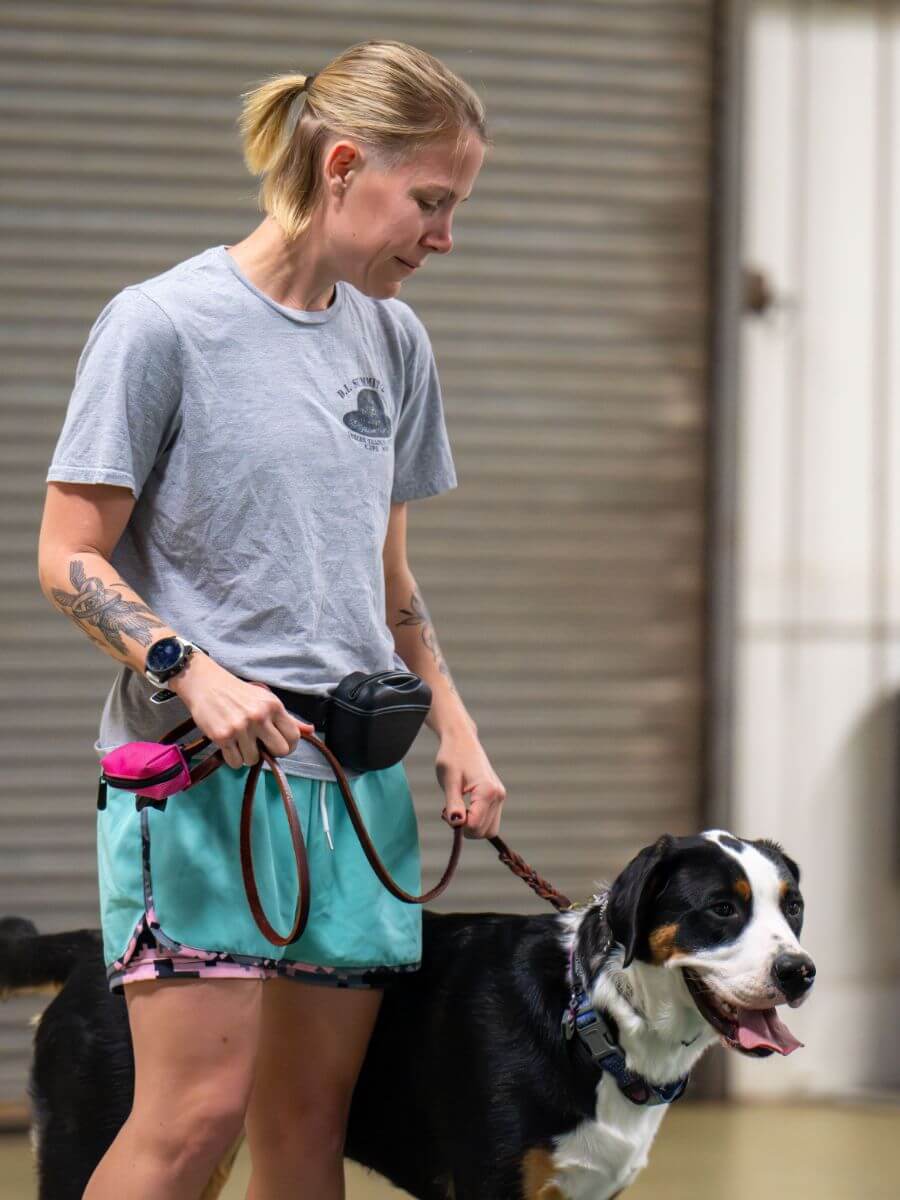
CMCDOTC offered three classes on the evening of my visit. “Puppy Class” gives puppies a chance to socialize and introduce handlers to basic Obedience. Graduates can continue into “Beginner’s Class,” then, during the third hour, experienced club members practiced advanced skills and American Kennel Club titles. This night, the “students” included a Scottish Terrier, German Shepherd Dog, Yorkshire Terrier, Mastiff, Bull Terrier, Spanish Water Dog, Greater Swiss Mountain Dog, Collies, and a West Highland Terrier, just to name a few.
During the Beginner’s Class, a dog breaks from a “down.” Regina Dougherty-McCarren, gentle drill sergeant and longtime trainer with the club, calmly guides the dog back into position, and gives the class practical lessons to remember: “Connect the command to the action.” “Keep your cues calm, clear, concise, and consistent.” “Teach rather than correct.” Regina’s Shetland Sheepdog, Ginger, accompanies her during lessons and is a model student.
Then comes her most important message: training should be stress-free: “Make it fun. Have a party.”
Several members noted the importance of adapting the lessons to the dog. One breed’s strong instincts may not respond to the same approach as another’s. Catherine Lundbeck, club member, who helps welcome visitors (along with Lily, her English Springer Spaniel) into the club’s varied training space, described the value of finding “original ideas and variations to get the dog where it needs to be to show it.” The first step, she said, is understanding the breed and its behavior. Dogs do what they were bred to do; the handler’s job is to learn how to work with those instincts.
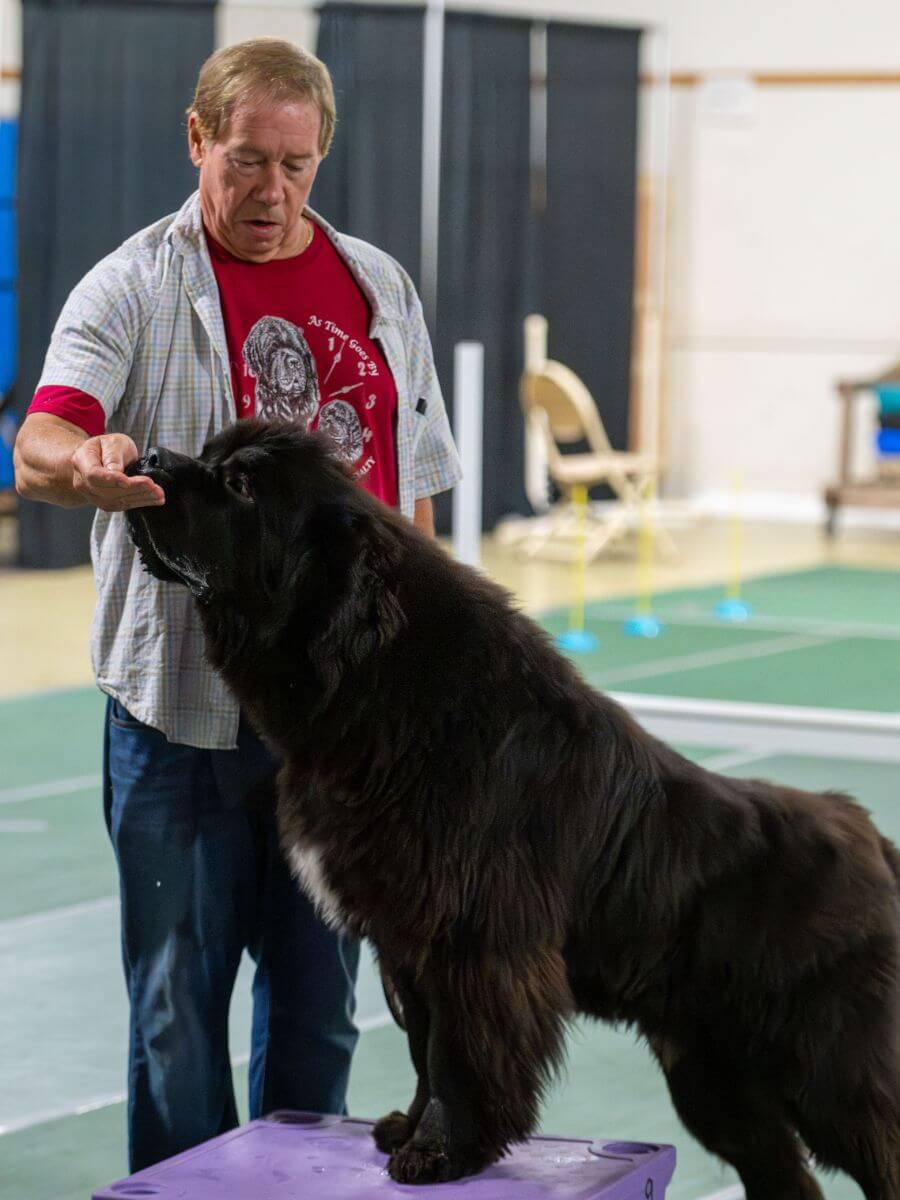
For Kaitlyn, classes have helped with Briar, her Siberian Husky. She came to training and remembered Briar as difficult to manage at first. The progress has been astounding to her. For Kevin, the club has been part of life with six Newfoundlands over 25 years. His current companions, Apollo and Zeus, are at different stages: one is a young dog of about 140 pounds; the other is ten years old and weighs about 150 pounds. He spoke of the bond with his dogs and the camaraderie among the members.
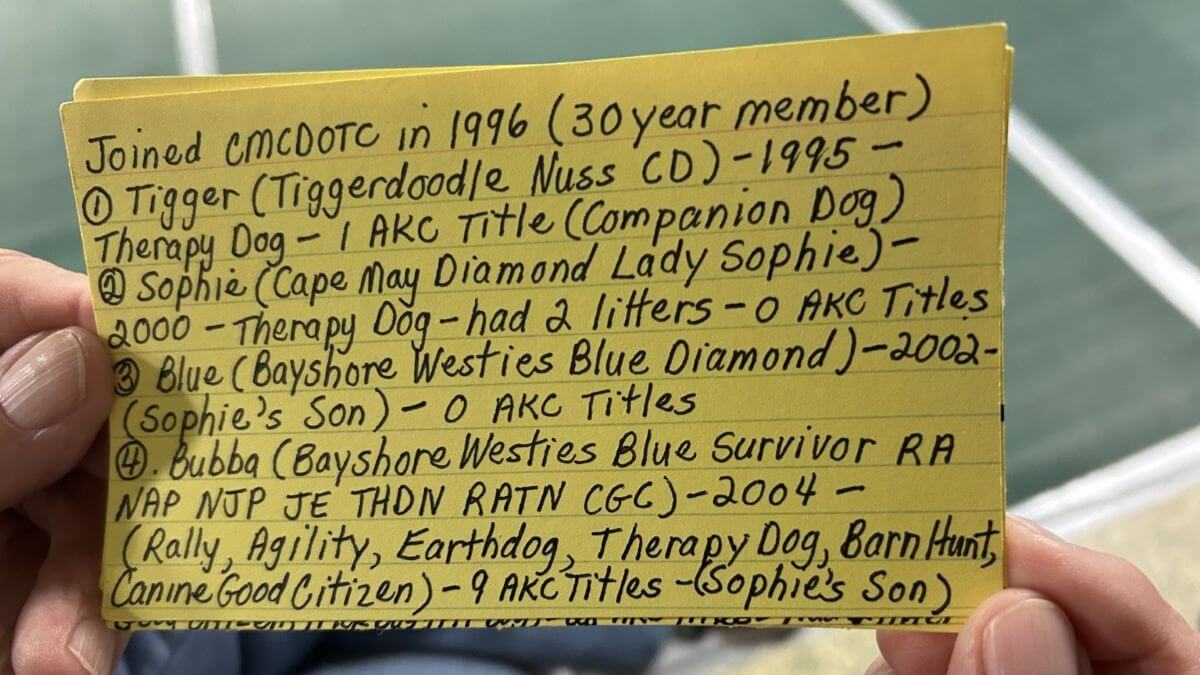
Judy Nuss shows me her handwritten index cards on which she has chronicled her Westies over roughly 30 years. Her first dog earned a Companion Dog title. Her current student, Barbie, is two and a half years old and has earned Grand Championships, and amassed 23 AKC titles.
The list of accomplishments matters here at CMCDOTC for sure, but I was also struck by the journeys and stories and people behind them. The titles mark achievement, but that’s just part of the story here at the club. A dog may earn a Companion Dog or Rally title, but may also visit someone in assisted living facilities. Handlers arrive hoping to solve a problem, but many have left with other impacts.
“The dogs change our lives and we change theirs,” Roberta commented to me. “And we all have made friends for life.”
At the Cape May County Dog Obedience Training Club, it’s all part of the lesson.
For more information about CMCDOTC, visit: https://cmcdotc.com/
For registration for Winter and Spring 2027 classes (space is limited!), email: cmcdotc@gmail.com or call 609-425-1096.

American Kennel Club (AKC)
Watch the AKC National Obedience Championship and Rally National Championship live July 16-19 on AKC.tv and YouTube.