
Members
Are you this judge?
Claim this profile by verifying an email address already listed for you. It will be linked to your account automatically.
Breed Conformation Judge
Location
1203 Roscomare Rd.Los Angeles, CA, 90077USAContact
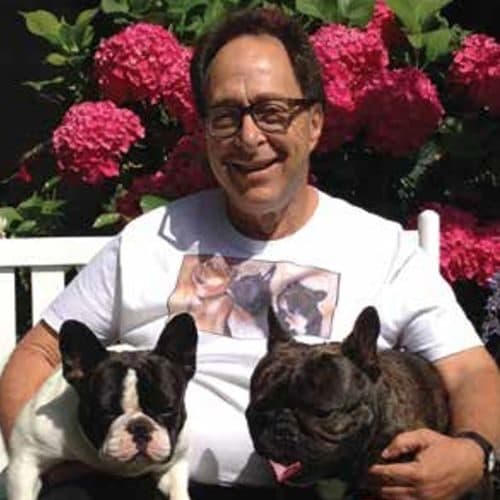
Barry Baum DVM is an AKC Breed judge based in Los Angeles, CA. 3 AKC approvals.
Barry Baum I was born and raised in the Bronx, New York. Living in a sixth-floor apartment was not conducive to having pets and the most common question I would ask my parents was “When can we get a dog?”
The first pet we got was a white Bulldog named Rosh Yom. I was smitten with a Westminster winner at the time, Frosty Snowman. Alas, at about five years of age, Rosh’s personality changed and he started attacking people. Retrospectively I think that he was the victim of a brain tumor.
Shortly after losing Rosh, I left home to attend college at Cornell University and completed both my Bachelor’s degree and my DVM in six years, finishing just before my twenty-third birthday. During my senior year, I rescued a beautiful red Bulldog, named PIF, (Pushed In Face), who accompanied me out to Southern California where I have been practicing ever since. For the last 43 years I have owned and operated Center Sinai Animal Hospital in West Los Angeles where I now have a staff of six veterinarians and forty lay employees. The childhood trauma of not having pets was instrumental in motivating me to become a veterinarian. It was obviously a very strong motivating factor as it also caused my younger brother to become a veterinarian.
Presently, my wife and I have three French Bulldogs that are our third and fourth generations. Laila Tov is a Bronze Grand Champion as is her daughter Dori. Dori’s brother, Nefesh, is handsome indeed and has sired twenty puppies, but is a little bit larger than the Standard. Laila’s mother, Modani, attained her championship at seven years and three months of age, having started her show career at six years. The third sibling is Winnie, who now lives with friends in Nashville. Winnie got her grand championship at thirteen months of age.
It’s funny how we decided to get our first Frenchie. I had a run of bad luck with our Bulldogs and got out of the breed. During this hiatus we had small Poodles, but as my adult children were leaving the nest they said, “Dad, we know you want to get another Bulldog.” My wife, Linda, having gotten used to small compact stools, said, “I don’t want another dog with large shits,” and she really meant it! My compromise was, “Why don’t we get a half-sized Bulldog” and that’s how we got our first Frenchie, Fessie, in 2003. Fessie’s pedigree was the Jaguar and Jamel lines, but she failed to have the brindling necessary to compete in shows despite otherwise being conformationally beautiful. Thus, I learned that there was a Standard that needed to be adhered to if I wanted to compete in the show ring. Three years later, we bought a magnificent fawn boy, Gadi, (Bali Hai line) who was bred to Fessie and thus Modani was born.
It wasn’t until Modi was bred and Laila was born in 2011, that I got serious about showing. The Wornalls showed Laila to her Championship and then Renata Drummand showed her to her Grand Championship, which was culminated by Laila winning Best of Opposite Sex at the New York Metro Specialty show in 2014 under Judge Richard Meen. What a thrill!! She followed that by winning Best Veteran Bitch at the National in 2018 and getting an Award of Merit from the Veterans class at the New York Metro shows in 2019.
Before I started handling my own dogs, I was obsessed with watching how the top handlers exhibited the dogs. Any time I went into the ring, I would ask Jennie or Renata what was the worst mistake that I was making. Gradually I got the hang of it and I am proud to say that I handled Laila’s daughter, Dori, exclusively while reaching her GCHB ranking. Memorable BOS wins at NY Metro in 2018, Best Bred-by Exhibitor, at NY Metro in 2017, Award of Merit at Westminster 2019, and BOS at the AKC National Championship in 2019 only fired up my passion.
My motivation to become a judge stemmed from seeing how inconsistent the judging was, especially when the judge was not a breeder-judge. I would see skinny legged, tall dogs being put up over the compact specimens that should have gotten the nod. I suspected that these judges did not really know the breed but were simply being influenced by seeing so many conformationally deficient dogs, that they must have thought that this what the dogs should look like. As soon as my fourth champion was crowned, I fulfilled the rest of the requirements for getting my provisional license.
The number one conformational asset that I look for is the overall balance of the dog. I look for beautiful head and facial structure; I like a soft, rounded look to the muzzle, not a harsh glaring look. I like a blocky body with an excellent topline. I am also very obsessed with the gait and how the dog reaches and drives itself. This is the one area where a skillful handler cannot hide the faults that can be hidden when the dogs are stacked. Our dogs are all dwarfs, but getting the right balance between dwarfism and athleticism is paramount. I am also very aware of how the dog breathes and will often try to get the exhibitor to exercise the dog to the extent that I can hear the breathing. Gurglers, to me, are a definite no. To a certain extent, I can’t help being a veterinarian.
As I came up through the ranks, as a breeder-judge, I became acquainted with many of the exhibitors, both breeders and handlers. When I step into the center of the ring, all my focus is on one end of the lead, the dog. My first impression of each dog is formed by their silhouette. I want a big, flat-topped head with ears perked up at attention. I also want a certain tautness to the body to bring out the well-developed and sculptured muscles. I want the topline to have that upslope in the lumbar area and I don’t want to see a tail above the dorsal topline. I generally like short tails, but the veterinarian in me is being torn by recent reports which may link the shorter tails to vertebral abnormalities. I like a good tuck up and a body that is not too elongated, but will make allowances for bitches. When the dogs are gaited, I am looking for the whole package to glide in unison. And again, I can’t help myself from listening to their respiratory sounds. I want to see the dog’s head held high as if to say, “I am proud of how I look.” I can’t stand to see the dogs looking like they are going downhill.
The table! That’s where I get to know the dogs and look for the smaller details. As I said before, I like a softer, rounder look to the muzzle when I am facing directly in front. My general impression is that the dogs with these rounder, broader muzzles breathe better. Straight upper teeth and soulful eyes are to my liking. I’m also looking to see if the light-colored dogs have problems with tear staining. When palpating, I am looking for big muscles and definition as well as any patella problems.
As each dog is examined, I make sure that there are no disqualifying features such as color or weight. When my staff found out that I had gained my provisional license, they made me guess the weight of each Frenchie that I saw at the hospital. Generally, I see 30 French Bulldogs a week, so I got a lot of practice.
The most common errors that exhibitors make involve lead placement and communicating with their dog. At least, that was my personal experiences. Many novice exhibitors don’t keep the leash high enough on the neck. As a result, the ears may not be kept up and erect. When you are showing your dog, you should direct your attention to keep him or her interested in what you do or what you have for them. I always had four or five items to present until I found the magic attention getter. This led my dry cleaner to wonder how pieces of hard-boiled eggs were found in my pocket!
When I was fulfilling my requirements for the judging permit, I judged a match in Las Vegas. I was somewhat surprised by the number of exhibitors who came up to me after the show expressing their thanks and amazement for how their high-strung dogs responded to my tableside manner.
How gratifying that is for me to hear.
I have been approached after a judging assignment and been complimeted on the consistency of my selections from the classes through Best of Breed. This was wonderful to hear this as consistency should be the focal point for all breeders and judges. I love the positive interactions with the handlers and their dogs. An exhibitor whose dog had gotten off on the wrong foot when gaiting came up to me after the show to call me a “nice judge.” He had asked me if he could move the dog again and I had allowed it. As I explained to him, I’m not looking for a, “gotcha!” I’m looking to see each exhibit the best that they can be. I want to see the champion within!
In closing, just a quick thought about breeding and developing your line. In my opinion, the most important individual is your foundation bitch. Besides being conformationally sound, I would want to see her free of the genes for Juvenile Cataracts and Cysteinuria. When she is a carrier, it limits your choice of sires. If you are an occasional breeder, it is not worth the one-in-eight chance of having an affected male puppy if she was to have been breed to a carrier… at least not for me. I think that sometimes people place too much emphasis on bloodlines. I would always go for the nicest specimen to breed to my beautiful girl. Having great ancestors a couple of generations back is less important to me than what the dog looks like now. A great-grandfather only contributes 12.5 percent of the gene pool.
Eventually, I hope to add a few Non-Sporting breeds to my license qualifications, but for now I hope to have the opportunity to judge more French Bulldog Specialties, and someday, to perhaps judge the National or Westminster!
Granted by the AKC.