01/Overview
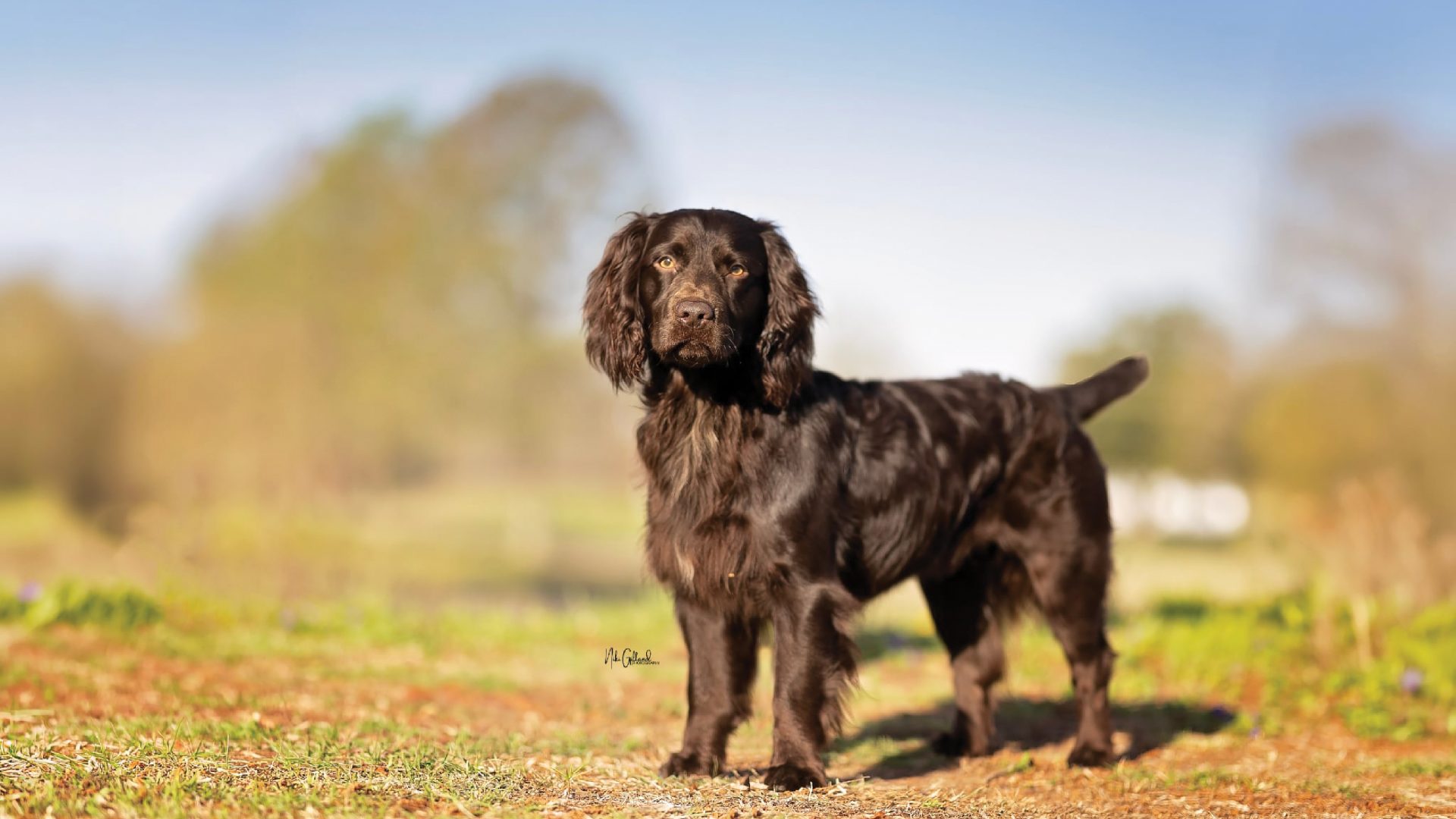
The Boykin Spaniel is a versatile and spirited hunter, renowned for its keen abilities in the field and for its friendly disposition. This breed originates from South Carolina and has become the Official State Dog. Its medium-sized frame and rich, chocolate-hued coat have garnered admiration from both hunters and families alike. Equally adept on land and in water, the Boykin possesses an unwavering enthusiasm for retrieving. Beyond its working capabilities, the breed is cherished for its affectionate nature and loyalty to its family members. Whether hunting or resting at home, the Boykin is sure to capture the hearts of many with its amiable personality and pleasing presence.
Highlights
02/History
The Boykin Spaniel, fondly referred to as the "Little Brown Dog" of South Carolina, has a history that is as charming as the breed itself. A versatile hunting dog with a heart and head for waterfowl, the Boykin has roots that stretch deep into the American South.
The tale of the Boykin Spaniel begins in early 20th century South Carolina. The breed's story is said to have started with a stray spaniel-type dog named "Dumpy." Found by a man named Alexander White in the town of Spartanburg, around 1900, the little brown dog was given a home and soon showcased a natural talent for retrieving. Recognizing the dog's abilities, White sent him to his hunting partner, Lemuel Whitaker Boykin, a man known for his expertise in training waterfowl hunting dogs.
L. W. Boykin refined and developed Dumpy's innate skills, and from this foundation the breeding and evolution of the Boykin Spaniel began. The breed was specifically tailored for hunting wild turkeys and ducks in the Wateree River Swamp, requiring a compact, energetic dog that could handle both water and land retrieves.
The Boykin quickly endeared itself to local hunters. Its size was perfectly suited for the smaller boats frequenting the Wateree River, and its keen senses, combined with the breed's boundless enthusiasm, made it indispensable to hunters in the area.
By the mid-20th century, the Boykin's reputation had become more widely known, garnering even more widespread appreciation. The Boykin Spaniel Society, established to preserve the breed's unique characteristics and heritage, played a pivotal role in promoting the breed's many distinct qualities and its uniquely American history.
While its roots are firmly planted in hunting, the Boykin's original role has diversified over time. Today, besides being a cherished hunting ally, the breed is also beloved as a family companion and Therapy Dog, and an eager participant in a wide variety of dog sports.
The American Kennel Club (AKC) officially recognized the Boykin Spaniel in 2009. Other major kennel clubs, such as the Fédération Cynologique Internationale (FCI) and The Royal Kennel Club (UK), have yet to give the breed their stamp of approval.
The Boykin Spaniel's importance in South Carolina's cultural history is clearly evident. In 1985, the state honored the breed by declaring it the Official State Dog, affirming its cherished status among South Carolinians.
03/Appearance
Adult male Boykin Spaniels typically stand between 15.5 and 18 inches tall at the shoulder, while mature females usually range from 14 to 16.5 inches.
When it comes to weight, males generally weigh between 30 and 40 pounds, with females being typically lighter, weighing around 25 to 35 pounds.
Skull: Moderately broad and flat on top, the skull tapers gently towards the eyes, culminating in a defined stop. The skull is neither too large for the body nor too small, striking a balance that aligns with the breed's medium stature.
Expression: The breed's expression is one of eagerness and intelligence, often illuminated with a hint of mischief. It's this lively and friendly expression that endears the breed to many.
Eyes: Set well apart and medium in size, the eyes of the Boykin Spaniel are usually a rich shade of amber or brown. Their almond shape exudes warmth and alertness, reflective of the breed's keen senses.
Ears: Set slightly above the line of the eyes, the Boykin's ears are of medium length, with a thin leather, and hang close to the cheeks. Their shape is pendulous and they're covered in wavy hair that gives them a gentle, feathered appearance.
Muzzle: The muzzle is of medium length and half as wide as the skull, tapering slightly but not to a point. It is powerful with a straight nasal bone, highlighting the breed's strength as a retriever.
Nose: The Boykin's nose is broad and dark liver in color. Its well-defined nostrils enhance its impressive scenting abilities, crucial for the breed’s usefulness as a hunting partner.
Bite: The Boykin Spaniel has a scissors bite, where the upper incisors closely overlap the lower incisors. This bite configuration is ideal for retrieving, allowing the dog to hold game gently yet firmly. A level bite is acceptable but is less desirable.
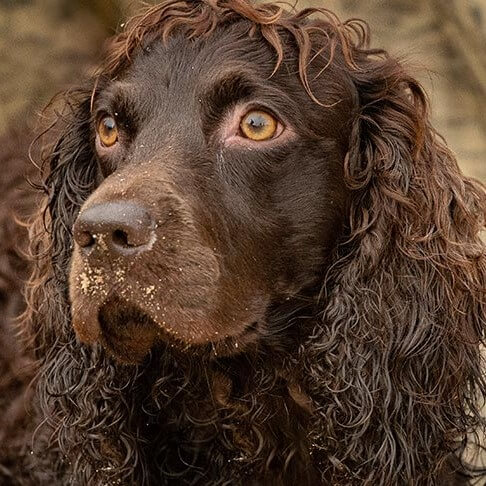
The Boykin Spaniel is a breed that exhibits both strength and agility. It has a sturdy frame without appearing bulky. Its body length is slightly longer than its height, giving it a somewhat rectangular proportion. This length, coupled with a strong back and well-developed musculature, equips the Boykin for endurance, particularly when retrieving game. The overall substance of the breed is neither too heavy nor too light, striking a harmonious balance that showcases its athletic abilities and inherent soundness.
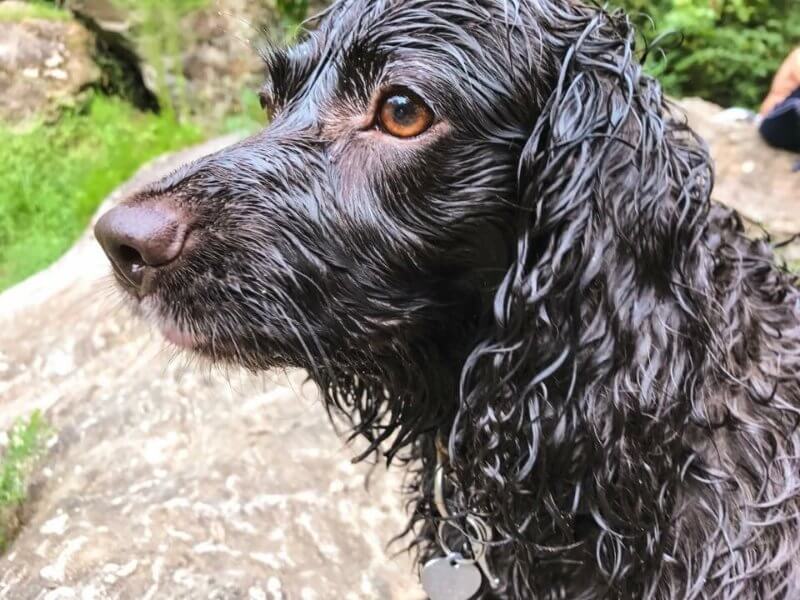
Texture: The coat of the Boykin Spaniel is medium in length and can range from slightly wavy to curly. This texture is not only aesthetically pleasing, it also provides the breed with protection in a wide variety of environments.
04/Consider
The decision to bring a Boykin Spaniel into one's life is to welcome a bundle of energy, intelligence, and affection. These "little brown dogs," while endearing, do come with certain requirements and considerations that potential owners should be aware of to ensure a harmonious relationship.
Interaction With Family
The level of affection a breed typically shows towards family members and familiar individuals.
Good With Other Dogs
The innate friendliness of a dog towards other dogs can depend on its breed.
Good With Young Children
The degree to which a breed will typically be patient with young children.
Amount Of Shedding
How much hair a breed typically leaves behind on clothes, furniture and floors.
Frequency Of Grooming
How often a breed needs brushing, bathing or a professional trim to stay in condition.
Amount Of Drooling
How prone a breed is to drool — worth knowing before you keep a towel by the door.
Openness To Strangers
How openly a breed tends to greet new people, visitors and strangers.
Protective Nature
How likely a breed is to alert you to — and stand between you and — anything unfamiliar.
Playfulness Level
How enthusiastic a breed stays about games and play well past puppyhood.
Trainability Level
How readily a breed takes direction and works with you rather than around you.
Barking Level
How much a breed uses its voice, and how readily.
Energy Level
How much get-up-and-go a breed brings to an average day.
Health
The Boykin Spaniel is typically a sturdy and healthy breed, blessed with a resilient constitution. However, like all breeds and mixed breeds, the Boykin can be susceptible to specific health conditions. Prospective owners should be aware of these potential issues and work closely with a trusted breeder and veterinarian to ensure each individual dog maintains optimal health throughout its life. Lifespan: The average lifespan of a Boykin Spaniel ranges between 10 and 15 years, but with proper care, regular check-ups, and a balanced diet, many can thrive beyond these years.
Boykin Spaniels are renowned for their affable nature, exuding a cheerful disposition that's hard to resist. Their historical role as hunting companions has shaped them into alert and intelligent dogs, but it's their affectionate demeanor that truly defines them.
For novice dog owners, a Boykin Spaniel can be a joy, as the breed is often eager to please and responsive to positive reinforcement. The sensitivity level of Boykins is moderately high, meaning they thrive on human companionship and do not respond well to harsh corrections or prolonged isolation. It's essential to approach training with kindness and patience, understanding that the bond formed during these sessions is integral to every Boykin's welfare.
In terms of socialization, the Boykin Spaniel usually fares well with other dogs, showcasing a playful and non-aggressive demeanor. Early socialization is crucial, as it ensures they develop positive behaviors around other animals and humans. This breed's gentle nature typically extends to young children, making Boykins a popular choice for families. However, as with any breed, supervision during interactions between dogs and young kids is always recommended.
Their friendly approach isn't just limited to familiar faces. Boykin Spaniels are usually welcoming toward strangers, albeit with a hint of initial caution. They might take a moment to assess a new person, but once they're assured of benign intentions, their warm and friendly nature shines through.
Exercise Expectations
In terms of exercise needs, the Boykin Spaniel requires regular and consistent physical activity. A couple of daily walks, combined with some playtime in a fenced yard, can help to meet this requirement. They particularly enjoy retrieving games, making fetch a favorite activity for many within the breed. The energy level of the Boykin Spaniel is moderately high. While they're capable of bursts of energy during play or work, they also cherish their downtime with family members. After a good exercise session, a Boykin Spaniel is often content to simply relax and cuddle. Intensity is a characteristic feature of this breed when they're engaged in a task or play. Whether it's chasing a ball, going for a swim, or participating in dog sports, a Boykin Spaniel tends to give it their all. Owners should be mindful of this intensity, ensuring the dog doesn't overexert itself, especially in hot weather. Lastly, they have a playful streak that endears them to both young and old. This playfulness, combined with their friendly disposition, makes them excellent companions for families, singles, and seniors alike.
Preparing your living space and lifestyle for a Boykin Spaniel can be a rewarding journey, but understanding the breed’s specific needs can make the experience smoother for both the dog and owner.
For apartment living, Boykin Spaniels can adapt well, given that their exercise needs are adequately met. Their medium size and affable nature make them suitable companions for smaller living spaces. However, it's crucial to ensure they get daily outdoor time to burn off energy and stimulate their minds.
When it comes to weather adaptability, Boykin Spaniels have a coat that offers some protection against the elements. In colder climates, their dense, wavy to curly coat provides insulation, but it's always a good idea to be attentive during extreme cold spells and consider protective gear if necessary.
Conversely, in hot weather, Boykin Spaniels can be susceptible to overheating. Ensuring they have easy access to shade and fresh water, and limiting their exposure during peak heat hours, can help to keep them safe and comfortable.
05/Puppies
The charm of Boykin Spaniel puppies is undeniable. These bundles of energy, with their soulful eyes and eager-to-please attitudes, can melt the hearts of anyone they meet. However, as with all puppies, Boykin Spaniels come with their own unique set of needs during their early life stages.
Bringing a Boykin Spaniel puppy home is an exciting event, but it's also a time that demands commitment, patience, and understanding from the new owner. From the very start, it's essential to establish a stable routine, as puppies thrive on consistency. This routine includes feeding times, potty breaks, playtime, and rest.
Socialization is a crucial aspect of every Boykin Spaniel puppy's life. Early exposure to various people, sounds, sights, and experiences can help shape their temperament and ensure they grow up to be sociable and confident adults. Puppy classes, home visits, and controlled outings can be beneficial for their development.
Diet plays a pivotal role in a puppy's growth. It's vital to feed a high-quality puppy food that meets a puppy’s nutritional requirements. Keeping a watch on a pup’s weight and ensuring it is not overfed are equally essential, as obesity can lead to health issues later in life.
Teething can be a trying period for both the puppy and everyone else in the house. Providing chew toys can help alleviate some of the discomfort and protect household items from being chewed.
Lastly, early training sessions should be short, fun, and positive. Boykin Spaniel puppies, with their eager nature, can pick up on commands quickly when taught with love and positive reinforcement.
06/Activities
Boykin Spaniels, with their Sporting Dog lineage, are naturally inclined towards activities that challenge their physical abilities and mental acumen. Their enthusiasm and drive make them excellent participants in a wide array of dog sports and events. Here are some activities in which Boykin Spaniels excel:
Spaniel Hunting Tests: Given their history as waterfowl retrievers, Boykin Spaniels are naturals in those tests and trials that showcase their skills in flushing and retrieving game under various conditions.
Agility: Agility courses, with their jumps, tunnels, and weave poles, offer Boykin Spaniels a platform to demonstrate their speed, dexterity, and trainability.
Obedience: With their eager-to-please attitude, Boykin Spaniels can excel in Obedience, highlighting their discipline and ability to follow commands.
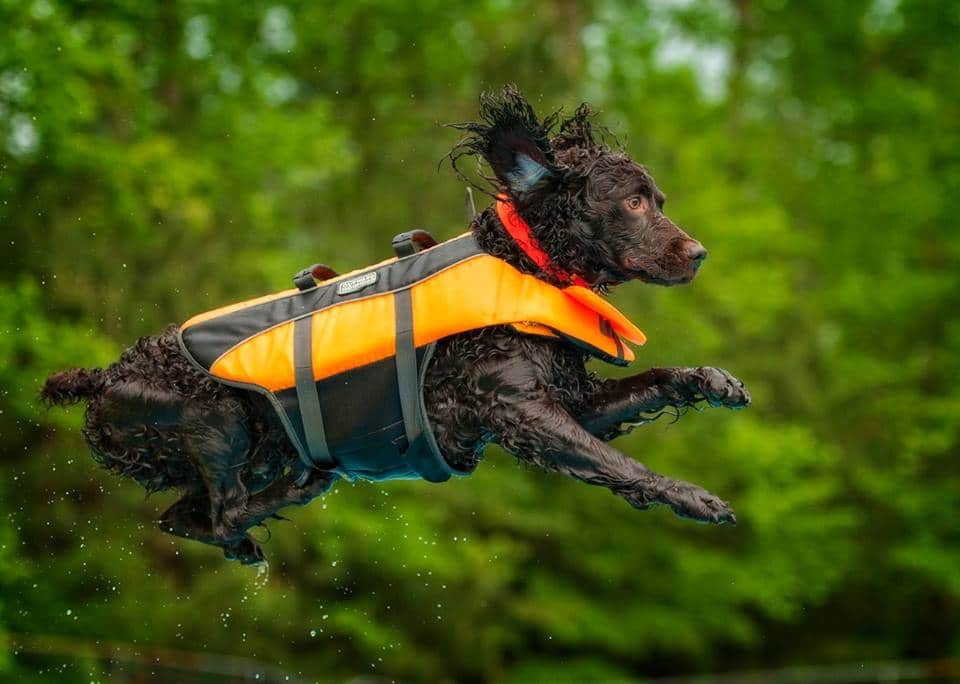
Dock Diving: Capitalizing on the Boykin’s love for water, Dock Diving is a sport where these dogs can exhibit their prowess in jumping and retrieving items from a cool body of water.
Rally Obedience: A sport which combines elements of Obedience and Agility, Rally-O offers Boykin Spaniels an opportunity to showcase their versatility and cooperative spirit.
Tracking: Using their keen sense of smell, Boykin Spaniels can be trained in Tracking activities, where they are given the chance to locate items or people based on scent trails.
Flyball: A relay race that involves jumps and fetching a ball, Flyball is another activity that can appeal to the energetic nature of the Boykin Spaniel.
Therapy Work: Beyond competitive sports, Boykin Spaniels, with their gentle and affectionate demeanor, can be trained as Therapy Dogs, providing comfort and companionship to those in hospitals, nursing homes, and other healthcare facilities.
The Boykin Spaniel is a versatile breed, making it suitable for a wide range of activities. Engaging the Boykin in these activities not only showcases its many talents, it also provides the mental stimulation and physical exercise the breed craves.
Gallery
07/Standards
The Boykin Spaniel is recognized by the world's leading registries and kennel organizations, which categorize the breed into a specific Group based on its unique characteristics. This breed is recognized worldwide under the following Group designations:
The ideal Boykin Spaniel is described by a Breed Standard that is approved by each of the world’s leading registries and kennel organizations. The Breed Standards for this breed may be found in the following links:
08/Clubs
The Boykin Spaniel, a breed cherished for its unique history and versatile skill set, has captivated the hearts of generations of breeders, enthusiasts, and dog lovers. Many breed clubs and organizations emphasize the importance of preserving the breed’s legacy and championing its distinctive qualities.In the United States, the Boykin Spaniel Society, established in 1977, remains at the forefront of championing the breed. The club works diligently to educate the public about the breed and promote responsible breeding practices. It also holds Retriever Field Trials as well as Upland Field Trials.Additionally, local clubs and groups across the US celebrate the Boykin Spaniel. These local entities often organize community events, training sessions, and meet-ups, providing a platform for Boykin Spaniel breeders, trainers, and enthusiasts to connect, share experiences, and deepen their knowledge about the breed.
09/Rescue
The breed enthusiasts’ dedication to the Boykin Spaniel extends beyond breed promotion to ensuring the welfare of individual dogs that might find themselves in less than ideal situations. Rescue groups play an invaluable role in this endeavor, providing temporary care, rehabilitation, and ultimately, finding loving forever homes for Boykin Spaniels in need.In the United States, Boykin Spaniel Rescue, Inc. stands out as a beacon of hope for these endearing canines. This organization operates nationwide, coordinating with volunteers, foster homes, and potential adopters to secure a brighter future for Boykin Spaniels in need. The members’ tireless efforts have seen countless Boykins transition from challenging circumstances to families that cherish them.The United Kingdom too has a network of general dog rescue organizations, such as the Dogs Trust and Royal Society for the Prevention of Cruelty to Animals (RSPCA), which could potentially take in and rehome a Boykin Spaniel, providing the same level of care and attention that is dedicated to all breeds.
10/Facts
Nickname
The Boykin Spaniel is fondly referred to as the "Little Brown Dog" of South Carolina.
State Recognition
This breed holds the esteemed title of the Official State Dog of South Carolina, an honor it received in 1985.
Special Day
Boykin Spaniel Day is celebrated on September 1st in South Carolina.
Expressive Gaze
One of the most charming features of the Boykin Spaniel is the breed’s notably soulful and expressive eyes.
Boating Buddy
Specifically bred for the swampy terrains of South Carolina, the Boykin Spaniel was the perfect fit for the small boats, or "section boats," used by local hunters.
Coat Functionality
The Boykin's double coat is not only aesthetically pleasing but also protective, serving as a shield against the swampy conditions of the breed’s home state.
Natural Swimmer
Possessing the innate ability to swim with ease and agility, the Boykin Spaniel's history as a retriever of wildfowl is self-evident in its aquatic skills.
Docked Tail
The Boykin’s typically “spaniel” tail, usually docked, results from a decision rooted in the hunters' need to protect the dog’s tail from harm in murky waters and the thick underbrush found in swampy wetlands.
Friendly Companions
Beyond their hunting prowess, Boykin Spaniels are celebrated for their amiable nature, which makes them ideal family companions.
11/FAQ
Yes, Boykin Spaniels do shed. Like many breeds, Boykins have a natural shedding cycle that results in a gradual loss of dead hair. Regular grooming can help manage and reduce the amount of loose hair.
Official Standard for the Boykin Spaniel
General Appearance - The Boykin Spaniel was developed in South Carolina, USA as a medium-sized sporting dog with a docked tail. The breed is built to cover all types of ground conditions with agility and reasonable speed. Size and weight were essential in development of the breed as these hunting companions needed to be lighter and smaller than their larger sporting dog cousins to fit in the portable section boats of the time period. As a result, the Boykin Spaniel came to be known as “the little brown dog that doesn’t rock the boat”. Being a hunting dog, he should be exhibited in hard muscled working condition. His coat should not be so excessive as to hinder his work as an active flushing spaniel, but should be thick enough to protect him from heavy cover and weather. The Boykin Spaniel is primarily a working gun dog; structure and soundness are of great importance.
Size, Proportion, Substance - The Boykin Spaniel is solidly built, with moderate bone, and smooth firm muscles. The ideal height measured from the ground to the highest point of the shoulder blades for dogs is 15½ to 18 inches at the withers; for bitches is 14 to 16½ inches at the withers. Any variance greater than 1 inch above or below the ideal height is a major fault. The minimum height ranges shall not apply to dogs or bitches under 12 months of age. Proportion is slightly longer than tall, never square. However, exact proportion is not as important as the dog being well-balanced and sound, capable of performing the breed’s intended function.
Head - The head must be in proportion with the size of the dog. The expression is alert, eager, self-confident, attractive and intelligent. Eyes range from yellow to amber to varying shades of brown, set well apart, medium size and almond or oval shaped, and trusting. Protruding or bulging eyes is a major fault. Ears are pendulous and set slightly above or even with the line of the eye; ear set is higher when alert. The leather of the ear is thin and when pulled forward should almost reach the tip of the nose. The ears hang close to the cheeks and are flat. Skull is fairly broad, flat on top, and slightly rounded at the sides and back. The occiput bone is inconspicuous. The stop is moderate. When viewed from the side the nasal bone and the top of the skull form two parallel lines. Muzzle is approximately the same length as the skull, and is approximately ½ the width of the skull. The distance from the tip of the nose to the occiput is about the same length as occiput to the base of the neck. The nasal bone is straight with no inclination down or of snippiness. The nose is to be fully pigmented, dark liver in color with well opened nostrils. The lips are close fitting and clean, without excess skin or flews. Scissors is the preferred bite, level is acceptable. Pronounced or extreme overshot or undershot bites are major faults. Broken teeth should not count against the dog.
Neck, Topline, Body - Neck is moderately long, muscular, slightly arched at the crest and gradually blends into sloping shoulders and never concave or ewe-necked. Back - The topline is straight, strong and essentially level and should remain solid and level in movement. Loins are short, strong with a slight tuck up. His body is sturdily constructed but not too compact and never square. The shoulders are sloping. The brisket is well developed but not barreled, extending to the elbow and not too broad or narrow as to interfere with movement. A ⅔ to ⅓ ribs to loin ratio is preferred. The croup slopes gently to the set of the tail, and the tail-set follows the natural line of the croup. The tail is docked to a length of 3 to 5 inches when fully mature. The tail’s carriage should be carried horizontally or slightly elevated and displays a characteristic lively, merry action, particularly when the dog is on game.
Forequarters - The Boykin Spaniel’s shoulders are sloping, clean and muscular. His legs medium in length, straight and well boned but not too short as to handicap for field work or so heavy as to appear clumsy. Pasterns are strong with no suggestion of weakness. Feet are round, compact, well-arched, of medium size with thick pads. Dewclaws should be removed. The toes closely grouped, webbed and well padded.
Hindquarters - The Boykin Spaniel has well developed hips and thighs with moderate angulation at the stifle with the whole rear assembly showing strength and drive. Hindquarters are muscular and most importantly, in balance with the forequarters. Hocks well let down, pasterns relatively short, strong and parallel when viewed from the rear. Feet – see feet under forequarters.
Coat - The coat can range from flat to slightly wavy to curly, with medium length. The Boykin Spaniel is typically a single coat breed but may have undercoat. Boykin Spaniels are considered a “wash and wear” dog easily going from the field to the ring. The ears, chest, legs and belly are equipped with light fringe or feathering. His coat may be trimmed, never shaved, to have a wellgroomed appearance and to enhance the dog's natural lines. It is legitimate to trim about the head, throat, ears, tail and feet to give a smart, functional but natural appearance. Honorable field scars are acceptable.
Color - The Boykin Spaniel color is a solid liver color - a deep reddish brown color that includes various shades of chocolate brown, from light to very dark. A small amount of white on the chest is permitted and no other white markings are allowed. Sun bleaching is acceptable.
Gait - Movement is effortless with good reach from well laidback shoulders at an angle that permits a long stride that is in balance with the rear quarters for strong driving power with no wasted movement. Viewed from the rear the hocks should drive well under the body following on a line with the forelegs neither too widely nor closely spaced. As speed increases it is natural for the legs to fall to a center line of travel. Seen from the side it should exhibit a good, long forward stride with no side winding. In gait the tail is carried level to or above the back.
Temperament - The Boykin Spaniel is friendly, a willing worker, intelligent and easy to train. The Boykin Spaniel thrives on human companionship and gets along well with other dogs and children. He shows great eagerness and energy for the hunt yet controllable in the field.
Faults - The foregoing description is that of the ideal Boykin Spaniel. Any deviation from the above described dog must be penalized to the extent of the deviation.
Approved January 8th, 2019
Effective April 2nd, 2019

American Kennel Club (AKC)
Interview with Joseph Wyant, handler of an Exemplary Companion Dog known as “Scout,” the 2022 AKC Humane Fund ACE Award Winner.

US breeders have produced a number of hearty and hungry canine originals by combining established British, European, and Asian breeds with local village dogs.
Top Reasons to Love a Boykin Spaniel – The Boykin Spaniel is unique in that no other breed of canine can claim that he is a dog…
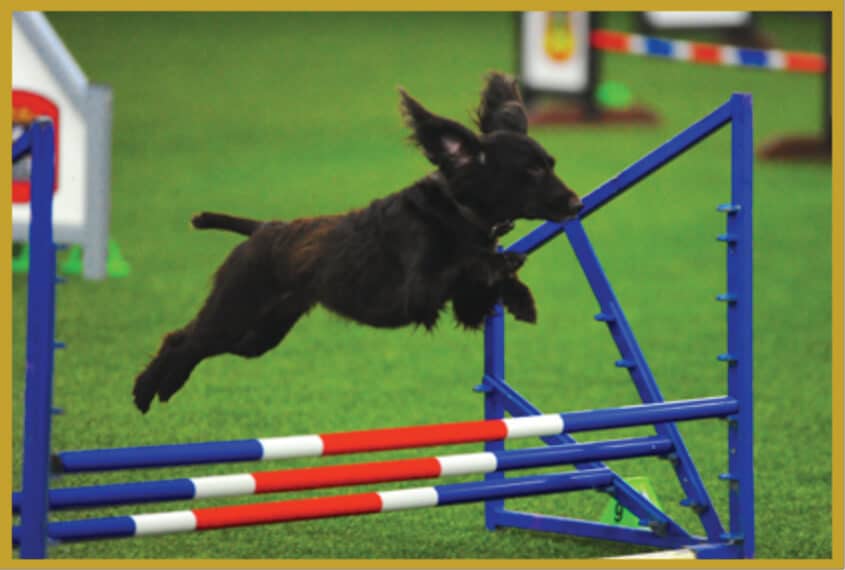
The joy of owning a Boykin Spaniel is strongest when both dog and owner work together to achieve a common goal.
The tail of the Boykin Spaniel is an essential breed feature, indicative of the dog's mood and enthusiasm. It is generally docked to a length of 3 to 5 inches and is set slightly below the level of the back. Undocked tails are less common in the breed. The tail is carried horizontally or slightly elevated above the level of the back, especially when the dog is alert or in motion. When the dog is in high spirits or on the move, the tail's gentle waving motion is accentuated by a moderately dense coat that has a slight feathering.
A Note About Color: The only acceptable color for a Boykin Spaniel is solid liver, a deep reddish brown that includes various shades of chocolate, from light to very dark. Some Boykins can have faint color variations due to bleaching from the sun. A small amount of white may appear on the chest, but nowhere else.
Coat Type
Double, Wavy
The structure of the coat this breed carries.
Coat Length
Medium
How long the breed's coat grows when kept in condition.
Adaptability Level
How easily a breed copes with changes in home, routine, noise and weather.
Mental Stimulation Needs
How much a breed needs a job, a puzzle or training to stay content.
The nutritional needs of a Boykin Spaniel change over the course of its life, and understanding these requirements is crucial for its overall health and well-being. Feeding a balanced diet tailored to the dog's age, weight, activity level, and health needs can make a significant difference in its vitality and longevity.
For Boykin Spaniel puppies, it's essential to provide a nutrient-rich puppy formula that supports their rapid growth and development. As puppies are notably active and have higher energy needs, they often require more frequent meals. Instead of feeding large portions, it's advisable to break down their daily food intake into smaller meals spread throughout the day.
As the Boykin Spaniel transitions to adulthood, its metabolism may slow down a bit. It's during this phase that owners should shift from puppy formula to adult dog food. Monitoring the dog's weight and adjusting the food portions is necessary to ensure a Boykin maintains a healthy weight. Typically, an adult might consume between 1.5 to 2.5 cups of high-quality dry dog food daily. However, this amount can vary based on the dog's activity level and individual metabolic rate.
It's also worth noting that Boykin Spaniels, with their enthusiastic nature, can sometimes be prone to overeating. Owners should be cautious about overfeeding and refrain from giving too many treats, especially those not specifically designed for dogs.
To ascertain the most appropriate diet for a Boykin Spaniel, consulting with a veterinarian or a pet nutritionist can be invaluable. They will provide personalized recommendations that cater to the specific needs of each individual dog.
Training a Boykin Spaniel can be a delightful experience, thanks to the breed's inherent eagerness to please and its agile mind. Historically, these dogs were trained to assist hunters in retrieving game, which honed their ability to follow commands and work cohesively with humans.
However, their responsive nature doesn't necessarily mean training is always a walk in the park. Patience and consistency are vital. Using positive reinforcement methods, such as praise or treats, can go a long way in cementing desired behaviors. Boykins respond best to gentle, reward-based training techniques.
When it comes to vocal tendencies, the Boykin Spaniel might occasionally exhibit a tendency to bark, especially when they're alerting their owners to someone's arrival or if they're bored. Early training can help to manage and even reduce excessive barking.
The breed's intelligence is one of its most notable traits. Boykin Spaniels are quick learners, able to grasp new commands and tricks with relative ease. However, this same intelligence can sometimes lead to stubbornness if they're not mentally stimulated. To counteract this, incorporating puzzle toys, agility training, or advanced obedience lessons can keep their minds sharp.
Wanderlust is generally not a pronounced trait in the Boykin Spaniel, but they're still dogs, and an intriguing scent or an exciting sight might tempt them. As a safety precaution, it's always a good idea to have a secure yard or to keep them on a leash during walks.
In terms of predatory instincts, while the Boykin Spaniel is a retriever at heart, they don't have a particularly high drive to chase. Early socialization and training, however, can help to ensure they interact appropriately with smaller pets or wildlife.
Grooming Expectations
In terms of ease of grooming, the Boykin Spaniel falls into the moderate category. Regular brushing, at least a few times a week, can help to prevent tangles and matting. This routine not only keeps the coat looking its best, it also aids in distributing the natural oils of the skin, promoting a healthy shine. Shedding is a natural part of a Boykin Spaniel's life. While the breed doesn't shed heavily, there's a consistent, light shedding that takes place throughout the year. Regular brushing can help to manage and reduce the amount of loose hair, ensuring a cleaner living environment and a healthier coat for the dog. Apart from coat care, other grooming essentials for a Boykin Spaniel include regular ear checks and cleaning. Due to the breed’s floppy ears, Boykins can be more susceptible to ear infections. Keeping the ears clean and dry can help to prevent such issues. Routine nail trimming, dental care, and periodic baths round out the grooming regimen. A Boykin Spaniel might need a bath every few weeks or when it gets particularly dirty. Using a dog-specific shampoo can help to maintain the coat's natural oils and ensure healthy skin.