Members
The Weekly Brief
The best of SHOWSIGHT editorials, weekly wins, and breeder commentary — delivered to your inbox every Sunday morning.
Whenever I see a fat dog, I get sad, and a little mad. After all, it is the humans who are feeding that dog. They (you) have control. And it is in your best interest for the health and lifespan of your dog for them to attain and maintain a healthy weight.
Walk into any veterinary clinic today and you’ll hear a familiar refrain: “Your dog needs to lose a little weight.” While most owners brush off these warnings with a chuckle—“He’s just big-boned!”—the truth is far from funny. Obesity is now one of the most common health problems facing dogs in the US, and it’s a condition that’s shortening lives, causing pain, and costing owners thousands of dollars in preventable medical bills.
The Association for Pet Obesity Prevention (APOP) estimates that over 55 percent of dogs in the US are overweight or obese. That’s more than half the canine population. Obesity isn’t just an aesthetic issue; it’s a health crisis. Overweight dogs face an increased risk of diabetes, arthritis, heart disease, respiratory problems, and certain cancers. For purebred dogs, extra pounds can also negatively impact participation in Conformation and Performance sports, and their movement in general.
So why is this happening? Two main culprits: too many calories and not enough activity. Most owners overestimate how much food their dogs need and underestimate how many treats they give. Pair that with a sedentary lifestyle, and you have a recipe for a pudgy pup.
Portion Distortion: Pet food bags often recommend more than your individual dog needs, and owners rarely measure accurately.
High-Calorie Treats: Those extra biscuits add up. A single Milk-Bone for a small breed can be like a human eating a donut.
Free-Feeding: Leaving food out all day often leads to overeating.
Lack of Exercise: Busy schedules, smaller yards, and too much couch time mean dogs burn fewer calories.
Humanization: Sharing table scraps is common, but it adds unnecessary calories and unhealthy fats.
Keep an Eye on Spayed & Neutered Dogs: Post surgery, some dogs gain weight. You will likely have to adjust their amounts.
Age Is a Factor: Older dogs tend to take on weight, mostly due to a more sedentary lifestyle.
A dog is classified as overweight when it weighs 15 percent or more above its ideal weight, and considered obese when it exceeds the ideal by 30 percent or more.
A scale isn’t the only tool. Use the Body Condition Score (BCS) system—a hands-on test:
Feel the ribs: You should be able to feel (not see) them easily without pressing hard.
Look from above: Your dog should have a visible waist behind the ribs.
Look from the side: There should be a slight tummy tuck. A straight or bulging belly is a red flag.
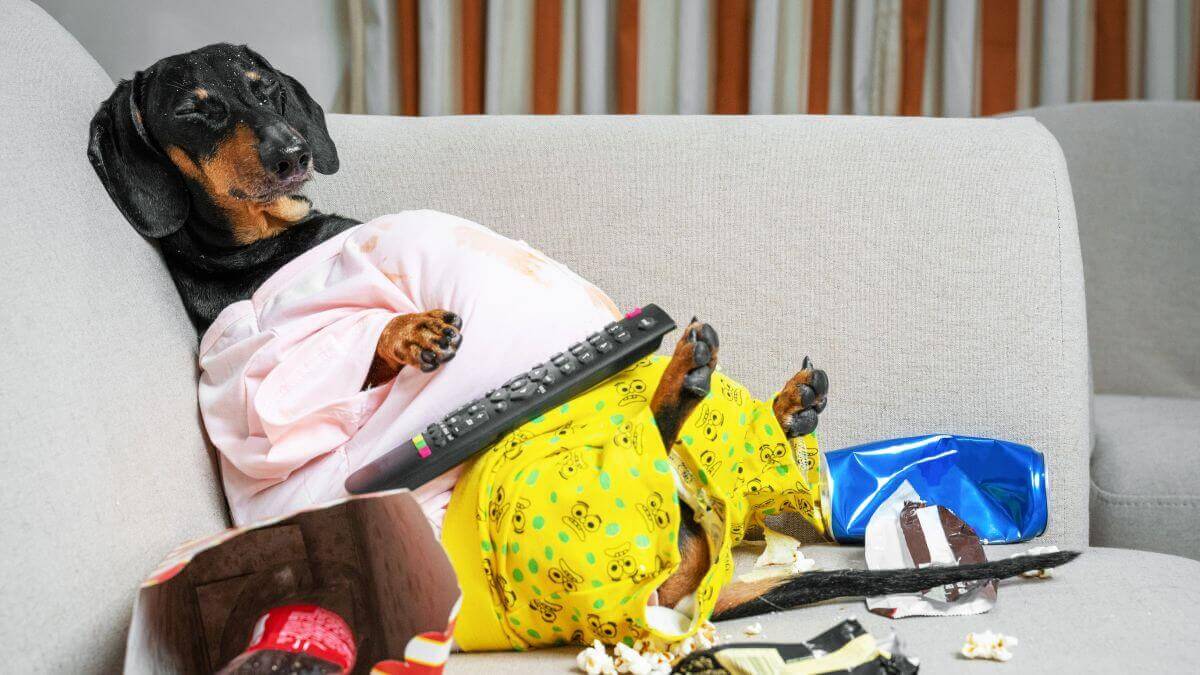
If your dog looks more like a sausage than an athlete, it’s time for action.
Consult Your Veterinarian: Rule out medical issues like hypothyroidism.
Control Portions: Measure meals based on your dog’s ideal weight, not current weight. And actually measure; don’t go by eye.
Cut the Extras: Treats should be no more than 10 percent of daily calories. Consider low-calorie options like carrots, blueberries, or green beans.
Increase Activity: Daily walks, games, and interactive toys make a difference.
Switch to Weight Management Diets: Your vet can recommend the right food with lower fat and higher fiber.
Canine obesity shortens life expectancy by up to two years. It causes chronic pain from arthritis, increases anesthesia risks, and contributes to metabolic diseases. For show breeders and exhibitors, an overweight dog is not just unhealthy, it’s at odds with the Breed Standard and may be penalized in the Conformation ring. And Agility or Fast CAT? Just like us, trying to run fast with extra pounds puts your canine athlete at a disadvantage.
Yes. When more than half of dogs are overweight, we’re dealing with a population-wide health crisis. And just like in humans, reversing this trend requires education, commitment, and a cultural shift in how we view “cute and chubby.” A lean dog is not a deprived dog; it’s a healthy dog.
The best gift you can give your dog is health. That starts with a scale, a measuring cup, and an honest look at what’s in the bowl. Because when it comes to keeping our dogs fit, the responsibility is in our hands.

Canine Health