Members
Do breeds change or are they fine-tuned? Doug Johnson explains how selective breeding preserves breed type while improving quality.
The Weekly Brief
The best of SHOWSIGHT editorials, weekly wins, and breeder commentary — delivered to your inbox every Sunday morning.
Someone recently posted photos on social media of a Wire Fox Terrier from the early 1960s and asked, “Could this dog win today?” I looked through the photos and thought, “Well, yes, that dog could win today.” So, I’ve been thinking ever since about the progression of breeds, and the question I have is: Do breeds change or are they fine-tuned? Does “conservation” mean a breed doesn’t change? Are breed conservation and the changes made to a breed mutually exclusive? Or can a breed change for the better while also conserving breed type? To me, that is the thing... making improvements versus simply making changes.
We want to retain the classic appearance and the classic traits and the basics of our breeds. Those things don’t change. Things like bone density and coat quality remain the same—but they’re improved. Just like us, today’s dogs are bigger and taller than they once were. If you look at a breed in the 1950s, the make and shape is similar but there are more varied options today. Those options are the breed-specific characteristics like leg length, eye color/shape/placement, and the amount of coat and markings. There’s the ability to grow coat over time and the cultivation of coat; the working of a Wire’s coat, for example, the stripping and the pulling versus clipping; the ability to keep undercoat and grow an outer coat long; and the ability to rake the coat. These are learned processes, though some dogs will have a genetic predisposition for “better.” One dog will have a better coat quality than the two generations prior, so he is selected to move forward in the breeding program based on his quality. That’s fine-tuning.
Let’s compare dogs and automobiles. The automobile replaced horses as a means of transportation, and the power of today’s cars is still measured in horsepower. But cars today are very different from the early models. They’ve become so much more than just a means of getting from point A to point B. Cars can now exceed 120 mph and they have global positioning systems. So, automakers have evolved and made improvements, and this is just as true for breeders of purebred dogs. We’ve developed many types of animals to do certain things. We’ve got companion animals versus dogs that work for a living. It’s sort of like having a luxury sports car versus a moving van. One has a need and a purpose and a use, the other is just for pleasure. Over time, all the mechanics and all of the fine-tuning, to both dogs and cars, have evolved with society.
As purebred dog breeders, the goal is always to appreciate and conserve the original source. That’s why parent clubs are so cautious about opening Pandora’s Box when it comes to revising a breed’s Standard, because we do have reverence for history and we have a lot of faith in what we were told: “This is the written blueprint, the historical accounting of where the breed is and what we want it to be.” And so, we breed towards that example, the ideal described by the written word, in order to produce better. But as we breed to the Standard, we’re always fine-tuning individual parts. We’re always selecting to get the dome just right on an English Toy Spaniel, for example, getting the groove just right between the eyes and up the skull to the occiput. The reason why the nose placement is high in the breed is because the Queen wanted it that way, and the people who came afterwards agreed with her. They said, “Yes, we’ll do that.” And so, they incorporated the Japanese Chin, the Pug, and the Pekingese. All of those animals were appealing to Queen Victoria aesthetically, and the breed grew in favor because of the fine-tuning that took place.
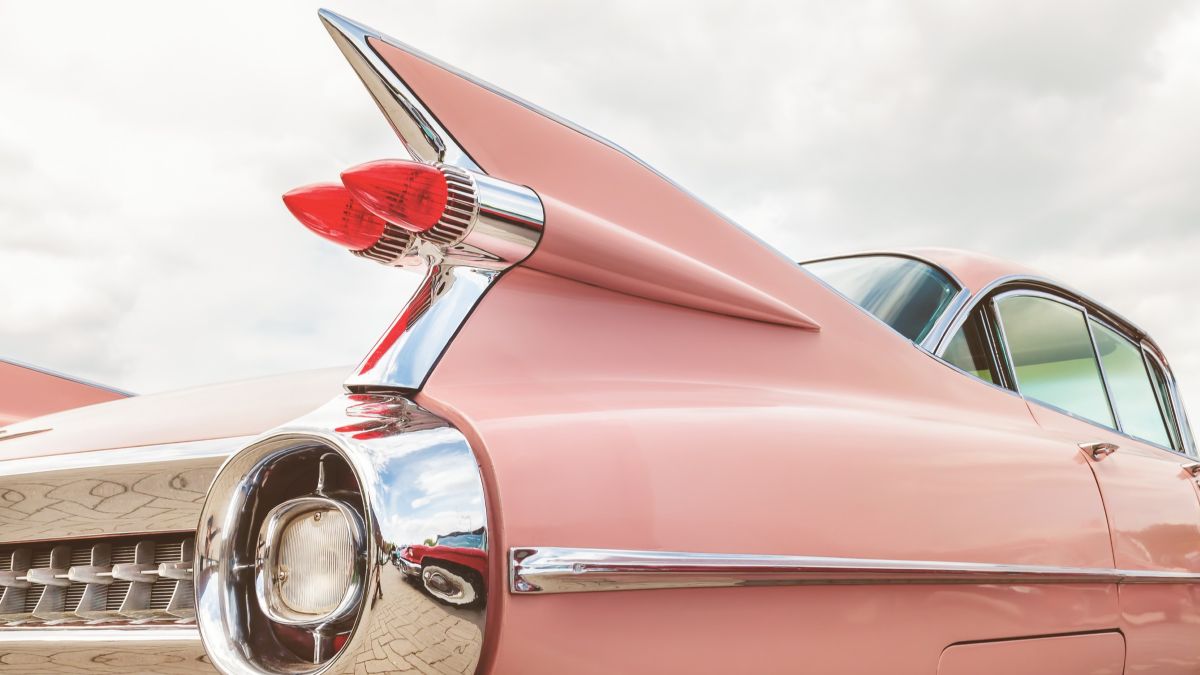
However, there’s a pendulum swing with societal fads that enters into the consumer’s desire to buy something that’s new, something different. In the 1950s, it was “cool” to have a Cadillac with big tailfins. Now it’s “cool” to have a merle or lilac French Bulldog. These things are just part of the “designer craze” of both genres, and there is something to be learned from them: Some things just don’t work!
Despite the trends, Breed Standards are not rewritten. They’re not transcribed into a new vernacular. They’re simply fine-tuned so that we are all still breeding towards that ultimate, unattainable quality that we call “perfection.” And through the years, we can produce about four to six generations per decade. Well, a lot of improvement can happen in four to six generations. If you compare the early Cocker Spaniels and the most recent dogs, you’ll see a definite change in “style.” You’ll notice the advancement and fine-tuning of breed quality in topline, coat, and silhouette when compared to the breed’s early stages, with flatter backs and flatter skulls. The same is true of other breeds that have evolved in the course of history, some for the better… and some not so much.
The historical reference photos of breeds are intriguing to the modern-day breeder because we are looking at the type they present, and we recognize the quality that we see and respond by saying things like, “Yes, that was a beautiful head.” But we are always suspect of what those past dogs were truly like, and only look at their photos for reference, or maybe to use for creating the ideal look in our brain. But they’re not dogs to seek out to get back to… because the baggage they carried has already shown itself through the generations that followed them. That baggage could have included a litany of problems.
Part of the frozen semen dilemma is: Do you use the old dog that was so good yet carries the mystery of his genetics? I’m a big proponent of frozen semen, and I have a lot of it, but you cannot use it without acknowledging old dog/old problems. After all, they’re closer to the source you’ve been trying to get away from. I am not saying don’t use the dog; what I’m saying is proceed with caution, because while he may be a link to better, he’ll drag along a few “barnacles” from the past. That’s where the fine-tuning comes in… we have to find ways to harness the good and conserve only the qualities that we want. Breeding is always a process like sifting through sand. You’re trying to retain the good stuff and weed out those bad genes.
I think it takes ten years, which is four to six generations, to recreate a great one. Greatness doesn’t just happen generation after generation. It takes a good bit of time between amazing animals to reproduce another one that works in a breeding program, or one that takes on the strength of a breed. In breeds that we consider to be endangered, with limited numbers produced, maybe it takes up to 15 years. However, in a breed like the Whippet it could take only five years. Maybe this is an advantage that breeders of vulnerable breeds haven’t yet figured out: Breed more often to reduce the time between the great ones. Imagine if we got everybody in a room and said, “We’re currently in between a forceful stud dog. If we each had a litter this year, maybe we’d come up with the new one. Or, if some of us had two litters with different combinations, we would find that dog sooner.”
It’s important to remember that a breed’s original concept has not changed. It’s just the gloss on top that has been improved. The details. Through selective breeding, and having the opportunity to produce more litters, we are still producing dogs that resemble the original intent of the Breed Standard. Changes haven’t made the Golden Retriever a Labrador. In fact, I think the pendulum is swinging back on Goldens, from a fancier type to a more traditional look of the breed. This is proven by the historical photos that indicate, yes, that dog could win today.
In some breeds, however, today’s dogs are actually too flawed to compete by today’s standards. They are not improved upon enough to be competitive. They’re recognizable as their breed, yes, but they’re recognizable as an ancient version of the breed we now know. And as such, they are “lesser than” by today’s standards: a tall, rangy Labrador with no body and no bone; a Golden Retriever with no hair and very straight angles. Those dogs may be recognizable, but they’re not desired today. Their breeders haven’t kept up with the positive changes that have been made. They’ve been left behind. They have become isolated because they have had an unwillingness to advance.
The truth is that most breeds are not the same today as they were at their inception. Over time, we do see improvements universally. And why is that? It’s because we’ve learned how to do better. We’ve learned how to feed better. We’ve learned how to train better. We’ve learned how to trim better and how to grow better coats. It’s through experience that we have the ability to improve AND retain; conserve the best qualities while keeping an eye on the bullseye of a breed’s intended purpose. And over time, we fix health elements like hip dysplasia, because we know how to test for it. We can now limit our breeding population to those animals we know are clear.
Do breeds change? Well, my answer is: Only for the better. They change because we’ve learned how to fine-tune, but I don’t think the change should be so drastic that we rewrite history and say, “This is really what the founders meant.” Those early breeders were right, and we are now benefitting from their wisdom. Their conservation efforts included recording the historical accuracy of a breed. The writing of Breed Standards was their conservation effort. We have to put ourselves in their shoes when they said, “Let’s put this down and get it right. And for generations to come, they’re going to use what we’re saying and they’re going to breed towards this ideal.” That is happening every day.
Today, we can still drive down country roads and see a horse and buggy or a Model T. They’re still around, but there are better modes of transportation with better climate controls, better tires, and a better, more comfortable ride. The automobile industry has advanced, but it’s still making cars. The Ford company still exists, and if it were a kennel it would still be going strong producing National Specialty winners instead of F-150s.

Breed Conservation
Dan Sayers explores how changing consumer trends and a shrinking middle class are impacting the future of purebred dogs.