Members
Interview with Ashley Silver, breeder behind Oceania Hamiltonstovare, on preserving this rare Swedish scenthound and its future in America.
The Weekly Brief
The best of SHOWSIGHT editorials, weekly wins, and breeder commentary — delivered to your inbox every Sunday morning.
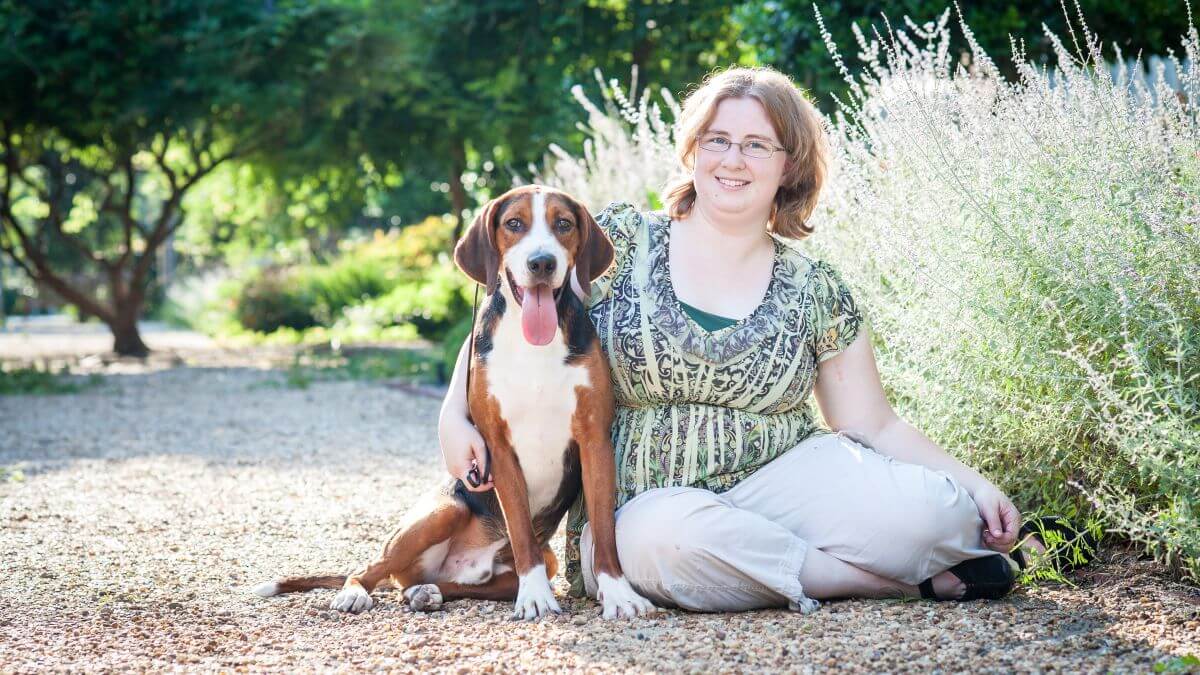
Ashley Silver: I am Ashley Silver, and my husband and I live in Goochland, Virginia. I have been involved in dogs for over 25 years; I started showing Beagles and then as a Junior Handler with Great Danes. I have been a breeder for nearly 12 years. My kennel name is Oceania Hamiltonstovare, and the name comes from letters of important animals from my past and an homage to my hometown of Virginia Beach.
Ashley Silver: The Hamiltonstovare is a tricolor scenthound that is built on a series of rectangles. A critical element of breed type is the tail; it should never be carried above the level of the back, even in motion. A judge should never attempt to lift the tail above the level of the back as this could be painful for a correctly built dog. This breed is still actively used to do what it was bred to do in Sweden and Norway, so those elements of being built on a series of rectangles and the tail carriage are of critical importance to be able to hunt in the snow and forests of Sweden and Norway. This breed is considered a national treasure in Sweden, and Hamiltonstovare Day is on the same day as Sweden’s National Day (June 6). The Hamiltonstovare is the only dog breed in the world to have been developed by the same person who went on to found a national kennel club; Count A. P. Hamilton exhibited the first two “Svenskastovare,” named Pang and Stella, at Sweden’s first dog show in 1882. Count Hamilton is one of the individuals credited with founding the Svenska Kennelklubben (SKK). Count Hamilton was the first President of the SKK, and the breed name was changed to honor him in 1921. Culture is of critical importance to this breed, and respect for the Swedish and Norwegian breeders, instinct preservation, and versatility are cornerstones for this breed.
Ashley Silver: I have a waiting list for this breed. The ban by the CDC on importing puppies has only put even more pressure on me to produce a litter. The CDC import ban has put the Hamiltonstovare in dire straits in America.
Ashley Silver: I have made it my mission to be ahead of the curve regarding science with this breed in America. My dogs are involved in multiple studies, including The Dog Aging Project, DNA banked at UC Davis and UMass, Darwin Ark DNA Behavioral Research, and my dogs are part of the base reference population for Embark for the breed.
Regarding communication, I try to use as many tools as possible, including Facebook, Instagram, TikTok, podcasts, maintaining active memberships in all four major clubs for the breed (Sweden, Norway, UK, and US), membership and a board member of the Virginia Kennel Club, working with artists and photographers for various different projects for the breed, and taking part in AKC Meet the Breeds events. My goal is to introduce as many people as possible to the breed in America.
Ashley Silver: In my local community, we actually have a decent number of breeders of different breeds. I think the public is starting to do more research on various breeds, but the purebred dog community has a long way to go, though improvements are being made.
Ashley Silver: The constant concern that I have is the lack of support for FSS breeds by the majority of all-breed clubs, including Westminster, Morris & Essex, the National Dog Show, and the AKC National Championship. In my state of Virginia, there was just one weekend where there were AKC FSS Open Shows offered in all of 2025, and they were hosted by the all-breed club that I am a member of, the Virginia Kennel Club, and the Gloucester Kennel Club.
FSS breeds need AKC FSS Open Shows as they are our primary venue for earning CM (Certificate of Merit) titles. The CM title is a requirement for advancement towards full recognition by the AKC.
The FSS program needs a complete overhaul, in my opinion, as there are several breeds that are in desperate need of help because of the CDC ban. We need people who are willing to consult with FSS breeds prior to making catastrophic changes. FSS breeds have no voice at the AKC Delegate meetings; we are not allowed to have a delegate. We rely on all-breed club delegates and fully recognized breed club delegates to advocate for us. We need to be embraced by the AKC community and welcomed with open arms, as the majority of us with FSS breeds are younger exhibitors or completely new to the AKC.
Ashley Silver: The FSS Community is one of the best things in dogs right now. The vast majority of us do our best to build each other up, celebrate big wins, grieve with us when dogs pass, and advocate for each other.
The dog people who have witnessed the community that we have built, and continue to build, instantly become our advocates. They notice that what we are doing is exactly what needs to be encouraged above everything else. The absolute and profound dedication to our chosen breed, even when the odds are stacked against us, isn’t about winning or losing. It is about connection and respect.
I am always willing to talk about Hamiltonstovare, as they are truly one of the best-kept secrets in hounds.

Meet the Breeders