Members
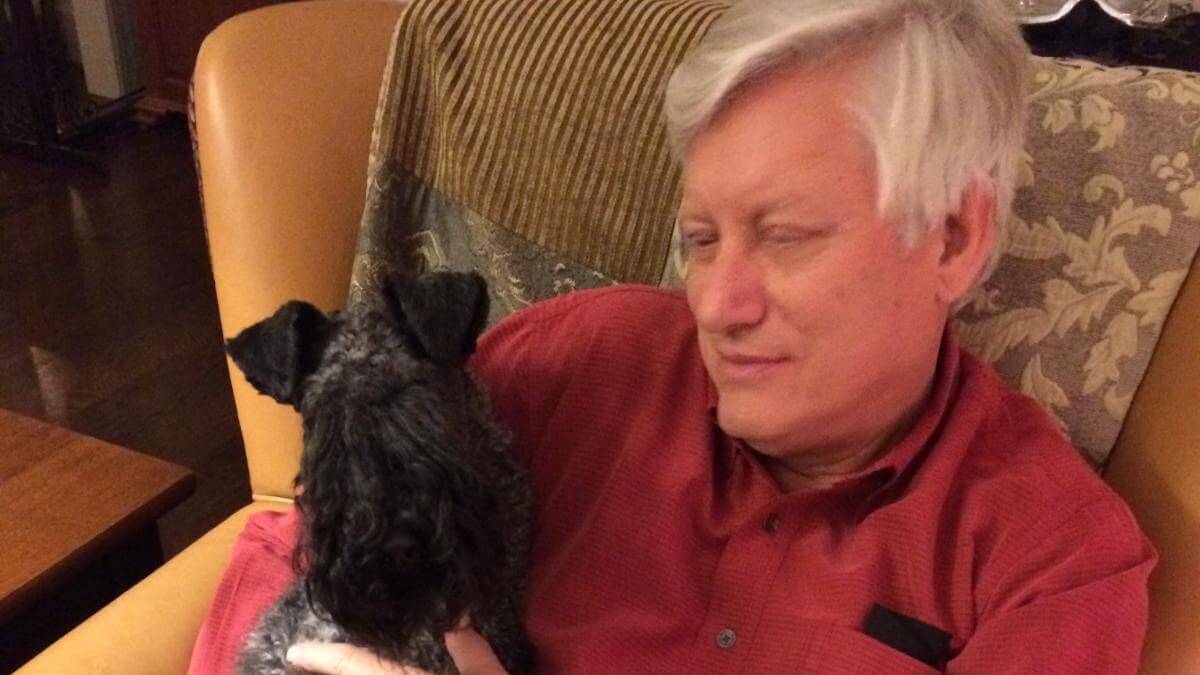
Carl Ashby of Blujac Kerry Blue Terriers shares 45+ years of dedication to breeding, showing, and preserving purebred dogs.
The Weekly Brief
The best of SHOWSIGHT editorials, weekly wins, and breeder commentary — delivered to your inbox every Sunday morning.
Carl Ashby
1. Jaimie and I began a lifelong journey with Kerry Blue Terriers fresh out of college. We moved to North Carolina where we live today. In my first professional job I was in a cubicle with a colleague whose wife was a veterinarian and very active in breeding and showing Miniature Schzernaus. Through that relationship we became interested in Conformation and met the late Margo Steinman (Kilmarley) at an Obedience Trial who introduced us to the Kerry Blue Terrier. Our foundation bitch, “Penny” (CH Kilmarley Irish Imp), was entrusted to us by Margo, and Penny produced our multiple Best in Show CH Blujac’s Afternoon Delight ROM-G. “Del” was owner-handled by Jaimie. We have over 45 years in the sport and continue to show and breed under the Blujac prefix.
We believe in the importance of giving back. Jaimie and I have been active in dog clubs from the beginning, both at the local and national level. I have chaired over 75 all-breed shows over the years and currently chair the Carolina Cluster. We both helped to establish the Carolina Terrier Association. At the national level, I currently serve as a Governor of the United States Kerry Blue Terrier Club, its Treasurer, and AKC (American Kennel Club) Delegate. I am Past Vice Chair of the Board of the American Kennel Club.
2. The Kerry Blue’s distinctive coat sets it apart from other breeds. Proper texture and color are important. In addition, proper balance and proportions, and correct movement, are essential for the breed to perform the work it was bred to do as a general-purpose farm dog.
3. In general, breeders of quality purebreds are struggling to place puppies. I do think that promotion of purebreds is a big part of the problem. In the case of Kerry Blues there are a very small number of active breeders, which makes it somewhat easier to place puppies.
We must raise the visibility of purebred dogs and find ways for AKC, working with our 5,000-plus clubs, to amplify our message that purebred dogs make the best family companion. For far too long we have feared the animal rights movement, and so, that fear has come home and it’s threatening our very dogs and sport.
4. We continue to use DNA testing in our breeding program, being careful to use the information wisely. In terms of communications, social media has become an essential part of both acquainting people with our breed and breeding. We must meet people where they are, and using various social media platforms is essential.
5. No. For too long we have allowed others to define us. We have not stood up for the reasons purebred dogs make the best companion animals and we have tried to stay on the “down-low.” That strategy hasn’t worked and now makes the hill that much harder to climb. We must stop running from who we are and start to be proud of being preservation breeders.
6. YES! The trend is the declining participation in Conformation, which is the backbone of the American Kennel Club and purebred dogs. There are over 30,000 fewer unique dogs in competition than 13 years ago. This fact contributes to the increase in the number of low-entry breeds (now 51% of the stud book), the decline of exhibitors at shows, a shrinking gene pool, and the graying of our club structure. All threaten the future of purpose-bred dogs.
There is no one fix but a combination of steps that can help to reverse the trend.
Examples include:
Most importantly, we must not be afraid to try new things… some of which will work, and others will fail, but the learnings will move us forward.
7. Positive changes include:

Meet the Breeders