Members

Kim Landman
Listen to this article
4 min
The Weekly Brief
The best of SHOWSIGHT editorials, weekly wins, and breeder commentary — delivered to your inbox every Sunday morning.
Leaving your dog in someone else’s care is an act of trust. You want to know that the people looking after your precious pup will recognize when he is having fun, when he needs a break, and when a situation is becoming too much for him. A cheerful sign and cute photos might catch your attention, but choosing a doggie daycare means looking closely at what happens beyond the front desk.
For many of us, daycare offers a way to give our dogs companionship and activity while we work, run errands, or manage a busy schedule. Still, every dog has a different personality, and every facility has its own approach. Some dogs enjoy lively play, while others need a quieter setting and a slower introduction. Finding the right match means asking questions, observing the surroundings, and being honest about your dog’s needs.
When I was choosing a daycare for our Miniature Bull Terrier puppy, Colby, I wanted a place where he could enjoy himself and where I could feel comfortable leaving him. Safety, thoughtful supervision, and clear communication were high on my list. The experience helped me identify what matters most when evaluating a facility.
Here is my checklist:
Facility allows dog owners to tour the play areas prior to leaving the dog in their care.
Facility is clean and safe.
Vaccinations required, such as Rabies, Bordetella, and DHPP/DAPP.
Dogs are temperament tested and placed in appropriate playgroups by size or activity level. (Our doggie daycare has certain days scheduled, such as Tiny Tuesdays for smaller dogs and puppies.)
Dogs are not immediately put in with the other dogs. New dogs are placed in a small, gated area to allow them and regularly attending dogs get used to each other.
Make sure there are experienced handlers with enough staff-to-dog ratio, such as one staff to four/five dogs.
Mid-day and other rest breaks allow dogs to decompress and have a water break. (We bring our dog’s lunch, and the facility may also offer safe treats or lick mats).
There should be individual water bowls, so there is no cross-contamination.
If the dog has been sick or has had surgery, the doggie daycare should not allow dogs to be present until they are not sick and/or have been cleared by a veterinarian.
As a bonus, our doggie daycare sends a report card with a description of how our dog has been during the day, with pictures, and the name of their “bestie” for the day, which always brings a huge smile.
Another bonus is that our doggie daycare offers grooming and training. You can look for that addition!
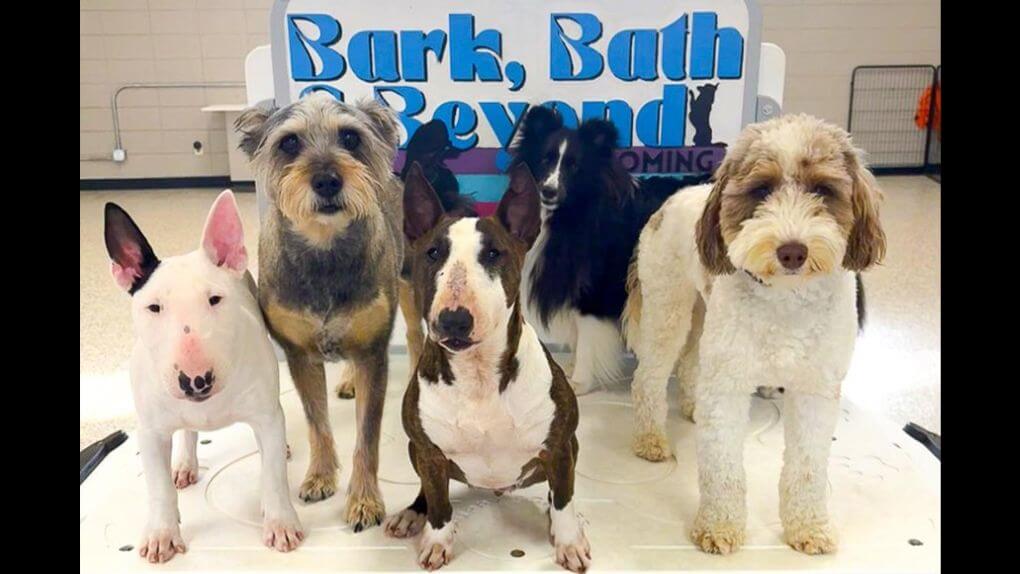
Colby gets super excited as soon as he exits our vehicle at Bark, Bath & Beyond in Elkhart, Indiana. He loves going to daycare, and seeing his enthusiasm makes drop-off a happy part of our routine. The report cards and photos give us a glimpse into his day, and learning the name of his “bestie” of the day always brings a huge smile.
Finding that fit takes a little homework. Tour the facility, ask how the staff handles introductions and disagreements, and find out what happens when a dog needs time away from the group. Pay attention to how openly your questions are answered. You should feel comfortable discussing your dog’s habits, preferences, and any concerns before entrusting him to their care.
Once your dog starts attending, keep the conversation going. Ask whether he is actively enjoying the experience, how well he settles during breaks, and whether the staff has noticed any changes. His needs may evolve as he grows, and the right daycare should be willing to discuss those changes with you.
For me, the goal is knowing that Colby is safe and that his day includes good care, enjoyable company, and time to rest. His excitement when we arrive is a wonderful bonus.

Breeding with Intention