Members
Heidi C.L. Kilgore, MA PSY

The Weekly Brief
The best of SHOWSIGHT editorials, weekly wins, and breeder commentary — delivered to your inbox every Sunday morning.
Why is the purebred with the most health clearances, the most researched pedigree, the most carefully planned breeding, and the soundest temperament always the last one to be found?
In psychology, we have a name for the answer: the fast-food mentality. We want it now, and we want it our way. Reputable breeders answer to something bigger—a picture of the breed that outlasts any single litter, any single sale, any single one of us. So, we screen. We educate. We hand out questionnaires and ask the hard questions, deliberately filtering for the people who share the vision instead of selling to the first stranger who clicks to buy. That patience is a virtue everywhere except the one place buyers now shop.
The data is blunt. Twice as many buyers use social media to find a puppy as did five years ago. Fifty-two percent bought “because it was cute.” Fifty-six percent were swayed most by the photo. Twenty-four percent spent under two hours researching a living animal they were about to live with for more than a decade. Impulse buying at its finest.
So where do they see the cute? Social media drives the market, and the formula is simple and brutal: cute photo + urgency caption + emotional story = a sale, before a single health record is checked. The engines are Instagram and TikTok. Instant. Sensational. Quick. Click. Sold. Nobody asks about a CAER eye exam or a DM result—there is only the cute little thing that needs a home. Layer “adopt don’t shop” on top of it and the buyer may even believe they are saving it. All of this while the reputable, ethical breeder is the one actually saving the breed.

We have to accept a truth about our own programs first. Roughly 98 percent of our puppies go to companion homes. And every last one of them—100 percent, regardless of pedigree or price—ends up on the couch, eating the snacks we swore we’d never feed them. That is the ultimate home for our puppies, whether it came from us or from someone who has never heard of the Breed Standard. If that is where they’re going, then that is the buyer we have to reach, on the platform where they already are.
So, what can we do—as individual breeders?
There are three platforms that feed each other to create a titanium foundation: social media, our websites, and the way we talk to buyers. Remember, the problem is not that our dogs are less. It is that we weren’t FOUND FIRST. Remember what we are really up against—the impulse.
Start here, because this is the gateway. Do you have an Instagram or a TikTok? Are you actually active on it? Are you using it to educate—to point people toward what longevity, health, and a sound temperament really look like in your breed—instead of leaving that ground entirely to the people selling cute?

The backyard breeder uses cute as the entire pitch. We use cute as the hook—to earn the view—and then spend that attention on the one thing they can’t fake: knowledge. The algorithm rewards the cute. Trust, and the sale, come from what follows it. The whole trick is doing both in the same fifteen seconds. What does that look like in practice? The ride-along to the ophthalmologist—the puppy adorable in the car seat, then thirty seconds on what a CAER eye exam actually is and why a cheek swab does not replace it. The “forty-dollar DNA panel versus the real thing,” held up beside the hip films and the CHIC certificate while a puppy chews your sleeve. The green-flag in a red-flag format. The honest, calm takedown of a “rare blue merle fluffy mini” ad. One clip, one idea, the cute carrying the lesson in on its back. Never lead with the lecture. Lead with the puppy, and let the knowledge ride along.
Length and shape matter more than production value. Shoot vertical in 9:16, the way the phone already holds, and keep most clips between fifteen and forty-five seconds. The platform rewards the video when people finish rather than those they abandon; so, a tight thirty seconds that holds attention will beat a rambling two minutes that loses it. Put your hook in the first two seconds—the puppy, the question, the bold claim—because that is where the viewer decides whether to keep scrolling. Stick to one idea per clip; if you have two ideas, you have two posts. You don’t have to look far for posts, just look at the pictures and videos you have taken in the past 15 minutes.
The settings that actually matter. Make the account public, and set it up as a Business or Creator account so that you unlock analytics and a clickable link. Write the caption the way a buyer would type it into a search bar—“Cardigan Welsh Corgi puppy,” “corgi health testing,” “what is a CAER eye exam?”—because the platform now reads your caption, your on-screen text, and even your spoken words as search terms. Three to five precise hashtags, not thirty. Add on-screen text in the first three seconds; the system reads it, and so do the people watching with the sound off.
Linking it together. TikTok gives you one link in the bio. Point it either at your website or at a free link-in-bio page, or a simple landing page on your own site—that gathers everything in one tap: your website, your waitlist application, your OFA/CHIC records, and your other accounts. Cross-post the same clip to Instagram Reels, YouTube Shorts, and Facebook, but export the clean file and upload it natively to each platform. Do not post a clip that still carries another app’s watermark; every algorithm quietly buries content that looks borrowed from somewhere else.
Building outward. Treat the fifteen-second clip as the front door, not the whole house. The TikTok earns the view. The Reel repeats it to a different crowd. The Facebook post reaches the buyers who never left Facebook. The website holds the long version—the full testing, the application, the waitlist. A hook on one platform, the depth on another, every road leading back to the one page you actually control. Take a single good clip and spin it three ways: the cute version, the educational version, the behind-the-scenes version. You are not making more work; you are making one idea travel.

Invite the conversation. The algorithm rewards replies, and so do buyers. Answer every real question in the comments, and when a good one lands—“what’s a CAER exam?”, “why does DM testing matter?”, “why does yours cost more?”—answer it with a brand-new video. A question is a free script and a second post. Pin the best comment. End each clip with a question of your own. The point is not to broadcast; it is to start the exact exchange the backyard breeder never wants to have.
If social media is where the impulse lives, the website is where the decision gets made—and it is where we are losing quietly. When a buyer is finally ready to do the homework, the homework starts on Google. The hard saying in the marketing world is, “if you aren’t on Google, you don’t exist.” By that measure, a great many of the best purebred breeders in the country do not exist.
Look honestly at our own corner of the fancy. The serious hobby breeder runs a page that hasn’t been touched since the last website builder went out of business, or a single line in a club listing, or nothing at all. There are reasons, and none of them are laziness. We breed rarely. We distrust “marketing” because it is the native tongue of the mills. We are time-poor. We lean on word of mouth and waitlists that worked beautifully in 1995 and simply do not surface in a search today. The result is that the most transparent, most accountable breeder is invisible to the exact buyer who would have chosen them.
The fix is not glossy. It is a real site—fast, mobile, and findable—that puts forward the things the backyard breeder cannot: the CHIC number in plain sight, the OFA records linked so that a stranger can verify them, the testing laid out in language a first-time buyer understands. Make the thing that should win the comparison actually possible to find.
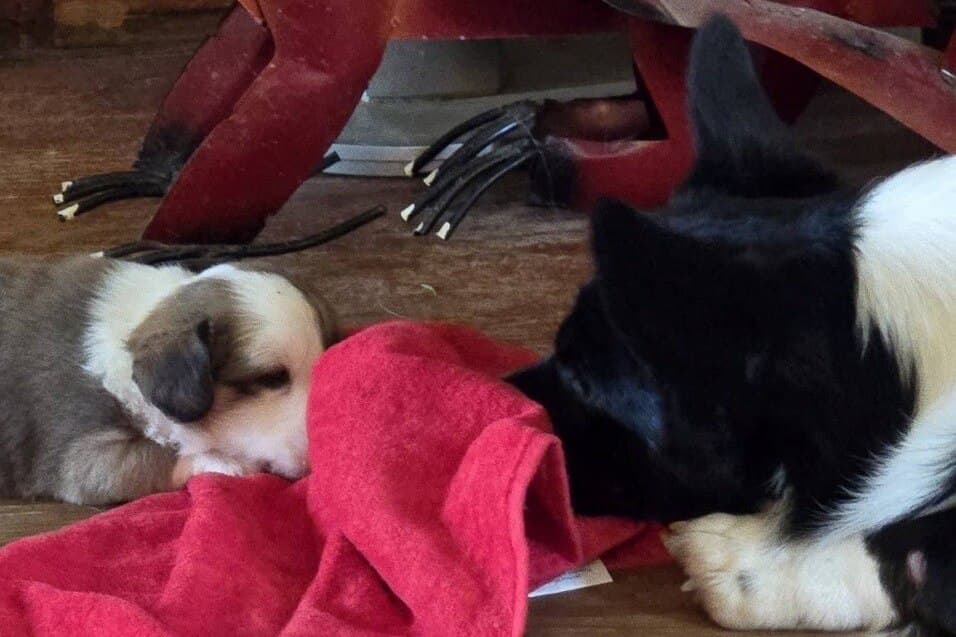
There is a second move, and it is the one almost no hobby breeder makes. A brochure site lists your dogs and waits. A community site shows your dogs living their lives—and the lives of every puppy you have ever placed. The hikes, the barn hunts, the therapy visits, the kids asleep on a Cardigan, and yes, the dog on the couch with a bag of potato chips. Clickable, alive, captures all the cute—and quietly proves the one thing a stock photo can’t: that a dog from you turns into a life people are happy to show off.
A working set of pages, and what each one is for:
Home – the hook. One strong photo, one line about what your program is for, and one obvious button (“Join the Waitlist” or “Meet Our Dogs”). A visitor should know in five seconds that they’ve found a real breeder, not a storefront.
Our Dogs – your breeding dogs, each with a CHIC number and a live link to their OFA record. This is where “transparent” stops being a word and becomes something a stranger can click and verify. Or each dog has its own page with their health information, including x-rays and DNA results.
Puppies – Available & Upcoming – current and planned litters, what placement actually looks like, and the application. Honesty about the waitlist belongs here; it sets you apart from “ready now.”
The “insert dog breed” Life – the community page. Owner photos and videos, a “where are they now” gallery, the couch-and-chips wall, a feed pulled from your hashtag. This is the page that sells without selling.
Health & Education – what CHIC means, the questions every buyer should ask, and why breed-specific testing beats a “triple clear” DNA panel. The page that makes you the trusted voice.
About & Mentorship – who you are, your ethics, and the parent club as the real on-ramp. The page that says a puppy from you comes with a person attached for life.
Contact & Apply – one form, easy to find, fast to answer.
Make it fun, not just informative. Let owners submit photos straight to the gallery. Add a thirty-second “is a “insert purebred breed” right for you?” quiz. Drop a map showing where your puppies live now. Run an owner spotlight every month. Interaction is what Google reads as “alive,” and what a buyer reads as “these people are still here.”
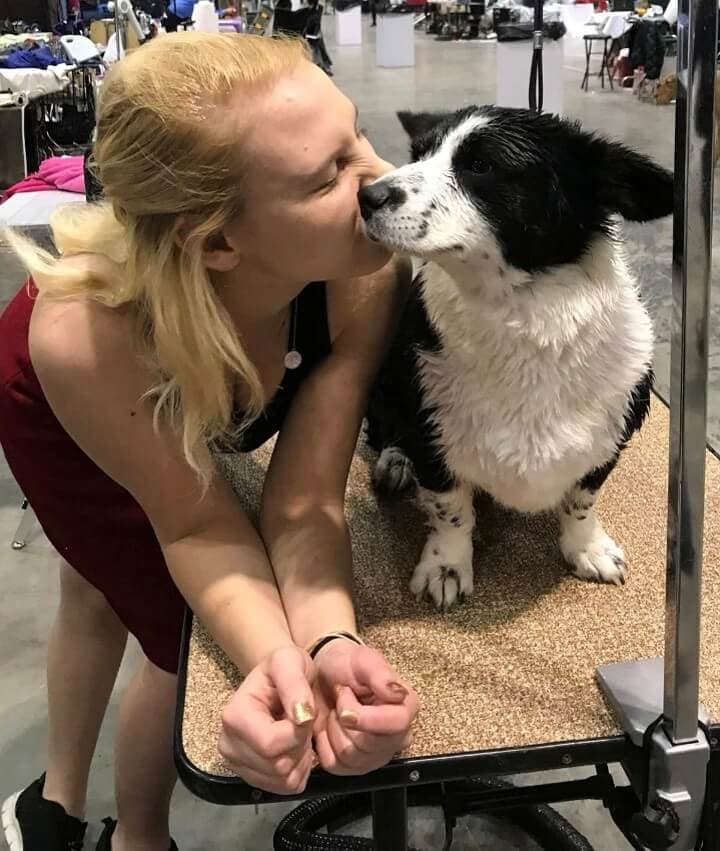
Embrace what works from the platforms beating us. Some sites package trust: health-testing badges, a verified screening process, owner reviews, and a clean phone-friendly path from photo to profile to application to deposit. AKC Marketplace packages authority: the AKC name, litter listings, breed information, and a direct line to the breeder. Strip away the branding and both are doing the same thing—turning a click into a structured next step, with no dead ends. Borrow that funnel exactly. The photo earns the click. The profile builds the trust. One obvious button converts it. Never make a ready buyer hunt for how to reach you; a hunt is where the impulse dies and the backyard breeder’s “DM me, she’s ready today” wins.
Turning a click into a sale is mostly discipline: one clear call to action per page, the application visible without scrolling, and a fast, warm reply when it comes in. The backyard breeder converts on speed. We convert on trust—but trust still has to be one tap away.

Visibility cuts both ways. The same openness that earns a buyer’s trust can hand an animal-rights activist a roadmap, and some of them are vindictive. Protect yourself and your dogs by keeping the following off the public site:
Your home address or exact location—use a contact form, and list a region or city only.
Interior shots that reveal your home layout, kennel setup, or how many dogs are on the property.
Your children’s names, faces, schools, or anything that identifies where your family is.
Your daily routine or travel schedule—anything that signals when the house is empty.
Graphic whelping or veterinary content that can be screenshotted and recaptioned as cruelty.
Real-time location of your dogs, litter counts framed without context, or anything that feeds a “mill” or “hoarder” narrative.
Unwatermarked photos—watermark them so they can’t be lifted and reused in a scam or a smear.
None of this means hiding. It means curating. Show the dogs, the lives, and the records—not your front door.
Before the questions, a warning about ourselves. We lose buyers to the backyard breeder we never even spoke to—and sometimes we lose them to our own attitude. Prejudging an inquiry. Answering a first email like an interrogation. Making someone feel small for saying “fur baby” or for asking “how much.” Going silent for three weeks behind a waitlist. Every one of those is a door we close, and the backyard breeder’s door is always open, always warm, always fast. We push good homes into the wrong hands by being unreachable, or impatient, or unkind.
“Fur baby” makes a lot of us wince. Let it. The person who says it is telling you the exact thing we want to hear: they intend to love this dog like family—to put it on the couch and feed it the chips. That is the 98 percent home, the ultimate home, the one we said we were breeding for. Meet them there. Picture their dog on their couch, and talk to them like the future owner they are, not like an applicant who hasn’t earned us yet. Keep the judgment in check: screen hard, but engage warm. The Standard is for the dogs. The patience and the kindness are for the people—and the people are how the dogs get good homes.
Then there is the conversation itself, and this is where a breeder with integrity holds every advantage—if they use it. Arm the buyer with the questions only a real program can answer. What is the dog’s CHIC number? Who did the hips, and what was the rating? Who did the eyes, and when? What were the DM and PRA results? Show me both parents on the public OFA database. What in this pairing was bred to the Standard? A handful of questions sort every breeder on earth in about two minutes, and “triple clear” collapses on the spot, because it answers none of them.
Then reframe the next step. Make it screening, not checkout. The backyard breeder sells urgency—“only one left.” We sell the opposite, and we say so proudly: a waitlist, an application, an interview, “the perfect puppy for the perfect home” rather than “take what we have.” That framing repels the impulse buyer and keeps the right one. We educate to slow the buyer down, not to speed them up. The moment we use cute to close fast, we have picked up the other side’s tool and put down our own.

And some of those buyers are the future of the breed—so say it out loud. A puppy from you comes with a mentor for that dog’s whole life. Show the work: the cost, the 2 a.m. whelping, the litter you chose not to breed and why. Point them to the parent club as the real on-ramp. Backyard-breeder culture has no apprenticeship. We do. Make that door visible, because that is how integrity reproduces itself instead of retiring with us. With it we grow our fancy and invite in new breeders for our dogs with the right ethics and the right tools to keep our breeds moving forward.
Last, teach buyers to evaluate every breeder—including the ones who are not you. It sounds like giving away the advantage. It is the opposite. The entire backyard model depends on buyers never learning the questions. Every time you teach the questions, you make the marketplace harder for the bad actor and you cement yourself as the trusted voice in it. That trust is the asset that actually converts, and unlike a cute photo, it compounds long after the post stops circulating.

Our dogs were never less. They were only found later. The buzzwords, the urgency, the curated cute—none of it was ever really about the dogs. It was about being FOUND FIRST.
So, we change the one thing we actually control. We show up where the buyers are looking. We build the site. We hand over the questions and we mean it. Our breeds have always been worth the work. Now the work includes being found.

Everything below supports the claims in this piece and gives you the tools to act on it: the sources behind the numbers, the free resources for getting found on Google, and the easiest platforms for building the site this article describes.
A note on the buyer-behavior figures
The headline statistics in the opening—twice as many buyers using social media as five years ago, 52 percent buying “because it was cute,” 56 percent swayed most by the photo, and 24 percent spending under two hours researching—come from the UK Kennel Club’s “Be Puppywise” research (2023). They describe the British market, but the dynamic they capture—impulse, image, and speed beating scrutiny—is exactly what US breeders see on the same platforms. Cited here as illustrative, not as US data.

Peer-reviewed literature
Borgi, M., Cogliati-Dezza, I., Brelsford, V., Meints, K., & Cirulli, F. (2014). Baby schema in human and animal faces induces cuteness perception and gaze allocation in children. Frontiers in Psychology, 5, 411. frontiersin.org/articles/10.3389/fpsyg.2014.00411/full
Holland, K. E. (2019). Acquiring a Pet Dog: A Review of Factors Affecting the Decision-Making of Prospective Dog Owners. Animals, 9(4), 124. mdpi.com/2076-2615/9/4/124
Packer, R. M. A., Murphy, D., & Farnworth, M. J. (2017). Purchasing popular purebreds: Investigating the influence of breed-type on the pre-purchase motivations and behaviour of dog owners. Animal Welfare, 26(2), 191–201. researchgate.net (full record)
Packer, R. M. A., et al. (2021). Pandemic Puppies: Characterising Motivations and Behaviours of UK Owners Who Purchased Puppies During the 2020 COVID-19 Pandemic. Animals, 11(9), 2500. mdpi.com/2076-2615/11/9/2500
Brand, C. L., et al. (2023). Is UK Puppy Purchasing Suffering a Long COVID Effect? Ongoing Negative Impacts of the COVID-19 Pandemic upon Puppy Purchase Motivations and Behaviours in 2021. Animals, 13(13). pubmed.ncbi.nlm.nih.gov/37443983
Lorenz, K. (1943). Die angeborenen Formen möglicher Erfahrung. Zeitschrift für Tierpsychologie, 5, 235–409. — the original description of the Kindchenschema (“baby schema”), the infantile features that trigger the human caretaking and “cute” response.
Breed, health, and industry sources
Cardigan Welsh Corgi Club of America — “Finding a Cardi,” including Jinnie Strickland’s “Buyer Beware: Where (and How) to Choose a Puppy Wisely” and the breed’s core CHIC testing (hips, CAER eyes, DM, PRA-rcd3). cardigancorgis.com/cwcca/breeders
Cardigan Welsh Corgi Club of America — Cardigan Health. cardigancorgis.com/cwcca/breed/health
Orthopedic Foundation for Animals — CHIC Program (Canine Health Information Center). ofa.org/chic-programs
American Kennel Club — Official Standard of the Cardigan Welsh Corgi (PDF). images.akc.org — Cardigan_Welsh_Corgi.pdf
The Kennel Club (UK) — “Be Puppywise” research, 2023 (source of the buyer-behavior statistics). royalkennelclub.com — 2023 research
The Kennel Club (UK) — “Be Puppywise” research, 2021 (virtual / “click-and-collect” buying). royalkennelclub.com — 2021 research
Good Dog — Standards & Screening (how the platform vets breeders and packages trust). gooddog.com/standards-and-screening
AKC Marketplace — breeder and litter listings. marketplace.akc.org
Getting found on Google: free keyword & search resources
Use these to find the actual words buyers type—then put those words in your captions, page titles, and headings.
Google Keyword Planner — shows real search volume and related terms; the baseline for “what do people search?” ads.google.com/keywordplanner
Google Trends — compares search interest over time and by region (e.g., “Cardigan Welsh Corgi” vs. “corgi puppy”). trends.google.com
Google Search Console — free; shows which searches already bring people to your site and where you rank. search.google.com/search-console
Google Business Profile — free; puts you on Google Maps and local results when someone searches breeders in your area. business.google.com
AnswerThePublic — turns a keyword into the real questions people ask around it — a ready-made content list. answerthepublic.com
Ubersuggest — keyword ideas, difficulty, and competitor terms; generous free tier. neilpatel.com/ubersuggest
All six let you build a real, mobile-friendly site by dragging blocks—no code. Listed easiest-first; any of them can do everything this article describes.
SHOWSIGHT - designed with purebred dog breeders in mind; features include bio, breed info, photos, and video; easiest to use and update. showsightmagazine.com/directories/breeders/
Squarespace — easy for most people; structured, polished templates that are hard to make ugly. Strong for photo-heavy, community-style sites. squarespace.com
Wix — the most flexible drag-and-drop editor (2,000+ templates); more freedom, slightly more to learn. wix.com
GoDaddy Website Builder — the fastest to a published page; simplest editor, fewer design options. godaddy.com — website builder
Weebly — simple, inexpensive, beginner-friendly with built-in basics. weebly.com
Google Sites — free and dead-simple; fine for a clean, findable starter site if budget is zero. sites.google.com

Breeding with Intention