01/Overview
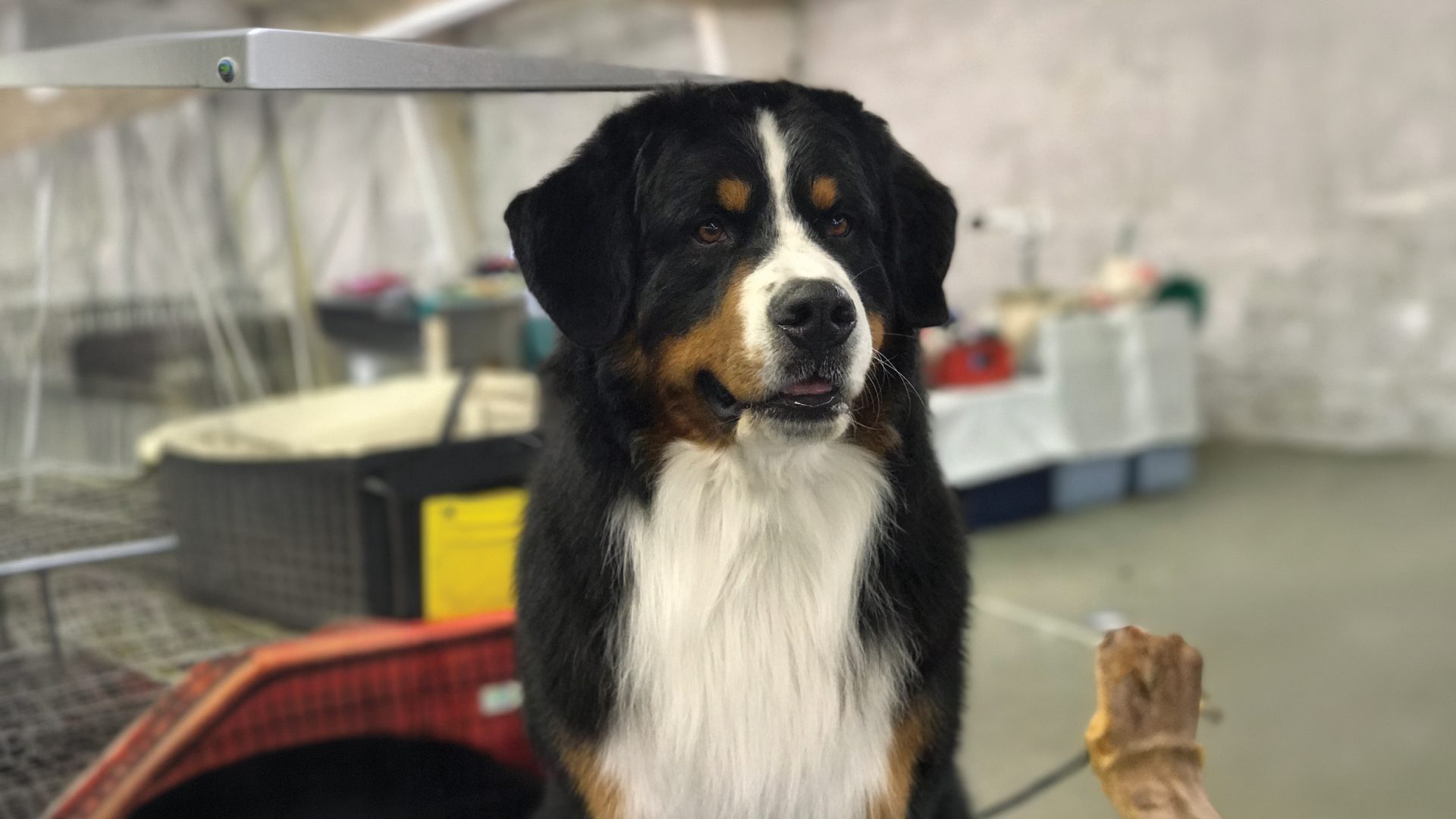
The Bernese Mountain Dog is a striking. tri-colored, large dog. He is sturdy and balanced. He is intelligent, strong, and agile enough to do the draft and droving work for which he was used in the mountainous regions of his origin. Dogs appear masculine, while bitches are distinctly feminine.
Highlights
02/History
The historical essence of the Bernese Mountain Dog is that it has been a farm dog of the midland regions of Switzerland, mostly around the city of Berne. In that capacity, it was primarily used as a companion and watchdog to the farmer and his family. It alerted his owner to unfamiliar visitors. It may have been used as a dog to pull a cart. A large dog, well-muscled and with sturdy bone, was needed for this task. It may have been used to accompany cows to pasture, but not for long distances as dogs which work on a range. As most Swiss farmers had a small number of cows, the dog was not required to manage large herds. The BMD was not a herding dog for sheep and goats, as these animals were not kept usually on Bernese farms except in very small numbers. The temperament of the Bernese Mountain Dog was never to be sharp or shy.
The history of the breed, therefore, is one of a watchful farm dog. Those fanciers who wish to have Conformation dogs or Obedience, Draft, Agility, Tracking, or Herding dogs would be wise to heed the heritage of the breed, and mind that this is not a breed of any one specific sport but is a Swiss farmer's companion.
03/Appearance
Measured at the withers, dogs are 25 to 2.5 inches; bitches are 23 to 26 inches. There are no weight specifications; however, because this is a working dog he should be fit and with well-developed muscles.
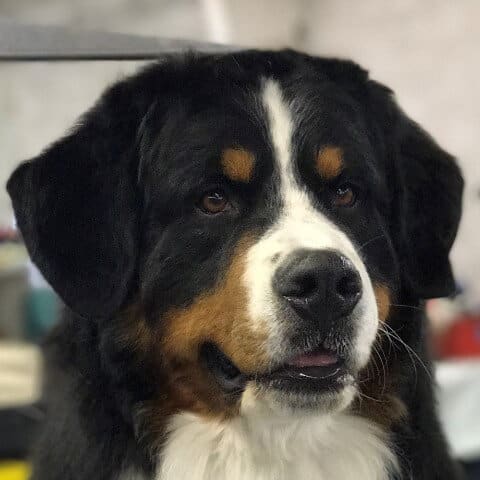
Skull: The skull is flat on top and broad. There is a slight furrow and a well-defined but not exaggerated stop
Expression: The expression is intelligent, animated, and gentle.
Eyes: Eyes are dark brown and slightly oval.
Muzzle: The muzzle is strong and straight. Lips are clean. The Bernese is a dry-mouthed breed.
Nose: The nose is always black.
Bite: The teeth meet in a scissors bite.
Bernese Mountain Dogs are slightly longer in body than they are tall. Sturdy bone is of great importance.
The body is full.
The neck is strong, muscular, and of medium length. The topline is level from the withers to the croup. The chest is deep and capacious with well-sprung ribs. The brisket reaches at least to the elbows. The back is broad and firm, and the loin is strong. The croup is broad and smoothly rounded to the tail insertion.
The shoulders are moderately laid back, flat-lying, well-muscled, and never loose. The legs are straight and strong, and the elbows are well under the shoulder when the dog is standing. The pasterns slope very slightly, but are never weak. Dewclaws may be removed. The feet are round and compact with well-arched toes.
The thighs are broad, strong, and muscular. The stifles are moderately bent and taper smoothly into the hocks. The hocks are well-let-down and straight as viewed from the rear. Dewclaws should be removed. Feet are compact and turn neither in nor out.
Texture: The coat is thick, moderately long, and slightly wavy or straight. It has a bright natural sheen.
Standard Colors
04/Consider
The Bernese Mountain Dog is a large, but not giant, dog. Potential owners need to realize that these dogs have abundant coat and shed heavily. This breed also needs to live where you are and should be inside with the family. They do not do well as kennel dogs and should not be left outside alone. They are farm dogs by heritage and, as such, need exercise to stay mentally and physically fit. They love cold weather but can live happily in warmer climates as long as they have an air-conditioned environment. They love cool, hard surface floors and fans. They need regular brushing and the coat is relatively easy to maintain.
Interaction With Family
The level of affection a breed typically shows towards family members and familiar individuals.
Good With Other Dogs
The innate friendliness of a dog towards other dogs can depend on its breed.
Good With Young Children
The degree to which a breed will typically be patient with young children.
Amount Of Shedding
How much hair a breed typically leaves behind on clothes, furniture and floors.
Frequency Of Grooming
How often a breed needs brushing, bathing or a professional trim to stay in condition.
Amount Of Drooling
How prone a breed is to drool — worth knowing before you keep a towel by the door.
Openness To Strangers
How openly a breed tends to greet new people, visitors and strangers.
Protective Nature
How likely a breed is to alert you to — and stand between you and — anything unfamiliar.
Playfulness Level
How enthusiastic a breed stays about games and play well past puppyhood.
Trainability Level
How readily a breed takes direction and works with you rather than around you.
Barking Level
How much a breed uses its voice, and how readily.
Energy Level
How much get-up-and-go a breed brings to an average day.
Health
Like all breeds, the Bernese have health issues. Most common issues are cancer, hip and elbow dysplasia, bloat, autoimmune diseases, hypothyroidism, and degenerative myelopathy. The Bernese Mountain Dog Club of America and the Berner-Garde Foundation aggressively support ongoing health research, and most breeders are involved in these endeavors. Test results and certifications are available on the Berner-Garde database and should be utilized to get a picture of the health of the pedigree. It is also helpful to find a veterinarian familiar with the breed. Lifespan: Unfortunately, Bernese have a relatively short lifespan, averaging eight years. However, many live to 10 years and beyond. Potential owners need to be prepared for issues which can be financially and emotionally draining.
Temperament & Personality: The temperament of the Bernese Mountain Dog is self-confident, alert, and good-natured. He should never be sharp or shy. This is a very friendly breed and is generally good with children and other animals, in keeping with his history as a farm dog. Bernese also excel in Therapy work with proper training.
Exercise Expectations
Daily walks are essential for the Bernese Mountain Dog. These walks not only provide physical exercise but also offer opportunities for mental stimulation and social interaction. The length and intensity of walks can vary, but it’s important to make sure that they are consistent and tailored to the dog's age and health. Young dogs and puppies, in particular, should not be over-exercised, as their bones and joints are still developing. In addition to walks, Berners also enjoy other forms of exercise and play. Activities like fetching, gentle tug-of-war, and obstacle courses can provide both physical activity and mental engagement. These activities also strengthen the bond between the dog and its human companion. Despite their size, Bernese Mountain Dogs are not generally high-energy dogs. Their exercise needs can be described as moderate. However, they do have a playful side and enjoy engaging in interactive play sessions. It’s important to provide a variety of activities to keep them engaged and happy. When considering exercise for a Bernese Mountain Dog, it's also important to take into account their adaptability to weather conditions. As a breed with a thick coat, they can enjoy outdoor activities in cooler weather, but care should be taken during warmer temperatures to prevent overheating. Providing ample water and avoiding strenuous exercise in hot weather are essential precautions.
Living with a Bernese Mountain Dog can be a highly rewarding experience, but it comes with certain considerations to maintain the happiness and health of both the dog and its human companions.
Berners, despite their large size, can adapt well to various living environments, including apartments, provided they receive enough exercise. However, they are best suited to homes where they have ample space to move around, such as a house with a yard. Their size and energy levels mean they need room to play and exercise daily.
When it comes to weather adaptability, the breed's thick coat makes them well-suited for cooler climates. They generally enjoy spending time outdoors in cold weather, often finding snow particularly invigorating. However, due to their heavy coat, they can be prone to overheating in hot weather. It's important to provide them with a cool, shaded place to rest during hot days and to limit their exercise to cooler periods, such as early morning or evening.
Their social nature means Bernese Mountain Dogs thrive on companionship and do not do well when left alone for extended periods. They are happiest when they can be part of family activities. Prolonged solitude can lead to anxiety and behavioral issues. Therefore, they are best suited to households where someone is home for most of the day or can take the dog with them on outings.
05/Puppies
Finding a Puppy: Bernese Mountain Dogs have become a very popular dog to own and the demand certainly exceeds supply, especially from reputable breeders. The BMDCA compiles a list of breeders in good standing with the club, who are currently breeding and may have puppies available, in their Online Breeder Referral which can be found on their website: BMDCA.org. As has happened in many breeds, puppy mills, pet stores, and online advertisers are trying to exploit the breed. Likewise, cross-breeding has become far too common, with buyers unknowingly spending exorbitant prices for nothing more than a mixed-breed with unknown and unpredictable temperament, health, and physical characteristics.
Potential owners need to do their research, and identify and work with responsible breeders. At a minimum, a responsible breeder will assist to help identify if the BMD is the right breed for the inquiring owner, provide lifelong support for both owners and their dog, provide verification of health testing of dogs in the pedigree, and provide a contract covering purchase requirements and the responsibilities of both breeder and owner.
As with all puppies, Bernese need a secure environment, puppy kindergarten training classes, a quality diet with appropriate calories to support their rapid growth, regular visits with an experienced veterinarian, which includes core vaccinations, socialization with different people and animals, and plenty of fresh air and play exercise. It is important to not ever force exercise, as it is easy for a large puppy to injure himself. Until the puppy is a year of age, it is wise to not allow access to stairs and to limit exercise to natural terrain, avoiding cement and asphalt. Please refer to the BMDCA Info Series available on BMDCA.org for more ideas and information.
06/Activities
As mentioned earlier, Bernese are strong, agile, and versatile athletes. In keeping with their heritage, the Bernese Mountain Dog Club of America has developed an extensive Draft Dog program. Dogs are eligible to participate in the tests after the age of two years. Tests are held throughout the year, hosted by regional BMD clubs and the BMDCA. Titles are awarded for Novice Draft Dog, Open Draft Dog, Brace Novice Draft Dog, and Open Draft Dog. Awards are also earned for multiple titles, culminating with Grand Master Draft Dog. In addition, many Berners excel in all other AKC performance sports. It is of utmost importance that all Bernese be kept in well-muscled physical condition, but especially those competing in draft tests and other dog sports.
Gallery
07/Standards
The Bernese Mountain Dog is recognized by the world's leading registries and kennel organizations, which categorize the breed into a specific Group based on its unique characteristics. This breed is recognized worldwide under the following Group designations:
The ideal Bernese Mountain Dog is described by a Breed Standard that is approved by each of the world’s leading registries and kennel organizations. The Breed Standards for this breed may be found in the following links:
08/Clubs
At present, there are 28 regional Bernese Mountain Dog clubs in the US. The areas served and contact information are listed on the Regional Clubs page of the national club website.
09/Rescue
There are rescue groups for the breed throughout the country. Most regional clubs have associated rescue groups, and the national Rescue Committee provides rescue information and can be contacted through the national club website.
10/Facts
Origins in Switzerland
The Bernese Mountain Dog originated in the Swiss mountains, where they were primarily used as farm dogs. Their main tasks included herding cattle, pulling carts, and serving as loyal companions to the farmers.
Part of the Sennenhund Group
This breed is one of the four types of Swiss Mountain Dogs, also known as Sennenhunds. The other three are the Appenzeller, Entlebucher, and Greater Swiss Mountain Dog.
A Tri-Colored Coat
One of the most distinctive features of the breed is its beautiful, tri-colored coat. The primary color is black, complemented by rust and white markings.
Long Silky Hair
Unlike some of the other Swiss Mountain Dogs, the Bernese has a long, silky coat. This requires regular grooming to maintain its beauty and to prevent matting.
Lifespan
Bernese Mountain Dogs have a relatively short lifespan compared to many other breeds, typically ranging between 7 and 10 years. This shorter life expectancy is a consideration for potential owners, emphasizing the importance of cherishing every moment with these gentle giants.
Versatile Working Dogs
Originally bred for draft work, Berners are strong and are capable of pulling many times their own weight, which made them invaluable on Swiss farms.
Gentle Temperament
Known for their gentle nature, these dogs are excellent family pets. They are particularly good with children, showing patience and gentleness.
Late Bloomers
Berners mature slower than many other breeds. They often retain their playful, puppy-like behavior well into their adult years.
11/FAQ
Yes, Bernese Mountain Dogs shed. They have a thick, long double coat that sheds throughout the year, with heavier shedding typically occurring during the spring and fall. Regular grooming, including brushing several times a week, is necessary to manage their shedding and to keep their coat healthy.
Official Standard of the Bernese Mountain Dog
General Appearance: The Bernese Mountain Dog is a striking. tri-colored, large dog. He is sturdy and balanced. He is intelligent, strong and agile enough to do the draft and droving work for which he was used in the mountainous regions of his origin. Dogs appear masculine, while bitches are distinctly feminine.
Size, Proportion, Substance: Measured at the withers, dogs are 25 to 27½ inches; bitches are 23 to 26 inches. Though appearing square, Bernese Mountain Dogs are slightly longer in body than they are tall. Sturdy bone is of great importance. The body is full.
Head - Expression is intelligent, animated and gentle. The eyes are dark brown and slightly oval in shape with close-fitting eyelids. Inverted or everted eyelids are serious faults. Blue eye color is a disqualification. The ears are medium sized, set high, triangular in shape, gently rounded at the tip, and hang close to the head when in repose. When the Bernese Mountain Dog is alert, the ears are brought forward and raised at the base; the top of the ear is level with the top of the skull. The skull is flat on top and broad, with a slight furrow and a well-defined, but not exaggerated stop. The muzzle is strong and straight. The nose is always black. The lips are clean and, as the Bernese Mountain Dog is a dry-mouthed breed, the flews are only slightly developed. The teeth meet in a scissors bite. An overshot or undershot bite is a serious fault. Dentition is complete.
Neck, Topline, Body: The neck is strong, muscular and of medium length. The topline is level from the withers to the croup. The chest is deep and capacious with well-sprung, but not barrelshaped, ribs and brisket reaching at least to the elbows. The back is broad and firm. The loin is strong. The croup is broad and smoothly rounded to the tail insertion. The tail is bushy. It should be carried low when in repose. An upward swirl is permissible when the dog is alert, but the tail may never curl or be carried over the back. The bones in the tail should feel straight and should reach to the hock joint or below. A kink in the tail is a fault.
Forequarters: The shoulders are moderately laid back, flat-lying, well-muscled and never loose. The legs are straight and strong and the elbows are well under the shoulder when the dog is standing. The pasterns slope very slightly, but are never weak. Dewclaws may be removed. The feet are round and compact with well-arched toes.
Hindquarters: The thighs are broad, strong and muscular. The stifles are moderately bent and taper smoothly into the hocks. The hocks are well let down and straight as viewed from the rear. Dewclaws should be removed. Feet are compact and turn neither in nor out.
Coat: The coat is thick, moderately long and slightly wavy or straight. It has a bright natural sheen. Extremely curly or extremely dull-looking coats are undesirable. The Bernese Mountain Dog is shown in natural coat and undue trimming is to be discouraged.
Color and Markings: The Bernese Mountain Dog is tri-colored. The ground color is jet black. The markings are rich rust and clear white. Symmetry of markings is desired. Rust appears over each eye, on the cheeks reaching to at least the corner of the mouth, on each side of the chest, on all four legs, and under the tail. There is a white blaze and muzzle band. A white marking on the chest typically forms an inverted cross. The tip of the tail is white. White on the feet is desired but must not extend higher than the pasterns. Markings other than described are to be faulted in direct relationship to the extent of the deviation. White legs or a white collar are serious faults. Any ground color other than black is a disqualification.
Gait: The natural working gait of the Bernese Mountain Dog is a slow trot. However, in keeping with his use in draft and droving work, he is capable of speed and agility. There is good reach in front. Powerful drive from the rear is transmitted through a level back. There is no wasted action. Front and rear legs on each side follow through in the same plane. At increased speed, legs tend to converge toward the center line.
Temperament: The temperament is self-confident, alert and good-natured, never sharp or shy. The Bernese Mountain Dog should stand steady, though may remain aloof to the attentions of strangers. Disqualifications: Blue eye color. Any ground color other than black.
Approved February 10, 1990
Effective March 28, 1990
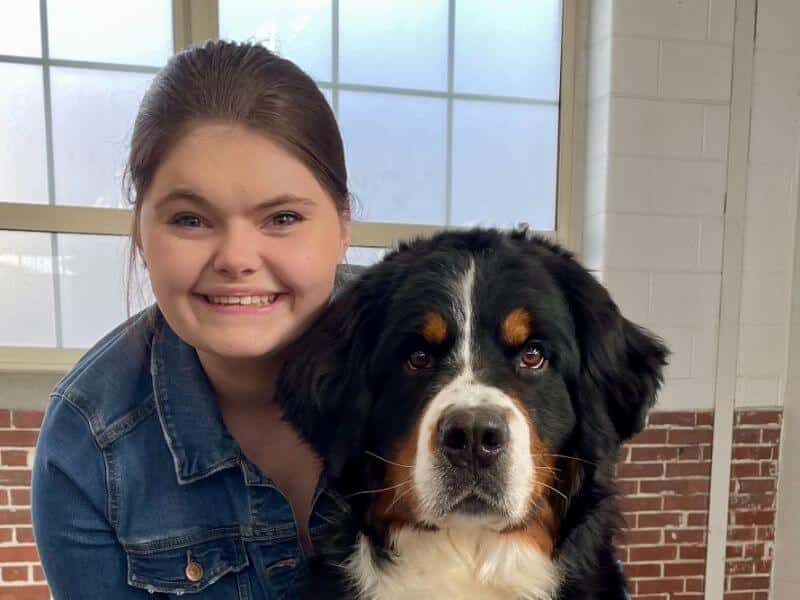

Meet the Owner Handlers
Interview with a owner handler Hunter Calvelage. Discover her journey in the world of purebred dogs, and her passion for this unique breed.
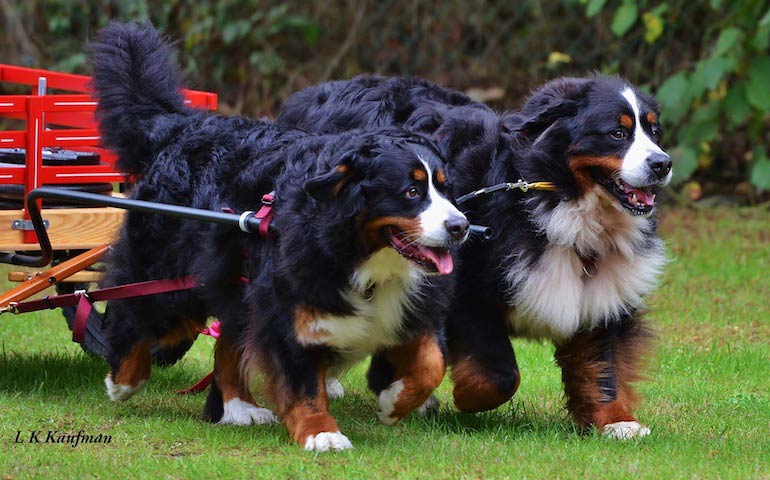
Dog Sports
Explore the draft heritage of the Bernese Mountain Dog. Learn how to start: Draft tests, drafting equipment such as carts, harnesses and more.
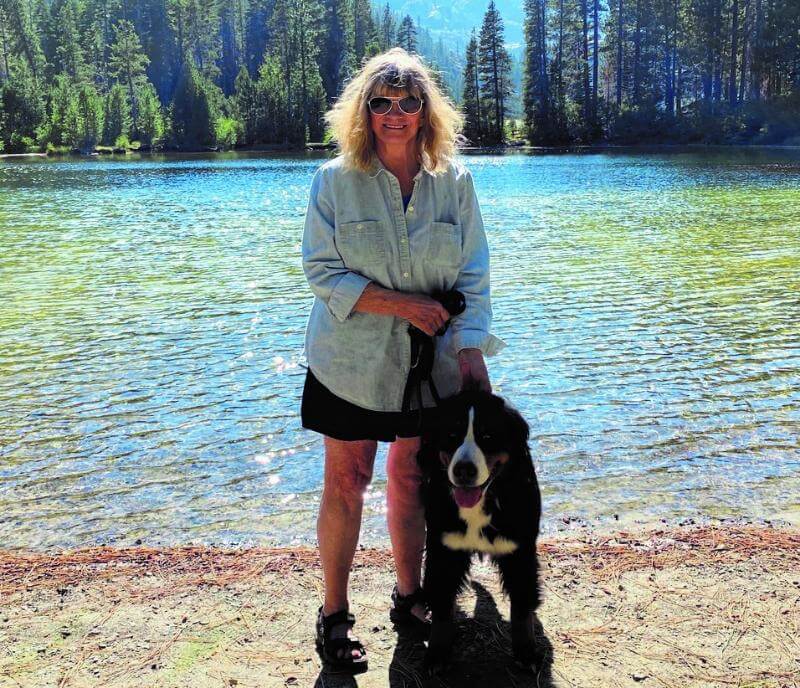
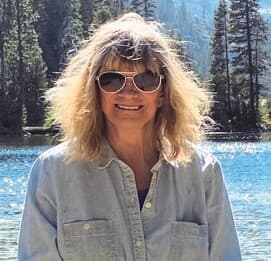
Meet the Breeders
Bobbie Hefner is the breeder behind Swiss Star Farms’ Bernese Mountain Dogs. Read about the kennel’s beginnings, champions, puppies and more!
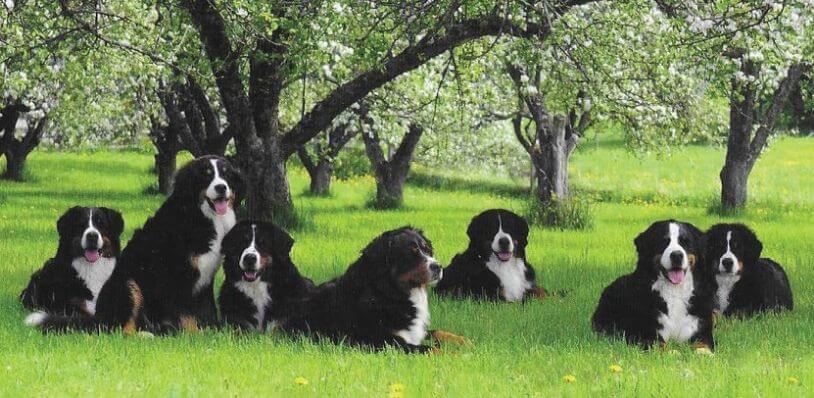
All About Judging
How to Judge the Bernese Mountain Dog Breed – Submitted by the Bernese Mountain Dog Club of America. Written by the late Fran Brown.
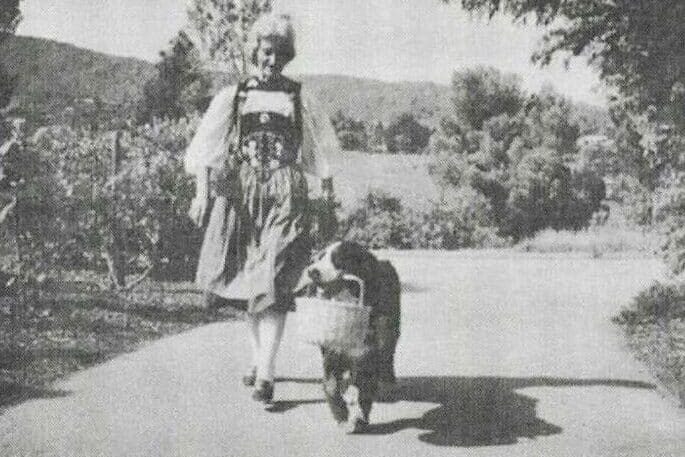
The Bernese Mountain Dog is one of the four breeds of Sennenhunde working dogs, having their origins in farming areas of Switzerland.
The tail is bushy and without kinks. It is carried low in repose, and in motion is carried straight off the back or in a slight upward swirl.
A Note About Color: The Bernese is tri-colored with ideally symmetrical white markings on the muzzle, white on all four feet and the tip of the tail. Rust separates the black from the white and appears over each eye. The ground color is jet black. Markings are rich rust and clear white.
Coat Type
Double
The structure of the coat this breed carries.
Coat Length
Medium
How long the breed's coat grows when kept in condition.
Adaptability Level
How easily a breed copes with changes in home, routine, noise and weather.
Mental Stimulation Needs
How much a breed needs a job, a puzzle or training to stay content.
The best advice an owner can get is from the breeder, and following their lead as to what type of food to feed as well as amounts and how often to feed. Most Bernese do receive some supplements, especially supplementation for joint health. Owners should discuss any issues with food and nutrition with their breeder and veterinarian.
The Bernese is a very versatile dog and can excel in any number of dog sports, including Conformation, Obedience, Rally, Agility, Tracking, Herding, Drafting, Scent Work, and more. Because a puppy will quickly become a large adult, puppy training and socialization classes are strongly encouraged.
Grooming Expectations
The coat of a Bernese Mountain Dog is dense and can trap dirt and debris, so regular brushing is essential. Brushing several times a week helps to remove loose hair, prevent matting, and distribute natural skin oils throughout the coat, keeping it healthy and shiny. During shedding seasons, typically in spring and fall, more frequent brushing may be necessary to manage the increased shedding. Bathing the Bernese Mountain Dog is also part of the grooming routine but doesn't need to be done too frequently. Over-bathing can strip the coat of its natural oils. Bathing every few months or when the dog is noticeably dirty is generally sufficient. Using a dog-specific shampoo will help maintain the health of their skin and coat. In addition to coat care, other grooming tasks are important for the Bernese Mountain Dog. Regular nail trimming is necessary to prevent discomfort and potential health issues. Their nails should be trimmed every month or as needed. Ear care is also crucial, as their floppy ears can be prone to infection. Checking and cleaning their ears regularly helps prevent the buildup of wax and debris, which can lead to infections. Dental hygiene is another important aspect of grooming. Regular teeth brushing, along with dental chews and regular check-ups with a veterinarian, can help prevent dental disease, which is common in many dog breeds.