Members
01/Overview
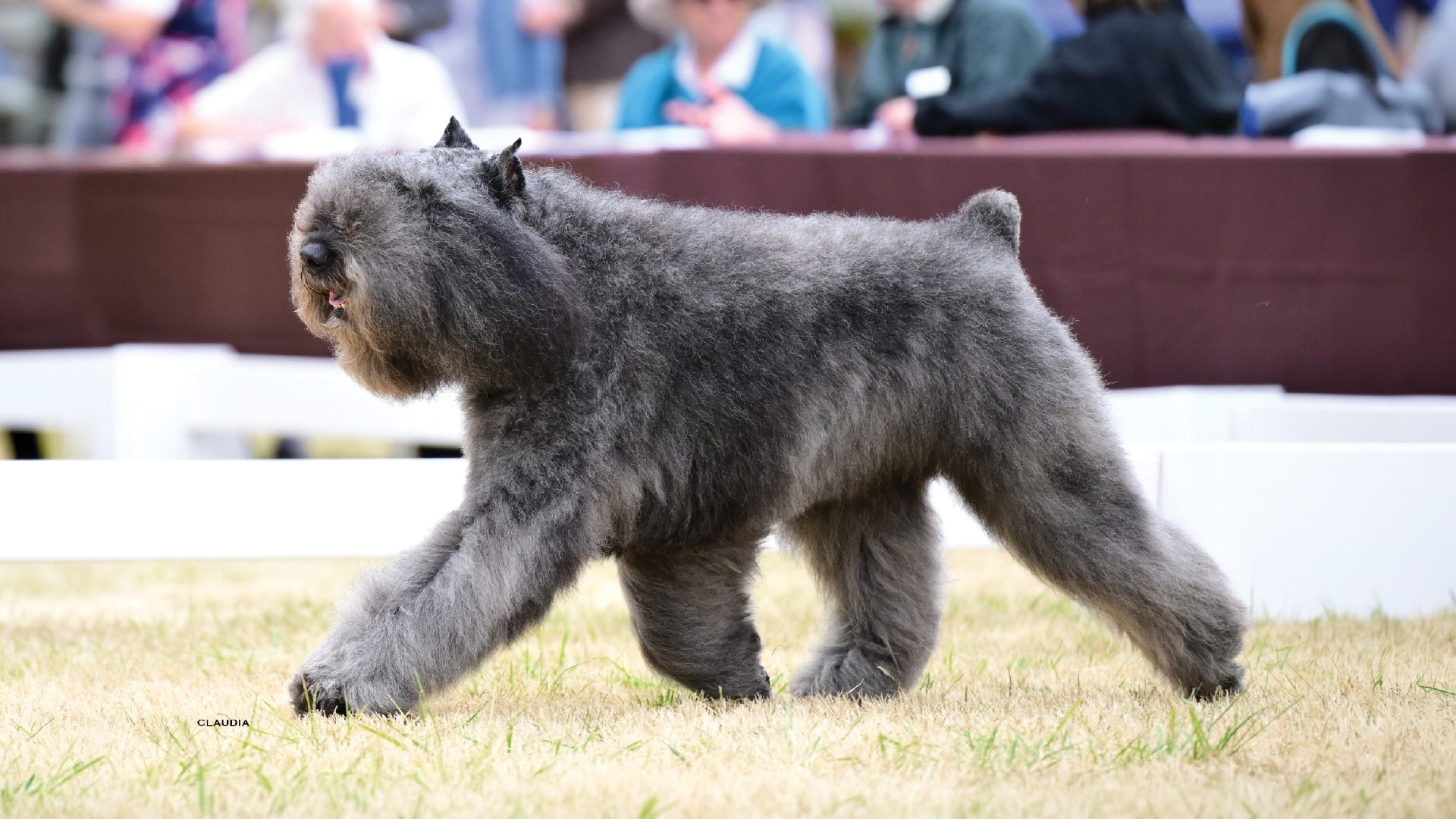
The Bouvier des Flandres, often simply referred to as the Bouvier, is a powerful and robust working farm dog known for its versatility in various tasks from herding to guarding. Originating from the Flanders region of Belgium, this breed is renowned for its loyalty, intelligence, and resilience.
Highlights
02/History
The Bouvier des Flandres is a breed steeped in history, originating from the Flanders region of Belgium. Its name translates to "Cow Herder of Flanders," which provides a glimpse into the breed's early role and purpose.
The Bouvier's roots trace back to a time when the Flanders region encompassed parts of modern-day Belgium, France, and the Netherlands. In these rural settings, the breed was primarily used as a farm dog, responsible for various tasks from herding cattle and sheep to pulling carts. The dogs’ strength, intelligence, and protective nature made them invaluable assets on the farm.
Several breeds are believed to have contributed to the development of the Bouvier, the Brabant and possibly the Beauceron and the Dutch Griffon. Through the years, selective breeding has focused on refining the breed's herding capabilities, strength, and protective instincts.
The late 19th and early 20th centuries saw the Bouvier's popularity rise. The breed was used during the World War I for its strength and versatility, serving as an ambulance dog and messenger, and even used for pulling heavy machine guns. However, the war nearly brought the breed to extinction and the post-war era was particularly challenging. Thankfully, dedicated breeders worked tirelessly to revive the breed.
In the 1920s, a written Breed Standard for the Bouvier des Flandres was established in Belgium, further solidifying the characteristics and traits desirable in the breed. The era also saw the Bouvier's introduction to other parts of the world, including the United States.
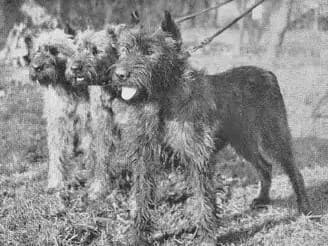
The American Kennel Club (AKC) recognized the Bouvier des Flandres in 1929. Since then, the breed has enjoyed steady popularity, not just as a working dog but also as a loyal companion and family pet. The Fédération Cynologique Internationale (FCI) and The Royal Kennel Club (UK) have also granted recognition, showcasing the breed's appeal on the world stage.
The history of the Bouvier des Flandres is a testament to the breed's resilience, versatility, and enduring appeal. From the farms of Flanders to households worldwide, the Bouvier's journey is a story of survival, dedication, and the undeniable bond that is shared between humans and dogs everywhere.
03/Appearance
The height of an adult male Bouvier des Flandres typically ranges from 24.5 to 27.5 inches tall at the shoulder, with mature females usually standing between 23.5 and 26.5 inches.
In terms of weight, adult Bouviers typically weigh between 70 and 110 pounds.
Skull: The skull of the Bouvier des Flandres is flat and broad, with a stop that is accentuated by the eyebrows midway between the tip of the nose and the occiput. This gives the head its typically strong and square appearance.
Expression: The expression is one of alertness and intelligence. The breed’s dark eyes, paired with its confident demeanor, create an impression of keen awareness and curiosity.
Eyes: Medium in size, the eyes are oval-shaped and dark in color, conveying a lively and keen expression. They are set well apart, providing the breed with a broad field of vision.
Ears: Traditionally, the ears are cropped to a triangular shape and stand erect. Uncropped ears hang flat and are of medium length, folding at a level with the top of the head.
Muzzle: The muzzle is strong and broad, tapering slightly towards the nose. The jaws are powerful, indicating the breed's herding and guarding heritage.
Nose: The nose is always black in color, regardless of the coat's color. It is broad and well-developed, complementing the dog’s strong muzzle.
Bite: The Bouvier des Flandres possesses a scissors bite, where the upper incisors fit snugly over the lower incisors. This ensures the strong grip that is essential for a herder and working farm dog.
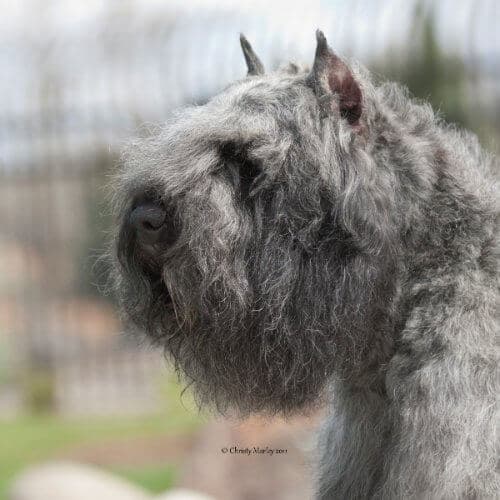
The Bouvier des Flandres boasts a harmonious and well-balanced structure. When viewed from the side, the length of the body, from the point of the shoulder to the point of the buttock, is equal to the height at the withers. This gives the Bouvier its distinct, compact appearance. In substance, the breed is powerful and solid, built for endurance and functionality. Its bone structure is hefty, yet its movement remains unhindered and fluid. This fluidity showcases the breed's strength and agility alongside a proud carriage.
Texture: The Bouvier des Flandres boasts a double coat, which serves as protection against harsh weather conditions. The outer coat is rough, coarse, and dense, giving the breed its rugged appearance. Underneath, there's a softer, fine undercoat which provides insulation. The harsh and tousled coat of the Bouvier features a heavy mustache and beard as well as the breed's characteristic eyebrows. The coat is most often trimmed to a length of 2-1/2 inches, which still offers sufficient protection when the dog is working.
Standard Colors
04/Consider
The Bouvier des Flandres is not just a dog of striking appearance, it is also one of commendable intellect and loyalty. When considering bringing a Bouvier into the home, several factors come into play. The breed’s working lineage means these dogs have a natural inclination to be active and engaged. As with any purebred dog, understanding the breed’s specific needs and characteristics can make the experience of owning one of these dogs more rewarding.
Interaction With Family
The level of affection a breed typically shows towards family members and familiar individuals.
Good With Other Dogs
The innate friendliness of a dog towards other dogs can depend on its breed.
Good With Young Children
The degree to which a breed will typically be patient with young children.
Amount Of Shedding
How much hair a breed typically leaves behind on clothes, furniture and floors.
Frequency Of Grooming
How often a breed needs brushing, bathing or a professional trim to stay in condition.
Amount Of Drooling
How prone a breed is to drool, worth knowing before you keep a towel by the door.
Openness To Strangers
How openly a breed tends to greet new people, visitors and strangers.
Protective Nature
How likely a breed is to alert you to anything unfamiliar, and stand between you and it.
Playfulness Level
How enthusiastic a breed stays about games and play well past puppyhood.
Trainability Level
How readily a breed takes direction and works with you rather than around you.
Barking Level
How much a breed uses its voice, and how readily.
Energy Level
How much get-up-and-go a breed brings to an average day.
Health
The health of the Bouvier des Flandres is generally robust, owing to its origins as a working farm dog. The breed’s sturdy frame and dense coat are evidence of the resilience of this spirited dog. However, like all breeds and mixed breeds, the Bouvier can be prone to certain health conditions. Lifespan: The average life expectancy of a Bouvier ranges between 10 and 12 years. This range can be influenced by factors such as genetics, diet, exercise, and regular veterinary care.
The Bouvier des Flandres embodies intelligence, loyalty, and protective instincts, characteristics cultivated from their origins as herding and farm dogs. For novice or first-time dog owners, the Bouvier's combination of loyalty and independent nature can be challenging. Consistent training and socialization from a young age are paramount, given the breed's determined disposition. While these dogs exhibit an even temperament and show resilience, they do have a sensitivity that means abrupt changes in the environment or rough treatment can adversely affect their demeanor.
One trait which potential owners should be aware of is the Bouvier's preference for the company. This breed thrives on human companionship and is not suited to long periods of solitude. Extended loneliness can result in the manifestation of undesirable behaviors, stemming from either boredom or anxiety.
Their relationships with other animals, including dogs, are generally amicable, especially if they have been raised together. However, the Bouvier does have a dominant streak that can surface when confronted with unfamiliar dogs. Early and consistent socialization can help to temper these instincts.
Within the household, especially when raised alongside them, the Bouvier des Flandres exhibits a gentle disposition towards children. The breed’s innate protective nature establishes these dogs as excellent family guardians. That said, due to their impressive size and strength, interactions with younger children should always be supervised.
Exercise Expectations
Despite their sizable and somewhat imposing appearance, Bouviers possess a moderate to high energy level. This means they benefit significantly from regular and varied physical activities. A simple walk around the neighborhood might not suffice for this breed; these dogs thrive when engaged in more dynamic exercises like jogging, hiking, or playing fetch. Given their herding instincts, Bouvier des Flandres often enjoy activities that simulate tasks or challenges. Engaging them in agility courses or herding exercises can be a great way to provide both mental and physical stimulation. They appreciate the challenge and the opportunity to work alongside their human partners. The intensity of their exercise regimen should be consistent with their age and overall health. While younger Bouviers might have seemingly boundless energy, older dogs may prefer a more leisurely pace. It's always essential to gauge the dog’s comfort and energy levels during physical activities. Additionally, playfulness is a trait that shouldn't be overlooked when discussing the Bouvier des Flandres' exercise needs. This dog enjoy games and interactive toys, and these can be great tools for indoor exercise or for days when longer outdoor sessions aren't feasible.
Living with a Bouvier des Flandres is an enriching experience, filled with loyalty, protection, and companionship. However, understanding the breed's unique characteristics and needs is essential to create a harmonious living environment.
First and foremost, while the Bouvier des Flandres can adapt to various living conditions, these dogs thrive in spaces where they have room to move. Though they can adjust to apartment living, especially if their exercise needs are diligently met, a home with a yard where they can play and patrol is ideal.
Given their historical role as farm dogs and protectors of livestock, the Bouvier possesses a natural protective instinct. This means they can be wary of strangers and will often stand guard over their home and family. Proper socialization can help to balance this protective nature, ensuring the Bouvier is discerning rather than overly aggressive.
When it comes to weather tolerance, the Bouvier's dense double coat provides insulation against colder climates. They are well-equipped to handle chilly conditions and can enjoy outdoor activities even in the winter months. On the flip side, their thick coat can be a disadvantage in hot weather. In warmer climates or during the peak summer months, it's important to ensure the Bouvier has a cool, shaded place to retreat to and that exercise is scheduled during the cooler parts of the day.
The Bouvier des Flandres’ strong bond with its family also means these dogs prefer to be involved in household activities. While they can handle being alone for short periods, prolonged isolation can lead to feelings of anxiety or boredom. Integrating them into daily routines, whether it's a walk in the park or a quiet evening in the living room, ensures they feel connected and content.
05/Puppies
The arrival of a Bouvier des Flandres puppy into a household is an exciting time, brimming with potential and new beginnings. These puppies, with their adorable expressions and boundless energy, soon grow into the strong and loyal dogs that the breed is known to be. Understanding the developmental and care needs of Bouvier puppies is critical to ensuring they grow up to become healthy and well-adjusted adults.
Caring for a Bouvier des Flandres puppy is a multifaceted responsibility that encompasses nutrition, health, socialization, and training. From the moment they are brought home, a structured and loving environment is essential for their well-being.
Nutrition plays a pivotal role during the puppy phase. Providing high-quality, balanced puppy food guarantees they receive the essential nutrients for growth and development. It's advisable to consult with a veterinarian or breeder for specific feeding guidelines tailored to the Bouvier puppy's needs.
Regular veterinary check-ups during the puppy phase are crucial. These visits not only monitor the puppy's health and development but also set the schedule for vaccinations and other preventative care measures. Keeping a close eye on a puppy’s health in these early stages can prevent potential issues down the road.
Socialization is another critical component of care for Bouvier puppies. Introducing pupppies to various environments, people, and other animals in a controlled and positive manner helps to shape their temperament. Positive encounters during their formative weeks and months play a significant role in how they interact with the world as adults.
Training, too, should begin early. Bouviers are intelligent and eager to learn, and starting with basic obedience commands provides a foundation for more advanced training later on. Consistency, patience, and positive reinforcement are keys to successful training sessions.
Lastly, the bond formed between the puppy and its family during these early months is profound. Spending quality time with the Bouvier puppy, whether through play, training, or simple companionship, strengthens this bond and sets the tone for a lifelong relationship.
06/Activities
The Bouvier des Flandres, with its strong physique and sharp intellect, is naturally inclined towards activities and dog sports. These endeavors not only provide physical stimulation, they also cater to the breed's mental agility and need for challenges. Engaging in activities and dog sports can strengthen the bond between the dog and its handler, offering mutual enjoyment and fulfillment.
Herding Trials: Given the Bouvier's origin as a cattle herder, Herding Trials are a natural fit. These events tap into the breed's innate herding instincts, challenging these dogs to guide livestock through a set course.
Agility: Agility Trials, with their series of obstacles and challenges, offer a dynamic playground for the Bouvier. The breed’s intelligence and physical prowess shine in this sport, where speed and accuracy are paramount.
Tracking: With their sharp noses and focused minds, Bouviers can be exceptional trackers. Tracking events test a dog's ability to identify and follow a scent, a skill that the Bouvier can hone with training.
Obedience: Bouviers excel in Obedience Trials due to their keen intellect and eagerness to please. This precision-based sport assesses a dog's ability to perform a series of commands and exercises, showcasing the Bouvier's training and discipline.
Rally: A sport that combines obedience with Agility, Rally Obedience offers a sequence of commands and exercises that the dog and handler navigate as a team. The Bouvier's versatility shines in this event, requiring both physical agility and mental sharpness.
Carting: Reflecting the breed’s historical usefulness as a draft animal, Bouviers can be trained in Carting or Drafting competitions. These events require the dog to pull a cart through a predetermined course, showcasing its strength and discipline.
Conformation Shows: A platform where the Bouvier des Flandres is judged against the Breed Standard, Conformation Shows evaluate the physical attributes and temperament of the breed. Participation in these events can be both rewarding and informative for preservation breeders and breed enthusiasts.
Engaging a Bouvier des Flandres in these activities and dog sports can offer numerous benefits. Beyond the physical exercise and mental stimulation, participation fosters a deeper connection between dog and handler. For the Bouvier, the opportunity to engage in tasks, challenges, and structured play taps into the dog’s natural instincts and provides an enriching experience.
Gallery
07/Standards
The Bouvier des Flandres is recognized by the world's leading registries and kennel organizations, which categorize the breed into a specific Group based on its unique characteristics. This breed is recognized worldwide under the following Group designations:
The ideal Bouvier des Flandres is described by a Breed Standard that is approved by each of the world’s leading registries and kennel organizations. The Breed Standards for this breed may be found in the following links:
08/Clubs
Breed clubs play a pivotal role in the preservation, education, and promotion of specific dog breeds. For the Bouvier des Flandres, various clubs worldwide are dedicated to ensuring the breed's well-being and the continuation of its storied legacy.In the United States, the American Bouvier des Flandres Club (ABdFC) stands as the official “parent” organization for the breed. Established in 1963, the ABdFC focuses on promoting responsible breeding, facilitating breed education, and organizing events that showcase the many talents of the Bouvier.In the United Kingdom, the Bouvier des Flandres Club of Great Britain champions the breed. This club, with its rich history, endeavors to provide resources, education, and events for Bouvier owners and enthusiasts throughout the UK.Membership or association with these clubs offers numerous benefits for Bouvier owners. Not only do they provide access to a community of like-minded enthusiasts, they also offer resources, workshops, and events tailored to the breed and its supporters.
09/Rescue
Rescue organizations play an indispensable role in the canine world. For the Bouvier des Flandres, these groups provide a safety net for dogs in need, offering them a second chance at a loving home. They are committed to rescuing, rehabilitating, and rehoming Bouviers that have been abandoned, mistreated, or are simply in need of a new family.In the United States, the American Bouvier Rescue League (ABRL) is at the forefront of these efforts. Dedicated to the Bouvier des Flandres, the ABRL works tirelessly to find suitable forever homes for Bouviers in need. The group’s volunteers not only offer adoption services, they also engage in public education about the breed and responsible ownership.Canada has rescue groups such as the Bouvier Rescue of Ontario. This group focuses on rescuing and rehoming Bouviers within the Ontario region. This volunteer-led organization works closely with foster homes and potential adopters to ensure the best possible outcomes for the dogs they rescue.In the United Kingdom, the Bouvier des Flandres Welfare & Rescue UK emerges as a significant force for the breed. This group, established by dedicated breed enthusiasts, works diligently to rescue and rehome Bouviers in the UK. The group also engages in raising awareness about the breed's needs and offers support to Bouvier owners.
10/Facts
Name Origin
The name "Bouvier des Flandres" translates from French to mean "cowherd of Flanders." This name is a nod to the breed's origins in the Flanders region of Belgium, where it was initially used for cattle herding.
Multifaceted Workers
Beyond herding, Bouviers have been employed in various roles throughout history. During World War I, they served as ambulance dogs and were even used to pull artillery.
Impressive Beards
One of the Bouvier's most distinguishing features is its rugged beard and mustache. This facial hair isn't just for show – it historically helped to protect the dog's face from errant cattle hooves.
Celebrity Owners
The Bouvier des Flandres has found fans in high places. US. President Ronald Reagan owned a Bouvier named “Lucky” during his tenure in the White House.
Adaptable Nature
Despite their large size, many Bouvier des Flandres adapt well to urban living, as long as they receive adequate exercise. Their calm demeanor often surprises those unfamiliar with the breed.
Strong and Silent
While the Bouvier can be trained to bark alerts, the breed is not known to be excessive barkers. Instead, these dogs often use their imposing presence to deter unwanted visitors.
Dedicated Protectors
While they are gentle with their families, Bouvier des Flandres have a natural protective instinct. They are often wary of strangers, making them effective watchdogs.
Late Bloomers
Unlike some breeds that reach maturity around one year of age, the Bouvier des Flandres can take two to three years to fully mature both in body and temperament.
Highly Trainable
Due to their intelligence and eagerness to please, Bouviers often excel in Obedience, Agility, and other canine activities. Their versatile nature has made them successful participants in various dog sports.
Natural Look
The Bouvier des Flandres’ rugged appearance is natural. In fact, excessive trimming, especially around the face, is discouraged for those showing the breed at dog shows.
11/FAQ
Yes, Bouvier des Flandres shed, but their shedding is relatively minimal compared to some other breeds. Their thick, coarse double coat helps to trap dead hair, reducing the amount found around the house. Regular grooming, including brushing and occasional trimming, can further reduce shedding and maintain the coat's overall health.

Written by
Dan Sayers is the Executive Editor of SHOWSIGHT. He is a member of the World Dog Press Association and the Dog Writers Association of America, which recognized his illustrations in the award-winning Encyclopedia of K-9 Terminology. Dan is a longtime supporter of the sport of dogs and an advocate for the conservation of recognized breeds in all their forms and functions. He is a member of the Morris and Essex Kennel Club, and for 45 years, the Irish Water Spaniel Club of America where he serves as AKC Delegate, Archivist, and approved Breed Mentor. Dan breeds under the Quiet Storm prefix and has judged the IWSCA National Specialty Sweepstakes twice.
Official Standard of the Bouvier des Flandres
General Appearance: The Bouvier des Flandres is a powerfully built, compact, short-coupled, rough-coated dog of notably rugged appearance. He gives the impression of great strength without any sign of heaviness or clumsiness in his overall makeup. He is agile, spirited and bold, yet his serene, well behaved disposition denotes his steady, resolute and fearless character. His gaze is alert and brilliant, depicting his intelligence, vigor and daring. By nature he is an equable dog. His origin is that of a cattle herder and general farmer's helper, including cart pulling. He is an ideal farm dog. His harsh double coat protects him in all weather, enabling him to perform the most arduous tasks. He has been used as an ambulance and messenger dog. Modern times find him as a watch and guard dog as well as a family friend, guardian and protector. His physical and mental characteristics and deportment, coupled with his olfactory abilities, his intelligence and initiative enable him to also perform as a tracking dog and a guide dog for the blind. The following description is that of the ideal Bouvier des Flandres. Any deviation from this is to be penalized to the extent of the deviation.
Size, Proportion, Substance: Size - The height as measured at the withers: Dogs, from 24½ to 27½ inches; bitches, from 23½ to 26½ inches. In each sex, the ideal height is the median of the two limits, i.e., 26 inches for a dog and 25 inches for a bitch. Any dog or bitch deviating from the minimum or maximum limits mentioned shall be severely penalized. Proportion - The length from the point of the shoulder to the tip of the buttocks is equal to the height from the ground to the highest point of the withers. A long-bodied dog should be seriously faulted. Substance - Powerfully built, strong boned, well muscled, without any sign of heaviness or clumsiness.
Head: The head is impressive in scale, accentuated by beard and mustache. It is in proportion to body and build. The expression is bold and alert. Eyes neither protrude nor are sunken in the sockets. Their shape is oval with the axis on the horizontal plane, when viewed from the front. Their color is a dark brown. The eye rims are black without lack of pigment and the haw is barely visible. Yellow or light eyes are to be strongly penalized, along with a walleyed or staring expression. Ears placed high and alert. If cropped, they are to be a triangular contour and in proportion to the size of the head. The inner corner of the ear should be in line with the outer corner of the eye. Ears that are too low or too closely set are serious faults. Skull well developed and flat, slightly less wide than long. When viewed from the side, the top lines of the skull and the muzzle are parallel. It is wide between the ears, with the frontal groove barely marked. The stop is more apparent than real, due to upstanding eyebrows. The proportions of length of skull to length of muzzle are 3 to 2. Muzzle broad, strong, well filled out, tapering gradually toward the nose without ever becoming snipy or pointed. A narrow, snipy muzzle is faulty. Nose large, black, well developed, round at the edges, with flared nostrils. A brown, pink or spotted nose is a serious fault. The cheeks are flat and lean, with the lips being dry and tight fitting. The jaws are powerful and of equal length. The teeth are strong, white and healthy, with the incisors meeting in a scissors bite. Overshot or undershot bites are to be severely penalized.
Neck, Topline, and Body: The neck is strong and muscular, widening gradually into the shoulders. When viewed from the side, it is gracefully arched with proud carriage. A short, squatty neck is faulty. No dewlap. Back short, broad, well muscled with firm level topline. It is supple and flexible with no sign of weakness. Body or trunk powerful, broad and short. The chest is broad, with the brisket extending to the elbow in depth. The ribs are deep and well sprung. The first ribs are slightly curved, the others well sprung and very well sloped nearing the rear, giving proper depth to the chest. Flat ribs or slabsidedness is to be strongly penalized. Flanks and loins short, wide and well muscled, without weakness. The abdomen is only slightly tucked up. The horizontal line of the back should mold unnoticeably into the curve of the rump, which is characteristically wide. A sunken or slanted croup is a serious fault. Tail is to be docked, leaving 2 or 3 vertebrae. It must be set high and align normally with the spinal column. Preferably carried upright in motion. Dogs born tailless should not be penalized.
Forequarters: Strong boned, well muscled and straight. The shoulders are relatively long, muscular but not loaded, with good layback. The shoulder blade and humerus are approximately the same length, forming an angle slightly greater than 90 degrees when standing. Steep shoulders are faulty. Elbows close to the body and parallel. Elbows which are too far out or in are faults. Forearms viewed either in profile or from the front are perfectly straight, parallel to each other and perpendicular to the ground. They are well muscled and strong boned. Carpus exactly in line with the forearms. Strong boned. Pasterns quite short, slightly sloped. Dewclaws may be removed. Both forefeet and hind feet are rounded and compact turning neither in nor out; the toes close and well arched; strong black nails; thick tough pads.
Hindquarters: Firm, well muscled with large, powerful hams. They should be parallel with the front legs when viewed from either front or rear. Legs moderately long, well muscled, neither too straight nor too inclined. Thighs wide and muscular. The upper thigh must be neither too straight nor too sloping. There is moderate angulation at the stifle. Hocks strong, rather close to the ground. When standing and seen from the rear, they will be straight and perfectly parallel to each other. In motion, they must turn neither in nor out. There is a slight angulation at the hock joint. Sickle or cow-hocks are serious faults. Metatarsi hardy and lean, rather cylindrical and perpendicular to the ground when standing. If born with dewclaws, they are to be removed. Feet as in front.
Coat: A tousled, double coat capable of withstanding the hardest work in the most inclement weather. The outer hairs are rough and harsh, with the undercoat being fine, soft and dense. The coat may be trimmed slightly only to accent the body line. Overtrimming which alters the natural rugged appearance is to be avoided. Topcoat must be harsh to the touch, dry, trimmed, if necessary, to a length of approximately 2½ inches. A coat too long or too short is a fault, as is a silky or woolly coat. It is tousled without being curly. On the skull, it is short, and on the upper part of the back, it is particularly close and harsh always, however, remaining rough. Ears are rough-coated. Undercoat a dense mass of fine, close hair, thicker in winter. Together with the topcoat, it will form a water-resistant covering. A flat coat, denoting lack of undercoat is a serious fault. Mustache and beard very thick, with the hair being shorter and rougher on the upper side of the muzzle. The upper lip with its heavy mustache and the chin with its heavy and rough beard give that gruff expression so characteristic of the breed. Eyebrows, erect hairs accentuating the shape of the eyes without ever veiling them.
Color: From fawn to black, passing through salt and pepper, gray and brindle. A small white star on the chest is allowed. Other than chocolate brown, white, or parti-color, which are to be severely penalized, no one color is to be favored.
Gait: The whole of the Bouvier des Flandres must be harmoniously proportioned to allow for a free, bold and proud gait. The reach of the forequarters must compensate for and be in balance with the driving power of the hindquarters. The back, while moving in a trot, will remain firm and flat. In general, the gait is the logical demonstration of the structure and build of the dog. It is to be noted that while moving at a fast trot, the properly built Bouvier will tend to single-track.
Temperament: The Bouvier is an equable dog, steady, resolute and fearless. Viciousness or shyness is undesirable.
Approved January 10, 2000
Effective February 23, 2000
Kennel Clubs & Registries
Celebrating 60 years of the American Bouvier des Flandres Club! Join us for events, awards, and the joy of our beloved breed.


Meet the Breeders
Experienced Bouvier des Flandres breeder Debra Gschwender reflects on breed changes, show challenges, and mentoring in the dog community
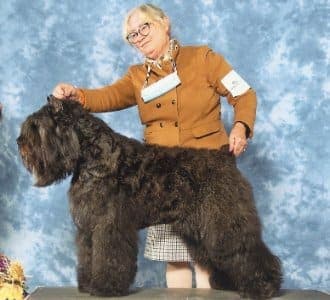
Meet the Owner Handlers
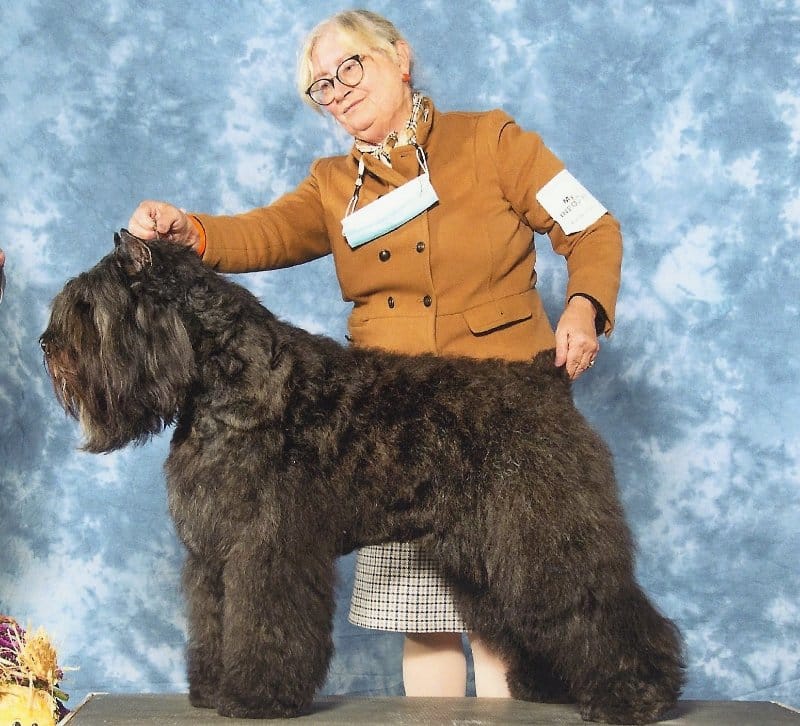
Insights from an Owner Handler, Jeannette Nieder. Read about her opinions on various topics about dog handling in the modern show ring.
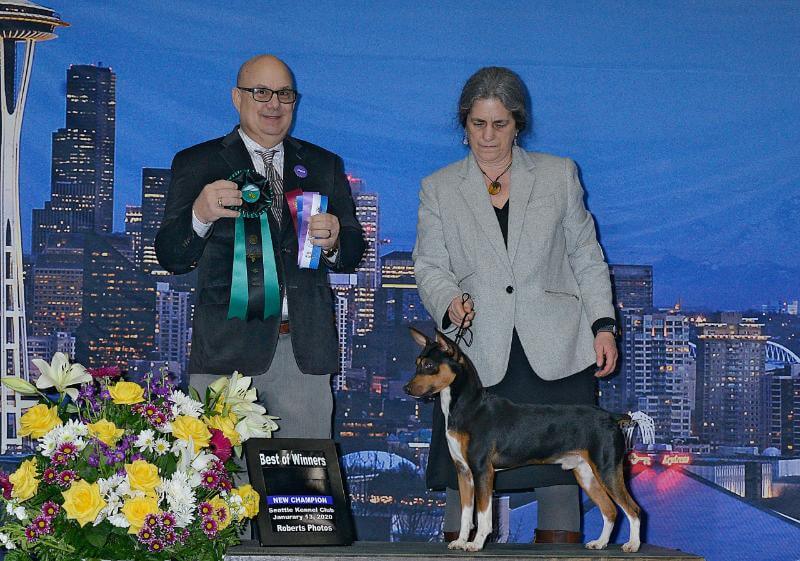
Meet the Breeders
Cory Downey Hart is the breeder behind DHart Rat Terriers & Bouviers. Read about the kennel’s beginnings, dogs, puppies, photos and more!
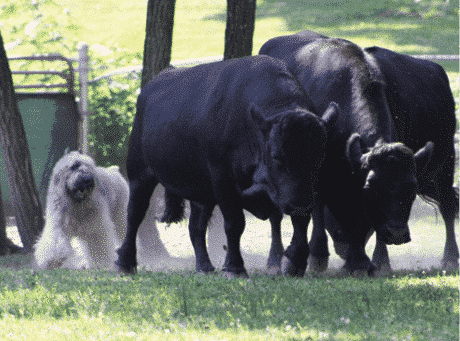
Bouvier des Flandres: A Farmer’s Dog | Let’s take a trip back in time. Let’s go back well over a hundred years to the country of Belgium
The tail of the Bouvier des Flandres is set high on the rump and aligns with the spinal column. The tail is typically docked to a length that leaves 2-3 vertebrae, giving the hindquarters a balanced appearance when the dog is standing. Docking was historically done to prevent injury when the Bouvier was working or herding cattle, as a long tail was liable to get caught on brush or trampled by difficult livestock.
In places where tail docking is prohibited or has fallen out of favor, the Bouvier’s tail is left in its natural state. A natural tail is medium in length, reaching the hocks, and is carried either straight or with a slight upward curve. When the dog is in motion or alert, the tail may elevate but should never curl over the back.
Standard Markings
A Note About Color: The coat’s color ranges from fawn to black, with or without brindling or a black mask. White, brown, or parti-colored Bouviers are unacceptable.
Coat Type
Rough, Double
The structure of the coat this breed carries.
Coat Length
Medium
How long the breed's coat grows when kept in condition.
Adaptability Level
How easily a breed copes with changes in home, routine, noise and weather.
Mental Stimulation Needs
How much a breed needs a job, a puzzle or training to stay content.
When it comes to strangers, the Bouvier's natural protective instincts come to the fore. The breed tends to be initially wary, evaluating the unfamiliar before deciding if it poses a threat. Over time, and with consistent introductions, these dogs can learn to distinguish between friendly visitors and those who might intend to do harm.
Feeding the Bouvier des Flandres requires a thoughtful understanding of the dog’s nutritional needs at various life stages. With roots tracing back to the rather flat terrain of Flanders, this robust breed demands a balanced diet to maintain its strength and vitality.
When considering the dietary needs of a Bouvier puppy, it's essential to recognize that the pup’s growth phase requires a higher calorie intake, rich in proteins and essential nutrients, to support its developing bones, muscles, and immune system. Puppy-specific formulas are often recommended during the first year, as these are designed to meet these nutritional requirements.
As the Bouvier transitions to adulthood, its dietary needs evolve. Adult Bouviers, depending on their activity level, usually require a well-balanced diet that includes high-quality proteins, healthy fats, essential vitamins, and minerals. While many owners might be tempted to feed based on the dog's size, it's more appropriate to consider the dog's age, weight, health, and activity level. On average, an adult Bouvier des Flandres might consume between 2.5 to 4 cups of high-quality dry dog food daily, divided into two meals. However, this can vary based on individual needs.
Regular monitoring of the Bouvier's weight and body condition is crucial. Overfeeding can lead to obesity, which in turn can result in numerous health issues. On the other hand, underfeeding or providing an imbalanced diet can lead to nutrient deficiencies. It's always advisable to consult with a veterinarian or a pet nutritionist to establish the best feeding regimen for the individual dog.
Water is another vital aspect of the Bouvier des Flandres’ diet. Ensuring the dog has access to fresh, clean water at all times is non-negotiable. It aids in digestion, helps to maintain body temperature, and supports overall metabolic functions.
Training a Bouvier des Flandres is an endeavor that rewards patience, consistency, and mutual respect. Boasting an impressive intelligence, this breed has an inherent desire to please its owner, but it also possesses a distinct independent streak that, if unchecked, can lead to stubbornness.
Starting the training process early is crucial with the Bouvier. The breed’s keen mind absorbs information rapidly during puppyhood, and this is the ideal time to lay the foundation for good behavior. Socialization is equally important at this stage. Exposure to various environments, people, and other animals will help to mold these pups into well-adjusted adults.
One noticeable trait of the Bouvier is its vocal nature. These dogs have a tendency to bark, especially if they sense something amiss in their surroundings. This protective instinct is commendable, but if left unchecked, it can become a nuisance. Therefore, training Bouviers to differentiate between ordinary occurrences and genuine threats can help in managing their vocal outbursts.
The Bouvier des Flandres is also known for its intelligence. While this makes these dogs apt learners, it also means they can quickly pick up undesirable behaviors if not guided correctly. Consistent training sessions, combined with positive reinforcement techniques, are most effective. Bouviers respond well to praise, treats, and play.
However, intelligence also brings with it the trait of curiosity. This breed can exhibit a degree of wanderlust. Hence, recall training becomes essential. Owners should ensure that their Bouvier is reliable in coming back when called, especially in open areas.
Despite the breed’s size and robust appearance, the Bouvier des Flandres does have a prey drive. This is a remnant of its days as a hard-working herder, when chasing was part of their everyday job. While it is less pronounced than in some breeds, it's something an owner should be aware of, especially around smaller animals.
Grooming Expectations
The Bouvier's coat is relatively harsh to the touch, offering protection against harsh weather conditions. Beneath this outer coat lies a softer, insulating undercoat. Together, these layers act as a shield against both cold and wet environments. However, this protective coat can become a magnet for dirt, debris, and tangles if not regularly attended to. Brushing is a fundamental aspect of grooming for the Bouvier des Flandres. A thorough brushing at least once a week helps to remove loose hairs, prevents matting, and distributes the natural oils across the coat, keeping it healthy and shiny. Due to the thickness of their coat, tools like a pin brush or a metal comb can be particularly effective. Shedding in the Bouvier is not as pronounced as in some breeds, but this dog does shed moderately. Regular brushing not only manages this shedding, it also reduces the amount of hair and dander around the house. While their coat doesn't require frequent trimming, occasional trips to a professional groomer can be beneficial, especially for those Bouviers shown in Conformation events. These grooming sessions can help to shape the coat, maintain cleanliness, and address any specific needs like ear cleaning or nail trimming. Bathing a Bouvier des Flandres doesn't need to be a frequent affair. Due to the nature of the breed’s coat, overbathing can strip essential oils and result in a dry, brittle texture. Instead, baths should be given as needed, based on the dog's activity and the level of dirt accumulated.