Members
01/Overview
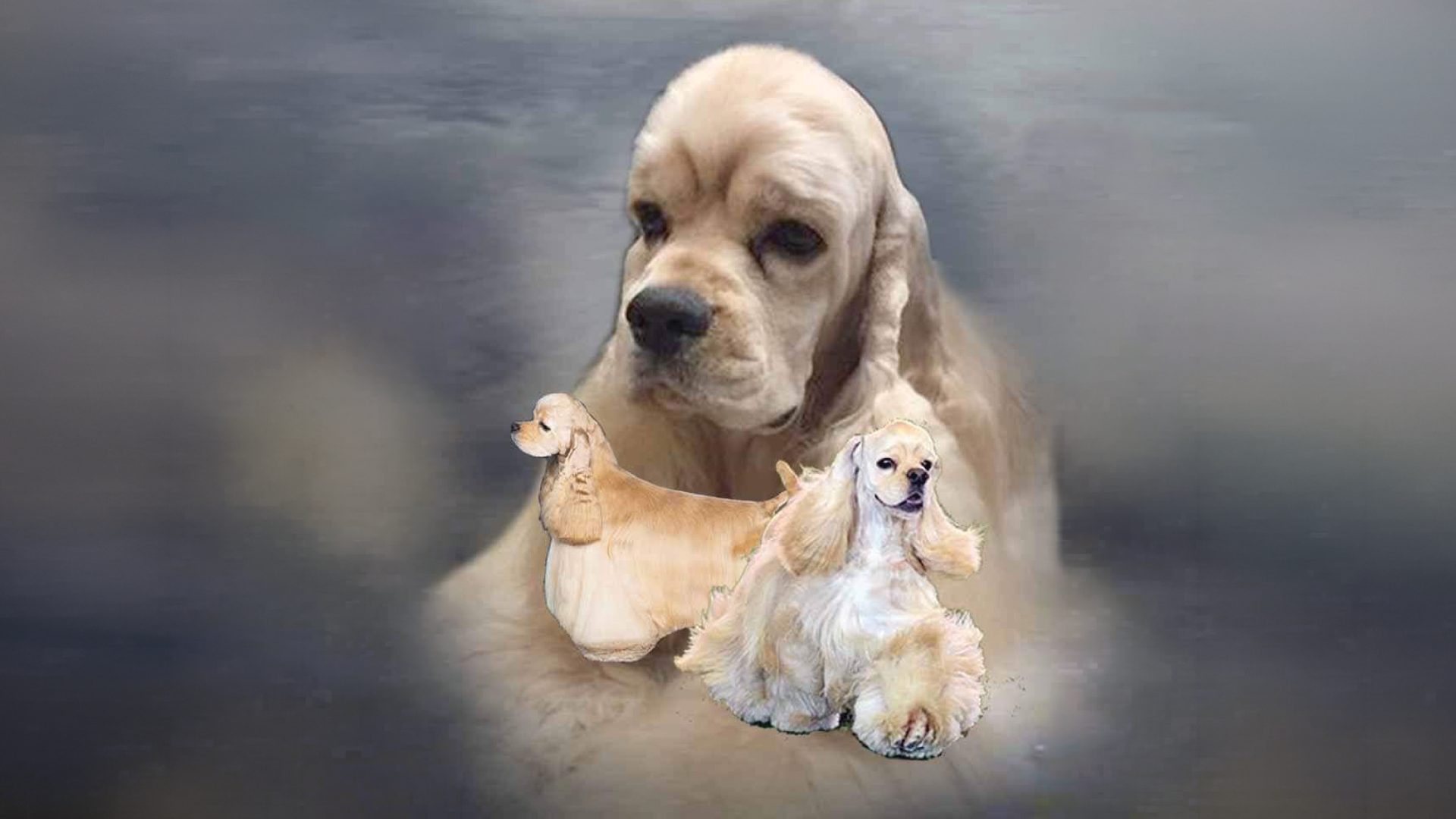
The Cocker Spaniel, often referred to as the "American Cocker" or simply as the "Cocker," is cherished for its sweet demeanor, expressive eyes, and luxuriant coat. The smallest member of AKC’s Sporting Group, the breed has captured the hearts of millions, making this determined little field dog a popular choice for families in the United States and around the world.
Highlights
02/History
The Cocker Spaniel has a rich lineage that dates back centuries. The breed’s journey from avid bird hunter to treasured household companion is truly fascinating.
The breed's name provides a hint to its origins. Cocker Spaniels were originally bred in England to hunt the Eurasian woodcock, a type of game bird, which led to the name "Cocker." They are part of the larger spaniel family, a group of breeds known for their exceptional hunting skills, particularly in flushing game from hiding spots.
By the 19th century, land spaniels in England were categorized by their size and the game they hunted rather than their specific breed. It was only later that specific Breed Standards were established, dividing spaniels into separate breeds. Among these, the Cocker Spaniel was recognized for its smaller size and its particular prowess in hunting woodcocks.
The breed's popularity soared when it made its way to the United States. American breeders started developing a slightly different version of the Cocker Spaniel, focusing on its potential as a show dog and companion rather than just as a hunter. This American variety became stockier, with a different head shape compared to its original English counterpart.
In 1946, due to these distinct differences, the American Kennel Club (AKC) recognized the English Cocker Spaniel and the American Cocker Spaniel as two separate breeds. Today, when people in the US refer to a "Cocker Spaniel," they are typically referring to the “American” Cocker.
Throughout their history, Cocker Spaniels have been beloved by many, including several US presidents. Their gentle disposition, combined with their beautiful appearance, has kept them in the limelight both in show rings and in homes around the world.
The breed has also gained recognition from major international kennel clubs, including the Fédération Cynologique Internationale (FCI) and The Royal Kennel Club (UK).
03/Appearance
Adult male Cocker Spaniels generally stand between 14.5 and 15.5 inches tall at the shoulder, while mature females typically range from 13.5 to 14.5 inches.
In terms of weight, males usually range from 25 to 30 pounds, while females tend to weigh between 20 and 25 pounds.
Skull: The breed's skull is well-developed but not overly broad, with a slight but noticeable stop midway between the tip of the nose and the occiput (the back of the skull).
Expression: Cocker Spaniels are often praised for their gentle and trusting gaze. Their eyes, coupled with their chiseled facial features, give them an endearing, alert, and intelligent expression.
Eyes: The Cocker’s eyes are almond-shaped, set wide apart and slightly slanted, harmonizing with the overall color of the coat. Dark brown is the most common shade, but the eyes of lighter-colored dogs may have a somewhat lighter hue.
Ears: The ears of a Cocker Spaniel are one of its distinguishing features. Set at or just below the level of the eyes, they are lobular in shape, thus framing the face with long, silky, and wavy hair. When pulled forward, they typically reach the tip of the nose.
Muzzle: Broad and deep, the Cocker's muzzle must be in balance with the head and must never be snipey. It is square in appearance and full, with lips that cover the lower jaw. The muzzle provides ample space for the olfactory senses, making the breed adept at tracking.
Nose: Depending on the variety, the color of the nose can be black or brown. Its large size, with well-opened nostrils, signifies a strong scenting ability.
Bite: The breed has a scissors bite, where the upper incisors closely overlap the bottom incisors, ensuring a strong grip in this small flushing spaniel.
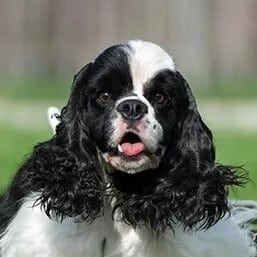
Cocker Spaniels are renowned for their sturdy, compact frame, which combines strength and agility in equal measure. They have a slightly sloping topline, strong back, well-sprung ribs, and muscular quarters. Their overall substance and balance complement their size, exuding a refined yet robust appearance.
Texture: The coat of the Cocker Spaniel is silky and either flat or slightly wavy. It is short and fine on the head, and of medium length on the body with a protective undercoat. Feathering on the ears, chest, abdomen, and legs gives the breed its distinctive appearance.
Standard Colors
04/Consider
The Cocker Spaniel, often dubbed the "Merry Cocker," is a delightful companion known for its affectionate nature and playful demeanor. Owning one of these dogs can be a rewarding experience, but there are a few special considerations to keep in mind. Their sporting background as a hunter means they are active and require regular exercise. Furthermore, their luxurious coat, while beautiful, demands consistent grooming to keep it in top condition. It's essential, therefore, to understand and cater to the breed's specific needs to ensure both the Cocker and its family will lead a happy life together.
Interaction With Family
The level of affection a breed typically shows towards family members and familiar individuals.
Good With Other Dogs
The innate friendliness of a dog towards other dogs can depend on its breed.
Good With Young Children
The degree to which a breed will typically be patient with young children.
Amount Of Shedding
How much hair a breed typically leaves behind on clothes, furniture and floors.
Frequency Of Grooming
How often a breed needs brushing, bathing or a professional trim to stay in condition.
Amount Of Drooling
How prone a breed is to drool — worth knowing before you keep a towel by the door.
Openness To Strangers
How openly a breed tends to greet new people, visitors and strangers.
Protective Nature
How likely a breed is to alert you to — and stand between you and — anything unfamiliar.
Playfulness Level
How enthusiastic a breed stays about games and play well past puppyhood.
Trainability Level
How readily a breed takes direction and works with you rather than around you.
Barking Level
How much a breed uses its voice, and how readily.
Energy Level
How much get-up-and-go a breed brings to an average day.
Health
Cocker Spaniels, like all breeds and mixed breeds, come with their own set of health concerns. However, with appropriate care they are generally known to lead full and vibrant lives. Regular veterinary check-ups, a nutritious diet, consistent exercise, and a keen awareness of the breed's specific health issues can substantially enhance the overall well-being and longevity of any Cocker. Lifespan: On average, a well-cared-for Cocker Spaniel can expect a lifespan of 10 to 14 years, positioning them as one of the longer-lived breeds within the AKC Sporting Group.
The Cocker Spaniel is often described as a breed with a "merry" temperament, radiating joy, warmth, and a zest for life. These dogs are known for their sociable and affectionate nature, making them excellent companions for families and individuals alike.
For those new to dog ownership, the Cocker Spaniel can be a good choice. While they do have an active side due to their hunting background, their eager-to-please attitude makes them relatively adaptable and responsive to training. Novices, however, should be prepared for the grooming and exercise needs of this breed.
When it comes to sensitivity, the Cocker Spaniel is quite a sensitive soul. The breed thrives best in loving environments and can sometimes become anxious or timid if treated unfairly. Positive reinforcement is the way to go with this breed.
Being alone for extended periods isn't ideal for Cocker Spaniels. They are social creatures and prefer the company of their human companions or other dogs. Speaking of other dogs, they generally get along well with their canine counterparts. Early socialization is beneficial to ensure they are also good with young children.
When meeting strangers, a well-socialized Cocker Spaniel is typically friendly and welcoming. However, early exposure to a variety of people and experiences can help to ensure they remain open and accepting of new faces.
Exercise Expectations
Cocker Spaniels thrive on activities that engage both their body and mind. A brisk daily walk, combined with some playtime in the yard or a nearby park, will usually suffice for their exercise needs. Fetch, being one of their favorite games, can be a great way to allow them to sprint and release their pent-up energy. In terms of intensity, while Cockers don't require the same level of rigorous exercise as some high-energy breeds, they do appreciate a good run and play session. Their playful nature makes them a joy to engage in activities, and they're always up for a game or two. It's worth noting that Cocker Spaniels, especially when young, can sometimes have bursts of energy, often referred to as "the zoomies," where they run around with exuberance. These bursts are perfectly normal and are just their way of expelling excess energy. Ensuring regular exercise for a Cocker Spaniel will not only keep this breed fit, it also helps to prevent potential behavioral issues that can arise from boredom or a lack of stimulation.
Living with a Cocker Spaniel can be a delightful experience filled with affection, playfulness, and unwavering companionship. These dogs, with their friendly demeanor and loving nature, easily weave themselves into the fabric of family life.
When considering living spaces, Cocker Spaniels are adaptable. While they are content in apartment settings, they do need their daily dose of exercise to prevent restlessness. If provided with adequate playtime and walks, they adjust well to smaller living areas. However, a house with a yard is always a plus for them to romp around in.
In terms of weather adaptability, the breed’s dense coat provides a degree of protection against cold weather, but it's essential to be cautious during extremely cold conditions. On the other hand, the breed’s coat can make it a bit more susceptible to overheating in hot weather. During the hotter months, it's best to walk them during the cooler parts of the day, such as early morning or late evening, and always ensure they have access to fresh water and plenty of shade.
It's worth noting that Cocker Spaniels can form strong attachments to their families. They thrive on human interaction and love being involved in family activities. Their sensitive nature means they can sometimes struggle with significant changes in their environment or routine, so it's always beneficial to introduce new situations gradually and with positivity.
05/Puppies
The arrival of a Cocker Spaniel puppy is an event filled with excitement and anticipation. These tiny bundles of joy are incredibly endearing and can light up any home with their playful antics and affectionate disposition. However, along with the joy comes the responsibility of ensuring that each puppy grows up to become a healthy, well-adjusted, and well-mannered adult.
Cocker Spaniel puppies, like all puppies, require special attention and care in their formative months. Their diet should be nutritionally balanced to support their rapid growth and development. Puppy-specific formulations are recommended, as they provide the necessary nutrients in the right proportions.
It's essential to create a safe environment for Cocker puppies. They are naturally curious and will explore their surroundings, which can sometimes lead to mischief or even danger. Puppy-proofing the home, much like baby-proofing, will help to keep them safe from potential hazards.
Early socialization is paramount for Cocker Spaniels. Introducing them to different people, pets, sounds, and environments while they are still young helps in developing a well-rounded and confident adult dog. Positive experiences during this critical period can shape their temperament for life.
Consistency in training is also key. Setting boundaries and teaching basic commands from a young age not only helps to instill good behavior, it also strengthens the bond between the puppy and its person. Remember to always use positive reinforcement techniques when interacting with a Cocker Spaniel puppy.
Routine veterinary check-ups, vaccinations, and deworming are crucial in these early stages of life to ensure each puppy is protected from common canine ailments and is on the right track health-wise.
06/Activities
Cocker Spaniels, with their keen senses and agile bodies, are well-suited for a variety of activities and dog sports. Engaging in these activities not only provides them with physical exercise, it also stimulates their minds, strengthening the bond between dog and handler.
Agility: Their nimble nature and eagerness to please make Cocker Spaniels excellent contenders in Agility Trials. Navigating through obstacle courses, jumping through hoops, and darting through tunnels, these dogs often excel in this fast-paced sport.
Obedience: Known for their desire to please, Cocker Spaniels can do exceptionally well in Obedience competitions. These events test a dog's discipline, responsiveness to commands, and overall behavior.
Rally: A fun twist on Obedience, Rally-O offers a more interactive experience for both the dog and handler. Cocker Spaniels often enjoy the varied challenges presented in Rally courses.
Hunt Tests: Tapping into their gundog roots, some Cocker Spaniels can eagerly participate in Hunt Tests. These events evaluate a dog’s natural hunting abilities, including scenting, flushing, and retrieving.
Flyball: This relay race sport, which involves jumping hurdles and retrieving a ball, can be another exciting activity for the energetic Cocker Spaniel.
Conformation Shows: A staple in the dog world, the show ring often provides a place where the Cocker Spaniel can shine. These events hire judges to evaluate dogs against the Breed Standard, emphasizing structure, movement, and temperament. The Cocker Spaniel's enviable appearance and graceful demeanor can make this breed a favorite at any dog show.
It's worth noting that while competitions and formal sports are an excellent avenue for showcasing the Cocker Spaniel's abilities, casual play and training at home can be just as rewarding. Whatever the activity, the most important thing is to ensure the activity is enjoyable and safe for the dog.
The Cocker Spaniel is recognized by the world's leading registries and kennel organizations, which categorize the breed into a specific Group based on its unique characteristics. This breed is recognized worldwide under the following Group designations:
| Organization | Group Designation |
|---|---|
| AKC (American Kennel Club) | Sporting |
| UKC (United Kennel Club) | Gun Dog |
| CKC (Canadian Kennel Club) | Sporting Dogs |
| ANKC (Australian National Kennel Council) | Gundogs |
| RKC (The Royal Kennel Club) | Gundog |
| FCI (Fédération Cynologique Internationale) | Group 8 - Retrievers - Flushing Dogs - Water Dogs ; Section 2 – Flushing Dogs |
The ideal Cocker Spaniel is described by a Breed Standard that is approved by each of the world’s leading registries and kennel organizations. The Breed Standards for this breed may be found in the following links:
Organization | Breed Standard | |
|---|---|---|
American Kennel Club | ||
United Kennel Club | ||
Canadian Kennel Club | ||
Australian National Kennel Council | ||
The Royal Kennel Club | ||
Fédération Cynologique Internationale |
Gallery
07/Standards
08/Clubs
Breed clubs play an essential role in the canine world. They promote responsible breeding, organize events, provide education about the breed, and often support rescue and rehoming efforts. For the Cocker Spaniel, several breed clubs are dedicated to preserving and promoting the best interests of this beloved breed.In the United States, the American Spaniel Club stands as the oldest breed club for Cocker Spaniels. Founded in 1881, this club has been at the forefront of Cocker Spaniel advocacy, setting the Breed Standard and organizing significant events such as the annual ASC Flushing Spaniel Show.For enthusiasts in Canada, the American Cocker Spaniel Club of Canada, formed in the early 1980s, is the leading authority on the breed. The club is a hub for breeders, owners, and breed supporters alike, providing resources and events that celebrate Cocker Spaniel's many unique qualities.The American Cocker Spaniel Club of Great Britain holds the distinction of being the parent club of the breed in the United Kingdom. The club's efforts have been instrumental in maintaining the Breed Standard and ensuring the (American) Cocker Spaniel's continued popularity in the UK.
09/Rescue
The undeniable charm of the Cocker Spaniel has won the hearts of many around the world. However, like all breeds, some Cockers end up in challenging situations which sometimes require rescue or rehoming. Dedicated rescue groups step in during these times, offering a beacon of hope for these beautiful dogs.In the US, one of the more prominent organizations dedicated to the breed is Cocker Spaniel Rescue of East Texas. Founded in the 1990s, this rescue group is committed to providing medical care, fostering, and rehoming Cocker Spaniels in need.In Canada, local rescue organizations and shelters, as regional groups, occasionally take in Cocker Spaniels and help them find their forever homes. The Canadian Kennel Club may also provide leads to reputable rescue organizations within the country.In the United Kingdom, American Cocker Spaniel Rescue UK has been instrumental in rehoming dogs in need. This organization works tirelessly to ensure that every (American) Cocker receives the love, care, and forever homes they deserve.
10/Facts
A Distinct Breed
Although they share a name and origin, the American and English Cocker Spaniels diverged in the early 20th centuries. In 1946, the American Kennel Club officially recognized them as two distinct breeds. The Cocker Spaniel is known as the “American” Cocker Spaniel in Great Britain and throughout much of the world.
Diverse Coat Colors
Among all AKC-recognized breeds, the Cocker Spaniel has one of the most varied palettes, ranging from solid colors like black or buff to combinations including roan or part-colored.
Presidential Pooch
American president Richard Nixon had a Cocker Spaniel named "Checkers," immortalized in the famous "Checkers Speech" of 1952.
Silky Coat
The Cocker Spaniel's luxurious, silky coat, especially the feathering on the legs and belly, sets the breed apart from its English counterpart and makes it a standout in the show ring.
A True American Star
The Cocker Spaniel has often been depicted in American culture, from films to literature, reflecting its enduring popularity in the country where it originated.
Sporting Heritage
While primarily seen as a companion dog today, the breed hasn't entirely lost its hunting instincts, especially its adeptness at flushing game from thick and often impenetrable underbrush.
Size Matters
One of the primary distinctions between the American and English varieties is size. The American Cocker Spaniel is smaller, with a more domed head and a shorter muzzle.
Eyes that Mesmerize
The breed's expressive eyes are a hallmark, sometimes described as "dreamy." These eyes can express a myriad of emotions, from curiosity to affection and even longing.
Affectionate Nature
Renowned for its gentle and affectionate disposition, the Cocker Spaniel is particularly well-known for forming strong bonds with its human family, often being described as "Velcro Dogs" because they like to stick close to their owners.
11/FAQ
Yes, Cocker Spaniels shed. While they have a beautiful, silky coat, it's not immune to shedding. Regular grooming, including brushing several times a week, can help to maintain the coat and reduce the amount of loose hair.
Official Standard for the Cocker Spaniel
General Appearance: The Cocker Spaniel is the smallest member of the Sporting Group. He has a sturdy, compact body and a cleanly chiseled and refined head, with the overall dog in complete balance and of ideal size. He stands well up at the shoulder on straight forelegs with a topline sloping slightly toward strong, moderately bent, muscular quarters. He is a dog capable of considerable speed, combined with great endurance. Above all, he must be free and merry, sound, well balanced throughout and in action show a keen inclination to work. A dog well balanced in all parts is more desirable than a dog with strongly contrasting good points and faults.
Size, Proportion, Substance: Size-The ideal height at the withers for an adult dog is 15 inches and for an adult bitch, 14 inches. Height may vary one-half inch above or below this ideal. A dog whose height exceeds 15½ inches or a bitch whose height exceeds 14½ inches shall be disqualified. An adult dog whose height is less than 14½ inches and an adult bitch whose height is less than 13½ inches shall be penalized. Height is determined by a line perpendicular to the ground from the top of the shoulder blades, the dog standing naturally with its forelegs and lower hind legs parallel to the line of measurement. Proportion-The measurement from the breast bone to back of thigh is slightly longer than the measurement from the highest point of withers to the ground. The body must be of sufficient length to permit a straight and free stride; the dog never appears long and low.
Head: To attain a well-proportioned head, which must be in balance with the rest of the dog, it embodies the following: Expression-The expression is intelligent, alert, soft and appealing. Eyes-Eyeballs are round and full and look directly forward. The shape of the eye rims gives a slightly almond shaped appearance; the eye is not weak or goggled. The color of the iris is dark brown and in general the darker the better. Disqualifications: Eye(s) blue, blue marbled, blue flecked. Ears-Lobular, long, of fine leather, well feathered, and placed no higher than a line to the lower part of the eye. Skull-Rounded but not exaggerated with no tendency toward flatness; the eyebrows are clearly defined with a pronounced stop. The bony structure beneath the eyes is well chiseled with no prominence in the cheeks. The muzzle is broad and deep, with square even jaws. To be in correct balance, the distance from the stop to the tip of the nose is one half the distance from the stop up over the crown to the base of the skull. Nose-of sufficient size to balance the muzzle and foreface, with well developed nostrils typical of a sporting dog. It is black in color in the blacks, black and tans, and black and whites; in other colors it may be brown, liver or black, the darker the better. The color of nose harmonizes with the color of the eye rim. Lips-The upper lip is full and of sufficient depth to cover the lower jaw. Teeth-Teeth strong and sound, not too small and meet in a scissors bite.
Neck, Topline, Body: Neck-The neck is sufficiently long to allow the nose to reach the ground easily, muscular and free from pendulous "throatiness." It rises strongly from the shoulders and arches slightly as it tapers to join the head. Topline-sloping slightly toward muscular quarters. Body-The chest is deep, its lowest point no higher than the elbows, its front sufficiently wide for adequate heart and lung space, yet not so wide as to interfere with the straightforward movement of the forelegs. Ribs are deep and well sprung. Back is strong and sloping evenly and slightly downward from the shoulders to the set-on of the docked tail. The docked tail is set on and carried on a line with the topline of the back, or slightly higher; never straight up like a Terrier and never so low as to indicate timidity. When the dog is in motion the tail action is merry.
Forequarters: The shoulders are well laid back forming an angle with the upper arm of approximately 90 degrees which permits the dog to move his forelegs in an easy manner with forward reach. Shoulders are clean-cut and sloping without protrusion and so set that the upper points of the withers are at an angle which permits a wide spring of rib. When viewed from the side with the forelegs vertical, the elbow is directly below the highest point of the shoulder blade. Forelegs are parallel, straight, strongly boned and muscular and set close to the body well under the scapulae. The pasterns are short and strong. Dewclaws on forelegs may be removed. Feet compact, large, round and firm with horny pads; they turn neither in nor out.
Hindquarters: Hips are wide and quarters well rounded and muscular. When viewed from behind, the hind legs are parallel when in motion and at rest. The hind legs are strongly boned, and muscled with moderate angulation at the stifle and powerful, clearly defined thighs. The stifle is strong and there is no slippage of it in motion or when standing. The hocks are strong and well let down. Dewclaws on hind legs may be removed.
Coat: On the head, short and fine; on the body, medium length, with enough undercoating to give protection. The ears, chest, abdomen and legs are well feathered, but not so excessively as to hide the Cocker Spaniel's true lines and movement or affect his appearance and function as a moderately coated sporting dog. The texture is most important. The coat is silky, flat or slightly wavy and of a texture which permits easy care. Excessive coat or curly or cottony textured coat shall be severely penalized. Use of electric clippers on the back coat is not desirable. Trimming to enhance the dog's true lines should be done to appear as natural as possible.
Color and Markings: Black Variety-Solid color black to include black with tan points. The black should be jet; shadings of brown or liver in the coat are not desirable. A small amount of white on the chest and/or throat is allowed; white in any other location shall disqualify. Any Solid Color Other than Black (ASCOB)-Any solid color other than black, ranging from lightest cream to darkest red, including brown and brown with tan points. The color shall be of a uniform shade, but lighter color of the feathering is permissible. A small amount of white on the chest and/or throat is allowed; white in any other location shall disqualify. Parti-Color Variety-Two or more solid, well broken colors, one of which must be white; black and white, red and white (the red may range from lightest cream to darkest red), brown and white, and roans, to include any such color combination with tan points. It is preferable that the tan markings be located in the same pattern as for the tan points in the Black and ASCOB varieties. Roans are classified as parti-colors and may be of any of the usual roaning patterns. Primary color which is ninety percent (90%) or more shall disqualify. Tan Points-The color of the tan may be from the lightest cream to the darkest red and is restricted to ten percent (10%) or less of the color of the specimen; tan markings in excess of that amount shall disqualify. In the case of tan points in the Black or ASCOB variety, the markings shall be located as follows:
1) A clear tan spot over each eye;
2) On the sides of the muzzle and on the cheeks;
3) On the underside of the ears;
4) On all feet and/or legs;
5) Under the tail;
6) On the chest, optional; presence or absence shall not be penalized.
Tan markings which are not readily visible or which amount only to traces, shall be penalized. Tan on the muzzle which extends upward, over and joins shall also be penalized. The absence of tan markings in the Black or ASCOB variety in any of the specified locations in any otherwise tan-pointed dog shall disqualify.
Gait: The Cocker Spaniel, though the smallest of the sporting dogs, possesses a typical sporting dog gait. Prerequisite to good movement is balance between the front and rear assemblies. He drives with strong, powerful rear quarters and is properly constructed in the shoulders and forelegs so that he can reach forward without constriction in a full stride to counterbalance the driving force from the rear. Above all, his gait is coordinated, smooth and effortless. The dog must cover ground with his action; excessive animation should not be mistaken for proper gait.
Temperament: Equable in temperament with no suggestion of timidity.
Disqualifications: Height-Males over 15½ inches; females over 14½ inches. Eye(s) blue, blue marbled, blue flecked. Color and Markings-The aforementioned colors are the only acceptable colors or combination of colors. Any other colors or combination of colors to disqualify. Black Variety-White markings except on chest and throat. Any Solid Color Other than Black VarietyWhite markings except on chest and throat. Parti-color Variety-Primary color ninety percent (90%) or more. Tan Points-(1) Tan markings in excess of ten percent (10%); (2) Absence of tan markings in Black or ASCOB Variety in any of the specified locations in an otherwise tan-pointed dog.
Approved January 9, 2018
Effective March 1, 2018
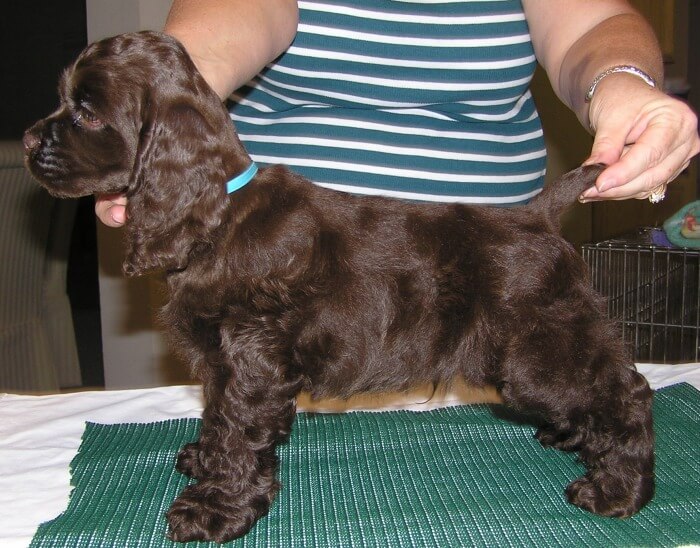

Meet the Breeders
Annette Norris is the breeder behind DreamShadow Cockers. Read about the kennel’s beginnings, the sires, the dams, the puppies, and more!

Meet the Breeders
Suzanne Bambule is the breeder behind Monarch Pointers and Cocker Spaniels. Read about the kennel’s beginnings, sires, dams, and more!
When the dog is in its natural stance, the tail is set as an extension of the topline. It is carried horizontally or at a slight upward angle, but is never raised high above the back. The tail showcases the breed's enthusiastic demeanor, especially when it wags for pleasure or attention.
Historically, the Cocker Spaniel's tail has been docked, primarily to prevent injury when working in the field. However, docking practices today vary by country and even within jurisdictions. When left undocked, the tail is of medium length and feathered, and still maintains its characteristic lively action.
Standard Markings
A Note About Color: The Black Variety includes black with tan points. The black must be a solid black with a healthy sheen. Tan points can range from light cream to dark red in color. Only a small amount of white on the chest and/or throat is acceptable. The Parti-Color Variety presents two or more solid and well-broken colors, one of which must be white, and includes roans as well as tan points. The ASCOB variety includes any solid color other than black, although lighter feathering is acceptable. Only a small amount of white on the chest and/or throat is acceptable.
Coat Type
Double, Silky
The structure of the coat this breed carries.
Coat Length
Long
How long the breed's coat grows when kept in condition.
Adaptability Level
How easily a breed copes with changes in home, routine, noise and weather.
Mental Stimulation Needs
How much a breed needs a job, a puzzle or training to stay content.
Feeding a Cocker Spaniel requires a balance of nutrition that suits the breed’s active and energetic nature. These dogs typically have a moderate appetite; however, and tend to gain weight if not provided with the right amount and type of food and given periods of regular exercise.
For Cocker Spaniel puppies, the diet should be rich in proteins and fats to support their growth and development. Puppies should be fed multiple small meals throughout the day, gradually reducing the number as they age. As they transition into adulthood, typically by 12 months, the Cocker’s diet can shift to adult dog food formulations.
An adult Cocker Spaniel will typically consume between 1.5 to 2.5 cups of high-quality dry dog food daily, divided into two meals. The exact amount may vary based on the dog's age, metabolism, activity level, and overall health. Owners should monitor their dog's weight and adjust portions accordingly to prevent overfeeding or not feeding enough.
It's always important to ensure that a Cocker Spaniel has access to fresh water throughout the day. Also, treats can be given, but this should be done in moderation and accounted for in the dog's total caloric intake.
Lastly, it's always a good practice to consult with a veterinarian to tailor a feeding plan that meets the specific needs of your individual Cocker Spaniel.
Training a Cocker Spaniel is an experience filled with rewards and challenges. These dogs are known for their intelligence and eagerness to please, which makes them relatively easy to train, especially when started early. The breed’s keen sense of understanding and its responsive nature often mean the Cocker picks up commands quickly.
However, it's important to remember that the Cocker Spaniel is a sensitive soul. Harsh training methods or negative reinforcement can lead to a timid or anxious dog. Positive reinforcement, using treats, praises, and toys, is the most effective way to guide them.
While Cocker Spaniels don't have a high tendency to bark excessively, they might alert their owners with a bark when they notice someone at the door or when they hear any unfamiliar sounds. Training them with commands like "quiet" can help to manage this behavior.
In terms of intelligence, Cocker Spaniels rank high. Combined with their sporting background, this can sometimes lead to a bit of wanderlust. It's crucial to provide secure fencing in the yard and always have the Cocker on a leash during walks. Early recall training is beneficial for this breed.
The breed’s ancestral instincts can also mean a higher prey drive. This doesn't mean these hunting dogs can't coexist with smaller pets, but early socialization and consistent training are essential to ensure harmonious relationships.
Grooming Expectations
The typical Cocker Spaniel's coat is of medium length and can either be straight or slightly wavy. Regular brushing, at least two to three times a week, is necessary to remove loose hair, prevent matting, and distribute natural oils throughout their coat. Due to the breed's propensity for ear infections, it's crucial to keep the ears clean and dry. Weekly ear checks and gentle cleanings with a vet-approved solution can help to prevent issues. Cocker Spaniels tend to shed moderately. While no dog is truly hypoallergenic, consistent grooming can help to manage the amount of hair and dander released into the environment, making life a bit easier for those with mild allergies. In addition to coat care, regular nail trimming is necessary. If left too long, overgrown nails can cause discomfort or lead to problems with posture and mobility. It's good practice to trim the nails every couple of weeks or as needed. Lastly, as with all breeds, regular dental care is a must. Brushing their teeth several times a week will help to reduce tartar buildup and the risk of gum disease.