Members
01/Overview
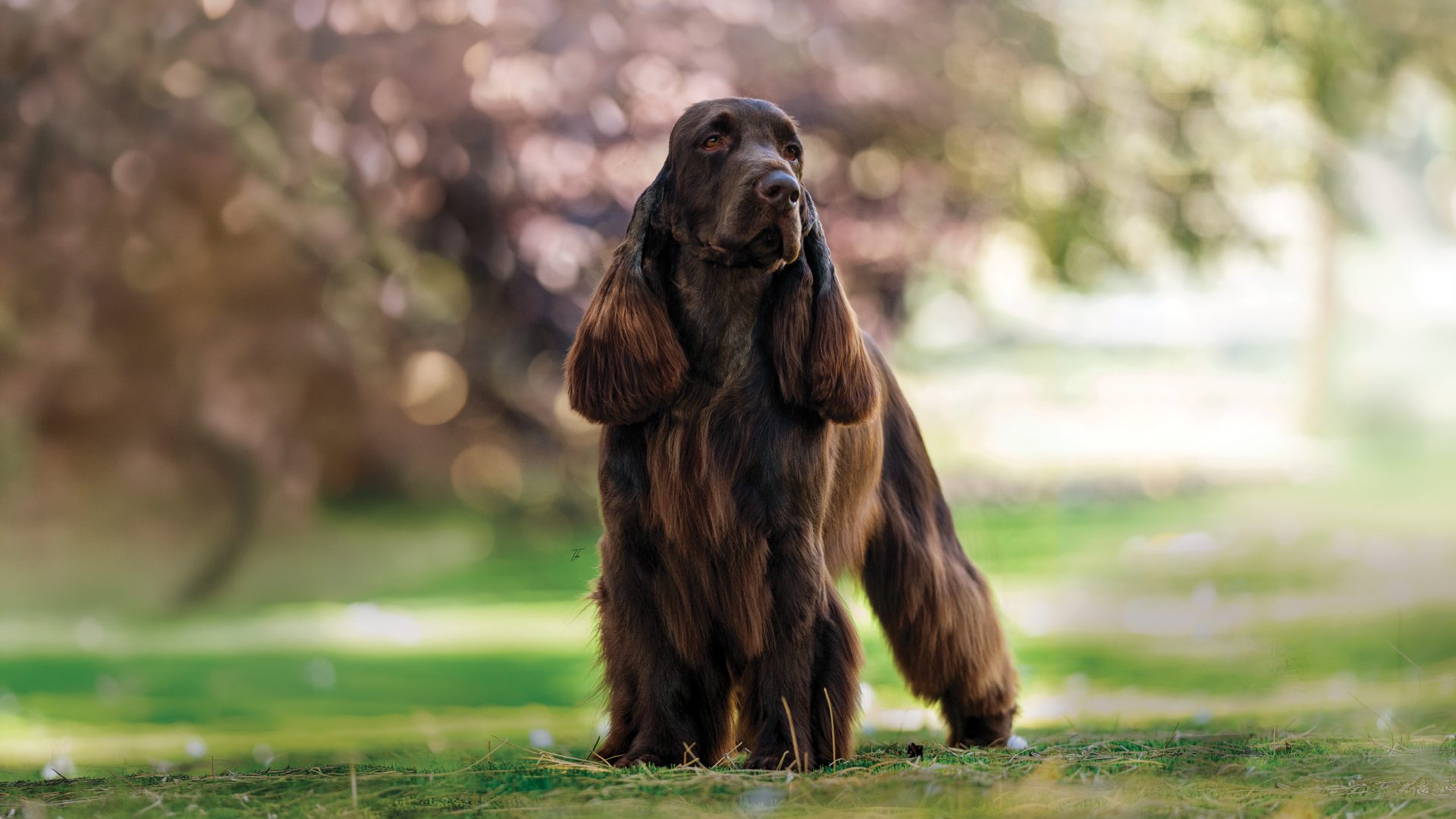
The Field Spaniel is a medium-sized breed known for its kind temperament, intelligence, and adaptability. Developed from a mix of spaniel breeds, it has excelled as both a hunter and a family companion, valued for its affectionate and patient nature with children.
Highlights
02/History
Developed in England during the mid-19th century, Field Spaniels are versatile dogs admired for their hunting skills and companionship. Initially classified by size rather than breed, spaniels weighing more than 25 pounds were designated as Field Spaniels, while smaller dogs were called Cocker Spaniels.
The late 19th century saw a surge in the breed’s popularity, but excessive “fancy” breeding led to exaggerated features—longer bodies, shorter legs, and heavy coats—that hindered their functionality. This decline in practicality caused a sharp drop in popularity among hunters and the general public.
By the early 20th century, the Field Spaniel faced extinction. Mortimer Smith encouraged enthusiasts in the UK and in the US to restore the breed’s athleticism and balanced proportions through crossbreeding with English Springers and Cockers. Despite these efforts, challenges persisted, with the breed nearly vanishing in America after a devastating kennel fire in 1909.
In 1967, three Field Spaniels were imported to the United States, forming the foundation of the modern American population. In the UK, the Field Spaniel Society, established in 1923, has played a pivotal role in preserving the breed and promoting its dual purpose as a capable working dog and a graceful show companion.
03/Appearance
Mature male Field Spaniels stand around 18 inches tall at the shoulder, with females slightly smaller at about 17 inches. Field Spaniels typically weigh between 35 and 50 pounds.
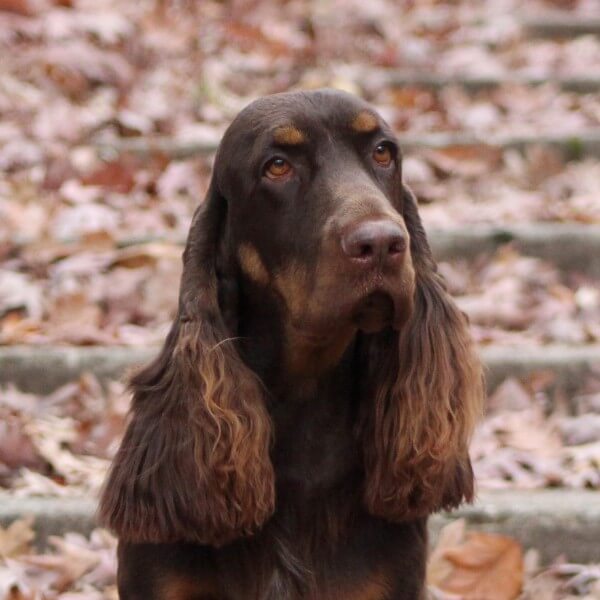
Field Spaniels are medium-sized, well-balanced dogs with a slightly rectangular body shape. Their length, from shoulder to buttocks, exceeds their height at the withers in a 7:6 ratio. The breed’s solid yet refined build reflects its strength and agility, ideal for field work.
Texture: The Field Spaniel has a single coat that is moderately long, flat, or slightly wavy. It is dense and water-repellant, offering protection in the field and in the water. The coat is glossy in appearance and silky to the touch, with feather-like furnishings of moderate length.
Standard Colors
Standard Markings
04/Consider
Field Spaniels are loyal, active companions well-suited for families that enjoy outdoor activities. They excel in canine sports and are affectionate and patient with children. They are typically reserved with strangers but never aggressive. Their playful nature requires consistent engagement and training.
Interaction With Family
The level of affection a breed typically shows towards family members and familiar individuals.
Good With Other Dogs
The innate friendliness of a dog towards other dogs can depend on its breed.
Good With Young Children
The degree to which a breed will typically be patient with young children.
Amount Of Shedding
How much hair a breed typically leaves behind on clothes, furniture and floors.
Frequency Of Grooming
How often a breed needs brushing, bathing or a professional trim to stay in condition.
Amount Of Drooling
How prone a breed is to drool, worth knowing before you keep a towel by the door.
Openness To Strangers
How openly a breed tends to greet new people, visitors and strangers.
Protective Nature
How likely a breed is to alert you to anything unfamiliar, and stand between you and it.
Playfulness Level
How enthusiastic a breed stays about games and play well past puppyhood.
Trainability Level
How readily a breed takes direction and works with you rather than around you.
Barking Level
How much a breed uses its voice, and how readily.
Energy Level
How much get-up-and-go a breed brings to an average day.
Health
Field Spaniels are generally healthy, with an average lifespan of 12–13 years. Responsible breeding, regular veterinary check-ups, and a balanced diet help to minimize health issues and promote longevity.
Field Spaniels are gentle and affectionate dogs, known for their calm and friendly demeanor. They display an eagerness to please and are well-suited for novice owners. They respond best to encouragement and positive reinforcement.
These dogs are patient and form strong bonds with their families, making them excellent companions for children. They get along well with other pets and are approachable and sociable without being overly assertive, quickly warming up to strangers.
Field Spaniels enjoy spending time with their human companions and thrive on interaction. While they can handle short periods alone, extended isolation often leads to boredom or anxiety, making the breed best suited for homes where they can be active participants in daily life.
Exercise Expectations
At least an hour of exercise per day is recommended to prevent boredom and associated behaviors like restlessness or chewing. Regular outdoor adventures, including opportunities to explore and follow scents, satisfy their natural curiosity and hunting instincts. Despite their high energy levels, Field Spaniels enjoy relaxing with their families. These well-balanced companions benefit from a consistent exercise routine that keeps them happy, healthy, and well-adjusted.
Grooming Expectations
Living with a Field Spaniel means embracing the breed’s affectionate and loyal nature. These dogs form deep bonds with their human companions and thrive in homes where they are included in daily activities.
They can adapt to various living arrangements, including apartments, provided their daily exercise needs are met. While they tolerate mild weather well, they may need protection in extreme heat or cold.
Field Spaniels are happiest when they have regular interaction with their people, making them ideal for individuals who can offer companionship and engage in outdoor adventures. Their gentle temperament ensures they integrate well into family life.
05/Puppies
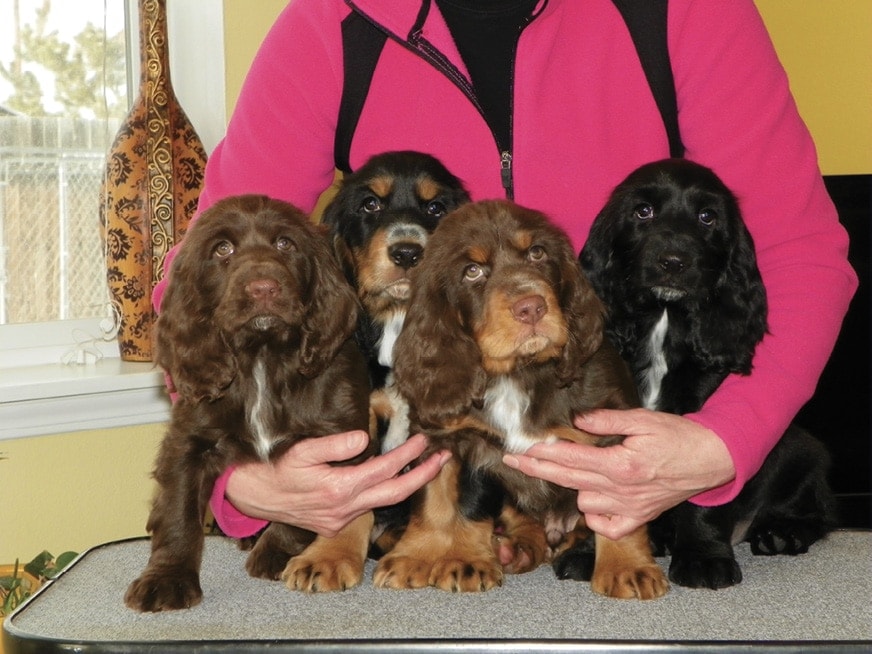
Field Spaniel puppies are adorable and energetic, and a delight to have around. They are typically affectionate and thrive on human companionship, requiring both patience and love from their people. As with any puppy, thoughtful care, training, and socialization will encourage individuals to become well-adjusted as adults.
Caring for a Field Spaniel puppy begins with creating a safe and nurturing environment. Puppy-proofing the home and providing a comfortable, designated space, such as a crate, helps the new family member to feel secure while aiding in housetraining.
Socialization is key during the early months of life to ensure the puppy grows up to become a well-adjusted adult. Introducing the puppy to various people, animals, and environments builds confidence and reduces the risk of fear or anxiety later in life.
A high-quality puppy food tailored to a puppy’s developmental needs, divided into smaller, frequent meals, supports rapid growth. Regular veterinary check-ups help to monitor overall health and keep the pup on track during this critical stage.
Training should start early, focusing on basic commands, leash manners, and positive reinforcement. and Supervisedplaytime provides both mental and physical stimulation, helping the puppy to burn off energy and develop a strong bond with each family member.
06/Activities
Gallery
07/Standards
The Field Spaniel is recognized by the world's leading registries and kennel organizations, which categorize the breed into a specific Group based on its unique characteristics. This breed is recognized worldwide under the following Group designations:
The ideal Field Spaniel is described by a Breed Standard that is approved by each of the world’s leading registries and kennel organizations. The Breed Standards for this breed may be found in the following links:
08/Clubs
09/Rescue
10/Facts
Ancient Heritage
Field Spaniels are among the oldest of all spaniel breeds, with a lineage dating back centuries. Their ancestors were skilled hunters, flushing and retrieving gamebirds.
Rare Breed
With a smaller population compared to other spaniel breeds, Field Spaniels are considered a rare and vulnerable breed, cherished by enthusiasts who value their distinctiveness.
Natural Athletes
Field Spaniels are built for action, excelling in activities like Agility and Flyball thanks to their strong legs and boundless energy.
Playful Personalities
Field Spaniels retain a puppy-like playfulness throughout their lives, making them endlessly entertaining companions.
Versatile Workers
From hunting and retrieving to search and rescue, the Field Spaniel’s intelligence and adaptability allow this breed to thrive in a variety of working roles.
11/FAQ
Field Spaniels do shed, but not excessively. Regular grooming helps to keep their coat in good condition and minimizes shedding.

Written by
Dan Sayers is the Executive Editor of SHOWSIGHT. He is a member of the World Dog Press Association and the Dog Writers Association of America, which recognized his illustrations in the award-winning Encyclopedia of K-9 Terminology. Dan is a longtime supporter of the sport of dogs and an advocate for the conservation of recognized breeds in all their forms and functions. He is a member of the Morris and Essex Kennel Club, and for 45 years, the Irish Water Spaniel Club of America where he serves as AKC Delegate, Archivist, and approved Breed Mentor. Dan breeds under the Quiet Storm prefix and has judged the IWSCA National Specialty Sweepstakes twice.
Official Standard of the Field Spaniel
General Appearance: The Field Spaniel is a combination of beauty and utility. It is a well balanced, substantial hunter-companion of medium size, built for activity and endurance in a heavy cover and water. It has a noble carriage; a proud but docile attitude; is sound and free moving. Symmetry, gait, attitude and purpose are more important than any one part.
Size, Proportion, Substance: Balance between these three components is essential. Size-Ideal height for mature adults at the withers is 18 inches for dogs and 17 inches for bitches. A one inch deviation either way is acceptable. Proportion-A well balanced dog, somewhat longer than tall. The ratio of length to height is approximately 7:6. (Length is measured on a level from the foremost point of the shoulder to the rearmost point of the buttocks.) Substance-Solidly built, with moderate bone, and firm smooth muscles.
Head: Conveys the impression of high breeding, character and nobility, and must be in proportion to the size of the dog. Expression-Grave, gentle and intelligent. Eyes-Almond in shape, open and of medium size; set moderately wide and deep. Color: dark hazel to dark brown. The lids are tight and show no haw; rims comparable to nose in color. Ears-Moderately long (reaching the end of the muzzle) and wide. Set on slightly below eye level: pendulous, hanging close to the head; rolled and well feathered. Leather is moderately heavy, supple, and rounded at the tip. Skull-The crown is slightly wider at the back than at the brow and lightly arched laterally; sides and cheeks are straight and clean. The occiput is distinct and rounded. Brows are slightly raised. The stop is moderate, but well defined by the brows. The face is chiseled beneath the eyes. Muzzle-Strong, long and lean, neither snipy nor squarely cut. The nasal bone is straight and slightly divergent from parallel, sloping downward toward the nose from the plane of the top skull. In profile, the lower plane curves gradually from the nose to the throat. Jaws are level. Nose-Large, flesh and well developed with open nostrils. Set on as an extension of the muzzle. Color: solid: light to dark brown or black as befits the color of the coat. Lips-Close fitting, clean, and sufficiently deep to cover the lower jaw without being pendulous. Bite-Scissors or level, with complete dentition. Scissors preferred.
Neck, Topline, Body: Neck-Long, strong, muscular, slightly arched, clean, and well set into shoulders. Topline-The neck slopes smoothly into the withers; the back is level, well muscled, firm and strong; the croup is short and gently rounded. Body-The prosternum is prominent and well fleshed. The depth of chest is roughly equal to the length of the front leg from elbow to ground. The rib cage is long and extending into a short loin. Ribs are oval, well sprung and curve gently into a firm loin. Loin-Short, strong, and deep, with little or no tuck up. Tail-Set on low, in line with the croup, just below the level of the back with a natural downward inclination. Docked tails preferred, natural tails are allowed. The tail whether docked or natural length should be in balance with the overall dog.
Forequarters: Shoulders blades are oblique and sloping. The upper arm is closed-set; elbows are directly below the withers, and turn neither in nor out. Bone is flat. Forelegs are straight and well boned to the feet. Pasterns are moderately sloping but strong. Dewclaws may be removed. Feet face forward and are large, rounded, and webbed, with strong, well arched relatively tight toes and thick pads.
Hindquarters: Strong and driving; stifles and hocks only moderately bent. Hocks well let down; pasterns relatively short, strong and parallel when viewed from the rear. Hips moderately broad and muscular; upper thigh broad and powerful; second thigh well muscled. Bone corresponds to that of the forelegs. No dewclaws.
Coat: Single; moderately long; flat or slightly wavy; silky; and glossy; dense and water repellent. Moderate setter-like feathering adorns the chest, underbody, backs of the legs, buttocks, and may also be present on the second thigh and underside of the tail. Pasterns have clean outlines to the ground. There is short, soft hair between the toes. Overabundance of coat, or cottony texture, impractical for field work should be penalized. Trimming is limited to that which enhances the natural appearance of the dog. Amount of coat or absence of coat should not be faulted as much as structural faults.
Color: Black, liver, golden liver or shades thereof, in any intensity (dark or light); either self-colored or bi-colored. Bi-colored dogs must be roaned and/or ticked in white areas. Tan points are acceptable on the aforementioned colors and are the same as any normally tan pointed breed. White is allowed on the throat, chest, and/or brisket, and may be clear, ticked, or roaned on a self-color dog. The sable pattern, a lighter undercoat with darker shading as tipping or dark overlay, with or without a mask present, is a disqualification. Disqualifications: The sable pattern, a lighter undercoat with darker shading as tipping or dark overlay, with or without a mask present.
Gait: The head is carried alertly, neither so high nor so low as to impede motion or stride. There is good forward reach that begins in the shoulder, coupled with strong drive from the rear, giving the characteristic effortless, long, low majestic stride. When viewed from front and/or rear elbows and hocks move parallel. The legs move straight, with slight convergence at increased speed. When moving, the tail is carried inclined slightly downward or level with the back, and with a wagging motion. Tail carried above the back is incorrect. Side movement is straight and clean, without energy wasting motions. Overreaching and single tracking are incorrect. The Field Spaniel should be shown at its own natural speed in an endurance trot, preferably on a loose lead, in order to evaluate its movement.
Temperament: Unusually docile, sensitive, fun-loving, independent and intelligent, with a great affinity for human companionship. They may be somewhat reserved in initial meetings. Any display of shyness, fear, or aggression is to be severely penalized.
Disqualifications: The sable pattern, a lighter undercoat with darker shading as tipping or dark overlay, with or without a mask present.
Approved April 6, 2020
Effective June 30, 2020


Meet the Judges
Gerardo Bernard shares his experience judging at the 2025 National Dog Show, reflecting on prestige, history, and excellence.

Obedience
Discover the Field Spaniel: a versatile, energetic dog perfect for agility, obedience, and hunting, with a playful and loving nature.
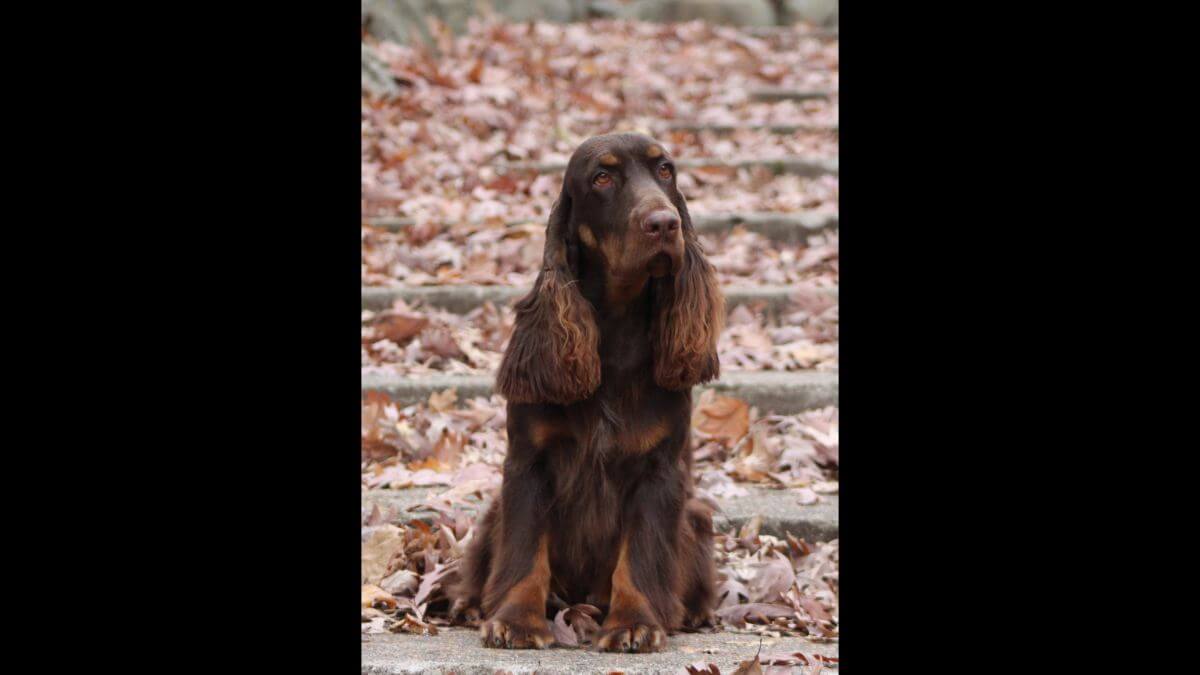
All About Judging
Master the Field Spaniel standard! Tips on judging for beauty, balance, and function in this rare, versatile hunting breed.
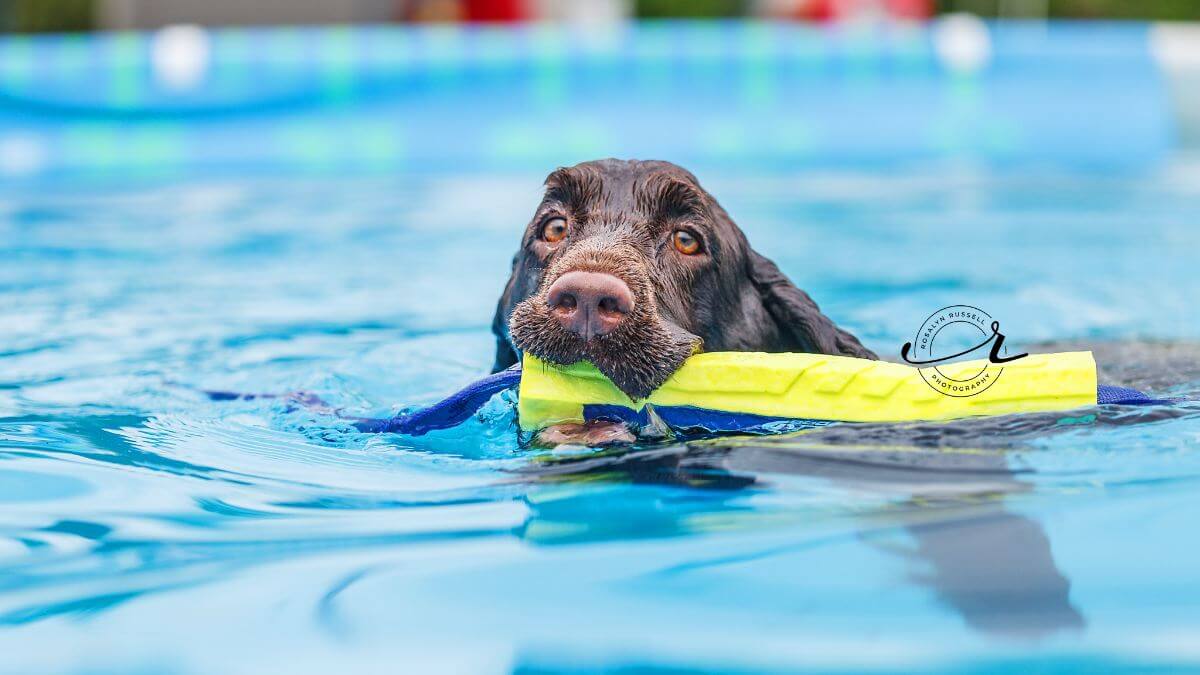
Dog Sports
Explore Field Spaniels’ beauty and utility through AKC sports like Scent Work, Dock Diving, and Barn Hunt. Perfect for non-hunters!
All About Judging
Color, pattern, and markings are the first things you notice when you meet a Field Spaniel, but they should be the last things considered
The Field Spaniel’s tail is an extension of the gently rounded croup, carried horizontally and never above the back. It may be natural or docked, usually by one-third. The tail is well-feathered with silky, fine hair and is typically trimmed for neatness.
A Note About Color: The Field Spaniel’s coat is as useful as it is beautiful. It is silky in texture, dense, and water-resistant. The chest, belly, second thigh, and back of the legs are nicely feathered with long hair, as is a naturally long tail. The head, face, throat, and top of the ears are typically trimmed as are the feet and tail. The coat of this spaniel is especially colorful, appearing in solid black or liver, black or liver roan, and black or liver with white. Bi-colored dogs must include areas of white with black or liver ticking. Tan markings can appear over the eyes and on the muzzle, cheeks, throat, underside of the ears, chest, feet, and the underside of the tail. White patches are acceptable on the throat and/or chest, and these may be clear white, roaned, or ticked.
Coat Type
Smooth
The structure of the coat this breed carries.
Coat Length
Medium
How long the breed's coat grows when kept in condition.
Adaptability Level
How easily a breed copes with changes in home, routine, noise and weather.
Mental Stimulation Needs
How much a breed needs a job, a puzzle or training to stay content.
Field Spaniels require a well-balanced diet to support their active lifestyle and overall health. To meet their nutritional needs, puppies benefit from high-quality puppy food, divided into smaller, frequent meals during the first few months of life.
Adult Field Spaniels thrive on two meals per day, with portions tailored to their size, age, and activity level To avoid overfeeding and obesity, they need 1.5 to 2 cups of high-quality dry food daily, but this will vary depending on a dog’s individual metabolism and exercise routines.
Field Spaniels are intelligent and eager to learn, which makes training a rewarding experience for both dog and owner. The breed’s natural willingness to please allows these dogs to respond well to positive reinforcement techniques, including treats and praise.
These sensitive dogs require a gentle and patient approach, as harsh corrections can undermine their confidence. Early training and socialization are essential to shape their behavior. This includes mastering basic commands and ensuring they feel comfortable in various environments.
While not excessive barkers, Field Spaniels may alert their owners to unfamiliar sounds or visitors. Their natural hunting instincts make recall training and secure outdoor spaces a priority.
Moderate shedding is normal, but routine grooming helps to control it. Occasional bathing with a gentle, dog-specific shampoo keeps the coat clean without stripping the natural oils. The breed’s long, feathered ears are prone to infections, so regular cleaning is essential. Nail trimming should be done regularly to avoid overgrowth and discomfort, and will support the dog’s overall good health as well as its appearance.