Members
01/Overview
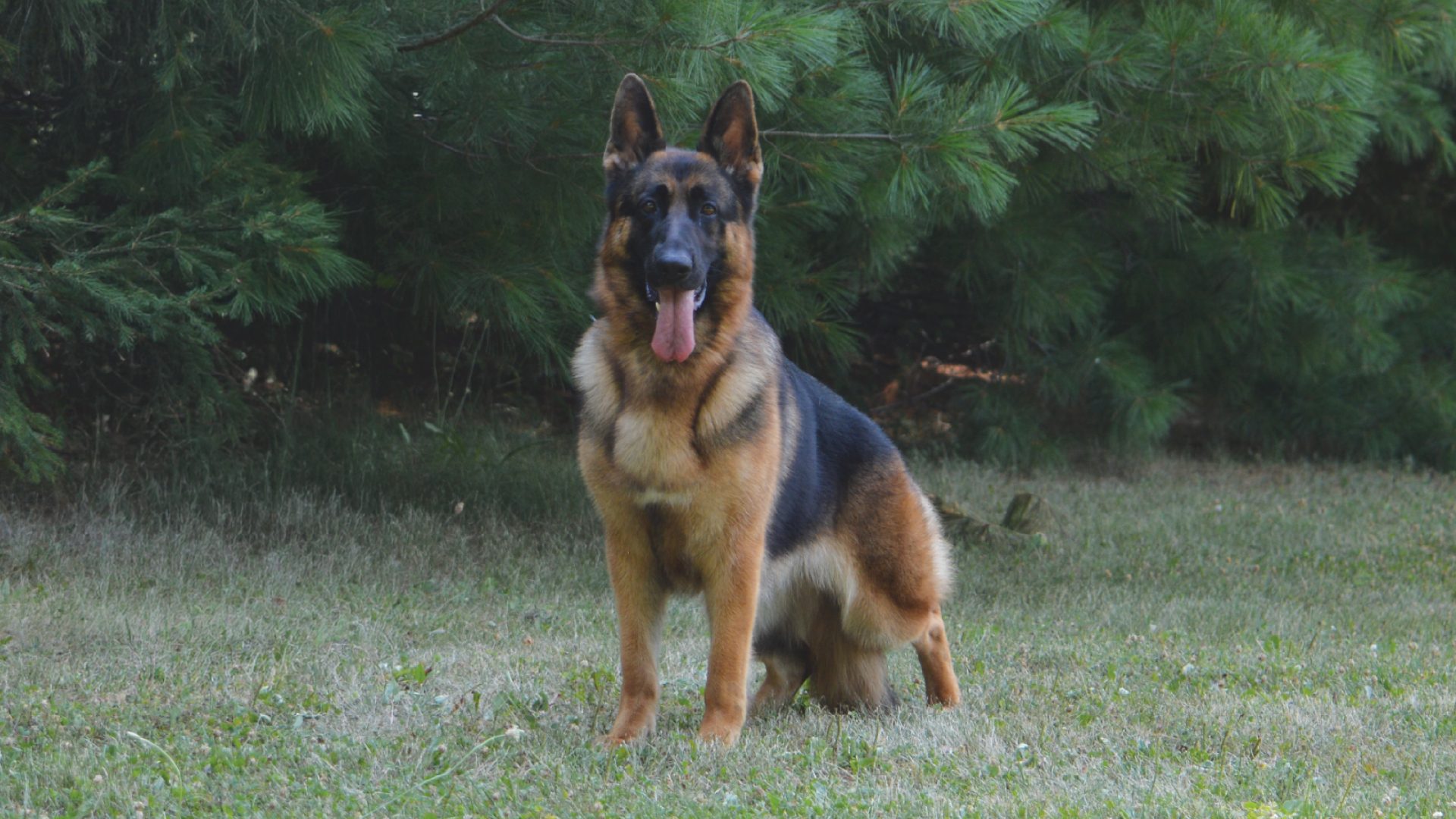
The German Shepherd Dog, often simply referred to as the German Shepherd or GSD, is one of the world's most recognizable and popular breeds. Originating from Germany, this noble breed was originally developed for herding and guarding sheep, but its adaptability has since propelled it into a myriad of roles beyond its pastoral beginnings. Known for its versatility, intelligence, and loyalty, the GSD is lauded as an ideal working partner, serving many roles in police and military work as well as in search & rescue operations. The breed’s strong protective instincts, combined with its high trainability and eagerness to please, have also made the “Shepherd” a cherished family companion.
Highlights
02/History
The origins of the German Shepherd Dog trace back to late 19th-century Germany. The breed was developed primarily for the purpose of herding sheep and protecting them from predators. Given Germany's vastness, there was a necessity for a hardworking, intelligent, and versatile dog capable of managing large flocks across varied terrain.
The man credited with the formal creation of the German Shepherd Dog as a distinct breed is Captain Max von Stephanitz. In the 1890s, he envisioned a German breed that would be unmatched in its capability as a herding dog. In 1899, after coming across a dog named Hektor Linksrhein, who possessed all the qualities he was looking for, von Stephanitz purchased the dog and changed his name to Horand von Grafrath. Horand would become the very first German Shepherd Dog registered and is considered the progenitor of the breed.
Von Stephanitz and his peers formed the Verein für Deutsche Schäferhunde (Society for the German Shepherd Dog) and worked diligently on refining the breed. They put a strong emphasis on traits such as intelligence, loyalty, and discipline. As industrialization spread across Germany and reduced the need for herding dogs, von Stephanitz advocated for the breed to be employed in other roles, such as police and military work, because of its adaptability and intelligence.
During World Wars I and II, the German Shepherd Dog's valor and effectiveness as a Military, Rescue, and Messenger Dog became evident. The dogs’ exceptionalism brought them to the attention of the world, elevating their global popularity.
However, due to anti-German sentiment that followed the wars, the breed was renamed in many parts of the world. In England, the breed became known as the Alsatian, a name that persisted until 1977 when it reverted back to German Shepherd Dog.
The American Kennel Club recognized the German Shepherd Dog in 1908, and since then, the breed has been one of the most popular and recognized in the United States. Its roles have expanded from herding and protection to Search and Rescue, Police and Service Work, and of course, companionship.
The legacy of the German Shepherd Dog is not just its versatility but also its loyalty, bravery, and dedication to whatever task it undertakes. Whether it’s in the field herding sheep, in a war zone saving lives, or at home providing companionship, the German Shepherd has proved time and again why it remains one of the most revered dog breeds in the world.
03/Appearance
Adult male German Shepherd Dogs typically stand between 24 and 26 inches tall at the shoulder, with mature females being slightly shorter, usually ranging from 22 to 24 inches.
In terms of weight, males usually fall within the 65 to 90 pounds range, while females tend to be lighter, weighing in between 50 and 70 pounds.
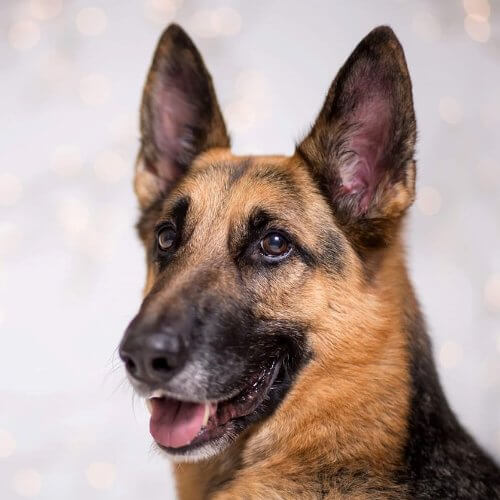
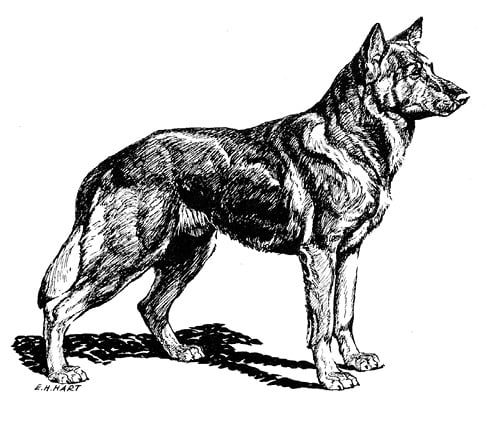
The German Shepherd Dog embodies a balance of strength and agility. When observed in profile, the breed is longer than tall by a ratio of 10 to 8.5 as measured from the prosternum to the rear edge of the pelvis. Length, however, is not achieved by a long back. Instead, the ribs are carried well back and the loin is relatively short. The result is a dog that is substantial, not spindly, with a well-muscled frame and an unmistakable nimbleness and nobility.
Texture: The double coat of the German Shepherd Dog can be described as dense and straight, with the presence of a harsh outer layer and a thick, insulating undercoat. The outer coat lies close to the body and is dense, harsh, and straight, although a slightly wavy topcoat is acceptable. The ideal coat is of medium length, but the head, foreface, ears, front of the legs, and feet are covered with short hair. The coat on the neck is generally thicker and longer, and the tail typically presents a rather bushy appearance. Soft, silky, woolly, curly, open, or long coats are unacceptable in the breed.
Standard Colors
04/Consider
Owning a German Shepherd Dog is a commitment to a loyal, intelligent, and versatile canine companion. These dogs are known for their dedication to their families, and their alertness makes them outstanding guardians. However, the breed’s strong working lineage also means they require regular mental and physical stimulation. Training, socialization, and daily engagement are crucial to ensure they develop into well-rounded partners. Without proper training, their protective instincts can become misdirected, and without sufficient exercise, they can become restless or even destructive.
Interaction With Family
The level of affection a breed typically shows towards family members and familiar individuals.
Good With Other Dogs
The innate friendliness of a dog towards other dogs can depend on its breed.
Good With Young Children
The degree to which a breed will typically be patient with young children.
Amount Of Shedding
How much hair a breed typically leaves behind on clothes, furniture and floors.
Frequency Of Grooming
How often a breed needs brushing, bathing or a professional trim to stay in condition.
Amount Of Drooling
How prone a breed is to drool — worth knowing before you keep a towel by the door.
Openness To Strangers
How openly a breed tends to greet new people, visitors and strangers.
Protective Nature
How likely a breed is to alert you to — and stand between you and — anything unfamiliar.
Playfulness Level
How enthusiastic a breed stays about games and play well past puppyhood.
Trainability Level
How readily a breed takes direction and works with you rather than around you.
Barking Level
How much a breed uses its voice, and how readily.
Energy Level
How much get-up-and-go a breed brings to an average day.
Health
German Shepherds are generally robust and healthy dogs, but like all breeds and mixed breeds, they can be susceptible to certain health conditions. Regular veterinary check-ups, a balanced diet, and an active lifestyle can help to maintain a longer, healthier life for this breed. Lifespan: The average lifespan for a German Shepherd Dog ranges from 7 to 10 years. However, with proper care and regular medical attention, many live longer, fulfilling lives.
German Shepherd Dogs have an innate desire to please their people, although their sheer intelligence and dynamic energy can prove challenging for novice dog owners. Their keen minds thrive on stimulation and purpose, and without proper engagement, they may resort to undesirable behaviors out of boredom or frustration. It's essential, therefore, for potential GSD owners to understand the commitment to training and mental stimulation required to raise a well-adjusted dog.
German Shepherds are not just emotionally intelligent; they are deeply sensitive creatures. They form profound connections with their families, and this bond manifests in various ways. They can be keenly attuned to their owner's emotions and moods, often providing comfort or company when it's most needed. However, this sensitivity also means they might struggle with changes in their environment or routine, needing reassurance and consistency.
Separation anxiety is not uncommon in German Shepherds. Their loyalty to their families means they thrive on companionship and may exhibit distress when left alone for extended periods. Owners need to be aware of this potential challenge and find ways to gradually acclimatize their dogs to short periods of solitude.
Socializing this breed from a young age is pivotal. Positive interactions with various people, animals, and environments can help to mold a well-rounded and confident adult dog. Given their protective instincts, German Shepherd Dogs naturally exhibit caution around strangers, making early socialization essential to prevent undue wariness or aggression.
Exercise Expectations
A young German Shepherd is a bundle of energy, often exhibiting its playful side through games and exploration. Regular play sessions, whether a spirited game of fetch or a romp in a secured yard, meet its need for physical activity and also foster deeper bonds between the dog and its owner. Such play sessions also serve as a controlled environment where the GSD can be taught boundaries and appropriate play behavior. Daily walks are fundamental to the exercise routine of a German Shepherd Dog. Ranging from 45 minutes to over an hour, these walks provide the dog with mental stimulation through the myriad of scents, sights, and sounds it encounters. This sensory enrichment is invaluable for keeping the dog engaged and content. As the German Shepherd matures, its inherent drive and capabilities can be channeled into specific activities. Given its roots in herding, Herding Trials, or even simulated herding games, can be immensely satisfying for the dog. Similarly, due to its keen sense of smell and alertness, Scent Work or Tracking exercises can be both stimulating and rewarding. Structured training beyond basic commands also doubles as exercise. Whether it's Agility training, advanced Obedience, or even Protection work, the German Shepherd is equipped to excel. These activities not only challenge the dog’s physical capabilities, it also engages its sharp intellect, making training both fun and productive. While it's essential to ensure the German Shepherd Dog receives adequate exercise, overexertion, especially in puppies, can be detrimental. Their developing bones and joints can be susceptible to injuries if overworked. Hence, it's crucial to strike a balance, taking cues from the dog's behavior and energy levels. Having access to fresh water and providing regular breaks during exercise sessions can prevent dehydration and fatigue.
Living with a German Shepherd Dog is a rewarding experience, enriched through unwavering loyalty and companionship. However, given the breed’s size, energy, and working history, there are several considerations that will ensure its well-being and contentment in almost any living environment.
German Shepherds are large, active dogs that benefit from having ample space to move, play, and explore. While they can adapt to apartment living, it's essential that they receive adequate outdoor exercise daily. Homes with fenced yards offer a safe space for the dog to play and run, but given the breed's intelligence and penchant for escape, it's essential to be sure the fence is always secure.
The double coat of the GSD offers protection against both cold and moderate heat. These dogs can handle colder climates relatively well, but during hot weather, it's crucial to provide shade and water, and to limit excessive activity during peak hours of excessive heat.
German Shepherds, with their keen senses and natural protective instinct, are often alert to their surroundings. Inside the home, they prefer to be involved in family activities and will stay close to their human companions. Providing them with a dedicated space or bed can give them a sense of security.
The breed is inherently social and bonds deeply with its family. These dogs thrive on interaction and can become distressed or develop behavioral issues if left alone for extended periods. It's beneficial to integrate them into daily routines, be it a walk, playtime, or even simple companionship while working.
05/Puppies
The sight of a litter of German Shepherd Dog puppies, with their floppy ears and curious eyes, can melt any heart. However, raising one of these beauties comes with its own set of challenges and rewards. The goal is to utilize the puppy phase as the foundation upon which a strong, well-adjusted adult GSD is built.
Welcoming a puppy into one's life is an engaging journey that requires commitment and understanding. However, the German Shepherd puppy’s dynamic nature, combined with its intrinsic drive, makes this a breed apart from all the rest.
As GSD puppies are both curious and active, ensuring a safe environment is essential. It's always necessary to puppy-proof the home, keeping a vigilant eye to deter the little one from potential hazards like chewing on wires or accessing unsafe areas.
The German Shepherd puppy has a robust growth trajectory. Feeding a balanced, high-quality puppy food is vital to support the youngster’s skeletal and muscular development. Consistency in feeding times also helps to instill discipline early on.
Given the breed's susceptibility to specific conditions like hip dysplasia, regular veterinary check-ups, particularly in the first year, are essential. These visits will encompass necessary vaccinations, preventive care, and growth monitoring.
The intelligence of the German Shepherd Dog is widely acknowledged, even among the puppies. This makes the GSD pup highly trainable, but it also underscores the importance of starting obedience training at a young age. Structured, positive reinforcement-based training methods are most effective, setting the stage for a disciplined adult dog.
Early socialization is crucial for the German Shepherd Dog. Exposing a puppy to a variety of environments, sounds, people, and other animals instills confidence and makes this breed a pleasure to be around. It's a proactive way to make sure the GSD puppy grows up to become a secure and sociable adult without any unwarranted aggression or fear.
06/Activities
The German Shepherd Dog is a breed known for its versatile capabilities, tireless work ethic, and keen intelligence. This combination of traits makes the breed a prime candidate for a range of activities and dog sports that cater to its physical and mental needs.
Gallery
07/Standards
The German Shepherd Dog is recognized by the world's leading registries and kennel organizations, which categorize the breed into a specific Group based on its unique characteristics. This breed is recognized worldwide under the following Group designations:
The ideal German Shepherd Dog is described by a Breed Standard that is approved by each of the world’s leading registries and kennel organizations. The Breed Standards for this breed may be found in the following links:
08/Clubs
09/Rescue
10/Facts
Origins and History
The German Shepherd Dog was originally developed in the late 19th and early 20th centuries in Germany for herding and guarding sheep. The dogs quickly gained popularity due to their intelligence, loyalty, and versatility.
Breeding for Skills
The breed's founder, Captain Max von Stephanitz, focused on creating a working dog with specific skills rather than purely aesthetic traits. This emphasis on functionality is why German Shepherds are known for their intelligence and ability to learn complex tasks.
Versatile Working Abilities
GSDs are often employed as Police, Military, Search & Rescue, Guide Dogs, and Service Dogs due to their keen senses, strength, and trainability. They excel in roles that require them to think and act quickly.
Heroic Dogs
German Shepherd Dogs have a long history of performing heroic acts. They've served in various wars, including World Wars I and II, where they delivered messages, detected enemies, and provided vital assistance to soldiers.
Popularity in Hollywood
German Shepherds have made their mark in the world of entertainment. They've appeared in numerous films and TV shows, often playing roles as canine officers. One of the most famous dogs in Hollywood was Rin Tin Tin, who gained fame in the 1920s.
Exceptional Senses
GSDs have strong senses of smell and hearing, making them excellent candidates for search & rescue operations. Their noses are so sensitive that they can detect certain medical conditions in humans, such as low blood sugar or the onset of a seizure.
Distinctive Appearance
German Shepherd Dogs are easily recognizable by their well-proportioned and athletic build. They have a thick double coat which can come in various colors, including black & tan, sable, and all-black.
Intelligence
German Shepherds are ranked as the third most intelligent dog breed, according to Stanley Coren's book, The Intelligence of Dogs. They can learn commands quickly and have a strong desire to please their owners.
Working Dog Championships
GSDs often dominate working dog competitions. They're known for their agility, obedience, and endurance, making them a common sight in events such as Schutzhund Trials, which test a dog’s protection, tracking, and obedience skill set.
Constant Shedding
German Shepherd Dogs are known for shedding year-round. Their thick double coat requires regular grooming to keep the coat manageable and reduce shedding around the house.
11/FAQ
Yes, the German Shepherd Dog can be a good family dog, but there are some important considerations. Although these are loyal and intelligent dogs, their size, energy levels, and protective instincts mean they may not be the best choice for every situation. Proper training, early socialization, and regular exercise are essential to ensure a puppy grows up to become a well-adjusted adult.
Official Standard of the German Shepherd Dog
General Appearance: The first impression of a good German Shepherd Dog is that of a strong, agile, well muscled animal, alert and full of life. It is well balanced, with harmonious development of the forequarter and hindquarter. The dog is longer than tall, deep-bodied, and presents an outline of smooth curves rather than angles. It looks substantial and not spindly, giving the impression, both at rest and in motion, of muscular fitness and nimbleness without any look of clumsiness or soft living. The ideal dog is stamped with a look of quality and nobility -difficult to define, but unmistakable when present. Secondary sex characteristics are strongly marked, and every animal gives a definite impression of masculinity or femininity, according to its sex.
Temperament: The breed has a distinct personality marked by direct and fearless, but not hostile, expression, self-confidence and a certain aloofness that does not lend itself to immediate and indiscriminate friendships. The dog must be approachable, quietly standing its ground and showing confidence and willingness to meet overtures without itself making them. It is poised, but when the occasion demands, eager and alert; both fit and willing to serve in its capacity as companion, watchdog, blind leader, herding dog, or guardian, whichever the circumstances may demand. The dog must not be timid, shrinking behind its master or handler; it should not be nervous, looking about or upward with anxious expression or showing nervous reactions, such as tucking of tail, to strange sounds or sights. Lack of confidence under any surroundings is not typical of good character. Any of the above deficiencies in character which indicate shyness must be penalized as very serious faults and any dog exhibiting pronounced indications of these must be excused from the ring. It must be possible for the judge to observe the teeth and to determine that both testicles are descended. Any dog that attempts to bite the judge must be disqualified. The ideal dog is a working animal with an incorruptible character combined with body and gait suitable for the arduous work that constitutes its primary purpose.
Size, Proportion, Substance: The desired height for males at the top of the highest point of the shoulder blade is 24 to 26 inches; and for bitches, 22 to 24 inches. The German Shepherd Dog is longer than tall, with the most desirable proportion as 10 to 8½. The length is measured from the point of the prosternum or breastbone to the rear edge of the pelvis, the ischial tuberosity. The desirable long proportion is not derived from a long back, but from overall length with relation to height, which is achieved by length of forequarter and length of withers and hindquarter, viewed from the side.
Head: The head is noble, cleanly chiseled, strong without coarseness, but above all not fine, and in proportion to the body. The head of the male is distinctly masculine, and that of the bitch distinctly feminine. The expression keen, intelligent and composed. Eyes of medium size, almond shaped, set a little obliquely and not protruding. The color is as dark as possible. Ears are moderately pointed, in proportion to the skull, open toward the front, and carried erect when at attention, the ideal carriage being one in which the center lines of the ears, viewed from the front, are parallel to each other and perpendicular to the ground. A dog with cropped or hanging ears must be disqualified. Seen from the front the forehead is only moderately arched, and the skull slopes into the long, wedge-shaped muzzle without abrupt stop. The muzzle is long and strong, and its topline is parallel to the topline of the skull. Nose black. A dog with a nose that is not predominantly black must be disqualified. The lips are firmly fitted. Jaws are strongly developed. Teeth - 42 in number - 20 upper and 22 lower - are strongly developed and meet in a scissors bite in which part of the inner surface of the upper incisors meet and engage part of the outer surface of the lower incisors. An overshot jaw or a level bite is undesirable. An undershot jaw is a disqualifying fault. Complete dentition is to be preferred. Any missing teeth other than first premolars is a serious fault.
Neck, Topline, Body: The neck is strong and muscular, clean-cut and relatively long, proportionate in size to the head and without loose folds of skin. When the dog is at attention or excited, the head is raised and the neck carried high; otherwise typical carriage of the head is forward rather than up and but little higher than the top of the shoulders, particularly in motion. Topline - The withers are higher than and sloping into the level back. The back is straight, very strongly developed without sag or roach, and relatively short. The whole structure of the body gives an impression of depth and solidity without bulkiness. Chest - Commencing at the prosternum, it is well filled and carried well down between the legs. It is deep and capacious, never shallow, with ample room for lungs and heart, carried well forward, with the prosternum showing ahead of the shoulder in profile. Ribs well sprung and long, neither barrel-shaped nor too flat, and carried down to a sternum which reaches to the elbows. Correct ribbing allows the elbows to move back freely when the dog is at a trot. Too round causes interference and throws the elbows out; too flat or short causes pinched elbows. Ribbing is carried well back so that the loin is relatively short. Abdomen firmly held and not paunchy. The bottom line is only moderately tucked up in the loin. Loin Viewed from the top, broad and strong. Undue length between the last rib and the thigh, when viewed from the side, is undesirable. Croup long and gradually sloping. Tail bushy, with the last vertebra extended at least to the hock joint. It is set smoothly into the croup and low rather than high. At rest, the tail hangs in a slight curve like a saber. A slight hook- sometimes carried to one side-is faulty only to the extent that it mars general appearance. When the dog is excited or in motion, the curve is accentuated and the tail raised, but it should never be curled forward beyond a vertical line. Tails too short, or with clumpy ends due to ankylosis, are serious faults. A dog with a docked tail must be disqualified.
Forequarters: The shoulder blades are long and obliquely angled, laid on flat and not placed forward. The upper arm joins the shoulder blade at about a right angle. Both the upper arm and the shoulder blade are well muscled. The forelegs, viewed from all sides, are straight and the bone oval rather than round. The pasterns are strong and springy and angulated at approximately a 25-degree angle from the vertical. Dewclaws on the forelegs may be removed, but are normally left on. The feet are short, compact with toes well arched, pads thick and firm, nails short and dark.
Hindquarters: The whole assembly of the thigh, viewed from the side, is broad, with both upper and lower thigh well muscled, forming as nearly as possible a right angle. The upper thigh bone parallels the shoulder blade while the lower thigh bone parallels the upper arm. The metatarsus (the unit between the hock joint and the foot) is short, strong and tightly articulated. The dewclaws, if any, should be removed from the hind legs. Feet as in front.
Coat: The ideal dog has a double coat of medium length. The outer coat should be as dense as possible, hair straight, harsh and lying close to the body. A slightly wavy outer coat, often of wiry texture, is permissible. The head, including the inner ear and foreface, and the legs and paws are covered with short hair, and the neck with longer and thicker hair. The rear of the forelegs and hind legs has somewhat longer hair extending to the pastern and hock, respectively. Faults in coat include soft, silky, too long outer coat, woolly, curly, and open coat.
Color: The German Shepherd Dog varies in color, and most colors are permissible. Strong rich colors are preferred. Pale, washed-out colors and blues or livers are serious faults. A white dog must be disqualified.
Gait: A German Shepherd Dog is a trotting dog, and its structure has been developed to meet the requirements of its work. General Impression - The gait is outreaching, elastic, seemingly without effort, smooth and rhythmic, covering the maximum amount of ground with the minimum number of steps. At a walk it covers a great deal of ground, with long stride of both hind legs and forelegs. At a trot the dog covers still more ground with even longer stride, and moves powerfully but easily, with coordination and balance so that the gait appears to be the steady motion of a well-lubricated machine. The feet travel close to the ground on both forward reach and backward push. In order to achieve ideal movement of this kind, there must be good muscular development and ligamentation. The hindquarters deliver, through the back, a powerful forward thrust which slightly lifts the whole animal and drives the body forward. Reaching far under, and passing the imprint left by the front foot, the hind foot takes hold of the ground; then hock, stifle and upper thigh come into play and sweep back, the stroke of the hind leg finishing with the foot still close to the ground in a smooth follow-through. The overreach of the hindquarter usually necessitates one hind foot passing outside and the other hind foot passing inside the track of the forefeet, and such action is not faulty unless the locomotion is crabwise with the dogs body sideways out of the normal straight line. Transmission - The typical smooth, flowing gait is maintained with great strength and firmness of back. The whole effort of the hindquarter is transmitted to the forequarter through the loin, back and withers. At full trot, the back must remain firm and level without sway, roll, whip or roach. Unlevel topline with withers lower than the hip is a fault. To compensate for the forward motion imparted by the hindquarters, the shoulder should open to its full extent. The forelegs should reach out close to the ground in a long stride in harmony with that of the hindquarters. The dog does not track on widely separated parallel lines, but brings the feet inward toward the middle line of the body when trotting, in order to maintain balance. The feet track closely but do not strike or cross over. Viewed from the front, the front legs function from the shoulder joint to the pad in a straight line. Viewed from the rear, the hind legs function from the hip joint to the pad in a straight line. Faults of gait, whether from front, rear or side, are to be considered very serious faults.
Disqualifications: Cropped or hanging ears. Dogs with noses not predominantly black. Undershot jaw. Docked tail. White dogs. Any dog that attempts to bite the judge.
Approved February 11, 1978
Reformatted July 11, 1994
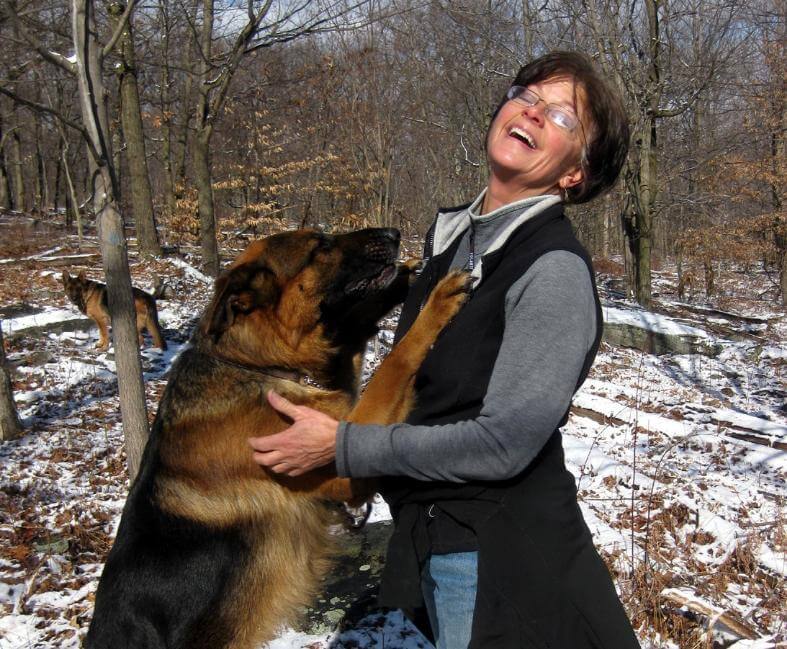
Meet the Breeders
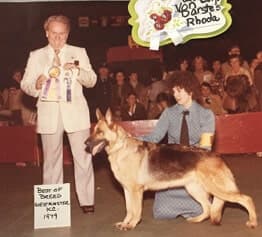
Interview with a Herding Group Breeder Beth Dillenbeck – I’m in northeastern Pennsylvania, just outside of Clark’s Summit. I’ve been training
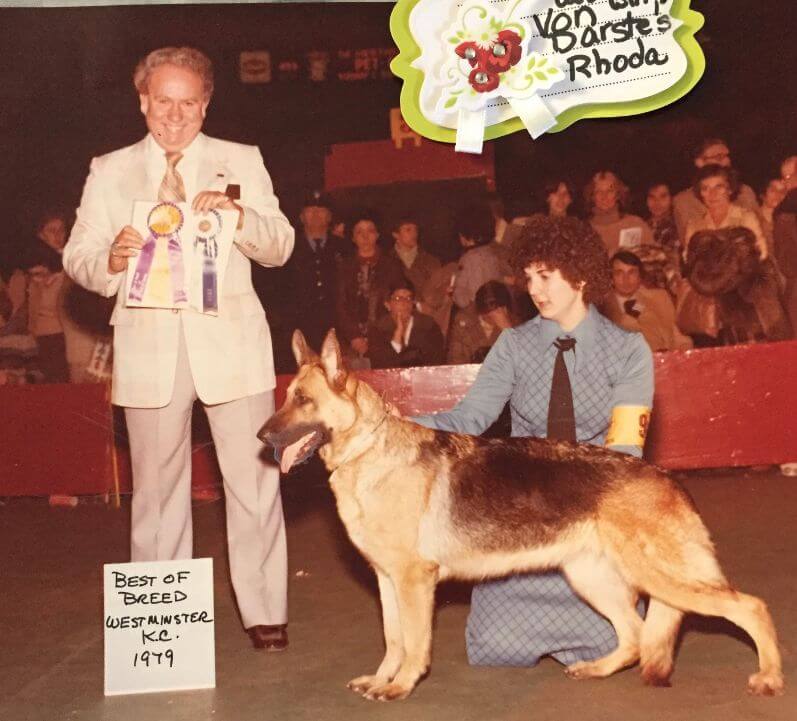
Meet the Breeders
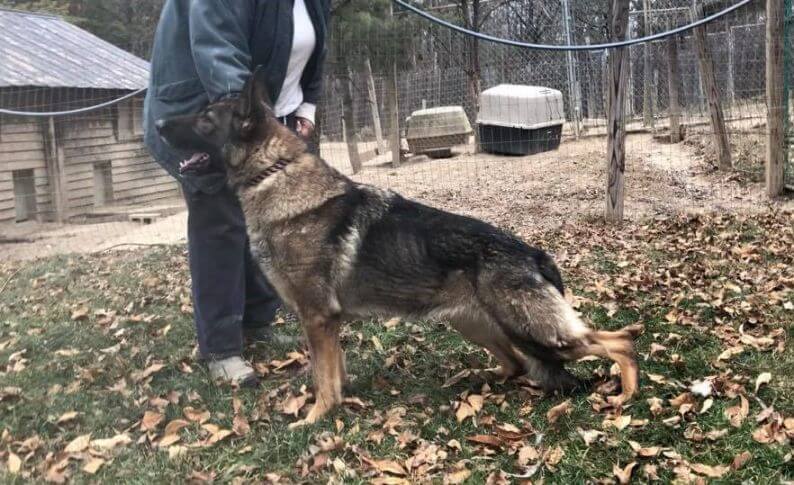
Interview with a Herding Group Breeder Dara Conklin – We live in Little Egg Harbor, New Jersey. Even though we have not had a large number of

Meet the Breeders
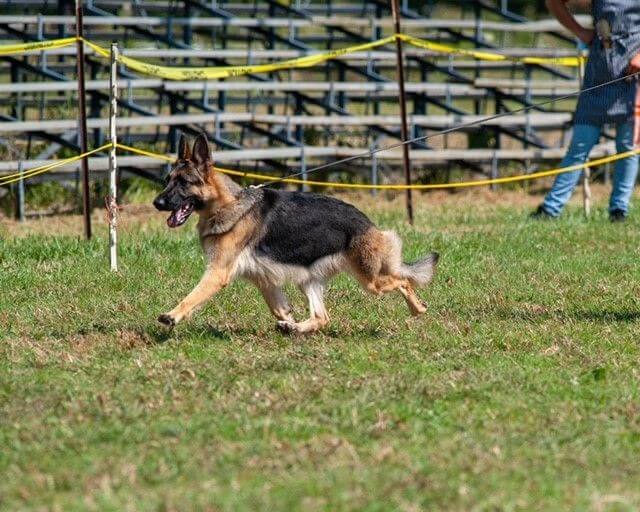
Interview with a Herding Group Breeder Donna Calabrese – Hi, I live in a little town called Edinburg in Virginia, in beautiful Shenandoah
Meet the Breeders
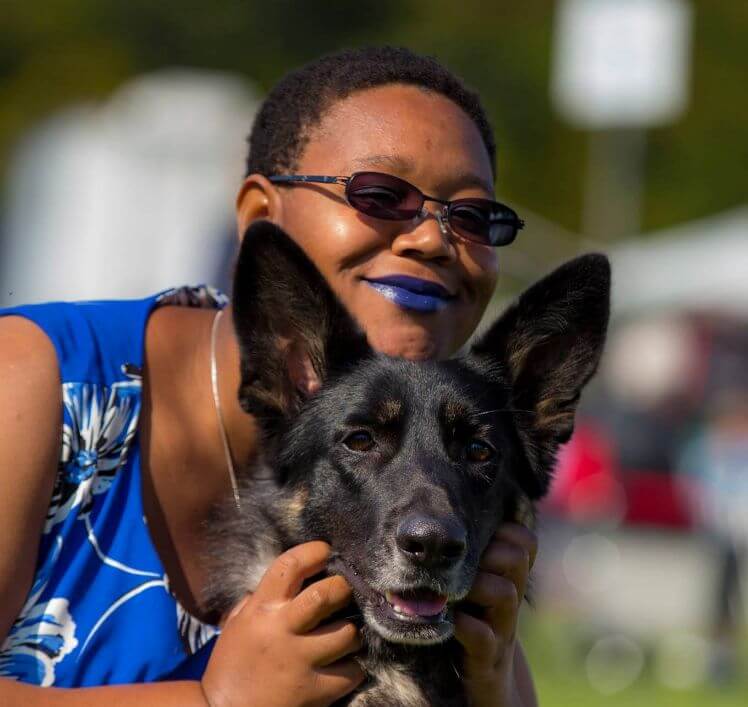
Interview with a Herding Group Breeder Mary Tripp – I live in Leander, Texas. I have been in dogs for 40-plus years as a breeder.
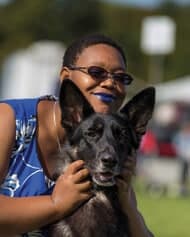
Meet the Breeders
Interview with a Herding Group Breeder Jackie Short-Nguyen – I live in Western Pennsylvania. I have been in dogs for 22 years and have been
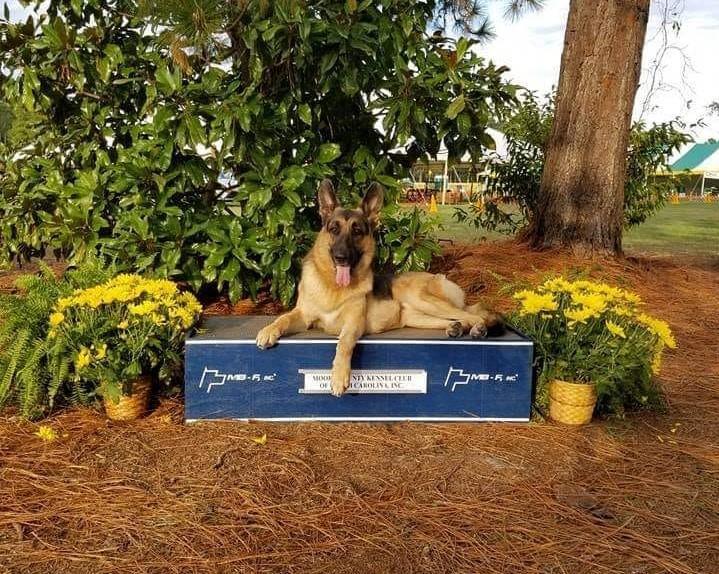
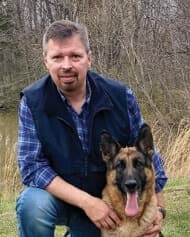
Meet the Breeders
Interview with a Herding Group Breeder Gerald Roach – I live in Southern Illinois. I started with my first German Shepherd Dog 41 years ago.
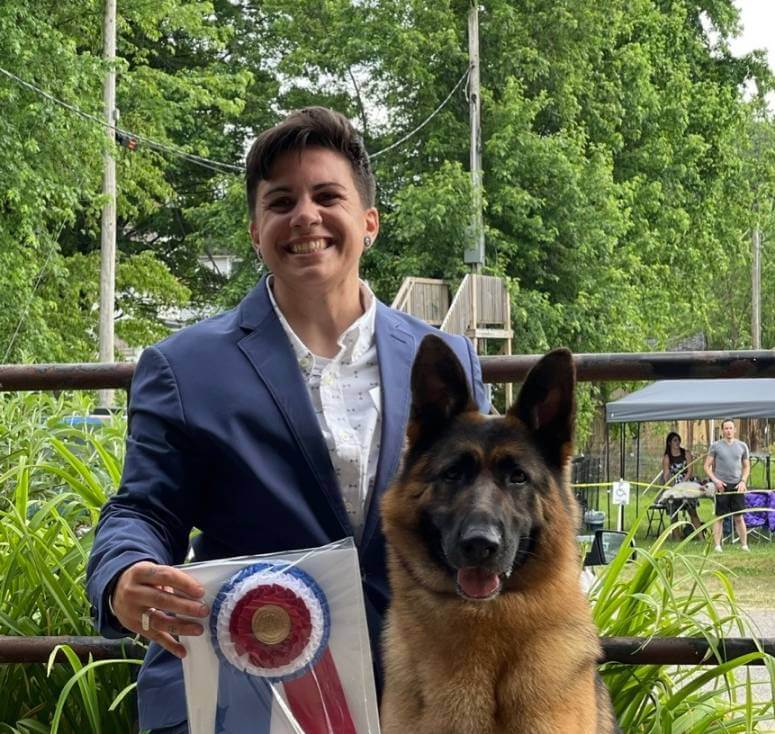
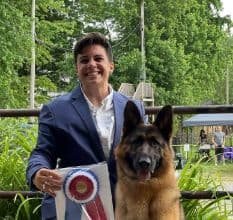
Meet the Breeders
Interview with Herding Group Breeder Olivia Calabrese – I currently live in York, Pennsylvania. I have been in dogs since the day I was born.

All About Judging
Let’s talk about type in the breed: Why is side gait important characteristic of breed type? It is important for the structure of the dog.
The tail of the German Shepherd Dog is bushy and reaches at least to the hock, but not beyond the mid-point of the metatarsus. It hangs in a gentle curve when the dog is at rest. When in motion or excited, the curve may become more pronounced, but the tail is never raised beyond the level of the back. The tail offers a balanced continuation of the topline, adding elegance to the dog's silhouette. A natural tail is a defining characteristic of the breed.
A Note About Color: Typically, the German Shepherd Dog appears in a variety of rich colors, including expressions of saddle, sable, bi-color, and solid black. Pale colors, and diluted blues and livers, are serious faults. A GSD must have a solid black nose, and a white dog is unacceptable in the breed.
Coat Type
Double
The structure of the coat this breed carries.
Coat Length
Medium
How long the breed's coat grows when kept in condition.
Adaptability Level
How easily a breed copes with changes in home, routine, noise and weather.
Mental Stimulation Needs
How much a breed needs a job, a puzzle or training to stay content.
German Shepherds typically coexist harmoniously with children, especially when raised with them. Their protective nature often extends to younger family members, making the breed an excellent family guardian. However, interactions with very young children should always be supervised, given the breed's size and energy levels.
With other animals, especially other dogs, the behavior of the breed can vary. Some German Shepherd Dogs are sociable and play well with others, although it’s not uncommon for many to exhibit more dominant tendencies. Early and positive introductions to other animals can promote harmonious (but always supervised) interactions.
The German Shepherd Dog, being a large and active breed, has specific nutritional requirements that are crucial to its overall health, vitality, and longevity. A balanced and tailored diet not only fuels the dog’s daily activities, it also supports a muscular physique and caters to the breed’s metabolic rate.
Puppyhood is a critical phase in the life of a GSD, marked by rapid growth and development. During this period, a diet rich in proteins, fats, and essential nutrients is paramount. High-quality puppy food designed for large breeds ensures each puppy receives the calcium and phosphorus needed to support growing bones and joints. Given the breed’s rapid growth, portion control and multiple meals—usually three to four times a day—can aid in steady and healthy weight gain.
As German Shepherds transition into adulthood, their dietary needs evolve. While protein remains essential for muscle maintenance, the focus shifts towards maintaining an ideal weight and supporting their active lifestyle. Premium adult dog food, rich in meat-based proteins, wholesome grains, and essential fatty acids, is ideal. The inclusion of Omega-3 and Omega-6 fatty acids can benefit skin and coat health, while glucosamine and chondroitin can support joint health, particularly crucial for a breed prone to hip dysplasia.
The amount of food that a German Shepherd requires can vary based on several factors. Age, metabolism, activity level, and overall health play pivotal roles in determining a dog’s daily caloric intake. On average, an adult GSD may consume 2 to 4 cups of high-quality dog food daily, split into two meals. However, active or working dogs might require more food to meet their energy demands, while more sedentary or senior dogs will likely need less.
It's crucial for owners to monitor their German Shepherd's weight and body condition. Regularly feeling the dog's ribs, observing the waistline, and watching for signs of excess weight can guide adjustments at mealtime. Obesity can lead to numerous health problems, so maintaining an ideal weight is vital.
Lastly, hydration plays an equally important role in a German Shepherd Dog's diet. Providing constant access to fresh and clean water is essential, especially after exercise or during warmer summer months.
Training is a cornerstone of the German Shepherd Dog's life. The breed’s intelligence, drive, and willingness to work makes it exceptionally trainable, but it also means it requires consistent and structured guidance. These characteristics, combined with the breed’s size and energy, underscore the importance of early and ongoing training.
Training during puppyhood lays the foundation for a well-behaved adult dog. Basic commands such as "sit," "stay," and "come" are essential. Equally crucial is early socialization, where the puppy is exposed to various people, environments, sounds, and other animals. This broad exposure helps to develop a confident and well-adjusted adult German Shepherd.
Given the breed’s size and strength, obedience training is a must. German Shepherds thrive in structured environments where they understand what is expected of them. Reinforcing positive behaviors with rewards, and consistent redirection of undesired behaviors, helps with building a bond of trust and respect between the dog and the owner.
Beyond learning basic commands, the GSD benefits immensely from tasks that challenge the breed’s intelligence. Puzzle toys, advanced Obedience, Tracking exercises, and Agility training can keep the dog’s mind sharp. Given its heritage as a working dog, the breed typically enjoys activities that mimic tasks, such as Herding Trials or Search and Rescue exercises.
While German Shepherds are known for their loyalty and protective nature, these traits can manifest as overprotectiveness or even aggression without proper training. It's essential to teach these dogs from a young age when to be alert and when to be at ease. Addressing unnecessary barking, digging, or chewing early on prevents these behaviors from becoming problematic habits.
Positive reinforcement, where good behavior is rewarded with treats, praise, or play, is highly effective with German Shepherds. These dogs are eager to please, so acknowledging their good behavior strengthens the bond with their handler. Conversely, harsh or punitive methods can be counterproductive, leading to distrust, fear or aggression.
Perhaps the most critical aspect of training a German Shepherd Dog is consistency. Mixed signals or sporadic training can confuse the dog and lead to undesirable behaviors. Whether it's house training, command training, or behavioral modification, consistent messaging and routine are paramount.
Grooming Expectations
Brushing is a crucial aspect of grooming for the German Shepherd. Given its double coat, the breed sheds year-round, with a notable "blow out" during the shedding seasons of spring and fall. Regular brushing, preferably multiple times a week, helps to remove the loose hairs, reduces matting, and distributes the natural oils across the coat. During periods of profuse shedding, daily brushing can help with managing the increased volume of loose hair. Bathing a GSD is essential but should not be needed frequently. Overbathing can strip the coat of its natural oils, leading to dry skin and potential irritation. Instead, bathing once every month, or when the dog is notably dirty, is typically sufficient. Always use a dog-specific shampoo that caters to the needs of the dog’s skin and coat. The German Shepherd's ears stand erect, making them prone to accumulating dirt and debris. Weekly ear cleaning with a veterinarian-recommended cleanser can prevent infections. Additionally, while the breed is not prone to excessive wax build-up, periodic checks will ensure early detection of potential issues. Dental hygiene plays a pivotal role in the overall health of a German Shepherd. Daily brushing with a canine toothpaste can prevent tartar build-up and gum diseases. Dental chews or toys can serve as supplementary tools to promote dental health, but they don't replace the efficacy of regular brushing. Nail trimming is another essential grooming aspect. If a GSD doesn't naturally wear down its nails through activity, regular trimming, usually every 3-4 weeks, will keep the nails at an appropriate length. Overgrown nails can affect the dog's movement and lead to general discomfort and pain. Finally, a routine check of the German Shepherd Dog's eyes, nose, feet, and underbelly can alert the owner to any anomalies such as rashes, sores, injuries, and signs of infection. These health checks, combined with regular vet visits, can identify potential health issues before they become serious.
German Shepherds, when introduced appropriately, generally coexist peacefully with other household pets. However, early socialization, supervised introductions, and understanding the individual dog's temperament are crucial. Their herding instincts might occasionally come to the forefront, especially with smaller animals.
Due to the breed's sometimes intimidating appearance and strong protective instinct, it's essential to be sure interactions between a German Shepherd Dog and human strangers, houseguests, and unfamiliar animals are carefully managed. Training and early socialization can aid in making these encounters more predictable and positive.