01/Overview
The German Wirehaired Pointer is a versatile and rugged sporting breed renowned for its exceptional hunting capabilities and loyal nature. Bred to excel in a variety of terrain and climates, this medium-to-large dog combines strength, endurance, and intelligence. With its distinctive wiry coat and keen expression, the GWP is equally adept as a hunting companion and a devoted family member.
Highlights
02/History
The German Wirehaired Pointer, known as the Deutsch-Drahthaar in its homeland, is a relatively modern breed developed in Germany during the late 19th and early 20th centuries. Its creation stemmed from a desire to produce an all-purpose hunting dog capable of working on land and water, tracking game, pointing, and retrieving with equal proficiency. Before the breed's development, hunters often relied on multiple breeds to fulfill these tasks, but the GWP emerged as a solution to unify these skills in one versatile dog.
The breed’s development involved careful crossbreeding of several established European breeds. The Pudelpointer, a cross between the Poodle and the Pointer, provided intelligence and water-retrieving abilities. The German Shorthaired Pointer contributed its keen nose and versatility, while the Wirehaired Pointing Griffon brought its characteristic harsh coat and rugged endurance. Other breeds, such as the Stichelhaar, are also believed to have played a role in refining the GWP’s physical and working traits. The goal was not only functionality but also a low-maintenance coat that could protect the dog from harsh weather and thorny underbrush.
By the early 20th century, the breed's development was well underway, with German hunters and breeders meticulously refining its traits. In 1928, the breed was officially recognized in Germany and the first Breed Standard was established. This Standard emphasized both working ability and a particular physical appearance, ensuring the GWP remains a versatile and practical hunting companion.
The popularity of the German Wirehaired Pointer quickly spread throughout Europe due to the breed’s exceptional versatility and adaptability. It became especially favored in Germany where it was considered the ultimate hunting partner. The GWP was officially recognized by the Fédération Cynologique Internationale (FCI) in 1954.
The German Wirehaired Pointer’s journey to the United States began in the mid-20th century. American hunters and sporting enthusiasts were drawn to its hardy nature and versatility. The GWP was officially recognized by the American Kennel Club (AKC) in 1959, where it was categorized within the Sporting Group. Since then, it has become a well-respected breed in the United States, excelling in Field Trials, Hunt Tests, and Conformation Shows.
03/Appearance
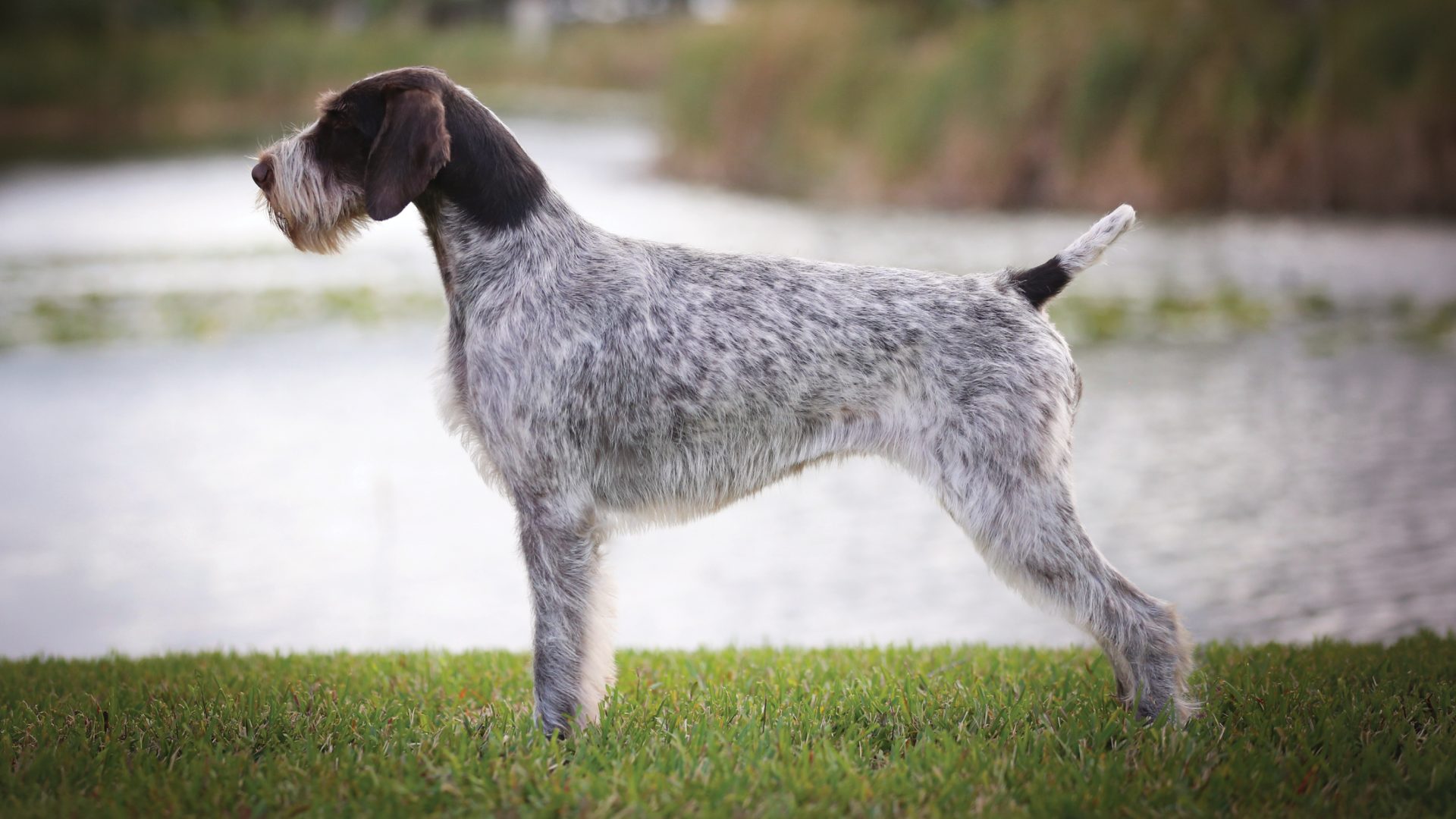
Male German Wirehaired Pointers typically stand between 24 and 26 inches tall at the shoulder, while females measure slightly less, between 22 and 24 inches. GWPs generally weigh 55 to 70 pounds.
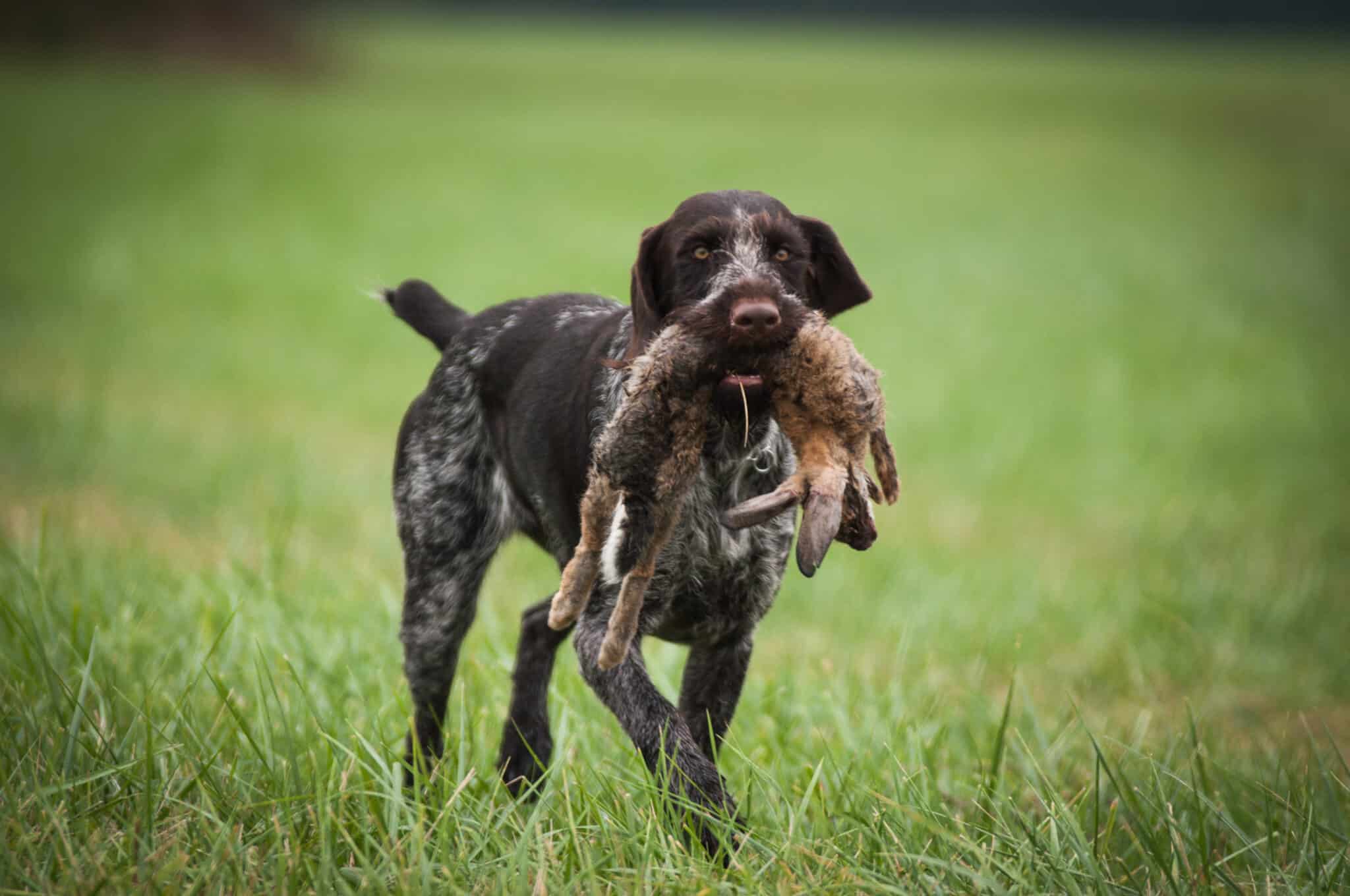
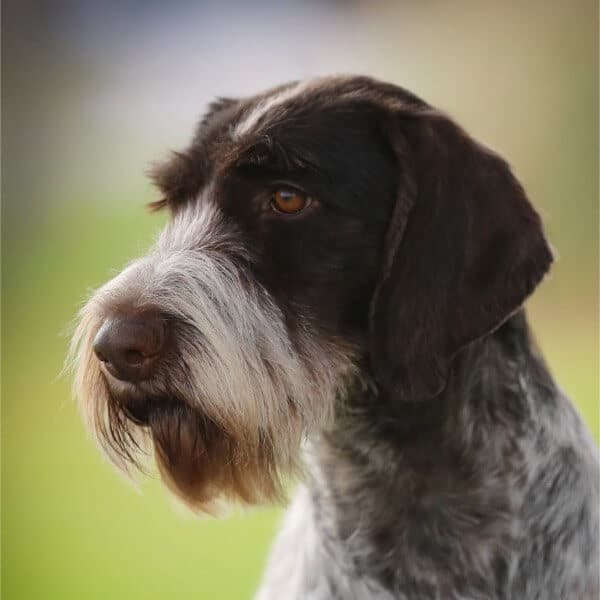 Photo: Alexis Chism[/caption]
The German Wirehaired Pointer is slightly longer than tall, with a strong, muscular body that maintains a blend of power and elegance. Its well-developed musculature and sturdy bone structure support its agility and endurance as a working field dog.
Texture: The German Wirehaired Pointer’s coat is a defining feature, designed to withstand harsh outdoor conditions. The outer coat is harsh, wiry, and weather-resistant, offering protection from thorns and brambles, while the dense undercoat provides seasonal insulation. This combination ensures the breed’s comfort and durability in varied terrains and climates.
Standard Colors
Standard Markings
04/Consider
The German Wirehaired Pointer is a versatile and hardworking breed, but owning one comes with responsibilities. This dog thrives in active households that can provide mental and physical stimulation. While the breed’s loyalty and intelligence make these dogs excellent companions, they require consistent training, regular exercise, and attentive care to reach their full potential. Prospective caretakers should understand the breed’s daily needs to ensure a harmonious and fulfilling relationship.
Interaction With Family
The level of affection a breed typically shows towards family members and familiar individuals.
Good With Other Dogs
The innate friendliness of a dog towards other dogs can depend on its breed.
Good With Young Children
The degree to which a breed will typically be patient with young children.
Amount Of Shedding
How much hair a breed typically leaves behind on clothes, furniture and floors.
Frequency Of Grooming
How often a breed needs brushing, bathing or a professional trim to stay in condition.
Amount Of Drooling
How prone a breed is to drool — worth knowing before you keep a towel by the door.
Openness To Strangers
How openly a breed tends to greet new people, visitors and strangers.
Protective Nature
How likely a breed is to alert you to — and stand between you and — anything unfamiliar.
Playfulness Level
How enthusiastic a breed stays about games and play well past puppyhood.
Trainability Level
How readily a breed takes direction and works with you rather than around you.
Barking Level
How much a breed uses its voice, and how readily.
Energy Level
How much get-up-and-go a breed brings to an average day.
Health
The German Wirehaired Pointer is a typically robust breed with an average lifespan of 14 to 16 years. Its sturdy build and rugged coat help it endure tough conditions. But like all dogs, it can be prone to certain health issues. Maintaining regular veterinary check-ups, a balanced diet, and a healthy lifestyle will support a GWP’s overall well-being.
The German Wirehaired Pointer is a loyal, intelligent, and energetic breed that thrives in active households. It is best suited for experienced caretakers who can meet both its mental and physical needs.
Highly affectionate and devoted to its family, this breed can be reserved around strangers. This is a reflection of its natural watchfulness.
The GWP generally gets along well with other dogs when properly socialized from a young age. These dogs can be good with children, although supervision is recommended due to the breed’s high energy levels.
The German Wirehaired Pointer forms strong bonds with its human companions and may struggle with being left alone for extended periods. They are happiest when active and engaged with their families.
Exercise Expectations
With its playful nature, the GWP makes an excellent companion for outdoor adventures. A lack of exercise, it should be noted, often leads to boredom and destructive behaviors. The German Wirehaired Pointer thrives on activities that engage a dog’s natural hunting instincts, such as Scent Work and Tracking. Regular walks alone are insufficient; incorporating more intensive exercise is crucial to meeting the needs of this energetic hunter.
Grooming Expectations
The German Wirehaired Pointer can adapt to various living environments, provided it receives ample exercise and mental stimulation. While these dogs can sometimes manage living in an apartment, a house with a securely fenced yard is ideal for meeting their energy needs.
The GWP handles cold weather well due to its dense coat, but it may require extra protection in extreme cold. These dogs are also capable of tolerating hot weather well, although care should be taken to avoid overexertion during excessively high temperatures.
As devoted and affectionate companions, German Wirehaired Pointers thrive in homes where they are active participants in daily family life, both indoors and outside where they can explore and work.
05/Puppies
German Wirehaired Pointer puppies are energetic, curious, and intelligent, displaying their active nature from an early age. Early socialization and consistent guidance are essential to channel their energy and help them develop into well-behaved and well-rounded adults.
Caring for a German Wirehaired Pointer puppy starts with creating a safe and stimulating environment. Puppy-proofing the home is important, as the breed’s natural curiosity can lead a puppy to chew on harmful household items. Providing chew toys and interactive play helps to redirect a pup’s energy in positive ways.
Early training and socialization are critical for this breed. Puppy training classes offer structured learning and opportunities for positive interactions with other dogs and people, while basic commands and crate training lay the foundation for good behavior.
The GWP puppy thrives on a balanced, high-quality diet tailored to its growth and energy needs. Small, frequent meals throughout the day prevent overeating and support healthy development. Regular veterinary check-ups are essential to monitor growth, administer vaccinations, and establish deworming and flea prevention schedules.
Exercise for the German Wirehaired Pointer puppy should be age-appropriate and moderate to avoid straining developing joints. Short walks and supervised play sessions during the first year of life provide sufficient activity until the pup is ready for more vigorous exercise.
06/Activities
Gallery
07/Standards
The German Wirehaired Pointer is recognized by the world's leading registries and kennel organizations, which categorize the breed into a specific Group based on its unique characteristics. This breed is recognized worldwide under the following Group designations:
The ideal German Wirehaired Pointer is described by a Breed Standard that is approved by each of the world’s leading registries and kennel organizations. The Breed Standards for this breed may be found in the following links:
08/Clubs
09/Rescue
10/Facts
Bred for Versatility
The German Wirehaired Pointer was developed to be an all-purpose hunting dog, excelling on land and water with skills in pointing, retrieving, and tracking.
A Distinctive Coat
The breed’s wiry, weather-resistant coat provides protection against harsh climates and rugged terrain, making for a durable working dog in diverse environments.
Relatively Modern Origins
Unlike many ancient breeds, the German Wirehaired Pointer was created in the late 19th and early 20th centuries in Germany, combining several breeds to achieve its renowned versatility.
AKC Recognition
The GWP was officially recognized by the American Kennel Club as a Sporting breed in 1959. This acknowledgement reflects its hunting heritage and its incredible working abilities.
Loyal & Devoted Nature
While affectionate with their families, German Wirehaired Pointers are naturally reserved around strangers, making them excellent watchdogs as well as devoted companions.
11/FAQ
Yes, German Wirehaired Pointers shed moderately, especially during seasonal coat changes. Regular brushing helps to control shedding and keeps their wiry coat in good condition.
Official Standard for the German Wirehaired Pointer
General Appearance: The German Wirehaired Pointer is a well muscled, medium sized dog of distinctive appearance. Balanced in size and sturdily built, the breed’s most distinguishing characteristics are its weather resistant, wire-like coat and its facial furnishings. Typically Pointer in character and style, the German Wirehaired Pointer is an intelligent, energetic and determined hunter.
Size, Proportion, Substance: The height of males should be from 24 to 26 inches at the withers. Bitches are smaller but not under 22 inches. To insure the working quality of the breed is maintained, dogs that are either over or under the specified height must be severely penalized. The body is a little longer than it is high, as ten is to nine. The German Wirehaired Pointer is a versatile hunter built for agility and endurance in the field. Correct size and balance are essential to high performance.
Head: The head is moderately long. Eyes are brown, medium in size, oval in contour, bright and clear and overhung with medium length eyebrows. Yellow eyes are not desirable. The ears are rounded but not too broad and hang close to the head. The skull broad and the occipital bone not too prominent. The stop is medium. The muzzle is fairly long with nasal bone straight, broad and parallel to the top of the skull. The nose is dark brown with nostrils wide open. A spotted or flesh colored nose is to be penalized. The lips are a trifle pendulous but close to the jaw and bearded. The jaws are strong with a full complement of evenly set and properly intermeshing teeth. The incisors meet in a true scissors bite.
Neck, Topline, Body: The neck is of medium length, slightly arched and devoid of dewlap. The entire back line showing a perceptible slope down from withers to croup. The skin throughout is notably tight to the body. The chest is deep and capacious with ribs well sprung. The tuck-up apparent. The back is short, straight and strong. Loins are taut and slender. Hips are broad with the croup nicely rounded. The tail is set high, carried at or above the horizontal when the dog is alert. The tail is docked to approximately two-fifths of its original length.
Forequarters: The shoulders are well laid back. The forelegs are straight with elbows close. Leg bones are flat rather than round, and strong, but not so heavy or coarse as to militate against the dog’s natural agility. Dewclaws are generally removed. Round in outline the feet are webbed, high arched with toes close, pads thick and hard, and nails strong and quite heavy.
Hindquarters: The angles of the hindquarters balances that of the forequarters. A straight line drawn vertically from the buttock (ischium) to the ground should land just in front of the rear foot. The thighs are strong and muscular. The hind legs are parallel when viewed from the rear. The hocks (metatarsus) are short, straight and parallel turning neither in nor out. Dewclaws are generally removed. Feet as in forequarters.
Coat: The functional wiry coat is the breed’s most distinctive feature. A dog must have a correct coat to be of correct type. The coat is weather resistant and, to some extent, water-repellent. The undercoat is dense enough in winter to insulate against the cold but is so thin in summer as to be almost invisible. The distinctive outer coat is straight, harsh, wiry and flat lying, and is from one to two inches in length. The outer coat is long enough to protect against the punishment of rough cover, but not so long as to hide the outline of the dog. On the lower legs the coat is shorter and between the toes it is of softer texture. On the skull the coat is naturally short and close fitting. Over the shoulders and around the tail it is very dense and heavy. The tail is nicely coated, particularly on the underside, but devoid of feather. Eyebrows are of strong, straight hair. Beard and whiskers are medium length. The hairs in the liver patches of a liver and white dog may be shorter than the white hairs. A short smooth coat, a soft woolly coat, or an excessively long coat is to be severely penalized. While maintaining a harsh, wiry texture, the puppy coat may be shorter than that of an adult coat. Coats may be neatly groomed to present a dog natural in appearance. Extreme and excessive grooming to present a dog artificial in appearance should be severely penalized.
Color: The coat is liver and white, usually either liver and white spotted, liver roan, liver and white spotted with ticking and roaning or solid liver. The head is liver, sometimes with a white blaze. The ears are liver. Any black in the coat is to be severely penalized.
Gait: The dog should be evaluated at a moderate gait. Seen from the side, the movement is free and smooth with good reach in the forequarters and good driving power in the hindquarters. The dog carries a firm back and exhibits a long, ground-covering stride. When moving in a straight line the legs swing forward in a free and easy manner and show no tendency to cross or interfere. There should be no signs of elbowing out. The rear legs follow on a line with the forelegs. As speed increases, the legs will converge toward a center line of travel.
Temperament: Of sound, reliable temperament, the German Wirehaired Pointer is at times aloof but not unfriendly toward strangers; a loyal and affectionate companion who is eager to please and enthusiastic to learn.
Approved October 10, 2006
Effective January 1, 2007
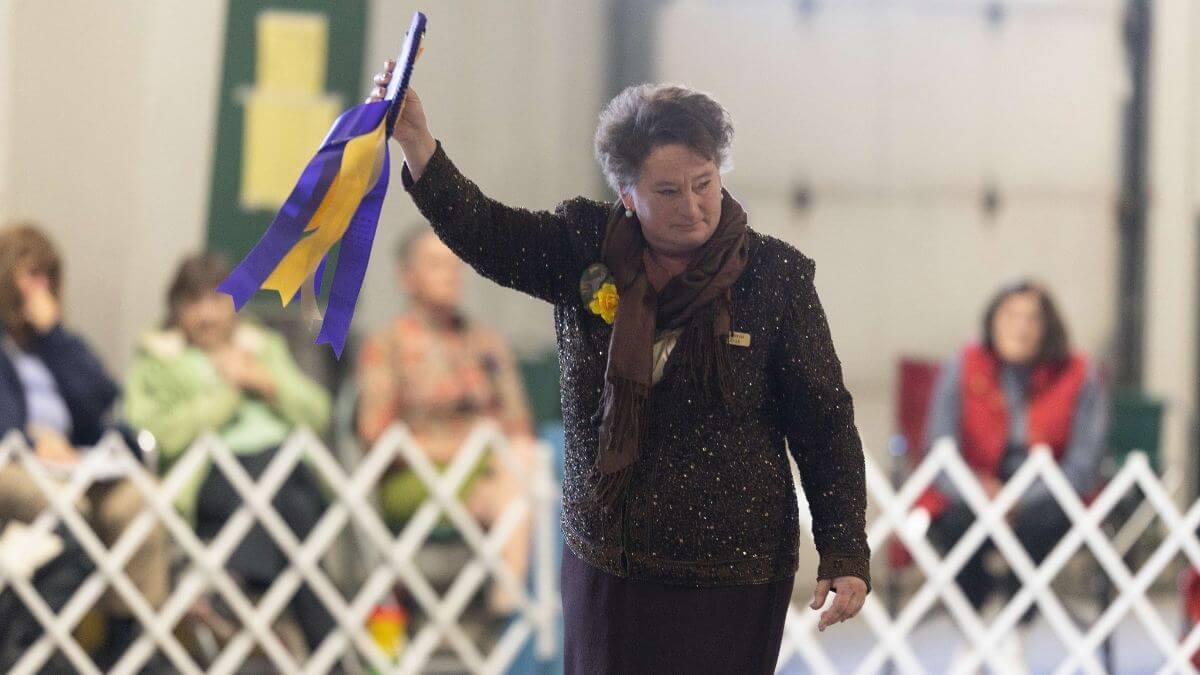

Meet the Breeders
Laura Reeves is the breeder behind The Scotia Kennel German Wirehaired Pointers. Read about the kennel’s beginnings, puppies, and much more!
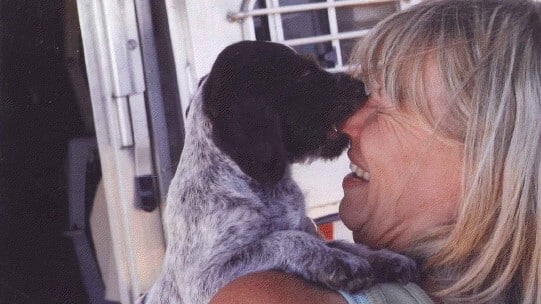
Meet the Breeders
Judy Cheshire is the breeder behind Heywire German Wirehaired Pointers. Read about the kennel’s beginnings, puppies, and much more!
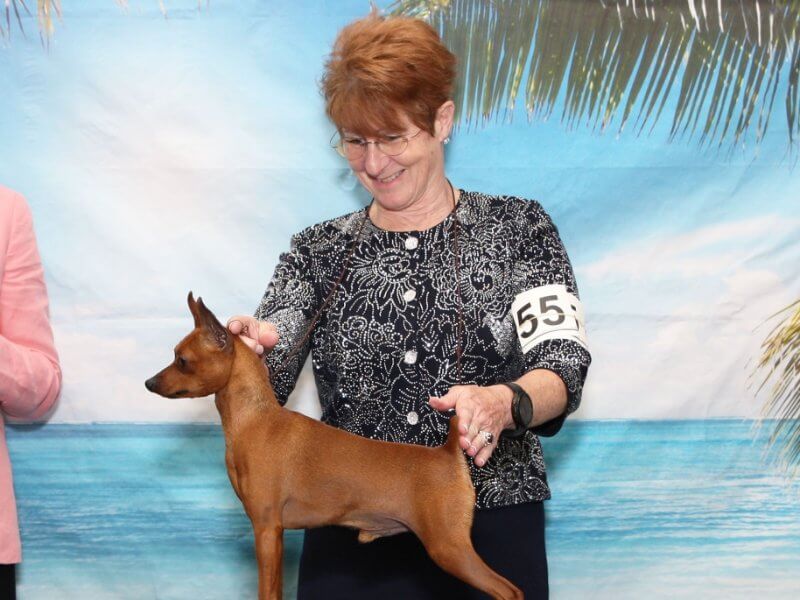

Meet the Breeders
Kim Byrd is the breeder behind the KISA Kennel. Read about the kennel’s beginnings, the sires, the dams, the puppies, and much more!

Meet the Breeders
Claire Wisch Abraham is the breeder behind Mountain View German Wirehaired Pointers. Read about the kennel’s beginnings, the dogs, and more!
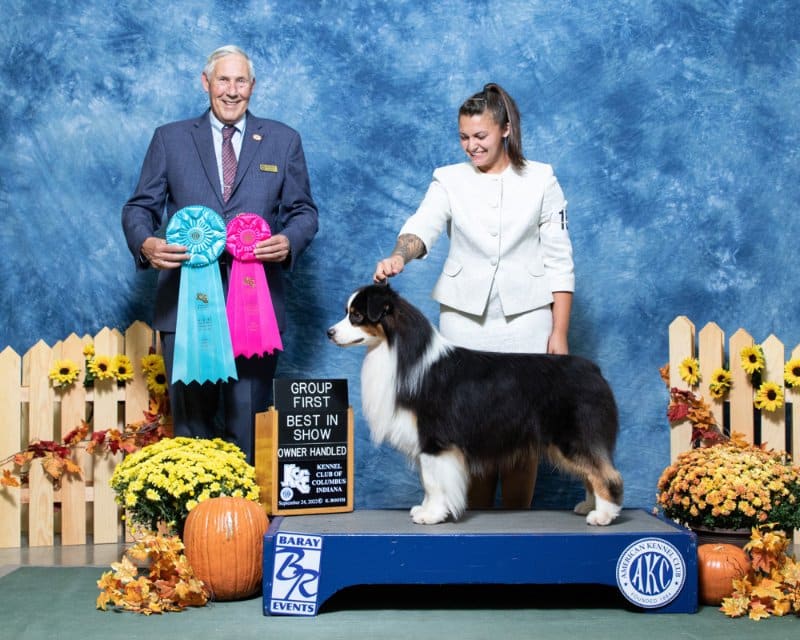

Meet the Owner Handlers
By the time these words are published, the newness of 2023 will have worn off for most people. But as it is, these words are being written as the year is brand spanking new. I’ve spent the past few days pondering the phenomenon of the novelty that is “new” and what “new” means for […]
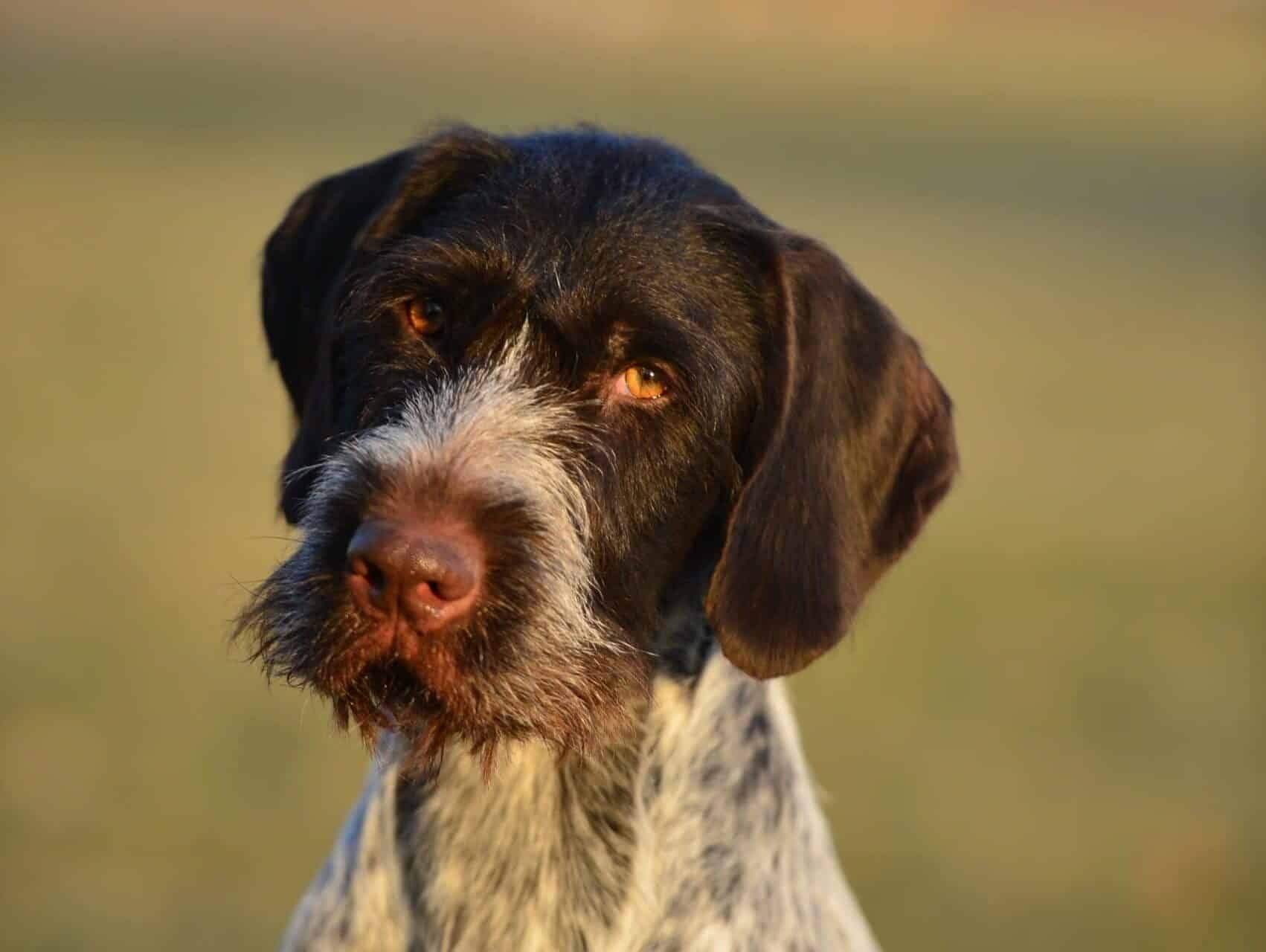

All About Judging
It’s important to note that the (GWP) German Wirehaired Pointer coat is this breed definition. Read more about the all important coat.
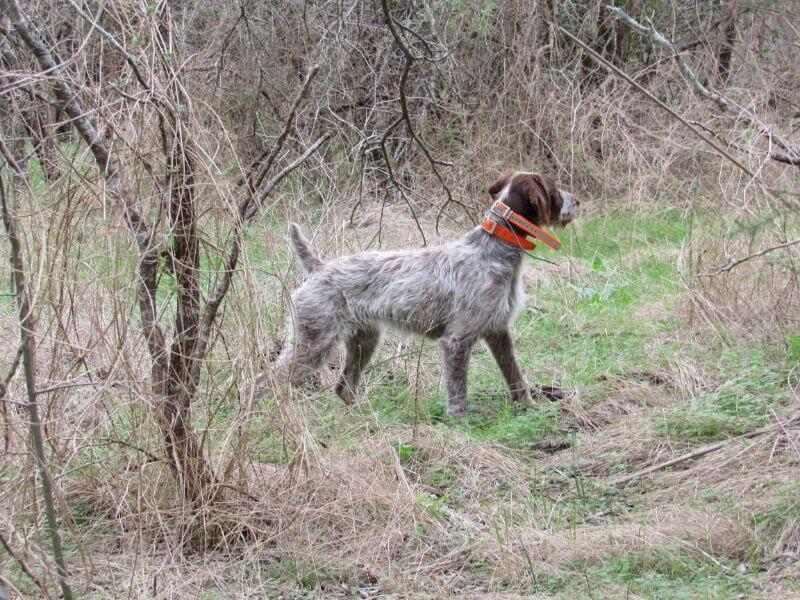
All About Judging
When judging German Wirehaired Pointer breed, judges should determine which dog is most suited to field work—based on the Breed Standard.
Dog Sports
There is only one Breed Standard for the German Wirehaired Pointer and it makes no distinction between “field” dogs and “show” dogs.

To convey to judges and dog fanciers the “Hallmarks” of the German Shorthaired Pointer (GSP), over 40 German Shorthaired Pointer Club of America breed mentors, breeders
The German Wirehaired Pointer’s tail is set high and carried horizontally or slightly raised, reflecting its alert and confident demeanor. In the US, tails are often docked to about 40 percent of their length for traditional working purposes. In countries where docking is prohibited, the tail tapers naturally. Whether docked or undocked, the tail aids in balance and communication during work and play.
A Note About Color: The coat is solid liver or liver and white, usually either liver and white spotted, liver roan, or liver and white spotted with ticking and roaning. The head is liver, sometimes with a white blaze, and the ears are liver. Black in the coat is allowed in some countries, but is unacceptable in the US.
Coat Type
Wiry
The structure of the coat this breed carries.
Coat Length
Medium
How long the breed's coat grows when kept in condition.
Adaptability Level
How easily a breed copes with changes in home, routine, noise and weather.
Mental Stimulation Needs
How much a breed needs a job, a puzzle or training to stay content.
A balanced diet is essential to support the active lifestyle of a German Wirehaired Pointer.
Puppies require high-quality puppy food that promotes healthy growth, divided into three to four meals per day. Adult dogs thrive on nutrient-rich food tailored for active breeds. Around 2.5 to 3 cups of dry food daily, split into two meals, is typically fed, but adjustments should be made based on age, activity level, and metabolism.
Caretakers of this breed should monitor their dog’s weight to prevent obesity, which can exacerbate joint issues. Fresh water should always be readily available, especially after exercise or in hot weather.
German Wirehaired Pointers are intelligent and eager to learn, making them relatively easy to train. However, the breed’s independent and assertive nature requires a consistent trainer who uses positive reinforcement techniques.
The breed’s strong hunting instincts can lead to a distracted dog, so early socialization and obedience training are essential for channeling a GWP’s energy appropriately.
These dogs have a moderate tendency to bark, often as an alert to unfamiliar activity. However, proper training can help to manage this behavior while preserving the GWP’s effectiveness as a watchdog.
The versatility of the German Wirehaired Pointer makes this breed an excellent candidate for advanced training in activities such as Agility, Field Trials and Hunt Tests, and Obedience competitions. At home, a securely fenced yard, or leash control at all times, is a must.
This breed is a moderate shedder, and its weather-resistant coat naturally repels dirt and debris. Bathing should be done sparingly, as frequent washing can strip the coat of its protective oils. Routine ear cleaning is necessary to prevent infections, especially since their hanging ears can trap moisture and debris. Regular nail trimming and dental care are also essential parts of their grooming routine.