Members
01/Overview
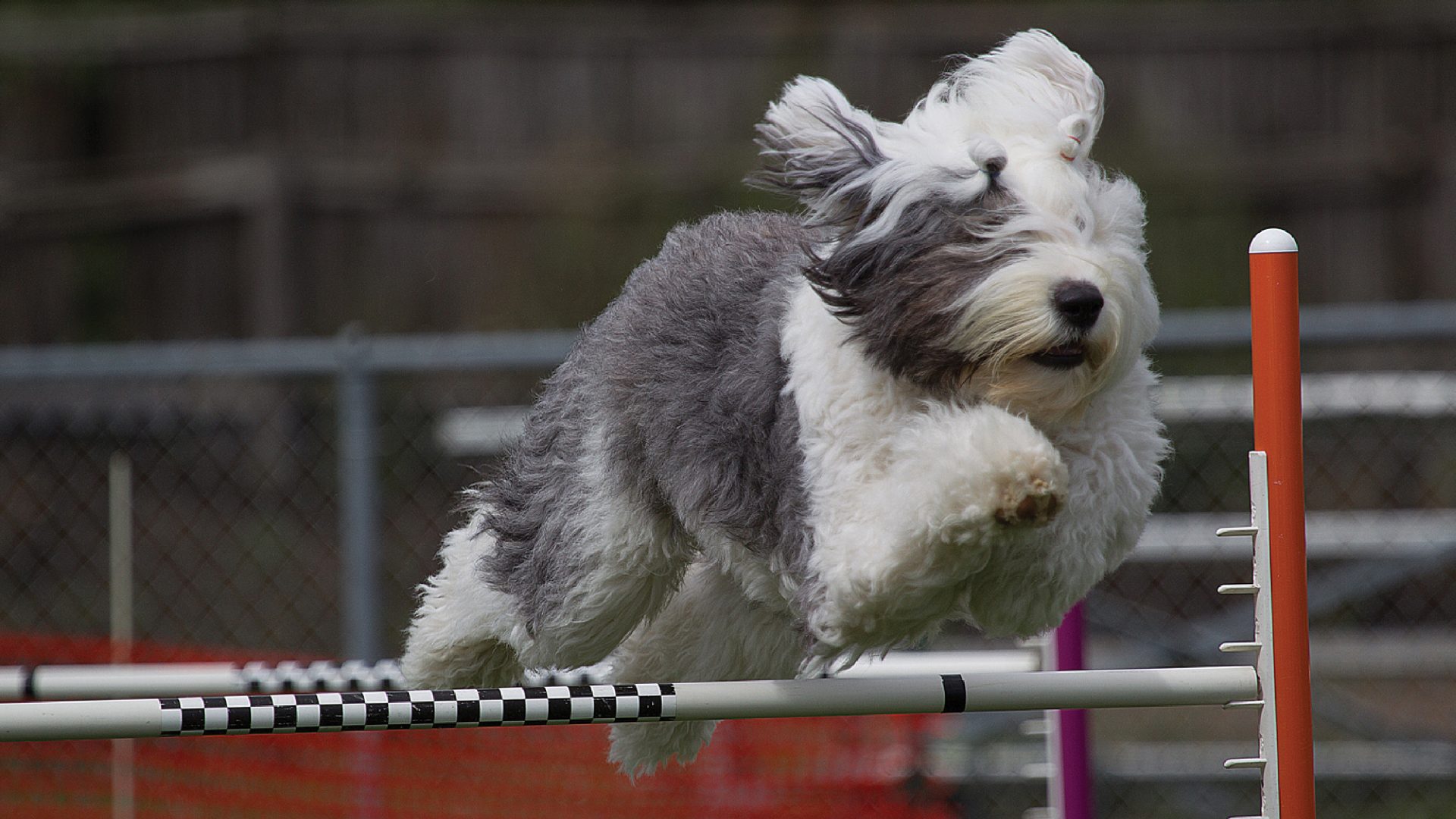
The Old English Sheepdog, also known as the Bobtail, is an adaptable and intelligent dog with a clownish personality and its own signature style. A watchful and courageous dog, the OES is a sturdy and athletic companion that is easily recognized by its distinctively shaggy coat. Historically, the breed assisted farmers with transporting cattle and sheep to market, and this work produced a dog that moves with an easy-going amble and an elastic gallop. Today, this sweet and sometimes silly dog enjoys being active at home and can be a fine competitor in Conformation, Obedience, Agility, and Herding competitions.
Highlights
02/History
The Old English Sheepdog has one of the most enigmatic of all canine origin stories. There is evidence that the breed originated in the southwestern counties of England in the early nineteenth century, though it may have descended from the Bearded Collie, the Russian Owtchar, or another dog entirely.
Writings during the time of the breed's supposed origins reported a dog used to drive cattle and lambs to market. Owners docked their dogs' tails to indicate they were drovers' dogs and to offer protection from the sharp hooves of the much larger stock animals. As a result, the dogs were often dubbed the "Bob" or "Bobtail."
When the Old English Sheepdog first arrived in the United States in the late 1880s, it was welcomed by a Pittsburgh manufacturer by the name of W. Wade. By the 1900s, just five affluent American families owned, showed, and bred the OES. One show administrator advised judges at the 1904 Westminster Show in New York to "take plenty of time; the dogs in the ring are the property of some of our leading Americans."
In 1885, the American Kennel Club officially recognized the Old English Sheepdog. Henry Arthur Tilley founded the Old English Sheepdog Club of America in 1904. Tilley and his brother, William Steeds Tilley, were instrumental in the development of the Breed Standard that is used today by breeders and judges. Many of the dogs they bred can still be found in the extended pedigrees of today's OES.
03/Appearance
A mature male Old English Sheepdog typically stands 22 inches or more at the shoulder, while females usually measure around 21 inches tall.
Male Old English Sheepdogs typically weigh between 70 and 90 pounds, with females slightly lighter at 60 to 80 pounds.
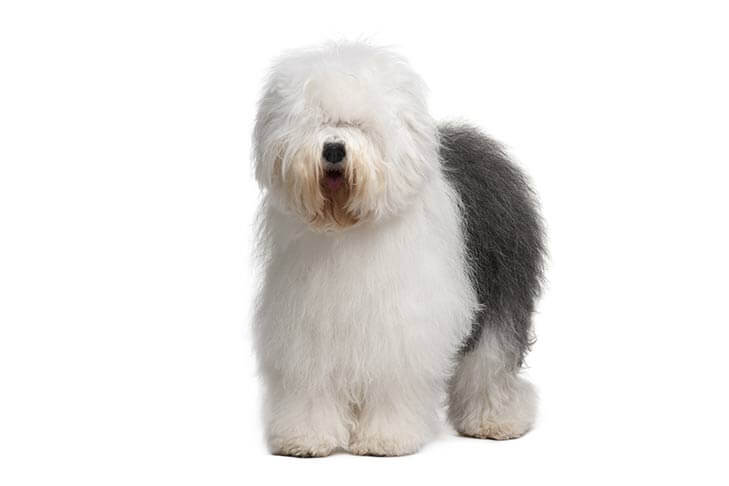
The Old English Sheepdog is a well-balanced and sturdy dog, built for herding livestock and driving the animals to market. The breed has a strong, substantial bone structure that supports its well-muscled and solid frame. In terms of proportion, the breed’s body length is approximately the same as its height, displaying a compact and practically square silhouette.
Texture: The Old English Sheepdog has an unmistakable double coat, with outer guard hairs that are rough in texture and an undercoat that's dense and waterproof. On the head, the hair is profuse, completely covering the eyes, but the hair on the ears is more moderately long and dense. The body is covered in a long, thick jacket, longer still over the hindquarters, and the legs are well-coated all-around. The hair has a harsh texture; not straight, but rather shaggy and without curl.
Standard Colors
04/Consider
The Old English Sheepdog is known for its shaggy coat, sturdy frame, and adaptable disposition. These dogs are typically fun-loving and playful, but they can also be great guardians and protectors of the family. The breed's signature coat, though beautiful, requires a serious commitment to keep it looking its best. The good news is that, while being large dogs, the typical OES can adapt well to suburban life as long its exercise needs are met.
Interaction With Family
The level of affection a breed typically shows towards family members and familiar individuals.
Good With Other Dogs
The innate friendliness of a dog towards other dogs can depend on its breed.
Good With Young Children
The degree to which a breed will typically be patient with young children.
Amount Of Shedding
How much hair a breed typically leaves behind on clothes, furniture and floors.
Frequency Of Grooming
How often a breed needs brushing, bathing or a professional trim to stay in condition.
Amount Of Drooling
How prone a breed is to drool, worth knowing before you keep a towel by the door.
Openness To Strangers
How openly a breed tends to greet new people, visitors and strangers.
Protective Nature
How likely a breed is to alert you to anything unfamiliar, and stand between you and it.
Playfulness Level
How enthusiastic a breed stays about games and play well past puppyhood.
Trainability Level
How readily a breed takes direction and works with you rather than around you.
Barking Level
How much a breed uses its voice, and how readily.
Energy Level
How much get-up-and-go a breed brings to an average day.
Health
The Old English Sheepdog is generally a healthy and robust breed, but like all dogs, individuals can be susceptible to certain issues. Regular veterinary care, a healthy diet, and adequate exercise can help to minimize the risk of any health concern. The average lifespan of the Old English Sheepdog is 10 to 12 years. Responsible breeders health-test their breeding stock to increase the likelihood that their dogs will enjoy long and healthy lives.
The Old English Sheepdog is widely known for its friendly and affectionate nature. These dogs have a gentle and loving disposition that endears them to people of all ages. Their welcoming demeanor and warm personality make them an excellent choice as a companion. These playful dogs often display remarkable patience and tolerance, making them an ideal choice for families seeking a canine companion that can coexist harmoniously with children.
One of the standout qualities of the Old English is the breed's playful spirit. These dogs retain a youthful exuberance well into adulthood, which means they can engage in playtime with children or enjoy an active lifestyle on the farm. Their boundless enthusiasm for games and outdoor activities encourages family members to stay active and engaged with their pets.
The breed's intelligence is another distinguishing trait. Old English Sheepdogs are quick learners and have a knack for understanding and responding to direction. This makes them responsive to training, although they can display an independent streak at times. Patience and consistency are the keys to unlocking their full potential.
While their intelligence is evident, the OES is also humorous and its sometimes mischievous side should not be overlooked. Playful antics are typical of the breed and can bring a smile to the faces of those fortunate enough to share their lives with these dogs. Their shaggy appearance, including the distinctive beard and mustache, and expressive eyes only add to the dog's comical charms.
Exercise Expectations
The Old English Sheepdog is a large and active breed known for its agility and strength. These dogs have a history of herding and working long hours, and this legacy has left a mark on their exercise needs. Providing them with at least two hours of exercise each day is crucial for their well-being. Exercise is essential for maintaining the physical fitness of an OES. These dogs require regular activity to keep their muscles toned and their joints healthy. Exercise helps to prevent obesity and other health-related issues common in many dogs today. Anything from walking and running to participating in a Herding or Agility Trial can be a great way for the dog to remain healthy and fit. In addition to physical exercise, Sheepdogs need plenty of mental stimulation each day. These intelligent dogs thrive on activities that challenge their minds, so interactive games, puzzles, and obedience training can provide the kind of mental exercise that prevents boredom and destructive behaviors. Due to the breed's thick coat, exercising in hot weather can be challenging for the Old English Sheepdog. Providing plenty of fresh water and offering shorter walks are recommended whenever it is hot outside. Otherwise, when temperatures drop, the OES is generally well protected for the cold weather.
Living with an Old English Sheepdog is a delightful adventure filled with love, laughter, and a healthy dose of playful antics. The breed's iconic appearance, affectionate disposition, and intelligence make these dogs wonderful additions to families that are willing to invest in the dog's care. OES return the favor by offering companionship, security, and a distinctive charm that's hard to ignore.
The breed's appearance is instantly recognizable, with its profuse, shaggy, coat and intelligent expression. The distinctive appearance of the OES often draws attention and elicits compliments from admirers. However, this gorgeous appearance needs regular attention and maintenance, so grooming is a challenge that needs to be considered.
The Old English Sheepdog thrives on human interaction and is known for forming deep emotional bonds with family members. The loving nature of this breed can make them an excellent choice as a canine companion. Despite their size, OES exude playfulness instead of intimidation, and they maintain their youthful exuberance and vitality well into adulthood.
The breed is known for its loyalty. These dogs are natural watchdogs, alerting their families to any unusual sounds or strangers. Typically sociable and friendly, with both friends and other pets, they often welcome invited guests warmly. This can make the their presence an asset at social gatherings and family events.
The Old English Sheepdog's shaggy coat is well-suited for colder climates, but it can make the breed prone to overheating in hot weather. Adaptability to different climates can be achieved with appropriate grooming, providing shade and water in hot weather, and ensuring the coat is properly maintained year-round. While these dogs do well in larger homes with access to a yard where they can exercise and play, many can adapt to apartment living as long as their exercise needs are met.
05/Puppies
Old English Sheepdog puppies are incredibly cute and appealing. However, when bringing one home, it's essential to be well-prepared for the responsibilities, as well as the joys, that come with raising a puppy of this breed.
Caring for an Old English Sheepdog puppy is a delightful but demanding responsibility that requires dedication, patience, and a lot of love. This adorable, shaggy pup will quickly become a cherished family member, but it also has specific needs.
Early socialization is crucial for the Old English pup. Exposure to a variety of people, animals, and environments will all but ensure it grows up to become a well-adjusted and confident adult. Positive social experiences during the formative months can also help to prevent unwanted behaviors in the future.
The Old English puppy is widely known for its playful and energetic nature, requiring ample activity each day to burn off its boundless energy. Regular playtime, short walks, and interactive games are important as both physical and mental exercises.
During puppyhood, the OES often chews to alleviate the soreness that accompanies teething. Since chewing is a natural behavior that helps to soothe the discomfort, it's important to provide safe and appropriate chew toys to prevent chewing on furniture, shoes, and other household objects.
Regular veterinary check-ups are crucial for the Old English Sheepdog puppy. Vaccinations, deworming, and regular wellness exams will provide protection from many common puppy illnesses. Regularly scheduled veterinary exams can also provide useful information on providing preventive care throughout the dog's life.
06/Activities
Old English Sheepdogs are intelligent and active dogs that thrive on mental and physical stimulation. Engaging in various dog sports can provide both exercise and mental enrichment. Here are just a few activities that can be fun for an OES:
Gallery
07/Standards
The Old English Sheepdog is recognized by the world's leading registries and kennel organizations, which categorize the breed into a specific Group based on its unique characteristics. This breed is recognized worldwide under the following Group designations:
The ideal Old English Sheepdog is described by a Breed Standard that is approved by each of the world’s leading registries and kennel organizations. The Breed Standards for this breed may be found in the following links:
08/Clubs
09/Rescue
10/Facts
Herding Heritage
Old English Sheepdogs were originally bred in England as herding dogs. Their name reflects their historical role as movers of sheep and other livestock. Their shaggy coat helped protect them from the elements while working in all kinds of weather.
Gentle & Affectionate
These dogs are known for their gentle and affectionate nature. They form strong bonds with their families and are often described as "gentle giants."
Adaptability
OES are adaptable and can thrive in various living arrangements, from mid-sized apartments to larger homes with yards. They do, however, require regular exercise to stay happy and healthy.
Beard & Mustache
The hair around the muzzle and face of this breed forms a "beard" and "mustache," adding much to the dog's distinctive and somewhat comical appearance.
Thick Coat, Light Shedders
Despite their long, shaggy coats, Old English Sheepdogs are surprisingly light shedders. Their hair often becomes trapped in the dense undercoat, reducing the amount of hair that ends up around the house. However, grooming is a must to prevent matting.
Famous Movie Stars
Old English Sheepdogs have been featured in various movies and television shows. One of the most famous OES in pop culture was "The Shaggy Dog," featured in the 1959 Disney film of the same name.
Beatles Connection
The Beatles’ song “Martha My Dear” is about Paul McCartney’s Sheepdog, Martha, who was originally named Knickers.
11/FAQ
Old English Sheepdogs are known for their profuse, shaggy coats, and they do shed. They require regular grooming to prevent matting and to manage the shedding hair. During seasonal changes, they tend to shed more heavily, requiring extra attention be paid to the loss of their thick undercoat.

Written by
Dan Sayers is the Executive Editor of SHOWSIGHT. He is a member of the World Dog Press Association and the Dog Writers Association of America, which recognized his illustrations in the award-winning Encyclopedia of K-9 Terminology. Dan is a longtime supporter of the sport of dogs and an advocate for the conservation of recognized breeds in all their forms and functions. He is a member of the Morris and Essex Kennel Club, and for 45 years, the Irish Water Spaniel Club of America where he serves as AKC Delegate, Archivist, and approved Breed Mentor. Dan breeds under the Quiet Storm prefix and has judged the IWSCA National Specialty Sweepstakes twice.
Official Standard of the Old English Sheepdog
General Appearance: A strong, compact, square, balanced dog. Taking him all around, he is profusely, but not excessively coated, thickset, muscular and able-bodied. These qualities, combined with his agility, fit him for the demanding tasks required of a shepherd's or drover's dog. Therefore, soundness is of the greatest importance. His bark is loud with a distinctive "pot-casse" ring in it.
Size, Proportion, Substance: Type, character and balance are of greater importance and are on no account to be sacrificed to size alone. Size - Height (measured from top of withers to the ground), Dogs: 22 inches (55.8 centimeters) and upward. Bitches: 21 inches (53.3 centimeters) and upward. Proportion - Length (measured from point of shoulder to point of ischium (tuberosity) practically the same as the height. Absolutely free from legginess or weaselness. Substance - Well muscled with plenty of bone. Head - A most intelligent expression. Eyes - Brown, blue or one of each. If brown, very dark is preferred. If blue, a pearl, china or wall-eye is considered typical. An amber or yellow eye is most objectionable. Ears - Medium sized and carried flat to the side of the head. Skull -Capacious and rather squarely formed giving plenty of room for brain power. The parts over the eyes (supra-orbital ridges) are well arched. The whole well covered with hair. Stop - Well defined. Jaw - Fairly long, strong, square and truncated. Attention is particularly called to the above properties as a long, narrow head or snipy muzzle is a deformity. Nose - Always black, large and capacious. Teeth - Strong, large and evenly placed. The bite is level or tight scissors.
Neck, Topline, Body: Neck - Fairly long and arched gracefully. Topline - Stands lower at the withers than at the loin with no indication of softness or weakness. Attention is particularly called to this topline as it is a distinguishing characteristic of the breed. Body - Rather short and very compact, broader at the rump than at the shoulders, ribs well sprung and brisket deep and capacious. Neither slab-sided nor barrel-chested. The loin is very stout and gently arched. Tail -Docked close to the body, when not naturally bob tailed.
Forequarters: Shoulders well laid back and narrow at the points. The forelegs dead straight with plenty of bone. The measurements from the withers to the elbow and from the elbow to the ground are practically the same.
Hindquarters: Round and muscular with well let down hocks. When standing, the metatarsus are perpendicular to the ground when viewed from any angle.
Feet: Small and round, toes well arched, pads thick and hard, feet pointing straight ahead.
Coat: Profuse, but not so excessive as to give the impression of the dog being overly fat, and of a good hard texture; not straight, but shaggy and free from curl. Quality and texture of coat to be considered above mere profuseness. Softness or flatness of coat to be considered a fault. The undercoat is a waterproof pile when not removed by grooming or season. Ears coated moderately. The whole skull well covered with hair. The neck well coated with hair. The forelegs well coated all around. The hams densely coated with a thick, long jacket in excess of any other part. Neither the natural outline nor the natural texture of the coat may be changed by any artificial means except that the feet and rear may be trimmed for cleanliness.
Color: Any shade of gray, grizzle, blue or blue merle with or without white markings or in reverse. Any shade of brown or fawn to be considered distinctly objectionable and not to be encouraged.
Gait: When trotting, movement is free and powerful, seemingly effortless, with good reach and drive, and covering maximum ground with minimum steps. Very elastic at a gallop. May amble or pace at slower speeds.
Temperament: An adaptable, intelligent dog of even disposition, with no sign of aggression, shyness or nervousness.
Approved February 10, 1990
Effective March 28, 1990
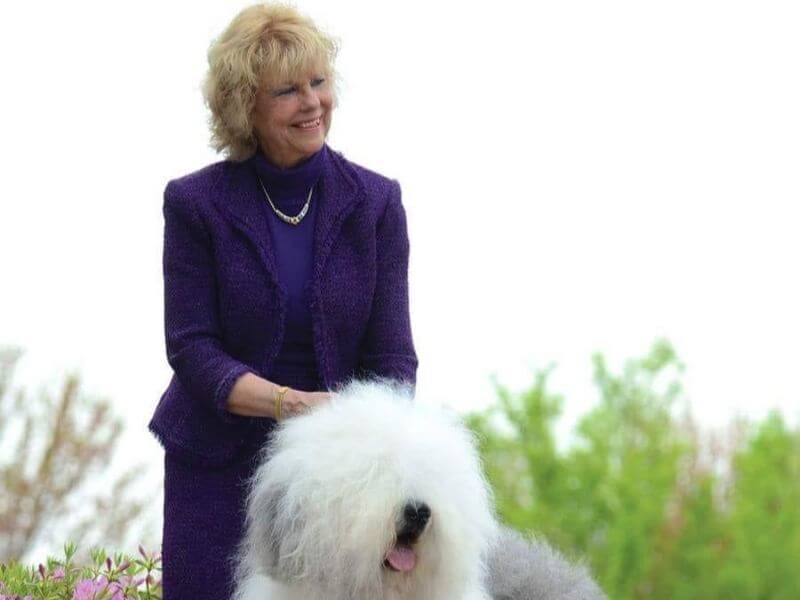

Meet the Breeders
Jere Marder, Breeder of Lambluv Old English Sheepdog for 40+ years. Insights on the breed and show community challenges.
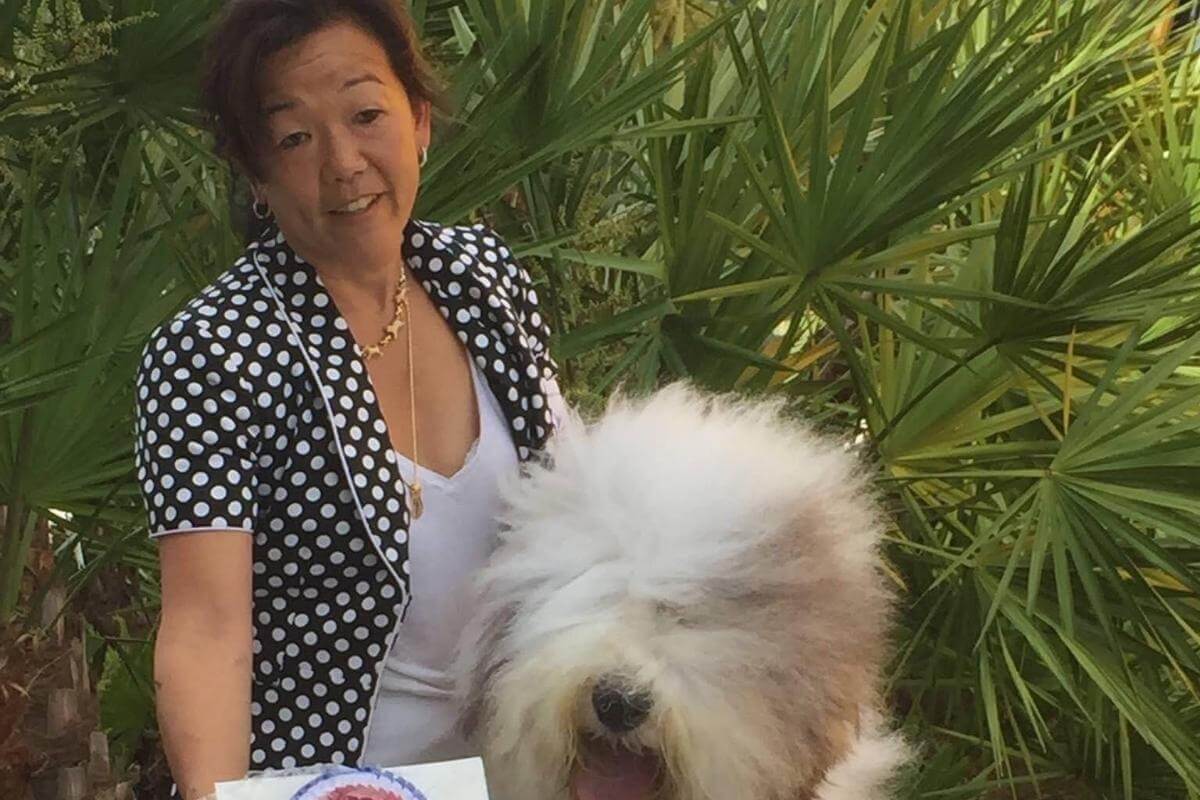
Meet the Breeders
Interview with Liz Fujikawa, breeder of Old English Sheepdogs and Norwich Terriers. Insights on breed, health, and the dog show community.
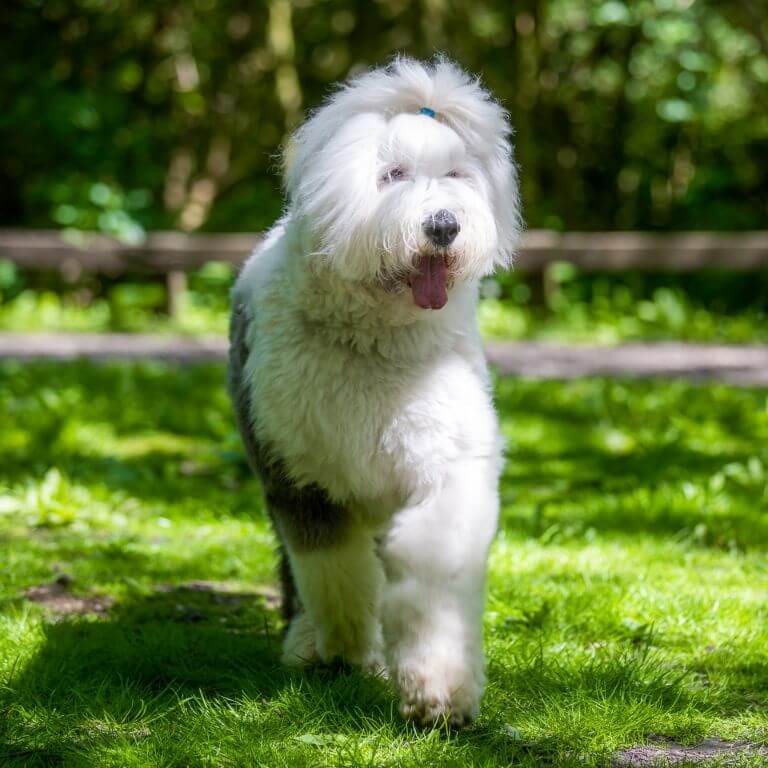

All About Judging
Many judges often wait to add the Old English Sheepdog dog breed to their credentials after they have had more judging experience. The coat

Meet the Breeders
Interview with Herding Group Breeder Dianne McKee-Rowland – I live in Salem, Oregon. Having a mother who showed her Peke and always had one
Meet the Breeders
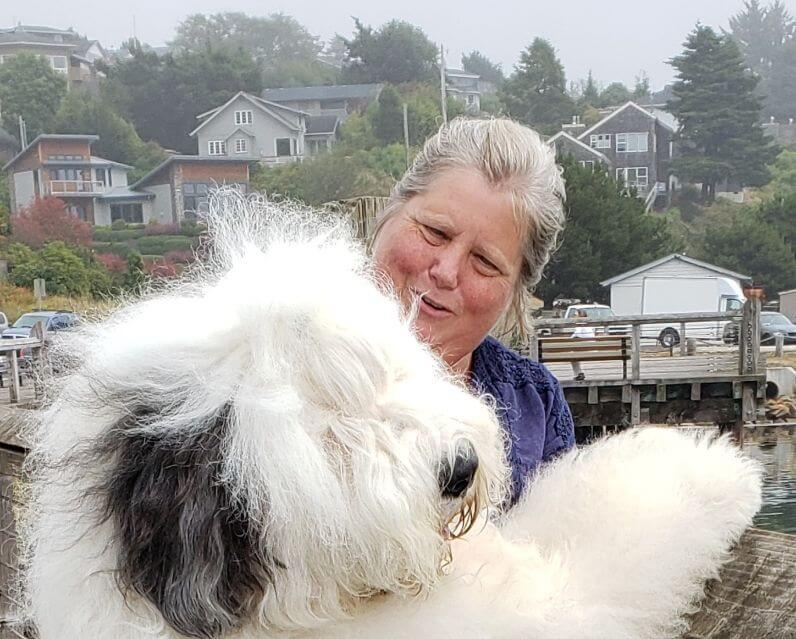
Interview with Herding Group Breeder Lita Long – We live in Oregon. (All of my life for 64 years.) While I was involved with my mother who
Often referred to as the "Bobtail," the Old English Sheepdog has traditionally had its tail closely docked. The purpose of tail docking was to prevent injury while the dog worked as a herder and drover of livestock, and to avoid taxes levied on dogs that did not work. The natural tail of an OES is bushy in appearance and is typically carried below the level of the back. It is often described as plume-like and gives the dog a distinctive, if nontraditional, appearance.
A Note About Color: Old English Sheepdog Puppies are born black and white without an undercoat. As they mature, the coat becomes hard in texture and lighter in color. A brown tinge may be apparent during the transition, but any brown (or black) in an adult coat is unacceptable.
Coat Type
Double
The structure of the coat this breed carries.
Coat Length
Long
How long the breed's coat grows when kept in condition.
Adaptability Level
How easily a breed copes with changes in home, routine, noise and weather.
Mental Stimulation Needs
How much a breed needs a job, a puzzle or training to stay content.
The Old English Sheepdog's herding heritage is still evident today. These dogs can readily exhibit their inclination to gather the flock by gently nipping at the heels of their family members, a carryover from their historical role as a livestock herder. These tendencies, though inappropriate at times, can be managed with proper training and redirection.
The Old English Sheepdog is a large breed with a large appetite. To support this dog's overall health and maintain its impressive physique, it's crucial to provide a well-balanced and high-quality diet throughout its lifetime.
Selecting the right type of dog food is the first step in ensuring a Sheepdog receives the necessary nutrition it needs. Protein is essential for muscle maintenance and overall health and moderate levels of fat are needed to provide a dependable energy source.
Carbohydrates provide energy too, and they also contribute the fiber that is important for digestive health. Feeding a diet that includes healthy carbohydrates, such as brown rice, sweet potatoes, or whole grains, is crucial.
The average adult Old English Sheepdog needs from 2.5 to 3.5 cups of high-quality food a day. Still, portion control is a key aspect of good nutrition. The breed's large size can make these dogs prone to obesity if overfed. It is important to adjust portion sizes as needed based on the dog's age, activity level, and body condition. Healthy weight is essential to prevent a range of health issues and diseases.
Training the Old English Sheepdog should start as early as possible. Puppies are like sponges and can quickly learn and adapt to new commands and routines. Socialization should also begin during the puppy stage to ensure the youngster becomes well-adjusted around people and other animals, and in a variety of environments.
Sheepdogs are well-known for their intelligence and eager-to-please nature. This combination makes them highly trainable and a pleasure to work with. However, their independent streak can appear as occasional stubbornness and present some interesting challenges.
Consistency in training is essential, as is establishing clear rules and boundaries. It is important for all members of the family to interact with the OES consistently. This helps to prevent confusion and it reinforces the desired behaviors. Basic obedience training is a must, and leash training and recall training are important for dogs that spend time in public settings.
The Old English Sheepdog can be sensitive, so patience is crucial. Avoiding harsh training methods and punishment is essential, as these can damage the dog's trust and its willingness to learn. Instead, using positive reinforcement techniques, such as treats, praise, and toys, is advisable.
Grooming Expectations
Brushing is a fundamental aspect of caring for the Old English Sheepdog. The breed's double coat consists of a soft, insulating undercoat and a longer, coarse outer coat. Regular brushing is essential to prevent matting and tangling. It should be done daily, if possible, or at least three times a week. Bathing an OES should be done as needed, typically every 6-8 weeks or when the dog gets especially dirty. Because the coat is dense, it's important to make sure the dog is completely dry after a bath to avoid any skin issues from developing. Because the Sheepdog's eyes are partially obscured by the hair, it's important to ensure the eyes are kept clean and free from discharge. Trimming the hair around the eyes is advisable. At least once a month, the nails of the OES should be trimmed, and the hair between the paws should be trimmed as well. Additionally, the ears should be checked weekly for signs of dirt, redness, or a strong odor that requires immediate attention to prevent infection.