Members
01/Overview
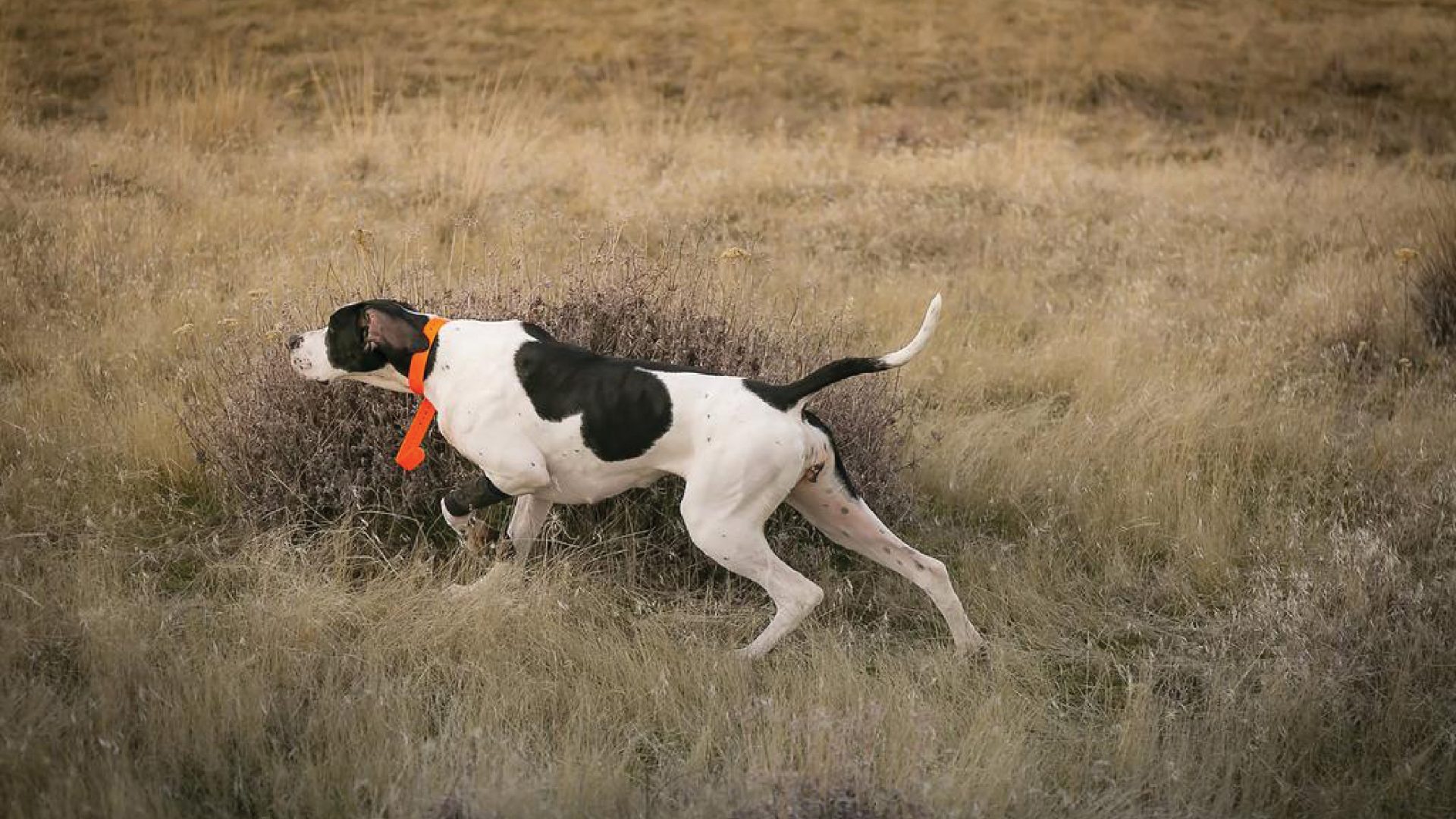
The Pointer, often called the "aristocrat of the field" and the “Cadillac” of bird dogs, is a graceful and athletic Sporting breed known for its unmistakable look, proud carriage, staying power, and dash in the field. Renowned for its intelligence, stamina, and distinctive “point,” this is a versatile breed that excels at fieldwork and makes a loving companion for active families.
Highlights
02/History
The Pointer's history dates back over three centuries, making it one of the oldest and most distinguished of the Gundog breeds. Originating in 17th-century England, it was developed to assist hunters by locating and pointing to the position of hidden game birds. This iconic stance, with the dog frozen in place, nose and tail aligned towards the prey, became a defining characteristic of the breed.
The Pointer’s development involved careful selective breeding, with Spanish Pointers serving as the foundation due to their exceptional scenting abilities and endurance. Traits from other breeds, such as the speed of the Greyhound, the stamina of the Foxhound, and the scenting powers of the Bloodhound, were incorporated to create a versatile and efficient hunting companion. Initially, Pointers worked alongside other dogs to locate and flush game, but with the advent of firearms in the 18th century they became invaluable in the uplands, enabling hunters to target stationary birds without disturbing the surrounding area.
By the late 18th century, Pointers had become symbols of distinction among European aristocrats and sportsmen, admired for their speed, elegance, and reliable pointing abilities. The breed’s reputation eventually crossed the Atlantic where it gained popularity among American sportsmen in the 19th century. Their breed’s adaptability to North America’s open landscapes, coupled with the dogs’ unmatched hunting skills, solidified their place as a premier field dog in the US.
In 1878, the Pointer became one of the first nine breeds recognized by the American Kennel Club (AKC), further establishing its prominence. American breeders refined the breed further, focusing on agility, endurance, and the Pointer’s characteristic sleek yet muscular build. These efforts produced a dog that excels in competitive Field Trials, Hunt Tests, and Conformation Shows.
03/Appearance
The Pointer is a medium-to-large-sized breed, with males standing between 25 and 28 inches tall at the shoulder, and females measuring slightly less at 23 to 26 inches. Males typically weigh between 55 and 75 pounds, while females generally weigh around 45 to 65 pounds.
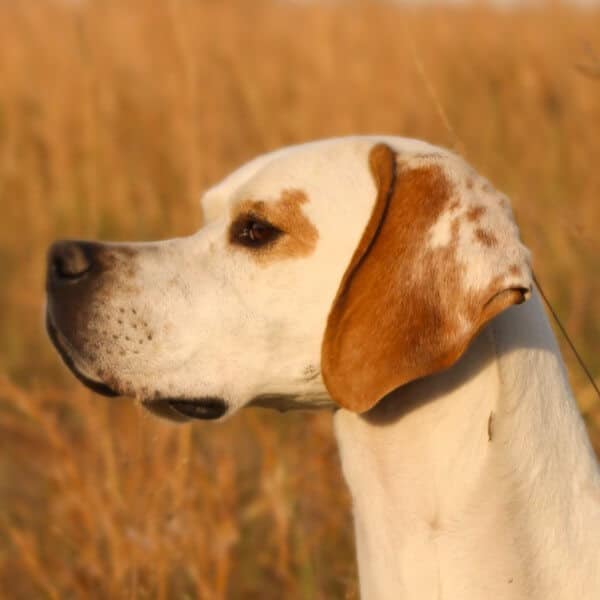
Pointers exhibit a well-balanced and symmetrical physique, with their height at the withers roughly equal to the length of their body. Their body structure emphasizes agility, endurance and symmetry, with strong, clean lines and no hint of coarseness. Substance is neither too heavy to hinder their athleticism nor too light to undermine their power, making these dogs efficient and tireless workers in the field.
Texture: The Pointer's coat is short, dense, and smooth, lying close to the body. It is a single coat that is maintenance-free. Texture should feel soft to the touch, with a natural sheen that enhances the breed’s sleek and athletic appearance. Extremely thick coats with a brush under the tail are not acceptable.
Standard Colors
04/Consider
The Pointer is an athletic and affectionate breed that thrives in active homes with plenty of exercise, training, and attention. Known for its hunting instincts and boundless energy, it bonds closely with its family and does best with owners who can keep up with its lively nature and provide consistent guidance.
Interaction With Family
The level of affection a breed typically shows towards family members and familiar individuals.
Good With Other Dogs
The innate friendliness of a dog towards other dogs can depend on its breed.
Good With Young Children
The degree to which a breed will typically be patient with young children.
Amount Of Shedding
How much hair a breed typically leaves behind on clothes, furniture and floors.
Frequency Of Grooming
How often a breed needs brushing, bathing or a professional trim to stay in condition.
Amount Of Drooling
How prone a breed is to drool — worth knowing before you keep a towel by the door.
Openness To Strangers
How openly a breed tends to greet new people, visitors and strangers.
Protective Nature
How likely a breed is to alert you to — and stand between you and — anything unfamiliar.
Playfulness Level
How enthusiastic a breed stays about games and play well past puppyhood.
Trainability Level
How readily a breed takes direction and works with you rather than around you.
Barking Level
How much a breed uses its voice, and how readily.
Energy Level
How much get-up-and-go a breed brings to an average day.
Health
The Pointer is a generally healthy and robust breed, with a lifespan ranging from 12 to 17 years. However, like all dogs, some Pointers may be prone to certain illnesses and health conditions.
The Pointer is an intelligent, affectionate, and adaptable breed, making it a great choice for active households. The breed’s friendly and gentle nature allows these dogs to bond closely with their families, and they are particularly well-suited for experienced handlers who can meet their physical and mental needs. While generally good with children and other dogs, early socialization is essential to ensure they are confident and well-mannered.
Pointers are sensitive and thrive on positive reinforcement training, responding poorly to harsh corrections. They dislike being left alone for long periods and may develop separation anxiety without adequate companionship. Their polite demeanor with strangers, combined with their sociable and eager-to-please personality, makes them delightful companions for those who can provide the attention and activity they require.
Exercise Expectations
Their strong hunting instincts make them particularly well-suited for Field Trials or Tracking exercises, which allow them to use their natural skills. Without proper outlets for their abundant energy, they may become bored and exhibit destructive behaviors. This expectation makes consistent exercise essential for maintaining their overall well-being and happiness.
Grooming Expectations
Pointers are best suited for homes with ample space to accommodate the breed’s energy levels. While these dogs can adapt to apartment living if given sufficient exercise, they thrive in homes with access to a fenced yard where they can run and play freely. Their short coat makes them more tolerant of warm weather than cold, so care should be taken to keep them warm during colder months, particularly in harsh climates.
As loyal and affectionate companions, Pointers love being part of a family and they dislike being left alone for long periods. They form strong bonds with their human companions and do best in homes where they can receive plenty of attention, mental stimulation, and physical activity. When their needs are met, Pointers are well-mannered, adaptable, and deeply devoted members of the household.
05/Puppies
Pointer puppies are energetic, playful, and curious, reflecting the breed’s lively nature from the start. Their high activity levels require age-appropriate outlets to channel their energy and enthusiasm positively. With consistent training and early socialization, they should grow into confident and well-mannered adults that are a pleasure in the field and a delight in the home.
Caring for a Pointer puppy involves establishing a routine that provides structure, consistency, and love. Each pup will require a diet formulated for its growth, typically fed in three to four small meals daily. The puppy’s breeder should help to determine the appropriate food and portion sizes at each developmental stage.
Socialization should begin as soon as possible, introducing the puppy to various people, environments, and other animals in a controlled and positive way. Early training, such as crate training and housebreaking, is crucial and works best with positive reinforcement techniques. Avoid harsh corrections, as Pointers are sensitive and respond best to encouragement and rewards.
To protect the Pointer puppy’s growing body, exercise should be moderate, focusing on short play sessions rather than intense activities. Regular veterinary check-ups, vaccinations, and parasite prevention are essential during this stage.
06/Activities
Gallery
07/Standards
The Pointer is recognized by the world's leading registries and kennel organizations, which categorize the breed into a specific Group based on its unique characteristics. This breed is recognized worldwide under the following Group designations:
The ideal Pointer is described by a Breed Standard that is approved by each of the world’s leading registries and kennel organizations. The Breed Standards for this breed may be found in the following links:
08/Clubs
09/Rescue
10/Facts
Nicknamed the "Cadillac” of Bird Dogs
Pointers earned this nickname for their speed, elegance, and unmatched precision in the field, setting them apart from other hunting breeds.
Famous for Their Freeze
The Pointer’s iconic stance—nose pointed towards its prey, tail straight, and body completely still—is so distinctive that it inspired the term "pointer" for similar behaviors in other breeds.
A Favorite of Aristocrats
Historically, English nobility prized Pointers for their hunting prowess and elegant appearance, often showcasing them in organized hunting expeditions.
A Breed for the Arts
Pointers have been immortalized in famous paintings and sculptures, particularly during the 18th and 19th centuries, reflecting the breed’s long-standing association with beauty and the sporting life.
11/FAQ
Yes, Pointers shed moderately throughout the year. Their short, sleek coat requires regular brushing to manage shedding and maintain its natural shine.
Official Standard for the Pointer
General Appearance: The Pointer is bred primarily for sport afield; he should unmistakably look and act the part. The ideal specimen gives the immediate impression of compact power and agile grace; the head noble, proudly carried; the expression intelligent and alert; the muscular body bespeaking both staying power and dash. Here is an animal whose every movement shows him to be a wide-awake, hard-driving hunting dog possessing stamina, courage, and the desire to go. And in his expression are the loyalty and devotion of a true friend of man.
Temperament: The Pointer's even temperament and alert good sense make him a congenial companion both in the field and in the home. He should be dignified and should never show timidity toward man or dog.
Head: The skull of medium width, approximately as wide as the length of the muzzle, resulting in an impression of length rather than width. Slight furrow between the eyes, cheeks cleanly chiseled. There should be a pronounced stop. From this point forward the muzzle is of good length, with the nasal bone so formed that the nose is slightly higher at the tip than the muzzle at the stop. Parallel planes of the skull and muzzle are equally acceptable. The muzzle should be deep without pendulous flews. Jaws ending square and level, should bite evenly or as scissors. Nostrils well developed and wide open. Ears-Set on at eye level. When hanging naturally, they should reach just below the lower jaw, close to the head, with little or no folding. They should be somewhat pointed at the tip-never round-and soft and thin in leather. Eyes-Of ample size, rounded and intense. The eye color should be dark in contrast with the color of the markings, the darker the better.
Neck: Long, dry, muscular, and slightly arched, springing cleanly from the shoulders.
Shoulders: Long, thin, and sloping. The top of blades close together.
Front: Elbows well let down, directly under the withers and truly parallel so as to work just clear of the body. Forelegs straight and with oval bone. Knee joint never to knuckle over. Pasterns of moderate length, perceptibly finer in bone than the leg, and slightly slanting. Chest, deep rather than wide, must not hinder free action of forelegs. The breastbone bold, without being unduly prominent. The ribs well sprung, descending as low as the elbow-point.
Back: Strong and solid with only a slight rise from croup to top of shoulders. Loin of moderate length, powerful and slightly arched. Croup falling only slightly to base of tail. Tuck-up should be apparent, but not exaggerated.
Tail: Heavier at the root, tapering to a fine point. Length no greater than to hock. A tail longer than this or docked must be penalized. Carried without curl, and not more than 20 degrees above the line of the back; never carried between the legs.
Hindquarters: Muscular and powerful with great propelling leverage. Thighs long and well developed. Stifles well bent. The hocks clean; the legs straight as viewed from behind. Decided angulation is the mark of power and endurance.
Feet: Oval, with long, closely-set, arched toes, well-padded, and deep. Catfoot is a fault. Dewclaws on the forelegs may be removed.
Coat: Short, dense, smooth with a sheen.
Color: Liver, lemon, black, orange; either in combination with white or solid-colored. A good Pointer cannot be a bad color. In the darker colors, the nose should be black or brown; in the lighter shades it may be lighter or flesh-colored.
Gait: Smooth, frictionless, with a powerful hindquarters' drive. The head should be carried high, the nostrils wide, the tail moving from side to side rhythmically with the pace, giving the impression of a well-balanced, strongly-built hunting dog capable of top speed combined with great stamina. Hackney gait must be faulted.
Balance and Size: Balance and over-all symmetry are more important in the Pointer than size. A smooth, balanced dog is to be more desired than a dog with strongly contrasting good points and faults. Hound or terrier characteristics are most undesirable. Because a sporting dog must have both endurance and power, great variations in size are undesirable, the desirable height and weight being within the following limits: Dogs: Height – 25 to 28 inches Weight – 55 to 75 pounds Bitches: Height – 23 to 26 inches Weight – 44 to 65 pounds
Approved November 11, 1975


Meet the Breeders
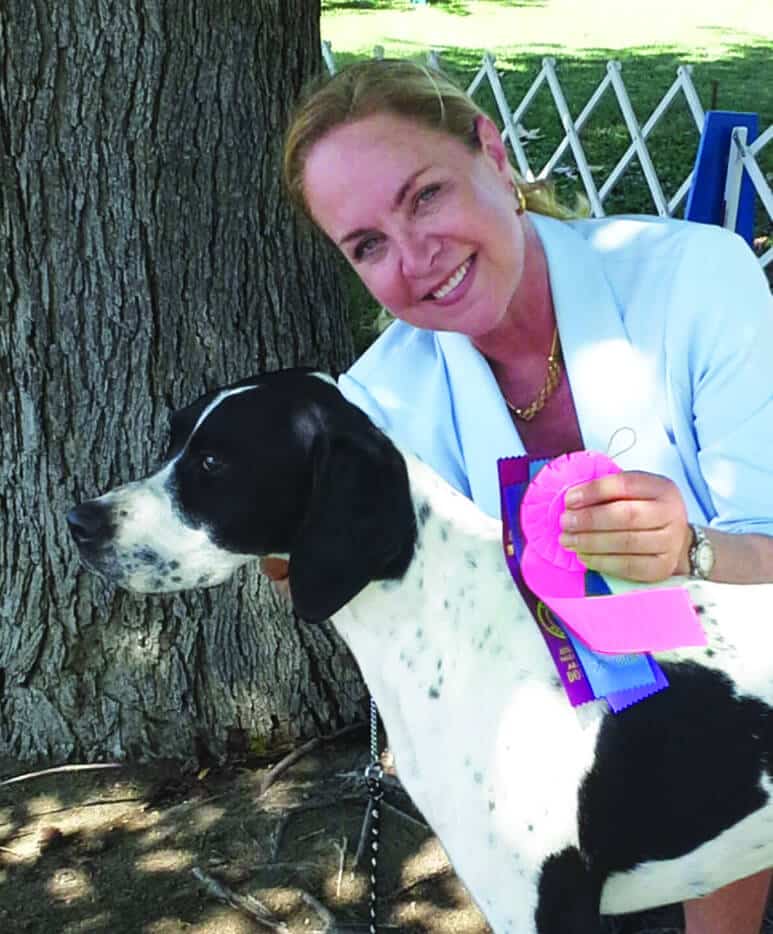
Interview with Sporting Group Breeder Nancy Tuthill – Where do I live? How many years in dogs? How many years as a breeder?

Meet the Breeders
I was 40 years old when I got my first dog, a Pointer, and had him until he was 12 years old. Having gone back to school part-time while
All About Judging
How to judge Pointers? It was late on Sunday evening and I had just returned from a show where I saw some incredible dogs being judged…
The Pointer’s tail, often referred to as a "bee sting" tail, is medium in length, thick at the base, and tapering towards a fine point. In length, it does not reach to the hock joint. The tail is carried straight and level with the back, or only slightly higher, never curling or carried between the legs. The tail’s movement is lively when the dog moves. The Pointer's tail is always undocked, in keeping with the breed’s elegant and functional appearance.
Standard Markings
A Note About Color: The coat of the Pointer is either liver, lemon, black, or orange, either solid-colored or in combination with white. In darker coat colors, the nose should be black or brown, while lighter coats may have a lighter or “flesh-colored” nose. A good Pointer’s quality is not determined by its color.
Coat Type
Smooth
The structure of the coat this breed carries.
Coat Length
Short
How long the breed's coat grows when kept in condition.
Adaptability Level
How easily a breed copes with changes in home, routine, noise and weather.
Mental Stimulation Needs
How much a breed needs a job, a puzzle or training to stay content.
Pointers thrive on a high-quality, balanced diet tailored to their age, size, and activity level. As puppies, they require specialized nutrition to support their growth and development, typically spread across three to four small meals a day. Adult dogs, with their energetic nature, often need two meals per day of nutrient-dense food to sustain their activity levels.
The amount of food varies depending on the dog’s weight and activity level, with an average adult Pointer consuming approximately 2.5 to 4 cups of food daily. Portion control is essential to prevent overeating and to maintain the breed’s naturally lean and athletic physique. Fresh, clean water should always be available, and an appropriate diet and feeding schedule should be provided by the dog’s breeder.
Training a Pointer can be both rewarding and challenging due to the breed’s intelligence and strong hunting instincts. These gundogs are quick learners and eager to please, making them relatively easy to train for owners who are consistent and patient. However, their independent nature and “birdiness” may occasionally require extra persistence in reinforcing commands, particularly in outdoor or distraction-filled environments.
Pointers excel in obedience training, fieldwork, and dog sports, showcasing their natural athleticism and sharp minds. Early socialization is crucial to ensure they are comfortable with various people, animals, and environments. While they are not excessively vocal, Pointers may bark when excited or to alert their owners, so training should include managing this behavior.
Bathing is only necessary occasionally, usually when the Pointer becomes dirty from outdoor activities. The ears should be checked weekly for dirt or signs of infection, and nails should be trimmed regularly to prevent overgrowth. Routine dental care, such as brushing the teeth or providing dental chews, is essential for maintaining good oral health.