Members
01/Overview
The Vizsla, or the "Hungarian Pointer," is a breed of dog renowned for its elegant bearing and distinguished golden-rust-colored coat. Originally bred by the Magyars, the ancestors of the modern-day breed were highly valued for their speed and strength. Their descendants today are admired for these qualities as well as for their versatile hunting skills and affectionate nature. The breed is known for the close bond it shares with its human companions, displaying a level of loyalty and responsiveness that makes it an outstanding family pet and an excellent field dog. A gentle demeanor, combined with an enthusiastic attitude, makes this breed a popular choice for those who enjoy spending time outdoors.
Highlights
02/History
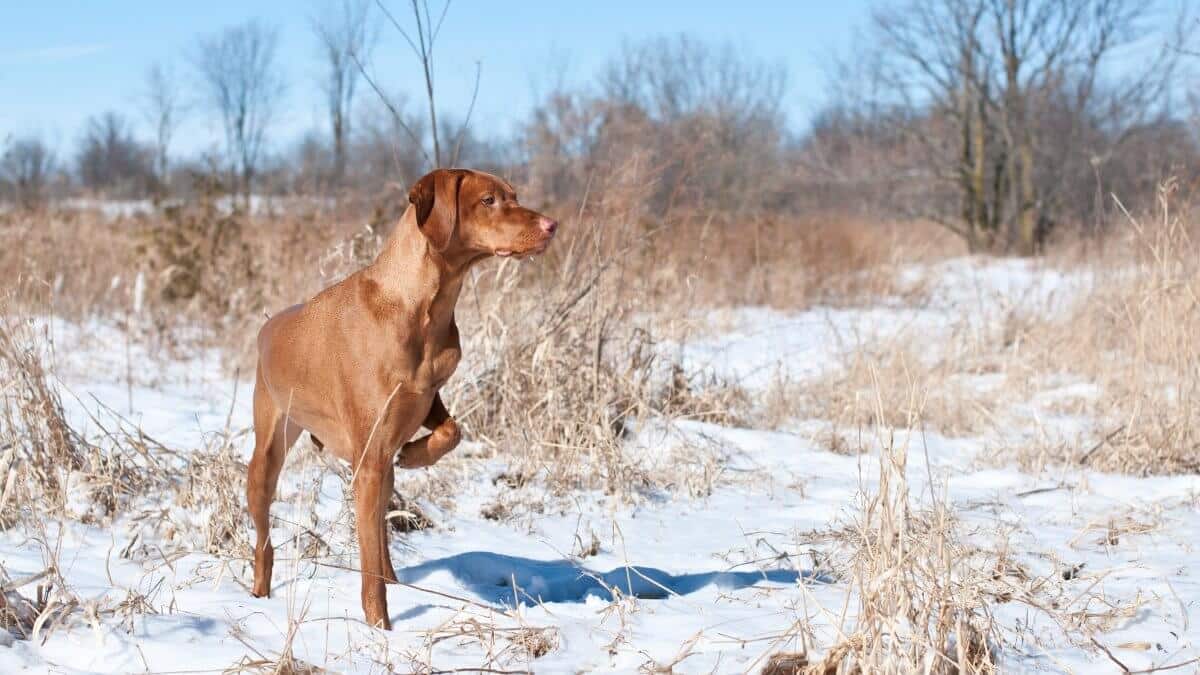
The Vizsla, a breed with a rich and expansive history, is one of the oldest known hunting dogs. Its origins trace back over a thousand years to the early Magyar tribes who migrated to what is now Hungary. The early Vizslas were valued companions of the Magyar hunters and warriors, revered for their exceptional hunting skills and loyal nature.
The breed's development was influenced by the varied geography and game found in Hungary. The Vizslas were bred to be versatile and resilient, capable of pointing and retrieving in the dense forests and on the open plains alike. Their keen sense of smell, agility, and endurance made them ideal for hunting fowl and game.
Over the centuries, the role of Vizslas expanded beyond hunting. They became symbols of nobility and status among the Hungarian aristocracy. The breed's purity was fiercely protected, and its breeding was often restricted to the nobility that owned much of the land.
The turmoil of wars and political changes in Europe posed significant threats to the breed's existence. The Vizsla suffered during the World Wars, with its numbers dwindling to dangerously low levels. However, dedicated breeders in Hungary, and later, in other parts of the world, worked tirelessly to preserve and revive the breed.
The Vizsla was officially recognized by the American Kennel Club (AKC) in 1960. This recognition marked a turning point for the breed, leading to increased interest and popularity in the United States. Similarly, The Royal Kennel Club (UK) and the Fédération Cynologique Internationale (FCI) have recognized the breed, further securing its status in the canine world.
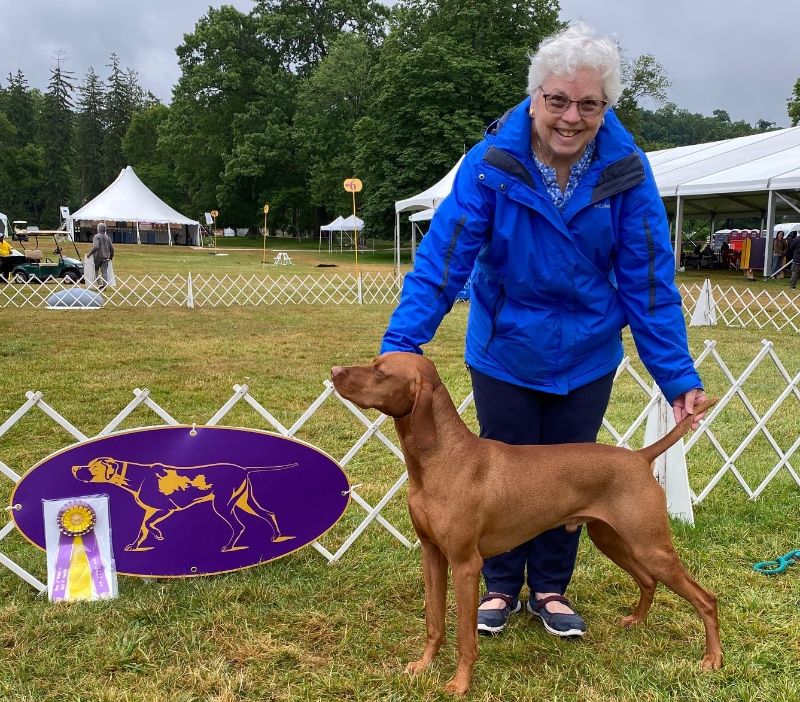
The modern Vizsla has retained much of its ancestral traits. The breed is still prized for its hunting abilities, but it has also gained recognition as versatile competitors in dog sports and dog shows, and as a beloved family companion. The affectionate nature of this loving and loyal breed, combined with its athletic build and great intelligence, makes it well-suited for a variety of roles and home settings.
03/Appearance
An adult male Vizsla typically stands between 22 and 24 inches tall at the shoulder, while a mature female is slightly shorter, ranging from 21 to 23 inches tall.
In terms of weight, a male usually weighs around 55 to 60 pounds, with a female generally falling within the range of 44 to 55 pounds.
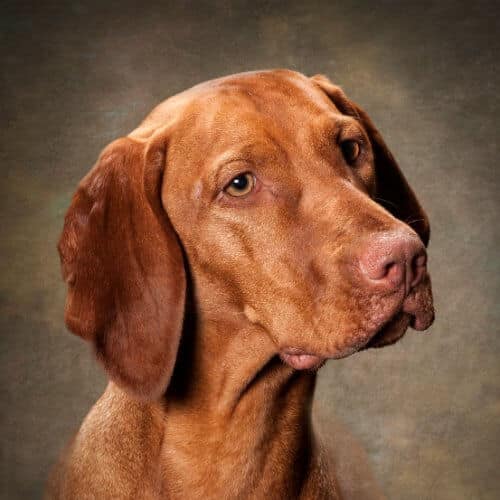

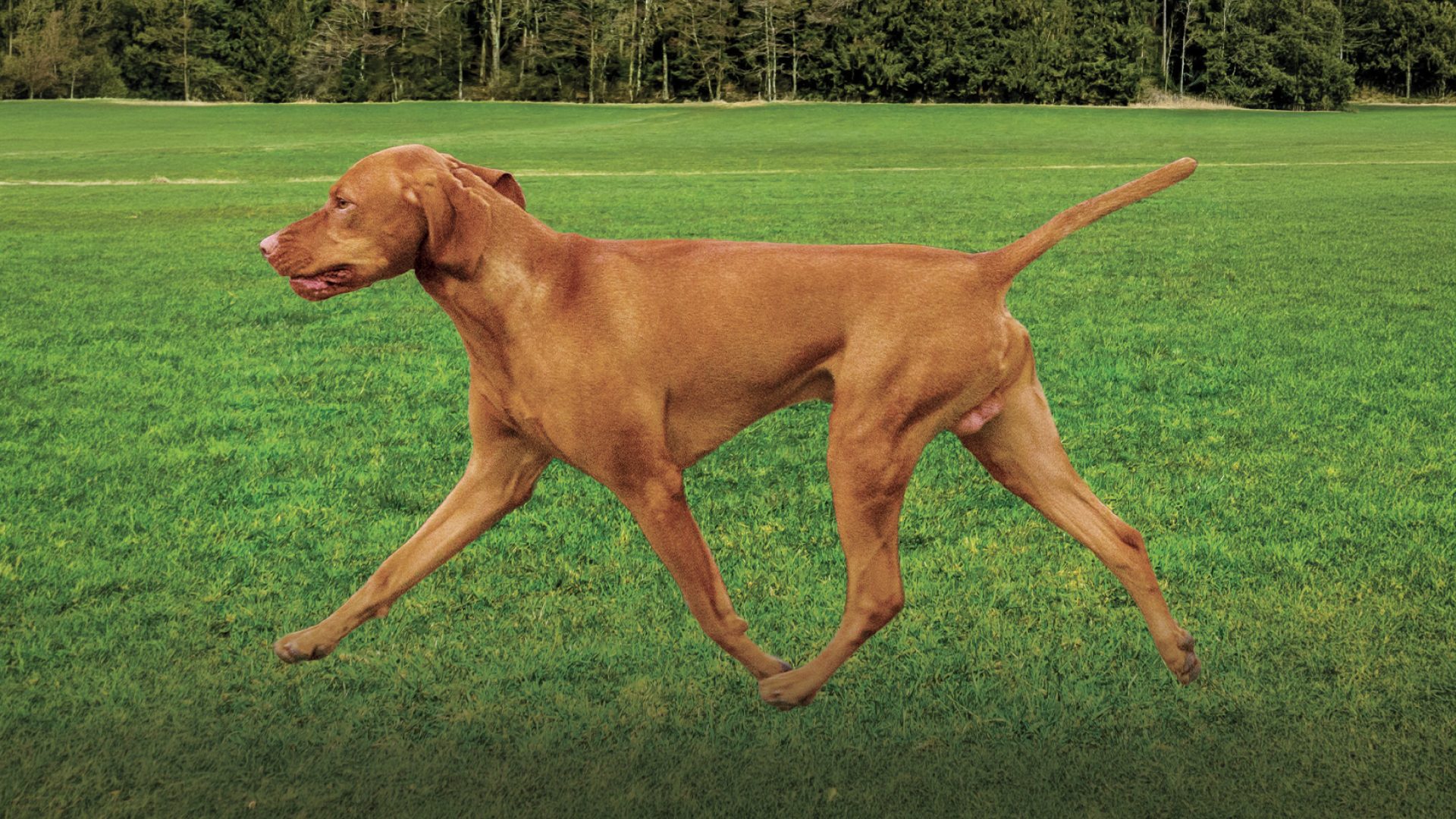
The Vizsla exhibits a well-proportioned body that speaks to its agility and endurance. The body is slightly longer than it is tall, measured from the point of the breastbone to the point of the buttocks and from the highest point of the shoulder blades to the ground. This contributes to the breed’s streamlined, athletic appearance and its usefulness as a pointer and retriever. The body is solid but not bulky, with a rather light build and just enough muscle mass to support vigorous activity without impeding swiftness. The breed's overall impression is one of balance and strength, a perfect embodiment of power, drive, and endurance.
Texture: The Vizsla has a short, smooth, and dense coat, offering protection in all types of weather and various terrain. The close-lying nature of the coat accentuates the dog's streamlined, athletic body, allowing for unhindered movement in dense brush and thick brambles. This type of coat is relatively easy to keep, requiring minimal grooming to maintain its sleek appearance.
Markings: White Markings
Standard Colors
04/Consider
Owning a Vizsla, a breed well-known for its affectionate nature and dynamic energy, is a rewarding experience for many. These dogs are not just pets but become an integral part of the family, offering reliable companionship and endless joy. However, prospective Vizsla owners should consider the breed's specific needs and characteristics to ensure they can provide a suitable environment and appropriate care.
Interaction With Family
The level of affection a breed typically shows towards family members and familiar individuals.
Good With Other Dogs
The innate friendliness of a dog towards other dogs can depend on its breed.
Good With Young Children
The degree to which a breed will typically be patient with young children.
Amount Of Shedding
How much hair a breed typically leaves behind on clothes, furniture and floors.
Frequency Of Grooming
How often a breed needs brushing, bathing or a professional trim to stay in condition.
Amount Of Drooling
How prone a breed is to drool, worth knowing before you keep a towel by the door.
Openness To Strangers
How openly a breed tends to greet new people, visitors and strangers.
Protective Nature
How likely a breed is to alert you to anything unfamiliar, and stand between you and it.
Playfulness Level
How enthusiastic a breed stays about games and play well past puppyhood.
Trainability Level
How readily a breed takes direction and works with you rather than around you.
Barking Level
How much a breed uses its voice, and how readily.
Energy Level
How much get-up-and-go a breed brings to an average day.
Health
Generally, the Vizsla is a robust and healthy dog, possessing a strong and athletic build. It is known for its longevity and vitality, often leading an active lifestyle well into its senior years. Prospective owners should be aware of the breed's health profile and make sure they have access to quality veterinary care that will help with maintaining the dog's overall health. Lifespan: The average lifespan of a Vizsla is typically between 12 and 14 years. With attentive care, a balanced diet, and regular exercise, many Vizslas live long and fulfilling lives, bringing happiness and companionship to their families for many years.
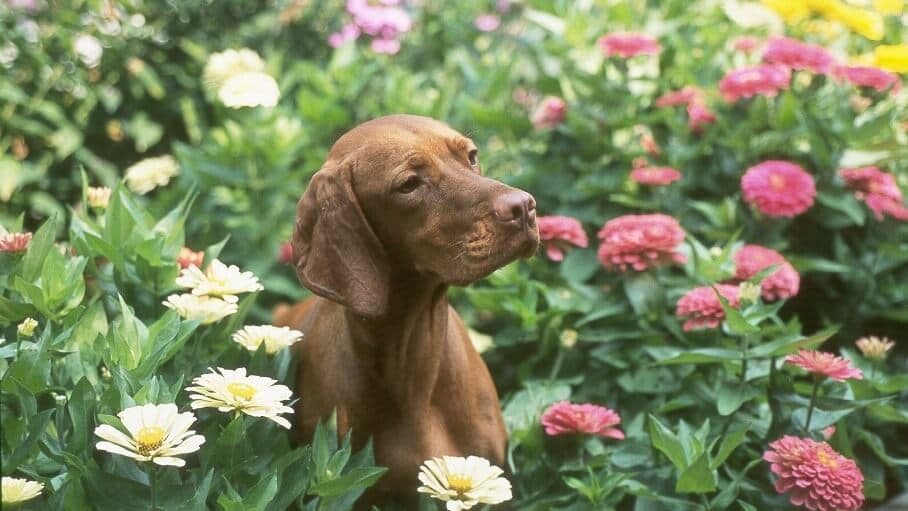
The Vizsla is known for its affectionate, gentle, and intelligent personality, making it an excellent companion in family settings and as a working gundog. Vizslas thrive on human companionship, often forming strong, loyal bonds with their caretakers. The breed is often a good fit for novice owners due to its eagerness to please and its trainability. The sensitivity level of most Vizslas is high, making them responsive to their owner's emotions and moods.
Being alone for extended periods can be challenging for a Vizsla, as the breed can be prone to separation anxiety due to its deep need for attachment to people. It is important for owners to provide these dogs with enough attention and to not leave them isolated for long durations. Thankfully, they are generally good with other dogs and enjoy their company, often displaying a playful and sociable demeanor. However, early socialization is key to make sure they are well-adjusted and confident meeting new canine companions.
Exercise Expectations
Regular, vigorous exercise is essential for a Vizsla. Activities like long walks, runs, hikes, or play sessions in a securely fenced area are ideal for keeping them physically fit and mentally stimulated. The intensity of the exercise should match the dog's age, health, and fitness level. Puppies and young dogs may have bursts of high energy, while older dogs might prefer more moderate activities. Playfulness is a key trait of the Vizsla, and they often enjoy interactive games such as fetch, frisbee, or tug-of-war. These activities not only provide physical exercise but also strengthen the bond between the dog and its owner. It's important to note that Vizslas require more than just physical exercise; they also need mental stimulation. Activities that challenge their minds, like obedience training, agility courses, or scent work, can be very beneficial. These not only tire them out physically but also keep their minds engaged, preventing boredom and destructive behaviors.
Adapting to life with a Vizsla involves understanding and catering to their unique needs in terms of environment and climate. Although energetic and active by nature, Vizslas are quite adaptable and can comfortably reside in apartments, provided they receive ample daily exercise. It's essential for them to engage in activities like long walks or runs, as well as interactive play sessions, to keep them physically fit and mentally sharp. Their need for human interaction is high, making them less suitable for environments where they would be left alone for extended periods.
When it comes to weather, Vizslas have certain sensitivities due to their short coats. They are not well-equipped for cold climates, lacking an undercoat to provide insulation. In colder regions, owners should take extra care to keep their Vizsla warm during outdoor activities, using dog sweaters or coats, and prioritizing indoor living to maintain their comfort.
Conversely, Vizslas fare better in warmer climates, thanks to their short, sleek fur. However, during particularly hot days, it's crucial to make sure that they have access to cool, shaded areas and plenty of water. Exercise routines should be adjusted to avoid the peak heat of the day, thereby preventing any risk of overheating or heat-related stress.
The key to a harmonious life with a Vizsla lies in integrating them into the family's daily life. They are affectionate and thrive on involvement in family activities. Providing a balanced environment where they have enough space to play, opportunities for regular exercise, and abundant time with their human family is essential for their well-being.
05/Puppies
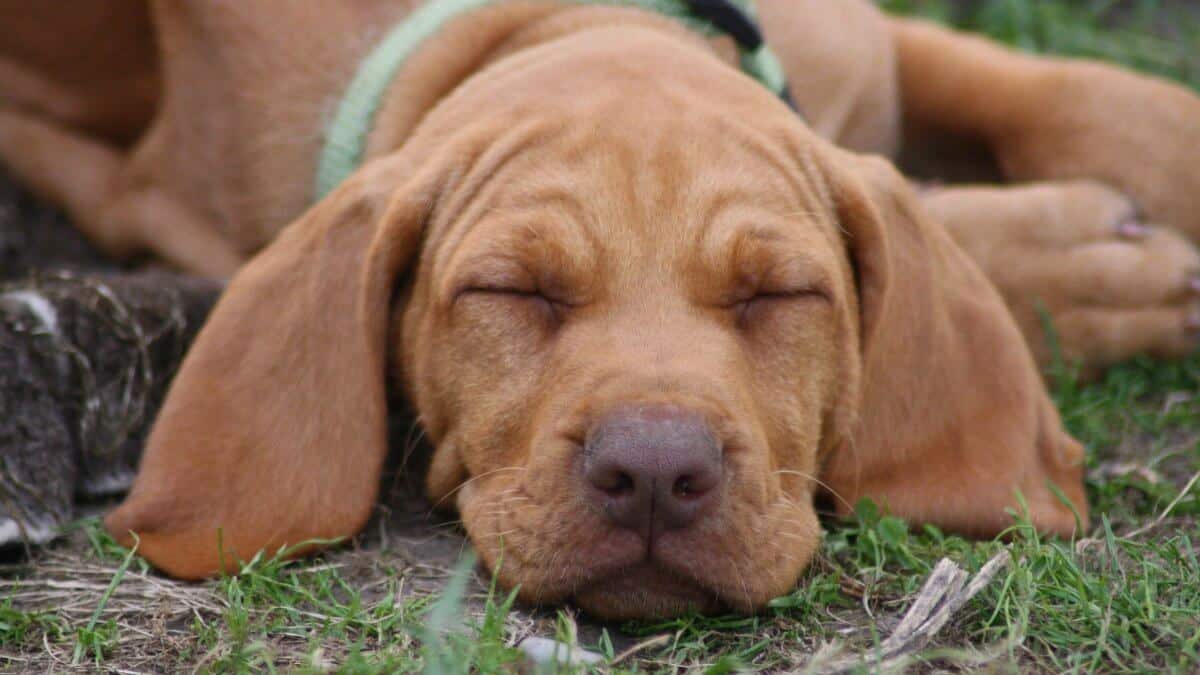
The arrival of a litter of Vizsla puppies is an exciting and rewarding experience. These pups are known for their boundless energy, curiosity, and affection. From the moment they enter the world, Vizsla puppies demand attention, training, and a lot of love. They grow rapidly, both physically and mentally, and require consistent guidance to develop into well-behaved adult dogs. It is essential for prospective owners to understand the commitment involved in raising a Vizsla pup, as the formative first few months are crucial for setting the foundation for future behavior and health.
Caring for a Vizsla puppy involves several key aspects to help it grow into a healthy and happy adult. One of the first priorities is establishing a regular feeding routine with a high-quality puppy diet that is formulated for medium-sized breeds. This diet should support the pup's rapid growth and high energy levels. Frequent, smaller meals are recommended to aid in digestion and maintain steady energy levels throughout the day.
Early socialization is also critical for the Vizsla puppy. Exposure to various people, pets, and environments helps it become a more well-rounded and confident dog. Positive experiences during this stage can positively shape both temperament and behavior.
Training should begin as soon as a Vizsla puppy arrives at its new home. The little one is already intelligent and eager to learn, making it responsive to early training. Basic commands, housetraining, and crate training are essential components of its early education. Positive reinforcement methods work best, as Vizslas are sensitive and respond well to praise and rewards.
Regular veterinary check-ups are crucial to monitor the pup's growth and health. This includes vaccinations, deworming, and any other preventive care recommended by the vet. Attention should also be given to its dental health, with regular teeth brushing or dental treats given that promote good oral hygiene.
Physical exercise should be appropriate for the age and development stage of the Vizsla. Puppies have a lot of energy, but its bones and joints are still developing, so care should be taken to avoid overly strenuous activities.
06/Activities
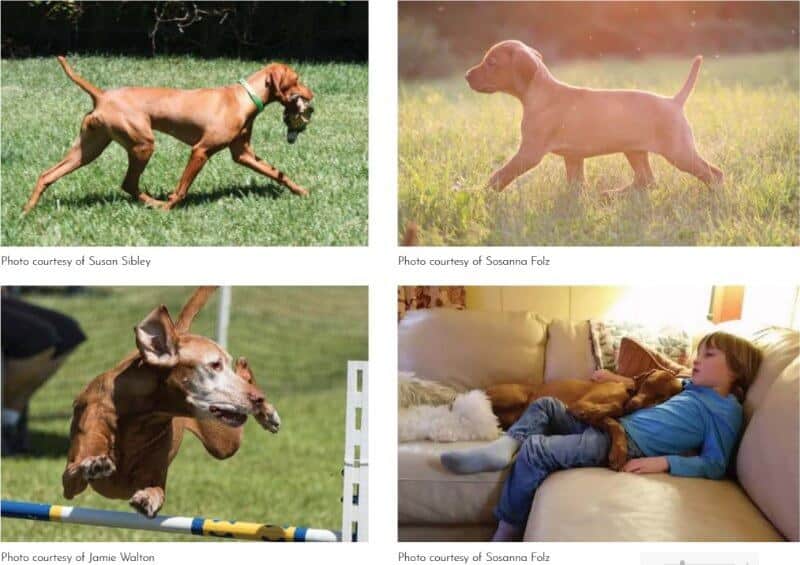
Vizslas are versatile and athletic dogs, excelling in a variety of doggy activities. Participation in Companion and Performance events not only provides physical and mental stimulation for the dog, it also strengthens the bond between the dog and its handler. Here are some dog sports for which the typical Vizsla is well-equipped:
Participation in these dog sports can be incredibly fulfilling for the Vizsla, as the breed loves to work in partnership with its handler and enjoys being mentally and physically engaged. For Vizsla owners, these activities offer a unique way to interact with their dogs, building a deeper understanding and a stronger relationship.
Gallery
07/Standards
The Vizsla is recognized by the world's leading registries and kennel organizations, which categorize the breed into a specific Group based on its unique characteristics. This breed is recognized worldwide under the following Group designations:
The ideal Vizsla is described by a Breed Standard that is approved by each of the world’s leading registries and kennel organizations. The Breed Standards for this breed may be found in the following links:
08/Clubs
09/Rescue
10/Facts
Ancient Lineage
The Vizsla is one of the oldest dog breeds, with a history dating back over a thousand years. The breed was originally bred by the Magyar tribes that settled in Hungary and were prized for their hunting skills.
Dual-Purpose Hunters
Vizslas were developed as pointer-retrievers, making them versatile dogs in the field. They are adept at both finding and retrieving game, a trait highly valued by hunters.
Velcro Dogs
Vizslas are often nicknamed "Velcro dogs" due to their strong desire to be close to their human companions. They are known for their affectionate nature and tendency to stick close to their owners.
Noble Appearance
Vizslas have a noble and elegant appearance, with a lean build and graceful movement. Their physical attributes reflect their aristocratic heritage.
High Energy Levels
Vizslas are high-energy dogs that require plenty of exercise. They are well-suited for active families and excel in various dog sports and canine-related activities.
Natural Swimmers
With their sleek bodies and love for activity, Vizslas are natural swimmers. They enjoy water-based activities and are often good candidates for Dock Diving and other water sports.
Intelligence and Trainability
Vizslas are highly intelligent and trainable. Their eagerness to please, combined with their intelligence, makes them excellent candidates for Obedience, Agility, and other dog sports.
Soft-Mouthed Retrievers
As a hunting breed, Vizslas are trained to retrieve game gently. This trait, known as being "soft-mouthed," means they can carry game without damaging it.
War Heroes
During wartime, Vizslas were used for delivering messages and assisting in search and rescue operations. Their bravery and loyalty made them invaluable companions on the battlefield.
Therapeutic Companions
Beyond their hunting and sporting abilities, Vizslas have a gentle and empathetic nature, making them excellent Therapy Dogs. They can easily and willingly provide comfort and support in various therapeutic settings.
11/FAQ
Vizslas do shed, although typically less than many other breeds due to their short, smooth coat. Their shedding is moderate, however, and can be managed with regular brushing, which helps to remove loose hair and maintain the coat's overall health. Owners may notice an increase in shedding during seasonal changes, but overall, Vizslas are not considered heavy shedders.

Written by
Dan Sayers is the Executive Editor of SHOWSIGHT. He is a member of the World Dog Press Association and the Dog Writers Association of America, which recognized his illustrations in the award-winning Encyclopedia of K-9 Terminology. Dan is a longtime supporter of the sport of dogs and an advocate for the conservation of recognized breeds in all their forms and functions. He is a member of the Morris and Essex Kennel Club, and for 45 years, the Irish Water Spaniel Club of America where he serves as AKC Delegate, Archivist, and approved Breed Mentor. Dan breeds under the Quiet Storm prefix and has judged the IWSCA National Specialty Sweepstakes twice.
Official Standard for the Vizsla
General Appearance: That of a medium-sized, short-coated, hunting dog of distinguished appearance and bearing. Robust but rather lightly built, the coat is an attractive shaded golden rust. Originating in Hungary, the Vizsla was bred to work in field, forest and water. Agile and energetic, this is a versatile dog of power, drive and endurance in the field yet a tractable and affectionate companion in the home. It is strongly emphasized that field conditioned coats, as well as brawny or sinewy muscular condition and honorable scars indicating a working and hunting dog are never to be penalized in this dog. The requisite instincts and abilities to maintain a "dual dog" are always to be fostered and appreciated, never deprecated.
Head: Lean and muscular. Skull moderately wide between the ears with a median line down the forehead. Stop between skull and foreface is moderate. Foreface or muzzle is of equal length or slightly shorter than skull when viewed in profile, should taper gradually from stop to tip of nose. Muzzle square and deep. It should not turn up as in a "dish" face nor should it turn down. Whiskers serve a functional purpose; their removal is permitted but not preferred. Nostrils slightly open. Nose self-colored. Any other color is faulty. A partially or completely black nose is a disqualification. Freckles due to aging or sun exposure are not to be faulted. Ears, thin, silky and proportionately long, with rounded-leather ends, set fairly low and hanging close to cheeks. Jaws are strong with well developed white teeth meeting in a scissors bite. Eyes medium in size and depth of setting, their surrounding tissue covering the whites. Color of the iris should blend with the color of the coat. Yellow or any other color is faulty. Prominent pop eyes are faulty. Lower eyelids should neither turn in nor out since both conditions allow seeds and dust to irritate the eye. Lips cover the jaws completely but are neither loose nor pendulous.
Neck and Body: Neck strong, smooth and muscular, moderately long, arched and devoid of dewlap, broadening nicely into shoulders which are moderately laid back. This is mandatory to maintain balance with the moderately angulated hindquarters. Body is strong and well proportioned. Withers high. While the Vizsla may appear square, when measured from point of breastbone to point of buttocks and from the highest point over the shoulder blades to the ground, the Vizsla is slightly longer than tall. A proper proportion of leg length to body length is essential to the desired overall balance of the Vizsla. The Vizsla should not appear long and low or tall and leggy. Backline firm with a slight rise over a short and well muscled loin. The croup is gently rounded to the set on of the tail and is not steep, sunken or flat. When moving at a trot, a properly built Vizsla maintains a steady, level backline. Chest moderately broad and deep reaching down to the elbows. Ribs well-sprung and carried well back; underline exhibiting a slight tuck-up beneath the loin. Tail set just below the level of the croup, thicker at the root and docked one-third off. Ideally, it should reach to the back of the stifle joint and when moving it should be carried at or near the horizontal, not vertically or curled over the back, nor between the legs. A docked tail is preferred.
Forequarters: Shoulder blades proportionately long and wide sloping moderately back and fairly close at the top. Upper arm is about equal in length to the shoulder blade in order to allow for good extension. Forelegs straight and muscular with elbows close. Feet cat-like, round and compact with toes close. Nails brown and short. Pads thick and tough. The removal of dewclaws, if any, on front and rear feet, is strongly recommended, in order to avoid injury when running in the field.
Hindquarters: Hind legs have well developed thighs with moderately angulated stifles and hocks in balance with the moderately laid back shoulders. They must be straight as viewed from behind. Too much angulation at the hocks is as faulty as too little. The hocks are let down and parallel to each other.
Coat: Short, smooth, dense and close-lying, without woolly undercoat. A distinctly long coat is a disqualification.
Color: Golden rust in varying shades. Lighter shadings over the sides of the neck and shoulders giving the appearance of a "saddle" are common. Solid dark mahogany and pale yellow are faulty. White on the forechest, preferably as small as possible, and white on the toes are permissible. Solid white extending above the toes or white anywhere else on the dog except the forechest is a disqualification. When viewing the dog from the front, white markings on the forechest must be confined to an area from the top of the sternum to a point between the elbows when the dog is standing naturally. White extending on the shoulders or neck is a disqualification. White due to aging or scarring must not be faulted. The Vizsla is self-colored, with the color of the eyes, eye-rims, lips, nose, toenails and pads of feet blending with the color of the coat.
Gait: Far reaching, light footed, graceful and smooth. When moving at a fast trot, a properly built dog single tracks.
Size: The ideal male is 22 to 24 inches at the highest point over the shoulder blades. The ideal female is 21 to 23 inches. Because the Vizsla is meant to be a medium-sized hunter, any dog measuring more than 1½ inches over or under these limits must be disqualified.
Temperament: A natural hunter endowed with a good nose and above-average ability to take training. Lively, gentle-mannered, demonstrably affectionate and sensitive though fearless with a well developed protective instinct. Shyness, timidity or nervousness should be penalized. The foregoing describes the ideal Vizsla. Any deviation from this ideal must be penalized to the extent of the deviation. Deviations that impact performance and function should be considered more serious than those that affect only appearance.
Disqualifications: Partially or completely black nose. Solid white extending above the toes or white anywhere else on the dog except the forechest. White extending on the shoulders or neck. A distinctly long coat. Any male over 25½ inches, or under 20½ inches and any female over 24½ inches or under 19½ inches at the highest point over the shoulder blades.
Approved January 13, 2009
Effective April 1, 2009
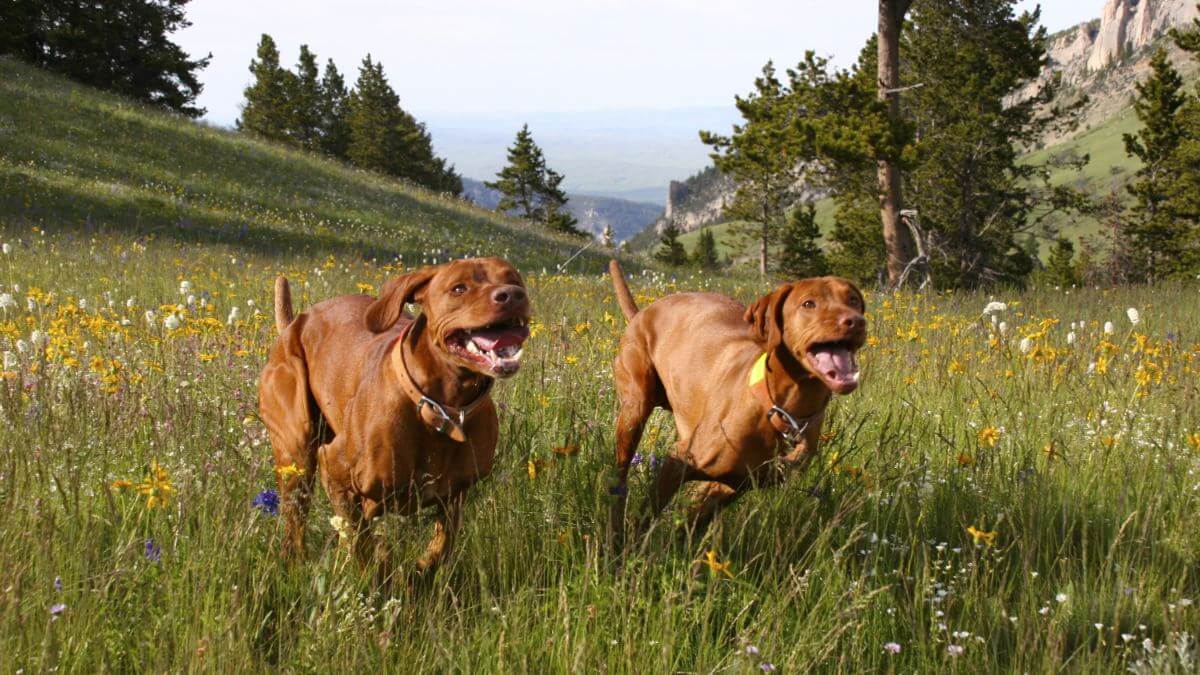
Explore the Vizsla’s unique history, conformation, and vibrant golden-rust color, highlighting the breed’s enduring legacy.
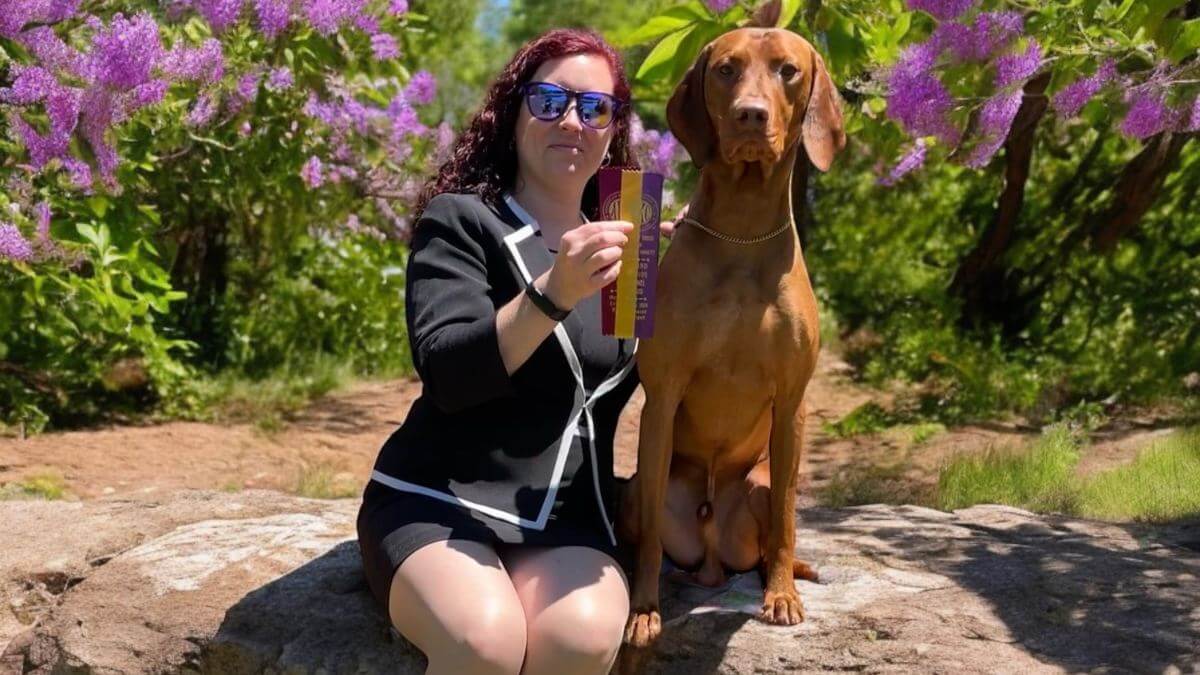

Meet the Breeders
A family’s journey in dog sports with Vizslas, from novice to breeder, with a passion for training, competing, and preserving the breed.
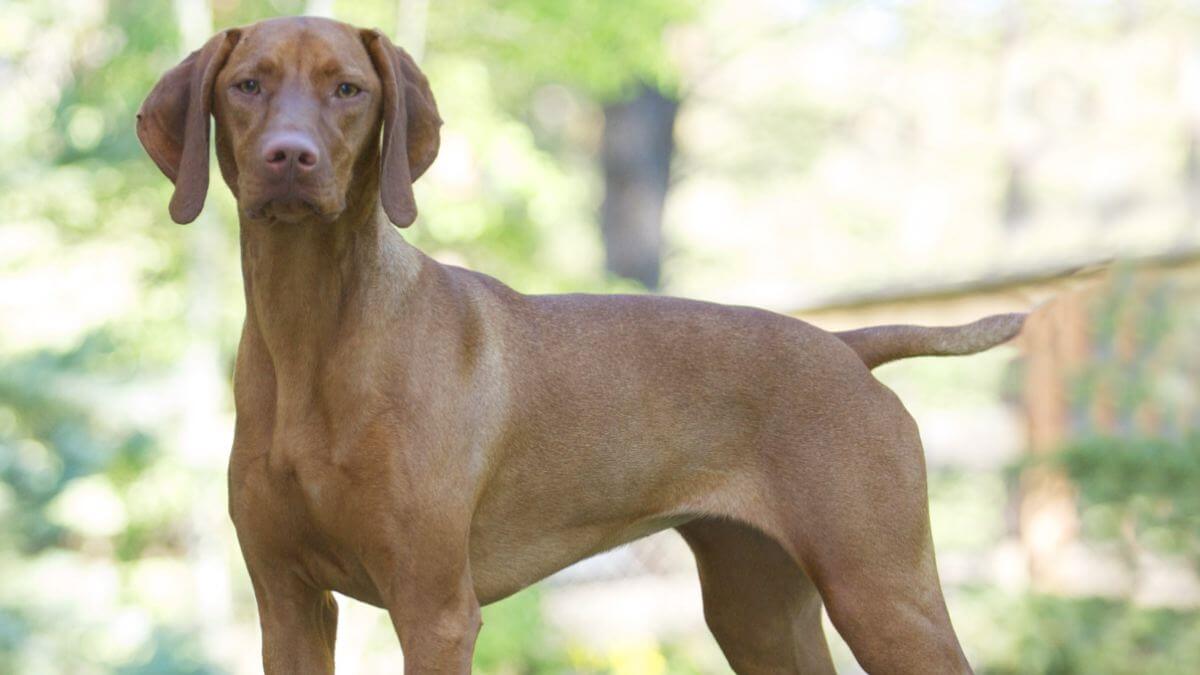
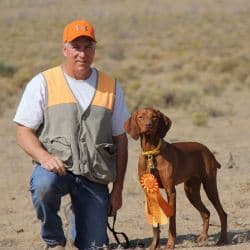
Discover the Vizsla: a dynamic sporting dog with a rich history, versatile skills, and a loving, active presence in family life.
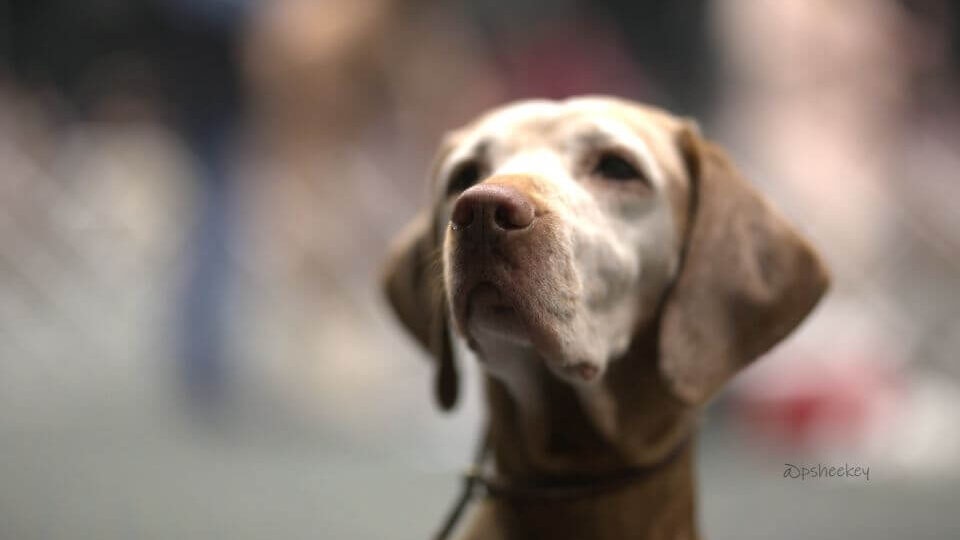

Dog Shows
Discover the exciting highlights of the Vizsla Club of America’s 2024 National Specialty and Companion Events in New England.
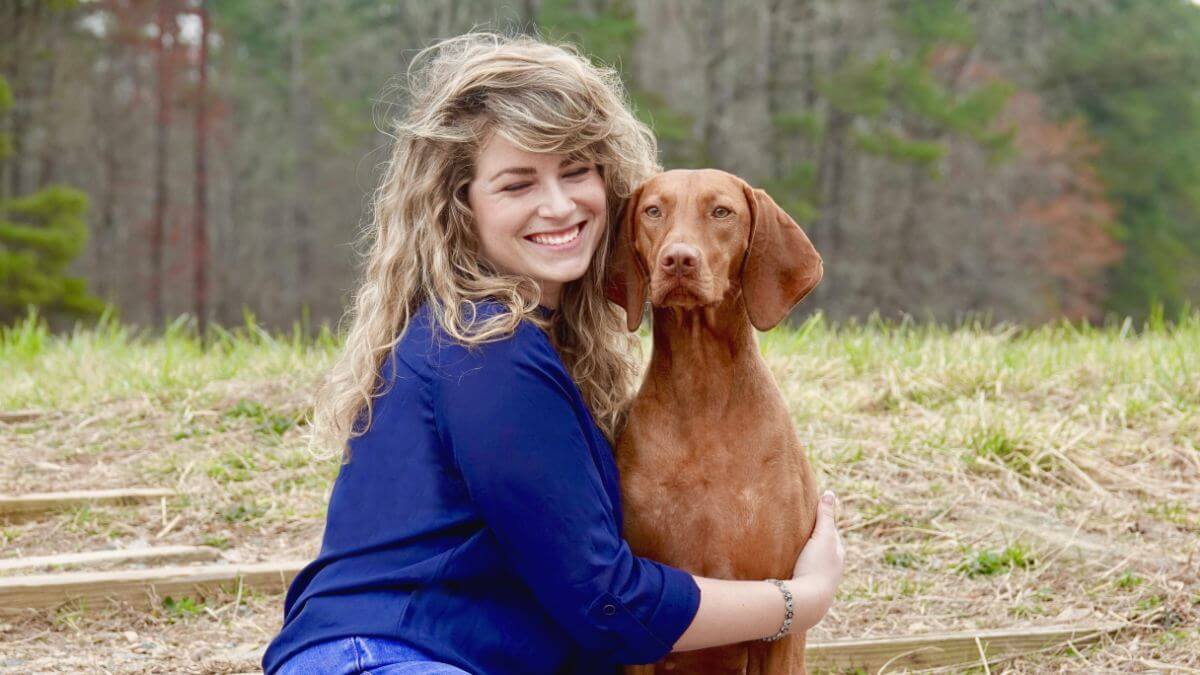
Meet the Breeders
Michelle Porfido DeLucia is the breeder behind Rhapsody Vizslas. Read about the kennel’s beginnings, puppies, and much more!

Meet the Breeders
Susan Nakamura is the breeder behind Suzu Vizslas . Read about the kennel’s beginnings, Suzu Vizslas puppies, and much more!
This article focuses on the medium-sized Vizsla but delves into the confusing use of “medium” in the Sporting Group. Read more.


Meet the Breeders
Corrinne Miklos is the breeder behind Grouse Point Vizslas. Read about the kennel’s beginnings, the sires, the dams, the puppies, and more!
Meet the Breeders
Gail Fleming is the breeder behind Pursuit Vizslas. Read about the kennel’s beginnings, the sires, the dams, the puppies, and more!
The Vizsla’s tail is strong and of medium length, set just below the level of the croup. This positioning allows for a smooth, flowing line from the top of the shoulders to the tip of the tail. This is a hallmark of the breed. The tail is carried horizontally or slightly elevated when the dog is in motion, displaying the breed’s energetic and alert nature.
Traditionally, Vizslas have had their tails docked, although this practice varies today based on regional norms and regulations. In countries where docking is permitted, the tail is typically docked to two-thirds its original length. This is done to protect the tail from injury in rough cover. However, on dogs with full-length sterns, the tail is straight or slightly curved, but it is never sickle-shaped.
A Note About Color: The Vizsla is a self-colored dog, with the eyes, eye rims, nose, lips, toenails, and pads of the feet blending with the coat. Always a golden rust color of varying shades, the breed displays lighter shadings over the sides of the neck and shoulders. This “saddle” is acceptable; however, pale yellow and solid dark mahogany colors are not. White markings on the toes and/or a small spot on the forechest may appear, but any other areas of white are unacceptable in the breed.
Coat Type
Smooth
The structure of the coat this breed carries.
Coat Length
Short
How long the breed's coat grows when kept in condition.
Adaptability Level
How easily a breed copes with changes in home, routine, noise and weather.
Mental Stimulation Needs
How much a breed needs a job, a puzzle or training to stay content.
Vizslas are also known to be good with young children, showing patience and gentleness. Their friendly disposition extends to strangers as well, although they can be cautious in new encounters. Proper socialization from a young age helps in developing their confidence and making sure they are well-behaved around new people and new environments.
Overall, the Vizsla's personality is one of warmth and intelligence, and an eagerness to be part of family activities. These dogs are adaptable, loyal, and affectionate, making them cherished companions. However, their high energy levels and need for interaction mean they are best-suited to an active lifestyle and an environment where they can be closely involved with their human family members.
Feeding a Vizsla properly is crucial for maintaining its health, energy, and overall well-being. This breed, known for its active lifestyle, requires a balanced diet rich in nutrients to sustain its energy levels. When feeding a Vizsla puppy, it's important to provide a diet formulated for high-energy breeds, which supports their rapid growth and development. Puppy-specific food should be given until they reach about 80% of their expected adult size.
For adult Vizslas, the diet should transition to a formula appropriate for active, medium-sized breeds. The amount of food a Vizsla requires varies depending on its age, size, metabolism, and activity level, but generally, an adult Vizsla might consume between 2 to 3 cups of dry dog food per day, divided into two meals. It's essential to monitor their weight and adjust portions accordingly to avoid overfeeding, as obesity can lead to health problems.
Vizslas are often enthusiastic eaters and may eat quickly. Using a slow-feeder bowl can help prevent digestive issues like bloat, especially since they are a breed that can be prone to this condition. Always make sure that fresh water is available, especially considering their high activity levels.
Remember, each dog is unique, and dietary needs can vary. Regular check-ups with a veterinarian can help determine the most appropriate diet for an individual dog's specific health and lifestyle needs.
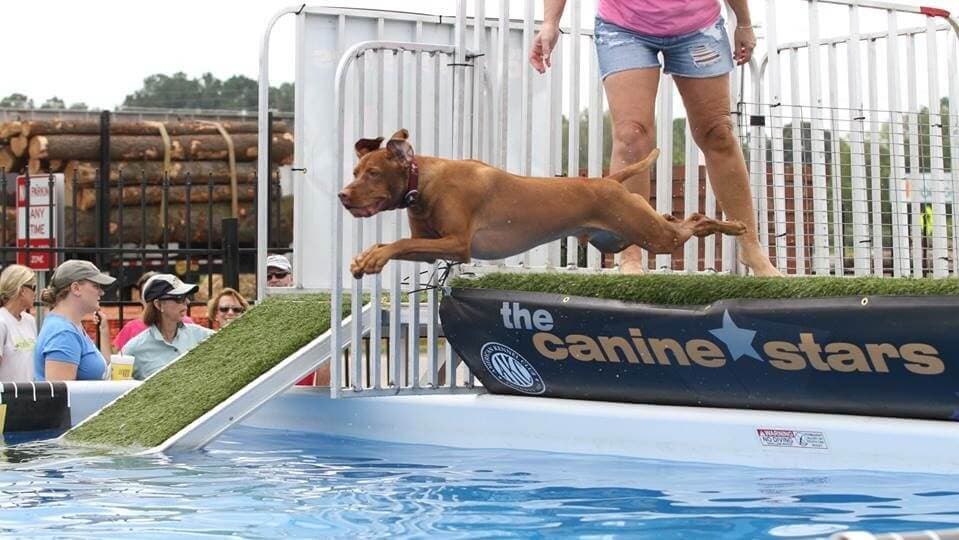
Training a Vizsla can be a rewarding experience due to their intelligent and eager-to-please nature. This breed is generally easy to train, responding well to positive reinforcement techniques such as praise, play, and food rewards. Vizslas are known for their high intelligence, making them quick learners who are receptive to commands and eager to impress their human companions.
Despite their intelligence, Vizslas can sometimes be distracted by their surroundings, especially if they pick up interesting scents, given their hunting background. Therefore, consistent and patient training sessions are important. Early socialization and puppy training classes are highly recommended to help them develop into well-adjusted adults.
As for their tendency to bark, Vizslas are not typically excessive barkers. However, like any dog, they may bark to alert their owners to something unusual or when they feel anxious. Training and socialization can help manage any unwanted barking behavior.
Their potential for wanderlust or predation can be managed with proper training and secure fencing. Due to their hunting instincts, it's important to keep a Vizsla on a leash or in a secured area, as they might chase after small animals or follow an interesting scent.
Grooming Expectations
Bathing a Vizsla should be done as needed, depending on their activity level and lifestyle. Since they have a short coat, they are prone to getting cold, so it's important to dry them thoroughly after bathing, especially in cooler weather. Using a mild dog shampoo will help preserve the natural oils in their skin and coat. Other aspects of grooming include regular nail trimming to prevent overgrowth and splitting, which can be painful and lead to problems walking. Ear care is also essential, as their floppy ears can be prone to infection. Regular checks and gentle cleaning can prevent issues. Dental hygiene is another important aspect of grooming. Regular brushing of the teeth or use of dental chews can help prevent tartar build-up and gum disease.