01/Overview
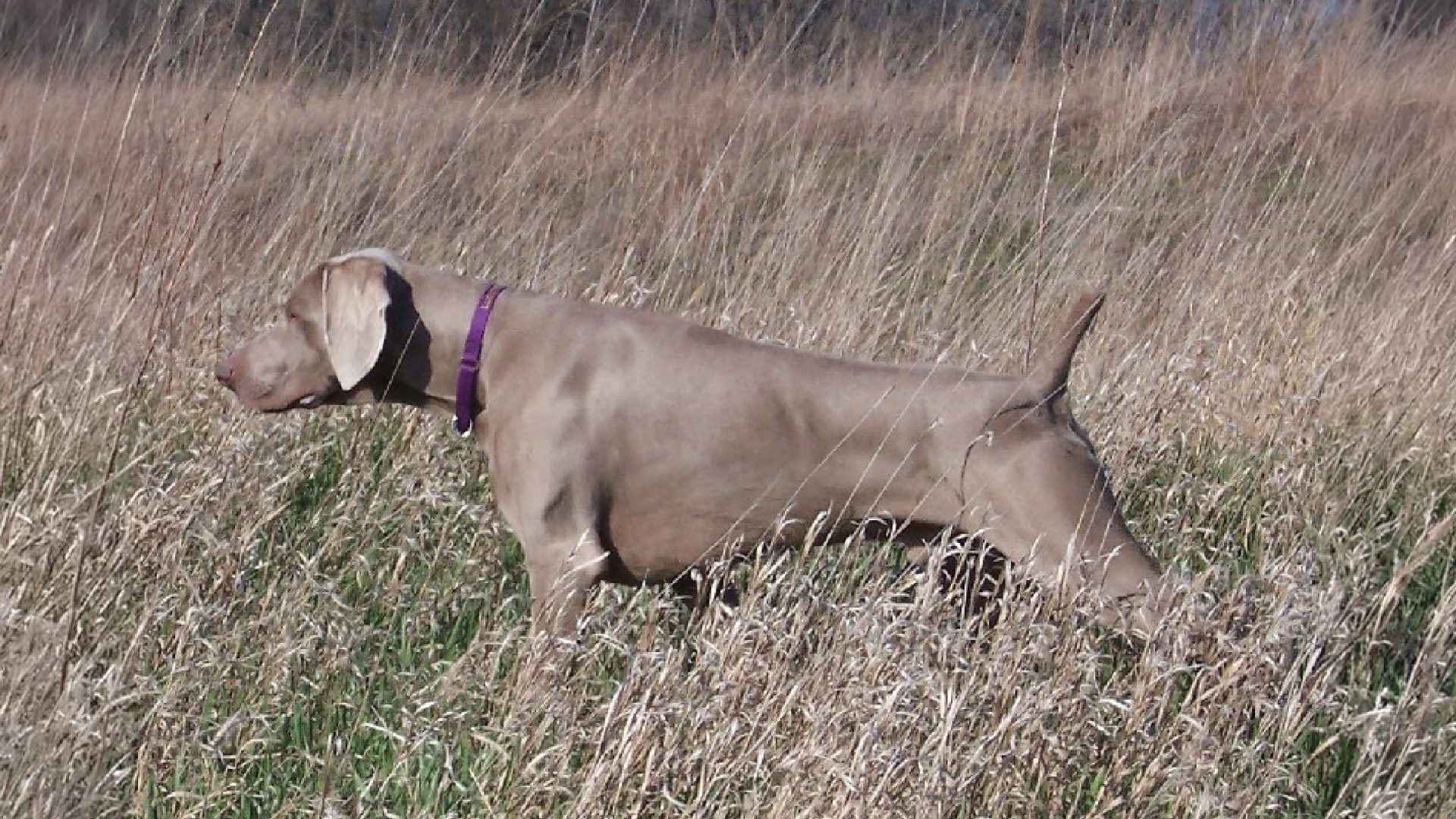
The Weimaraner is a breed of dog that embodies grace, stamina, and speed. Originating from Germany, the “Gray Ghost” is distinguished by its aristocratic features and loyalty, making it a standout in the field and as a trusted friend. The breed’s intelligence and eagerness to please make these dogs delightful and demanding companions that require ample mental and physical stimulation. Weimaraners are versatile dogs that can excel in a variety of roles as hunters, dog sport competitors, and affectionate family members.
Highlights
02/History
The Weimaraner has a rich and intriguing history that dates back to early 19th century Germany. The breed was developed with the intention of creating the perfect hunting dog, one that was not only capable of hunting large game such as deer and bear but also versatile enough to handle smaller, feathered game.
The origins of the Weimaraner can be traced to the Grand Duchy of Weimar, where the nobles were passionate about hunting. The nobility desired a dog with courage, intelligence, good scenting ability, speed, and stamina. To achieve this, breeders likely crossed Bloodhounds with various German and French hunting dogs, possibly including the German Shorthaired Pointer. The exact mix of breeds remains the subject of debate, but the result was a dog that excelled in hunting both in forested areas and open terrain.
The Weimaraner was originally used by royals for hunting large game. However, as big game hunting became less popular, the breed's focus shifted to smaller game and birds. The breed's keen sense of smell, as well as its speed and stealth, made it an excellent pointer and retriever, qualities that are still prominent in the breed today.
The Weimaraner was so highly prized that its breeding was closely controlled, with ownership restricted to members of the German Weimaraner Club. This exclusivity helped to maintain the breed's purity, but it also limited its exposure. It wasn't until the early 20th century that the breed began to spread beyond Germany.
The first Weimaraners arrived in the United States in the 1930s, thanks to an American sportsman named Howard Knight, who was a member of the German Weimaraner Club. Mr. Knight played a significant role in establishing the breed in America. The American Kennel Club recognized the breed in 1943, and it quickly gained popularity not only as a hunting dog but also as a family companion and show dog. Itd was further popularized by the photography of William Wegman, who used his Weimaraners in a series of iconic photographs.
In the United Kingdom, the breed was recognized by The Royal Kennel Club in the late 1940s, around the same time that it gained recognition from the Fédération Cynologique Internationale (FCI).
Today, while the breed is still used as a hunting dog in some parts of the world, most Weimaraners are more commonly found as pets and hunting companions that are treasured for their friendly and affectionate nature. They have also made their mark in various dog sports and as working dogs in roles such as Search and Rescue where then have demonstrated the versatility and intelligence which are the hallmarks of their breeding. The Weimaraner remains a beloved breed today, greatly admired for its elegant appearance, devoted loyalty, and multifaceted capabilities.
03/Appearance
An adult male Weimaraner typically stands between 25 and 27 inches tall at the shoulder, while a mature female is slightly shorter, ranging from 23 to 25 inches in height.
In terms of weight, a mature male generally weighs from 70 to 90 pounds, with a female typically weighing between 55 and 75 pounds.

The Weimaraner's proportion and substance are key to its elegance and functionality. These dogs possess a harmonious balance, with their length from chest to buttock slightly greater than their height at the shoulders. This proportion creates a slightly rectangular profile, essential for flexibility and power. In terms of substance, the Weimaraner is solidly built, with strong bones and well-developed muscles that reflect the breed’s capacity for endurance and speed. The overall structure is neither too light nor too heavy, allowing for agility and strength in various activities.
Texture: The coat of a Weimaraner is short, smooth, and sleek, fitting tightly to the body. The texture is a defining characteristic of the breed, providing a glossy sheen that highlights the breed’s muscular physique. The coat is easy to maintain, requiring minimal grooming to retain its neat appearance. A distinctly long coat is unacceptable in the breed.
Markings: None
Standard Colors
04/Consider
Owning a Weimaraner is a rewarding experience for those who appreciate a dog with energy, intelligence, and a strong need to bond with its human family. Weimaraners are known for their loyalty and affectionate nature, making them excellent companions, but they also have a strong hunting instinct and require proper socialization and training from a young age. Prospective owners should be aware that this breed requires considerable exercise, mental stimulation, and consistent training to remain happy and satisfied.
Interaction With Family
The level of affection a breed typically shows towards family members and familiar individuals.
Good With Other Dogs
The innate friendliness of a dog towards other dogs can depend on its breed.
Good With Young Children
The degree to which a breed will typically be patient with young children.
Amount Of Shedding
How much hair a breed typically leaves behind on clothes, furniture and floors.
Frequency Of Grooming
How often a breed needs brushing, bathing or a professional trim to stay in condition.
Amount Of Drooling
How prone a breed is to drool — worth knowing before you keep a towel by the door.
Openness To Strangers
How openly a breed tends to greet new people, visitors and strangers.
Protective Nature
How likely a breed is to alert you to — and stand between you and — anything unfamiliar.
Playfulness Level
How enthusiastic a breed stays about games and play well past puppyhood.
Trainability Level
How readily a breed takes direction and works with you rather than around you.
Barking Level
How much a breed uses its voice, and how readily.
Energy Level
How much get-up-and-go a breed brings to an average day.
Health
The Weimaraner is generally a healthy and robust breed, but like all dogs, they are susceptible to some health conditions. Being aware of these potential issues is crucial for maintaining the dog's health and well-being. Lifespan: The average lifespan of a Weimaraner ranges between 10 and 13 years, but with proper care, regular check-ups, and a balanced diet, many can thrive beyond these years.
The Weimaraner is a breed with a dynamic and engaging personality, making it an excellent companion for active individuals and families. This breed is known for its strong attachment to its human companions, often described as a "Velcro dog" due to its desire to be close to family members. Weimaraners are generally friendly and outgoing, but they do require proper socialization from a young age to ensure they become well-adjusted and confident adults.
Weimaraners are intelligent and eager to please, which can make training both a rewarding and challenging experience. They respond well to positive reinforcement techniques, but due to the breed's intelligence, they can also become bored with repetitive tasks. Keeping training sessions varied and engaging is key to maintaining their interest and cooperation.
In terms of compatibility with other dogs and children, Weimaraners can do well if they are raised with them from a young age. However, the dog's size and energy levels should be monitored to ensure safe interactions, especially with young children. As with any breed, early socialization and consistent training are crucial in developing a well-behaved and sociable dog.
While Weimaraners can adapt to being alone for short periods, they prefer the company of their owners and can become anxious or destructive if left alone for too long. They are best-suited to a home where they will receive plenty of attention, interaction, and exercise.
The Weimaraner's friendly nature generally extends to strangers, though these dogs can be initially reserved or cautious. However, once they understand that a new person poses no threat, they usually warm up quickly. This characteristic, combined with the breed's notable alertness, can make them good watchdogs, although aggressive is uncommon.
Exercise Expectations
Weimaraners have a high exercise need, which should be met with a mix of physical activities and mental stimulation. Daily vigorous exercise is essential; this could include long walks, runs, hikes, or playing fetch. They are well-suited for active families or individuals who enjoy outdoor activities and can provide them with the opportunity to expend their energy. Their energy level is quite high, and without proper outlets, they may resort to undesirable behaviors out of boredom or frustration. An under-exercised Weimaraner can become restless, which can manifest in chewing, digging, or excessive barking. It’s important to make sure that they get enough physical exercise every day. The intensity of their exercise should be matched with their age and health condition. While young and healthy Weimaraners can handle and enjoy more intense activities like running or agility training, older dogs or those with health concerns may require less strenuous activities. Playfulness is another characteristic of the Weimaraner. They enjoy interactive games and toys, which also provide mental stimulation. Engaging them in playtime not only satisfies their exercise needs but also strengthens the bond between the dog and its human companion. It’s important to note that Weimaraner puppies should not be over-exercised, as their bones and joints are still developing. Exercise for puppies should be shorter and less intense, gradually increasing as they grow.
Adapting to life with a Weimaraner requires an understanding of their unique needs, especially in terms of their living environment. This breed is known for its high energy levels and strong bonding nature, which influences their adaptability to different living situations.
In the context of apartment living, a Weimaraner can adapt if its exercise needs are adequately met. These dogs are active and require ample daily exercise, so living in an apartment demands a commitment to regular, vigorous outdoor activities. Without this, a Weimaraner may become restless and exhibit behavior issues. It's also important to provide mental stimulation through interactive play and training to keep them engaged.
The breed's adaptability to weather conditions is another consideration. This breed generally does well in both cold and hot weather, but precautions should be taken. In colder climates, their short coats may not provide enough warmth, so a dog jacket or sweater may be necessary during outdoor activities. Conversely, in hot weather, it's crucial to make sure that they don't overheat. Providing ample shade, water, and avoiding intense exercise during the hottest part of the day are key measures to keep them comfortable.
Weimaraner's size and energy also mean they are more suited to homes where they have space to move and play. A house with a securely fenced yard can be ideal, giving them a safe place to expend some of their energy. However, the fence should be secure and high enough to prevent them from jumping over, as they can be quite athletic.
05/Puppies
The arrival of a litter of Weimaraner puppies is an exciting and significant experience. These puppies are energetic and curious, and they require consistent training and socialization from an early age. When considering a Weimaraner puppy, it is important to be prepared for the pup's rapid growth and high energy levels, as well as the responsibility of shaping it into becoming a well-adjusted adult dog.
Caring for a Weimaraner puppy involves several key aspects to ensure its healthy development. Firstly, proper nutrition is crucial. A high-quality diet formulated for large breed puppies is essential to support the pup's rapid growth and to prevent any growth-related health issues. The diet should be rich in nutrients that promote healthy bone and joint development.
Early socialization is vital for a Weimaraner puppy. Exposing the pup to a variety of people, environments, sounds, and experiences is key. Positive, gentle socialization helps to develop a confident and well-adjusted adult. This is particularly important for this breed, as it can be reserved or cautious around unfamiliar people or situations if not properly socialized.
Training should begin early, with basic commands and housetraining taught. The Weimaraner pup is intelligent and learns quickly, but it also has an independent streak. Consistency, patience, and positive reinforcement are key in training the little one effectively. Puppy training classes can be beneficial for both the puppy and the owner, offering structured training and an opportunity for socialization.
Regular veterinary check-ups are essential to monitor the puppy's health and to keep it up to date with vaccinations and parasite control. A veterinarian will provide the appropriate schedule for vaccinations and other preventive care.
Exercise for the Weimaraner puppy should be carefully balanced. While the pup is energetic and requires physical activity, exercise should not be too intense or prolonged. Moderation avoids putting undue strain on the developing bones and joints. Short, frequent play sessions and walks are better-suited for the pup.
Lastly, a Weimaraner puppy needs lots of love, attention, and interaction. It thrives on companionship and forms strong bonds with its human caretakers. Making sure that it becomes part of family activities and receives plenty of affection is crucial for its emotional well-being.
06/Activities
The Weimaraner is a highly versatile and energetic breed, thriving in various activities and environments. The breed's intelligence, agility, and endurance make these dogs suitable for a wide range of pursuits, including the following dog sports:
Participation in dog sports and related activities not only provides physical and mental stimulation for the Weimaraner, it also strengthens the bond that is shared between the dog and its handler. It is important, however, to choose activities that match the dog’s interests and abilities, as well as the handler’s commitment level and lifestyle.
Gallery
07/Standards
The Weimaraner is recognized by the world's leading registries and kennel organizations, which categorize the breed into a specific Group based on its unique characteristics. This breed is recognized worldwide under the following Group designations:
The ideal Weimaraner is described by a Breed Standard that is approved by each of the world’s leading registries and kennel organizations. The Breed Standards for this breed may be found in the following links:
08/Clubs
09/Rescue
10/Facts
Nicknamed the Gray Ghost
The Weimaraner is often referred to as the "Gray Ghost" due to its distinctive silvery-gray coat and its ability to move silently.
Originally Bred for Royalty
This breed was developed in early 19th century Germany for the Grand Duke of Weimar, who desired a noble-looking dog that was a skilled hunter.
Versatile Hunting Dog
Weimaraners were originally bred to hunt large game like deer and bear. As big game hunting declined, the dogs were trained to hunt smaller animals, including birds.
Famous for its Eyes
Weimaraners are known for their striking eyes, which can be amber, blue-gray, or gray, adding to the dog's captivating appearance.
Renowned in Art and Photography
The breed gained fame in modern times through the photography of William Wegman, known for his whimsical and thought-provoking photos of Weimaraners.
Highly Intelligent and Energetic
Weimaraners are known for their high intelligence and energy levels, requiring regular mental and physical stimulation.
Strong Attachment to Owners
Often described as "Velcro dogs," Weimaraners are known for their strong attachment to their owners, often wanting to be involved in all family activities.
Successful in Various Dog Sports
Their agility, intelligence, and endurance make Weimaraners successful in a variety of dog sports, including Obedience, Tracking, and Agility competitions.
11/FAQ
Weimaraners do shed, although their shedding is generally considered moderate due to their short, sleek coat. Regular brushing can help to manage the shedding and keep the coat healthy. Owners should expect some hair around the house, especially during seasonal changes when shedding may increase.
Official Standard for the Weimaraner
General Appearance: A medium-sized gray dog, with fine aristocratic features. He should present a picture of grace, speed, stamina, alertness and balance. Above all, the dog's conformation must indicate the ability to work with great speed and endurance in the field.
Height: Height at the withers: dogs, 25 to 27 inches; bitches, 23 to 25 inches. One inch over or under the specified height of each sex is allowable but should be penalized. Dogs measuring less than 24 inches or more than 28 inches and bitches measuring less than 22 inches or more than 26 inches shall be disqualified.
Head: Moderately long and aristocratic, with moderate stop and slight median line extending back over the forehead. Rather prominent occipital bone and trumpets well set back, beginning at the back of the eye sockets. Measurement from tip of nose to stop equals that from stop to occipital bone. The flews should be straight, delicate at the nostrils. Skin drawn tightly. Neck clean-cut and moderately long. Expression kind, keen and intelligent. Ears-Long and lobular, slightly folded and set high. The ear when drawn snugly alongside the jaw should end approximately 2 inches from the point of the nose. Eyes-In shades of light amber, gray or blue-gray, set well enough apart to indicate good disposition and intelligence. When dilated under excitement the eyes may appear almost black. Teeth-Well set, strong and even; well-developed and proportionate to jaw with correct scissors bite, the upper teeth protruding slightly over the lower teeth but not more than one sixteenth of an inch. Complete dentition is greatly to be desired. Nose-Gray. Lips and Gums-Pinkish flesh shades.
Body: The back should be moderate in length, set in a straight line, strong, and should slope slightly from the withers. The chest should be well developed and deep with shoulders well laid back. Ribs well sprung and long. Abdomen firmly held; moderately tucked-up flank. The brisket should extend to the elbow.
Coat and Color: Short, smooth and sleek, solid color, in shades of mouse-gray to silver-gray, usually blending to lighter shades on the head and ears. A small white marking on the chest is permitted, but should be penalized on any other portion of the body. White spots resulting from injury should not be penalized. A distinctly long coat is a disqualification. A distinctly blue or black coat is a disqualification.
Forelegs: Straight and strong, with the measurement from the elbow to the ground approximately equaling the distance from the elbow to the top of the withers.
Hindquarters: Well-angulated stifles and straight hocks. Musculation well developed.
Feet: Firm and compact, webbed, toes well arched, pads closed and thick, nails short and gray or amber in color. Dewclaws-Should be removed.
Tail: Docked. At maturity it should measure approximately 6 inches with a tendency to be light rather than heavy and should be carried in a manner expressing confidence and sound temperament. A non-docked tail shall be penalized.
Gait: The gait should be effortless and should indicate smooth coordination. When seen from the rear, the hind feet should be parallel to the front feet. When viewed from the side, the topline should remain strong and level.
Temperament: The temperament should be friendly, fearless, alert and obedient.
Faults: Minor Faults-Tail too short or too long. Pink nose. Major Faults-Doggy bitches. Bitchy dogs. Improper muscular condition. Badly affected teeth. More than four teeth missing. Back too long or too short. Faulty coat. Neck too short, thick or throaty. Low-set tail. Elbows in or out. Feet east and west. Poor gait. Poor feet. Cowhocks. Faulty backs, either roached or sway. Badly overshot, or undershot bite. Snipy muzzle. Short ears. Very Serious Faults-White, other than a spot on the chest. Eyes other than gray, blue-gray or light amber. Black mottled mouth. Non-docked tail. Dogs exhibiting strong fear, shyness or extreme nervousness.
Disqualifications: Deviation in height of more than one inch from standard either way. A distinctly long coat. A distinctly blue or black coat.
Approved December 14, 1971


There are just so many choices. Where are you going to start? Well, owning the versatile Weimaraner is similar.
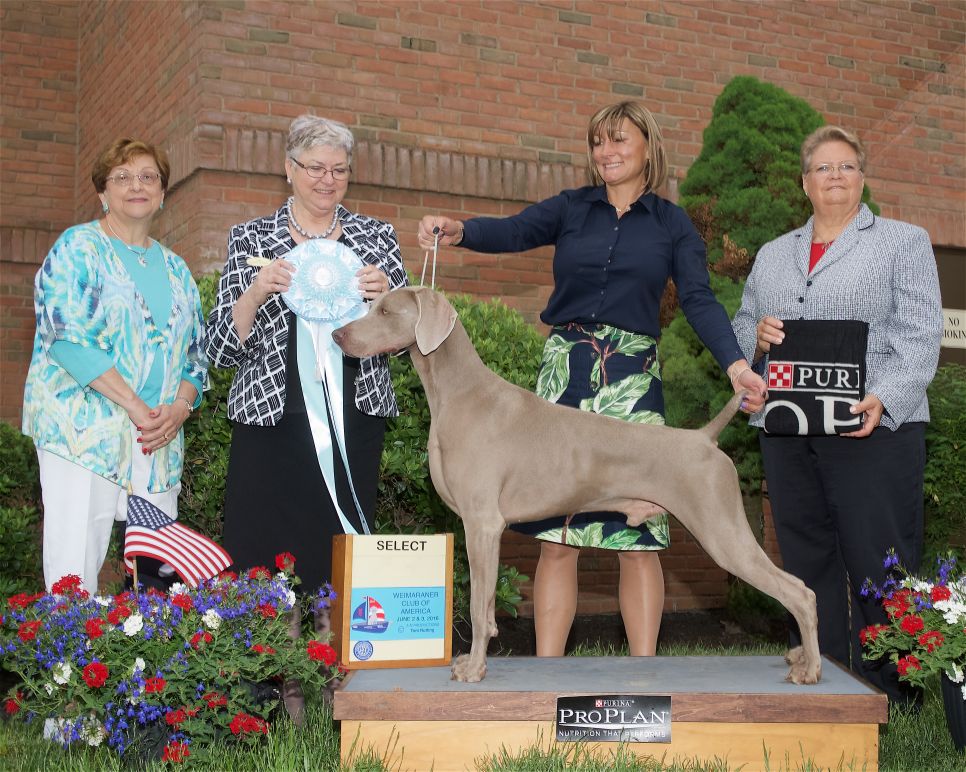

All About Judging
In judging the Weimaraner, we must remember to seek type, as type is what distinguishes this breed from all others.
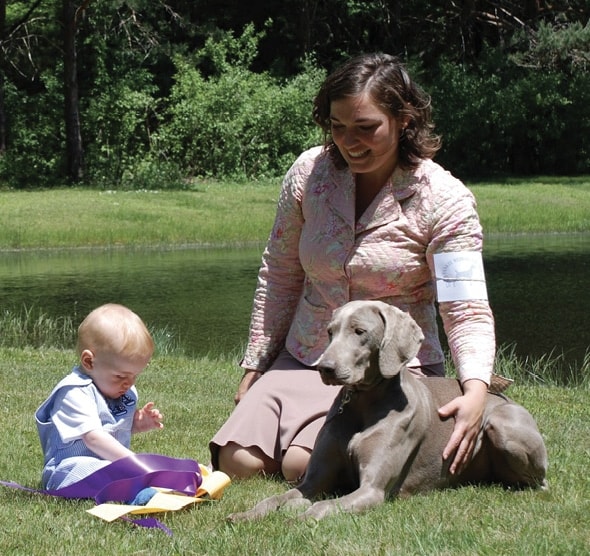

Meet the Breeders
Alessandra Folz | Rissana Weimaraners – Breeder Interview by award-winning journalist and broadcaster Allan Reznik.
The tail of a Weimaraner is set moderately low and carried with confidence. In jurisdictions where tail docking is permitted, it has traditionally been docked to a length of six inches Docking gives the breed its distinctive silhouette and facilitates its usefulness as a hunting dog; however, a natural tail will display a smooth, saber-like carriage and will hang down in repose.
A Note About Color: The Weimaraner is a solid-colored dog in shades of mouse-gray to silver-gray. The color is always a grayish taupe and should never appear brown, blue, or black. Lighter shades of gray on the head and ears, referred to as the “Grafmar Cap,” become more pronounced over time, and a small white marking on the chest is acceptable.
Coat Type
Smooth
The structure of the coat this breed carries.
Coat Length
Short
How long the breed's coat grows when kept in condition.
Adaptability Level
How easily a breed copes with changes in home, routine, noise and weather.
Mental Stimulation Needs
How much a breed needs a job, a puzzle or training to stay content.
Proper feeding and nutrition are vital for the Weimaraner, a breed known for its energy and athleticism. The dietary needs of a Weimaraner vary with age, activity level, and health status, making it important to tailor their diet accordingly.
For Weimaraner puppies, a balanced diet that supports their rapid growth and development is crucial. Puppies should be fed a high-quality puppy food that's specifically formulated for large breeds. This provides them with the right balance of nutrients to support their bone and muscle development without encouraging excessive growth, which can lead to health issues.
As they transition into adulthood, Weimaraner adults require a diet that maintains their lean muscle mass and supports their high energy levels. Adult Weimaraners typically do well on a diet with a good balance of protein, fats, and carbohydrates. The protein supports muscle maintenance and repair, while fats provide a concentrated energy source. Carbohydrates offer a more sustained energy release. It's also important to include a range of vitamins and minerals to support overall health.
The amount of food a Weimaraner needs can vary. Generally, an adult Weimaraner might require between 2.5 to 3.5 cups of dry dog food per day, divided into two meals. However, this can vary depending on the dog's size, age, and activity level. Active Weimaraners may require more food, while less active or older dogs may require less. It's important to monitor their weight and body condition, adjusting food amounts as needed to prevent obesity, which can lead to health issues.
Always make sure that your Weimaraner has access to fresh, clean water, especially if they are highly active or it's hot outside. Proper hydration is as crucial as a balanced diet for maintaining health.
Consulting with a veterinarian can provide specific guidance on the best diet for an individual Weimaraner, considering their unique needs and lifestyle. Regular check-ins regarding weight and health can help keep your Weimaraner on the right track nutritionally.
Training a Weimaraner requires a blend of firmness, consistency, and positive reinforcement. This breed is highly intelligent and learns quickly, but can also display a level of independence or stubbornness, making consistent training essential from an early age.
Weimaraners are eager to please their human companions, which can make them responsive to training. However, their intelligence means they can become bored with repetitive tasks, so it’s important to keep training sessions engaging and varied. Utilizing games and activities that challenge them mentally can be particularly effective.
When it comes to barking, Weimaraners are not known as excessive barkers, but they will alert to unfamiliar sounds or sights. Training them to understand commands like "quiet" can help manage any unnecessary barking.
Their intelligence and problem-solving abilities place Weimaraners high in terms of learning and understanding new commands. They excel in obedience training when it's done with patience and positive reinforcement. Negative or harsh training methods are not recommended, as they can lead to resistance and anxiety in this sensitive breed.
Weimaraners have a moderate to high wanderlust potential, often driven by their hunting instincts. Making sure that they have a secure environment to play in and teaching them reliable recall commands are important for their safety. They also benefit from mental stimulation to prevent boredom, which can lead to wandering behavior.
Predation is a natural instinct for Weimaraners, stemming from their hunting heritage. It’s important to manage this instinct through training and to provide appropriate outlets for their energy, like structured play and exercise.
Grooming Expectations
One of the key aspects of grooming a Weimaraner is regular brushing. Although they have a short coat, Weimaraners do shed. Brushing them once or twice a week with a soft bristle brush or a grooming mitt can help to remove loose hair and distribute skin oils, maintaining the health and shine of their coat. During shedding seasons, more frequent brushing may be necessary to manage the increased hair loss. The amount of shedding for a Weimaraner is moderate. They are not considered a heavy-shedding breed, but owners will still notice hair around the home, especially during seasonal changes when shedding tends to increase. Apart from coat care, other grooming essentials include regular nail trimming, as overly long nails can cause discomfort or lead to problems walking. Checking and cleaning their ears regularly is also important to prevent wax build-up and ear infections, especially since their long ears can trap moisture and dirt. Dental care is another crucial aspect of grooming. Regular teeth brushing with dog-specific toothpaste can help prevent dental issues and promote overall health. Bathing a Weimaraner is typically an infrequent task due to their short coat. They only need to be bathed when necessary, such as when they get particularly dirty or start to develop an odor. Using a mild dog shampoo will help to keep their skin and coat healthy.