Members
01/Overview
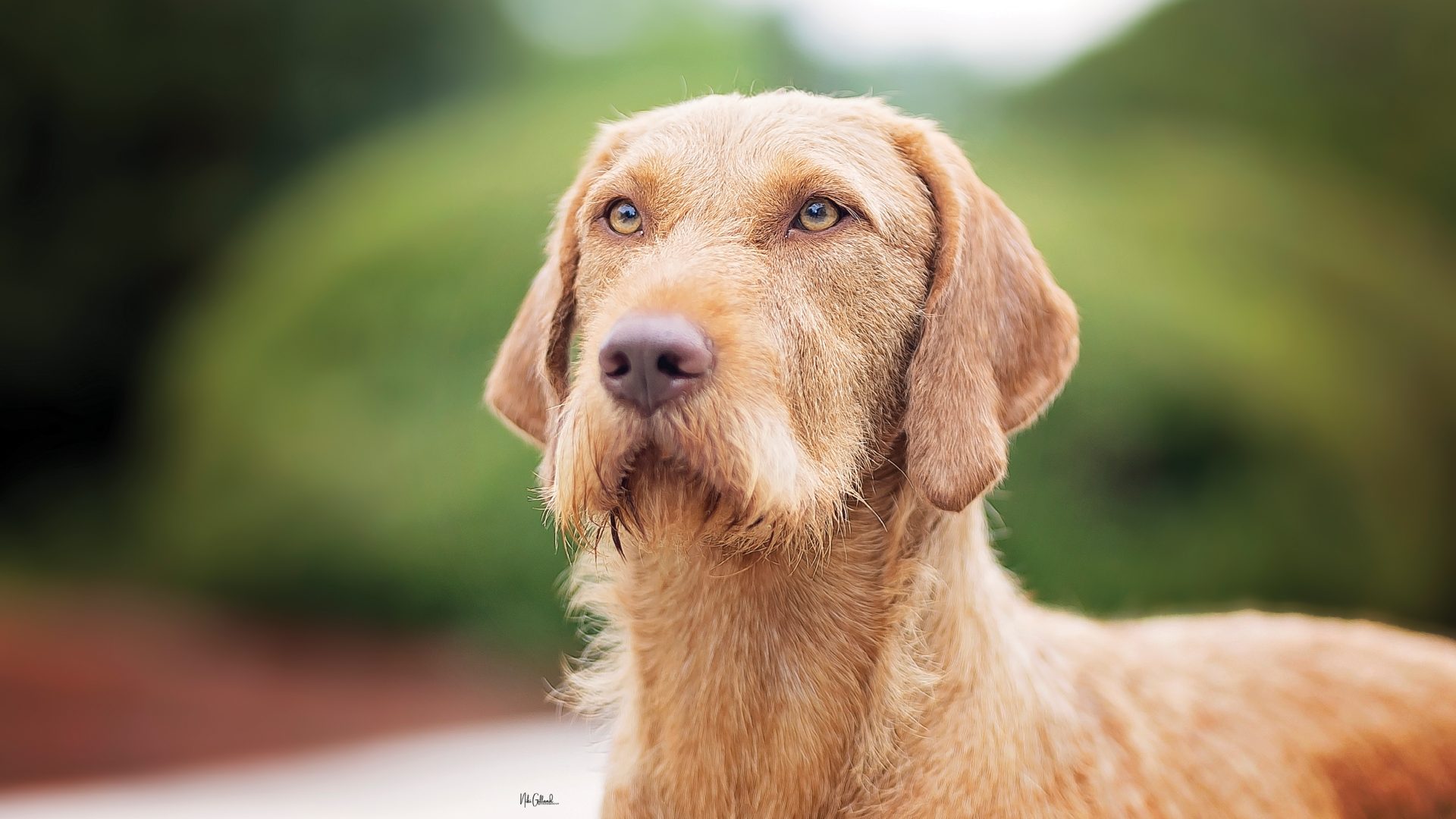
The Wirehaired Vizsla is a versatile and athletic hunting dog known for its distinctive wiry coat and versatile hunting abilities. Originating from Hungary, this breed balances its exceptional performance in the field with a loyal and affectionate nature, making it a favorite among active families and hunters alike.
Highlights
02/History
The Wirehaired Vizsla traces its origins to Hungary in the 1930s, when breeders sought to create a more robust version of the smooth-coated Vizsla. The goal was to develop a dog capable of enduring the harsh climate and rugged terrain of the Hungarian countryside while maintaining the breed's innate hunting skills and affectionate temperament.
To achieve this, breeders crossed the Magyar Vizsla with the German Wirehaired Pointer, resulting in a dog with a denser, weather-resistant coat and greater physical stamina. Over time, selective breeding refined the Wirehaired Vizsla into a distinct breed that retained its Hungarian heritage while offering increased versatility for hunters and outdoor enthusiasts.
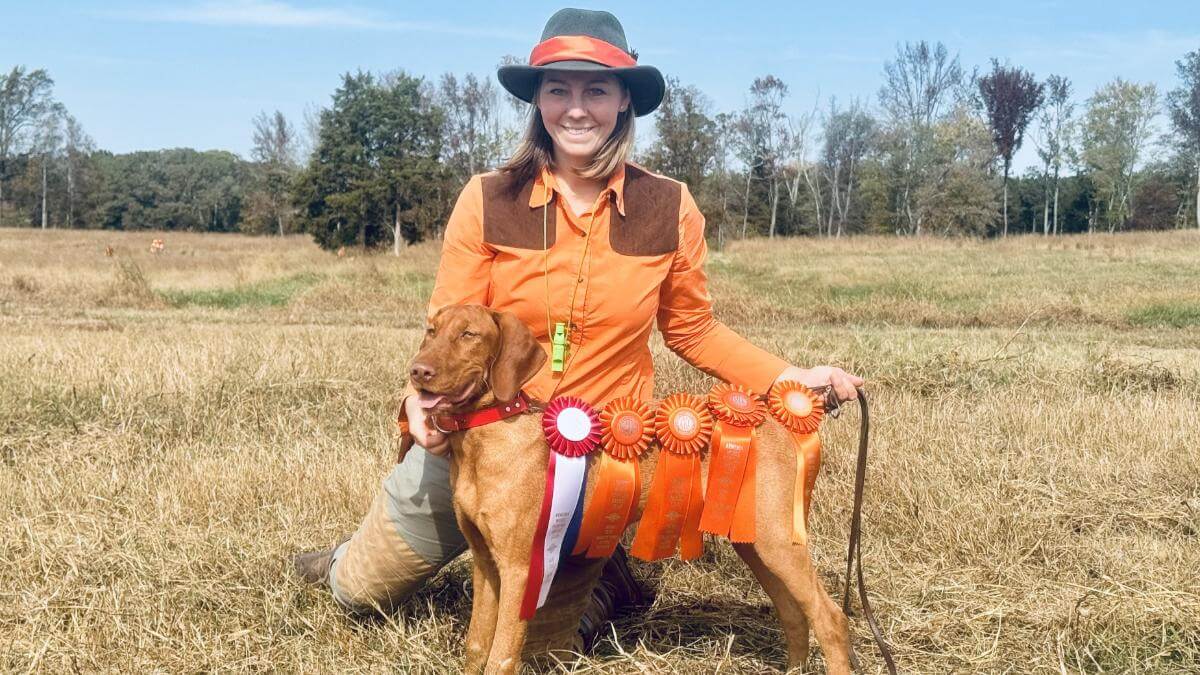
The Wirehaired Vizsla was recognized as a separate breed by the Fédération Cynologique Internationale (FCI) in 1986 and by The Kennel Club in the UK in 2004. The American Kennel Club (AKC) granted full recognition in 2014, placing the breed in the Sporting Group. Today, the breed continues to excel in hunting, field trials, and various dog sports while also enjoying life as a devoted family companion.
03/Appearance
Wirehaired Vizsla males typically stand between 23 and 25 inches tall at the shoulder, while females measure slightly less at 21.5 to 23 inches. Males generally weigh between 55 and 65 pounds, with females weighing 45 to 55 pounds.
The Wirehaired Vizsla presents a balanced and athletic appearance, with a medium-sized body that is slightly longer than it is tall. The breed is sturdy without being heavy, showcasing a muscular frame that supports endurance and agility. The overall impression is one of strength and elegance, with a harmonious build that reflects its purpose as a versatile hunting companion.
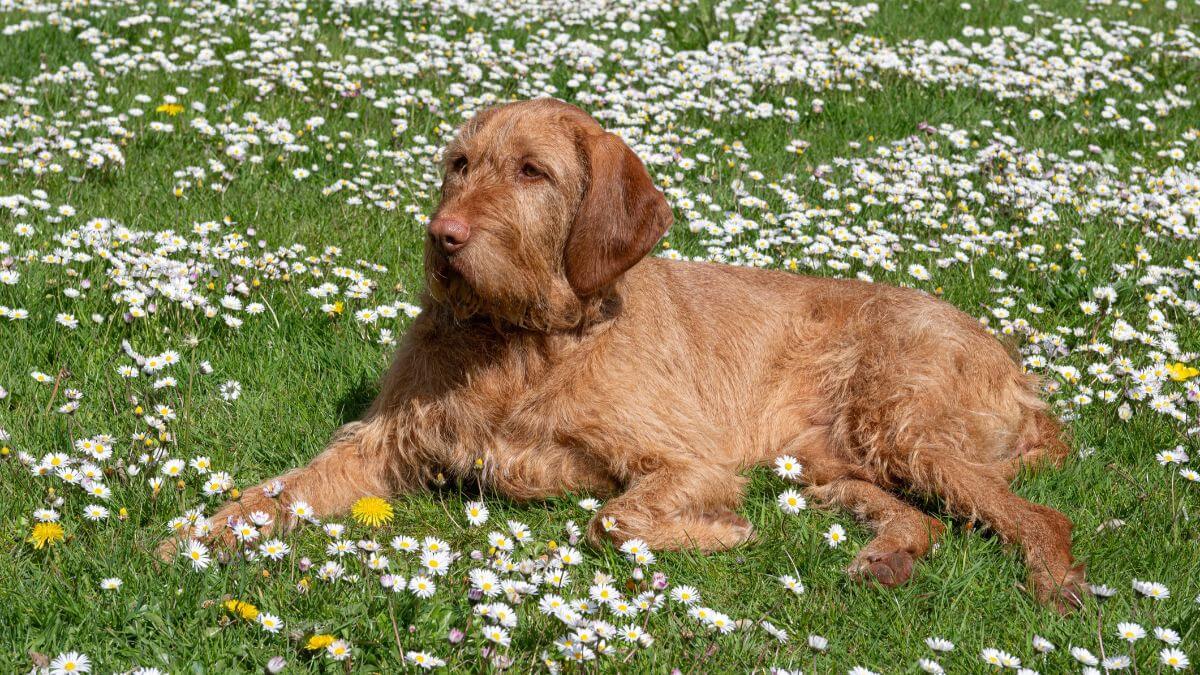
Texture: The Wirehaired Vizsla's coat is dense, wiry, and weather-resistant, providing excellent protection in harsh environments. The outer coat is coarse to the touch and lies close to the body, while the undercoat is soft and dense, offering insulation. The coat is close-lying and measures approximately one inch in length, with shorter hair on the face and ears as well as on the legs. Coat brushes appear on the back of the front legs and in a V-shape on both sides of the neck. Pronounced eyebrows and a harsh beard create a distinguished look to the head.
Standard Colors
Standard Markings
04/Consider
The Wirehaired Vizsla is an active and versatile hunting dog that thrives in an environment where it can engage both its body and mind. Prospective owners should be prepared for the breed’s energy levels, intelligence, and need for companionship.
Interaction With Family
The level of affection a breed typically shows towards family members and familiar individuals.
Good With Other Dogs
The innate friendliness of a dog towards other dogs can depend on its breed.
Good With Young Children
The degree to which a breed will typically be patient with young children.
Amount Of Shedding
How much hair a breed typically leaves behind on clothes, furniture and floors.
Frequency Of Grooming
How often a breed needs brushing, bathing or a professional trim to stay in condition.
Amount Of Drooling
How prone a breed is to drool, worth knowing before you keep a towel by the door.
Openness To Strangers
How openly a breed tends to greet new people, visitors and strangers.
Protective Nature
How likely a breed is to alert you to anything unfamiliar, and stand between you and it.
Playfulness Level
How enthusiastic a breed stays about games and play well past puppyhood.
Trainability Level
How readily a breed takes direction and works with you rather than around you.
Barking Level
How much a breed uses its voice, and how readily.
Energy Level
How much get-up-and-go a breed brings to an average day.
Health
The Wirehaired Vizsla is a generally healthy breed with a lifespan of 12 to 14 years. Regular veterinary care, a balanced diet, and consistent exercise are essential to maintaining good health and overall well-being. While the breed is relatively robust, individuals can be prone to certain health conditions.
The Wirehaired Vizsla is a friendly, intelligent, and devoted breed that forms strong bonds with its human companions. These versatile dogs are known for their affectionate nature and thrive in households where they can be a part of daily activities.
Their sensitivity allows them to be attuned to their handler's emotions, so harsh training methods and extended periods of solitude will be counterproductive. They are generally good with children and other dogs when properly socialized, displaying both patience and a playful demeanor.
Wirehaired Vizslas are typically friendly toward strangers but may initially show a reserved or cautious side. This makes early socialization crucial for their overall development. Their eagerness to please and cooperative nature can make them excellent companions for both experienced and novice dog owners.
Exercise Expectations
Due to their hunting heritage, Wirehaired Vizslas enjoy games that tap into their natural instincts, such scent work and fieldwork. They also excel in activities like swimming, which provides a low-impact way to burn off energy. Without adequate exercise, Wirehaired Vizslas may become bored or restless, leading to undesirable behaviors. A well-exercised dog is a happy and well-adjusted companion.
Grooming Expectations
Wirehaired Vizslas are highly adaptable and can thrive in various living environments, provided their exercise and companionship needs are met. They can live comfortably in apartments or homes with smaller yards if given ample daily exercise, but they truly shine in larger spaces where they can run and explore.
Their dense coat allows them to tolerate cold weather better than their smooth-coated counterparts, but they still appreciate protection during extremes of temperature. Hot weather can be more challenging for them, so it is essential to provide plenty of shade, fresh water, and rest during the warmer months.
Wirehaired Vizslas are highly social and form strong bonds with their human companions, making them happiest when included in family activities. They do not do well when left alone for extended periods and thrive in homes where someone is present for much of the day.
05/Puppies
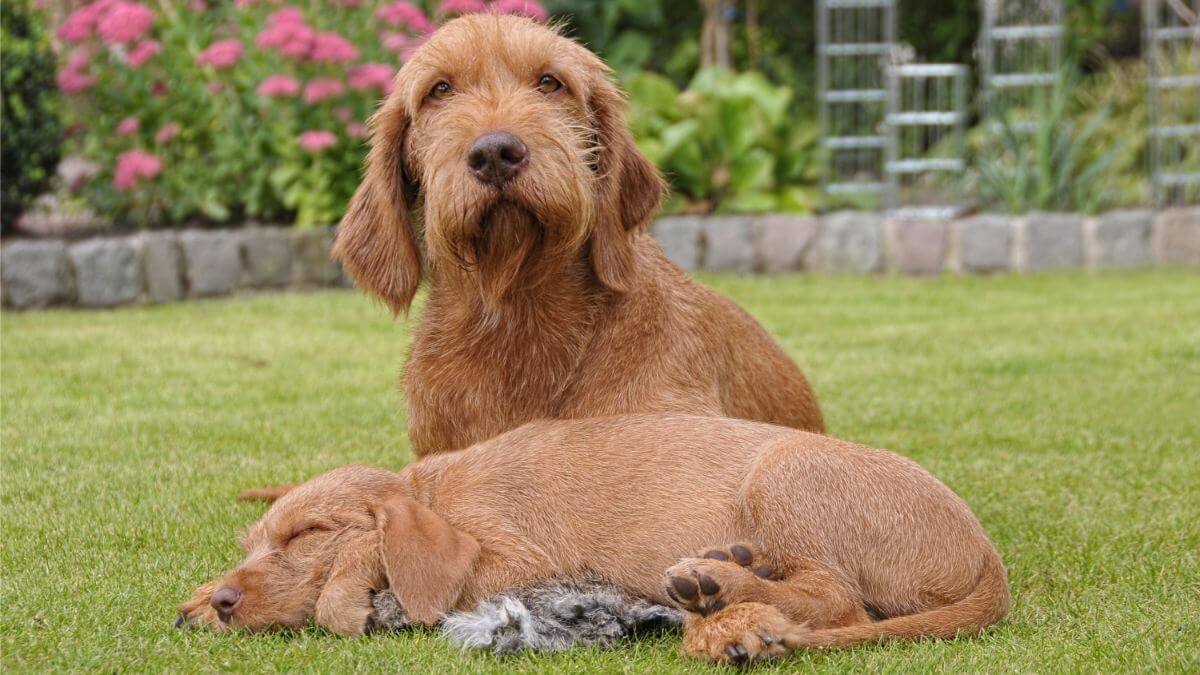
Bringing home a Wirehaired Vizsla puppy is an exciting and rewarding adventure. These puppies are known for their curious, playful, and affectionate nature, but they also require consistent training and socialization from an early age.
Caring for a Wirehaired Vizsla puppy involves providing the right balance of nutrition, exercise, training, and companionship. A high-quality puppy food is essential to support the puppy’s growth and development, and feeding should be divided into three to four meals per day.
Socialization is critical during the early months. Exposing the puppy to various environments, people, and animals will help it to become adaptable and more confident. Puppy training classes are an excellent way to introduce basic commands while also providing opportunities for social interaction.
Exercise should be moderate, as excessive physical activity can stress a puppy’s developing joints. Short play sessions and gentle walks are ideal during the growth phase. Mental stimulation is equally important, and puzzle toys or interactive games can keep the pup’s intelligent mind engaged.
Consistency, patience, and positive reinforcement are key to building trust and ensuring a strong bond with a Wirehaired Vizsla puppy. Crate training is helpful too, for housebreaking and for creating a safe space where the puppy can rest during the day and sleep at night.
06/Activities
Gallery
07/Standards
The Wirehaired Vizsla is recognized by the world's leading registries and kennel organizations, which categorize the breed into a specific Group based on its unique characteristics. This breed is recognized worldwide under the following Group designations:
The ideal Wirehaired Vizsla is described by a Breed Standard that is approved by each of the world’s leading registries and kennel organizations. The Breed Standards for this breed may be found in the following links:
08/Clubs
09/Rescue
10/Facts
Bred for Versatility
The Wirehaired Vizsla was developed in the 1930s to create a robust and versatile hunting dog, combining the traits of the Vizsla and the German Wirehaired Pointer.
Unique Coat for Harsh Conditions
The breed’s wiry, weather-resistant coat is a defining feature, offering superior protection in cold and wet environments.
A Recognized Sporting Breed
Officially recognized by the AKC in 2014, the Wirehaired Vizsla became part of the Sporting Group.
Devoted Family Companions
Despite the breed’s roots as a hunter, Wirehaired Vizslas are known for their affectionate and gentle nature, making them excellent family dogs.
11/FAQ
Yes, Wirehaired Vizslas shed moderately throughout the year, with seasonal increases during shedding periods. Regular brushing helps to manage shedding and keeps the wiry coat in good condition.

Written by
Dan Sayers is the Executive Editor of SHOWSIGHT. He is a member of the World Dog Press Association and the Dog Writers Association of America, which recognized his illustrations in the award-winning Encyclopedia of K-9 Terminology. Dan is a longtime supporter of the sport of dogs and an advocate for the conservation of recognized breeds in all their forms and functions. He is a member of the Morris and Essex Kennel Club, and for 45 years, the Irish Water Spaniel Club of America where he serves as AKC Delegate, Archivist, and approved Breed Mentor. Dan breeds under the Quiet Storm prefix and has judged the IWSCA National Specialty Sweepstakes twice.
Official Standard for the Wirehaired Vizsla
General Appearance: Originating in Hungary, the Wirehaired Vizsla was developed by hunters and falconers who desired a sturdy, versatile hunting dog able to withstand harsh winters in the field, forest and water. The Wirehaired Vizsla is a distinguished, versatile hunting dog of medium size, bred for substance and a dense wire coat. Balanced in size and proportion, the Wirehaired Vizsla is robust and lean. Movement is powerful yet graceful with far reaching drive enabling the breed to hunt in all elements and cover any terrain encountered by the walking hunter. The breed possesses an excellent nose for hunting and tracking feather and fur on land and in water, as well as a natural point and retrieve. The breed's most distinguishing features are its weather resistant dense wire coat and its facial furnishings, specifically its beard and eyebrows. Natural appearance is essential to breed type, therefore the Wirehaired Vizsla is to be shown with limited stripping and should not be penalized for being shown in working condition: sinewy, well muscled, with honorable scars. The Wirehaired Vizsla is intelligent, loyal, sensitive and biddable, but cannot tolerate harsh handling. Eager to learn, lively yet gentle, they are readily trainable for gun and falcon. The Wirehaired Vizsla is a tractable and affectionate companion in the home.
Size, Proportion, Substance: The Wirehaired Vizsla is a medium sized hunting dog, however overall symmetry and balance are more important than mere measurable size. The ideal male adult (over 12 months of age) is 23 to 25 inches at the highest point over the shoulder blades. The ideal female adult (over 12 months of age) is 21½ to 23 inches. Because the Wirehaired Vizsla is meant to be a medium-sized hunter, any dog measuring more than 1 inch over or under these limits must be disqualified (over 12 months of age). The body length from breastbone to buttocks slightly exceeds the height at the shoulders, as ten is to nine. The Wirehaired Vizsla body is well muscled and strong, with sufficient bone and substance.
Head: The Wirehaired Vizsla's head is in proportion to the body, moderate and well muscled. The expression should be lively, clever, and is enhanced by the eyebrows and beard. Eyes are slightly oval, of medium size with well fitting eyelids, giving the Wirehaired Vizsla an intelligent and lively expression. Iris color is as dark as possible and blends harmoniously with the coat color. Yellow eyes are a serious fault. Eye rim color should blend with the coat color, but freckles from sun or age are not to be faulted. Lower eye rims should neither turn in nor out. Ears are set at a medium height, moderate in length, hanging close to the cheeks and ending in a rounded V shape. The skull is well muscled, moderate in length, and slightly domed. A slight groove runs from the moderate occiput to the stop. The stop is moderate. The muzzle is slightly shorter than half the length of the head when viewed in profile. The muzzle is blunt, with a straight bridge that is parallel to the top of the skull and is well muscled with strong jaws. The nose is wide with nostrils well open. The nose color should blend with the coat color. Any black on the nose is a disqualification, but brown freckles, due to aging or sun exposure are not to be faulted. The bearded lips lay close to the jaw as tightly as possible. The jaw is strong with teeth aligned in a scissors bite. An over or undershot bite or more than two missing teeth is a disqualification.
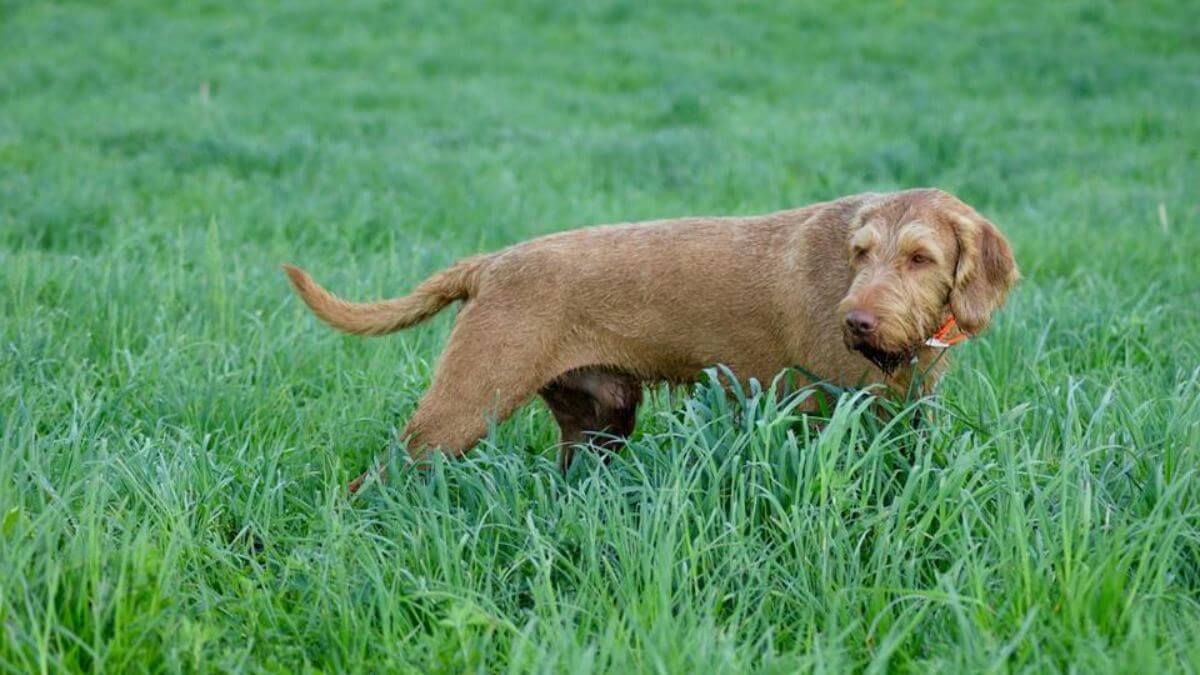
Neck, Topline and Body: The neck is in balance with the body and head, medium in length, muscular and slightly arched. Skin on the neck and body is tight fitting, there is no dewlap. The shoulders are strong and muscular. The topline is straight, well muscled and solid, falling into a slightly rounded, well muscled croup, which is moderate in length. The chest is deep, moderately broad, and well muscled. The depth of the chest is slightly less than half the height at the shoulders and sets at the elbow when seen from the side. The forechest is well developed. The ribs are moderately sprung and carried well back. The underline is graceful with a moderate tuck-up. The loin is tight, well muscled and straight or slightly arched. The tail is set just below the level of the croup. The tail is thick at its base then tapers and carries a dense coat. The preferred tail is docked by one-quarter of its length; natural tails will not be penalized. A natural tail reaches down to the hock joint and is carried straight or slightly saber-like. When moving, the tail is carried near the horizontal, not curled over the back or carried between the legs.
Forequarters: The forequarters are well muscled with strong, sufficient bone and balance. From the front, legs are straight, from the side they are placed well under the body. Shoulders are well laid back, showing fluidity when moving. The upper arm is well muscled, about equal to the shoulder in length and well angulated at its attachment to the shoulder, in order to allow for good extension. The elbows lie close to the body; pasterns are short, sinewy and only very slightly sloping. Preferably, dewclaws are removed from the front legs to avoid injury in the field, but a dog with natural dewclaws is not to be penalized. The feet are cat-like, but slightly oval and always parallel. Pads are thick and tough; nails are self colored and short.
Hindquarters: The hindquarters are straight and parallel with well developed thighs when viewed from behind. The angulation of the hindquarters is in balance with the forequarters. The legs have strong, sufficient bone and balance, with thighs that are well muscled and long. The stifle is well angulated. The hocks are strong, well let down, short and straight as viewed from behind. Rear dewclaws are a disqualification. Feet are as in the Forequarters section.
Coat: The Wirehaired Vizsla's coat makes this breed unique. Close lying, a length of approximately 1 inch, the dense wiry coat should not hide the outline of the body. Functionally the coat should protect against weather and injury with a dense undercoat and wiry outer coat. The lower legs and underside of the chest and belly are covered with shorter, softer, thinner coat. Coat on the head and ears is close fitting and shorter. Pronounced eyebrows highlight the stop. Expression is enhanced not only by eyebrows, but also by a strong, harsh beard, approximately 1 inch in length, formed from both sides of the muzzle. On both sides of the neck the coat forms V shaped brushes. Lacking undercoat or coat brushes on the back of the front legs should be penalized, as is any deviation in coat texture or excessive length of the coat. The Wirehaired Vizsla should be exhibited almost in his natural state, nothing more in the way of stripping being needed than a tidying up. A clipped coat is faulty.
Color: Golden rust in varying shades. Red, brown or yellow colors are faulty. The ears may be slightly darker than the body; otherwise the coat color is uniform. White on the forechest or throat, not more than 2 inches in diameter, as well as white on the toes is permissible and common. Solid white extending above the toes or white anywhere else on the dog except the forechest and throat is a disqualification. White due to aging or scars from hunting is not to be faulted. The Wirehaired Vizsla is self-colored, with the color of the eyes, eye-rims, lips, nose and toenails blending with the color of the coat.
Gait: The Wirehaired Vizsla should move in a light-footed, smooth trot. When seen from the side, the gait is dynamic yet graceful and there is a balance to the movement with far reaching drive. The topline remains level, the back firm. When working in the field his sound movement enhances his ability as a versatile hunting dog.
Temperament The Wirehaired Vizsla is self-confident, eager to learn, clever, sensitive and yet stubborn; affectionate and loyal with his owner, occasionally aloof with strangers and has a keen protective instinct. Shyness, nervousness or aggressiveness are faulty.
Disqualifications: Dogs over 12 months of age measuring over 26 inches, or under 22 inches and bitches over 12 months of age over 24 inches or under 20½ inches. Partial or completely black nose. Under or overshot bite. More than two missing teeth. Rear dewclaws. White extending above the toes or white anywhere else on the dog except the forechest and throat. More than 2 inches of white in any direction on the forechest and throat.
Approved August 18, 2012
Effective January 1, 2013


American Kennel Club (AKC)
Britt Jung reflects on judging at the 2025 AKC National Championship, highlighting depth of quality, mentorship, and exhibitor spirit.

Meet the Breeders
From Budapest roots to breeding in NC, a journey of passion, purpose, and Wirehaired Vizslas at Cave Canis Kennels.
Dog Sports
Discover the Wirehaired Vizsla: a versatile, intelligent, and affectionate hunting dog with a rich history and unique traits.
Explore the AKC standard for the Wirehaired Vizsla, a durable, versatile hunting dog bred for substance and balance in all terrains.
All About Judging
Essential guide for judges on assessing the rare Wirehaired Vizsla, focusing on distinct standards and unique coat traits.
Dog Sports
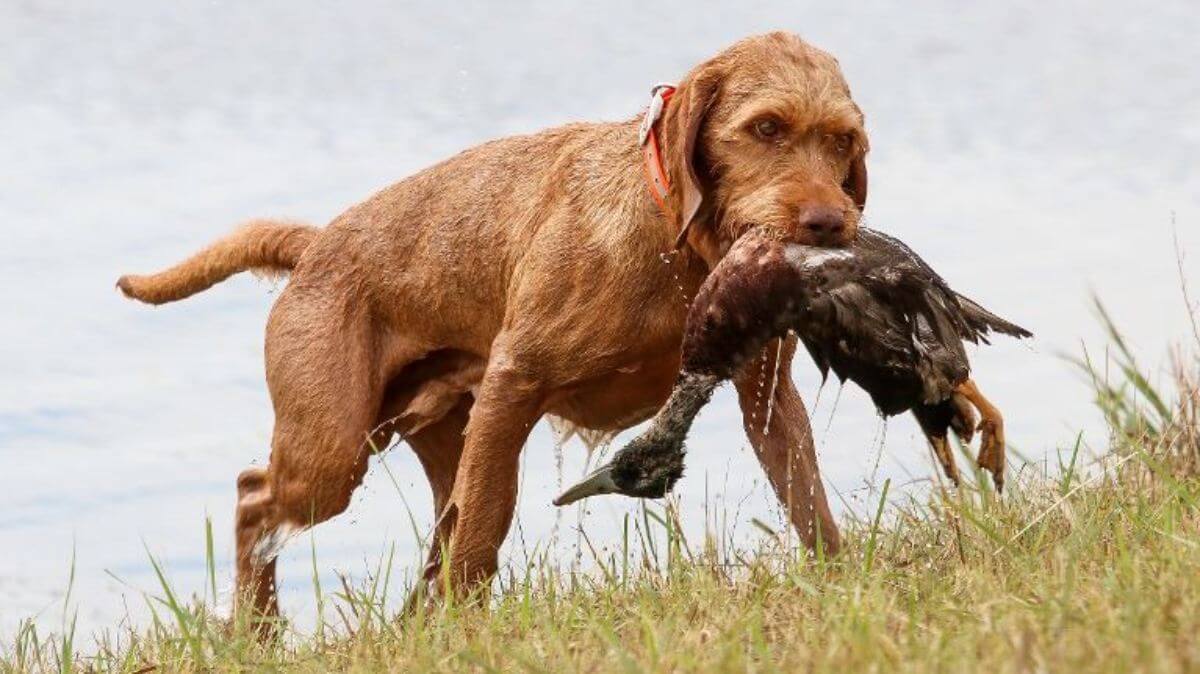
Discover the versatile and loyal Wirehaired Vizsla, a top-notch hunting dog, family companion, and active competitor in various dog sports.

Meet the Breeders
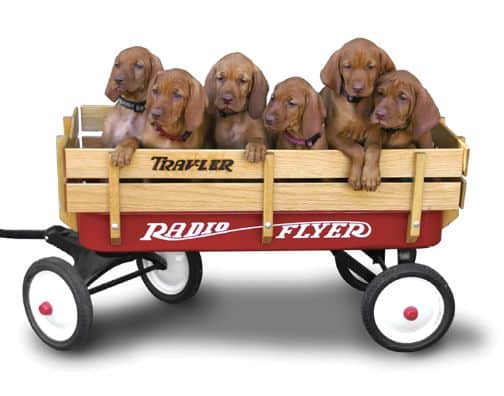
Purebred Vizsla Breeders Mark & Bonnie Goodwein Koppertone Vizslas interview by Allan Reznik. Our lifetime journey and love for Vizslas
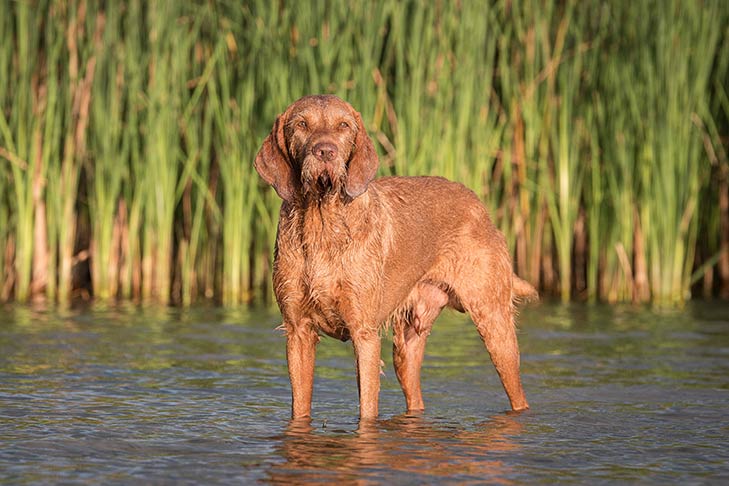
Coat and Color of the Wirehaired Vizsla | The quotes that follow are from the AKC Official Breed Standard of the Wirehaired Vizsla
The Wirehaired Vizsla's tail is set just below the level of the croup. It is historically docked to about two-thirds of its natural length. When undocked, the tail is of medium length, thick at the base, and tapers towards the tip. It is carried near the horizontal and should never be curled or carried between the legs.
A Note About Color: The coat of the Wirehaired Vizsla is golden rust in varying shades. The color is uniform except on the ears where it may be slightly darker. Faulty colors include brown, red, and yellow. White may appear on the forechest or throat but should not be more than two inches in diameter. White toes are allowed, but the white may not extend above the toes. Otherwise, white may not appear anywhere else on the dog. The eyes, eye rims, lips, nose, and toenails blend with the color of the coat.
Coat Type
Wiry
The structure of the coat this breed carries.
Coat Length
Short
How long the breed's coat grows when kept in condition.
Adaptability Level
How easily a breed copes with changes in home, routine, noise and weather.
Mental Stimulation Needs
How much a breed needs a job, a puzzle or training to stay content.
Wirehaired Vizslas require a high-quality, balanced diet to support their active lifestyle and maintain their lean, muscular build. As puppies, they benefit from a diet designed to support steady growth, typically fed in three or four small meals per day.
Once adulthood is reached at around one year of age, two meals per day are recommended to meet their nutritional needs without overfeeding. The quantity of food depends on the dog’s size, age, and activity level, but most adults will consume about 2.5 to 3.5 cups of food per day, divided into two portions.
Monitoring the Wirehaired Vizsla’s weight and adjusting portions as necessary is essential to prevent obesity. Fresh, clean water should always be provided, and consultations with the dog’s breeder and veterinarian should be sought for specific dietary recommendations or concerns.
The Wirehaired Vizsla is highly intelligent and eager to please, making training an enjoyable and rewarding experience. These dogs respond best to positive reinforcement methods, such as praise, treats, and play, that encourage their natural desire to work with their handler.
While generally quick learners, their sensitive nature means they may shut down if training is overly harsh or punitive. Consistency, patience, and early socialization are crucial to shaping a happy and well-mannered adult dog.
This breed has a moderate tendency to bark, often alerting to new sights or sounds. This tendency requires early training to curb unnecessary barking. Their high intelligence also means they can become bored if training sessions are too repetitive or lack variety.
Providing mental challenges, such as puzzle toys or advanced obedience exercises, can help to keep their sharp minds engaged. Additionally, they can have a potential for wandering, so ensuring they have a secure environment is essential during off-leash activities.
Shedding in this breed is moderate, with seasonal increases, and their grooming needs are generally manageable for most owners. Bathing should be done as needed, using a dog-specific shampoo to avoid stripping the skin and coat's natural oils. Attention should also be given to the dog’s nails, ears, and teeth. Regular nail trimming prevents discomfort and splitting, while weekly ear checks help to reduce the risk of infections. Brushing the teeth several times a week promotes good dental hygiene and overall health.