Members
The Weekly Brief
The best of SHOWSIGHT editorials, weekly wins, and breeder commentary — delivered to your inbox every Sunday morning.
Global dog registries recognize more than 360 (and counting) individual breeds, each representing a unique partnership with humanity that has spanned miles and millennia. No matter the culture or the need, there’s always been a dog perfectly adapted for a particular role in a particular place. Service has certainly been the mandate, but so too has substance—and style. In this way, each breed is a reflection of its geographic and cultural origin, much like clothing and food and music. And architecture. Just as an igloo is cut from blocks of ice in the frozen Arctic, so too are Northern breeds cut out for life on the tundra. The same can be said for desert sighthounds and traditional Bedouin tents, highland collies and Scottish crofts, and royal lapdogs and Imperial palaces.
Building types around the world have a lot in common with breed type in purebred dogs, including many of the period structures that have been built on the American landscape. Pre-Columbian architecture may best be represented by the Pueblo style of homes in the Southwest and the Chihuahuas that lived there for centuries; both are links to the time of pre-European contact. Spanish Colonial Missions, with their terracotta roofs and private courtyards, typify the security provided by breeds like the Spanish Mastiff. Conversely, in New England, Saltbox houses (and the Cape Cod-style homes that followed) suggest the understated yet functional styling of the Boston Terrier.
The founders of the United States often turned to the past in search of ancient inspiration. Jefferson’s Monticello is a Neoclassical masterpiece akin to Washington’s American Foxhounds. The Gothic Revival churches and chapels built throughout the colonies suggest the strength, grace, and towering height of the Greyhound. Mausoleums, which still grace park-like graveyards in many major cities, pay homage to the Egyptian Revival period as well as the sphinx and the Pharaoh Hound. In Annapolis, Maryland, both the Chesapeake Bay Retriever and the Federal-style buildings that line the city’s 18th-century streets face the water with unflinching resolve.
The Second Bank of the United States in Philadelphia is a Greek Revival masterpiece, standing firm like an American Bulldog with a degree in ancient philosophy. Similarly, City Hall in Albany, New York, graces the state capital like a Volpino Italiano from the Romanesque Revival period. And on the other side of the continent, the Lincoln Theater in Los Angeles beguiles passersby with its Moorish Revival facade that’s as lively as any Podengo—in any size.
San Francisco’s Painted Ladies seem to watch over the neighborhood like variously marked Collies of the High Victorian period, and back on the East Coast, the Cavalier King Charles Spaniel would never be out of place among the Queen Anne bed and breakfasts of Cape May, New Jersey. Similarly, the French Bulldog is the ideal complement to the Art Nouveau-inspired leaded glass windows produced by the studios of Louis Comfort Tiffany and installed for public viewing in places like the Art Institute of Chicago. And in Spring Green, Wisconsin, Frank Lloyd Wright’s house and studio, Taliesin, expands across a 600-acre estate like an American Water Spaniel in search of a fallen bird.
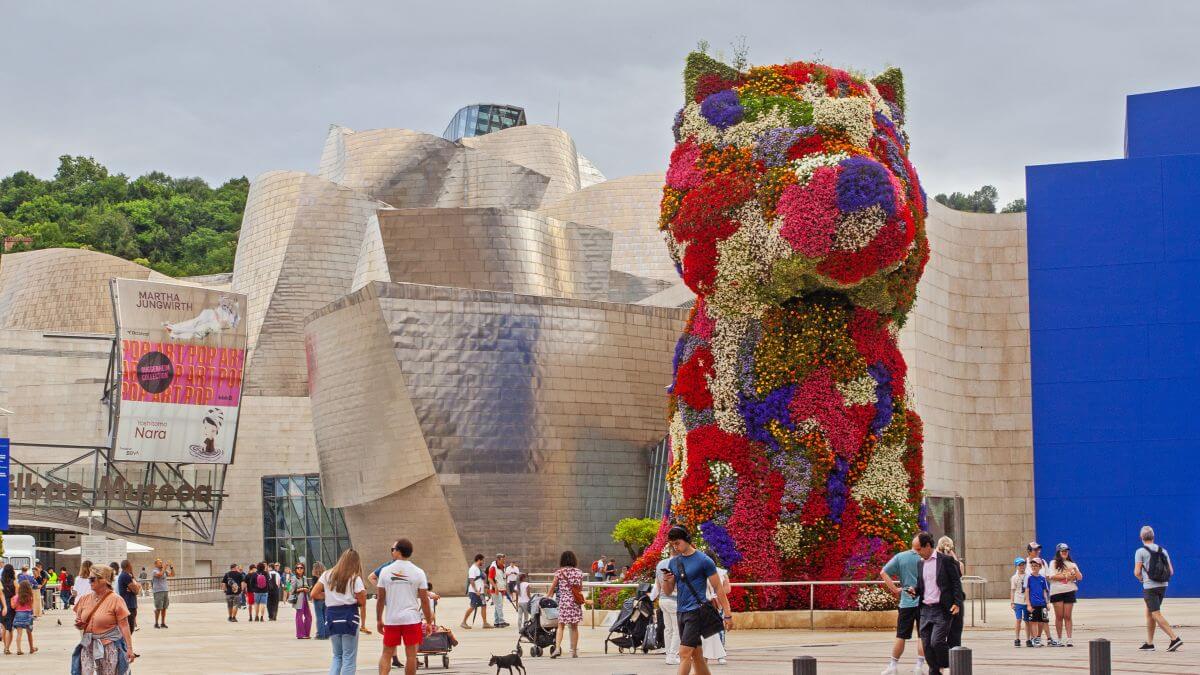
In Manhattan, “The Whitney” is a hulking wonder, challenging pedestrians like an immovable Greater Swiss Mountain Dog or any other behemoth of the Modernist movement. Uptown, the former Seagram Building maintains its International Style with the efficient beauty of a German Shorthaired Pointer. And Mid-Century Modern never looked as simple (or is it severe?) as the monolithic Guggenheim Museum—or a Cocker Spaniel parading through Central Park.
Further south, the Art Deco hotels that face Miami Beach seem both inviting and intimidating, like a Borzoi on an extended holiday. Back in LA, Postmodernism makes itself known in the form of Frank Gehry’s Walt Disney Concert Hall, like a pesky Rat Terrier that just will not be ignored. Likewise, the Getty Museum, with its gorgeous skin of beige travertine, presides over the City of Angels like a Neomodern American Hairless Terrier with a priceless art collection.
Perhaps contemporary American architecture would best be represented by the five-over-one complexes that sell an “ultra-luxury” lifestyle that comes with questionable construction and an exorbitant mortgage. These copy/paste condominiums typify life in the twenty-first century as reliably as a Mini Bernadoodle’s pedigree, promoted by clever marketing efforts that have little to no interest in anything but the bottom line.
Thankfully there is hope. The tiny house movement could be the antidote to the current construction craze, much like preservation breeders offer an alternative to all the overpriced doodles and those questionable “rescues.” When you think about it, tiny houses and purebred dogs have something in common; they both speak to many of the issues people are concerned about today: affordability, security, and sustainability. Purebred dogs are a “renewable” resource that can meet the future while acknowledging the past. In this way, recognized breeds are like period buildings that have endured through many lifetimes.

Breeding with Intention