Members
Keep your injured dog happy and engaged with safe, creative ways to stimulate their body and mind during recovery and crate rest.
The Weekly Brief
The best of SHOWSIGHT editorials, weekly wins, and breeder commentary — delivered to your inbox every Sunday morning.
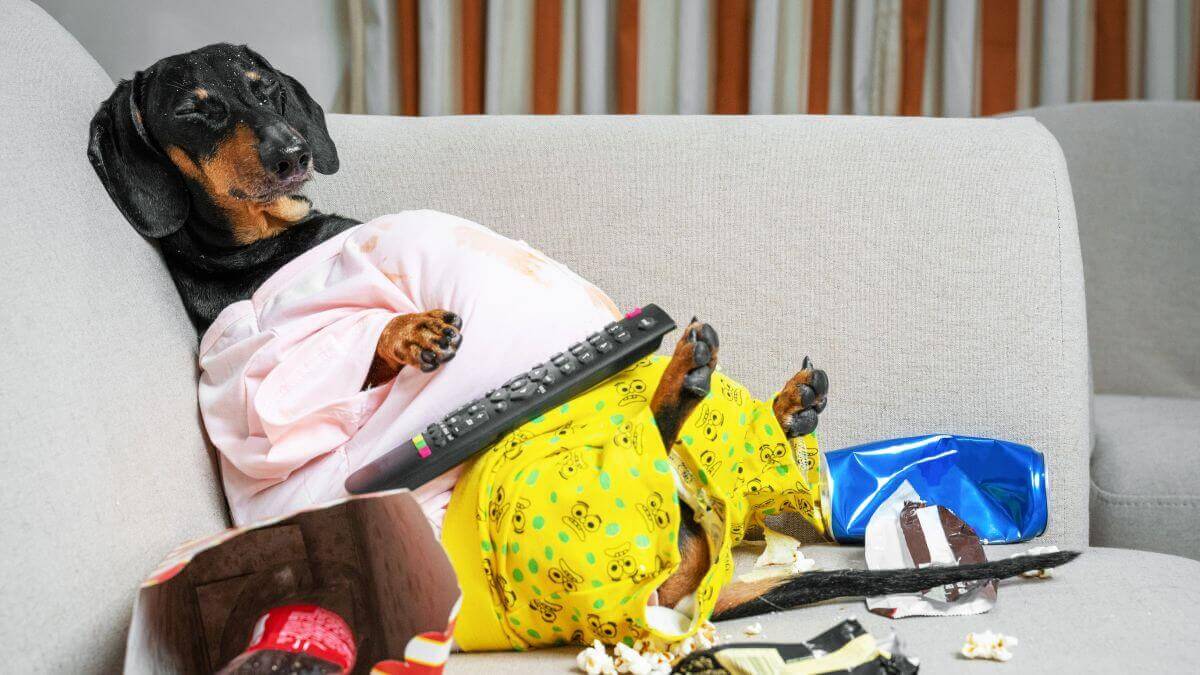
Okay, your canine buddy is on the team’s disabled list (Figure 1). It’s only temporary, but it’s driving you and your teammate nuts! Your dog’s brain is used to being active—running, playing, wrestling with his buddies, spending time training, and competing with you in whatever games you play. That brain thrives on stimulation!
But now the veterinarian says you must restrict their activity. Phrases like “crate rest,” “potty on leash only,” and “no running or jumping” make you think that the next few weeks or months are going to be unbearable. You know that you must comply so that your dog can heal completely and get back to all the games that it loves, but how is this going to work?
Well, there’s great news! There are a lot of things that you can do with a dog on restricted activity, and they might actually expand, rather than contract, your dog’s repertoire. The key is that dogs are highly intelligent beings, and you can use this time to exercise their brains, in addition to the parts of their bodies that are not in rehab.
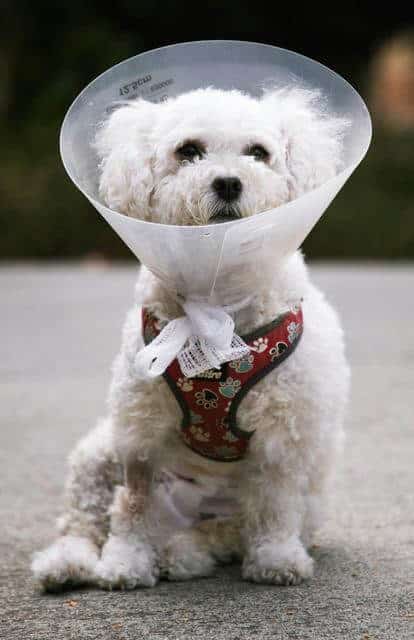
Let’s deal with the 900-pound gorilla in the room first. Your veterinarian might have recommended crate rest, but long-term crate rest causes significant muscle atrophy. A day or two of strict crate rest after surgery might be necessary until your dog’s body is cleared of anesthetic from the surgery and the initial post-surgical pain is under control.
However, other alternatives can keep your dog confined but still able to get up, move around a little, change position, and lie stretched out in whatever position it wants. An exercise pen consisting of six or eight wire or plastic panels of various heights that can be arranged in a circle and clipped together can be an ideal way to give your dog just a little more room. Start by arranging the panels in a way that gives your dog just a little more room than a crate, and gradually increase the available area during the rehabilitation
process. If your dog tries to climb or jump out of the pen, you can purchase or engineer a cover for the pen, which will prevent all but the most insistent canine Houdini from making The Great Escape. If you place the pen in a well-frequented location, add favorite chew toys and a soft bed, and throw food treats into the pen to reward your dog for settling down, it won’t be long before your dog is thinking that this new living room fort is a pretty cool place to be.
Don’t just clip on a six-foot leash, go outside to the nearest grass, get the business done, and go back inside. Outdoors, there is a great deal of stimulation for all of your dog’s senses. There are other dogs, people, food, trash, and other sights and scents much more interesting to dogs than to us out there in the world. Let your dog experience them safely. There is also the sun, the rain, the breezes—so much to experience.
So, make potty time a positive event. Depending on your dog and the stage of rehabilitation, you can gradually increase the length of the leash. Take your dog to the most scent-worthy places in your yard and let him or her just wander around, taking in the environment. Maybe a roll in the freshly mown grass is called for. Who cares about a few grass stains when considering the big picture of your dog’s emotional health?
Have you ever taken a class (for me, it would be physics) in which you struggle so hard to figure something out that afterwards you feel so mentally exhausted that you’d like to take a nap? Well, dogs experience the same thing. Here are several games that will help tire your dog. I bet you can think of others as well!
There are dozens of games on the market that are designed so that your dog has to solve a puzzle to get a piece of food. Some are very simple toys that require your dog to move the toy into a certain position before the food will drop out. Others require your dog to initiate a series of complex moves, such as moving sliders and opening drawers, before the food is presented. Experiment with them, starting with the simpler ones, and see how far your brilliant dog can advance.
Give your dog a marrow bone with meaty tissue stuck to the outside. That can make a dog happy for an hour or more, chewing all the gristle off the outside and digging out the marrow. If your dog is not used to fresh, fatty foods, you might limit his or her time with the bone initially to be sure that your dog’s gastrointestinal tract is up to the job.
Fill a KongTM or other similar toy with your dog’s food, sealing it with peanut butter or yogurt. Freezing will make it last even longer. There are dozens of good, filling recipes online.
Teach your dog to catch food. This usually requires minimal movement by your dog if you start by tossing the food from a very short distance and gradually move farther away. Use foods of different weights, e.g., kibble vs. popcorn, so that your dog learns to really track the food, regardless of its speed.
These can be played inside and outside, giving your dog lots of different experiences.
There are lots of tricks that involve minimal movement by your dog. They just require a little understanding of reward-based learning. Essentially, figure out a way to get your dog to do the desired behavior (this might require several steps to progressively approximate the final action), and the instant your dog performs the desired behavior, praise with a single word and give a treat. Don’t add the verbal cue until your dog is performing the final behavior. The best games are ones that play off something your dog already loves to do. So, watch your dog and turn his joy into tricks!
Here are a few examples of easy tricks, but I know you can think of lots more!
Here are two ideas specific to rehabbing your dog.
If your dog has injured its elbow, no one says that it can’t safely build the rear leg muscles. Conversely, if your dog has a hip injury, there’s no reason not to build those shoulder muscles. There are many ways to safely strengthen a dog’s muscles without having to spend hours trotting up and down a road. The best strengthening exercises have the following characteristics: they are non-impact, they are targeted to specific areas of the body, and they involve working to overload. That’s great news, because it means that most of these exercises can be performed in the comfort of your living room.
For dogs with front limb injuries, you can improve their core by teaching them to sit up on their haunches (yes, studies show this is completely safe), having them lift diagonal legs and hold for 30 seconds, or having them move from a sit to a stand and back to a sit repeatedly without moving the front feet. You can strengthen the rear by having your dog step on a plastic container lid with their rear feet.
For dogs with rear limb injuries, why not teach them to wave with their paw above their head or give you a high nine (like a high five) by placing the paw in any of nine different positions in front of the body? Award-winning videos of how to train these exercises and many more can be purchased to view on any of your devices here: https://caninesports.com/shop/books-ebooks-videos/ffl-videos/
Going for a walk with your dog shouldn’t be like going on the Bataan Death March. Many rehabilitation professionals prescribe gradually increasing lengths of walks, but don’t march down the street at a speed that helps you get fit. Instead, view going for a walk as a good-for-the-soul exercise; not just your dog’s soul, but yours too.
Here’s what to do. Put your dog on a long line or a flexi-lead. Think of a place where you can go that is new and preferably in the middle of nature (Figure 3). A park, or a path in the woods, or a public garden where leashed dogs are allowed are great places. But even your yard and possibly your neighbors’ yards will do in a pinch. Take your dog out and let him or her sniff and pee, and poop, and sniff some more to their heart’s content. Don’t rush it. Don’t time it. Just be. And while you’re at it, breathe. Deeply. Be present and enjoy where you are, spending quality time with that creature that you love and are helping to heal.
Canine Health