Members
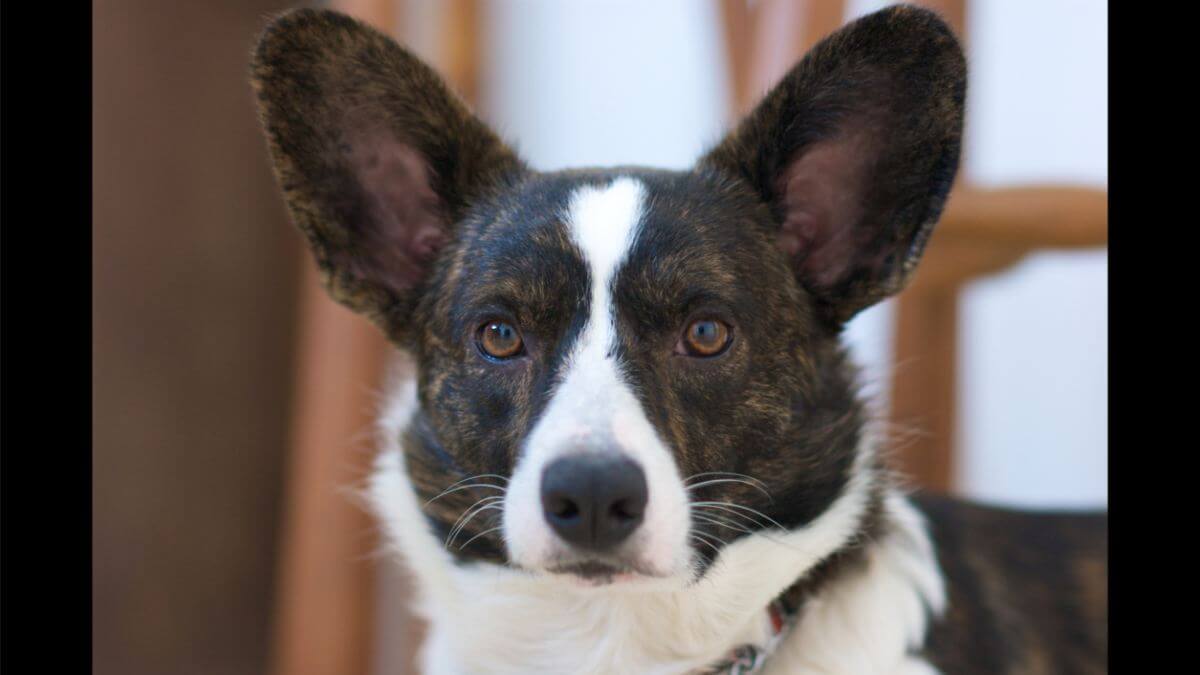
Discover the rich history and versatility of the Cardigan Welsh Corgi, a beloved all-purpose farm dog with ancient origins.
Kathy Schwabe
The Weekly Brief
The best of SHOWSIGHT editorials, weekly wins, and breeder commentary — delivered to your inbox every Sunday morning.
This article was originally published in Showsight Magazine, May 2014 issue.
Origin & History
The origins of the Cardigan Welsh Corgi are somewhat hidden in the mist of the Welsh hills. We know that dogs of the same essential body structure were recorded as early as 2500 B.C. It is believed by some that the Neolithic Man, who arrived in the area we now know as Great Britain in the post-glacial age, brought with him long-bodied, low-to-ground droving dogs. The Cardigan is descended from the Teckel group of dogs and is most closely related to breeds such as the Dachshund and the Basset Hound. By comparison, the Pembroke Welsh Corgi is descended from the Spitz group. The differences between the breeds in structure and temperament are easier to understand when you keep this basic fact in mind.
The Cardigan in Early Wales
The Cardigan, in his homeland, was a multi-purpose dog. He helped the farmer move the small, hardy Welsh cattle on unfenced pasture; he acted as a nanny to watch the children while the parents worked the fields; he kept the grain stores free from vermin, and he guarded his family from intruders at night. The Cardigan was called Ci Llathaid, which translates to “by the yard,” referring to their measurement of an average of 101.5 cm (40″) long from nose to the end of their bushy tails. The Cardigan Welsh Corgi was a larger, longer, heavier-boned dog than the neighboring Corgwyn, the Pembroke. He often had dropped ears and was found in brindle and merle colors, as well as red and sable.
Winds of Change
By the late 1800s, the winds of change had blown across Wales. There were far fewer cattle, and farmers were raising more sheep. Fences were built, and common pasture land was disappearing. The Cardigan, which excelled at driving cattle to market, now had to learn new skills such as fetching and penning stock. To meet this need, farmers bred their Cardiganshire Corgwyn to the Brindle Herder, or Welsh Collie, and eventually to the Pembrokeshire Corgi. The development of both Corgis continued—the two breeds were interbred into the 1920s. In 1925, the first meeting of The Welsh Corgi Club was held, and the breeds were established as two varieties of the same breed. In 1934, The Kennel Club of Great Britain separated the breeds into Welsh Corgi, Pembroke, and Welsh Corgi, Cardigan.
Coming to America
In 1931, Roberta Bole became captivated by the Cardigan Welsh Corgi while visiting friends in England. Upon her return to her home in Boston, MA, she welcomed the first Cardigans to the US; a female named Cassie and a male named Cadno. In 1933, we had our first AKC Champion, “Megan,” and we celebrate this event at the CWCCA National Specialty with the “Megan Competition.” The American Kennel Club granted the CWCCA Member Club status in 1935, and we subsequently held our first National Specialty in conjunction with the Morris & Essex Dog Show in 1936. The Best of Breed winner was Ch. Megan! The Cardigan was moved from the Non-Sporting Group to the Working Group, and finally to the Herding Group in 1983. In 2006, the breed name was officially changed from Welsh Corgi, Cardigan to Cardigan Welsh Corgi—further identifying the breed as separate from the Pembroke Welsh Corgi.
The Cardigan was slow to gain popularity and recognition both in and out of the show ring. It took 40 years to go from our first AKC Champion to our first AKC Best in Show—that honor being awarded to Ch. Springdale Droednoeth in 1973! History was made again this year, as we celebrated Ch. Riverside TellTail Coco Posh being awarded Herding Group I at Westminster Kennel Club!
Undoubtedly, the Pembroke Welsh Corgi’s rise to popularity was fueled by the Royal Family’s sponsorship since the 1950s. The Cardigan’s increase in popularity has been slow but steady. The breed has many devoted breeders and enthusiastic owners. The Cardigan Welsh Corgi Club of America is committed to protecting the future of the breed, supporting its members, and educating Judges. The Cardigan Welsh Corgi is enjoying success and recognition in every venue; their humble beginnings as an all-purpose farm dog serve them well for owners who truly want a dog that can do it all, and do it well!
Dogs in the Media
The 151st Westminster Kennel Club Dog Show heads to Netflix in 2027, with live coverage from Madison Square Garden and the Javits Center.