Members

George Wright
The Weekly Brief
The best of SHOWSIGHT editorials, weekly wins, and breeder commentary — delivered to your inbox every Sunday morning.
photos provided by author
What defines a terrier? It’s their temperament. Terriers are smart, independent thinkers. They stand their ground and they won’t back down. The people who show them are the same.
The work that goes into conditioning and presenting a terrier is unlike that of almost any other breed. I think much of the reason we are seeing a decline in terrier entries is that people don’t want to do the work that is required to have a terrier in proper condition.
Nobody can show a dog like a dog can show himself. When done correctly with the appropriate breeds, sparring shows if a dog has true terrier temperament. I would like to see more judges bring them out two at a time and see if they look the other dog in the eye and won’t back down.
In the Group at Montgomery, there will be a ring full of dogs that are “showers,” using their ears, holding their tails up. (It irks me when people get down on the ground to hold a terrier’s tail up.) Every year, I look forward to seeing the final line up at Montgomery. It should be the best of the best in terms of what’s out there right now.
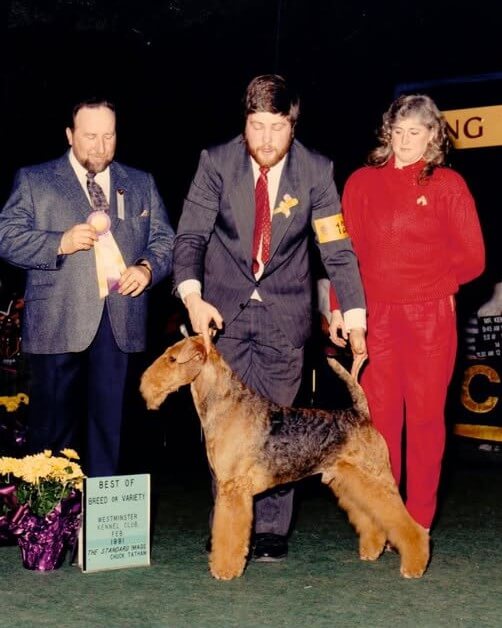
The Airedale Terrier is a labor of love—conditioning them for the show ring is a lot of work. They are truly the “King of Terriers,” as they are so often called. There’s Otterhound behind the breed and in Airedale, in the northeast of England, they were indeed used to hunt otter. Because of the hound bred into them, you can still sometimes see “hound ears” in this breed, which is incorrect. You want them carried to the side of the head, with the fold above the skull. There have been many Airedales I’ve really liked over the years—Ch. Jokyl Superman (handled in the US by Bill Thompson, and in the UK by Mary Swash), Ch. Bravo True Grit (handled by Ric Chashoudian) and Ch. Harrington’s Kantankres Kyna (handled by Alex Wheeler) are among my favorites.
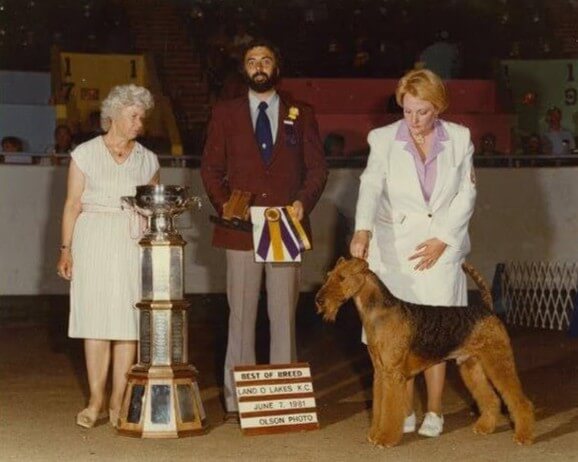
If coat work is outside of someone’s comfort zone, but they still want that smart, alert terrier temperament, American Hairless Terriers can be a great choice. This breed excels at many dog sports, in addition to participating in Conformation.
The American Staffordshire Terrier is a head breed. It can’t have a snipey foreface and cheeks that don’t have a lot of muscle. To me, the ideal AmStaff is more “bully” because the Standard does say they “should be stocky, not long-legged or racy in outline.” You want a good body, solid as a rock. They also need nice tail carriage; it can come up a little bit, but I like the tail to settle into a sabre shape. Contemporary AmStaff breeders have done a great job, both in terms of conformation and temperament. One of the best representatives of the breed was GCHP Roadhouse’s Life Of The Party, shown by Kim Rudzik.
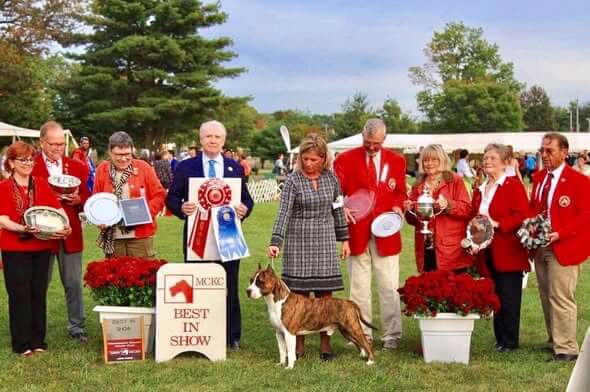
My father-in-law, Clifford Hallmark, helped write the Standard for the Australian Terrier and got the breed recognized in the US, along with Milton Fox. Clifford also finished the first Aussie in this country. Lois Hallmark, my mother-in-law, bred the first Aussie to win a Group in the US. The breed was developed in Australia to hunt snakes—this is a courageous breed. In order to do the job it was bred to do, the dog needs a long and strong head for its size. They also must be long in proportion to height, with a level topline. Texture of the coat comes with the color; in my opinion, the reds are better coated than the blue and tans.
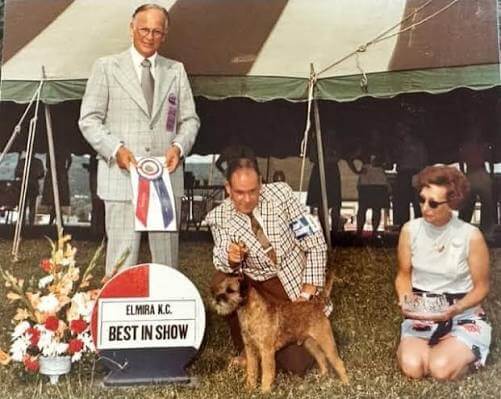
The Bedlington Terrier is in excellent shape in this country. There are a lot of breeders who have done a fantastic job with their programs, including importing the right dogs and mentoring a lot of new people. There are such strong entries, both in terms of numbers and quality. I do see a lot of judges examine this breed incorrectly. You want a deep brisket, but you should be able to get three fingers in between the front legs. And the other thing that is unique about Bedlingtons, which again, a lot of judges don’t look at, are the feet. They should have hare feet, as do Skye Terriers.
One of the best Border Terriers was Ch. Workmore Waggoner, who was shown to a record five consecutive National Specialty wins (1977-1981), by Clifford Hallmark. There’s something delightful about their expression, and the easy-to-maintain coat makes them attractive. One of the hallmarks of the breed is the “otter” head. I like to see the tail carried slightly above the level of the back. As judges, we’re required to span the chest and check the “pelt” to see that it is thick and loose fitting. The Standard says that in the field this breed is “hard as nails” and, in my experience, that is true.
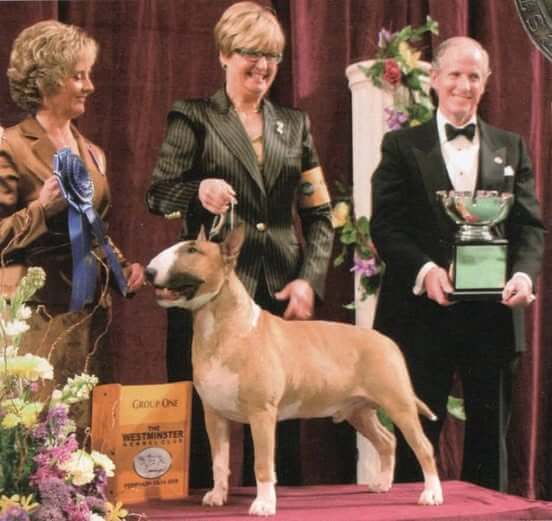
In both varieties of Bull Terrier, you’re looking for a level topline and good tail carriage—ideally level with the back. And of course, that distinctive egg-shaped head that is the hallmark of the breed, with a triangular-shaped eye. These are wonderfully muscular and powerful dogs that have a sweet disposition. Ch. Rocky Tops Sundance Kid, who was handled by Kathy Kirk to his Westminster Best in Show win, is probably my favorite Bull Terrier of all time.
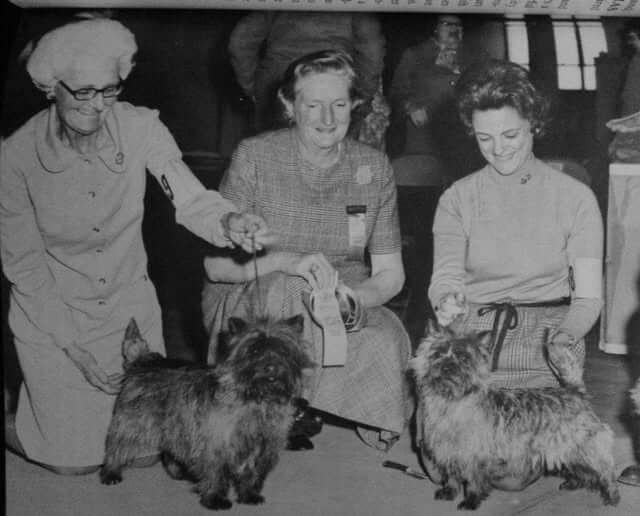
A Cairn Terrier was bred to be able to run over mounds of rocks, called cairns. So, you don’t want Cairns to be too short in leg. The thing that stands out to me today is the variation in overall size and length of leg; some are too short, in my opinion. I want a wide skull, but I don’t want to see a cat-like face with no foreface and no stop. The head should be wider than long. And I like to see nice small ears. The front and back ends of most Cairns you see in the ring these days are very good, and they have nice level toplines. One of my favorite Cairns was Ch. Cairnwoods Quince, a four-time National Specialty winner, who was owned and handled by Mrs. Taylor Coleman.
The Cesky Terrier is not like other terriers in so many ways. They should have a soft coat with long furnishings, and they are clipped. They also have a rise to their topline, and they don’t have a typical terrier temperament—they are a very calm breed.
I love the Dandie Dinmont Terrier. Those big, dark, round eyes with that lovely soft expression. But they are really bold, determined hunters. Once they get their eye on a rat, they can really cover ground. Of course, the Dandie has that unique curved topline, like an S-shape, but they are solid and have a lot of muscles in the back.
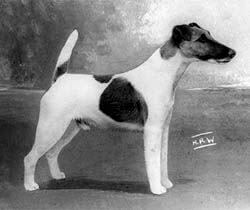
Fox Terriers are the crème de la crème of terriers. The difference between Smooth Fox Terriers and Wire Fox Terriers is, of course, the coat. Both have dense coats, and while the Smooth’s coat is harsh, it does not have the hard, wiry texture of a Wire’s coat. Both Fox Terrier Standards say, “He should stand like a cleverly made hunter.” That refers to a hunter horse: a strong foreface, a lot of neck, good layback of shoulder, and a short back. When you run your hand down the back of the neck, you just feel between the shoulder blades; you should be able to fit two fingers between those blades. That’s how you know they have really good layback. The back has got to be in proportion to the size of the dog. If they’re too short, they don’t move right. If they have the correct front, you don’t see any break in the leg from the side; it’s like a pendulum, back and front, with all the drive coming from behind. There should be a moderate bend at the stifle—not overdone, with too much bend. I like a nice, short hock; that’s so they can push ahead and those front legs come straight out. They also have to have that keen look. It’s “the look of eagles,” that piercing look, with a round eye. UK Ch. Watteau Snuff Box, handled by Mary Blake, was a Smooth that left a big impression on me when I was young. Clifford Hallmark showed several great Wires that I was lucky enough to spend time with, including Ch. Harwire Hetman Of Whinlatter, who was No. 1 Dog All Breeds in 1977.
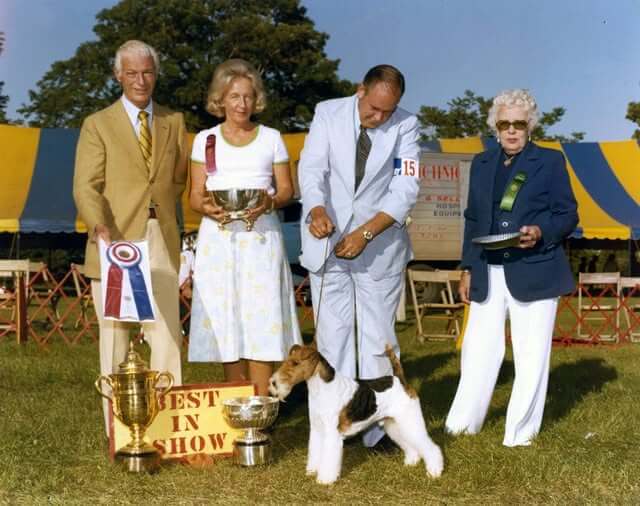
The Glen of Imaal Terrier is a very old and unique breed, yet it seems like it took forever to recognize them in this country. This breed is a lot of dog for its size. Everything you want in most other terrier breeds; you don’t want in a Glen. They’re not an overly groomed breed, or they shouldn’t be. You want a powerful, strong head, bowed forelegs, and a slightly rising topline.
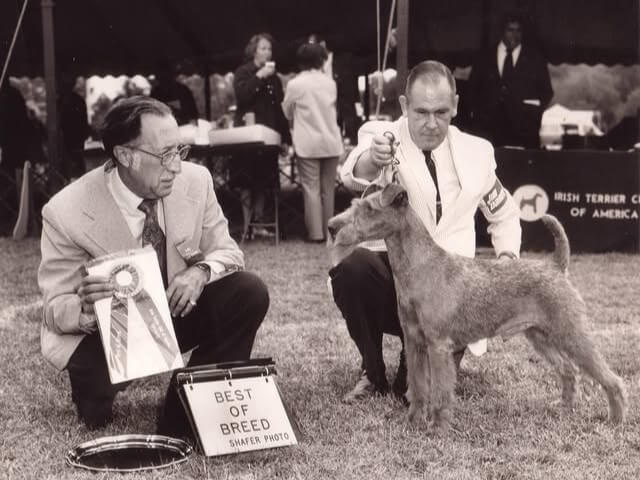
When judging Irish Terriers, in addition to looking for overall breed type, I’m paying particular attention to color, head, and temperament. Everybody wants them to be bright red, but an Irish can be wheaten; they can be all shades of red. The Standard says the head is “long,” but not long to the extreme, which results in a weak foreface. The Standard also says the skull is “narrow between the ears,” so a lot of people read that as it’s got to be a narrow skull. No, it’s saying that because of the very high-set ears, the space from ear to ear should be narrow. The Irish has a flat skull and the highest-set ears of any terrier. The back must be strong and straight, free of a dip behind the withers. This is not a short-backed breed and there should be a slight rise at the rump near the loin. The topline falls away slightly, but the tail is high set. Irish will never back down from anything—that’s why they call them the “daredevil.” Ch. Tralee’s Rowdy Red, handled by Bobby Fisher, was one of the greatest Irish of all time, as was Ch. Carris’s Watch Me, handled by Clifford Hallmark.
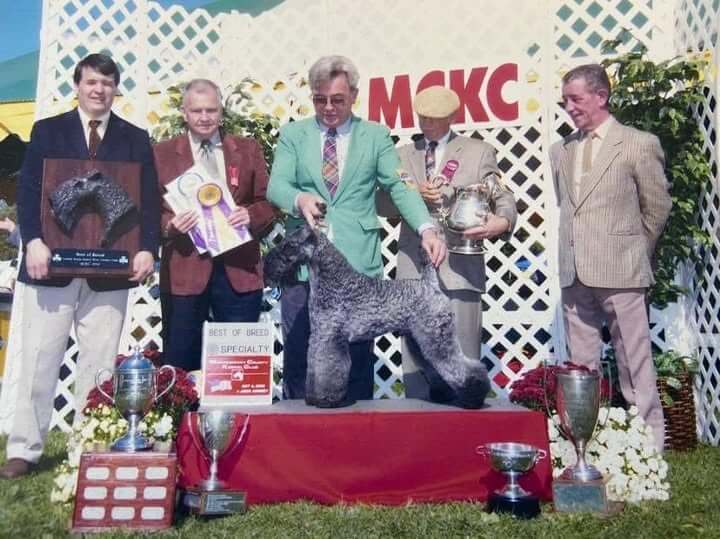
The Kerry Blue Terrier is really an all-purpose farm dog. They’ll kill vermin, they’ll herd cattle and sheep, they’ll work to the gun, and they won’t let a stranger in the door. I can tell you from experience, they will also help raise your children. What other breed can do all that? The first things I’m looking for in a Kerry are correct coat and color. Coats used to be soft, silky, and wavy, but they’ve changed the Standard and now it says, “soft, dense and wavy.” They took the silkiness out, so now many Kerry Blues have a harsh, brittle coat, which you can trim easily and sculpt a beautiful picture. I’m concerned that a lot of people think that’s okay. The Kerry should have nice length of head and a flat skull, with the ears broken just above the skull, not up high. The breed is square, with a short back and straight front, and when they move you want to see them driving from behind. In addition to incorrect coats, I see a lot of poor tail carriage and overly aggressive dogs in the ring today. I’m lucky to have gotten to own and handle some truly great Kerry Blues in my life, including Ch. Hallsblu Royal Flush and GCHG Class Act By Hallsblu.
To a layperson, the Fox Terrier, Lakeland Terrier, and Welsh Terrier all look similar. The Lakeland is the smallest of the “long-legged terriers” and the narrowest. While the movement of these breeds may be similar, their heads are entirely different. The Lakeland’s head is lean, but not as lean as a Fox Terrier’s head. The Lakeland should have the same proportion of skull to foreface and you want a strong muzzle. The Lakeland also has an intense expression. The ear carriage is slightly different than a Fox Terrier’s; they should break just above the skull. I think a lot of Lakelands today have ear sets that are too high. Ch. Stingray Of Derryabah, handled by Peter Green, is still one of my favorite Lakelands.
One of the unique features of the Manchester Terrier are their markings—the tan “rosettes” on the chest, the “thumbprint” on the forelegs, and the “pencil mark” on the feet. However, these markings aren’t more important than type. They should have a nice clean, wedge-shaped head, with a strong foreface and powerful jaw. I want a lovely arched neck that blends into the shoulders. The topline should have a slight, subtle arch—you don’t want a roached back. Tails are tapered and should be carried no higher than the back.
The Miniature Bull Terrier is a well-built, muscular breed. Temperament-wise, they are very determined, but steady. They should be square in outline. Because they truly are supposed to be a miniature version of the Bull Terrier, size is very important. They should not be over 14 inches. Being oversized is not a disqualification, but in my opinion it should be, as we see many that are too big.
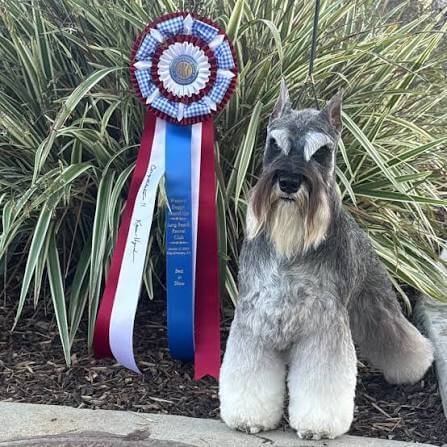
The Miniature Schnauzer is really popular both as a companion and in the show ring. I like them to have good body and bone; this breed does have a size disqualification (under 12 inches and over 14 inches), but I very seldom see one that is oversized. They should have a short back, with a big spring of rib. You don’t want a long neck, but a strong one that blends into the shoulders. When it comes to heads, most have nice flat skulls, but could use a stronger foreface, in my opinion. And you want a good, hard double coat, which most these days do seem to have. The recently campaigned GCHS Carmel Mr. Joe Adamis, who was handled both by his owner, John Constantine, and Jorge Olivera, was a lovely example of the breed.
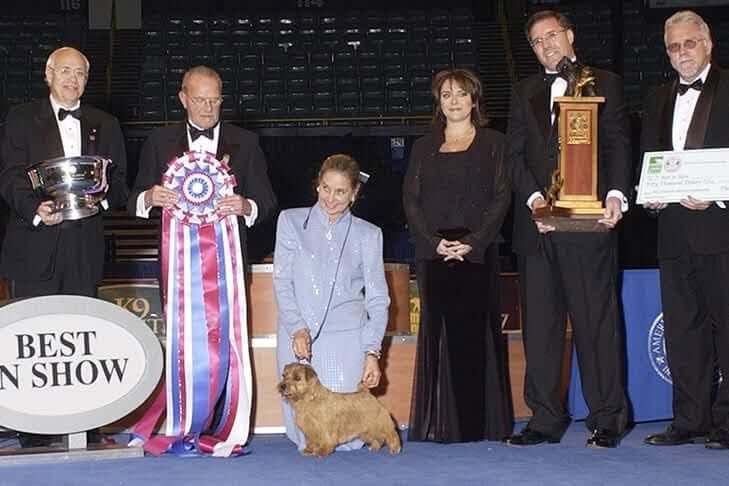
At one time, the Norfolk Terrier and the Norwich Terrier were the same breed. They had both drop and prick ears, and they were interbred. It’s a shame that there aren’t the same number of devoted breeders in Norfolk today as there are in Norwich. Of course, the Norfolk now have drop ears only. You want small ears that break level with the skull and are carried close to the head. Most Norfolks you see today do have good ears. Another distinction between the two breeds is in the length of body. In Norfolks, you want moderate length. You don’t want them too short-backed (gone are the days of a too-long Norfolk!). The breed should also have a keen expression. The muzzle should be strong, wedge shaped, and about one-third the length of the skull. I do think you see some Norfolks today with too short a muzzle, which has in turn led to bad bites. There are some very nice Norfolks being shown at the moment, and of course, Ch. Cracknor Cause Celebre, handled by Beth Sweigart, was really one of the very best—she put the breed on the map.
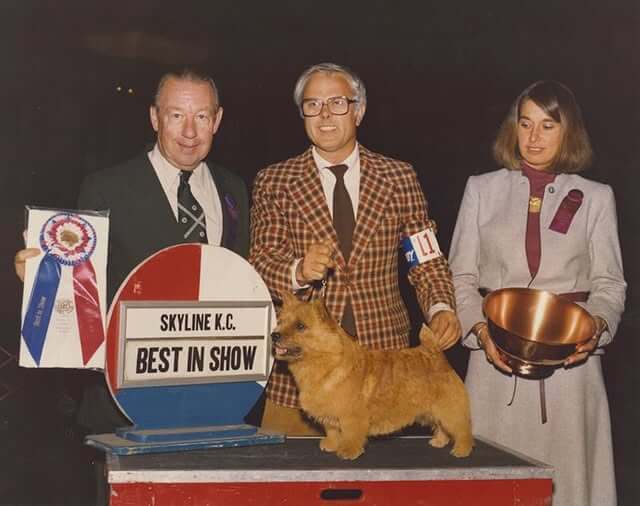
There are a lot of nice Norwich Terriers out there and I think this breed is in good shape at the moment. In Norwich, you want a moderately short back. But if they become too short, they don’t move right—they get that little hop in the hindquarters. Like the Norfolk, some of the heads on the Norwich have gotten too “cute.” If you look back at old photos, they’re not as foxy looking today as they once were. Ch. Thrumpton’s Lord Brady, handled by Peter Green, was a really great example of the breed.
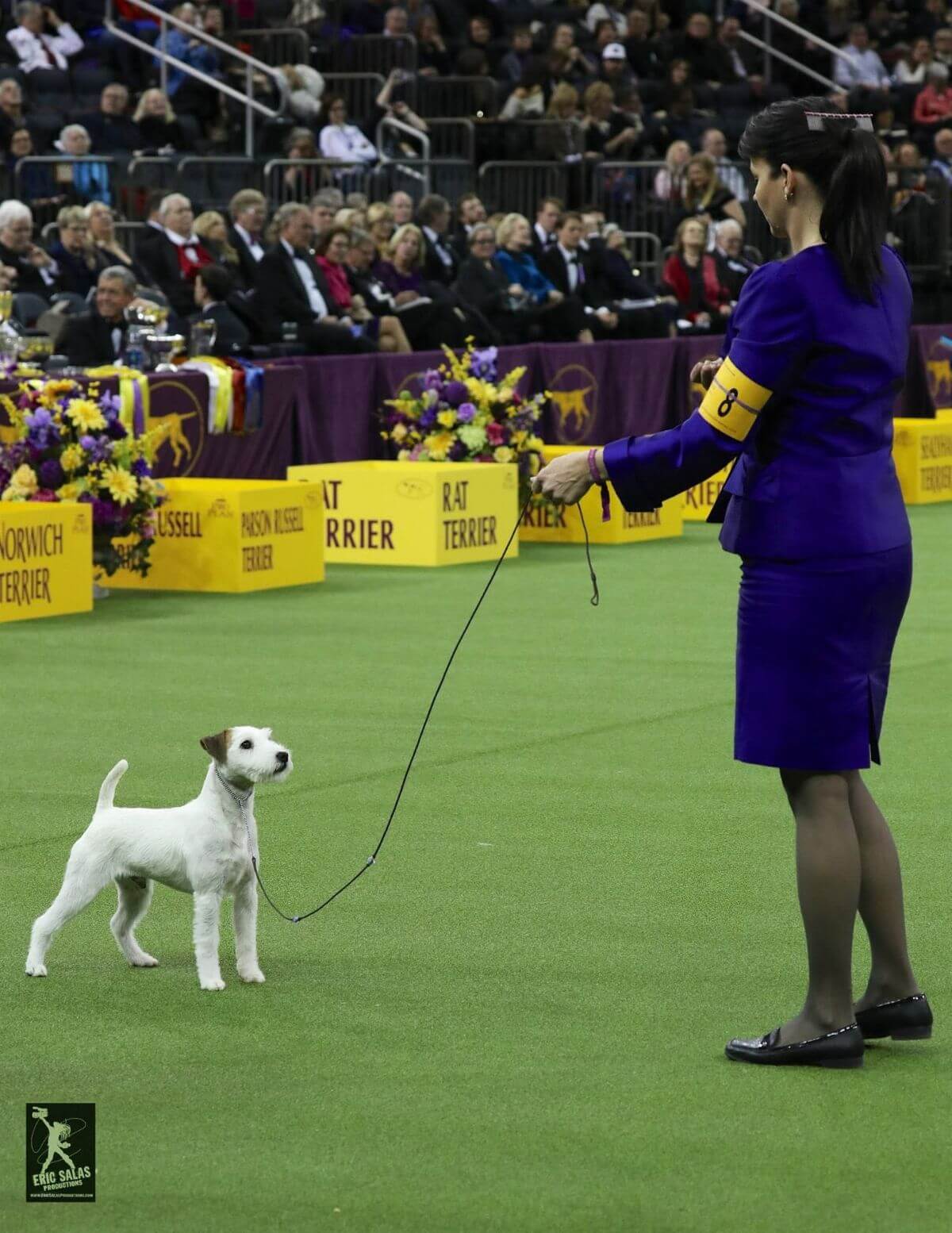
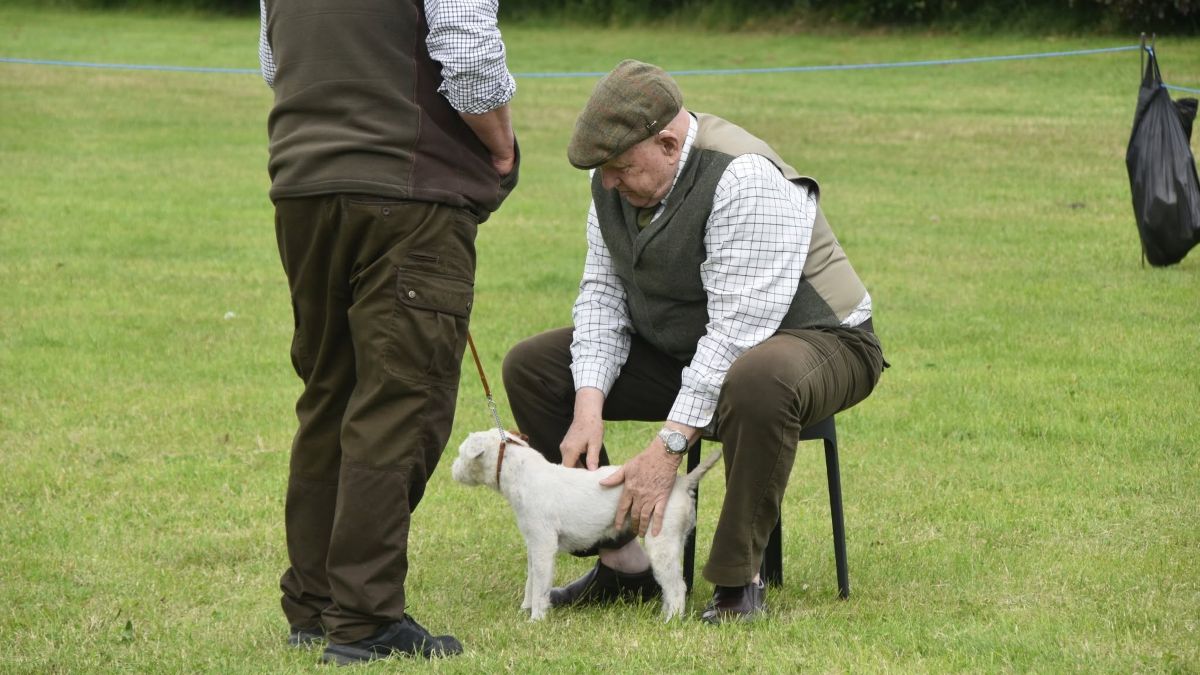
The Parson Russell Terrier is an approximately square breed. They do have a size disqualification—they must measure 12-15 inches at the withers. I rarely see one that I think measures out. Parsons should be spanned, like Russells and Borders, to ensure a flexible chest that allows them to go to ground. I like a nice head on a Parson, with a dark, almond-shaped eye and small ears, level with the skull or very slightly above, carried close to the head and pointing to the eye. They must have a weatherproof coat, which can be smooth or broken, and they must be predominantly white. This is a great breed for people who truly want a working terrier—they are athletic and great hunters. One of my favorite Parsons was GCHG Brywood Heluva Ride, handled by Dana Bryson-Benn.
The Rat Terrier is a very versatile breed—bred to kill vermin both above and below ground. They are athletic in appearance and can range from 10 to 18 inches. They are compact, with a well-sprung rib and level topline. You want a wedge-shaped head and V-shaped ears that are set on the top outer edge of the skull. They are easily trained, and for that reason, we see them succeed in many dog sports, in addition to participating in Conformation.
The first line of the Russell Terrier Standard tells you much of what you need to know about this breed—they are strong, active, predominately white, and should have a flexible body of moderate length and a rectangular profile. I do think you often see shorter-backed, square profile Russells rewarded in the ring, as well as Russells that would potentially measure in at over 12 inches (there is a size disqualification in this breed—they must be between 10 and 12 inches). I like to see the same dark eye and nice little pair of ears that I want on a Parson. Breeders in this breed are working hard to breed a better-moving dog, and it’s always a pleasure to have a good-moving one that has breed type in my ring. Temperament-wise, this breed is a delight, and they excel at many other dog sports outside Conformation.
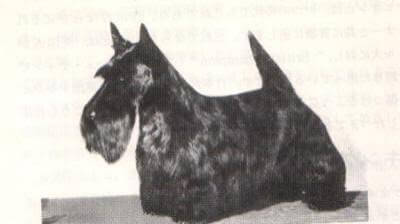
The Scottish Terrier is my “original” breed, and I feel very strongly about the line in the Standard that states: “No judge should put to Winners or Best of Breed any Scottish Terrier not showing real terrier character in the ring.” If only more terrier Standards contained this statement. It also says, “short, strong loin.” It doesn’t say short back, and I believe a lot of people misinterpret that. Scotties have barrel ribs—they are very well sprung. I like to say a Scottie should be like a table with a leg at each corner. You want a big back end on them and very powerful, muscular thighs. When a Scottie moves, he comes right at you because there’s a lot of chest, and he drives with the hind legs moving out. The tail set is really up, carrot-shaped and thick—I don’t like a skinny tail. Ear placement is also important; you want them high up top. For me, placement is more important than size. Scotties can be black, wheaten, or brindle, and on the whole, the brindles are better coated. My favorite Scottie of all time is the dog that made me fall in love with the breed and acquire my first Scottie at 12 years old: Ch. Bardene Bingo. I was lucky to get to see him in person in the UK, before he went to the US.
Like the Scottie, I want a Sealyham Terrier to have a leg in each corner of “the table.” I want a prosternum, and I don’t like them too short-backed. It says “short-coupled” in the Standard, but to me, a Sealyham should be moderate, with a great big powerful back end. I like to see them drive and cover ground. I want a good rib cage on them and a moderately short loin as well. Ears should be folded level with the top of the head. You want a long, powerful head that is in balance to the body. I do find that some Sealys, when you get under the hair, have a weak foreface.
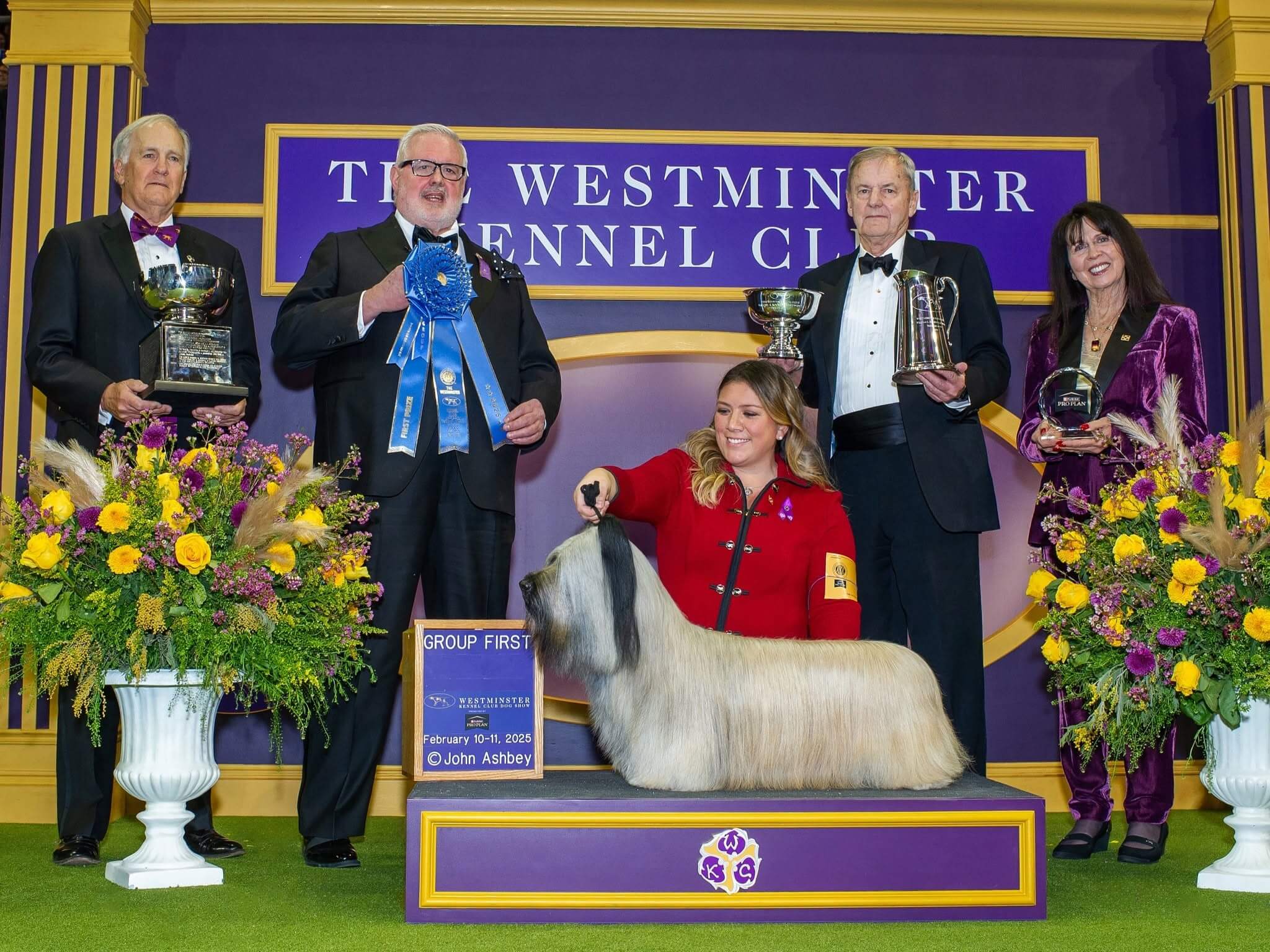
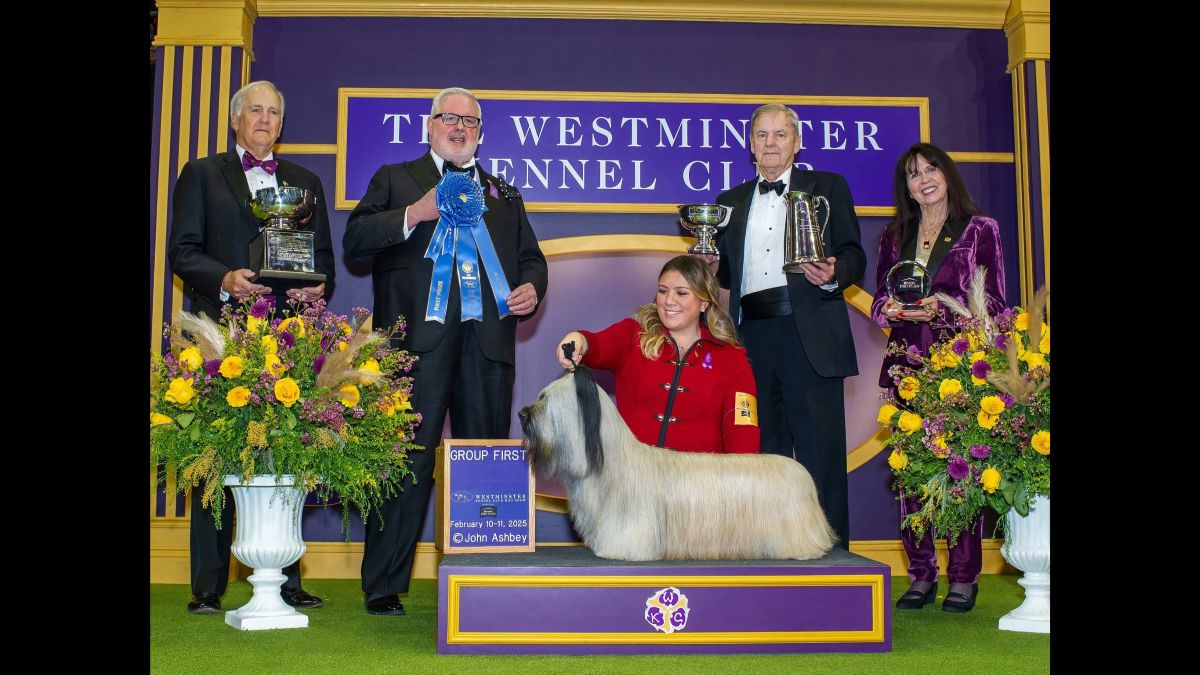
The Skye Terrier is a unique and elegant breed. They are, first and foremost, long, low, and level. You want a strong, level topline and a nice tail carriage. I don’t like a high tail. The legs are short, muscular, and straight. Like the Bedlington, the Skye has hare feet. They can have a drop ear or a prick ear, but I look for a long head with a very strong muzzle and a really strong bottom jaw. They have a lot of coat, which is there to protect them from the elements on the Isle of Skye, and they can come in many colors, from cream to black. Recent Montgomery Best in Show winner GCHS Gleanntan’s Sure Shot Greyjoy, owner-handled by Antoinelle Vulpis, was a beautiful example of the breed.
Soft Coated Wheaten Terrier breeders in the US have improved the breed in several ways, but I believe the old Wheatens, that came from Ireland, had a lot more substance to them. The Standard says “moderate,” but nowadays some of them are too fancy: short back, long neck, over-angulated back ends. Most of the dogs today have good level toplines, nice tail sets, pretty good fronts, and nice heads—good ears and expressions. But I think rear movement and, in particular, the coats leave a lot to be desired. They should be soft, but not woolly; and the Standard says “silky” and “wavy.” Some call that “Irish-coated.” I call that a correct coat. You do not see many coats these days with a wave in them.
I love Staffordshire Bull Terriers. They are smart, affectionate—great all-around dogs. The Staffy has a broad skull and a short foreface, with a defined stop and a lot of cheek muscle, and big teeth that meet in a scissor bite. They can have rose or half-pricked ears. I like a very muscular neck and a level topline. The legs are straight, but the feet turn out slightly. You want a well-muscled back end. I prefer a moderate-sized Staffy, 14-15 inches.
I have yet to see many Teddy Roosevelt Terriers, but they seem like wonderful companions. They are a strong, low-set, rectangular breed. Although they can hunt vermin both above and below ground, they are not a spanned breed like the Russell and some of the other breeds that go to ground. It will be interesting to see the first one in the Best in Show ring at Montgomery this year.
There are some very good Welsh Terriers in this country now, with good broad skulls and muzzles, and good bites. Thirty or 40 years ago, many had bumpy skulls and some of them used to be very short in head and neck. The Welsh should be square in appearance and have more rib and more substance overall than a Fox Terrier or a Lakeland. They are really spirited dogs.
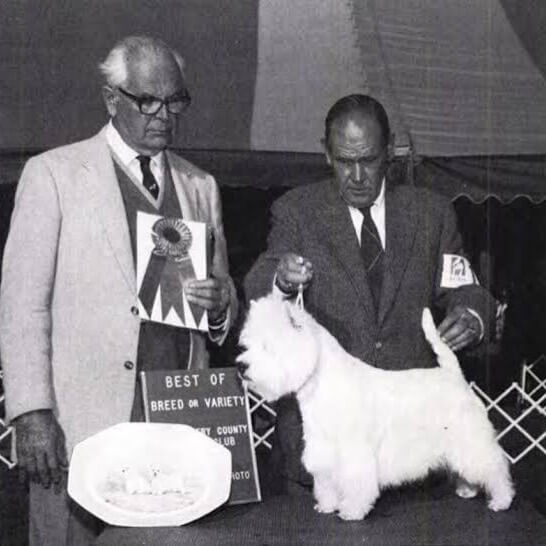
Unfortunately, my opinion is that many West Highland White Terriers we see these days have had the real terrier temperament bred out of them and instead have been bred for “cuteness.” This breed should have showmanship, a strong build, and be a powerful mover. When I judge Westies, I want a lovely head—broad skull with a slightly shorter (but not short) muzzle—and a beautiful bite with nice-sized teeth. A lot of Westies lack underjaw and have smaller teeth. I also look for pigment. When you look inside the ear, you want to see nice dark skin, and you want feet with nice black nails. One of my favorite Westies was Ch. Pagan Ghost, handled by Clifford Hallmark. He won the National Specialty twice and placed in the Group at Montgomery in 1985.
Anybody who’s interested in judging terriers should have to attend Montgomery. It should be a requirement to be passed to judge these breeds, in my opinion. With the majority of breeds holding their National Specialty that day, the quality is deep from the puppy classes all the way through to the specials. The judges really have their work cut out for them, as you have multiple outstanding dogs that day that are really representative of breed type. Not only do American breeders showcase the best of what they have that day, but we see quality dogs from Canada, Europe, and other parts of the world too. Every terrier person wants to win at Montgomery.

Meet the Judges
Polly Smith reflects on judging the Terrier Group at Westminster 2026, discussing entry quality, key placements, and her Group winner.