Members
Listen to this article
12 min
The Weekly Brief
The best of SHOWSIGHT editorials, weekly wins, and breeder commentary — delivered to your inbox every Sunday morning.
Recently, I was taken aback by a reality TV program where a guy stood up and said, “I’m dedicating my win to all the rescue dogs out there.” I thought, “Ugh, why are we dedicating it to the rescue dogs? Why can’t we dedicate that to all dogs? Why are you soloing out the rescue dogs?” Well, in Orlando next month, I’m putting on a breeder symposium with the AKC to encourage people to breed tried-and-true alternatives to rescues. And since November is the month for being thankful, I’ve started to think about the celebrations of purebred dogs and why we should all be grateful for the people who breed them.
As top breeders, we are inclusive when it comes to breeding. Over time, I have come to believe that you can’t be a dog breeder and not support those who breed dogs in any ethical capacity. We believe in dogs and we love all dogs. We don’t care if it’s nine generations of our own breeding or a mixed breed running the street, we care about that animal. We want the best life for that animal. Is he healthy? Is he abandoned? Does he need food? Our concern is about the welfare of the animal more than its breed. And though we are all invested in the canine species, our primary focus is on purebred animals that are highly researched and planned. We use thoughtfully laid-out formulas to produce our animals, but this doesn’t diminish how we feel towards an animal in need. We just recognize the obvious advantages to purebred dogs with all the documented facts of their genetic makeup. We appreciate a breed’s prescribed personality traits, its tailored general appearance, its general health and wellness, and we seek a life of companionship with an animal that is bred and “designed” to protect or serve, or simply to be our best friend. That’s a lot to be thankful for.
Over time, there has been a lack of messaging on why we should all be grateful for purebred dogs. Let’s be thankful for their service to communities in firehouses, in airports, in hospitals, and in our court systems. The purebred canine team has been there. For years, the mantra was our purebred dogs are simply “better than those mixed-breed dogs.” A new way to think of this is that our tested and predictable animal is better than the untested and unpredictable. In today’s world, this is a more accurate and fair statement. However, both breeding paths result in dogs that deserve food and housing. It is time to remind the general public that “rescuing” an animal is solving a problem for something that went wrong: a home that fell apart; a financial hardship; a dog that was no longer unwanted and abandoned to the street. I mean, there has been a black-market rescue industry created in this country. Until very recently, entities in this country have been importing “rescue” dogs for profit.
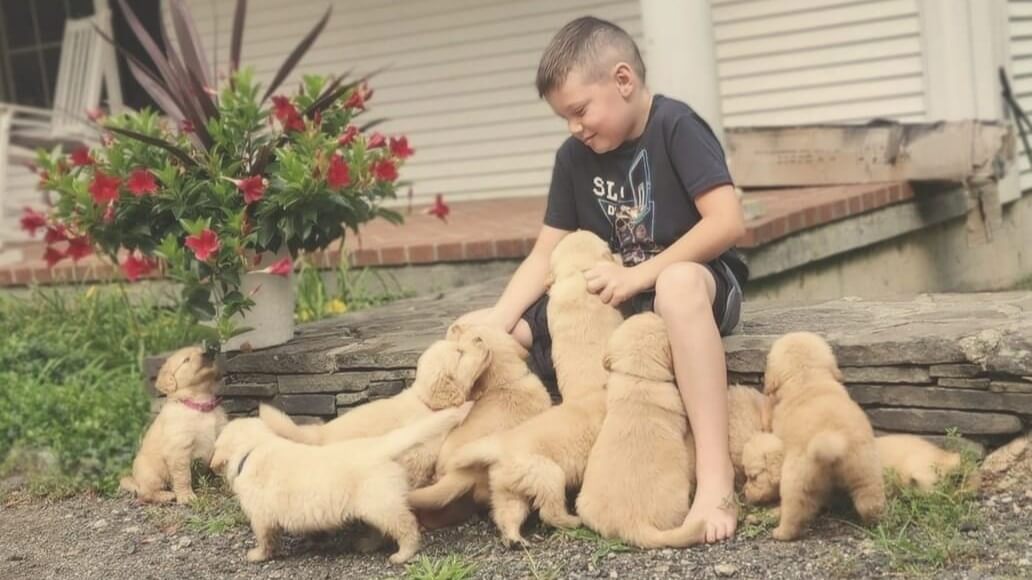
Part of my mantra for 2026-2027 is: If we as breeders don’t continue to breed and provide quality animals, we will continue to diminish our message over the rescue option that pulls at the heartstring of every individual dog that “just needs 53 cents a day to be fed.” (Cue Sarah McLachlan music now!) We will continue to lose our positive messages about our dogs that are of higher quality with planned, known parentage. With our dogs, people can meet the parents. They can experience the litter. They can sit down on the floor and have the puppies crawl all over, instead of having to visit the sort of jail mentality of a shelter. And while we are empathetic and sympathetic to those dogs, we must not diminish our value as breeders because of them. What we need to speak on is the error of the way those shelter animals were produced or acquired. We need to make sure the dogs leaving shelters are spayed or neutered upon adoption, and we need to control the interbreeding of dogs so that the purebred supersedes the “fad-bred” dog. We need to reclaim the educated decision that encourages people to invest in quality animals for the future of their family, so they have a reliable companion to enjoy for the next decade-plus. We need to afford them the opportunity to have a quality dog that is tailored to the environment they live in. A dog that will go along with them on a boating trip. A dog that will run two miles a day with them. A dog that will protect their family when someone breaks into their home at 3 a.m. Or a dog that will encircle a young child against a predator. There are so many positives to researching and purchasing a purebred dog versus adopting the fad or rescue dog. There are so many options for finding that perfect fit; purebred dogs that are designed to please and satisfy any buyer’s desires.
Rescue is risk. To rescue something is an emotional act: “We’re going to physically go and pull this animal out of the depths of despair and bring it into our happy home.” There are, however, so many unknowns involved with taking a rescue into your home. It’s completely unpredictable. Anything can happen.
It’s everything established breeders preach against, and yet we do understand why it is done. We understand that people want to provide safe shelter for a dog in need. We would want that for any animal. But as conservation breeders, we want there to be fewer of them. We don’t want them to go away, we just want less of them produced, and we don’t want to have to finance another high-priced rescue drama. We want better welfare for all dogs, but we want the public to realize there are other options to rescue, and if you want predictable and reliable you’re in the wrong arena.
When someone takes in a rescue, it is a lost opportunity for purebred dog breeders. Families typically have one dog at a time, and when they adopt without awareness, breeders of purebreds can lose one decade of that buyer’s availability to the rescue dog. We can only hope that in the 8-12 years they have that dog, they learn to recognize the qualities in that animal from its purebred parents. That the wiry coat they like is from the Airedale father and not the Cocker Spaniel mother. And that when they Google “wire-coated breeds” they realize what they really want is a Wirehaired Vizsla. That’s what they were looking for all along. They’ll say, “I think I’ll get a Wirehaired Vizsla.” And so, we win that person back through a well-planned, educated purchase that’s reliable with fewer risks. This also relies on conservation breeders remaining active, marketing their efforts and having future breeding plans to fill that market need.
People who are “in the market” for a dog often begin their search locally, so we should be asking ourselves: What’s my local club doing to promote breeders in the area? Unfortunately, many are not doing a thing. Many clubs don’t even have a footprint on social media, so if someone Googles “dogs near me” they’re finding Fluffy Friends Rescue, not a local kennel (likely because of the “breeder shame” of advertising puppies). It is important for all-breed clubs to have visibility on a local breed referral board. Clubs should have someone locally who will respond to all inquiries. “There isn’t a breeder close by, but there is one in Wisconsin and they’d be happy to talk to you.” Or “Here’s the parent club contact information.”
Most puppy buyers don’t even know what a parent club is, but they do know there are seven dogs at the pound that allegedly are being put down “tomorrow,” and maybe they should just take one of those. Sadly, the market today is not always encouraging people who are willing to wait. Most are shopping for “off-the-rack” and need it now!
Events like AKC’s Meet the Breeds in New York City are great for introducing purebred dogs to the public, but their success doesn’t mean every breeder can’t—and shouldn’t—be doing some local promotion routinely. Local all-breed clubs need to keep the community aware of their presence by promoting their club and letting people know when and where their events are happening: “Here’s an opportunity to come and meet the Xolo, meet the Shiba Inu, meet the Leonberger!” I think it’s very important for purebred dog breeders to acknowledge what we’re up against in terms of promotion and the “adopt don’t shop” mindset. “Shop don’t adopt” is what we should be saying! Make an educated decision when buying your next dog. Let breeders not recoil from the next breeding out of fear that there are not enough homes. We know the homes are out there and that buyers are looking; they just don’t know where to find you. The rescue alliances are able to place all of their dogs, and you can too. Don’t give the rescues a clear path to your potential buyers. Stop letting homes be filled by the rescue dogs in the community. It is time to learn how to reach the buying market.
The reality is that those of us in the purebred dog community have an obligation to breed, and that obligation extends to the promotion of our individual breeds. We must let people know how they can find our quality animals. Your all-breed club should be a useful and viable tool for breeders to utilize when promoting purebred dogs, and it is my opinion that there is an obligation on the club’s part to do so as well. After all, that is why dog clubs were formed. Sadly, with the lack of affordable venues for dogs shows, those events have all too often been moved to centralized locations and lost the connection to the community they were to serve. We unwittingly cleared a path for people to turn to local rescue—because rescue is accessible. They don’t know about the Afghan Hound kennel nearby or the Poodles being bred in town because they’re not promoted locally. This is a downfall of clustering dog shows and not fulfilling the civic community role as the representative of purebred dogs in our areas.
For clubs that no longer hold their shows locally, there are other ways to connect positively with the public. Why not have a club meeting once a year in a local park where the public can attend? An open house meeting where members bring their dogs and provide a picnic lunch or a pizza party; something to grab the community’s attention, look for new members, and display the various breeds within the club so that people can learn a little bit more about them. It would fulfill the club’s obligation to let the community know it exists and it could also identify local homes for purebred dogs.
We can’t hide from this any longer. As breeders of some of the greatest dogs the canine colony has ever produced, from the healthiest foundations using the most current and up-to-date technology, it is time to reintroduce ourselves to the local buying market. It is time to show the communities what we have and why we are the best choice for including a dog in their families. We need to remind them of the dedication and forethought we take with each litter, the investment of time and emotion to produce our next generation. We need to work to include them as part of the story of our success, and show them the advantages of purposefully bred animals.
Breeders live a life of great gratitude for the success we have when producing that new litter of puppies. We celebrate the birth of our purebred dogs and we’re thankful for the lives created; the lives we planned and researched to share with homes near and far. Grateful for each one, and thankful for every moment we share with them.

Breeding with Intention