01/Overview
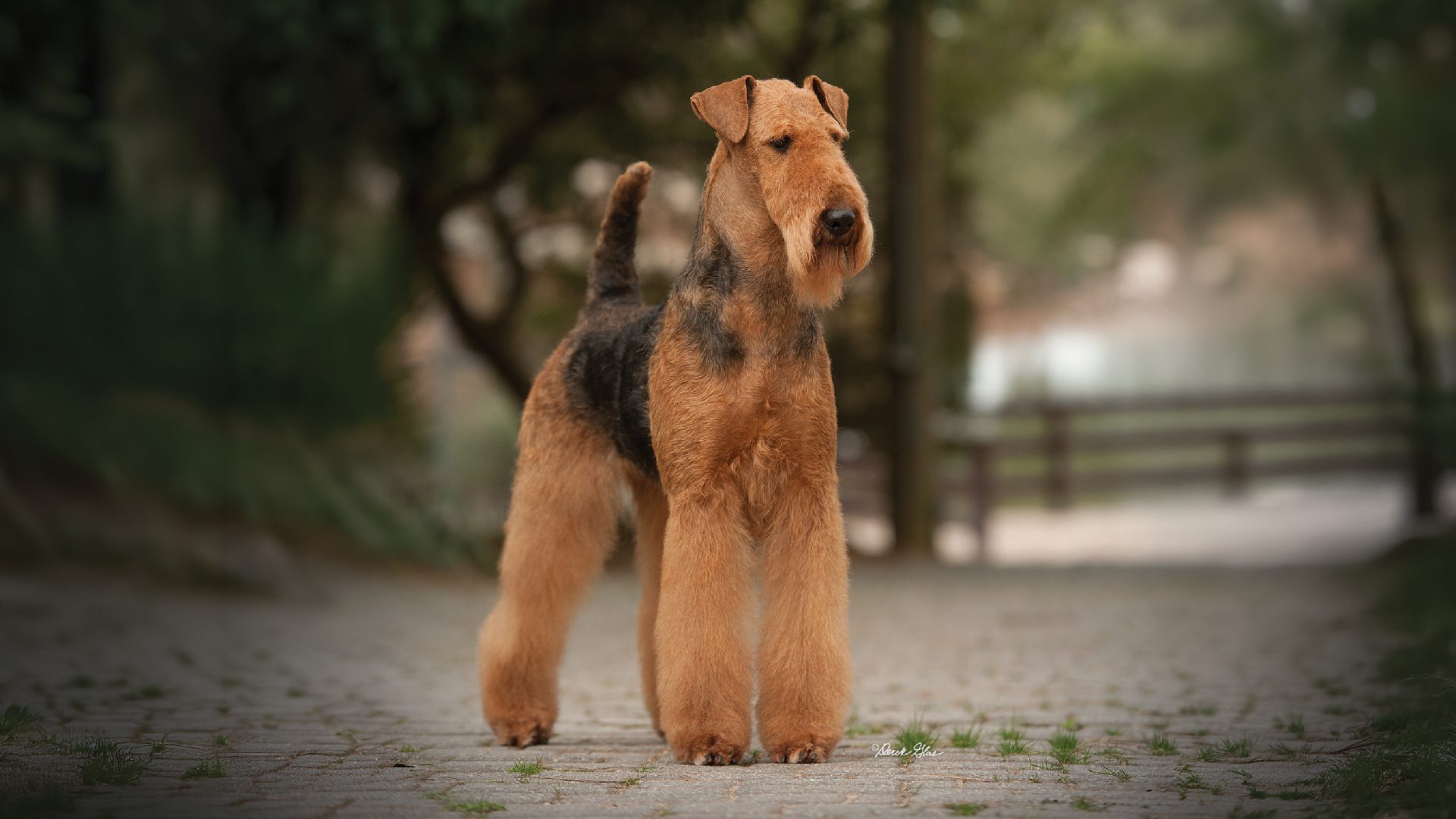
The Airedale Terrier is the largest of the terrier breeds and is known for its strong, athletic build, wiry coat, long head, and confident expression. Often called the “King of Terriers,” the breed is intelligent, courageous, energetic, and highly versatile.
Airedales combine the determination and curiosity of a terrier with the size and stamina of a working dog. They were developed for a wide range of tasks and remain active companions that often enjoy training, exercise, and dog sports.
Highlights
02/History
The Airedale Terrier originated in the Aire Valley of Yorkshire, England, during the nineteenth century. Local working dogs were developed to hunt along the rivers and farmland of the region, where they needed enough size, strength, and endurance to pursue a variety of quarry.
The breed was created primarily from the old Black and Tan Terrier and the Otterhound. This combination helped produce a dog with the determination and vermin-hunting ability of a terrier together with a stronger swimming ability, improved scenting, and greater size.
Early Airedales were used to hunt rats, otters, and other game around waterways and farms. Their versatility quickly became one of the breed’s defining characteristics, and they were also used for guarding, retrieving, and general farm work.
As the breed became more standardized, it gained popularity beyond Yorkshire. Airedales began appearing in organized dog shows during the late nineteenth century and were admired for their distinctive appearance, intelligence, and working ability.
The breed later proved useful in military and police work. During periods of war, Airedales served as messenger dogs, sentries, and working dogs capable of carrying information across difficult terrain.
The American Kennel Club recognized the Airedale Terrier in 1888 and placed the breed in the Terrier Group. The Airedale Terrier Club of America serves as the breed’s American Kennel Club Parent Club.
The Fédération Cynologique Internationale recognizes the Airedale Terrier in Group 3, Terriers, Section 1, Large and Medium-Sized Terriers.
03/Appearance
A mature Airedale Terrier stands approximately 23 inches tall at the withers, with females somewhat shorter, and typically weigh between 50 and 70 pounds.
Skull: The Airedale Terrier has a long, flat skull that is moderately narrow and gradually tapers toward the eyes. The head should appear clean, balanced, and free from coarseness.
Expression: The expression is keen, intelligent, and alert, reflecting the breed’s confident and attentive nature.
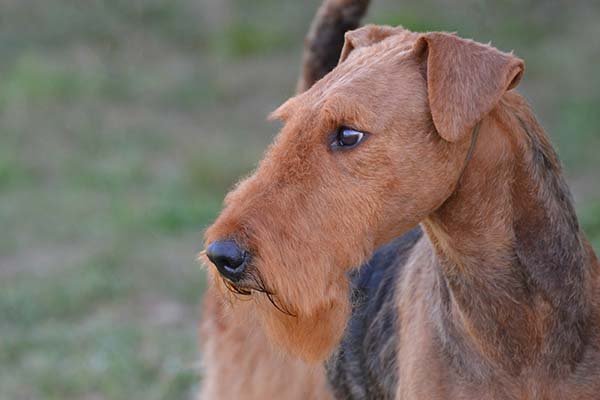
Eyes: The eyes are small, dark, and full of terrier expression. They should not appear prominent or overly round.
Ears: The ears are small, V-shaped, and carried to the side of the head with the fold slightly above the level of the skull. They should contribute to the breed’s alert and balanced appearance.
Muzzle: The muzzle is long, strong, and well filled under the eyes, tapering only slightly toward the nose.
Nose: The nose is black and well developed.
Bite: The Airedale Terrier has strong “vise-like” teeth that meet in a level or scissors bite.
The Airedale Terrier is a strong, muscular, well-balanced dog with a square, athletic outline. The body is compact, with a level back, deep chest, and enough substance to support endurance and active work without appearing heavy or cumbersome.
Bone is substantial but not coarse, and the overall structure should convey strength, agility, and stamina. The Airedale should appear sturdy and capable, with balanced proportions that reflect its history as a versatile hunting and working terrier.
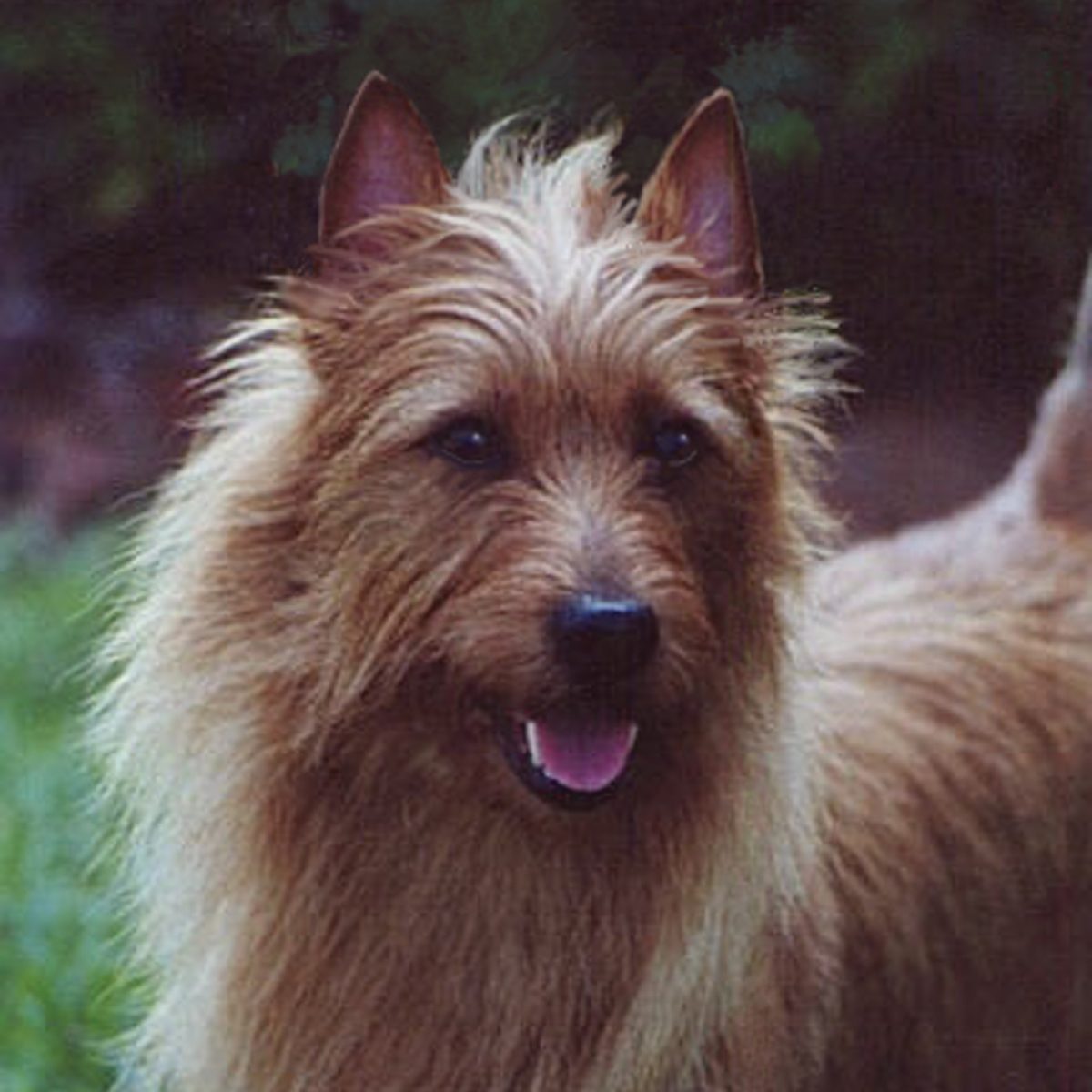
Texture: The Airedale Terrier has a hard, dense, wiry double coat with a softer undercoat. The outer coat should lie close to the body and have a straight or slightly waved texture without appearing soft or curly.
Standard Colors
Standard Markings
04/Consider
The Airedale Terrier is intelligent, energetic, confident, and highly versatile. Anyone considering the breed should be prepared to provide daily exercise, early socialization, consistent training, regular coat maintenance, and plenty of mental stimulation.
Because the breed was developed for demanding work, Airedales often do best with people who can provide structure, activity, and opportunities to engage the dog’s body and mind.
Interaction With Family
The level of affection a breed typically shows towards family members and familiar individuals.
Good With Other Dogs
The innate friendliness of a dog towards other dogs can depend on its breed.
Good With Young Children
The degree to which a breed will typically be patient with young children.
Amount Of Shedding
How much hair a breed typically leaves behind on clothes, furniture and floors.
Frequency Of Grooming
How often a breed needs brushing, bathing or a professional trim to stay in condition.
Amount Of Drooling
How prone a breed is to drool — worth knowing before you keep a towel by the door.
Openness To Strangers
How openly a breed tends to greet new people, visitors and strangers.
Protective Nature
How likely a breed is to alert you to — and stand between you and — anything unfamiliar.
Playfulness Level
How enthusiastic a breed stays about games and play well past puppyhood.
Trainability Level
How readily a breed takes direction and works with you rather than around you.
Barking Level
How much a breed uses its voice, and how readily.
Energy Level
How much get-up-and-go a breed brings to an average day.
Health
The Airedale Terrier is generally a healthy and active breed with a typical lifespan of 11 to 14 years. Preventive veterinary care, balanced nutrition, regular exercise, dental care, and maintenance of a healthy weight can help support long-term health.
The Airedale Terrier is intelligent, confident, energetic, and often curious. The breed tends to be alert and self-assured, with a playful side that can remain well into adulthood.
Airedales usually form strong bonds with their families and often enjoy being involved in daily activities. Their terrier heritage can encourage them to be independent and persistent, and quick to investigate movement, scents, or unfamiliar situations.
Early socialization is important to help the breed become comfortable with different people, dogs, environments, and everyday experiences. Clear boundaries and consistent handling can channel the Airedale’s confidence and energy into appropriate behavior.
Exercise Expectations
A healthy adult generally benefits from at least 60 minutes of activity each day, with many individuals enjoying considerably more. Exercise should include both physical movement and mentally challenging activities. Because of the breed’s strong prey drive and curiosity, off-leash exercise should take place only in securely enclosed areas. Activities involving scenting, retrieving, tracking, and problem-solving can provide particularly useful outlets for the Airedale’s working instincts.
Grooming Expectations
The Airedale Terrier can adapt to different living environments as long as it receives enough exercise, training, companionship, and mental stimulation. Its size and energy levels make access to regular outdoor activity especially important.
The breed often enjoys being part of family activities and may become bored or destructive if left without enough interaction or purposeful activity. Secure fencing is important because an Airedale may chase wildlife or investigate beyond the property line.
The Airedale Terrier usually does best with people who appreciate an intelligent, active, and independent companion. Consistent routines, regular exercise, clear expectations, and opportunities to use both body and mind help the breed thrive.
05/Puppies
Airedale Terrier puppies are energetic, curious, intelligent, and often very confident. They benefit from early socialization, consistent routines, positive training, and plenty of safe opportunities to explore, play, and learn.
An Airedale Terrier puppy should have a predictable daily schedule that includes regular meals, potty breaks, naps, play, training, and quiet time. A crate or secure puppy area can provide a safe place to rest and can also support housetraining.
Early socialization should introduce the puppy to different people, well-mannered dogs, household sounds, surfaces, vehicles, and unfamiliar environments. These experiences should remain positive and appropriate for the puppy’s age.
Training can begin as soon as the puppy arrives home. Short sessions can focus on name response, recall, leash walking, house training, basic manners, and impulse control. Because Airedales are intelligent and can be independent, varied and engaging lessons are especially helpful.
An Airedale puppy should receive a complete and balanced diet formulated for growth. Young puppies generally do best with several measured meals throughout the day before gradually transitioning to an adult feeding schedule.
Exercise should include supervised play, short walks, and gentle exploration rather than repetitive or high-impact activity. As the puppy matures, activity can gradually increase to match the breed’s high energy levels and athletic abilities.
Regular veterinary visits are important during the first year. Grooming routines such as brushing, combing, nail trimming, ear checks, tooth brushing, and handling of the coat should also begin early so that the puppy becomes comfortable with routine care.
06/Activities
Airedale Terriers are intelligent, athletic, and versatile dogs that often enjoy activities involving movement, scenting, problem-solving, and close cooperation with a handler. Here are some of the dog sports and activities in which Airedale Terriers may participate:
Obedience: Airedale Terriers can demonstrate focus, responsiveness, and reliable performance with a handler.
Rally: Rally Obedience combines obedience exercises with movement through a designated course and can provide both mental and physical stimulation.
Agility: Airedales can use their athleticism, coordination, and quick reactions while navigating obstacle courses.
Scent Work: The breed can use its strong sense of smell to locate specific odors hidden in containers, indoor spaces, outdoor areas, or vehicles.
Tracking: Airedales can follow a scent trail over varying terrain, making use of the scenting ability inherited from their working background.
Fast CAT: This timed 100-yard dash gives the Airedale Terrier an opportunity to use its speed and enthusiasm for chasing.
Conformation Shows: Airedale Terriers compete in Conformation Shows, where judges evaluate each dog according to the Breed Standard, including structure, movement, coat, expression, temperament, and overall type.
Trick Dog: Trick training provides mental stimulation and gives the Airedale Terrier an enjoyable way to use its intelligence and problem-solving ability.
Therapy Work: A calm, friendly, and well-socialized Airedale Terrier may participate in therapy visits to hospitals, schools, assisted living facilities, and other settings.
Canine Good Citizen: Airedale Terriers may participate in programs that evaluate everyday manners, social behavior, and reliability around people and other dogs.
Gallery
07/Standards
The Airedale Terrier is recognized by the world’s leading registries and kennel organizations, which categorize the breed into a specific Group based on its unique characteristics. This breed is recognized worldwide under the following Group designations:
The ideal Airedale Terrier is described by a Breed Standard that is approved by each of the world’s leading registries and kennel organizations. The Standards for this breed may be found in the following links:
08/Clubs
Airedale Terrier clubs support breed education, responsible breeding, health initiatives, Conformation shows, Performance events, and preservation of the Breed Standard.
Airedale Terrier Club of America: Founded in 1900, this is the national breed club for the Airedale Terrier in the United States and the breed’s AKC parent club.
Airedale Terrier Club of Canada: Established in 1970, Canada’s national organization for the Airedale Terrier welcomes breeders, exhibitors, and breed enthusiasts.
09/Rescue
Breed-specific rescue organizations help Airedale Terriers that have been surrendered, abandoned, or need rehoming. These groups may provide foster care, veterinary treatment, behavioral evaluation, and placement with an appropriate adoptive family.
Airedale Terrier Club of America Rescue Resources: The breed’s American Kennel Club parent club can provide rescue contacts, referrals, or guidance for Airedale Terriers needing placement in the United States.
Airedale Terrier Rescue and Adoption: A volunteer-based rescue organization dedicated to helping Airedale Terriers in need through foster care, rehabilitation, and placements across parts of the United States.
Airedale Terrier Club of Canada: Canada’s national breed club may provide information or referrals for Airedale Terriers needing rescue or rehoming.
Airedale Terriers may also be found through local shelters, terrier rescue organizations, and national adoption databases. These resources can provide additional options for people interested in adopting an Airedale Terrier or Airedale mix.
10/Facts
Known as the “King of Terriers”
The Airedale Terrier earned this nickname because it is the largest of the terrier breeds.
Developed in Yorkshire
The breed originated in the Aire Valley of Yorkshire, England, during the nineteenth century.
A Versatile Working Terrier
Airedales were used for hunting, vermin control, retrieving, guarding, and other practical work.
Otterhound Influence
The Otterhound was one of the breeds used in the Airedale Terrier’s development, contributing size, scenting ability, and skill in and around water.
11/FAQ
Airedale Terriers can make excellent pets for active households that want an intelligent, confident, and versatile companion. They usually do best with regular exercise, consistent training, and plenty of mental stimulation.
Official Standard of the Airedale Terrier
Head: Should be well balanced with little apparent difference between the length of skull and foreface.
Skull: Should be long and flat, not too broad between the ears and narrowing very slightly to the eyes. Scalp should be free from wrinkles, stop hardly visible and cheeks level and free from fullness.
Ears: Should be V-shaped with carriage rather to the side of the head, not pointing to the eyes, small but not out of proportion to the size of the dog. The topline of the folded ear should be above the level of the skull.
Foreface: Should be deep, powerful, strong and muscular. Should be well filled up before the eyes.
Eyes: Should be dark, small, not prominent, full of terrier expression, keenness and intelligence.
Lips: Should be tight.
Nose: Should be black and not too small.
Teeth: Should be strong and white, free from discoloration or defect. Bite either level or viselike. A slightly overlapping or scissors bite is permissible without preference.
Neck: Should be of moderate length and thickness gradually widening towards the shoulders. Skin tight, not loose.
Shoulders and Chest: Shoulders long and sloping well into the back. Shoulder blades flat. From the front, chest deep but not broad. The depth of the chest should be approximately on a level with the elbows. Body: Back should be short, strong and level. Ribs well sprung. Loins muscular and of good width. There should be but little space between the last rib and the hip joint.
Hindquarters: Should be strong and muscular with no droop.
Tail: The root of the tail should be set well up on the back. It should be carried gaily but not curled over the back. It should be of good strength and substance and of fair length.
Legs: Forelegs should be perfectly straight, with plenty of muscle and bone. Elbows should be perpendicular to the body, working free of sides. Thighs should be long and powerful with muscular second thigh, stifles well bent, not turned either in or out, hocks well let down parallel with each other when viewed from behind. Feet should be small, round and compact with a good depth of pad, well cushioned; the toes moderately arched, not turned either in or out.
Coat: Should be hard, dense and wiry, lying straight and close, covering the dog well over the body and legs. Some of the hardest are crinkling or just slightly waved. At the base of the hard very stiff hair should be a shorter growth of softer hair termed the undercoat.
Color: The head and ears should be tan, the ears being of a darker shade than the rest. Dark markings on either side of the skull are permissible. The legs up to the thighs and elbows and the under-part of the body and chest are also tan and the tan frequently runs into the shoulder. The sides and upper parts of the body should be black or dark grizzle. A red mixture is often found in the black and is not to be considered objectionable. A small white blaze on the chest is a characteristic of certain strains of the breed.
Size: Dogs should measure approximately 23 inches in height at the shoulder; bitches, slightly less. Both sexes should be sturdy, well muscled and boned.
Movement: Movement or action is the crucial test of conformation. Movement should be free. As seen from the front the forelegs should swing perpendicular from the body free from the sides, the feet the same distance apart as the elbows. As seen from the rear the hind legs should be parallel with each other, neither too close nor too far apart, but so placed as to give a strong well-balanced stance and movement. The toes should not be turned either in or out.
Faults: Yellow eyes, hound ears, white feet, soft coat, being much over or under the size limit, being undershot or overshot, having poor movement, are faults which should be severely penalized.
Scale of Points
Head 10
Neck, shoulders and chest 10
Body 10
Hindquarters and tail 10
Legs and feet 10
Coat 10
Color 10
Size 5
Movement 10
General characteristics and expression 15
Total 100
Approved July 14, 1959
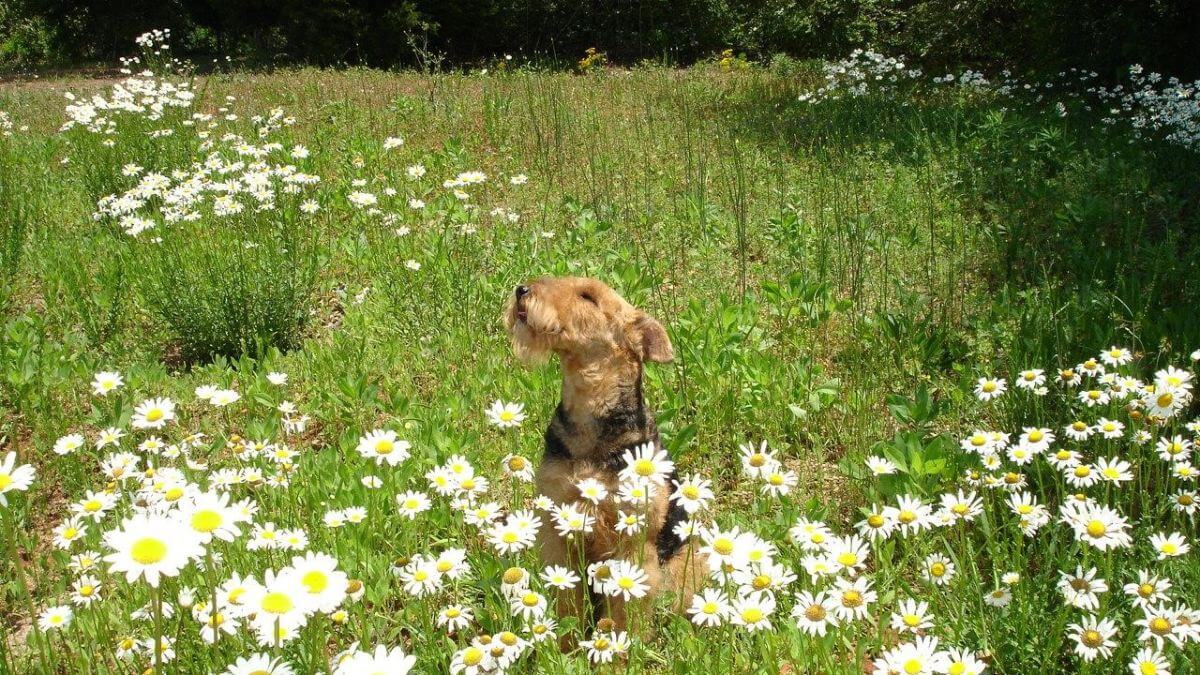
Learn about the versatile Airedale Terrier, the “King of Terriers” and “Jack of All Trades,” perfect for active and adventurous owners.


Meet the Owner Handlers
Interview with a owner handler Heather Roozee. Discover her journey in the world of purebred dogs, and her passion for this unique breed.

All About Judging
The Airedale Terrier’s eyes should be dark, small, not prominent, and full of terrier expression, keenness, and intelligence.
Meet the Breeders
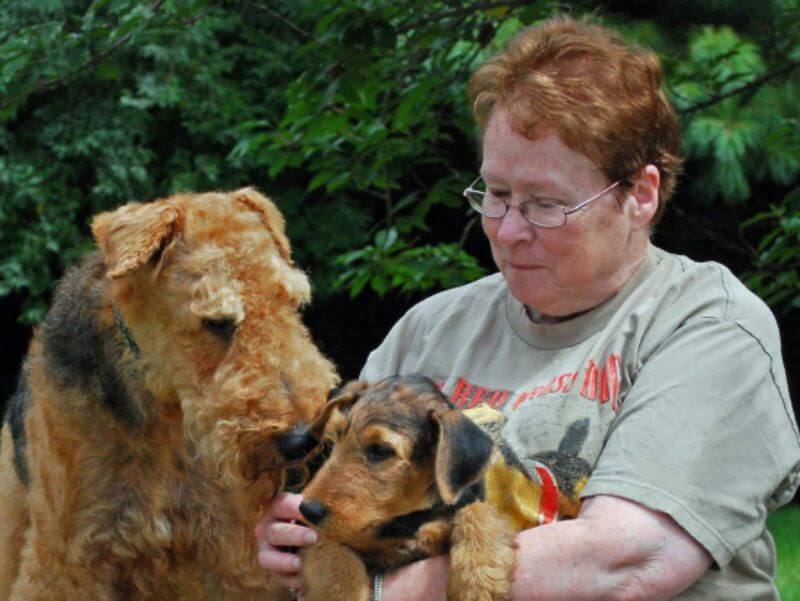
Susan Rodgers is the breeder behind Stirling Airedale Terriers. Read about the kennel’s beginnings, Airedale Terrier puppies, and much more!
Meet the Judges
Insights from the 2022 MCKC Breed Judge Richard Powell. Read about the judge’s opinions on various topics regarding the show.


Meet the Breeders
Purebred Airedale Terriers Breeders Todd and April Clyde – Longvue Airedale Terriers Where did each of you grow up? Todd and April Clyde: Todd was born and raised on Long Island, New York, and April was born in Rantol, Illinois, and raised in Pittsburgh, Pennsylvania. Do you come from doggy families? And if […]
Meet the Breeders
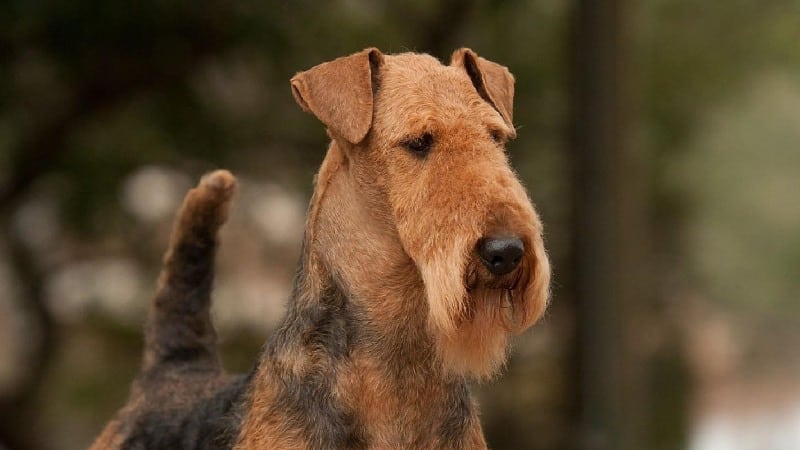
Explore the Airedale Terrier’s charm and versatility from Texas to Virginia with enthusiasts sharing unique insights and joys.
The tail is set high and carried gaily but should not curl over the back. It is strong and substantial, and of fair length, contributing to the Airedale Terrier’s balanced and confident outline.
A Note About Color: Color accounts for only five points out of 100. There is a wide range of acceptable natural color in the breed, and there is nothing in the AKC Breed Standard that says the tan parts of the Airedale should be of a specific shade - it only says “tan.” No particular shade of tan should be given preference over another. The jacket of the dog may be black or grizzle, and may have a red mixture in it or, in the case of puppies, have quite a few white hairs scattered through it. All of these variations are equally acceptable. Since Airedales are born black with tan points, and the black recedes gradually into just the saddle, sometimes puppies are seen which still have black hair extending down their legs. They should not be penalized for this in the show ring. The undercoat on the body and neck of an Airedale Terrier ranges from black to light gray. White feet should be severely penalized.
Coat Type
Wiry
The structure of the coat this breed carries.
Coat Length
Short, Medium
How long the breed's coat grows when kept in condition.
Adaptability Level
How easily a breed copes with changes in home, routine, noise and weather.
Mental Stimulation Needs
How much a breed needs a job, a puzzle or training to stay content.
An Airedale Terrier should receive a complete and balanced diet appropriate for the dog’s age, activity level, and body condition. Portions should be measured carefully to support a lean, athletic build without unnecessary weight gain.
Most adults do well with two measured meals per day, while puppies may need three or four smaller meals as they grow. Treats can be useful during training but should remain a modest part of the dog’s total daily calorie intake.
Maintaining a healthy body condition can support joint health, endurance, and overall fitness. Of course, fresh water should always be available.
The Airedale Terrier is highly intelligent and capable of learning quickly, but the breed can also be independent and easily bored by repetitive training. Short, varied, and purposeful sessions generally work best.
Positive reinforcement using food, praise, toys, or play can help maintain motivation. Early training should include recall, leash manners, impulse control, basic cues, and calm behavior around visitors and other dogs.
Because Airedales were developed to work independently, consistency is especially important. Training that includes problem-solving, scenting, retrieving, or other mentally engaging tasks can keep the breed focused and cooperative.
Dogs maintained in proper show coats are generally hand-stripped to preserve the correct hard texture and color. Pet Airedales may be clipped or trimmed, although repeated clipping can soften the coat and alter its appearance over time. The beard and furnishings should be checked regularly for food, debris, and tangles. Nails should be trimmed as needed, ears should be checked for irritation or buildup, and teeth should be brushed routinely.