Members
01/Overview
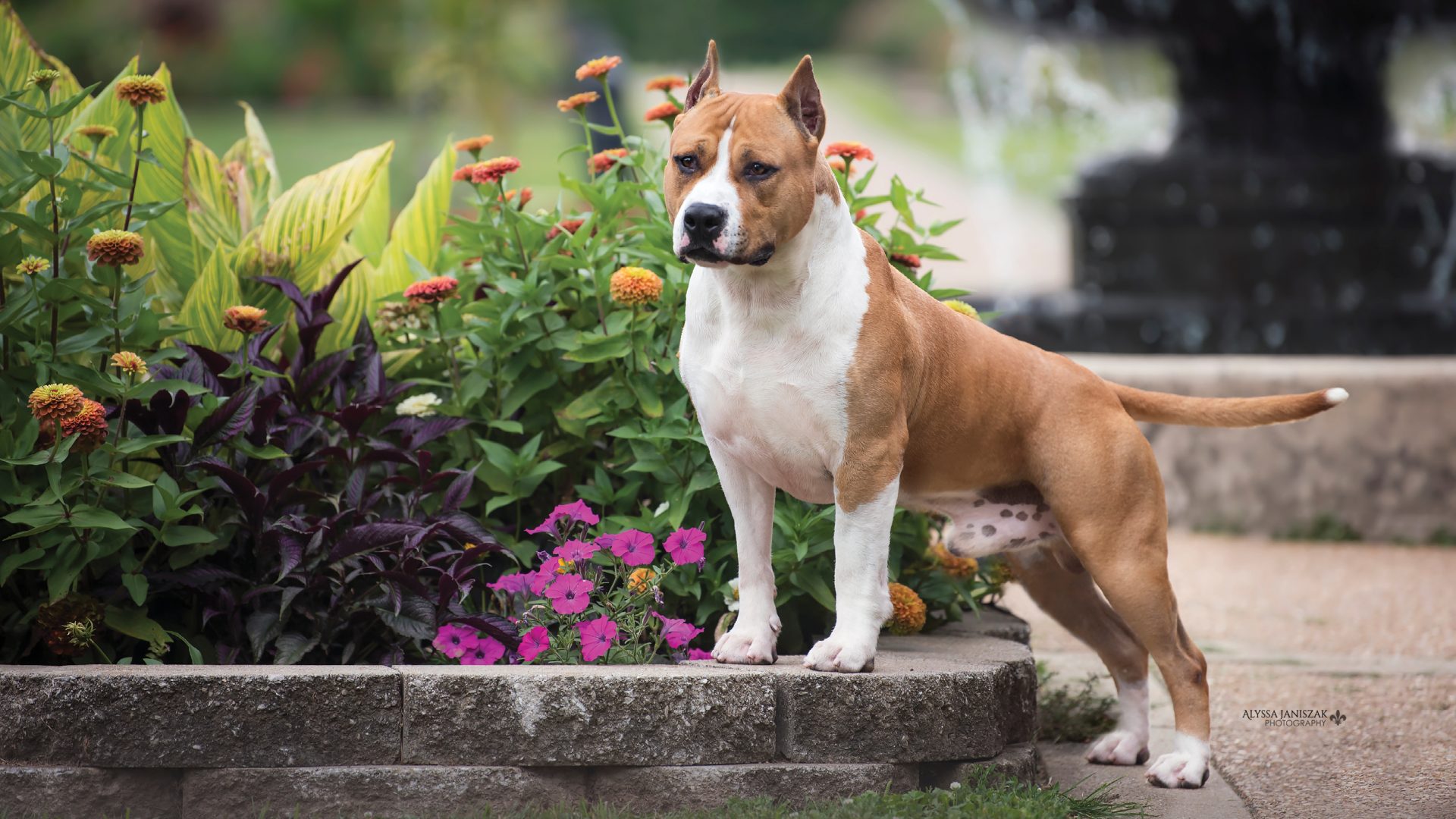
The American Staffordshire Terrier (AmStaff) is a powerful and muscular breed known for its strength, confidence, and affectionate nature. Originally bred for farm work, guarding, and companionship, the breed is highly intelligent and eager to please. Despite the breed’s imposing appearance, AmStaffs are known for their loyalty and deep bonds with their family members. These dogs thrive in homes where they receive proper training, socialization, and structured activities that channel their considerable energy.
Highlights
02/History
The American Staffordshire Terrier traces its origins to 19th-century England, where breeders sought to develop a strong, agile, and tenacious dog. By crossing Bulldogs with various terrier breeds, the Bull-and-Terrier was created, a versatile dog used for farm work, vermin control, and later, unfortunately, bull baiting and dog fighting. These dogs were brought to America in the mid-1800s, where they were further developed into a larger and more powerful breed suited for diverse tasks, including guarding and companionship.
By the early 20th century, the breed gained popularity in the United States, where it became known as the American Pit Bull Terrier. However, as breed fanciers sought to separate their dogs from the fighting world and emphasize their family-friendly temperament, they pursued official recognition from the American Kennel Club (AKC). In 1936, the AKC accepted the breed under the name Staffordshire Terrier to distinguish it from its English counterpart, the Staffordshire Bull Terrier.
To further differentiate the American-bred dogs, the breed name was officially changed to American Staffordshire Terrier in 1972. This distinction reflected the breed's unique American development and emphasized its purpose as a companion and show dog rather than a fighting dog.
03/Appearance
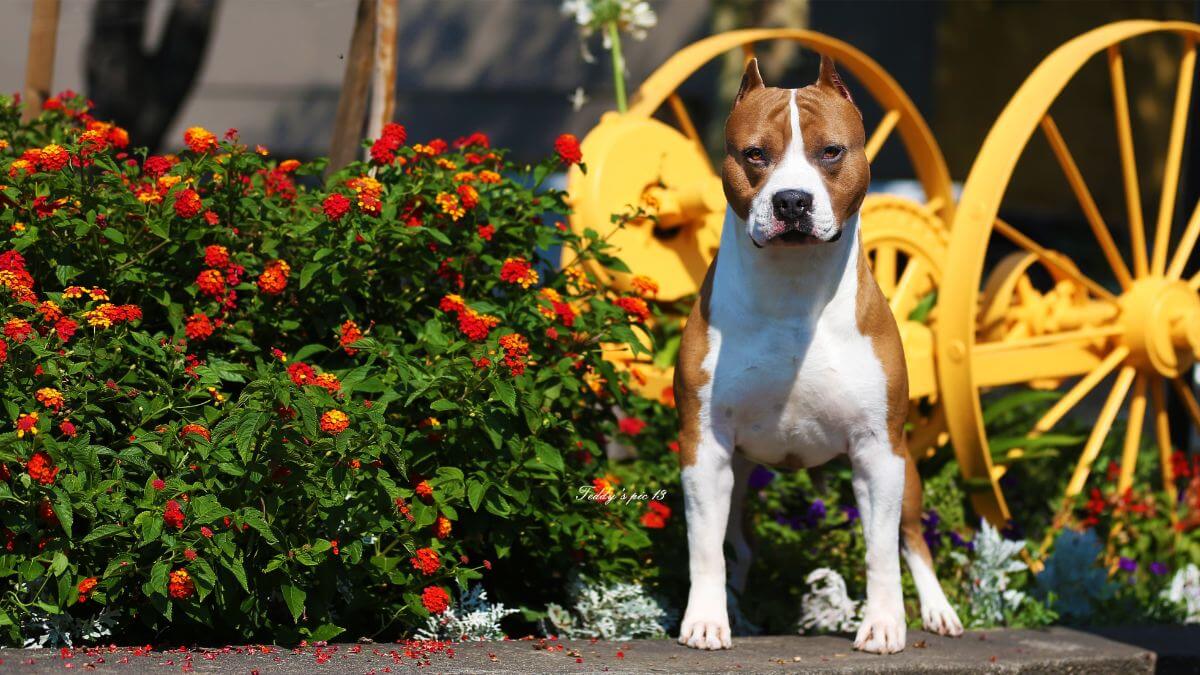
Adult American Staffordshire Terrier males typically stand between 18 and 19 inches tall at the shoulder and weigh from 55 to 70 pounds. Mature females are slightly smaller, standing from 17 to 18 inches tall and weighing between 40 and 55 pounds.
Skull: Broad and deep, with well-defined cheek muscles and slightly rounded.
Expression: Keen and alert, reflecting the breed’s intelligence and confidence.
Eyes: Medium-sized, round, and set well apart, with dark pigmentation preferred; light or pink eyes are a fault..
Ears: Set high on the head; can be cropped or uncropped, with uncropped ears being semi-erect or rose-shaped.
Muzzle: Medium length, well-filled under the eyes, and tapers slightly toward the nose without appearing weak. The underjaw is strong.
Nose: Always black, with well-developed nostrils; a “dudley” nose is a fault..
Bite: Scissors bite preferred, with strong and well-aligned teeth; undershot or overshot mouths are a fault..
The American Staffordshire Terrier has a broad chest, well-defined muscles, and a sturdy bone structure, reflecting its considerable strength and agility. The breed is slightly longer than tall, giving it a solid and compact appearance. It gives the impression of great strength for its size. While stocky, the breed should never appear bulky or racy, as it must maintain both athleticism and endurance.
Texture: The American Staffordshire Terrier has a short, smooth, and glossy coat that lies close to the body. The texture is stiff to the touch, providing a protective layer against minor abrasions and environmental elements. The coat is low-maintenance and requires minimal grooming, making it easy to care for throughout the year.
Standard Colors
04/Consider
Owning an American Staffordshire Terrier requires commitment, as this strong and intelligent breed thrives on structure, training, and companionship. These dogs are highly affectionate and loyal to their families, but they need firm, consistent leadership to develop into well-mannered dogs. Their powerful build and high energy levels mean they require regular exercise, early socialization, and proper training to reach their full potential as loving companions.
Interaction With Family
The level of affection a breed typically shows towards family members and familiar individuals.
Good With Other Dogs
The innate friendliness of a dog towards other dogs can depend on its breed.
Good With Young Children
The degree to which a breed will typically be patient with young children.
Amount Of Shedding
How much hair a breed typically leaves behind on clothes, furniture and floors.
Frequency Of Grooming
How often a breed needs brushing, bathing or a professional trim to stay in condition.
Amount Of Drooling
How prone a breed is to drool, worth knowing before you keep a towel by the door.
Openness To Strangers
How openly a breed tends to greet new people, visitors and strangers.
Protective Nature
How likely a breed is to alert you to anything unfamiliar, and stand between you and it.
Playfulness Level
How enthusiastic a breed stays about games and play well past puppyhood.
Trainability Level
How readily a breed takes direction and works with you rather than around you.
Barking Level
How much a breed uses its voice, and how readily.
Energy Level
How much get-up-and-go a breed brings to an average day.
Health
The American Staffordshire Terrier is generally a robust and healthy breed with a lifespan of 12 to 16 years. While the breed is typically resilient and athletic, responsible breeding and routine veterinary care are essential to maintaining any dog’s well-being.
The American Staffordshire Terrier is an affectionate, confident, and highly intelligent breed that forms strong bonds with its family. These dogs are eager to please and thrive on human interaction, making them well-suited for experienced owners who can provide firm yet positive training. While highly loyal and protective, they are not aggressive when properly socialized from an early age.
The AmStaff is known for its love of children and is often referred to as the "nanny dog" due to the breed’s gentle and patient nature with younger family members. However, due to the strength and energy of these dogs, interactions with young children should always be supervised. They are generally friendly with people but can be wary of strangers, making early socialization essential to ensure a well-adjusted temperament as adults. With other dogs, they may display dominance or dog-selective behaviors, so careful introductions and continual training may be necessary for multi-dog households.
Exercise Expectations
The AmStaff excels in dog sports such as Agility, Weight Pulling, and Obedience Trials, which help to channel the breed’s strength and intelligence. Mental stimulation, such as puzzle toys and obedience training, is just as important as physical exercise. A securely fenced yard is recommended, as the athleticism of these dogs allows them to jump or climb if not properly contained.
The American Staffordshire Terrier is a loyal and affectionate companion that thrives in a home where they can be an integral part of family life. These dogs adapt well to different living environments, including apartments, as long as they receive sufficient exercise and mental stimulation. However, they do best in homes where they are not left alone for long periods, as they form strong bonds with their caretakers.
The short coat of the AmStaff makes these dogs sensitive to extreme cold, so they may need a coat in winter months. They are naturally protective and will alert their human companions to unfamiliar activity, making them effective watchdogs. While they can coexist with other dogs and animals, early socialization and proper introductions are necessary due to their strong personalities.
05/Puppies
Raising American Staffordshire Terrier puppies requires dedication, structure, and early socialization to help them grow into well-mannered, confident adults. These pups are energetic, intelligent, and eager to learn, making early training and positive reinforcement essential. Since they are a strong and powerful breed, it is crucial to establish boundaries and reinforce good behavior from a young age.
Socialization should begin early by exposing the American Staffordshire Terrier puppy to different people, environments, and animals to encourage a stable temperament. Positive reinforcement methods, such as treats and praise, work best for training, and consistency is key to establishing good habits. Crate training is highly recommended for housebreaking and to provide a secure space for the puppy to nap during the day and sleep at night.
A high-quality puppy food formulated for medium-sized breeds is necessary to support a puppy’s rapid growth. Meals should be divided into three to four portions per day to promote steady growth and development. As the pup matures, transitioning to two meals per day is best for maintaining a healthy weight and good muscle tone.
Regular veterinary checkups, vaccinations, and parasite prevention are essential in the first year. Since AmStaffs are a high-energy breed, controlled playtime and light exercise help to develop coordination without stressing the developing joints. Providing safe chew toys will help with teething and also prevent destructive chewing on household items.
06/Activities
Agility: The American Staffordshire Terrier thrives in Agility, demonstrating speed, precision, and problem-solving skills while navigating obstacle courses.
Obedience: The breed’s intelligence and willingness to work make these dogs excellent competitors in Obedience Trials, where they showcase precise command responses.
Rally: This sport combines Obedience with teamwork, allowing the breed to follow a course with designated stations requiring specific commands.
Weight Pulling: Due to their muscular build, AmStaffs can excel in Weight Pulling competitions, showcasing their strength and endurance.
Dock Diving: The breed’s athleticism and enthusiasm for water can make the AmStaff a great participant in Dock Diving, where the dog leaps from a dock into the water to fetch objects.
Scent Work: A keen sense of smell allows any dog to participate in Scent Work competitions, where they locate fragrances hidden in progressively challenging locations.
Conformation Shows: Recognized by the AKC, the AmStaff can compete in Conformation Events, where judges evaluate a dog’s physical structure and adherence to the Breed Standard.
Therapy Work: The breed’s affectionate and loyal nature can equip the AmStaff with the skills necessary to become a Therapy Dog, providing comfort and support in hospitals, schools, and assisted living facilities.
Protection Sports: With proper training, American Staffordshire Terriers can excel in Protection Sports such as Schutzhund, showcasing their ability to follow commands while demonstrating controlled guarding instincts.
Gallery
07/Standards
The American Staffordshire Terrier is recognized by the world’s leading registries and kennel organizations, which categorize the breed into a specific Group based on its unique characteristics. This breed is recognized worldwide under the following Group designations:
The ideal American Staffordshire Terrier is described by a Breed Standard that is approved by each of the world’s leading registries and kennel organizations. The Standards for this breed may be found in the following links:
08/Clubs
Staffordshire Terrier Club of America: This is the official parent club for the American Staffordshire Terrier in the United States, recognized by the American Kennel Club (AKC). The STCA supports breed education, health research, Conformation dog shows, and various Performance events.
09/Rescue
For those interested in supporting an American Staffordshire Terrier in need, several reputable rescue organizations specialize in rehoming and rehabilitating this breed. These groups focus on providing care, training, and medical attention to American Staffordshire Terriers in need before placing them in suitable homes.
Pit Bull Rescue Central: PBRC is an educational and listing resource for owners and caretakers of American Pit Bull Terriers, American Staffordshire Terriers, Staffordshire Bull Terriers, and mixes thereof. They operate as a virtual shelter, assisting in the rescue and rehoming of these breeds across the United States.
It's The Pits: Based in San Diego County, California, It's The Pits is a 501(c)(3) canine rescue specializing in American Staffordshire Terriers, Staffordshire Bull Terriers, American Pit Bull Terriers, and other bully breeds. They coordinate fostering and adoption services to find permanent homes for these dogs.
Bullies In Need Dog Rescue: Operating in Ontario, Canada, Bullies In Need is a non-profit dog rescue dedicated to saving dogs, particularly bully breeds like the American Staffordshire Terrier, from euthanasia in shelters. They focus on adoption, fostering, and education to promote responsible dog ownership.
For those considering adoption, reaching out to these organizations is a commendable way to provide a loving home to an American Staffordshire Terrier that needs a loving home. Additionally, local animal shelters and general dog rescue organizations may also have the occasional AmStaff available.
10/Facts
Once a National Symbol
During World Wars I & II, the breed was used in propaganda posters as a symbol of loyalty, bravery, and determination.
Sergeant Stubby – A War Hero
An American Staffordshire Terrier mix named Sergeant Stubby served in World War I, becoming the most decorated war dog in U.S. history.
First AKC Registered AmStaff
The first American Staffordshire Terrier to be registered with the AKC in 1936 was named "Tudor's Black Jack."
Hollywood & Celebrity Favorites
Many celebrities, including Theodore Roosevelt, Helen Keller, and Fred Astaire, owned American Staffordshire Terriers, highlighting the breed’s loyal and loving nature and its star quality.
One of the Strongest Bite Forces
While not the strongest of all breeds, the American Staffordshire Terrier has incredibly powerful jaws, capable of exerting significant pressure.
Not a Natural Swimmer
Despite their muscular build, many AmStaffs struggle with swimming due to their dense muscle mass, requiring supervision near water.
11/FAQ
Yes, American Staffordshire Terriers shed moderately throughout the year. Their short coat is easy to maintain, however, and regular brushing helps to minimize the shedding.

Written by
Dan Sayers is the Executive Editor of SHOWSIGHT. He is a member of the World Dog Press Association and the Dog Writers Association of America, which recognized his illustrations in the award-winning Encyclopedia of K-9 Terminology. Dan is a longtime supporter of the sport of dogs and an advocate for the conservation of recognized breeds in all their forms and functions. He is a member of the Morris and Essex Kennel Club, and for 45 years, the Irish Water Spaniel Club of America where he serves as AKC Delegate, Archivist, and approved Breed Mentor. Dan breeds under the Quiet Storm prefix and has judged the IWSCA National Specialty Sweepstakes twice.
Official Standard of the American Staffordshire Terrier
General Impression: The American Staffordshire Terrier should give the impression of great strength for his size, a well put-together dog, muscular, but agile and graceful, keenly alive to his surroundings. He should be stocky, not long-legged or racy in outline. His courage is proverbial. Head: Medium length, deep through, broad skull, very pronounced cheek muscles, distinct stop; and ears are set high. Ears - Cropped or uncropped, the latter preferred. Uncropped ears should be short and held rose or half prick. Full drop to be penalized. Eyes - Dark and round, low down in skull and set far apart. No pink eyelids. Muzzle- Medium length, rounded on upper side to fall away abruptly below eyes. Jaws well defined. Underjaw to be strong and have biting power. Lips close and even, no looseness. Upper teeth to meet tightly outside lower teeth in front. Nose definitely black. Neck: Heavy, slightly arched, tapering from shoulders to back of skull. No looseness of skin. Medium length.
Shoulders: Strong and muscular with blades wide and sloping.
Back: Fairly short. Slight sloping from withers to rump with gentle short slope at rump to base of tail. Loins slightly tucked. Body: Well-sprung ribs, deep in rear. All ribs close together. Forelegs set rather wide apart to permit chest development. Chest deep and broad. Tail: Short in comparison to size, low set, tapering to a fine point; not curled or held over back. Not docked.
Legs: The front legs should be straight, large or round bones, pastern upright. No semblance of bend in front. Hindquarters well-muscled, let down at hocks, turning neither in nor out. Feet of moderate size, well-arched and compact. Gait must be springy but without roll or pace.
Coat: Short, close, stiff to the touch, and glossy.
Color: Any color, solid, parti, or patched is permissible, but all white, more than 80 per cent white, black and tan, and liver not to be encouraged. Size: Height and weight should be in proportion. A height of about 18 to 19 inches at shoulders for the male and 17 to 18 inches for the female is to be considered preferable.
Faults: Faults to be penalized are: Dudley nose, light or pink eyes, tail too long or badly carried, undershot or overshot mouths.
Approved June 10, 1936

Meet the Judges
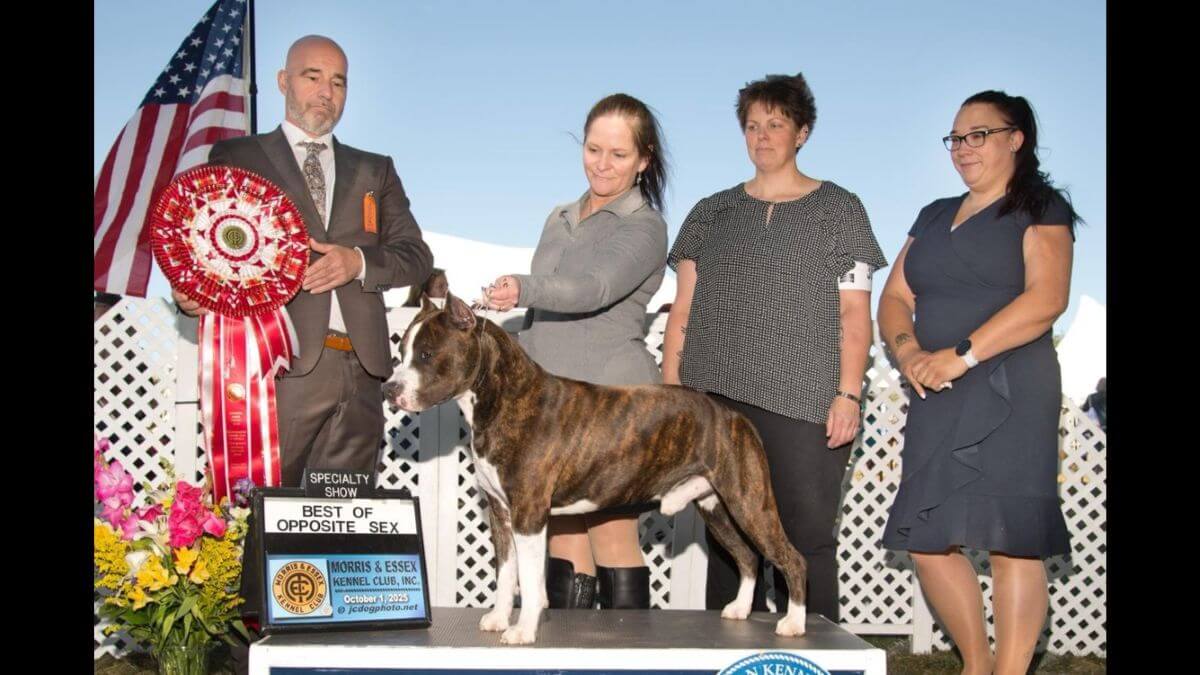
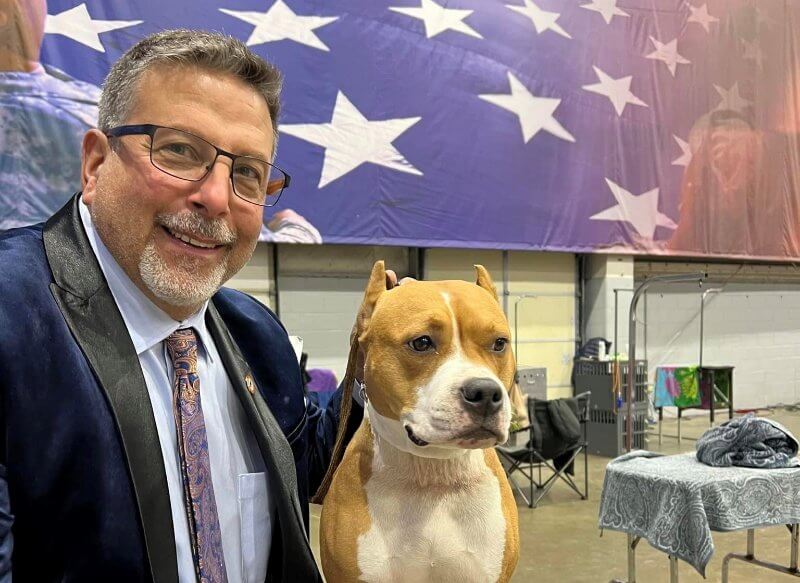
Olaf Verhorevoort reflects on the honor of judging American Staffordshire Terriers at the 2025 Morris & Essex show.

Meet the Junior Handlers
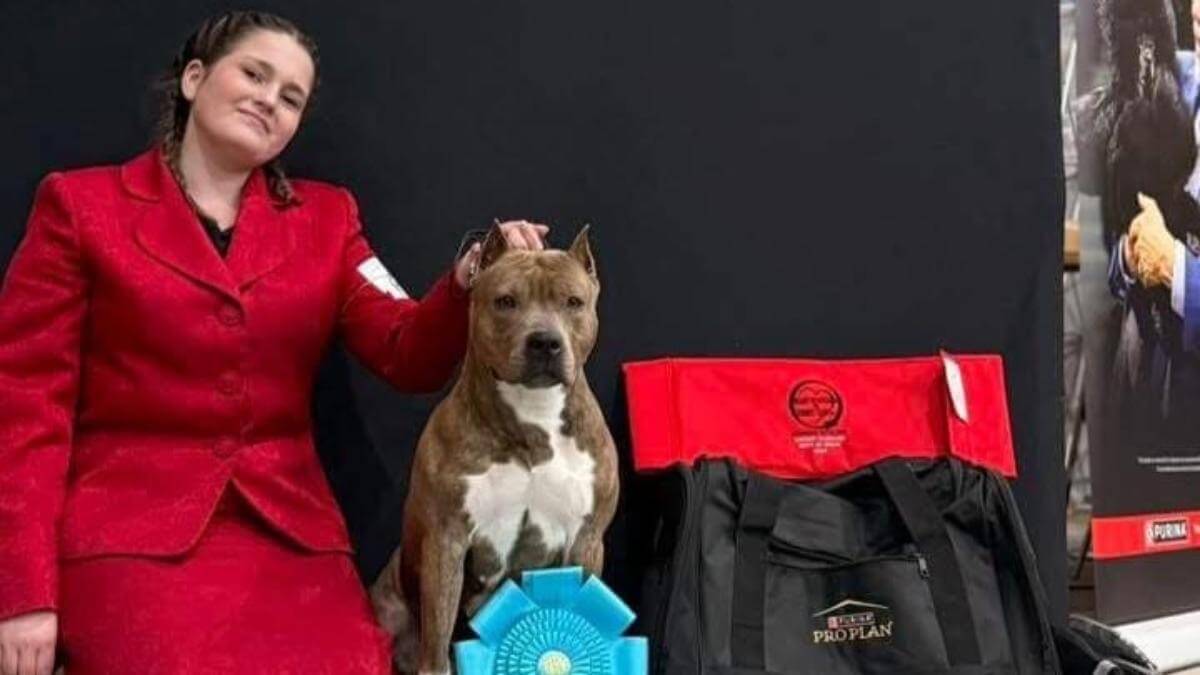
Meet Kalyn Erickson, a passionate Junior Handler from Iowa, making memories, winning titles, and building her future in dogs.
Dog Sports
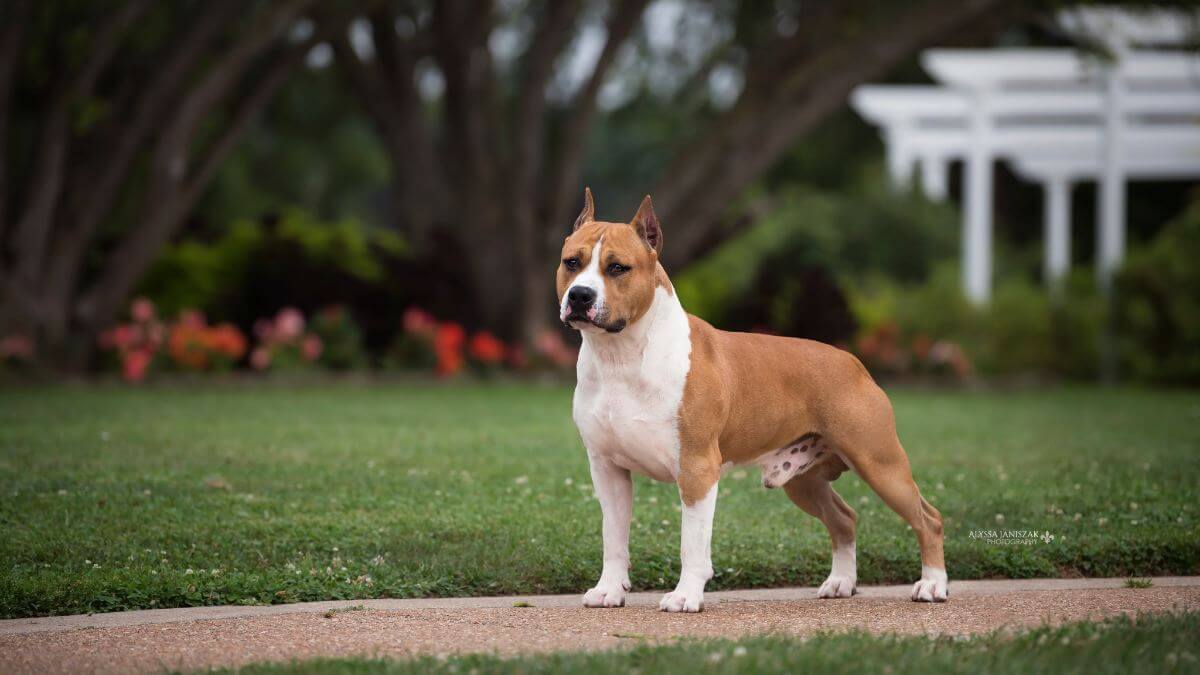
Discover the versatility of the American Staffordshire Terrier: loyal, intelligent, playful, and ready for any challenge!
All About Judging
Explore the history, standard, and judging nuances of the American Staffordshire Terrier, emphasizing balance and moderation.

Meet the Judges
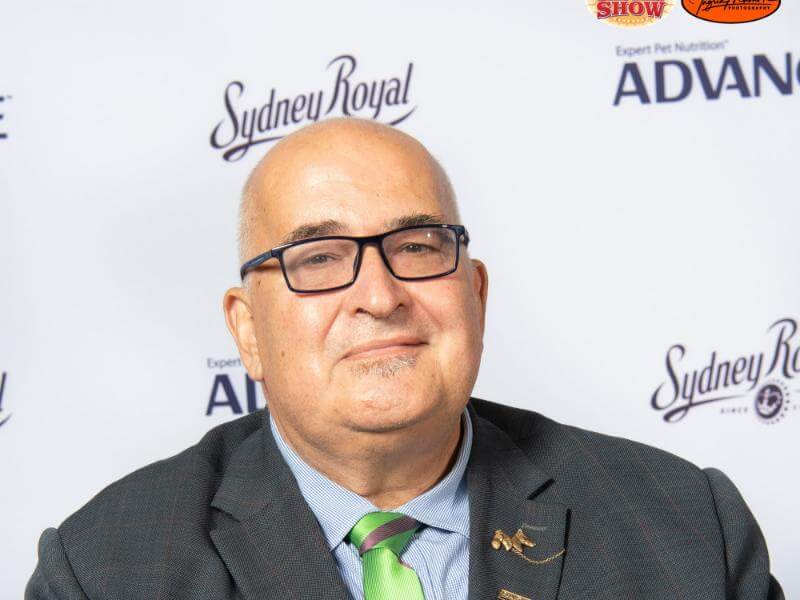
Interview with Kerry Lee 2023 MCKC Dog Show Breed Judge. Read about his experience with judging at the prestigious dog show.
Barn Hunt
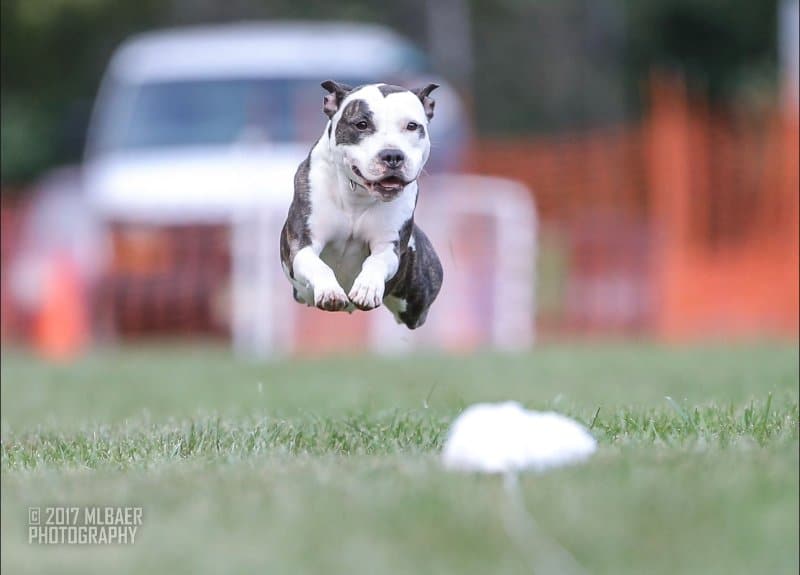
The versatility of the American Staffordshire Terrier (Amstaff) has been a coveted attribute of the breed since its early creation.
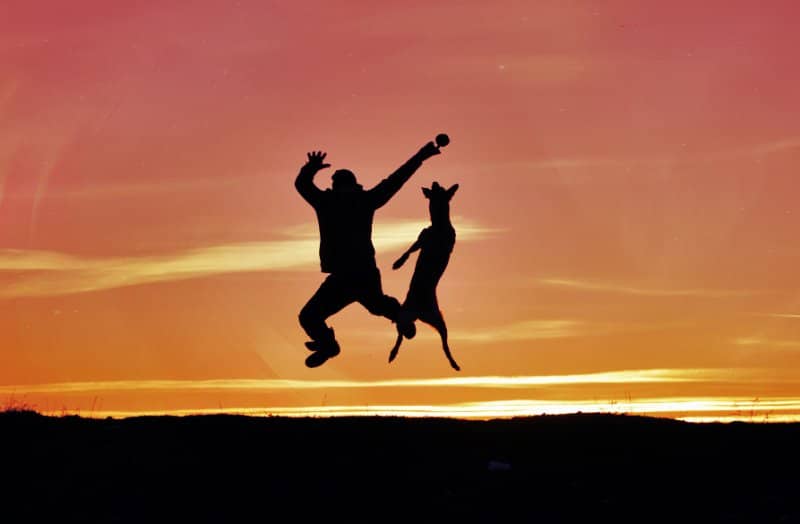

Any good dog parent knows that ALL dogs have the potential to help us stay active. That being said, check out this list of energetic dogs.
Life with dogs. It’s really about the dogs—a personal history accented by the dogs who’ve made me a better person.

Meet the Breeders
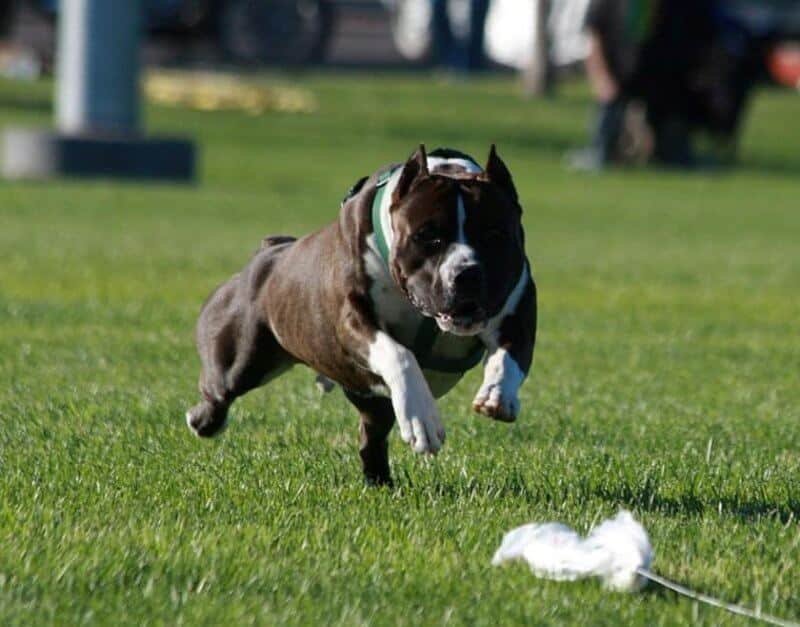
Nancy Hjelmstad is the breeder behind Sunset American Staffordshire Terriers. Read about the kennel’s beginnings, puppies, photos and more!
The tail of the American Staffordshire Terrier is of moderate length, set low, and tapers to a fine point. It should not be curled or carried over the back and is never docked. The tail is in proportion to the body and is naturally straight or slightly curved. A tail that is too long or carried badly is a fault.
Standard Markings
A Note About Color: Any color, solid, parti, or patched is permissible in the breed. However, all white, more than 80 percent white, black and tan, and liver are not to be encouraged.
Coat Type
Smooth
The structure of the coat this breed carries.
Coat Length
Short
How long the breed's coat grows when kept in condition.
Adaptability Level
How easily a breed copes with changes in home, routine, noise and weather.
Mental Stimulation Needs
How much a breed needs a job, a puzzle or training to stay content.
A well-balanced diet is crucial for maintaining the health and energy levels of an American Staffordshire Terrier. As a muscular and active breed, these dogs require high-quality food rich in protein to support muscle development and overall good health.
Puppies should be fed a medium-breed puppy formula, divided into three to four meals per day to support their rapid growth. As they mature into adults, they should transition to two meals per day, with portion sizes adjusted based on their activity level, metabolism, and body condition. Most adult AmStaffs require 1.5 to 3 cups of dry food per day, depending on their size and energy expenditure. Treats should be given in moderation to prevent obesity, and fresh water should always be available.
The American Staffordshire Terrier is highly intelligent and eager to learn, making these dogs trainable with consistent, positive reinforcement methods. They respond well to praise, treats, and structured training sessions but require a confident handler who sets clear boundaries. Early socialization and obedience training are essential to help them grow into well-mannered companions.
They have a strong protective instinct and can be naturally wary of unfamiliar people or animals, so exposure to different environments, people, and other dogs from a young age is key. They may have a tendency to pull on the leash due to their strength, so leash training should begin early. Barking is usually moderate, but they will alert their human companions to anything unusual.
Grooming Expectations
AmStaffs should be given a bath only as needed, typically once every few months, unless the coat gets particularly dirty. Ears should be checked and cleaned regularly to prevent infections, and the nails should be trimmed to avoid overgrowth. Regular dental care is also important, as individual dogs may be prone to plaque buildup, making brushing the teeth a necessary part of any grooming routine.