Members
01/Overview
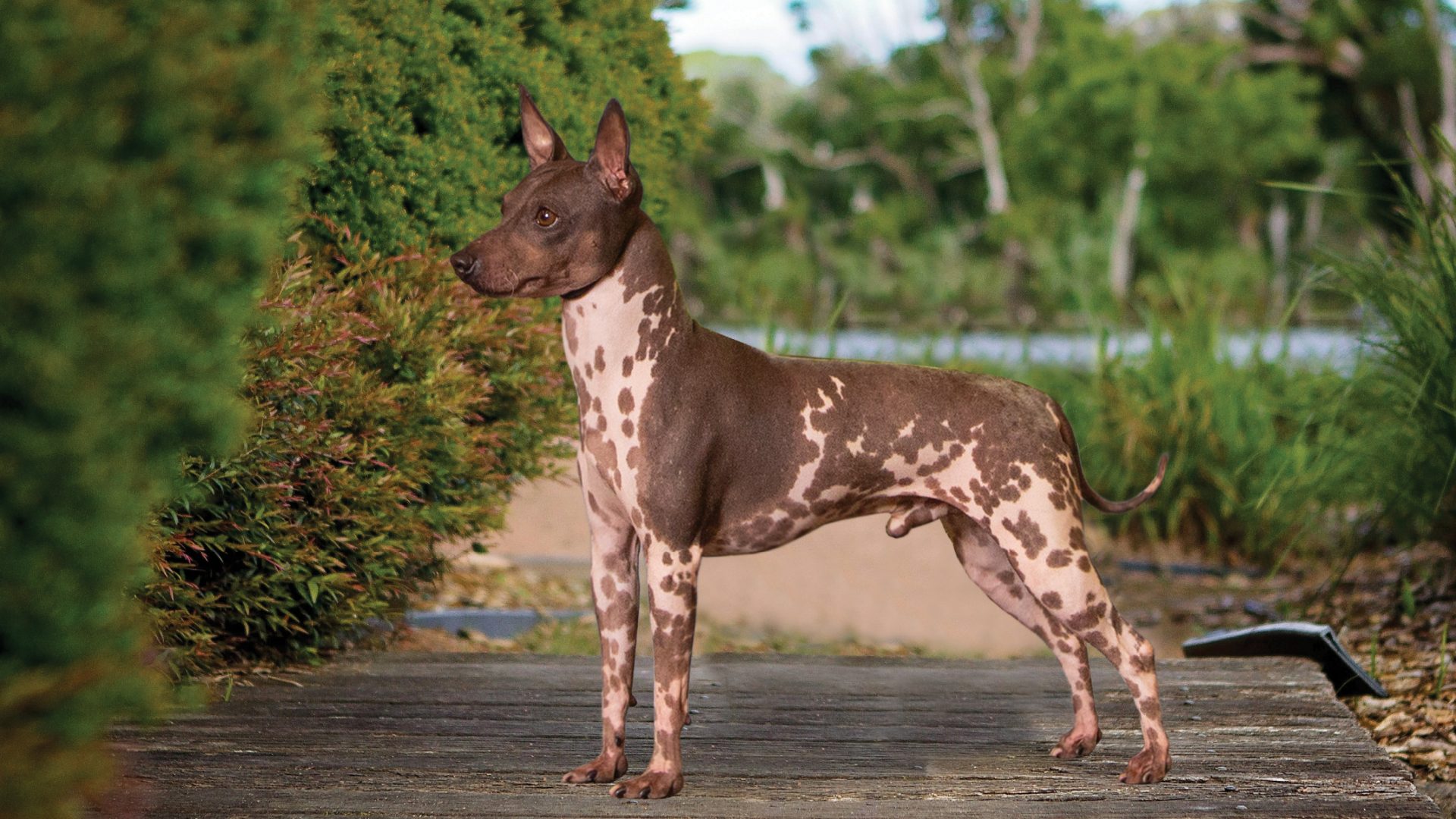
The American Hairless Terrier (AHT) is a unique and energetic breed known for its hairless coat and lively personality. With a sharp intelligence and affectionate nature, the breed excels as a companion while retaining the agility and hunting instincts of its terrier ancestors. Unlike other hairless breeds, the AHT does NOT have hair anywhere on the body, dentition is full and strong, and skin problems are rare.
Highlights
02/History
The American Hairless Terrier traces its roots to the Rat Terrier, a breed developed in the United States for farm work and vermin control. The breed's story began in 1972 in Louisiana, when a completely hairless puppy named Josephine was born in a litter of Rat Terriers owned by Edwin and Willie Scott. Although Rat Terriers occasionally produced hairless pups due to a rare genetic mutation, this was the first time a dedicated effort was made to develop a hairless breed.
Recognizing the uniqueness of Josephine, the Scotts decided to breed her in an attempt to establish a consistent hairless lineage. Through careful selection, Josephine’s descendants produced more hairless puppies, eventually solidifying a distinct breed. Unlike other hairless breeds, such as the Chinese Crested or the Xoloitzcuintli, the American Hairless Terrier’s lack of hair is caused by a recessive gene rather than a dominant one. This genetic distinction makes hairlessness more predictable when breeding.
Over the years, the breed gained recognition for its intelligence, versatility, and suitability as a companion. In 2004, the United Kennel Club (UKC) granted the breed full recognition. Continued efforts by breed enthusiasts led to the American Kennel Club (AKC) officially recognizing the American Hairless Terrier in 2016 as a member of the Terrier Group.
03/Appearance
American Hairless Terriers typically stand between 12 to 16 inches tall at the shoulder. Their weight ranges from 12 to 18 pounds, with variations depending on structure and activity level.
Skull: Moderately broad, slightly domed, and tapers towards the muzzle.
Expression: Alert and intelligent, reflecting the breed’s keen and inquisitive nature.
Eyes: Medium-sized, set well apart, round to slightly oval in shape, and available in a variety of colors that complement the coat.
Ears: Set high on the skull; can be erect, semi-erect, or button, with erect ears being the most preferred.
Muzzle: Well-filled under the eyes, tapering slightly to a strong underjaw.
Nose: Well-pigmented, with color that complements the dog’s overall coloration.
Bite: Scissors bite (level is acceptable), with strong and well-aligned teeth.
The American Hairless Terrier has a balanced and compact body, with slightly longer-than-tall proportions with a 10:9 ratio. It possesses a sturdy but not bulky frame, reflecting its terrier heritage. The breed exhibits strong musculature, allowing for agility and endurance.
Texture: The American Hairless Terrier is unique among terriers due to its lack of a traditional coat; however, the AHT has a coated variety. The coated variety is covered with a short, smooth, and dense coat that has a sheen. Whiskers are not removed. A coated dog that lacks a full coat is to be seriously faulted in the show ring. Hairless puppies are born with a soft, vestigial “down” known as the “birth coat.” This generally covers the body but diminishes over time, and puppies should be completely hairless by approximately 8-10 weeks of age. A mature, hairless dog should be free of hair with the exception of whiskers and guard hairs on the eyebrows and muzzle. Short, very fine (vellus) hair may be present on the body of a mature dog. The skin is smooth and warm to the touch. In the coated variety, wire, broken, or long coats are unacceptable.
Standard Colors
04/Consider
Owning an American Hairless Terrier requires an understanding of the breed’s unique characteristics, including its energetic temperament, unique grooming needs, and health considerations. While these dogs are affectionate and intelligent companions, their hairless nature demands special care to protect their skin from environmental factors. Potential owners should be prepared for an active and intelligent terrier that thrives on engagement and companionship.
Interaction With Family
The level of affection a breed typically shows towards family members and familiar individuals.
Good With Other Dogs
The innate friendliness of a dog towards other dogs can depend on its breed.
Good With Young Children
The degree to which a breed will typically be patient with young children.
Amount Of Shedding
How much hair a breed typically leaves behind on clothes, furniture and floors.
Frequency Of Grooming
How often a breed needs brushing, bathing or a professional trim to stay in condition.
Amount Of Drooling
How prone a breed is to drool, worth knowing before you keep a towel by the door.
Openness To Strangers
How openly a breed tends to greet new people, visitors and strangers.
Protective Nature
How likely a breed is to alert you to anything unfamiliar, and stand between you and it.
Playfulness Level
How enthusiastic a breed stays about games and play well past puppyhood.
Trainability Level
How readily a breed takes direction and works with you rather than around you.
Barking Level
How much a breed uses its voice, and how readily.
Energy Level
How much get-up-and-go a breed brings to an average day.
Health
The American Hairless Terrier is generally a healthy and robust breed with a lifespan of 14 to 16 years. Unlike other hairless breeds, the AHT does not suffer from dental issues associated with hairlessness, as these dogs possess a full set of strong teeth. However, their exposed skin requires extra attention, particularly regarding sun protection, cold weather, and potential irritations.
The American Hairless Terrier is an intelligent, lively, and affectionate breed that forms strong bonds with its family. They are well-suited for novice owners due to their eager-to-please nature and adaptability. However, they have a moderate sensitivity level and can be somewhat reactive to changes in their environment.
These terriers do not tolerate long periods of solitude and thrive on human companionship. They are generally good with other dogs, especially when socialized early, but their strong prey drive may make them less suited to homes with small pets.
AHTs are excellent with children, displaying a playful and gentle temperament. However, interactions with very young children should be supervised to prevent rough handling. These dogs are usually friendly toward strangers but maintain a natural alertness, making them good watchdogs. Their social and inquisitive personalities mean they enjoy being part of family activities and require mental and physical stimulation to stay happy.
Exercise Expectations
A minimum of 30 to 60 minutes of exercise per day helps to keep the AHT happy and well-behaved. These dogs thrive on structured activities that challenge their intelligence and satisfy their natural terrier instincts. Indoor play can supplement outdoor exercise, especially in extreme weather conditions when their skin needs protection from the sun or cold. American Hairless Terriers enjoy playing with their human companions and are known for their enthusiasm in dog sports. Their playful and curious nature makes them excellent candidates for activities such as Obedience, Rally, and even Fast CAT. Regular exercise helps to prevent boredom-related behaviors, such as excessive barking and destructive chewing.
The American Hairless Terrier adapts well to various living situations, including apartments, as long as they receive adequate exercise and mental stimulation. Their affectionate nature makes them excellent companions, but they do not tolerate being left alone for long periods and will thrive in a home where they are part of daily activities.
Due to their lack of hair, they are not well-suited for extreme cold or excessive sun exposure without protection. Owners should be mindful of their skin’s sensitivity and provide appropriate measures to keep them comfortable in different climates.
The American Hairless Terrier can coexist well with other dogs and can live harmoniously in multi-pet households when properly socialized. The playful and friendly demeanor of this breed makes these dogs well-suited for families with children, although supervision is recommended with very young kids. Their alert and curious nature also makes them excellent watchdogs without being overly aggressive.
05/Puppies
Bringing home an American Hairless Terrier puppy is an exciting experience, but it requires careful preparation to ensure a smooth transition. These puppies are intelligent, curious, and full of energy, needing structured training and socialization from an early age. Due to their hairless nature, they require extra care to protect their delicate skin, especially during outdoor playtime.
Proper care during puppyhood lays the foundation for a well-adjusted and healthy American Hairless Terrier. Socialization should begin as early as possible, exposing the puppy to different people, environments, and experiences that will assist in the development of confidence and good manners. Positive reinforcement training works best, as the pup will respond best to treats and praise.
Since the puppy’s skin is exposed, protection from sunburn and cold weather is needed. Lightweight dog clothing or pet-safe sunscreen can help to safeguard the skin outdoors. Regular baths with a gentle, moisturizing shampoo prevent dryness and irritation. Keeping nails trimmed and ears clean will ensure overall good hygiene.
A high-quality, nutrient-rich diet is crucial for the puppy’s growth. Small-breed puppy food provides the right balance of protein, fats, and essential nutrients. Meals should be divided into three to four portions per day, gradually transitioning to two meals as the pup matures. Fresh water should always be available to maintain hydration throughout the day.
Providing safe chew toys will help the American Hairless Terrier puppy with teething and will help to prevent destructive chewing on household items. Creating a designated space with a comfortable bed, toys, and training pads can aid in housebreaking and will help the puppy feel secure. Early crate training can also be beneficial for house training and travel.
06/Activities
Agility: The American Hairless Terrier thrives in Agility, navigating obstacle courses with speed, enthusiasm, and precision.
Obedience: The breed’s intelligence and trainability make the AHT a strong competitor in Obedience Trials, where commands are performed with accuracy.
Rally: This sport combines Obedience and teamwork, allowing these dogs to showcase their quick learning abilities.
Coursing Ability Tests: A strong prey drive makes the AHT an excellent participant in Fast CAT, where dogs chase a moving lure through a set course.
Barn Hunt: While the breed typically lacks a traditional coat, the AHT retains its terrier instincts and enjoys seeking out hidden prey-like scents in Barn Hunt.
Earthdog Trials: Some AHTs may enjoy Earthdog Events, where they can test their natural hunting skills in underground tunnels.
Dock Diving: Despite their smaller size, many dogs enjoy jumping into water and retrieving objects in Dock Diving competitions.
Conformation Shows: Recognized by the AKC, the AHT participates in Conformation shows, where dogs are judged on their adherence to the written Breed Standard.
Therapy Work: The breed’s affectionate and gentle nature makes these dogs well-suited for Therapy Work where they can provide comfort and companionship to those in need.
Service & Emotional Support: The American Hairless Terrier’s intelligence and devotion can equip these dogs to serve as Emotional Support Animals or Service Dogs for individuals with specific needs.
Gallery
07/Standards
The American Hairless Terrier is recognized by the world’s leading registries and kennel organizations, which categorize the breed into a specific Group based on its unique characteristics. This breed is recognized worldwide under the following Group designations:
The ideal American Hairless Terrier is described by a Breed Standard that is approved by each of the world’s leading registries and kennel organizations. The Standards for this breed may be found in the following links:
08/Clubs
American Hairless Terrier Club of America (AHTCA): This is the official parent club for the breed in the United States, recognized by the American Kennel Club (AKC). The AHTCA promotes responsible breeding, education, and participation in Conformation and Performance events.
09/Rescue
For those looking to adopt an American Hairless Terrier, several rescue organizations work to rehome dogs in need. These groups focus on rescuing, rehabilitating, and placing AHTs and other hairless breeds into loving homes.
Naked K9 & Small Dog Rescue: A nonprofit organization dedicated to rescuing and rehoming hairless and small-breed dogs. Volunteers provide foster care, veterinary treatment, and adoption services across the United States.
For those considering adoption, checking with these rescues is a great way to find an American Hairless Terrier in need of a home. Additionally, local animal shelters and general dog rescue organizations may occasionally have AHTs available for adoption.
10/Facts
The First Hairless Puppy Was a Surprise
The breed originated in 1972 when a hairless puppy named Josephine was born in a litter of Rat Terriers in Louisiana.
Born with a Light Fuzz
Hairless puppies are born with a fine layer of downy hair, which falls out completely within a few weeks, leaving their smooth skin exposed.
Sweat Through Their Skin
Unlike most dogs that regulate temperature by panting, the American Hairless Terrier can sweat through its skin, similar to humans.
A Hypoallergenic Breed
While no dog is 100% hypoallergenic, the American Hairless Terrier is one of the best choices for allergy sufferers, since they lack a dander-producing undercoat.
11/FAQ
The hairless variety of the American Hairless Terrier does not shed because the dogs lack a traditional coat. However, the coated variety of the breed has short hair, though it sheds minimally compared to many other breeds.

Written by
Dan Sayers is the Executive Editor of SHOWSIGHT. He is a member of the World Dog Press Association and the Dog Writers Association of America, which recognized his illustrations in the award-winning Encyclopedia of K-9 Terminology. Dan is a longtime supporter of the sport of dogs and an advocate for the conservation of recognized breeds in all their forms and functions. He is a member of the Morris and Essex Kennel Club, and for 45 years, the Irish Water Spaniel Club of America where he serves as AKC Delegate, Archivist, and approved Breed Mentor. Dan breeds under the Quiet Storm prefix and has judged the IWSCA National Specialty Sweepstakes twice.
Official Standard of the American Hairless Terrier
General Appearance: The American Hairless Terrier is a small to medium sized, smoothly muscled and active terrier. Ancestors of the breed were bred to hunt rats and other vermin. The lack of coat on the hairless variety of the American Hairless Terrier renders them unsuited for most hunting activities. They have, however, retained a strong hunting instinct and excel in many other activities and sports. The breed is energetic, alert, curious and intelligent. Given early socialization and training they excel as companions, displaying great affection for their owners and family. American Hairless Terriers should not be sparred during conformation judging.
Size, Proportion, Substance: Size - Ideal height is from 12 to 16 inches at the withers. Proportion - Body is rectangular being slightly longer than tall with a 10:9 ratio when measured from the prosternum to point of buttocks and from the withers to the ground. Substance - Medium bone, not so heavy as to appear coarse or so light as to appear racy and blends with the proportion of the dog. The overall appearance is strong but moderate with firm, smooth, flat muscles. While correct size is very important, it should not outweigh that of type. Too heavy or too light in bone and obesity are to be faulted.
Head: Expression - is alert, curious and intelligent. Viewed from the front or side the head forms a blunt wedge shape and is proportionate to the size of the body. The skull is broad, slightly domed and tapers slightly toward the muzzle. Skull and muzzle are of equal length with a moderate stop. Muzzle - Muzzle is well filled under the eyes, tapers slightly from the stop to the nose and is well-chiseled. Jaws are powerful with well-muscled cheeks. Lips are tight, dry, without flews. Pigmentation of the lips match the nose. Nose - The nose is solid colored. Abrupt stop, snipey muzzle and a Dudley or butterfly nose are to be faulted. Serious fault - Apple head. Eyes - Eyes are expressive, set obliquely, round, somewhat prominent but moderate in size, and of matching color. Eye color varies with body color from darkest brown to amber and hazel. When eyes are brown, a darker brown is preferred. Amber eyes are permissible for a blue dog. Blue eyes are acceptable in blue or blue fawn dogs only but gray is preferred. Eye rim pigmentation corresponds with the nose color. Incomplete eye rim pigmentation is permitted only when the skin/coat color around the eye area is white. Bite - The teeth are white and strongly developed meeting in a scissors bite. A level bite is acceptable. Missing pre-molars are not to be faulted. Overshot or undershot bite should be faulted. Ears - Ears are set at the outside edge of the skull and V-shaped. Erect ears are preferred however, tipped or button ears are acceptable. Both ears should match in carriage. Rose ears, flying ears, erect ears with the sides curved inward forming a tulip petal shape and non-matching ear carriages are to be faulted. Disqualification - Hanging ears.
Neck, Body, Topline: The neck is clean, moderately long, smoothly muscled, slightly arched and tapers slightly from the shoulders to the head, blending smoothly into well laid back shoulders. Body - The body is slightly longer than tall. Length of the front leg (measured from point of elbow to the ground) should approximately equal one-half of the dog’s height. The loin is moderately short, slightly arched, and muscular, with moderate tuck-up and the croup is slightly sloping. Ribs extend well back and are well sprung out from the spine, forming a broad, strong back, then curving down and inward to form a deep body. Brisket extends to or just below the elbow. The chest between the forelegs is well filled and of moderate width when viewed from the front. The forechest extends in a shallow oval shape in front of the forelegs when viewed from the side. Topline - The line of the back is strong and level when the dog is standing or moving. The tail comes off the end of the croup, almost reaches hock and is thick at the base, tapering toward the tip. The tail is held upward in a slight curve when the dog is alert and may be carried out behind the dog or up in a slight curve when the dog is in motion. The tail on the hairless variety should never be docked. Tail docking on the coated variety is permitted and optional. Bent tail, ring tail or curled tail are to be faulted. Disqualification - bobtail or docked tail on the hairless variety.
Forequarters: Shoulders blades are well laid back with the upper tips fairly close together at the withers. The upper arm appears equal in length to the shoulder blade and joins at an apparent right angle. Shoulders are smoothly muscled and the elbows are close to the body. Forelegs are straight and strong when viewed from any angle and sturdy in bone. Pasterns are strong, short, and nearly vertical. Feet - Feet are slightly oval in shape and compact. The two middle toes are slightly longer than the other toes. Toes may be well split up but the foot is not flat or splayed. Removal of front dewclaws is optional but rear dewclaws must be removed. Flat feet, splayed feet or rear dewclaws present are to be faulted.
Hindquarters: The hindquarters are muscular. Upper and lower thighs being approximately equal in length. Angulation of the hindquarters and forequarters are in balance with each other. Stifles are well-bent and the hocks are well let down. The short, strong rear pasterns are perpendicular to the ground and when viewed from the rear they are parallel to one another.
Coat: The breed is hairless but has a coated counterpart. Coated: The coated variety is covered with a short, smooth and dense coat that has a sheen. Whiskers are not removed. A coated dog that lacks a full coat is to be seriously faulted. Hairless: Hairless puppies are born with a soft, vestigial “down” known as the “birth coat”. This generally covers the body but diminishes over time and puppies should be completely hairless by approximately eight to ten weeks of age. A mature, hairless dog should be free of hair with the exception of whiskers and guard hairs on the eyebrows and muzzle. Short, very fine (vellus) hair may be present on the body of a mature dog. The skin is smooth and warm to the touch. Disqualification – In the coated variety – wire, broken or long coat.
Color: Any color or combination of colors is allowed with the exception of albino or merle. Disqualification - Merle, albinism.
Gait: Movement is smooth and effortless, showing good reach and drive. The forequarters move without any hint of being hackney and the rear drives with power and with the hocks fully extending. This breed moves smoothly but with a jaunty attitude that suggests a dog of agility, power and speed. The legs do not turn in or out and the feet do not cross or interfere with each other. As speed increases, feet tend to converge toward centerline but do not cross.
Temperament: The breed is energetic, alert, curious and intelligent. Aggressiveness or extreme shyness is to be faulted.
Disqualifications: Hanging ears. Bobtail or docked tail on the hairless variety. In the coated variety - wire, broken or long coat. Merle color and albinism.
Approved March 9, 2010
Effective January 1, 2014

Meet the Breeders
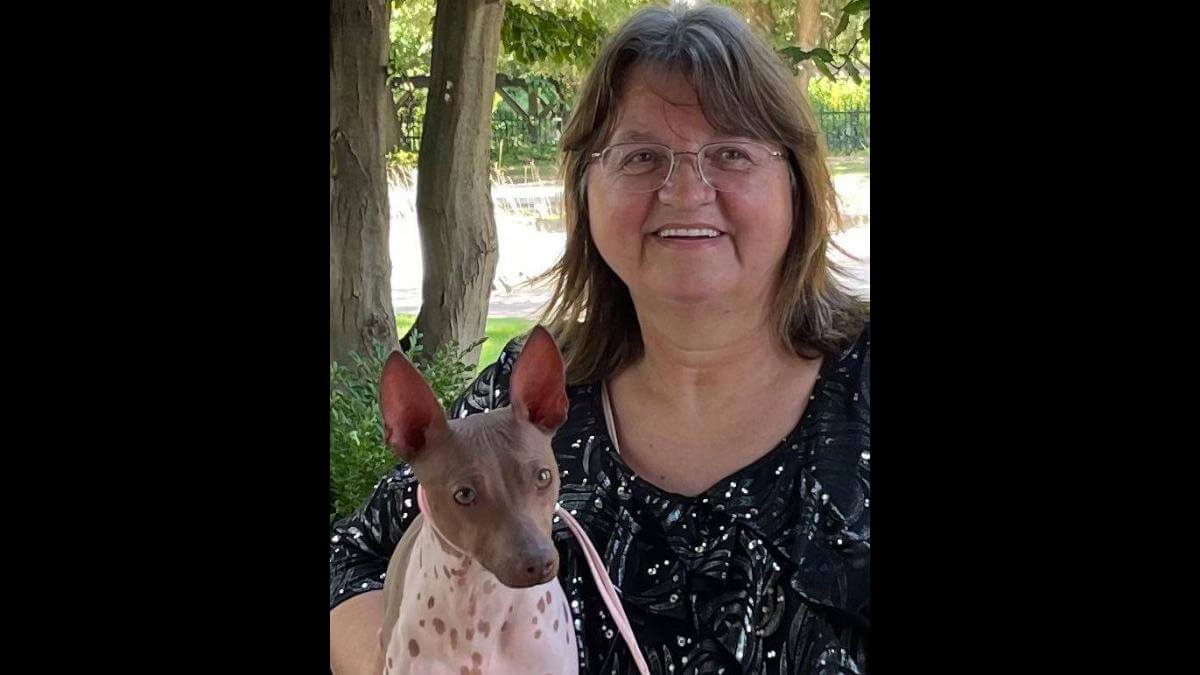
Rita Gaus of Gaus Hof Kennel shares her passion for American Hairless Terriers, focusing on health, breed standards, and community.

Meet the Judges
Interview with Kerry Lee 2023 MCKC Dog Show Breed Judge. Read about his experience with judging at the prestigious dog show.

Earthdog
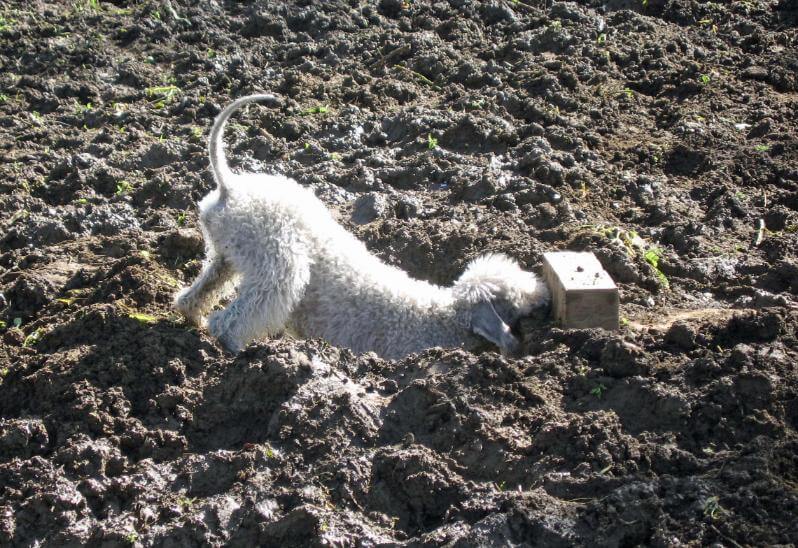
NATIONAL EARTHDOG TESTS hosted by the Bedlington Terrier Club of America, Monday (Columbus Day) October 10, 2022. Ev-ry Place, LLC., 1333
The tail of the American Hairless Terrier is set off the end of the croup, reaches almost to the hock, and tapers to a fine point. The tail is held upward in a slight curve when the dog is alert and may be carried out behind the dog or up in a slight curve when the dog is in motion. The tail on the hairless variety should never be docked. Tail docking on the coated variety is permitted and optional. Bent tails, ring tails, and curled tails are to be faulted in the show ring.
Standard Markings
A Note About Color: Any color or combination of colors is allowed with the exception of albino or merle, which are disqualifications in the show ring.
Coat Type
Hairless
The structure of the coat this breed carries.
Coat Length
Short
How long the breed's coat grows when kept in condition.
Adaptability Level
How easily a breed copes with changes in home, routine, noise and weather.
Mental Stimulation Needs
How much a breed needs a job, a puzzle or training to stay content.
Proper nutrition is essential for maintaining the health and energy levels of an American Hairless Terrier. As a rather small but active breed, they require a balanced diet rich in high-quality protein, healthy fats, and essential vitamins.
A growing puppy benefits from a diet specifically formulated for small-breed puppies, divided into three to four meals per day to support steady development. As they reach adulthood, their feeding schedule should transition to two meals per day, with portion sizes adjusted based on individual metabolism, age, and activity level.
Most adult AHTs require about 1/2 to 1-1/4 cups of high-quality dry food per day, divided into two meals. However, food quantity may vary depending on individual energy levels and body condition. Monitoring weight is important, as smaller breeds can be prone to obesity if overfed. Fresh water should always be available, and treats should be given in moderation to prevent excessive calorie intake.
The American Hairless Terrier is highly intelligent and eager to learn, making training relatively easy with consistent, positive reinforcement methods. These dogs respond well to praise, treats, and play as rewards, but harsh corrections can make them stubborn or resistant. Early socialization and obedience training are essential to ensure they grow into well-mannered dogs.
The breed has a natural inclination to bark when excited or alert, making early training crucial to manage excessive vocalization. The problem-solving skills and high intelligence of the AHT allow these dogs to excel in dog sports such as Agility and Obedience. However, they can be prone to distraction if not properly engaged.
While the American Hairless terrier does not have a strong tendency to wander, the breed’s terrier instincts mean these dogs may chase small animals if not on a leash or in a secure area. Proper training helps to manage their prey drive and keeps them responsive to commands. Regular mental stimulation, including puzzle toys and interactive play, can help to prevent boredom and any destructive behaviors.
Grooming Expectations
Routine skin care includes wiping down the AHT with a damp cloth or mild dog-safe wipes to remove dirt and oils. Periodic baths with a gentle, moisturizing dog shampoo help to prevent clogged pores and skin irritation. Their ears should be checked and cleaned regularly to prevent infections, and their nails should be trimmed to a comfortable length. For the coated variety, grooming is minimal, requiring occasional brushing to remove loose hairs and maintain a healthy coat. Regardless of the variety, dental care is important, and regular tooth brushing helps to prevent tartar buildup and gum disease.