01/Overview
The Bergamasco Sheepdog, originally hailing from the Italian Alps, is a distinct heritage breed known for its unique, matted coat. Initially bred for herding and guarding livestock, this dog is characterized by its intelligence, loyalty, and steadfast demeanor. With ancient roots and a coat designed to protect it from harsh mountain weather, the Bergamasco has a rich history and a striking appearance that captures the attention of all who meet it.
Highlights
02/History
The Bergamasco Sheepdog, with its uniquely flocked coat and keen herding instincts, boasts a rich history that traces back over two millennia. Originating in the European Alps, particularly in the Bergamo region of Italy from which it takes its name, this breed played an important role for many generations of herders as a loyal sheepdog.
Historical records suggest that the Bergamasco's ancestors were brought to the Alpine regions by the ancient Phoenicians during their trade expeditions. Over time, as these dogs adapted to the harsh, mountainous terrain and cold climates of the Alps, they developed their distinctive coat, which served as protection against both predators and the elements.
The breed's primary role was as a herder, guiding and protecting flocks in the challenging Alpine environment. With their innate intelligence, they often worked independently from their human handlers, making decisions to safeguard the sheep from any threats. This encouraged the development of a breed with a strong work ethic, independent thinking, and unparalleled loyalty.
While the Bergamasco Sheepdog has been an integral part of Alpine life for centuries, it remained relatively unknown outside of Italy for a long time. It wasn't until the 20th century that enthusiasts began to introduce the breed to a broader audience, both in Europe and across the Atlantic in North America.
Official recognition by kennel club organizations took some time. The Bergamasco was officially recognized by the Fédération Cynologique Internationale (FCI) in the mid-20th century and was later recognized by the American Kennel Club (AKC) and The Royal Kennel Club (UK), further solidifying its position within the forganized dog world.
Despite its long history, the Bergamasco Sheepdog remains a rare breed. However, thanks to the efforts of dedicated breeders and enthusiasts, it continues to charm and impress those who encounter it, ensuring that its legacy and unique characteristics endure for future generations.
03/Appearance
Adult male Bergamasco Sheepdogs ideally stand at 23.5 inches at the shoulder, while the mature female typically measures 22 inches. The breed’s height, however, can range from 21 to 25 inches.
In terms of weight, a male Bergamasco generally weighs between 70 and 84 pounds, with females weighing slightly less, ranging from 57 to 71 pounds.
Skull: The skull of the Bergamasco Sheepdog is moderately wide and slightly domed. It has a prominent occiput and a marked median furrow, with a noticeable but not pronounced stop as it transitions to the muzzle.
Expression: The expression exudes intelligence, attentiveness, and a hint of ruggedness. These dogs have a calm yet observant demeanor, a reflection of their historical role as both a herder and a protector.
Eyes: Almond-shaped, the eyes are usually of a dark brown hue, harmonizing with the coat's color. They're set semi-laterally, adding to the breed's alert and intelligent expression.
Ears: The ears are set high, triangular in shape, and hang close to the head. They're medium in size and are typically covered in a fine layer of hair.
Muzzle: Strong and of equal length to the skull, the muzzle is straight. It blunts and tapers only slightly toward the nose and embodies the breed's sturdy nature.
Nose: The nose is black in color, complementing the coloration of the coat. It is prominent and well-defined, with open nostrils that speak to the breed's keen sense of smell.
Bite: The Bergamasco Sheepdog boasts a level or scissors bite, where the upper incisors closely overlap the lower incisors. This configuration is ideal for the dogs’ historical role as a herder and drover, ensuring a firm but fair interaction with livestock when necessary.
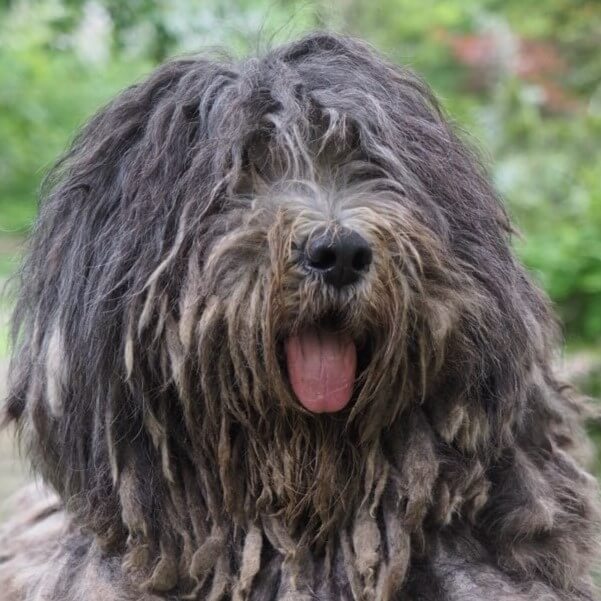
The Bergamasco Sheepdog boasts a harmonious overall structure. The breed’s length, when measured from the point of the shoulder to the point of the buttock, tends to be about five percent more than the dog's height at the withers. The height-to-length ratio is approximately 10:10.5 to 11. This gives the Bergamasco a very slightly longer profile. The breed’s substance is solid without appearing bulky, maintaining a rustic elegance that’s unique among purebred dogs. The Bergamasco’s build reveals a dog that's equipped for endurance rather than speed, highlighting its historical role as a diligent herder and protector of flocks in a challenging alpine environment.
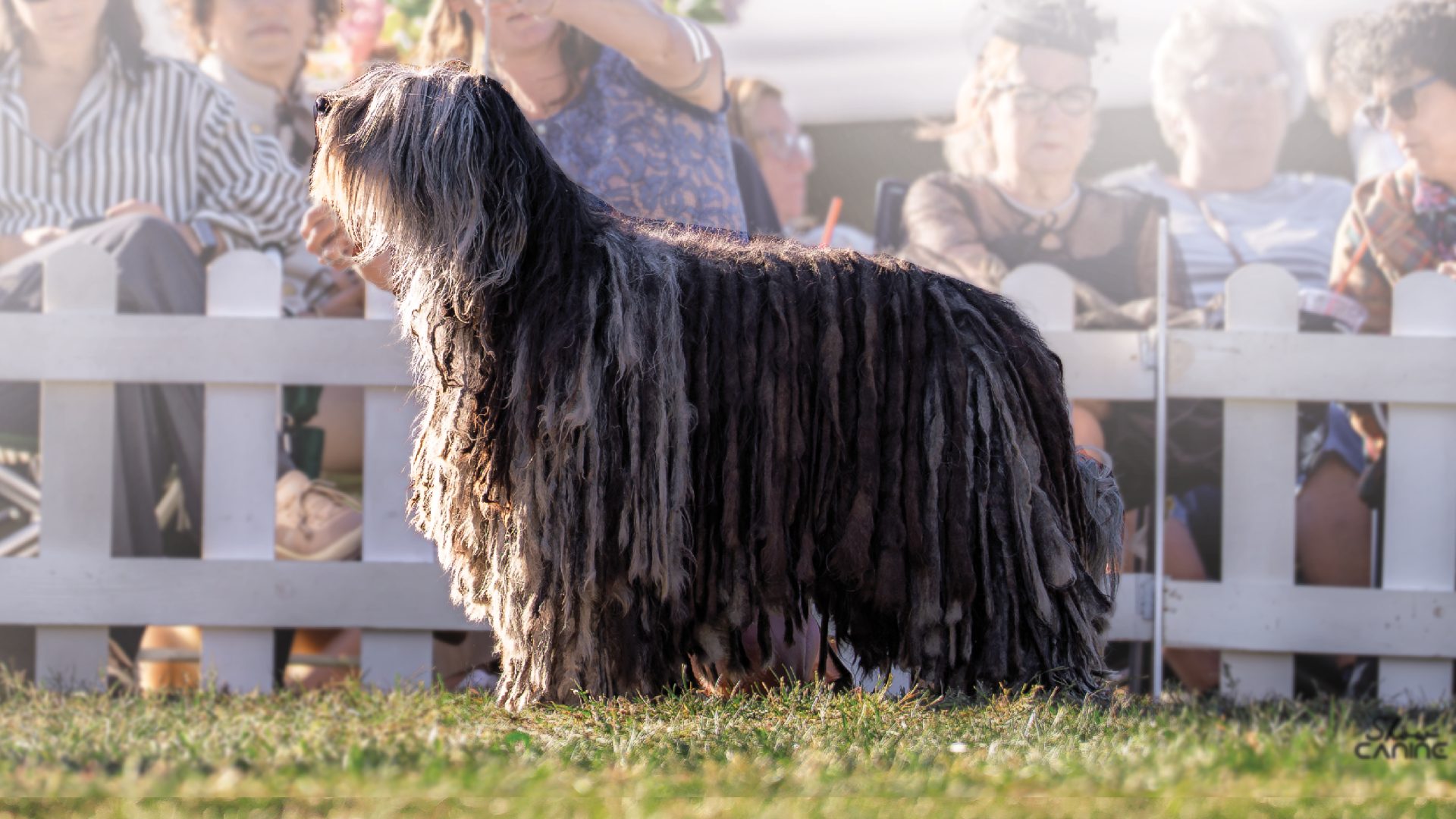
Texture: The Bergamasco Sheepdog is renowned for its unique coat, which consists of three different types of hair that combine to form characteristic flocks or mats. These flocks serve not only as a protective measure against the cold and predators, it also gives the breed its distinctive appearance. The coat's texture can range from wooly to more hair-like, and as the dog ages, the coat changes and the flocks can reach the ground.
The Bergamasco’s coat takes years to mature and can vary considerably. The distribution, size, texture, and thickness of the flocks grow differently on every dog. The hair is composed of three hair types: undercoat, “goat hair,” and wooly hair. The undercoat provides insulation, with the other two types weaving naturally together to form flat, irregular flocks. The absence of wool is unacceptable; however, trimming is acceptable.
Markings: Gradations of Gray (including Merle)
Standard Colors
04/Consider
Owning a Bergamasco Sheepdog is a rewarding experience, but potential owners should consider various aspects of this breed to ensure it matches a person or family's lifestyle and expectations. This ancient herder, with its distinctive coat and diligent nature, requires specific care, attention, and understanding in order to thrive.
Interaction With Family
The level of affection a breed typically shows towards family members and familiar individuals.
Good With Other Dogs
The innate friendliness of a dog towards other dogs can depend on its breed.
Good With Young Children
The degree to which a breed will typically be patient with young children.
Amount Of Shedding
How much hair a breed typically leaves behind on clothes, furniture and floors.
Frequency Of Grooming
How often a breed needs brushing, bathing or a professional trim to stay in condition.
Amount Of Drooling
How prone a breed is to drool — worth knowing before you keep a towel by the door.
Openness To Strangers
How openly a breed tends to greet new people, visitors and strangers.
Protective Nature
How likely a breed is to alert you to — and stand between you and — anything unfamiliar.
Playfulness Level
How enthusiastic a breed stays about games and play well past puppyhood.
Trainability Level
How readily a breed takes direction and works with you rather than around you.
Barking Level
How much a breed uses its voice, and how readily.
Energy Level
How much get-up-and-go a breed brings to an average day.
Health
In general, the Bergamasco Sheepdog is a robust and healthy breed with a long lifespan, reflecting its origins as a hardy mountain dog. Lifespan: The breed typically enjoys a lifespan of 13 to 15 years when given proper care, a balanced diet, and regular health check-ups.
The Bergamasco Sheepdog is recognized as a devoted, intelligent, and patient breed, embodying qualities that have been honed through generations of herding livestock. For those wondering if this breed is a good fit for novice owners, it's worth noting that while the Bergamasco is patient and generally amiable, its intelligent and independent spirit can sometimes present challenges for those unfamiliar with dog training. These dogs benefit from consistent and understanding training approaches, making them potentially rewarding companions for even those new to dog ownership.
One of Bergamasco's striking traits is its sensitivity. These dogs bond deeply with their families, often becoming finely attuned to the emotions and ambiance around them. This sensitivity means they tend to thrive with positive reinforcement during training and can become somewhat withdrawn if treated harshly. Their deep connection with their families also means they don't take well to being left alone for long stretches. They flourish best when involved in family activities and given regular companionship.
With their herding lineage, Bergamascos generally exhibit good behavior around other dogs, especially if they've been socialized from a young age. This same background and their gentle, patient nature often make them excellent companions for families with children. They're known to keep a watchful, protective eye on younger family members. This doesn't mean, however, that they're overly friendly with every new face they encounter. When it comes to strangers, the Bergamasco Sheepdog tends to be protective and might exhibit reserved behavior, being naturally cautious and observant around unfamiliar individuals.
Exercise Expectations
Bergamascos, despite their shaggy appearance, are dynamic dogs. Their exercise regimen should be more than just a leisurely walk around the block. Incorporating activities that engage both their mind and body will be beneficial. Play sessions, interactive games, and structured training exercises can be particularly effective in keeping them engaged. However, the intensity of exercise should be tailored to their individual needs. While some Bergamascos might be content with a long walk followed by a play session, others might need more vigorous activities like fetch, agility training, or even herding exercises if the environment permits. It's crucial to observe a Bergamasco and adjust its activities based on the dog’s energy levels. Another noteworthy trait of the Bergamasco is its playfulness. These dogs often enjoy playing with toys, engaging in tug-of-war, or simply romping around in a secure yard. This playfulness can be a great way to bond with a dog and it provides a way to be sure it’s receiving enough physical activity. However, exercise isn't just about physical activity. Mental stimulation is equally crucial for this intelligent breed. Puzzle toys, obedience training, and even learning new tricks can help to keep the Bergamasco’s mind sharp and prevent potential behavioral issues that might arise from boredom.
The experience of living with a Bergamasco Sheepdog is genuinely unique, thanks to the breed’s rich heritage, distinct coat, and affable nature. However, understanding this dog’s specific needs can help to ensure a harmonious coexistence.
Given their herding background, one might assume that Bergamascos are best suited for open spaces or farms. While they do thrive in such environments, they're also adaptable to apartment living, but only as long as their exercise needs are met consistently. Their moderate-to-high energy levels necessitate daily physical and mental stimulation, regardless of the size of the living space.
One significant consideration when living with a Bergamasco, especially in more confining spaces, is the dog’s coat. This breed’s unique flocked coat can collect dirt and debris, which is likely to get carried back into the house. Regular inspections and occasional baths can help to remedy this.
When it comes to weather considerations, the Bergamasco's dense coat offers protection against cold temperatures. These dogs are well-suited for colder climates, and their flocks provide insulation against the cold. However, in hot weather, it's essential to be cautious. The same coat that protects them in the cold can make them susceptible to overheating in overly hot conditions. During warmer months, it's advisable to ensure they have access to shade and fresh water, and to avoid intense physical activity during the hottest parts of the day.
The Bergamasco Sheepdog's sociable and loyal nature can make this breed a great companion. These dogs are protective of their families, often forming strong bonds with their human counterparts. This loyalty, combined with the breed’s intelligence, can sometimes lead to the Bergamasco being reserved or wary of strangers. Early socialization can help to encourage a balanced temperament and reduce any tendency towards over-protectiveness.
05/Puppies
The sight of a Bergamasco Sheepdog puppy, with its soft, fluffy coat and curious eyes, is truly enchanting. Like all puppies, Bergamascos in their early days are playful, inquisitive, and filled with boundless energy. It's during these crucial early months that the foundation for a well-adjusted adult dog is laid.
When it comes to caring for a Bergamasco puppy, there are certain considerations and practices that can ensure the pup grows up to become a healthy and well-adjusted adult.
One of the first noticeable traits of Bergamasco puppies is their soft, wool-like coat. As they mature, this coat will undergo a transformation, forming the breed's distinctive flocks. Owners can assist in this natural matting process, making sure the flocks don't become overly thick or cumbersome. Regularly inspecting the skin underneath, even at a young age, helps in identifying any potential issues early on.
Nutrition plays a pivotal role in the growth and development of a Bergamasco puppy. Ensuring the pup is fed a balanced diet, formulated specifically for puppies, can support its growth phase and maintain its overall health. Monitoring the puppy’s weight and ensuring it isn't overfed is also vital, as obesity can lead to various health issues later in life.
Training and socialization should begin early. Given the Bergamasco's intelligence and independent nature, introducing the puppy to basic commands and making sure it’s exposed to various environments, sounds, and experiences will undoubtedly shape its temperament. Positive reinforcement techniques will often work best with this breed.
Puppy-proofing the living environment is essential. Like all young dogs, Bergamasco puppies are curious and can sometimes get into mischief. Ensuring that potential hazards, like electrical cords or toxic plants, are out of reach can create a safer space for them to explore.
Regular vet check-ups, vaccinations, and preventive treatments for parasites are critical components of puppy care. Building a relationship with a trusted veterinarian will all but guarantee the puppy will be put on the right track health-wise.
In essence, caring for a Bergamasco Sheepdog puppy requires dedication, patience, and knowledge. With the right approach, these young dogs can blossom into loyal, intelligent, and well-adjusted adults.
06/Activities
Engaging a Bergamasco Sheepdog in activities and dog sports can provide this heritage breed with essential physical and mental stimulation. The versatility of these dogs allows them to excel in various activities. Here's a list of some of the most suitable arenas and sports events for this breed:
Herding Trials: Reflecting their lineage, Bergamascos possess a natural instinct for herding. Participating in these trials simulates the tasks they were originally bred for, challenging them to move livestock in controlled ways.
Agility: This sport tests a dog's speed, dexterity, and obedience as it navigates a timed obstacle course. With proper training, the intelligent Bergamasco can excel at Agility Trials.
Obedience: These trials gauge a dog's ability to perform a sequence of commands and exercises alongside a handler. The Bergamasco's keen intelligence and eagerness to please can make this breed a top contender.
Rally: A mix of Obedience and Agility, Rally involves the dog and handler moving through a course with signs that indicate various exercises. It's both challenging and engaging for Bergamascos.
Barn Hunt: This is a relatively new sport where dogs find rats (safely encased in tubes) concealed in straw or hay courses. Given the Bergamasco's background as a farm dog, Barn Hunt taps into the breed’s innate instincts.
Conformation Shows: The Bergamasco's unique appearance and distinctive coat make them standouts in any arena, but especially in Conformation Shows. These competitive events allow individual dogs to be judged against their breed’s standard of perfection.
In essence, whether it's showcasing their legacy in herding, testing their agility, or putting their obedience to the test, Bergamasco Sheepdogs thrive in a myriad of activities and dog sports.
Gallery
07/Standards
The Bergamasco Sheepdog is recognized by the world's leading registries and kennel organizations, which categorize the breed into a specific Group based on its unique characteristics. This breed is recognized worldwide under the following Group designations:
The ideal Bergamasco Sheepdog is described by a Breed Standard that is approved by each of the world’s leading registries and kennel organizations. The Breed Standards for this breed may be found in the following links:
08/Clubs
Breed clubs play an essential role in the preservation and promotion of specific dog breeds. For the Bergamasco Sheepdog, these organizations have been instrumental in safeguarding the breed's survival and continued recognition in the dog-loving community.In the United States, the primary breed club dedicated to the Bergamasco Sheepdog is the Bergamasco Sheepdog Club of America (BSCA). This organization serves as a central hub for breed enthusiasts, offering resources on the Breed Standard, breed health, social events, and more. The club’s members work tirelessly to ensure the Bergamasco's health, temperament, and working ability are maintained.In Canada, the Bergamasco Shepherd Association of Canada champions the breed, providing resources and hosting events to highlight and celebrate the Bergamasco Sheepdog's unique qualities.In the United Kingdom, the Bergamasco Sheepdog Club UK stands as the main organization supporting the breed. This club is dedicated to the promotion, protection, and betterment of the Bergamasco Sheepdog.
09/Rescue
The journey of a Bergamasco Sheepdog doesn't always follow a straight path, and sometimes these dogs find themselves in need of a second chance. Rescue organizations, both breed-specific and general, work tirelessly to ensure that these unique sheepdogs find loving, forever homes.In the United States, while there might not be a rescue group devoted solely to the Bergamasco Sheepdog due to its rarity, several all-breed rescue organizations and shelters often come across this breed. It's recommended for potential adopters to check with the Bergamasco Sheepdog Club of America (BSCA) for guidance on rescues or rehoming situations involving Bergamascos.For those in Canada, the situation is similar. While there might not be a Bergamasco-specific rescue group, the Bergamasco Shepherd Association of Canada could provide assistance or direct prospective adopters to trusted all-breed rescues that may have a Bergamasco in need.In the United Kingdom, the Bergamasco Sheepdog Club UK can act as a resource for those interested in adopting or assisting Bergamascos in search of love and permanent companionship.
10/Facts
Ancient Roots
The Bergamasco’s lineage can be traced back over 2,000 years. This ancient breed has been a steadfast companion to shepherds in the Alps for many generations.
Protective Coat
The Bergamasco's unique flocked coat isn’t just for show. It offers protection against harsh Alpine weather and also acts as armor against predators, making it difficult for them to get a firm grip on the dog.
Three Hair Types
Bergamasco's iconic coat is made up of three types of hair: the undercoat, the "goat hair," and the wooly outer coat. These combine and mat together, forming the breed's characteristic flocks.
Low Maintenance Flocks
Contrary to what one might believe, the Bergamasco’s flocked coat requires minimal grooming. Once the flocks are formed, they largely maintain themselves, with occasional trimming needed around the eyes and the rear.
Intuitive and Independent
Historically, Bergamascos would often be tasked with leading sheep over long distances without constant oversight from their shepherds. This bred an independence and intuitive decision-making trait into the Bergamasco, making these dogs both independent thinkers and fiercely loyal protectors of their flock.
Rare but Remarkable
Though the Bergamasco is relatively rare, its charm and distinctive look have earned it a dedicated following. In recent years, there’s been a slow but steady rise in interest and appreciation for the breed, especially among purebred dog enthusiasts.
Versatile Workers
Beyond herding, Bergamascos have been employed in a variety of roles, including as guard dogs and even as therapy dogs, showcasing their adaptability and gentle nature.
11/FAQ
Yes, Bergamasco Sheepdogs are thought of as good family dogs. They are known for their patient, gentle, and loyal nature, which makes them great companions for families. They can form deep bonds with their family members, and their intelligent and independent nature allows them to coexist well with children.
Official Standard of the Bergamasco Sheepdog
General Appearance: The Bergamasco, with origins dating back almost 2,000 years, is a true heritage breed, which developed unique characteristics without man-made aesthetics. The Bergamasco Sheepdog is a medium-sized dog of rustic appearance with an abundant coat covering all parts of the body. Strong, sound and brave, the Bergamasco is above all very intelligent, calm and even-tempered. The distinctive flocks (flat woolly strands of felted hair) that cover their bodies protect them from the elements, as well as making them appear larger, with a foreboding appearance warning most predators to stay away. Bergamascos are mountain sheepdogs that are slightly longer than tall. Their unique skeletal structure makes them well-equipped for working in rough terrain. Correct, efficient movement is essential. Owing to the steeper shoulder and pelvis angles, they have a free, low-reaching, extended elastic trot with both front and rear feet remaining close to the ground. Having no need for speed, their gait is a steady, slow trot that can be maintained for long periods without tiring. There is a fair amount of variation both with respect to size and coat. The variations discussed in detail below are not considered undesirable as they do not affect the working ability of the dog. The ideal Bergamasco at any stage in coat development is a well-balanced dog with a rustic appearance. The ideal height ranges from 21 to 25 inches.
Size, Proportion, Substance: The Bergamasco is ideally suited to move and guard sheep on the alpine rocky slopes and pastures with a body slightly longer than tall. Built for strength and resistance, the Bergamasco has a lean, athletic build on sturdy (but not heavy) bones with a well-developed chest, relatively short necks with firm, limber muscles. This framework is well-muscled, without being thick or bulky. The length of body measured from point of shoulder to point of buttocks is 5 to 6 percent longer than the height measured at the withers. (Height-to-length ratio approximately 10:10.5 to 11.) Measured at the withers, the ideal dog stands 23½ inches and the ideal bitch stands 22 inches. However, there is a fair amount of variation in the breed with respect to height, and taller females or shorter males are acceptable as long as they are between 21 and 25 inches tall. Males weigh between 70 and 84 pounds. Females weigh between 57 and 71 pounds. Disqualification – Height under 21 inches. Any height over 25 inches must be considered a fault. The minimum height requirement of 21 inches shall not apply to dogs or bitches under twelve months of age.
Head: The head is large, roughly proportionate to the size of the dog. The skull and muzzle are of equal length, (parallel to one another) and joined at a pronounced stop. The hair on the head may either be flocked or not. In either case, the typical disheveled appearance is natural and rustic. Eyes - The eyes are large, oval, and set just slightly obliquely. Eye color is chestnut, with the darkness of the color varying from hazel to dark brown. The eye rims are tight-fitting and black pigmented; eyelashes are particularly long so that they can lift the hair falling from the forehead over the eyes. The expression is attentive and calm. Disqualifications – Any lack of pigmentation of the eye rims; one (or two) full blue eye(s). Ears - The ears are soft and thin and hang down on either side of the face. The ears are set high. At its widest point, the ear is from 2½ to 3 inches wide. Ear length does not exceed half the length of the head, and shorter is preferred. The top two-thirds of the ear is triangular, with slightly rounded tips. When the dog is alert, the ears prick up at the base, with the top two-thirds semi-drooping. Viewed from the side, the ears appear to be an extension of the curve of the back of the neck. The ears may either be flocked or not. Skull - The skull is slightly domed between the ears and rounded at the forehead. The skull is as wide as it is long and features a prominent occiput and a marked median furrow. Muzzle - The depth and width of the muzzle, measured at midpoint, are each half the length of the muzzle. The muzzle is blunt, tapering only slightly toward the nose. The upper longitudinal planes of the skull and the muzzle are parallel. Nose - The nose is large and black, with big, well-opened nostrils. In profile, the nose is on the same line as the top of the muzzle and does not extend beyond the forepart of the muzzle. Disqualification – Dudley nose. Lips - The lips are tight and black pigmented. Bite and Teeth: The jaw is wide with strong, evenly spaced teeth meeting in a scissors bite. The line of the incisors is straight and perpendicular to the outside lines of the jaw. A level bite is acceptable. Serious Faults – Overshot, with a space greater than one eighth of an inch. Undershot bite, such that there is a complete loss of contact by all the incisors.
Neck, Topline, Body: Neck - The neck is strong, slightly arched, with well-developed muscles. Measured from the nape to the forward edge of the withers, the neck is 20 percent shorter than the length of the head. The neck circumference is at least twice the length of the neck. There is no dewlap. The hair on the neck forms a thick collar with a varying degree of flocks present. In action, the neck is carried forward with its upper profile almost a continuation of the topline, with only a slight angle at the withers. Topline - The stacked side silhouette presents a level topline to a slight rise over the loin with a slightly sloping croup falling off to a low-set tail. While moving, the topline is level. Body - Chest and Ribs: The chest is heart-shaped when felt from the front. The rib cage is well-sprung and let down to the elbow. (The depth of the rib cage is equal to half the dog's height at the withers.) Tuck-up - Tuck-up is nearly absent. Back - The back is straight. Loin - The loin is slightly convex, firmly joining the back and the croup. Croup - In the Bergamasco, the croup slopes about 35 degrees downward from the horizontal. Pelvis - The pelvis is well-developed. The length is 31 to 32 percent of the height at the withers with a fallaway of 35 to 40 degrees from horizontal. Due to the steeper inclination of the pelvis, the rear extension is lesser than other breeds who work on flat terrain where speed and stride width are more important than power. Therefore, at a trot, the Bergamasco’s drive will not be as high and long as other herding dogs. Tail - The tail is natural and undocked, thick at the base, and tapering to the tip, inserted in the lower third of the croup. When in repose, the tail hangs down to the hock and curves slightly outward. While moving the tail flags back-and-forth at a level higher than the topline, but not curling forward over the back.
Forequarters: The legs are straight when viewed from the front and side and well-proportioned in relation to the size of the dog. Shoulders - The shoulders are tightly knit and strong. The shoulder blades are wide and long with a steep angulation, 55 to 60 degrees from the horizontal. The length is at least one-fourth the height at the withers. Upper Arms - The upper arms are strong and well-muscled. They are just slightly longer than the shoulder blades. The angle formed by the upper arm and shoulder blade is about 115 degrees. The ratio between the distance from withers to elbow and from elbow to the ground is 1:1. This is essential for a dog which has to move both up and downhill where extra effort is required. Elbows - Elbows are set on a plane parallel to the body. They are neither close to the body nor jutting out. The humeroradial angle (between upper-arm and forearm) ranges from 150 to 155 degrees. The hair hanging down from the elbows is profuse, long and thick, tending to flock. Forearms - The forearms are strong with lean muscle. They are roughly the same length as the upper arms (1:1) and are placed so that the point of the elbow is on a vertical line falling from the top of the shoulder blade. Pasterns - The pastern joint (carpus) follows the vertical line of the forearm and is very mobile. The pasterns are straight when viewed from the front, and slightly sloping when viewed from the side (about 10 degrees from vertical). Dewclaws - Dewclaws may be removed. Feet - The front feet are oval shaped, arched with tight toes, well-flocked with hair. Pads - The pads of the feet are thick and black pigmented with a tight skin. Nails - The toenails are strong and black.
Hindquarters: The Legs are straight when viewed from the back and well-proportioned in relation to the size of the dog. The femur and tibia are roughly the same length. This, in combination with the 35 to 40 degree slope of the pelvis, make the dog better suited for locomotion over hilly territories. Upper Thighs - The upper thighs are long, wide, and well-muscled, sloping downward and forward at a 95 to 100 degree angle from the pelvis. Stifles (Knees) - The Stifles are perfectly in line with the limbs, neither turned in nor out. Lower Thighs - The lower thighs are as long as the upper thighs, with lean muscles. They slope downward and back, forming an angle of about 105 to 110 degrees at the stifle joint (femur-tibia). Hocks - The length of the hock is no less than 25 percent of the height at the withers. Viewed from behind, the rear pasterns are vertical and parallel to one another. Viewed from the side, the rear pasterns are vertical and placed so that the hocks just slightly extend past a vertical line dropped from the point of buttock. The angle of the hock joint (tibio-tarsal) is about 130 to 135 degrees. Dewclaws - Dewclaws may be removed. Feet - The back feet are slightly smaller than the front ones. They are oval shaped, arched with tight toes, well-flocked with hair. Pads - The pads of the feet are thick and black pigmented with a tight skin. Nails - The toenails are strong and black.
Coat: The Bergamasco is a rustic, working dog with a coat that takes years to reach maturity, and can vary considerably. As discussed in detail below, the distribution, size, texture and thickness of the flocks grow differently in each individual. A young dog’s coat goes through a number of stages in the early years. Female coats are subject to change due to hormones and raising pups. These are natural differences and therefore are not to be penalized. The make-up of the Bergamasco's coat is extremely complex. The hair is composed of three types of hair: undercoat, "goat hair," and woolly hair. The undercoat is short, dense, and of fine texture adhering to the skin forming a protective, waterproof layer. The "goat hair" is strong and rough in texture, as in goats, which stays smooth without tufting together with itself. The third type of hair is woolly hair. This type is somewhat finer in texture and grows together in tufts. The "goat hair" and the woolly hair naturally weave together over time and form the flocks, which have a tight consistency akin to boiled wool. The flocks are somewhat flat, irregular in shape, and sometimes open in a fan-shape at the tip. The distribution of the goat and woolly hair over the body is not homogeneous. Because of this, there is little uniformity in the abundance, size and width of the flocks throughout the body. For instance, from the top of head, continuing over the top of neck and top of withers and often down to the shoulder joint up to the middle of the back, “goat hair" predominates, resulting in a smoother texture and less flock formation. However, the complete absence of wool is not acceptable. On the remaining parts of the neck, shoulders and chest, the presence of the woolly hair is more prevalent; thus, has more flock formation. On the back of the body and the legs, the woolly hair is very abundant and mingles with the reduced quantity of "goat hair;" thus, an abundance of flocks form in this region. The hair on the legs also hangs in flocks rather than feathering. The hair on the top of head and ears may either be flocked or not. In either case, the typical disheveled appearance is natural and rustic and hangs over the eyes. The eyelashes are exceptionally long and serve to hold the hair/flocks somewhat away from the eyes. The coat is never shaven or the wool brushed out. Trimming is acceptable for hygienic reasons and the ease of movement around the feet and pads. Also, the coat may be thinned or trimmed when it becomes too thick and long hampering normal movement and compromises the dog’s welfare. However it must maintain the traditional rustic appearance of the dog. Puppies: From birth to 10 to 12 months of age, the coat is soft and short. At approximately 9 to 10 months of age, the goat hair and woolly undercoat begin to grow in. Human intervention is usually required to separate the coat into the beginnings of flocks at this point. This leads to the formation of informal bundles, then eventually to stubby formations that can give an unkempt and messy appearance at this period of the dog’s life. This is natural and unavoidable. It is only at approximately 3 years of age that the flocks will have grown long enough for the unique look for which the dog is known to begin to be achieved. The flocks continue to grow throughout the dog’s life. They may reach the ground at 5 to 6 years of age; hence young dogs must not be penalized for a coat which has not yet lengthened.
Color: Only eumelanin, i.e., black melanin is present in Bergamascos. Bergamascos are born solid gray or gradations of gray (including merle) up to and including solid black. The color often changes to different shades as the dog matures. The majority of dogs born black as well as the black patches of the merle dogs will lighten into shades of grey from light to charcoal due to a “fading black” gene; a few will remain black. A superficial coloring includes shadings of tawny-brown and fawn at the lower part of flocks as a result of discoloration of old hair under the influence of sun, water and atmospheric factors in general as well as aging of the hair. The loose hairs gradually change color: the gray hairs turn yellowish while the black ones take on a tawny hue. The overall look of these may be more reddish brown from a distance. The flocks must be examined at the roots, close to the skin, here the coat must be either black or gray. Solid white is not allowed but white markings are acceptable if they cover no more than one-fifth of the body. Disqualification – White coat color on more than one-fifth of the total area of the body.
Gait: Bergamascos had to adapt to various ways of moving the sheep, sometimes covering long distances every day to get to the grazing grounds, while at other times they would only cover short distances within specific areas. The gait must have steady and elastic movement with resistance for efficiency and power. Due to its unique angulations of the fore and hind quarters and compact build, the Bergamasco’s gait is focused on resistance, strength and low center of gravity, with both fore and hind feet closer to the ground. The forward and backward reach, while extended are less than flatland herding breeds. The proportions and angles of the fore and hind quarters provide the needed for strength and resilience in hilly terrain. Their natural gait is slower paced than other herding dogs. The natural and preferred gait for the Bergamasco to achieve a calm and balance movement while preserving energy in a mountainous terrain is a free, extended, elastic, slow trot with both front and rear feet remaining close to the ground. The pasterns are supple and flex freely at a 90degree angle. The head is carried forward with the neck forming a slight angle at the withers. The topline is level, and the tail flags back and forth at a level higher than the topline, but not curling forward over the back.
Temperament: The Bergamasco is a drover and a guardian. The primary functions are to move and guard herds and livestock. Tasks for which the breed expresses consummate ability, thanks to its qualities of vigilance, concentration and harmonious build. The Bergamasco’s capacity for learning and strong determination are combined with a calm and patient temperament. They are bred to think for themselves and assess each situation. This does account for some of the stubbornness that runs in them. Bergamascos have a unique ability to size people up and determine the appropriate way to interact with both family members and strangers. While they may appear aloof, they are ever watchful. Just because the eyes are not seen does not mean they are not watching. They have an eager-to-please nature and establish a close relationship with humans. The breed must never be aggressive without cause, or fearful. Bergamascos are highly intelligent and self-possessed and may display indifference to attempts to engage their attention.
Serious Faults: Overshot, with a space greater than one eighth of an inch. Undershot bite, such that there is a complete loss of contact by all the incisors.
Disqualifications
Height under 21 inches. The minimum height requirement of 21 inches shall not apply to dogs or bitches under twelve months of age.
Any lack of pigmentation of the eye rims; one (or two) full blue eye(s).
Dudley nose.
White coat color on more than one-fifth of the total area of the body.
Approved February 8, 2022
Effective May 4, 2022


Meet the Judges
Sharon Ann Redmer reflects on judging Herding breeds at Westminster 2026, highlighting breed function, type, and standout winners.
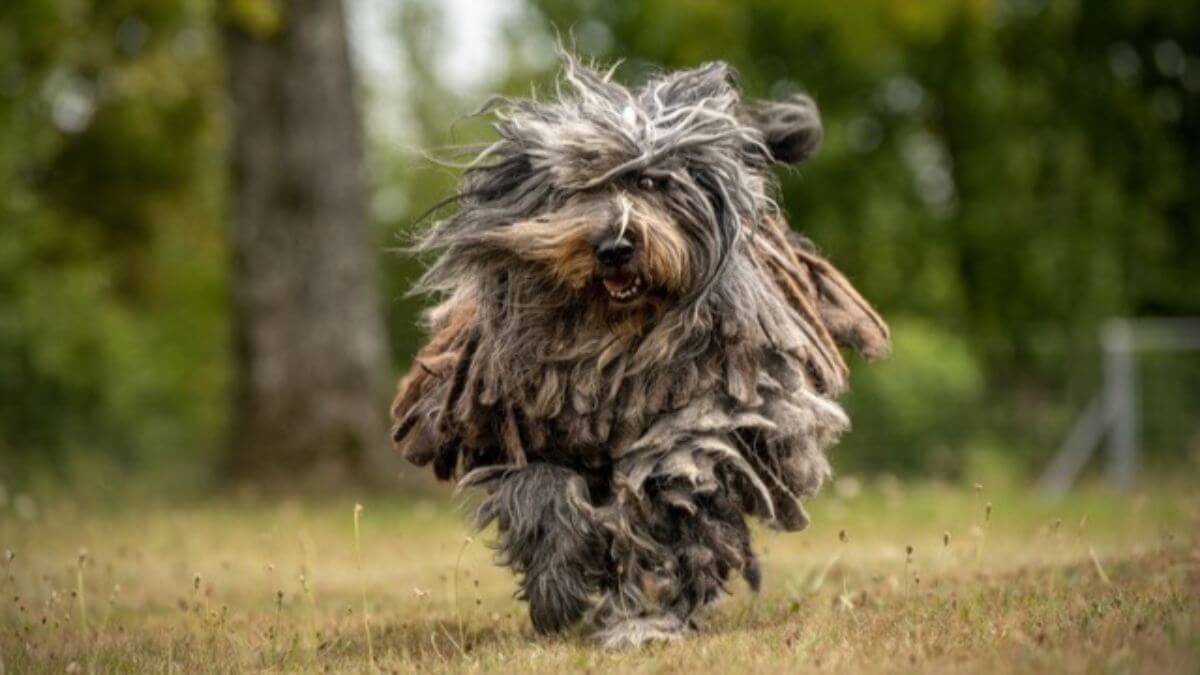
All About Judging
Judging the Bergamasco Sheepdog: Key traits, movement, and coat insights for appreciating this unique heritage breed.
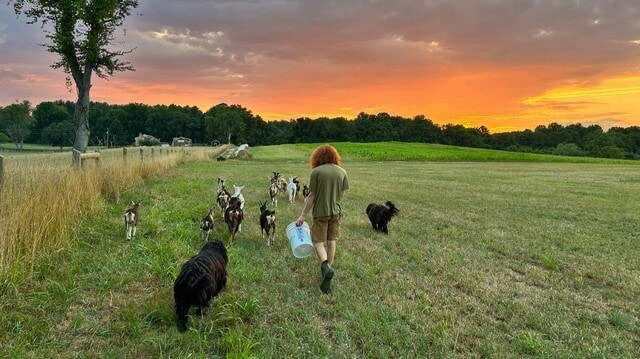
Herding Group
Discover the ancient Bergamasco Sheepdog: a versatile herder, flock protector, and loving family companion.
Meet the Breeders
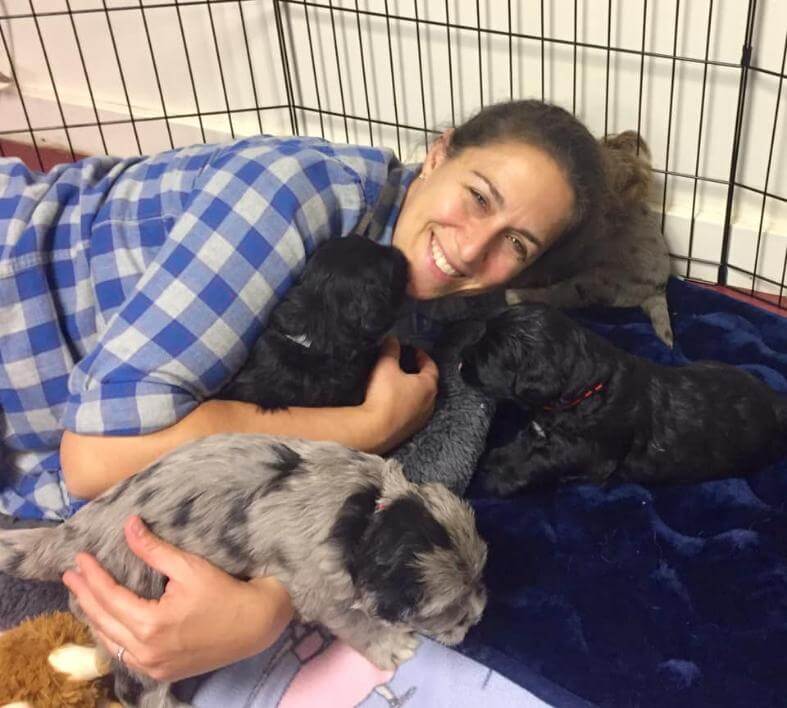
Interview with Herding Group Breeder Jeanine Dell’Orfano – I live in Connecticut and have been involved with my breed, the Bergamasco
The Bergamasco Sheepdog's tail is a defining feature, adding to the breed’s rustic silhouette. It is set low, extending from a natural line of the croup. In its relaxed state, the tail hangs down, reaching the hock or slightly below it. When the Bergamasco is in motion or alert, the tail can be raised, but it doesn’t typically curl over the back.
The tail is covered with dense, semi-long hair that can form slight waves, adding to the breed's agrarian appeal. As per the Breed Standard, the Bergamasco's tail is always undocked, allowing it to flag back-and-forth freely at a level higher than that of the topline.
A Note About Color: The Bergamasco is born solid gray in color or gradations of gray (including merle) up to and including solid black. The color tends t change to various shades as the dog matures. Black coloration in puppies (including black patch on merles) will typically lighten into shades of gray. Shadings of tawny-brown and fawn are typically seen at the lower part of the flocks due to the influence of the sun, water, and atmospheric factors as well as the aging of the hair. The overall appearance from a distance is of a reddish brown color. White markings are acceptable only if they do not exceed one-fifth of the total body area.
Coat Type
Corded
The structure of the coat this breed carries.
Coat Length
Long
How long the breed's coat grows when kept in condition.
Adaptability Level
How easily a breed copes with changes in home, routine, noise and weather.
Mental Stimulation Needs
How much a breed needs a job, a puzzle or training to stay content.
In the company of those they trust and love, Bergamascos shine as both a loyal guardian and a diligent worker, perfectly balancing their roles as family companions and dependable working partners.
The Bergamasco Sheepdog, with its robust herding history, has specific dietary needs for staying healthy and energetic. It's essential to remember that the right nutrition supports not only the dog’s physical health but also its unique coat and overall happiness.
For Bergamasco puppies, a high-quality puppy food designed for medium-to-large breeds is often recommended. As these young dogs are growing and developing, they require a diet rich in essential nutrients, proteins, and fats to support bone growth, muscle development, and overall health. Splitting their daily intake into multiple small meals can help to manage their rapid growth and ensure steady energy levels.
Once a puppy transitions to adulthood, the dietary needs of the Bergamasco shift. An adult Bergamasco typically requires a balanced diet with high-quality proteins as the primary ingredient. Given the breed’s active nature, the Bergamasco may need more calories than some less active breeds, but it's essential to monitor the dog’s weight and adjust its food intake accordingly. The average adult might consume around 2 to 3 cups of high-quality dry dog food daily, depending on size, age, metabolism, and activity level. This amount should be divided into two meals to promote better digestion and prevent the risk of bloat, a condition to which deep-chested breeds can be susceptible.
Factors like pregnancy and nursing, or regular participation in rigorous activities, might necessitate adjustments in a Bergamasco's daily food consumption. It's always advisable to consult with a veterinarian to fine-tune the dog’s diet, especially if drastic changes are noticed in its weight or energy levels.
When considering the Bergamasco's feeding routine, it's also important to have a consistent schedule and a designated feeding area, which can provide a sense of routine and security. Fresh water should always be readily available, and treats should be given only in moderation, ensuring these don't exceed 10 percent of the dog’s daily caloric intake.
Training a Bergamasco Sheepdog can be a rewarding experience, thanks to their innate intelligence and eagerness to please. Originating with a list of herding duties, these dogs were bred to be independent thinkers, capable of making decisions in the absence of their handlers. This independent streak, paired with an innate intelligence, means that training methods need to be engaging and varied to keep this breed interested.
Despite their independent nature, Bergamascos are generally eager to please their owners. This can be a double-edged sword: while they're keen to learn and engage, they can sometimes try to outthink their trainers. For this reason, early training and socialization are crucial. Introducing them to a variety of people, places, and other animals during their formative months can go a long way towards ensuring a well-adjusted adult dog.
It's essential to approach training with consistency. This breed responds best to methods that are firm yet fair. Harsh corrections or punitive measures can often be counterproductive with Bergamascos, given their sensitive nature. Positive reinforcement, like treats, praise, and play, tends to yield the best results.
Potential Bergamasco owners should be prepared for a vocal breed. They have a tendency to bark, often to alert their owners of strangers or potential threats. While this makes them effective watchdogs, it's also a trait that can be managed with proper training.
Their herding background comes with a certain level of wanderlust. Given an opportunity, a Bergamasco might try to explore its surroundings, driven by curiosity and an instinctual drive to roam and survey.
The Bergamasco's intelligence also means these dogs can have a high predation instinct. While they get along well with other animals they've been raised with, smaller pets might sometimes be seen as prey. Proper introductions and consistent training can help in managing this instinct.
Grooming Expectations
At first glance, the Bergamasco's coat might seem high-maintenance due to its distinct flocks – mats of hair that form naturally, creating a characteristic "corded" or “flocked” appearance. However, the reality is that their grooming needs, especially when it comes to regular upkeep, are quite minimal compared to many other breeds. When they are young, Bergamascos have a soft, fluffy coat. As they mature, typically between 8 months to a year old, their adult coat starts to come in. Around this time, the coat begins its unique process of matting into individual flocks. As the dog’s owner, it's beneficial to assist in this process by manually separating the flocks to ensure they don't become too thick or large, which could lead to skin issues underneath. Once the flocks are fully formed, they serve as protection from the elements and potential predators, much as they did for the Bergamasco's herding ancestors. In terms of shedding, the Bergamasco's unique coat means that any loose hair tends to get caught in the flocks rather than falling out freely. This results in minimal noticeable shedding around the house. However, this doesn't mean they don't shed at all; instead, the dead hairs are simply retained within the live coat. While Bergamascos might not need frequent brushing, it's crucial to regularly inspect the skin underneath the flocks for any signs of irritation, pests, or dirt buildup. Bathing is only necessary occasionally, and when it’s bath time, it's vital to ensure the coat is thoroughly dried to prevent any mold or mildew from forming within the flocks. In addition to coat care, regular grooming practices like nail trimming, ear cleaning, and dental care should also be a part of the Bergamasco Sheepdog’s grooming regimen.