Members
01/Overview
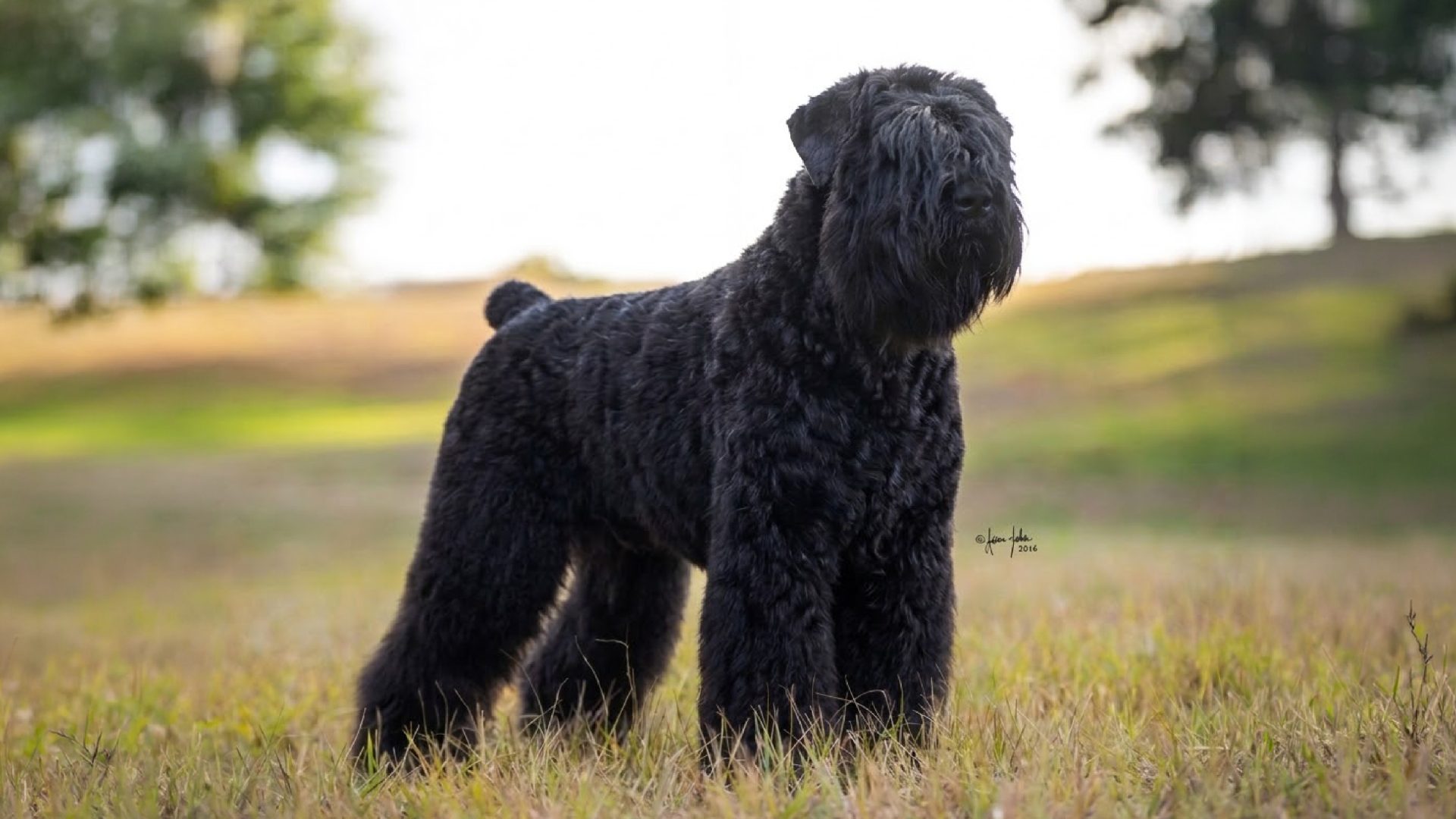
The Black Russian Terrier (BRT) is a large and robust working breed developed in the former Soviet Union for military and guard work. Known for its intelligence, courage, and loyalty, the breed excels in protection roles and thrives only in a home with an experienced handler who can meet the dog’s physical and mental needs.
Highlights
02/History
The Black Russian Terrier, also known as the "Black Pearl of Russia," was developed in the 1940s and ‘50s by the Red Star Kennel, a Soviet military program aimed at creating a versatile working dog. The breed was designed to serve as a guard dog for military installations, prisons, and other sensitive areas, with the goal of producing a dog that was powerful, intelligent, and adaptable to harsh climates.
To achieve these traits, the Red Star Kennel utilized selective breeding, combining over 17 breeds to create the Black Russian Terrier. The primary contributors to the development of the BRT included the Giant Schnauzer, Rottweiler, Airedale Terrier, Newfoundland, and Caucasian Shepherd Dog. The Giant Schnauzer provided intelligence and a strong work ethic. The Rottweiler added strength and guarding instincts. The Airedale Terrier contributed agility and endurance. And the Newfoundland and Caucasian Shepherd Dog enhanced the breed's size and adaptability to extreme weather.
By the 1950s, the breed’s development had progressed to the point where it had become standardized and was distributed to civilian breeders for further refinement. In 1958, the Black Russian Terrier was officially recognized by the Russian Ministry of Agriculture as a distinct breed. The dogs quickly gained popularity beyond military use, thanks to their versatility and suitability for roles such as search and rescue, police work, and personal protection.
The Black Russian Terrier was introduced to the United States and other countries in the late 20th century, where it gained recognition for its impressive working ability and striking appearance. The Fédération Cynologique Internationale (FCI) recognized the Black Russian Terrier in 1984, and the American Kennel Club (AKC) followed in 2004, placing the breed in the Working Group.
03/Appearance
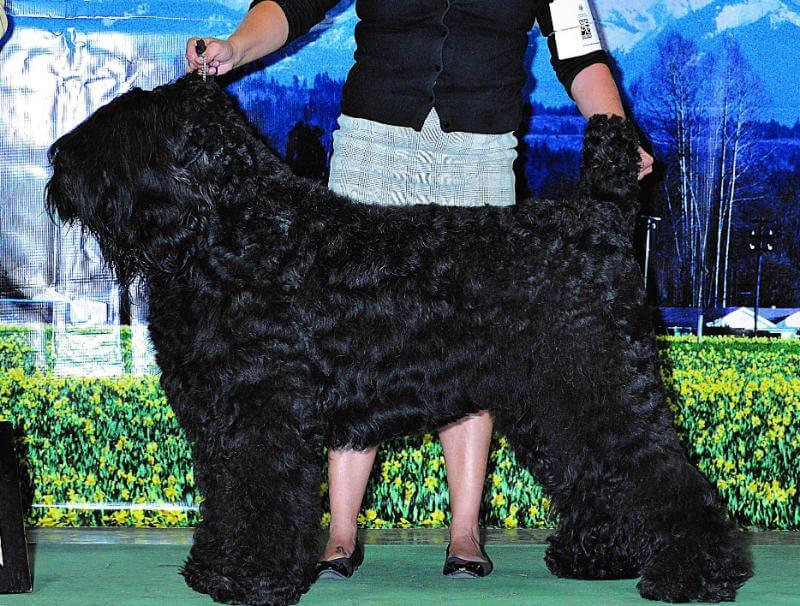
Male Black Russian Terriers stand between 27 and 30 inches tall at the shoulder, while females measure slightly less at 26 to 29 inches. They generally weigh between 80 and 130 pounds.
Skull: The Black Russian Terrier’s skull is broad and slightly rounded, with a well-defined stop.
Expression: The breed has a confident, intelligent, and alert expression.
Eyes: Eyes are medium-sized, oval, and dark brown, set wide apart.
Ears: Ears are triangular, of medium size, set high on the skull, and carried close to the cheeks.
Muzzle: The muzzle is strong, broad, and slightly shorter than the skull, tapering slightly towards the nose.
Nose: The nose is large, black, with well-developed nostrils.
Bite: A strong scissors bite with large, well-aligned teeth is required.
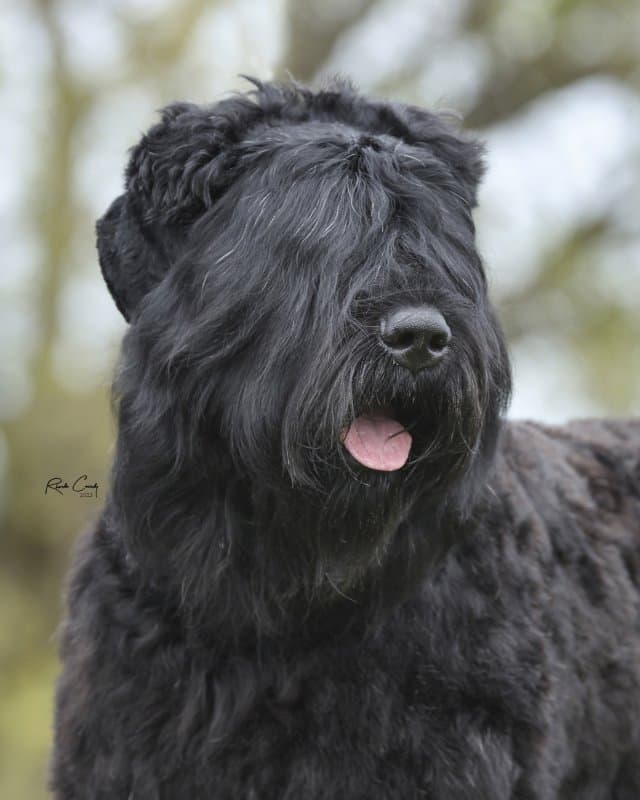
The Black Russian Terrier is a large, well-muscled dog with a balanced and powerful build that indicates both strength and endurance. The body is slightly longer than it is tall at a ratio of 9.5 to 10, with a deep chest and a strong, straight back. The appearance is sturdy and athletic, and general balance is more important than absolute size.
Texture: The Black Russian Terrier has a double coat that is dense and coarse, designed to protect the dog in harsh climates. The outer coat is rough and wiry, and varies in length from 1.5 to 6 inches, with a softer undercoat that provides insulation. The legs are covered with long, protective hair, and the head features distinctive facial furnishings, including a beard, moustache, and a fall over the eyes, which add much to the breed's imposing appearance. The coat requires trimming to maintain a tidy appearance.
Standard Colors
Standard Markings
04/Consider
The Black Russian Terrier is a highly intelligent and protective breed best suited for experienced owners who can provide firm leadership and consistent training. These dogs thrive in active households with ample space, where their physical and mental needs can be met through exercise, training, and meaningful interaction.
Interaction With Family
The level of affection a breed typically shows towards family members and familiar individuals.
Good With Other Dogs
The innate friendliness of a dog towards other dogs can depend on its breed.
Good With Young Children
The degree to which a breed will typically be patient with young children.
Amount Of Shedding
How much hair a breed typically leaves behind on clothes, furniture and floors.
Frequency Of Grooming
How often a breed needs brushing, bathing or a professional trim to stay in condition.
Amount Of Drooling
How prone a breed is to drool, worth knowing before you keep a towel by the door.
Openness To Strangers
How openly a breed tends to greet new people, visitors and strangers.
Protective Nature
How likely a breed is to alert you to anything unfamiliar, and stand between you and it.
Playfulness Level
How enthusiastic a breed stays about games and play well past puppyhood.
Trainability Level
How readily a breed takes direction and works with you rather than around you.
Barking Level
How much a breed uses its voice, and how readily.
Energy Level
How much get-up-and-go a breed brings to an average day.
Health
The Black Russian Terrier is a generally healthy breed with a lifespan of 10 to 12 years. Maintaining good health requires regular veterinary care, a balanced diet, and sufficient exercise to support the dog’s robust build and active nature.
The Black Russian Terrier is a confident, intelligent, and loyal breed known for its natural protective instincts. These dogs are deeply devoted to their families and are especially good with children when properly socialized.
While generally reserved with strangers, they are not overly aggressive and can typically distinguish between threats and normal situations. Early socialization, however, is essential to ensure they grow into well-mannered and adaptable companions, so they do best in homes where they receive consistent attention and training from the start.
Exercise Expectations
Without adequate exercise and stimulation, these intelligent dogs may become bored, which can lead to a variety of destructive behaviors. A minimum of 60 to 90 minutes of daily physical activity is recommended to meet their needs.
Grooming Expectations
The Black Russian Terrier thrives in a home with ample space and a securely fenced yard where the dog can move about freely and patrol the perimeter. These dogs are best suited for families who can provide structured training, consistent interaction, and plenty of mental and physical stimulation.
The BRT forms strong bonds with family members and does not tolerate long periods of isolation well, preferring to be actively involved in household activities. These are, however, adaptable dogs and can manage well in a variety of climates when given the proper care.
05/Puppies
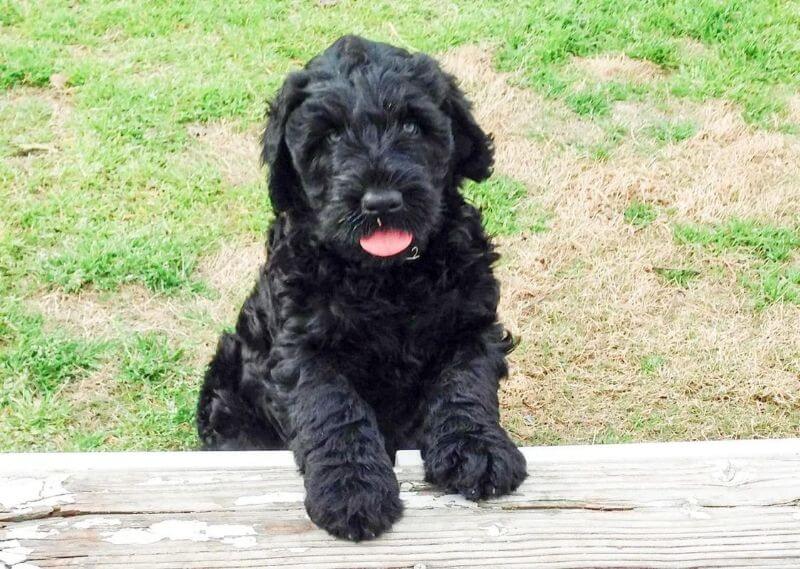
Black Russian Terrier puppies are intelligent and energetic, often displaying signs of their breed’s natural protective instincts. Early training and socialization are critical during puppyhood to help them grow into confident, well-mannered adults capable of distinguishing a normal interaction from a genuine threat.
Caring for a Black Russian Terrier puppy requires a structured routine that includes proper nutrition, consistent training, and regular veterinary care. A high-quality large-breed puppy food is essential to support rapid growth, with meals divided into three to four portions daily to prevent overfeeding and reduce the risk of bloat.
Training should begin as soon as the puppy arrives home, focusing on basic commands, housetraining, and leash manners. Positive reinforcement methods, such as treats and praise, work best for this intelligent and eager-to-learn breed. Socialization is equally important, exposing the puppy to a variety of people, animals, and environments to build confidence and reduce potential overprotectiveness.
Regular grooming sessions should start early to get the BRT puppy accustomed to brushing and trimming, especially around the face and paws. Veterinary check-ups during the first year are vital to monitor growth, administer vaccinations, and screen for any health concerns. Providing a balance of exercise, mental stimulation, and rest helps to ensure a healthy, happy, and well-adjusted puppy.
06/Activities
Obedience: Black Russian Terriers often excel in Obedience competitions, showcasing their intelligence and eagerness to learn.
Agility: Their athleticism and ability to navigate obstacles suits them well for participating in Agility Trials.
Rally: These dogs can thrive in Rally competitions, where they can display their focus and teamwork with their handler.
Conformation Shows: The BRT’s striking appearance makes it a stand out in the show ring.
Search and Rescue: With their intelligence and stamina, they can become effective participants in Search and Rescue missions.
Personal Protection Training: Their natural guarding instincts make them well-suited for Personal Protection Training, ensuring the safety of their families.
Weight Pulling: Black Russian Terriers can demonstrate their strength and determination in Weight Pulling events.
Gallery
07/Standards
The Black Russian Terrier is recognized by the world's leading registries and kennel organizations, which categorize the breed into a specific Group based on its unique characteristics. This breed is recognized worldwide under the following Group designations:
The ideal Black Russian Terrier is described by a Breed Standard that is approved by each of the world’s leading registries and kennel organizations. The Breed Standards for this breed may be found in the following links:
08/Clubs
Black Russian Terrier Club of America: Established in 1997, the BRTCA is the official parent club for the breed in the United States. The club promotes responsible breeding practices, education, and participation in a variety of activities.
Black Russian Terrier Club of Canada: Focused on preserving the breed in Canada, the BRTCC supports education, responsible ownership, and events that showcase the breed’s conformation and working abilities.
The UK Russian Black Terrier Club: Formed in 1998, this club is dedicated to promoting the breed in the UK through Conformation and Performance events, and educational initiatives for breeders and owners.
09/Rescue
Black Russian Terrier Club of America Rescue: Operated by the BRTCA, this program is dedicated to rescuing and rehoming BRTs in need across the United States.
Black Russian Terrier Rescue Association: A 501(c)(3) organization and a national rescue group for Black Russian Terriers in the United States.
National Black Russian Terrier Rescue Association: A non-profit organization dedicated to the rescue and placement of Black Russian Terriers throughout the United States.
10/Facts
Soviet Origin
The Black Russian Terrier was created by the Soviet military in the 1940s to serve as a versatile working dog for guarding duties and military tasks.
Multi-Breed Ancestry
Over 17 breeds, including the Giant Schnauzer, Rottweiler, Airedale Terrier, and Newfoundland, were used to develop the Black Russian Terrier.
Size & Strength
These dogs are large and robust, with males often weighing up to 130 pounds.
AKC Recognition
The breed was recognized by the American Kennel Club (AKC) in 2004, joining the Working Group.
11/FAQ
Yes, Black Russian Terriers shed minimally compared to many other breeds, but their dense coat does require regular grooming to prevent matting. Seasonal shedding is manageable with consistent brushing.

Written by
Dan Sayers is the Executive Editor of SHOWSIGHT. He is a member of the World Dog Press Association and the Dog Writers Association of America, which recognized his illustrations in the award-winning Encyclopedia of K-9 Terminology. Dan is a longtime supporter of the sport of dogs and an advocate for the conservation of recognized breeds in all their forms and functions. He is a member of the Morris and Essex Kennel Club, and for 45 years, the Irish Water Spaniel Club of America where he serves as AKC Delegate, Archivist, and approved Breed Mentor. Dan breeds under the Quiet Storm prefix and has judged the IWSCA National Specialty Sweepstakes twice.
Official Standard of the Black Russian Terrier
General Appearance: The Black Russian Terrier is a robust, large, balanced, agile and powerful dog. The Black Russian Terrier has large bone and well-developed muscles. He has great strength and endurance. The Black Russian Terrier must have a stable and reliable temperament, possessing self-assurance and courage.
Size, Proportion, Substance: Size - The height for males at maturity (over 18 months of age) is between 27 and 30 inches with the desired height being between 27 and 29 inches. The height for females at maturity (over 18 months of age) is between 26 and 29 inches with the desired height being between 26 and 28 inches. Any height deviation is a serious fault. Height consideration should not outweigh that of type, proportion, movement and other functional attributes. General balance is more important than absolute size. Proportion - The desired height to length ratio of the Black Russian Terrier is approximately 9½ to 10. Thus the dog is slightly longer than tall. Females may be slightly longer than males. The length is measured from point of shoulder to rear edge of the pelvis. Substance - The Black Russian Terrier must have large bones and well-developed musculature. Females are definitely to appear feminine but never lacking in substance. Light bone, lack of substance, and poor musculature are serious faults.
Head: The head must be in proportion to the body and give the appearance of power and strength. It is approximately equal to the length of neck and not less than 40 percent of the height of the dog at the withers. The eyes are oval, of medium size, dark, and set relatively wide apart. Eye rims are black without sagging or prominent haw. Light eyes are a serious fault. The ears are medium in size, triangularly shaped, set high, but not above the level of the skull. The ear leather is dense, rounded at the bottom, hanging with the front edge lying against the head and terminating at approximately mid-cheek. Cropped ears are not acceptable. The skull is moderately wide with round, but not too pronounced cheek bones. The supraorbital arches and occiput bones are moderately expressed. The back skull is flat. The stop is moderate. The back skull is slightly longer than the muzzle measured from the stop to the occiput and stop to end of nose, an approximate ratio of 5:4. The muzzle is broad with a slight tapering towards the nose. A moustache and beard emphasize volume and give the muzzle a square shape. Viewed in profile, the topline of the muzzle is parallel to the topline of the backskull. The nose is large and black. Nose color other than black is a disqualification. Lips are thick, fleshy, black, tight and without flews. The gums have dark pigmentation. The teeth are large and white with full dentition. Any missing tooth is a severe fault. The incisors form a straight line at the base. A correct bite is a scissors bite. Two or more missing teeth or bite other than a scissors bite is a disqualification.
Neck, Topline and Body: Neck - The neck should be thick, muscular and powerful. The nape is strong and well expressed. There should be no pendulous or excessive dewlap. The length of the neck and the length of the head should be approximately the same. The neck is set at an approximate 45 degree angle to the line of the back. Body - The whole structure of the body should give the impression of strength. The chest is oval shaped, deep and wide with well-sprung ribs. The bottom line of the chest extends to the elbows or below and is not less than 50 percent of the dog's height measured from the withers. The forechest is pronounced. The withers are high, well developed and more pronounced in the male than in the female. There is a slight slope from the top of the withers into a straight, firm back. The back is approximately half of the distance between the top of the withers to the base of the tail. The last half of the backline is comprised of two equal parts, the loin and the croup measured to the base of tail. (The ratio of back to loin to croup measured to base of tail is 2:1:1.) The loin is short, wide, muscular, slightly arched and elastic. The croup is wide, muscular, and slopes slightly (5 to 10 degrees). The tail is thick, set moderately high, and is carried at an approximate 45 degree angle from the horizontal. When the tail is docked, there are 3 to 5 vertebrae remaining. An undocked tail is not to be penalized. The preferred shape of an undocked tail resembles a sickle or saber. The abdomen is moderately tucked up and firm.
Forequarters: Shoulders are well laid-back with blades broad and sloping. There is good return of upper arm so that the angle between the shoulder blade and the upper arm is approximately 100 degrees. Upper arms are muscular. Elbows sit close to the body and turn neither in nor out while standing or moving. The forelegs are straight, thick, of medium length, and parallel when viewed from the front. Length of the foreleg to the elbow is approximately 50 percent of dog's height at the withers. Pasterns are short, thick, and almost vertical. Front dewclaws should be removed. Feet are large, compact, and round in shape. Nails are black.
Hindquarters: Viewed from the rear the legs are straight and parallel, set slightly wider than the forelegs. The hindquarters are well boned and muscular with good angulation to be in balance with the front shoulder angulation. Thighs are muscular and broad when viewed from the side. The hocks are moderately short and vertical when standing. Rear dewclaws should be removed
Coat: The coat is a double coat. The natural untrimmed coat length varies from 1½ to 6 inches. While the outer guard hair is coarser than the softer undercoat, it is not wiry or curly. The body coat has a slight to moderate wave. The furnishings on the head form a fall over the eyes and a moustache and beard on the muzzle. The legs are covered and protected by long, dense coat. Trimming of the natural coat is needed for suitable shape and upkeep. For presentation in the show ring, the Black Russian Terrier should be trimmed so that the dog's outline is clearly defined. The trimmed length of coat and leg furnishings may vary from 0.2 to 6 inches depending upon the location on the body. The fall and muzzle furnishings may be longer than 6 inches. In no case should grooming be given more weight than structure, movement and balance when evaluating the Black Russian Terrier.
Color: The only acceptable color for the Black Russian Terrier is solid black or black with scattered gray hairs. Any other color is considered a disqualification.
Gait: A well-balanced Black Russian Terrier should move freely in a smooth, fluid motion. In movement the normal head carriage is extended forward and the backline remains level. As movement accelerates, the feet will converge toward a centerline. The Black Russian Terrier covers a lot of ground through strong reach of the forelegs and drive of the hindquarters.
Temperament: The character and temperament of the Black Russian Terrier is of utmost importance. The Black Russian Terrier is a calm, confident, courageous and self-assured dog. He is highly intelligent and adapts well to training. The Black Russian Terrier was initially bred to guard and protect. He is alert and responsive, instinctively protective, determined, fearless, deeply loyal to family, is aloof and therefore does not relish intrusion by strangers into his personal space. Shyness or excessive excitability is a serious fault.
Faults: Any departure from the foregoing ideal should be considered a fault and the seriousness with which the fault should be regarded is in proportion to its degree.
Serious Faults: Light bone. Lack of substance. Poor musculature. Mature male under 27 inches or over 30 inches. Mature female under 26 inches or over 29 inches. Light colored eyes. One missing tooth. Shyness or excessive excitability.
Disqualifications: Nose color other than black. Two or more missing teeth. Any bite other than a scissors bite. Any coat color other than solid black or black with scattered gray hairs.
Approved May 12, 2009
Effective July 1, 2009


Meet the Breeders
Patty Bartley Shonts is breeder behind NAISSUR Black Russian Terriers. Read about the kennel’s beginnings, the puppies, and much more!
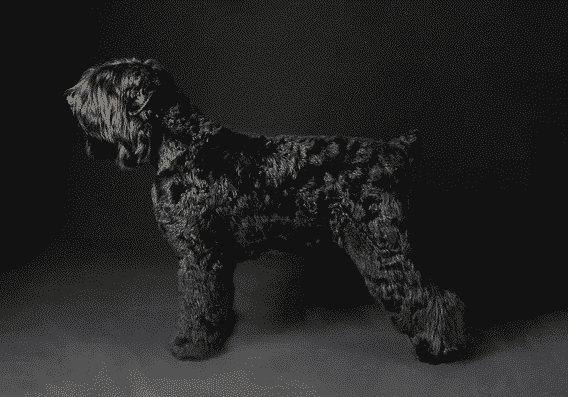

Why are Black Russian Terriers black? A Comprehensive look at the history of color and pigmentation of the Black Russian Terriers.
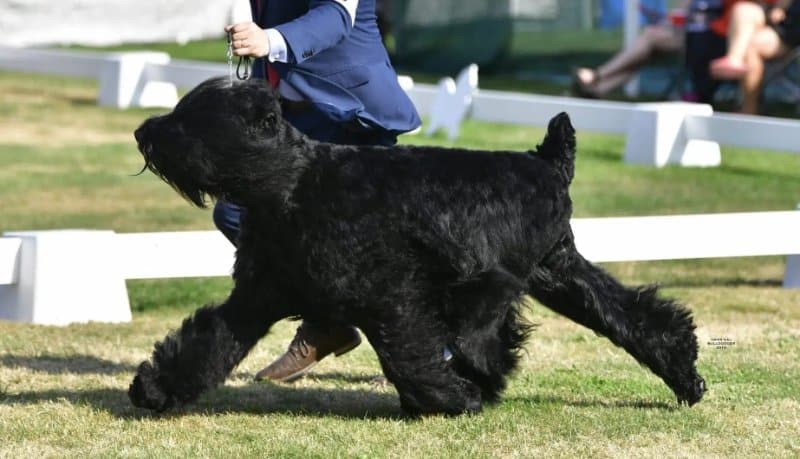
All About Judging
Read on to learn how the Black Russian Terrier breed is judged in the AKC conformation show ring. Judging size, proportion, and substance.

Meet the Breeders
Christine Robinson is the breeder behind Black Beard Black Russians. Read about the kennel’s beginnings, champions, puppies, photos & more!

Meet the Breeders
Lyla Morrell is the breeder behind Russia’s Royalty Black Russian Terriers. Read about the kennel’s beginnings, champions, puppies & more!
Preventive Medicine
The Black Russian Terrier : A Picture of Health | in general, the Black Russian Terrier is a healthy, robust dog. Like many large breed dogs

All About Judging
Over the years, there seems to be a growing confusion about the appropriate size and coat type of the Black Russian Terrier.
The tail of the Black Russian Terrier is set high and thick at the base. It is traditionally docked, leaving about three vertebrae, but in countries where docking is prohibited, the natural tail is long and carried in a slight upward curve when the dog is alert.
A Note About Color: The only acceptable color for the Black Russian Terrier is black, or black with gray hairs. Any other color is unacceptable in the breed.
Coat Type
Double, Curly
The structure of the coat this breed carries.
Coat Length
Medium, Long
How long the breed's coat grows when kept in condition.
Adaptability Level
How easily a breed copes with changes in home, routine, noise and weather.
Mental Stimulation Needs
How much a breed needs a job, a puzzle or training to stay content.
The Black Russian Terrier requires a high-quality diet tailored to its size, age, and activity level. Adult dogs typically consume 3 to 4 cups of dry dog food per day, divided into two meals to prevent overeating and reduce the risk of bloat.
Puppies should be fed a diet formulated for large-breed growth, with meals divided into three to four portions daily to support steady development. Monitoring weight gain and adjusting food portions as needed helps to maintain a healthy condition overall, avoiding issues like obesity or joint strain.
Black Russian Terriers are highly intelligent and trainable but can be independent and strong-willed, requiring firm and consistent leadership. Positive reinforcement methods, such as treats and praise, work best to keep them engaged and motivated during training sessions.
Early training and socialization are critical to teaching appropriate behavior and ensuring comfort for the BRT in various environments. Due to the breed’s natural guarding instincts, these dogs need clear boundaries to prevent overprotectiveness. Likewise, ongoing mental stimulation through obedience exercises or canine sports is essential to keep them happy and content.
The coat needs occasional trimming, especially around the beard, eyebrows, and feet, to maintain the breed’s signature appearance. Regular nail trimming, ear cleaning, and dental care are also essential parts of the grooming routine.