Members
01/Overview
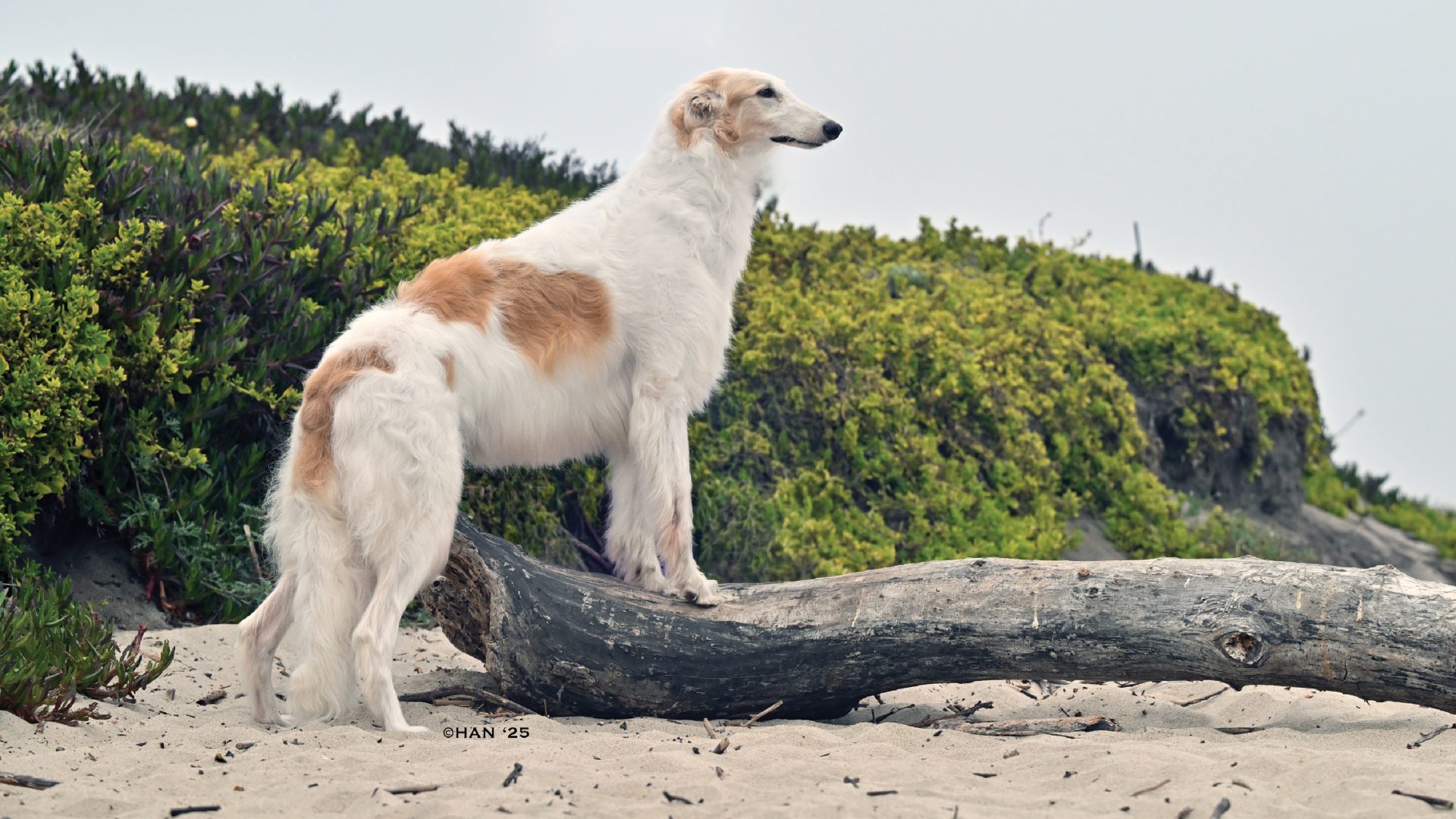
The Borzoi, previously known as the Russian Wolfhound, is a breed of immense elegance and grace. Known for its long, silky coat and slender, statuesque appearance, this sighthound is reminiscent of a refined aristocrat with an air of regal self-importance. The Borzoi has its roots in Tsarist Russia and was originally bred to chase and hunt wild game over vast expanses of land.
Highlights
02/History
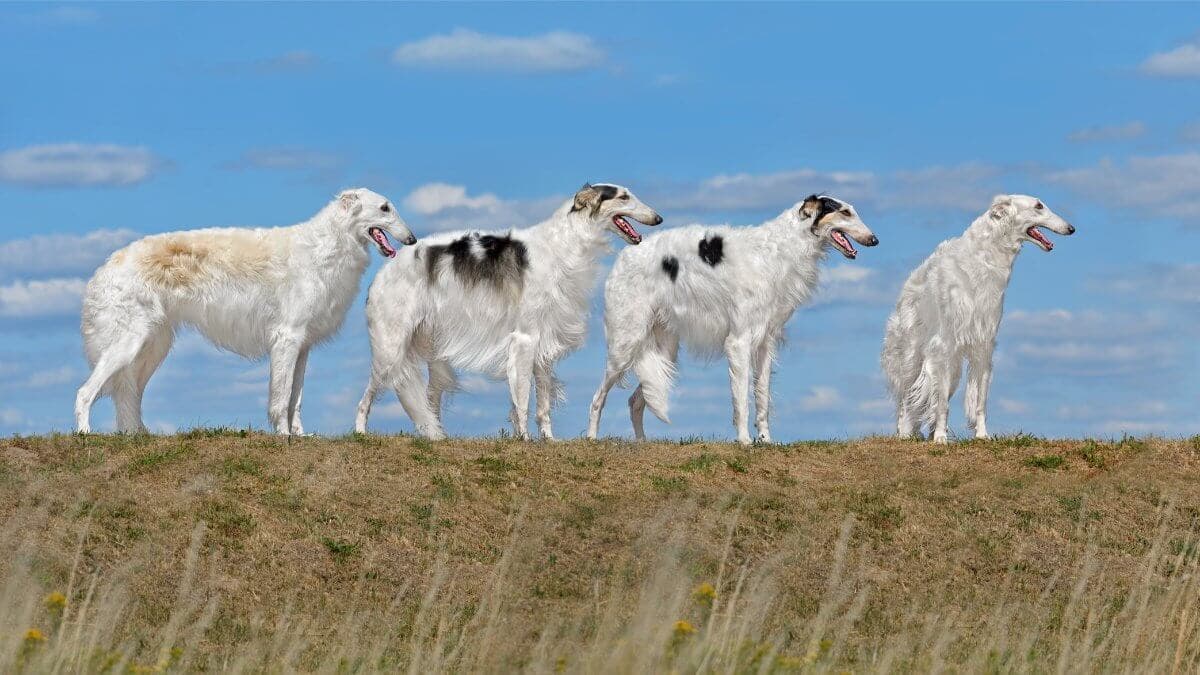
The Borzoi, or Russian Wolfhound, boasts a lineage that traces back centuries. A breed imbued with an air of aristocratic elegance, this sighthound's history is intertwined with that of the Russian nobility, the vast, landscape of the Eurasian Steppe, and the pursuit of large and powerful game.
Originating in Russia, the Borzoi was meticulously bred for centuries to hunt wolves and other big game across the sprawling terrain of the Russian Steppe. The breed’s ancestry is believed to encompass the long-haired sheepdogs of central Asia combined with swift greyhounds brought to Russia by traders.
During the Renaissance, Borzois became the favored companions of Russian nobles. The hounds were often gifted to monarchs and dignitaries across Europe, further enhancing their prestige. The breed's allure was not just rooted in their hunting prowess but also in their striking appearance and regal demeanor.
As hunting expeditions were considered grand events among the nobility, the Borzoi played a vital role. Often, a hunt began with the sighting of game by a human spotter, followed by the release of a pair of Borzoi. Working in tandem, these dogs would chase down and hold the prey, showcasing their speed, endurance, and coordination.
By the late 19th century, the Borzoi had found its way to British and American shores. The breed quickly gained popularity, not just as a hunting hound but also as a show dog and companion. The American Kennel Club (AKC) officially recognized the Borzoi in 1891. The Fédération Cynologique Internationale (FCI) acknowledged the breed much later, in 1956.
While the Borzoi's opportunity to demonstrate its hunting exploits in the modern world has greatly diminished, the breed’s appeal remains strong among purebred dog fanciers. These hounds continue to captivate enthusiasts with their grace, intelligence, and unique history, which is a testament to the breed's remarkable endurance and adaptability.
03/Appearance
Adult male Borzoi typically stand at a height of 28 inches or more at the shoulder, whereas mature females are generally slightly smaller, measuring 26 inches or taller.
In terms of weight, males usually range from 75 to 105 pounds, while females tend to weigh between 60 and 85 pounds.
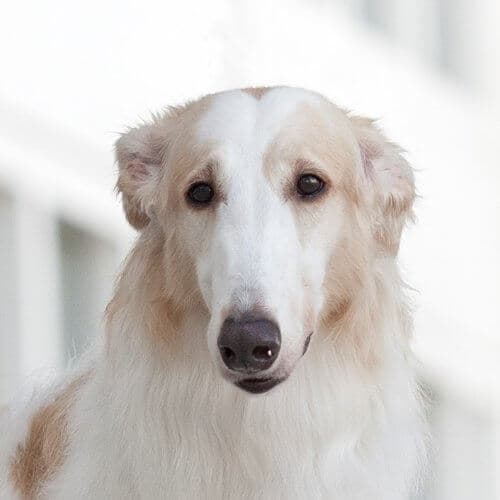
Skull: The skull of a Borzoi is long and slightly domed, narrowing gradually from the ears to the eyes, and then more sharply towards the nose. This elongation is a hallmark of the breed, giving it a refined and aristocratic appearance.
Expression: The expression is one of quiet dignity and keen alertness. The gaze is often described as introspective, almost as if the dog is lost in thought, which adds much to the breed’s mystique.
Eyes: Set obliquely, the eyes are dark and almond-shaped, contributing to the Borzoi's soft and intelligent expression. Their placement provides the hound with a wide field of vision, an essential trait for a breed originally used for hunting.
Ears: The ears are small and set high on the head. When the hound is at rest, the ears lie back, but when alert, they may lift slightly, always retaining their backward fold.
Muzzle: Long, lean, and tapering, the muzzle is a testament to the breed's sighthound lineage. Its length and shape facilitate efficient breathing, especially during high-speed pursuits in cold climates.
Nose: The large nose is prominent and dark in color, offering a stark contrast against a coat that is often light in color.
Bite: The Borzoi possesses an even or scissors bite, where the upper incisors closely overlap the lower incisors and are set square to the jaws. This configuration is efficient for grabbing and holding on to fast-moving prey.
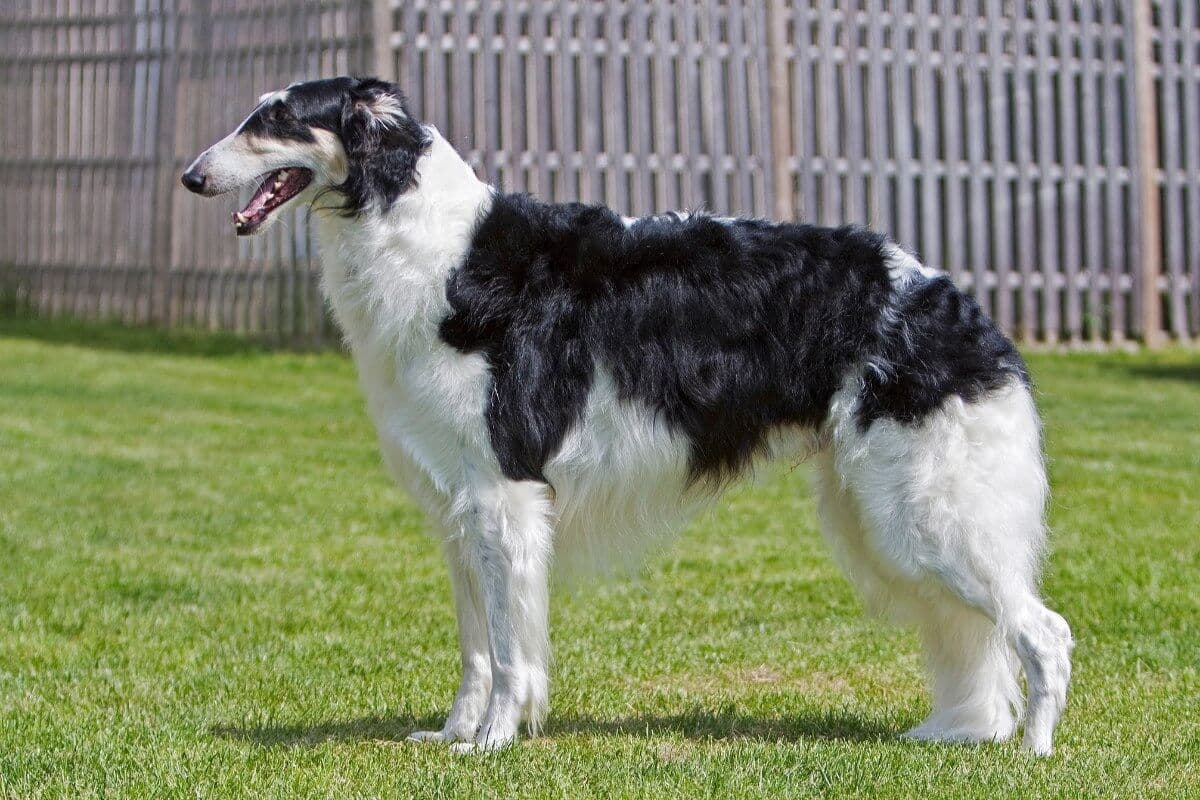
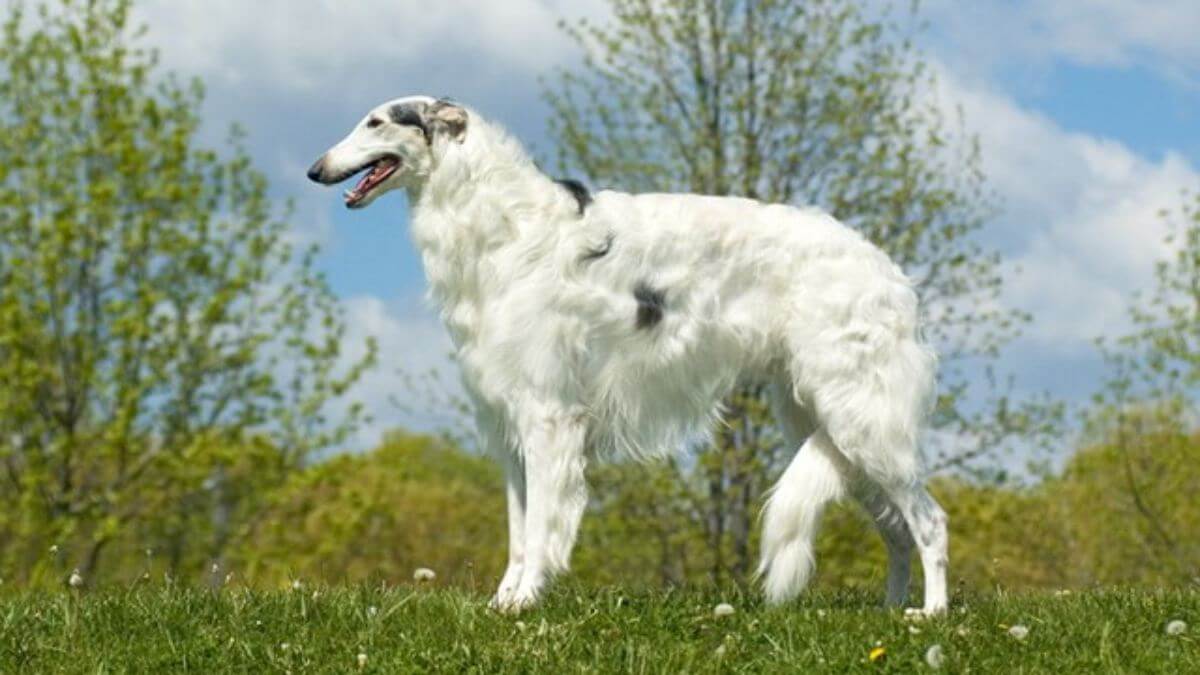
The Borzoi is characterized by its long, narrow head and a body that is slightly longer than it is tall. These proportions, as well as the breed's flowing and curvy silhouette, give the breed its unmistakable elegance. Despite its slender appearance, the Borzoi possesses a robust build, lending it the necessary strength and stamina required for its original purpose as a hunter. The body of this sighthound is well-muscled, but never bulky, thus ensuring agility and speed when in motion. Its general appearance is a harmonious blend of strength, speed, and grace, making it perfectly suited for pursuits that demand both swiftness and endurance.
Texture: The Borzoi boasts a long, silky coat that can be flat, wavy, or only slightly curly. It should be neither extremely straight nor curly, and never harsh or wooly. The luxurious coat not only enhances the breed’s regal appearance, it also offers protection against the elements. However, it should not be so excessive as to spoil the dog’s ability to hunt.
Standard Colors
04/Consider
The decision to bring a Borzoi into one's home should be made with a clear understanding of the breed's characteristics, needs, and idiosyncrasies. As elegant as it may appear, this hound is a unique blend of athlete and aristocrat. Its heritage as a hunter means it is both energetic and independent, and its connection with nobles has instilled the breed with a rather dignified demeanor.
Interaction With Family
The level of affection a breed typically shows towards family members and familiar individuals.
Good With Other Dogs
The innate friendliness of a dog towards other dogs can depend on its breed.
Good With Young Children
The degree to which a breed will typically be patient with young children.
Amount Of Shedding
How much hair a breed typically leaves behind on clothes, furniture and floors.
Frequency Of Grooming
How often a breed needs brushing, bathing or a professional trim to stay in condition.
Amount Of Drooling
How prone a breed is to drool, worth knowing before you keep a towel by the door.
Openness To Strangers
How openly a breed tends to greet new people, visitors and strangers.
Protective Nature
How likely a breed is to alert you to anything unfamiliar, and stand between you and it.
Playfulness Level
How enthusiastic a breed stays about games and play well past puppyhood.
Trainability Level
How readily a breed takes direction and works with you rather than around you.
Barking Level
How much a breed uses its voice, and how readily.
Energy Level
How much get-up-and-go a breed brings to an average day.
Health
In general, the Borzoi is a healthy breed with a robust constitution, a testament to its origins in the harsh climates of its Russia homeland. The breed's lean physique and active nature mean this hound often remains agile and lively well into its senior years. Lifespan: On average, the lifespan of a Borzoi ranges between 9 and 14 years. With proper care, a balanced diet, regular vet check-ups, and a loving environment, a hesalthy hound can reach the upper limit of this range.
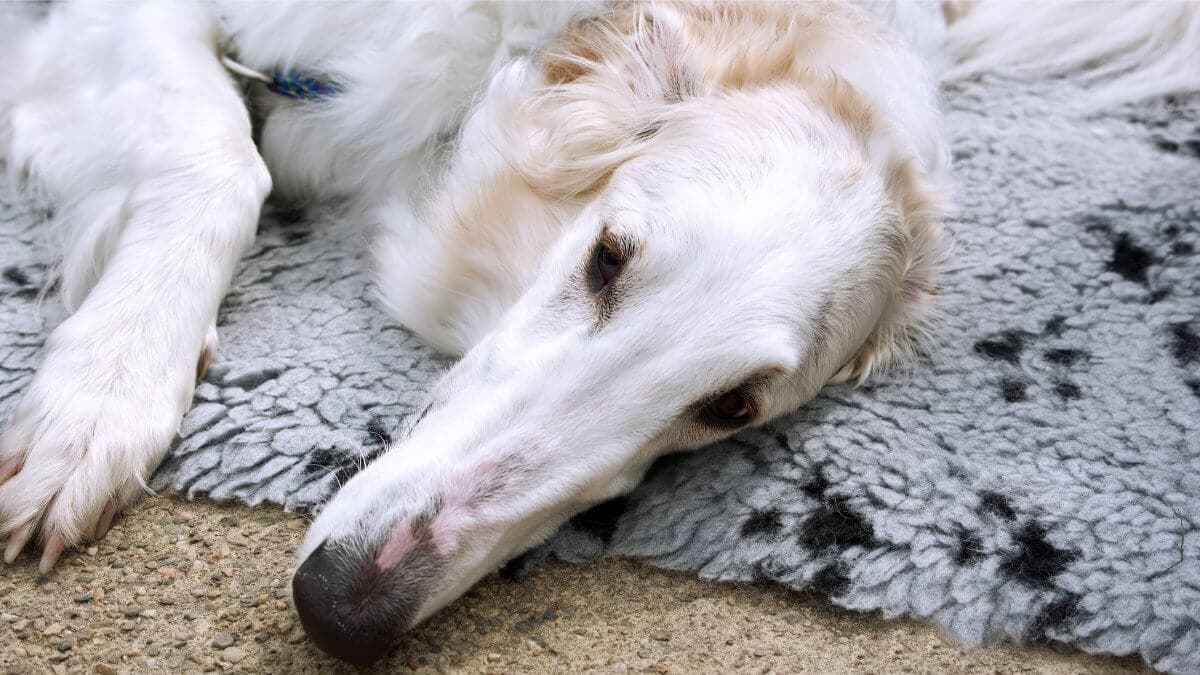
The Borzoi, often characterized by its blend of aristocratic elegance and the spirit of a hunter, has a personality that captivates many who encounter the breed. This sighthound’s gentle and affectionate nature means these dogs form deep bonds with their families, offering a quiet yet unwavering loyalty. Yet, this loyalty is paired with an independent streak, a trait that harkens back to their early days as hunters, when quick decisions were vital in the field.
Newcomers to the world of dog ownership might find the Borzoi a bit of a challenge. While these hounds exude grace and are generally well-mannered, their inherent independence requires an owner who can navigate canine behaviors with understanding and provide consistent yet gentle training.
Borzois have a heightened sensitivity, often resonating with the emotions and moods of their human counterparts. This attunement means they flourish in serene and harmonious home environments, reflecting back the peace they sense around them.
Exercise Expectations
While they might give off an air of leisurely relaxation, especially when lounging around the house, Borzois have bursts of energy that necessitate regular exercise. These spurts of joy often manifest in short, intense sprints rather than prolonged physical exertion. A large, securely fenced area where they can run freely and safely is invaluable for a Borzoi. Here, they can indulge their natural inclination to run without the constraints of a leash or the risks of an unenclosed space. Apart from free-runs, daily walks are also essential for the Borzoi. These not only cater to the sighthound’s physical needs but also provide essential mental stimulation. Exploring different routes or environments, encountering new smells, and meeting other dogs or people can enrich the dog’s daily experiences. In terms of energy level, while Borzois have a calm demeanor indoors and can often be found seeking out the comfiest spot to recline, this should not be mistaken for laziness. These dogs require consistent physical activity to remain healthy and happy. The intensity of their exercise should, however, be moderated to suit their age, health, and individual preference. Puppies and older dogs, for instance, might not have the same stamina as an adult in prime condition. And it’s important to remember that overexercising can lead to injuries or health issues. Playfulness is another trait of the Borzoi. These unmistakably elegant hounds have a fun-loving side and often enjoy interactive games with their owners, such as fetch or tug-of-war. Their interest in these games, however, can wane faster than that of more play-driven breeds.
Sharing living space with a Borzoi brings about a sense of elegance and athleticism to the home, as this breed seamlessly combines its regal demeanor with bursts of energy. Adjusting the living environment, and understanding the breed’s unique characteristics, is key to harmoniously coexisting with this enormously appealing sighthound.
While Borzois can adapt to various living situations, including apartments, it's essential to be sure they have enough space to move around comfortably. Given their size and elongated structure, they appreciate having room to stretch out and relax. In smaller spaces, providing them with a comfortable, designated resting area, like a large dog bed or cushion, can make them feel at ease.
In terms of outdoor spaces, having access to a securely fenced yard or garden is beneficial for Borzois. This allows them to indulge their natural instincts to sprint and chase while in a safe environment. However, due to their prey drive, it's crucial that fences are high and sturdy to prevent these hounds from pursuing wildlife or other temptations beyond their designated area.
Some Borzois can be sensitive to temperature extremes. In colder climates, most are tolerant thanks to their soft undercoat. However, on extremely cold days and nights, a sweater or coat can help to keep them especially warm. On the other hand, in hot weather, it's important to always provide ample shade and fresh water. Exercise at this time should be limited during peak temperatures, and walks are best scheduled for the cooler parts of the day.
One of the joys of living with a Borzoi is the breed’s calm and gentle nature indoors. These dogs are often described as "cat-like" in their mannerisms, seeking out quiet spots to lounge and observe their surroundings. While they enjoy being part of family activities, they aren't typically overly demanding of attention.
05/Puppies
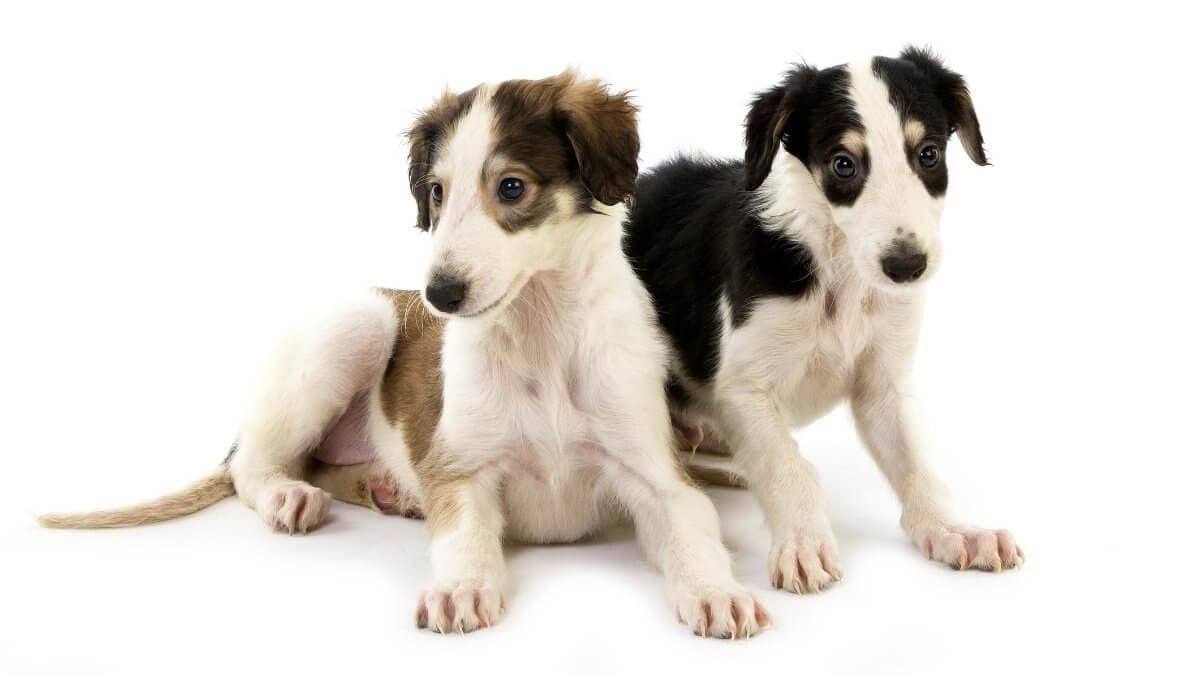
The transition from a tiny, fuzzy Borzoi puppy to a graceful, elegant adult is nothing short of mesmerizing. Those fortunate enough to embark on the journey of raising a Borzoi from puppyhood will find it is an adventure filled with rewarding challenges and countless memorable moments. Understanding the intricacies of a hound’s growth and unique needs is instrumental in guiding the Borzoi through its formative months.
From the moment a Borzoi puppy enters the home, an atmosphere of excitement, learning, and adjustments permeates the air.
Providing just the right nutrition for a puppy is paramount. The breed’s swift growth in the early stages demands a diet that can support their rapidly developing bones and muscles. High-quality puppy food, especially formulated for large breeds, offers the balance of nutrients that’s needed at this time.
Socialization plays a critical role in shaping a puppy's temperament. The experiences a Borzoi puppy has during its initial months lay the foundation for its adult behavior. Introducing puppies gently to varied environments, diverse groups of people, and other animals, always under controlled and positive circumstances, helps to nurture their confidence.
Training a Borzoi puppy is a testament to one's patience. While these pups exhibit intelligence and can quickly understand basic commands, their inherent independence requires a consistent and positive reinforcement approach to training.
A Borzoi puppy's curious disposition is enchanting, but it can sometimes lead it into potentially dangerous situations. Taking steps to puppy-proof the home, ensuring hazards are out of reach and always keeping an eye on them during their play and exploration sessions, can prevent mishaps.
Frequent health checks during the early stages are pivotal. These benchmarks will determine if the Borzoi puppy's growth trajectory is on the right path and is free from common puppy ailments. This period is also an opportune time to initiate a vaccination regimen and delve into preventative healthcare measures with the vet.
Balancing rest with play is another key aspect of raising a Borzoi puppy. The growing pup’s energetic bouts should be balanced with much-needed periods of undisturbed sleep to rejuvenate and support its rapid growth.
06/Activities
The Borzoi's elegance, speed, and agility make it a natural contender in various dog sports and outdoor activities. While these hounds are adaptable and can be trained for various pursuits, certain activities naturally resonate with their inherent instincts and abilities.
Lure Coursing: This sport mimics the breed's traditional function of chasing game over open terrain. A mechanical lure is used to simulate the chase, allowing the hound’s speed and agility to be on full display.
Open Field Coursing: More akin to the Borzoi’s historical hunting roots, Open Field Coursing involves the hound chasing live game in a controlled environment, testing its sight, speed, and hunting instincts.
Agility: While not as commonly associated with Borzois as with some other breeds, Agility can still be a fun activity for both hound and handler. This fast-action sport requires a team to navigate a timed obstacle course, showcasing the dog’s dexterity and trainability.
Obedience: Borzois can be successfully trained to participate in Obedience Trials. These precision-based events test a dog's responsiveness to commands and its overall level of discipline.
Rally: A sport combining elements of Agility and Obedience, Rally is a sequential activity where dogs navigate a course with their handlers, performing various tasks at a number of designated stations.
Conformation Shows: Borzois excel in the show ring due to their majestic appearance and graceful gait. Participation in Conformation Shows can be both a leisurely hobby and a competitive pursuit for Borzoi enthusiasts.
Therapy Work: With their calm demeanor, many Borzois excel in Therapy Work, providing comfort and support to patients and residents in hospitals, schools, and extended care homes.
Participating in these activities and sports not only enhances the bond between the Borzoi and its human companion, it also provides an outlet for the dog's energy and instincts. Whether competing at high levels or simply engaging for fun and personal enrichment, these pursuits offer both the dog and its favorite person a sense of accomplishment and joy.
Gallery
07/Standards
The Borzoi is recognized by the world's leading registries and kennel organizations, which categorize the breed into a specific Group based on its unique characteristics. This breed is recognized worldwide under the following Group designations:
The ideal Borzoi is described by a Breed Standard that is approved by each of the world’s leading registries and kennel organizations. The Breed Standards for this breed may be found in the following links:
08/Clubs
Breed clubs play an essential role in promoting and preserving the legacy, health, and written Standards of the Borzoi. These organizations often provide resources for enthusiasts, breeders, and prospective owners, ensuring that the breed's rich history and characteristics are maintained for future generations.For sighthound people in the United States, the Borzoi Club of America stands as a primary resource. Established in 1903, this club is dedicated to promoting the health, well-being, and Breed Standard of the Borzoi. It offers a wealth of information, ranging from breed history to health guidelines, and is actively involved in hosting National Specialty shows, Lure Coursing events, and educational seminars.The Borzoi Club of Canada is the main organization for the breed in Canada. The club strives to protect and promote the breed within the country by offering guidance on everything from judging to the Breed Standard to responsible breeding and ownership.In the United Kingdom, the Borzoi Club serves as a hub for breed devotees. Founded in 1892, this is one of the oldest breed clubs in the UK. The organization and its members are actively involved in promoting various social and competitive events, educational programs, and offers resources for the welfare of the breed.Membership or involvement in these breed-specific clubs is invaluable for anyone who is deeply invested in the Borzoi. Not only do they provide an avenue for networking with other enthusiasts, these clubs also offer opportunities for learning, showing, and appreciating this magnificent breed.
09/Rescue
Ensuring the welfare and well-being of the Borzoi, particularly those that are displaced or in need, is of immense importance to many within the purebred dog community. Rescue groups play a vital role in this endeavor, focusing on the rehabilitation and rehoming of these elegant hounds when necessary.In the United States, the National Borzoi Rescue Foundation (NBRF) is a prominent organization dedicated to the rescue and placement of surrendered or abandoned Borzois. Through a network of volunteers, foster homes, and veterinary professionals, NBRF makes sure these dogs receive the necessary care and find their forever homes.In Canada, the Borzoi Canada Assistance Network takes the lead in rescue operations for the breed. This group offers support, care, and rehoming services for Borzois in distress, ensuring these majestic creatures receive the love and care they deserve.While these breed-specific rescue organizations are wholly dedicated to the Borzoi, it's essential to remember that local shelters and broader breed rescue groups might also occasionally house a Borzoi looking for a home. Anyone who is considering adoption should explore these avenues, giving a chance to a Borzoi in need and enriching their lives in return.
10/Facts
Russian Roots
The Borzoi, originally named the Russian Wolfhound, hails from Russia and was bred primarily for hunting wolves, thanks to its exceptional ability to chase, catch, and hold its quarry.
Noble Companions
In Russia, Borzois were considered symbols of wealth and nobility. Owning one was a sign of prestige, and they were often gifted to nobles and royals throughout Europe as a mark of esteem.
Impressive Speed
Despite their elegant and somewhat languid appearance, Borzois are incredibly fast. They can reach speeds of up to 35-40 miles per hour, placing them among the fastest of all dog breeds.
Silent Hunters
Borzois are known as sighthounds, which means they hunt primarily by sight rather than by scent or sound. When on the chase, they're remarkably quiet, relying on their keen eyesight to track and pursue their prey.
Literary Legacy
The Borzoi has been referenced in various literary works. Notably, in the novel The Beautiful and Damned by F. Scott Fitzgerald, a Borzoi named “Ariel” plays a role.
Royal Fans
Many royals and notable figures in history have been fans of the Borzoi. Queen Alexandra of England had a particular fondness for the breed.
11/FAQ
Yes, Borzois shed. The breed has a double coat that goes through seasonal shedding, especially in the spring and fall. Regular grooming can help to manage and reduce the amount of hair that is shed around the house.

Written by
Dan Sayers is the Executive Editor of SHOWSIGHT. He is a member of the World Dog Press Association and the Dog Writers Association of America, which recognized his illustrations in the award-winning Encyclopedia of K-9 Terminology. Dan is a longtime supporter of the sport of dogs and an advocate for the conservation of recognized breeds in all their forms and functions. He is a member of the Morris and Essex Kennel Club, and for 45 years, the Irish Water Spaniel Club of America where he serves as AKC Delegate, Archivist, and approved Breed Mentor. Dan breeds under the Quiet Storm prefix and has judged the IWSCA National Specialty Sweepstakes twice.
Official Standard for the Borzoi
General Appearance: The Borzoi was originally bred for the coursing of wild game on more or less open terrain, relying on sight rather than scent. To accomplish this purpose, the Borzoi needed particular structural qualities to chase, catch and hold his quarry. Special emphasis is placed on sound running gear, strong neck and jaws, courage and agility, combined with proper condition. The Borzoi should always possess unmistakable elegance, with flowing lines, graceful in motion or repose. Males, masculine without coarseness; bitches, feminine and refined.
Head: Skull slightly domed, long and narrow, with scarcely any perceptible stop, inclined to be Roman-nosed. Jaws long, powerful and deep, somewhat finer in bitches but not snipy. Teeth strong and clean with either an even or a scissors bite. Missing teeth should be penalized. Nose large and black.
Ears: Small and fine in quality, lying back on the neck when in repose with the tips when thrown back almost touching behind occiput; raised when at attention.
Eyes: Set somewhat obliquely, dark in color, intelligent but rather soft in expression; never round, full nor staring, nor light in color; eye rims dark; inner corner midway between tip of nose and occiput.
Neck: Clean, free from throatiness; slightly arched, very powerful and well set on.
Shoulders: Sloping, fine at the withers and free from coarseness or lumber.
Chest: Rather narrow, with great depth of brisket.
Ribs: Only slightly sprung, but very deep giving room for heart and lung play.
Back: Rising a little at the loins in a graceful curve.
Loins: Extremely muscular, but rather tucked up, owing to the great depth of chest and comparative shortness of back and ribs.
Forelegs: Bones straight and somewhat flattened like blades, with the narrower edge forward. The elbows have free play and are turned neither in nor out. Pasterns strong.
Feet: Hare-shaped, with well-arched knuckles, toes close and well padded.
Hindquarters: Long, very muscular and powerful with well bent stifles; somewhat wider than the forequarters; strong first and second thighs; hocks clean, broad and well let down; legs parallel when viewed from the rear.
Dewclaws: Dewclaws, if any, on the hind legs are generally removed; dewclaws on the forelegs may be removed.
Tail: Long, set on and carried low in a graceful curve.
Coat: Long, silky (not woolly), either flat, wavy or rather curly. On the head, ears and front of legs it should be short and smooth; on the neck the frill should be profuse and rather curly. Feather on hindquarters and tail, long and profuse, less so on chest and back of forelegs.
Color: Any color, or combination of colors, is acceptable.
Size: Mature males should be at least 28 inches at the withers and mature bitches at least 26 inches at the withers. Dogs and bitches below these respective limits should be severely penalized; dogs and bitches above the respective limits should not be penalized as long as extra size is not acquired at the expense of symmetry, speed and staying quality. Range in weight for males from 75 to 105 pounds and for bitches from 15 to 20 pounds less.
Gait: Front legs must reach well out in front with pasterns strong and springy. Hackneyed motion with mincing gait is not desired nor is weaving and crossing. However, while the hind legs are wider apart than the front, the feet tend to move closer to the center line when the dog moves at a fast trot. When viewed from the side there should be a noticeable drive with a ground-covering stride from well-angulated stifles and hocks. The overall appearance in motion should be that of effortless power, endurance, speed, agility, smoothness and grace.
Faults: The foregoing description is that of the ideal Borzoi. Any deviation from the above described dog must be penalized to the extent of the deviation, keeping in mind the importance of the contribution of the various features toward the basic original purpose of the breed.
Approved June 13, 1972
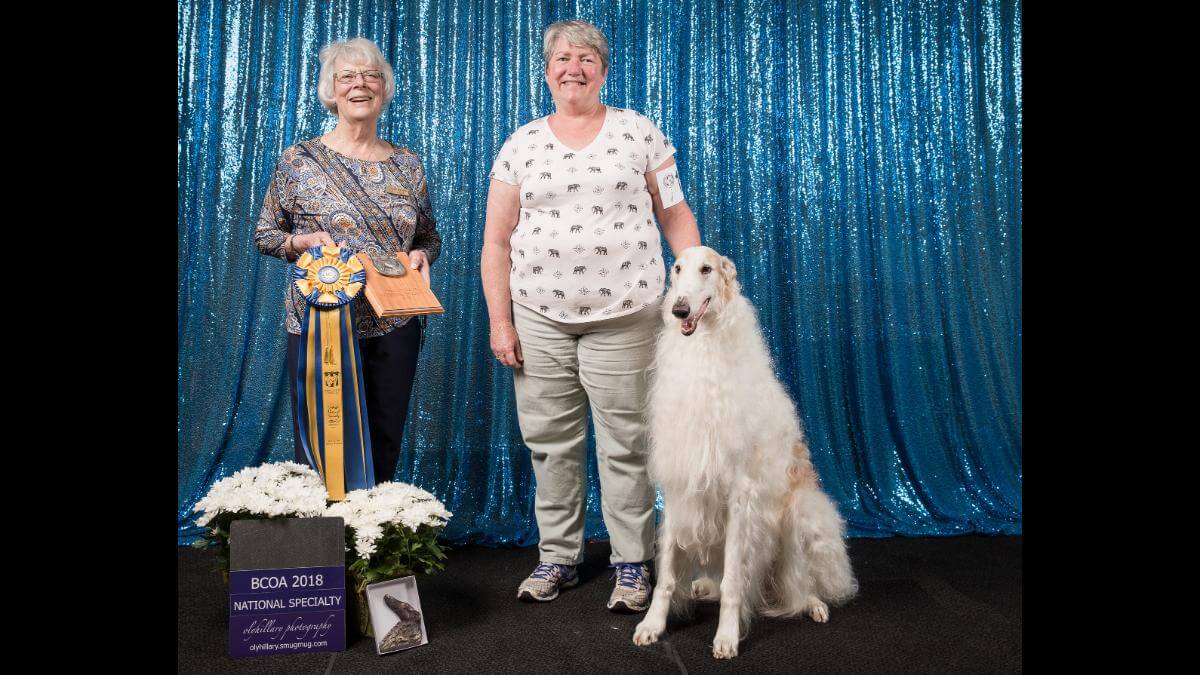

Meet the Breeders
Meet Kathleen (Kay) Novotny, a dedicated Borzoi breeder, owner, and handler with decades of success in AKC dog sports.
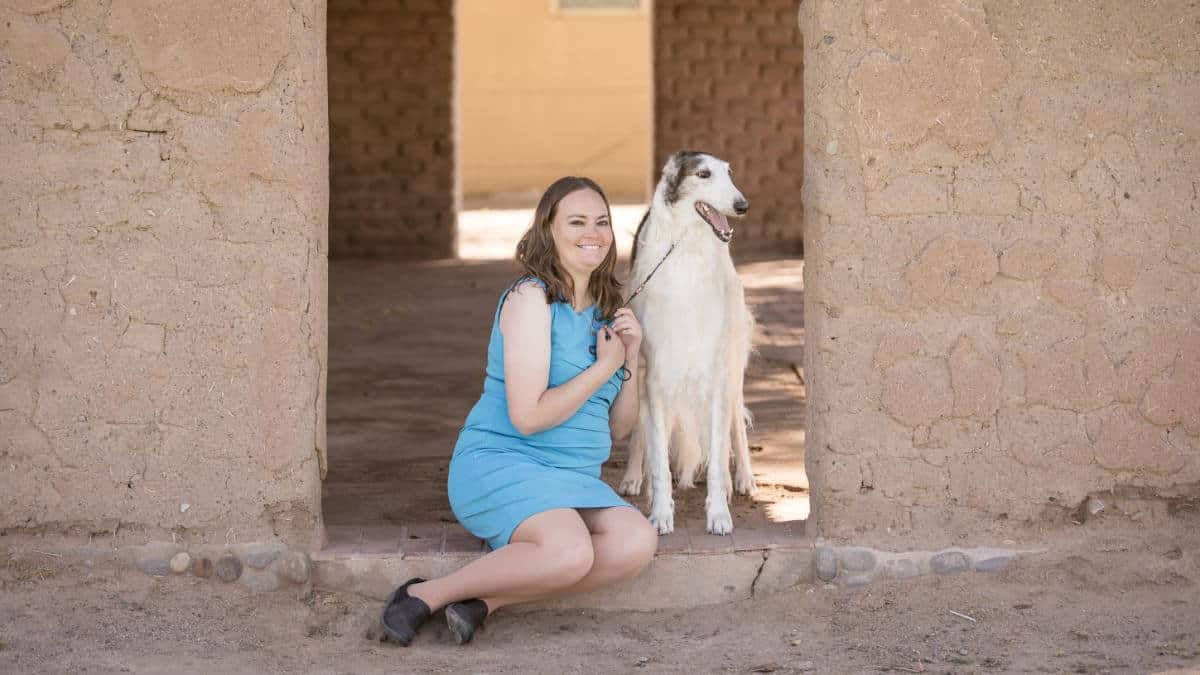
Meet the Owner Handlers
Owner-handler Adrianne Montgomery shares her journey with Borzoi, from virtual beginnings to NOHS success and breed advocacy.

Meet the Breeders
Kyrov Borzoi’s Amy Sorbie shares insights on breeding, Borzoi traits, preservation, and evolving challenges in the dog world.
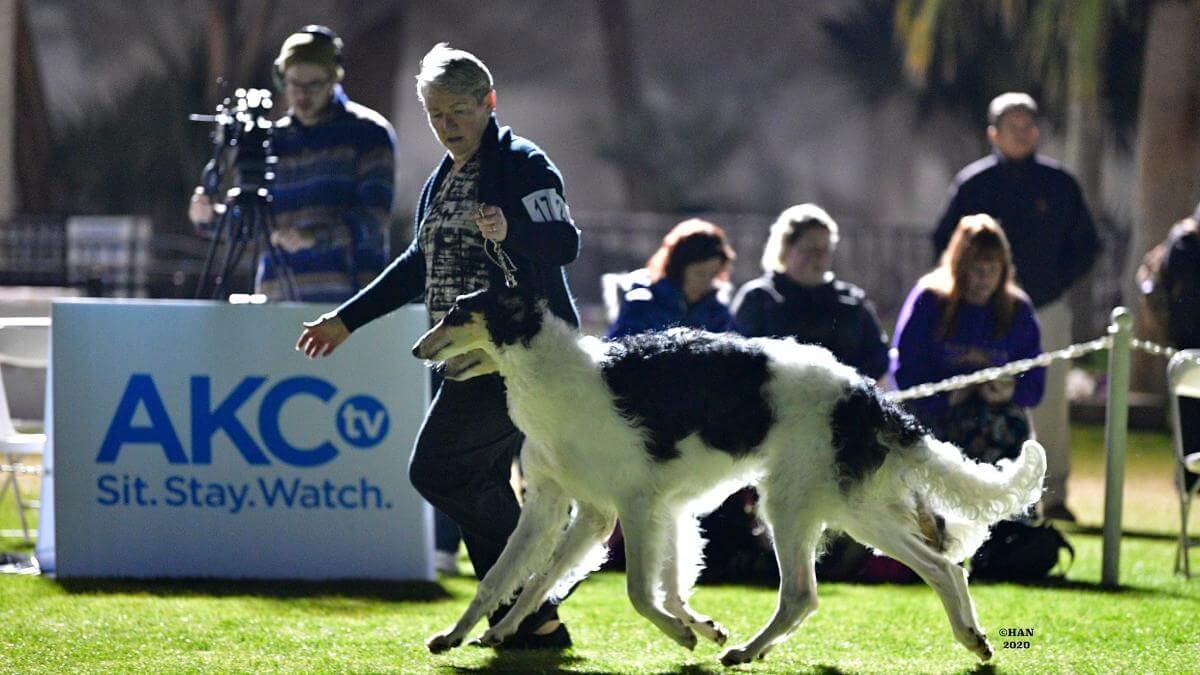
Meet the Breeders
Kay Novotny of Casa Del Rey shares insights on Borzoi breeding, dog shows, and changes in purebred dog culture since 1972.
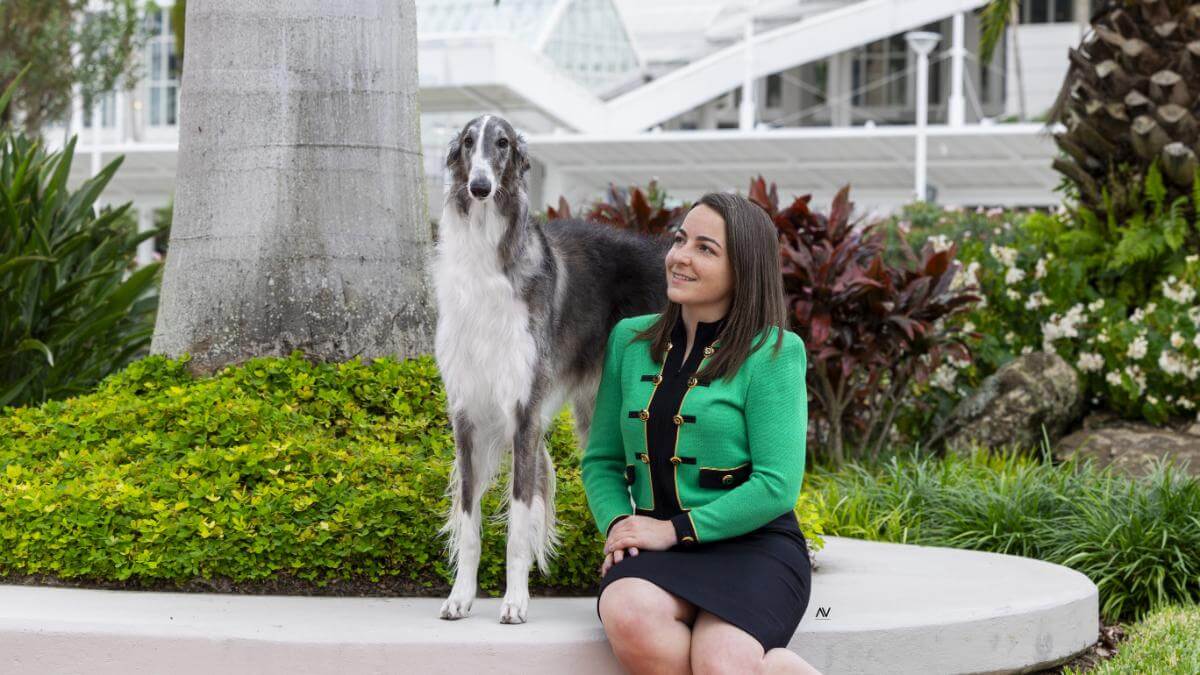
Meet the Owner Handlers
Join dedicated Borzoi owner-handler, Ziggy, in their journey of training, showing, and inspiring others in the dog show world.
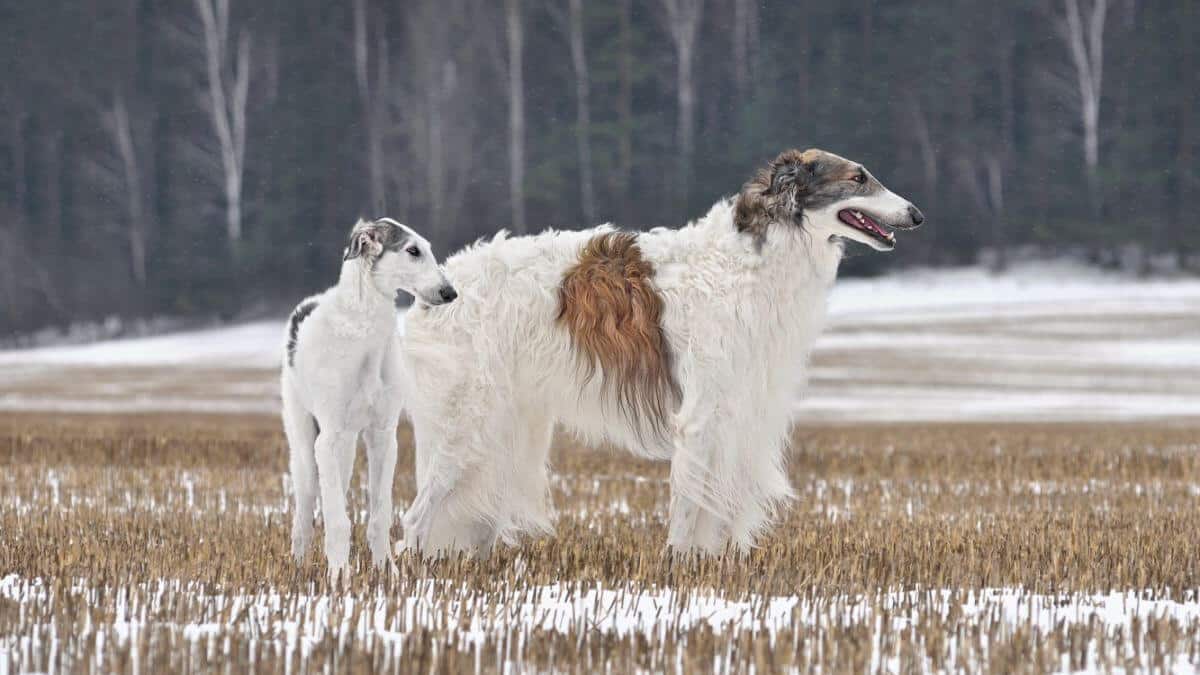
Explore the history, function, and timeless elegance of Borzoi, highlighting their purpose, versatility, and breed preservation.
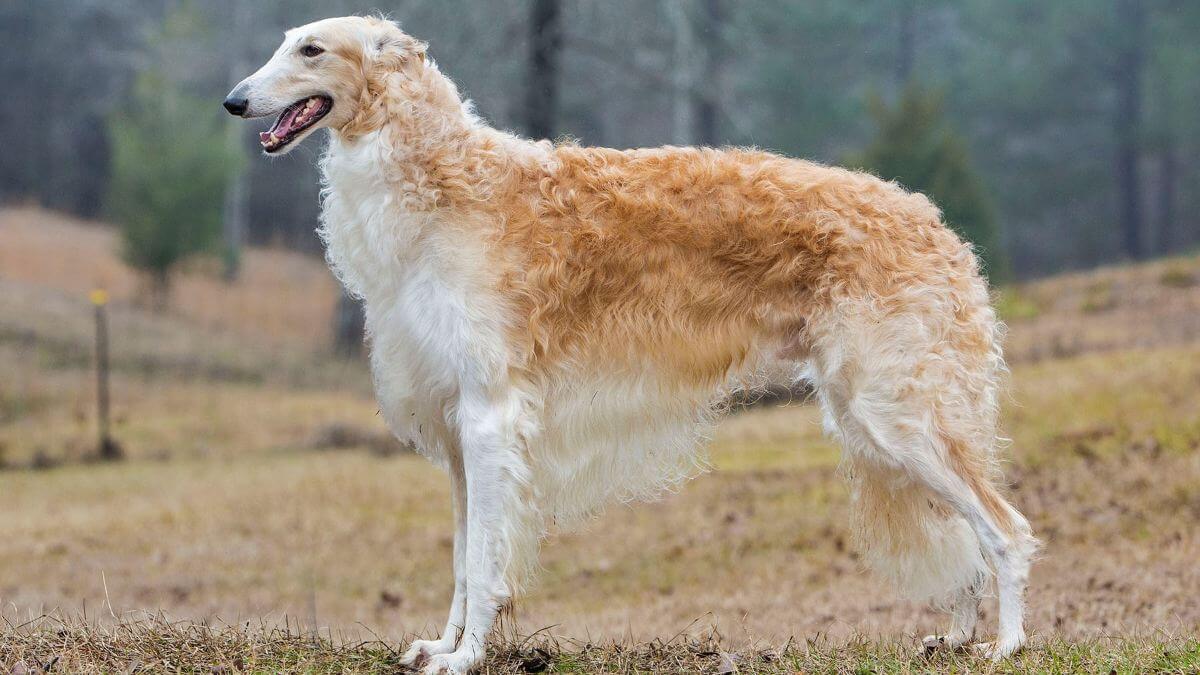
Explore the Borzoi’s aristocratic lineage and unique functionality, revealing its captivating history and diverse types.

Dog Shows
Discover the allure of Borzoi: bred for royalty, hunted by aristocrats, embraced. Elegance and athleticism in perfect balance.

Meet the Breeders
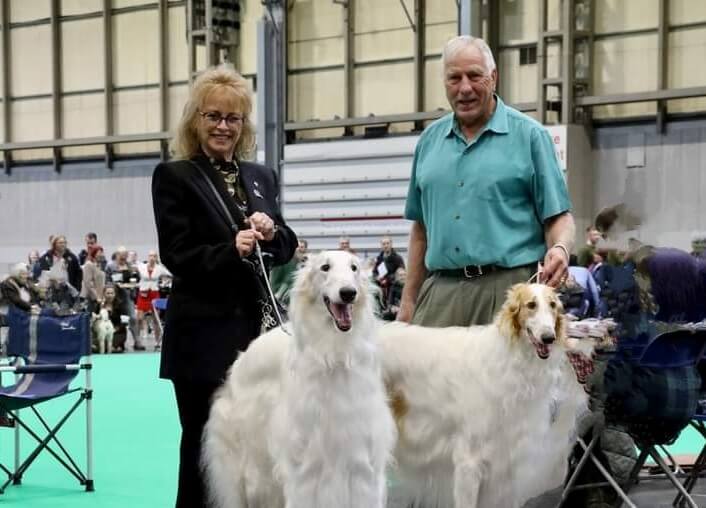
Bill and Lynda Sarman are the breeders behind Radost Borzoi. Read about the kennel’s beginnings, the dogs, the puppies, and much more!
The tail of the Borzoi is an extension of its graceful silhouette, complementing the breed’s overall elegance and functionality as a hunter. It is long and set low, reaching at least to the hocks.
In terms of shape, it follows a slight curve and is carried low in repose. When the Borzoi is in motion or particularly alert, the tail may elevate slightly but rarely rises above the level of the back.
The tail is generously covered with longer hair, often referred to as "feathering," which can be wavy or somewhat curly. This feathering further accentuates the breed's aristocratic appearance.
Historically, the tail served a practical purpose, aiding in balance during high-speed pursuits and while making turns over the expansive terrain of its native Russia.
Standard Markings
A Note About Color: The Borzoi is a very colorful breed, with virtually any color or combination of colors acceptable.
Coat Type
Curly, Silky
The structure of the coat this breed carries.
Coat Length
Medium
How long the breed's coat grows when kept in condition.
Adaptability Level
How easily a breed copes with changes in home, routine, noise and weather.
Mental Stimulation Needs
How much a breed needs a job, a puzzle or training to stay content.
Given the depth of their attachment to their human family, the typical Borzoi is not a fan of solitude. Extended periods of isolation can lead these dogs to feelings of anxiety or melancholy. In terms of their relationships with other dogs, they typically coexist peacefully, especially if they have grown up together. However, their robust hunting instincts can occasionally cast smaller pets in a prey-like light, necessitating careful introductions and consistent monitoring.
Children, especially the younger ones, and Borzois can be a delicate mix. While these dogs are undoubtedly gentle, their sheer size and vigor can sometimes lead to unintentional bumps or knocks. It's often recommended that they share a home with older children who comprehend the nuances of interacting with a larger breed.
When it comes to strangers, the breed's reaction is varied. Some might lean towards caution and reservation, while others might greet newcomers with warmth. Regardless of their initial reaction, aggression is rarely a concern, and with appropriate introductions, Borzoi tend to be quite amicable.
Nourishing a Borzoi appropriately is vital to ensuring the dog leads a healthy and vibrant life. Given the breed’s size and activity level, dietary needs might be somewhat different from other breeds.
When it comes to feeding a Borzoi puppy, it's essential to offer a diet rich in nutrients that support their rapid growth phase. High-quality puppy food formulated for large breeds can be beneficial in this regard. As puppies transition from puppyhood to adulthood, their dietary requirements shift as well. An adult Borzoi requires a well-balanced diet that caters to its energy needs while also ensuring the dog maintains an ideal weight.
The exact amount of food a Borzoi requires can vary based on factors such as age, activity level, metabolism, and overall health. On average, many adult Borzois consume around 3 to 4 cups of high-quality dry dog food daily, divided into two meals. However, this is a general guideline, and the precise amount can vary. It's crucial to monitor the dog’s weight and adjust the food quantity based on individual needs. Overfeeding or underfeeding can have detrimental effects on any dog’s health.
It's also worth noting that Borzois, with their deep chests, are at a higher risk for bloat. To mitigate the risk, it's advisable to let the dog rest after eating and avoid vigorous activity right after meals. Using a slow-feed bowl can also be beneficial for making sure a dog doesn't eat too quickly, which can contribute to gas buildup.
Consistent feeding routines, paired with fresh water availability, regular dietary consultations with a vet, and keen observation of the dog's general condition, can all but guarantee that a Borzoi will thrive in most households.
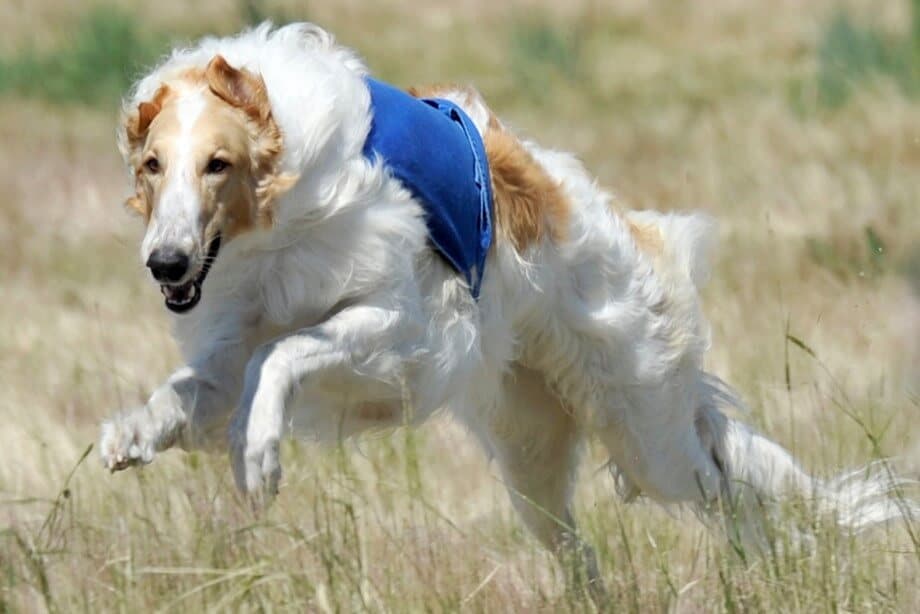
Training a Borzoi offers a unique experience, courtesy of the breed's blend of hunting instincts and regal bearing. The breed’s heritage as a sighthound has bestowed upon these dogs a strong independent streak, which can sometimes be mistaken for stubbornness or aloofness. But, with the right approach, training a Borzoi can be a rewarding endeavor.
Despite their occasional willfulness, Borzois are intelligent and often eager to please, especially when training methods are rooted in positive reinforcement. Treats, praise, and gentle corrections often yield better results than more confrontational techniques. Being sensitive dogs, harsh corrections can shut them down or lead to mistrust.
One of the primary concerns when training a Borzoi is the breed’s high prey drive. This instinctual behavior means that when these dogs spot something that triggers their hunting instincts, they might give chase, ignoring even the most fervent recall commands. As a result, it's crucial to start recall training early and practice it often. It's equally essential to ensure that they are in a secure environment when off-leash to prevent any potential accidents.
While they aren't known for being incessant barkers, a Borzoi will alert its people to the presence of strangers or unusual noises. However, these sighthounds aren't typically employed as guard dogs, primarily due to their general lack of aggression.
Their intelligence means Borzois can pick up on commands quickly, but their independent nature might mean they decide when they want to respond to them. Consistency is the key. Daily training sessions, even if brief, can help to reinforce commands and behaviors.
Wanderlust can be another challenge. Borzois are known to enjoy exploring, and if given an opportunity, they might set off on an adventure of their own. Secure fencing and supervised outdoor time can help to curb this tendency.
Lastly, it's worth noting that socialization is pivotal for Borzois. Introducing them to various environments, people, and other animals from a young age can result in a well-adjusted and sociable adult dog.
Grooming Expectations
Contrary to what one might assume given its length and volume, the breed's coat is relatively easy to care for. Regular brushing, ideally a few times a week, helps to prevent tangles and matting. Using a pin brush or a long-toothed comb can effectively detangle the coat and distribute natural oils, ensuring that it remains glossy and healthy. Focus should be given to areas that are more prone to matting, such as behind the ears, on the thighs, and across the underbelly. One advantage of the Borzoi’s coat is that it doesn't have the dense undercoat commonly found in other long-haired breeds. This means that they shed comparatively less. However, like all dogs, they do go through shedding seasons, particularly in spring and fall, during which more frequent brushing will be necessary to manage the loose hair. Bathing the Borzoi isn't a frequent necessity. Due to the breed’s coat's texture, dirt and debris don't adhere as readily, and often a simple brush-out can keep these dogs looking pristine. However, when baths are required, using a gentle dog shampoo followed by a conditioner can help to maintain the coat's silkiness. Apart from the Borzoi’s coat, other grooming aspects should not be overlooked. Regularly checking and cleaning the ears can prevent infections. Long nails should be trimmed or filed down to prevent overgrowth, which can cause discomfort and affect their ground-covering gait, and good oral hygiene, including brushing the teeth or providing dental chews, will establish dental health and fresh breath.
While Borzois might appear aloof at times, they are deeply bonded to their families. They appreciate consistency in their environment and thrive when there's a routine in place. Changes or disruptions can sometimes unsettle them, so gradual introductions to new situations or environments are appreciated.