Members
01/Overview
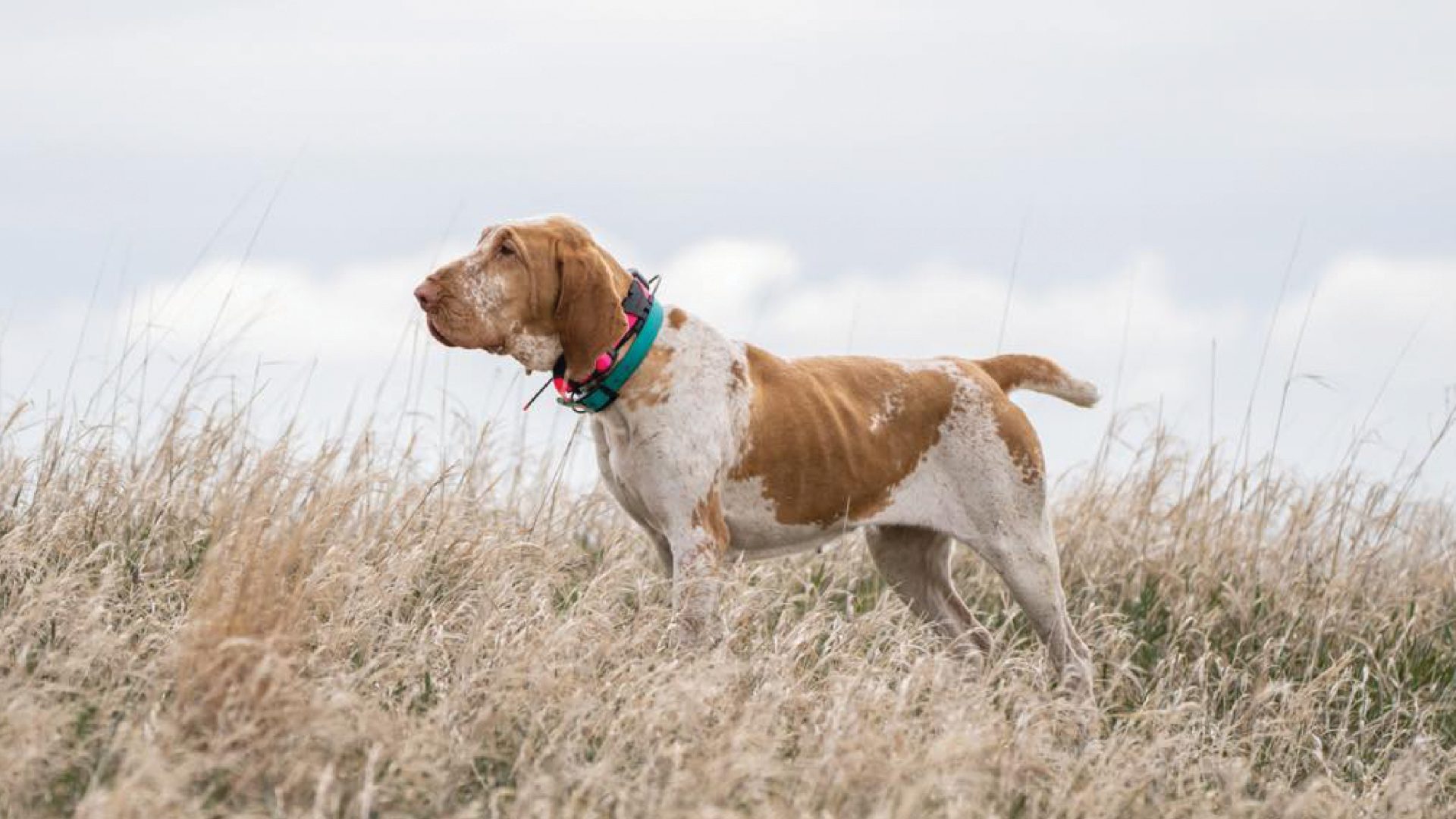
The Bracco Italiano, often referred to as the Italian Pointer, is an ancient and distinctive breed that hails from Italy. Characterized by its athletic build and soulful expression, the Bracco is not only a formidable hunting partner but also a loving family companion. Renowned for its keen nose and impressive work ethic in the field, the breed is equally cherished for its affectionate and gentle nature at home.
Highlights
02/History
The Bracco Italiano holds the distinction of being one of the oldest pointing breeds in existence. Its history is a rich tapestry of evolution and refinement, deeply interwoven into the fabric of Italian culture and hunting traditions.
Tracing its lineage back to ancient times, the Bracco is believed to have descended from dogs used by the ancient Egyptians, which were later brought to Italy by Phoenician traders. Artistic depictions from as early as the 4th and 5th centuries showcase dogs bearing a strong resemblance to the Bracco Italiano that is recognized today.
During the Renaissance, the Bracco Italiano experienced a golden age. Esteemed by the Italian nobility, it became especially popular among influential families like the Medici and the Gonzaga. These noble households were instrumental in promoting and refining the breed. Throughout this era, Bracchi were often the subject of art and were featured prominently in paintings and writings.
The significance of the Bracco in Italian canine history is further underscored by the fact that it was the first dog registered by the Ente Nazionale della Cinofilia Italiana (ENCI), founded in 1888.
However, by the turn of the 20th century, the breed's popularity began to diminish, with its numbers dwindling alarmingly. The World Wars further threatened its existence, but thanks to dedicated breed enthusiasts efforts were made to preserve and rejuvenate interest in the Bracco.
While it gained recognition from organizations like the Fédération Cynologique Internationale (FCI) and The Royal Kennel Club (UK), the Bracco Italiano remained relatively elusive on the American landscape until the 1990s. A significant milestone was achieved in 2001 when the breed was incorporated into the AKC Foundation Stock Service (FSS). Full recognition was achieved when the breed became part of the Sporting Group in 2022.
Today, the Bracco Italiano is revered not solely for its unparalleled hunting acumen but also for the unwavering companionship it offers. The breed’s enduring legacy, spanning millennia, stands as a tribute to its adaptability, magnetic charm, and resilience.
03/Appearance
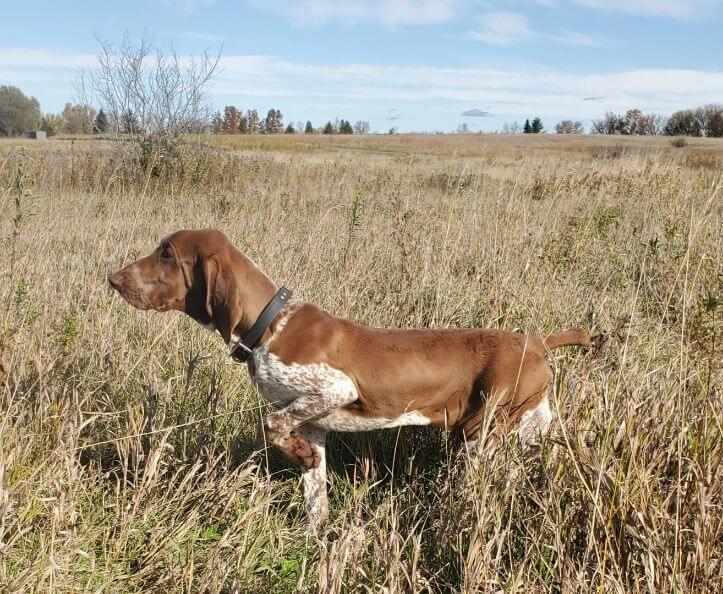
In terms of height, mature Bracco Italiano males typically stand between 23 and 27 inches at the shoulder. Their adult female counterparts measure slightly less, ranging from 21 to 25 inches in height.
When considering weight, a Bracchi can range from 55 to 90 pounds, with the exact weight dependent on the individual dog's height.
Skull: The Bracco Italiano's skull is slightly oval in shape and broad, with a very pronounced occiput. Collectively, this gives the skull a domed appearance when viewed from the front. The stop is well-defined, creating a clear transition from the forehead to the muzzle.
Expression: One of the most captivating aspects of the Bracco is its soulful and earnest expression. This breed often has a thoughtful and contemplative look, revealing its keen intelligence and observant nature.
Eyes: The eyes are large and oval in shape. Their color typically ranges from ochre to hazel, harmonizing beautifully with the coat's color. The eyes reflect the breed's gentle and affectionate temperament.
Ears: Set level with the eyes, the Bracco's ears are rather long and they hang flat against the sides of the head. Their shape is somewhat triangular, with a rounded tip, and they have a slight inward turn, giving them a characteristic fold.
Muzzle: The muzzle is strong and square-shaped. It is in proportion to the skull and tapers slightly towards the nose. The nostrils are well open, indicative of the breed's excellent scenting abilities.
Nose: Prominent and fleshy, the nose can be either flesh-colored or a shade darker than the coat. It is always moist, attesting to the breed’s keen sense of smell.
Bite: The Bracco Italiano possesses a scissors bite, where the upper incisors neatly overlap the lower incisors. This alignment is ideal for its function as a gundog, allowing for efficient retrieval without damaging the game.
The Bracco Italiano is a harmoniously built pointing breed, showcasing a perfect blend of endurance and power. Its build is robust and vigorous, yet it never appears heavy. The breed is square or slightly longer than its height. This proportion aids in its impressive galloping abilities in the field and its hallmark extended and fast trot. Substance-wise, the Bracco's solid bone and well-developed muscles attest to its hunting heritage, ensuring it can work tirelessly when needed.
Texture: The Bracco Italiano boasts a coat that is both elegant and functional. A dense, short coat lies close to the body on skin that is tough but elastic. Its sleek and glossy finish not only gives the dog a polished appearance, it also ensures streamlined movement when the dog is in action. The breed's coat is particularly well-suited for the hunting conditions of its Italian homeland, offering a level of protection against the elements and allowing the Bracco to navigate through thorny brush and dense foliage with ease.
Markings: Roan
Standard Colors
04/Consider
Owning a Bracco Italiano offers an enriching experience that is filled with affection, activity, and adventure. However, it's essential to understand the breed's specific needs and characteristics to provide for a relationship that's fulfilling. Prospective Bracco owners should familiarize themselves with the breed's temperament, exercise requirements, and health considerations to provide the best home possible.
Interaction With Family
The level of affection a breed typically shows towards family members and familiar individuals.
Good With Other Dogs
The innate friendliness of a dog towards other dogs can depend on its breed.
Good With Young Children
The degree to which a breed will typically be patient with young children.
Amount Of Shedding
How much hair a breed typically leaves behind on clothes, furniture and floors.
Frequency Of Grooming
How often a breed needs brushing, bathing or a professional trim to stay in condition.
Amount Of Drooling
How prone a breed is to drool, worth knowing before you keep a towel by the door.
Openness To Strangers
How openly a breed tends to greet new people, visitors and strangers.
Protective Nature
How likely a breed is to alert you to anything unfamiliar, and stand between you and it.
Playfulness Level
How enthusiastic a breed stays about games and play well past puppyhood.
Trainability Level
How readily a breed takes direction and works with you rather than around you.
Barking Level
How much a breed uses its voice, and how readily.
Energy Level
How much get-up-and-go a breed brings to an average day.
Health
When considering the health of the Bracco Italiano, it's encouraging to note the breed’s generally robust nature. Yet, as with any breed or mixed breed, there are specific health concerns to be aware of. Lifespan: A Bracco typically has a lifespan of 10-14 years. Providing a balanced diet, regular exercise, and consistent veterinary care will always support a dog's healthy and fulfilled life.
The Bracco Italiano, often described as an affectionate and versatile companion, is notable for its gentle demeanor coupled with an enthusiastic hunting spirit. Its history as a pointer and retriever is evident in its alert, attentive nature, and it possesses a keen intelligence that can make it both a joy and a challenge to live with.
For those new to dog ownership, the Bracco Italiano might be a tad overwhelming. The breed’s energy and drive, especially during those younger years, necessitates an owner who can channel this enthusiasm productively. However, with the right guidance, Bracchi can be remarkably adaptable and eager to please.
Sensitive by nature, the Bracco Italiano thrives in a loving, positive reinforcement-based environment. Harsh training methods or neglect can lead to a withdrawn or even stubborn dog. The breed’s inherent loyalty and desire for human companionship mean these dogs don't fare well when left alone for extended periods. Separation anxiety can develop if they feel neglected or isolated.
The breed generally exhibits a friendly demeanor towards other dogs. However, socialization from an early age is essential to ensure that this friendliness extends to a wide range of animals and situations. Their hunting background might sometimes result in a high prey drive, so owners should be cautious when introducing smaller pets.
One of Bracco's most endearing traits is its affinity for children. Gentle and patient, they make excellent family pets. Nevertheless, supervision during interactions with very young kids is always recommended to ensure safety for both the child and the dog.
Exercise Expectations
Their energy levels are robust, and Bracchi thrive when given opportunities to stretch their legs and engage in dynamic activities. A simple walk around the block is rarely sufficient for this breed. Instead, longer walks, play sessions, and free runs in a secure area are better suited to meet their exercise requirements. Intensity is another attribute of their exercise style. When given the chance, a Bracco Italiano enjoys sprinting and chasing, demonstrating the vigor and enthusiasm inherent to the breed’s hunting lineage. Interactive games, such as fetch or tug-of-war, not only help these dogs to burn off energy, they also reinforce the bond between each dog and its person. Playfulness is a delightful characteristic of the Bracco Italiano. The breed is not just about work and exercise; it also adores playtime. Whether it's romping in the yard with family members or engaging in canine sports, the Bracco’s playful demeanor shines through, bringing joy to everyone. Yet, while the Bracco Italiano has abundant energy, it's essential to recognize the signs when a dog needs a break. Overexertion, especially in hot weather, can lead to potential health risks. It's crucial to monitor a Bracco’s exercise sessions, ensuring it has access to fresh water and shade, and adjust activity levels accordingly, based on weather conditions and the dog's overall fitness. Incorporating a balanced exercise regimen that respects the Bracco's needs will result in a happier, healthier, and more harmonious companion, one that is fully able to share in the adventures and joys of life with its people.
Sharing your home with a Bracco Italiano is a rewarding experience that offers affection, companionship, and a touch of Italian elegance. Yet, as with any breed, understanding the dog's specific needs and tendencies is essential to create a harmonious living environment.
One of the first considerations when bringing a Bracco Italiano into your home is space. While they are adaptable dogs, they thrive in environments where they have ample room to move and play. Given their size and energy levels, homes with spacious yards are ideal. However, it's worth noting that these are not strictly outdoor dogs; they cherish time spent indoors with their families.
When it comes to apartment living, the Bracco Italiano can adapt, provided it receives sufficient exercise and mental stimulation. In such settings, multiple daily walks and opportunities to play and socialize outside become paramount to the dog’s well-being.
Weather considerations are also noteworthy. The Bracco Italiano's coat is well-suited to a range of climates, but extreme temperatures, both hot and cold, can be challenging. During summer months, it's essential to ensure the dog has plenty of shade and fresh water, and it’s best to avoid walking during peak midday hours of excessive heat. In colder climates, while the Bracco can tolerate moderate cold thanks to its dense coat, severe cold spells might require shorter outdoor excursions.
05/Puppies
The sight of a Bracco Italiano puppy, with its earnest eyes and boundless enthusiasm, can melt even the most stoic of hearts. Like all puppies, Bracchi Italiani are bundles of energy, curiosity, and potential. Bringing one into your home is both a joyous and significant responsibility.
Caring for a Bracco Italiano puppy requires a balance of patience, understanding, and commitment. These pups are intelligent and eager to learn, making early socialization and training essential. Introducing them to various people, pets, sights, and sounds during their formative weeks helps to shape them into well-rounded adults. Positive reinforcement methods, given the breed's sensitive nature, yield the best results.
Diet plays a crucial role during this growth phase. Ensuring the puppy gets high-quality, breed-specific nutrition supports every pup’s rapid physical development and energy needs. It's also a prime time to establish good feeding routines, ensuring a puppy will grow at a healthy rate without becoming overweight.
Physical health is just one aspect of puppy care; mental stimulation is equally vital. Bracco Italiano puppies are naturally curious, so providing them with toys and puzzles can challenge their brains and help to prevent unwanted behaviors. Remember, an engaged puppy is a happy puppy.
Like their adult counterparts, Bracco Italiano puppies are active and need space to expend their energy. However, caution should be exercised. Their bones and joints are still developing, so it's essential to avoid over-exerting them or engaging in activities that might cause injury.
Regular vet check-ups, vaccinations, and preventive care during these early months lay the foundation for a lifetime of good health. This also allows for any potential health concerns to be addressed promptly.
Lastly, the need for love and attention cannot be understated. Bracco Italiano puppies, with their affectionate and loyal nature, thrive in environments where they feel loved and secure. Building a bond with your puppy through play, training, and simply spending time together ensures that as they grow, the relationship between people and puppy remains strong and enduring.
06/Activities
The Bracco Italiano thrives when engaged in activities and dog sports that allow it to tap into its natural instincts and physical abilities.
Field Trials: The Bracco Italiano showcases its innate hunting talents in these trials, demonstrating its ability to scent, point, and retrieve game in competitive environments.
Agility: This high-paced sport challenges the Bracco Italiano's agility and speed as it navigates through timed obstacle courses, jumping hurdles, weaving through poles, and darting through tunnels.
Obedience: Here, the breed's discipline, training, and intelligence are put to the test. They are required to follow a series of commands executed by the handler to earn points.
Conformation Shows: A platform where the Bracco Italiano's physical attributes, based on written Breed Standards, are judged. This is not just about beauty; Conformation Shows also assess the breed's ability to perform the tasks it was originally bred for.
Hiking and Tracking: Given the Bracco's keen sense of smell, these activities are an excellent way to engage the breed in natural environments, allowing it to trace scents and explore varied terrains.
Interactive Play: Simple games such as fetch, hide and seek, or even specialized interactive toys can be beneficial in keeping the Bracco Italiano physically active and mentally stimulated.
The Bracco Italiano is a versatile breed, making it suitable for a wide range of activities. Engaging the Bracco Italiano in these activities not only showcases its many talents but also provides the mental stimulation and physical exercise that this breed needs.
Gallery
07/Standards
The Bracco Italiano is recognized by the world's leading registries and kennel organizations, which categorize the breed into a specific Group based on its unique characteristics. This breed is recognized worldwide under the following Group designations:
The ideal Bracco Italiano is described by a Breed Standard that is approved by each of the world’s leading registries and kennel organizations. The Breed Standards for this breed may be found in the following links:
08/Clubs
Breed clubs play a pivotal role in preserving, educating, and promoting specific dog breeds. For the Bracco Italiano, several dedicated organizations worldwide work tirelessly to champion the breed, ensuring its well-being and fostering a tight-knit community of enthusiasts.In the United States, the Bracco Italiano Club of America, founded in 2007, stands at the forefront, organizing events, disseminating educational resources, and offering a platform for Bracco Italiano owners and admirers to connect and compete.In the United Kingdom, the Bracco Italiano Society, founded in 1998, plays a central role. With a broad spectrum of events, from Conformation Shows to Field Trials, this society remains instrumental in upholding the breed's Standard while promoting its continued prominence in the UK canine community.Membership in a breed club presents Bracco Italiano owners and enthusiasts an opportunity to exchange experiences, garner insight, and contribute to the collective celebration and preservation of this ancient breed's legacy.
09/Rescue
The dedication of rescue organizations is pivotal in ensuring the well-being of distinct breeds like the Bracco Italiano. While breed-specific rescues can be less common for unique breeds, there are invaluable resources available for those looking to adopt, foster, or provide assistance.One notable organization that works fervently for the Bracco Italiano breed is the Bracco Italiano Rescue Organisation (BIRO), which operates on a worldwide scale. This organization focuses on rehoming, rescuing, and educating individuals about the breed, playing a pivotal role in safeguarding Bracchi Italiani.For those based in the US, the Bracco Italiano Club of America can serve as an important point of contact. While not a traditional rescue, many breed-specific clubs maintain connections with rescue volunteers, often guiding those with an interest in the breed towards reputable resources or individuals committed to rehoming Bracchi Italiani in need.In the UK, the Bracco Italiano Society is another essential hub for breed enthusiasts. This organization can offer direction and support to those looking to rescue or rehome a Bracco Italiano.Beyond these breed-specific resources, general all-breed rescue organizations may occasionally encounter Bracchi Italiani, providing prospective adopters with another avenue worth exploring.
10/Facts
Versatile Hunter
The Bracco Italiano, often referred to as the Italian Pointer, is known for its versatile hunting skills, particularly in pointing and retrieving. This breed thrives in various terrains, from marshes to mountain ranges.
Ancient Lineage
The Bracco Italiano boasts a lineage that dates back to ancient times. Historical depictions in frescoes and paintings from the 4th and 5th centuries provide glimpses into the breed's storied past.
Noble Companion
The breed was a favored companion of Italian nobility, particularly the Medici and the Gonzaga families. Their appreciation for the breed's hunting prowess and amicable nature solidified its place in aristocratic households.
Distinctive Appearance
Bracco Italiano's droopy eyes and floppy ears, combined with its strong, athletic build, make it easily recognizable and endearingly expressive.
Intelligent and Affectionate
Beyond their hunting abilities, Bracchi Italiani are known for their intelligence and deep affection towards their families. They form strong bonds and thrive on companionship.
Adaptable Nature
Despite their hunting background, Bracchi have an adaptable nature. They can thrive in various living conditions as long as their exercise and mental stimulation needs are met.
11/FAQ
Yes, a Bracco Italiano is renowned for being an exceptional family companion. Known for its gentle temperament, loyalty, and deep affection, this breed quickly forms strong bonds with family members. The Bracco’s warm and friendly demeanor, especially with children, makes it an ideal choice for families seeking a loving and patient pet.

Written by
Dan Sayers is the Executive Editor of SHOWSIGHT. He is a member of the World Dog Press Association and the Dog Writers Association of America, which recognized his illustrations in the award-winning Encyclopedia of K-9 Terminology. Dan is a longtime supporter of the sport of dogs and an advocate for the conservation of recognized breeds in all their forms and functions. He is a member of the Morris and Essex Kennel Club, and for 45 years, the Irish Water Spaniel Club of America where he serves as AKC Delegate, Archivist, and approved Breed Mentor. Dan breeds under the Quiet Storm prefix and has judged the IWSCA National Specialty Sweepstakes twice.
Official Standard of the Bracco Italiano
General Appearance: Of strong and harmonious construction, powerful appearance. The preferred subjects are smooth coated, with lean limbs, well-developed muscles, well defined lines, and a markedly sculpted head with very obvious chiseling under the eyes. These elements all contribute to give distinction to this breed. The Bracco is tough and adapted to all types of hunting, reliable, docile, and easy to train.
Size, Proportion, Substance: Height at the withers between 21 to 27 inches. Preferred size for males: 23 to 27 inches; preferred size for females: 21 to 25 inches. Weight between 55 to 90 pounds, depending on height. Height at the withers less than 21 inches after 12 months of age is a disqualification. Height greater than 27 inches is a disqualification. The Bracco is a solidly built dog with powerful bone, but without lumber, and without sacrificing balance and harmonious appearance. A dog in hard and lean field condition is not to be penalized. Important Proportions: The body is square or slightly longer than tall. Length of head is equal to two-fifths (40 percent) of the height at the withers; its width, measured at the level of the zygomatic arches, is less than half its length. Skull and muzzle are of equal length.
Head: Head - Angular and narrow at the level of the zygomatic arches, its length corresponds to two-fifths (40 percent) of the height at the withers; the middle of its length is at the level of a line that unites the inner angles of both eyes. The upper planes of the skull and muzzle are divergent, i.e.: if extended, the top line of the muzzle emerges in front of the occiput, ideally at mid-length of the skull (down-faced). Dish face (convergence of the planes of the skull and muzzle) is a disqualification. The head and neck are moderate in skin. The head should have a soft fold of skin from the outer corner of the eye, falling down the cheek. When the head is down and relaxed, there is a skin fold across the skull from ear to ear. Eyes - Semi-lateral position, neither deep set nor prominent. Eyes fairly large, eyelids oval-shaped and close-fitting (no entropion or ectropion). The iris is a dark amber to orange or brown color depending on the color of the coat. Wall eye is a disqualification. Expression is soft, gentle and intelligent. Ears - Well developed. In length they should, without being stretched, reach the tip of the nose. Their width is at least equal to half their length; raised only very slightly; base rather narrow, set at level of zygomatic arches. A supple ear with a front rim well-turned inwards to frame the face; the lower extremity of the ear ends in a slightly rounded tip. Skull Region: Seen in profile, the skull shape is a very open arch. Seen from the top, it forms lengthwise an elongated oval. The width of the skull measured at the level of the zygomatic arches should not exceed half the length of the head. Cheeks are lean, the bulge of the forehead and the supra-orbital ridges are perceptible. The stop is not pronounced. The frontal groove is visible and ends at mid-length of the skull. The interparietal crest is short and not very prominent. The occiput is pronounced. Muzzle - Foreface is either straight or slightly arched. Its length is equal to half of the length of the head and its depth measures four-fifths (80 percent) of its length. Seen from the front, the lateral sides of the muzzle converge slightly, still presenting a fore-face of good width. The chin is not very apparent. Nose - Voluminous, with large well-opened nostrils, protrudes slightly over the lips with which it forms an angle. Color brown or from pale pink to more or less deep fleshy red depending on the color of the coat. A split nose is a disqualification. Lips - Upper lips well developed, thin and floppy without being flaccid, covering the jaw; seen in profile, they overlap the lower jaw slightly, seen from the front, they form an inverted "V" below the nose; the corner of the lips must be marked without being droopy. Teeth - Dental arches well adapted, with the teeth square to the jaw. Bite - scissor or level. Any deviation (overbite or underbite) should be faulted in accordance to its severity.
Neck, Topline, Body: Neck - Powerful, in truncated cone shape. Length of the neck is at least two-thirds but not greater than the length of the head. Well detached from the nape. The throat shows a soft double dewlap. Excessive skin with exaggerated wrinkling or single dewlap is faulted. Topline - The upper profile of the back is made up of two lines: one, almost straight, slopes from the withers to the 11th dorsal vertebrae (mid-back); the other is slightly arched, joining with the line of the croup. Body - Chest is broad, deep and well down to level of the elbows, without forming a keel. Ribs well sprung, particularly in their lower part, and sloping. Wide lumbar region. Loin is well muscled, short and slightly convex. Croup is long (about one third of the height at the withers), wide and well-muscled; the pelvic angulation (angle formed by the pelvic girdle with a horizontal line) is 30 degrees. Underline - Lower profile almost horizontal in its rib cage part, rising slightly in its abdominal part. Tail - Thick at the base, straight, with a slight tendency to taper, hair short. When the dog is in action and especially when questing, is carried horizontally or nearly. Docked - Should be docked 6 to 10 inches from the root. Undocked - Carried horizontally; length of the undocked tail is to the hock. May be slightly curved but never held high or carried bent over the back.
Forequarters: Withers are well defined, with the points of the shoulder blades well separated. Shoulder strong, well-muscled, long, sloping, and well laid back, very free in its movement. The upper arm sloping, fitting to the rib cage. Forearm strong, straight, with well-marked sinews; the point of the elbows should be on a perpendicular line from the rear point of the shoulder blade to the ground. Metacarpus (pastern) well proportioned, lean, of good length and slightly sloping. Feet strong, slightly oval shaped, well arched and closed toes with strong nails well curved towards the ground. Color of nails is white, yellow or brown, of a more or less dark shade depending on the color of the coat. Foot pads elastic and lean.
Hindquarters: In balance with the forequarters. Thigh long, parallel, muscular, with the rear edge almost straight when viewed from the side. Strong limbs; hocks wide, metatarsals (rear pasterns) relatively short and lean. The feet, with all the characteristics of the front feet, have dewclaws, the absence of which is not a fault. Double dewclaws are tolerated.
Coat: Skin - Ample skin, tough but elastic, well separated from the tissues underneath; fine on the head, the throat, inside the elbows, and on lower part of the body. The visible mucous membranes must be a corresponding color with the coat, but never show black spots. The mucous membranes of the mouth are pink; sometimes with light brown spotting. Coat - Short, dense and glossy, fine and shorter on the head, the ears, front part of the legs and feet.
Color: The base color is white. The colors acceptable in this breed are: solid white, white with orange markings, or white with brown markings. The markings are of varied sizes (patches, ticking, or roan). A symmetrical face mask is preferred, but the absence of a mask is tolerated. The orange color can range from a dark amber to rich orange. It is not lemon or yellow. The brown color is warm shade that recalls the color of a monk's frock (Crayola Brown); it is not liver. A metallic sheen is appreciated in brown and white dogs. Disqualifying colors - Tricolor, or with tan markings, fawn, hazel. Any trace of black on coat or mucous membranes. Any solid color other than white. Albinism.
Gait: Extended and fast trot, with powerful reach and drive. Head raised, nose held high in such a way that, when hunting, the nose is higher than the topline as if the dog is being "pulled along by the nose." The fluid, powerful, and extended trot is hallmark of this breed.
Temperament: The Bracco is tough and adapted to all types of hunting, reliable, docile, and intelligent. Friendly, not shy, never aggressive, and readily makes eye contact. Extreme shyness is a fault. Aggressiveness is a disqualification.
Fault: Any departure from the foregoing constitutes a fault which when judging must be penalized according to its seriousness and its extension.
Disqualifications:
Height at the withers less than 21 inches after 12 months of age.
Height greater than 27 inches.
Dish face (convergence of the planes of the skull and muzzle).
Wall eye.
Split nose.
Tricolor, tan markings, fawn or hazel color.
Any trace of black on coat or mucous membranes.
Any solid color other than white.
Albinism.
Aggressiveness.
Approved October 8, 2018
Effective July 3, 2019
The tail of the Bracco Italiano is an extension of its graceful physique, serving both functional and expressive purposes.
The breed's tail is set in-line with the croup and is thick at the base. In motion, the Bracco carries its tail horizontally or slightly lower, especially when it is in its natural hunting stance.
Traditionally, Bracco tails are docked, especially for hunting purposes, to prevent injury from brambles and rough terrain. However, with changing views on tail docking and its prohibition in many countries, more Bracchi now sport their full-length tails that reach down to the hock.
Whether docked or undocked, the Bracco Italiano's tail is always in motion, often wagging enthusiastically when the dog is alert or excited. This constant movement is indicative of the breed's energetic and spirited nature.
A Note About Color: On the Bracco Italiano, the color orange can range from a dark amber to a rich orange. A brown-colored coat is of a warm shade, similar to that of a monk’s frock. Any other color is unacceptable. Markings may be of various sizes, although a symmetrical mask on the head and face is preferred. Tricolor, tan markings, fawn, hazel, albinism, and any trace of black are all unacceptable in the breed.
Coat Type
Smooth
The structure of the coat this breed carries.
Coat Length
Short
How long the breed's coat grows when kept in condition.
Adaptability Level
How easily a breed copes with changes in home, routine, noise and weather.
Mental Stimulation Needs
How much a breed needs a job, a puzzle or training to stay content.
When it comes to strangers, a well-socialized Bracco Italiano is typically approachable and friendly, though they might exhibit initial caution. Early exposure to a variety of people and settings can help to mold these dogs into sociable, well-rounded citizens.
The Bracco Italiano, with its active and energetic nature, requires a diet that can support its physical demands. Proper nutrition is paramount, not only to fuel its daily activities but also to maintain its overall health and well-being.
Young Braccos are bundles of energy, and their rapid growth demands a nutrient-rich diet. Puppy-specific formulations, rich in proteins and healthy fats, support their developing muscles and bones. Typically, feeding a Bracco Italiano puppy three to four times a day ensures that it receives the nutrition it needs during these critical growth stages.
As puppies transition into adulthood, Bracchi dietary needs will change. High-quality adult dog food that's rich in lean proteins is beneficial for maintaining their muscle tone, especially considering their active lifestyle. The actual amount of food a Bracco requires can vary based on its weight, activity level, and individual metabolism. However, a general guideline would be two meals a day, with the total daily quantity based on the dog's size and energy output.
Considering its size and build, a Bracco Italiano's diet might range from 2 to 3 cups of high-quality dog food daily. It's essential to closely monitor weight and adjust feeding amounts accordingly. Overfeeding or offering too many treats can lead to obesity, a condition that can exacerbate many of the common health issues in the breed.
Lastly, it's worth noting the importance of clean, fresh water. Ensuring that your Bracco has constant access to water is vital, especially after vigorous exercise or during hot weather.
Training a Bracco Italiano is a journey that unveils the breed's harmonious blend of eagerness to please and innate intelligence. However, the process demands patience, consistency, and an understanding of the dog's unique temperament and characteristics.
Bracco Italiano's sharp intellect and history as a versatile hunting dog make it a responsive and quick learner. The breed is generally easy to train, but its sensitive disposition means that it responds best to positive reinforcement techniques. Heavy-handed or punitive methods might prove counterproductive with this breed. Instead, offering praise, treats, or toys as rewards can foster a more fruitful training experience.
One of the endearing traits of the Bracco is that it isn’t particularly prone to excessive barking. Bracchi might occasionally bark to alert their owners of someone approaching, but they don't typically display incessant vocalizations. This natural restraint, however, doesn't mean training in this area can be overlooked. As with any dog, early training can help to manage unwanted barks and keep vocalizations in check.
The Bracco's intelligence is a double-edged sword. While the breed can pick up commands swiftly, this sharpness also means it can easily become bored if not mentally stimulated. Without proper engagement, a Bracco might resort to undesirable behaviors as a means of self-entertainment.
When it comes to exploring the outdoors, Bracchi Italiani carry a hint of wanderlust. Their background in hunting has instilled in them a natural instinct to follow a scent or be drawn to potential prey. Owners should be cautious during walks or outdoor adventures, opting to keep these dogs on a leash or within a secure area unless the dog’s recall is impeccable. This hunting lineage also suggests a prey drive, especially towards smaller animals. It's not a sign of aggression, but rather an instinctual behavior that can be managed with early socialization and training.
Grooming Expectations
While the Bracco Italiano does shed, the shedding of the coat is not excessive in the breed. Regular brushing, about once a week, should suffice to remove loose hairs and keep the coat looking its best. A firm bristle brush or a hound glove works well for this purpose, helping to distribute the coat's natural oils, promoting shine and ensuring the skin underneath remains healthy. Baths can be infrequent for this breed, reserved for when the dog gets particularly dirty or begins to emit a noticeable odor. Over-bathing can strip the coat of its natural oils, potentially leading to skin issues. When bathing is required, it's recommended to use a mild dog-specific shampoo to protect the coat's natural balance. Beyond coat care, regular grooming routines should include checking the ears for signs of infection or wax build-up. Cleaning them as needed with a vet-recommended solution can prevent potential problems. The Bracco’s nails should also be trimmed regularly to prevent overgrowth and splitting, and teeth should be brushed several times a week to maintain good oral health.