01/Overview
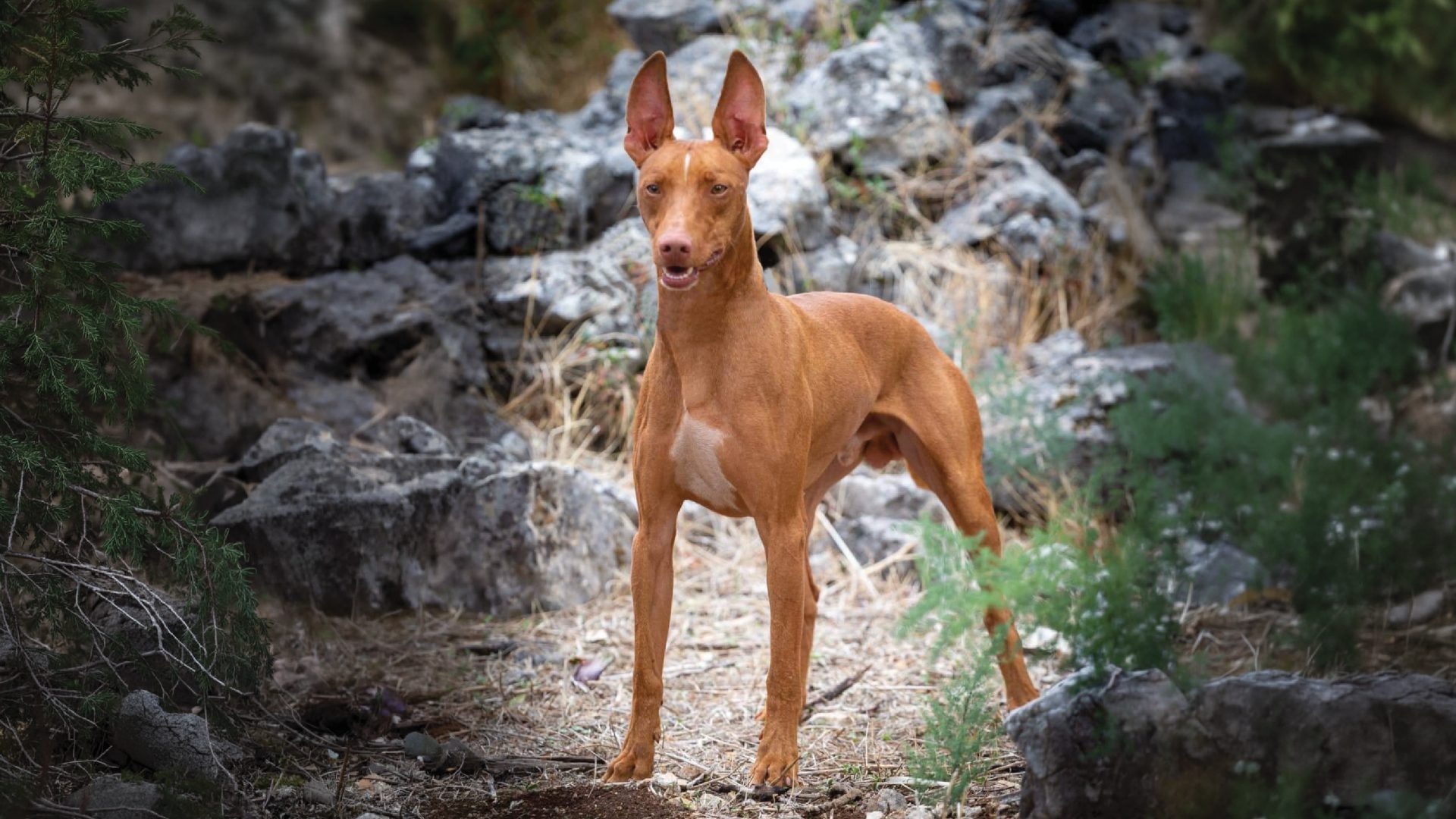
The Cirneco dell’Etna is a graceful, slender dog native to the island of Sicily in the Mediterranean Sea. Characterized by its agile and elegant physique, this breed has served as a rabbit hunter on the challenging terrain surrounding Mount Etna for over two millennia. Famed for its stamina and keen sense of smell, the Cirneco is a breed deeply ingrained in Sicilian culture and history.
Highlights
02/History
The Cirneco dell’Etna is a breed steeped in antiquity, with an origin that can be traced back over two millennia. This elegant hound is named after Mount Etna, the majestic volcano situated on the eastern coast of Sicily that has been a silent witness to the breed's evolution and enduring presence.
The ancestors of the Cirneco are believed to have been brought to Sicily by the Phoenicians, a group of ancient maritime traders from the eastern Mediterranean region. Over the centuries, the dogs adapted to the island’s challenging geography, particularly the rocky areas around Mount Etna. Their lightweight physique, coupled with an inherent hardiness and agility, made them ideal for hunting game, primarily rabbits, across the mountainside.
Numerous artifacts and coins from ancient Sicily depict images of the Cirneco, underscoring the breed’s significance and reverence in the ancient past. Some of these remnants date back as far as the 5th century BC, showcasing the small hound's long-standing presence in the region.
Despite its ancient origins, the Cirneco dell’Etna remained relatively isolated for much of its existence, leading to the preservation of its genetic purity. It wasn't until the 20th century that concerted efforts were made to stave off the breed's demise by seeking official recognition for its existence. Driven by enthusiasts who appreciated the breed's history and unique attributes, efforts were made that resulted in the formation of a Breed Standard and subsequent acknowledgment by purebred dog registries.
Today, the Cirneco dell’Etna is recognized by several major registries and kennel clubs, including the American Kennel Club (AKC), the Fédération Cynologique Internationale (FCI), and The Royal Kennel Club (UK). Though not as widespread as some other breeds, the Cirneco has found a dedicated following among dog enthusiasts who cherish its ancient lineage, hunting prowess, and affectionate demeanor.
03/Appearance
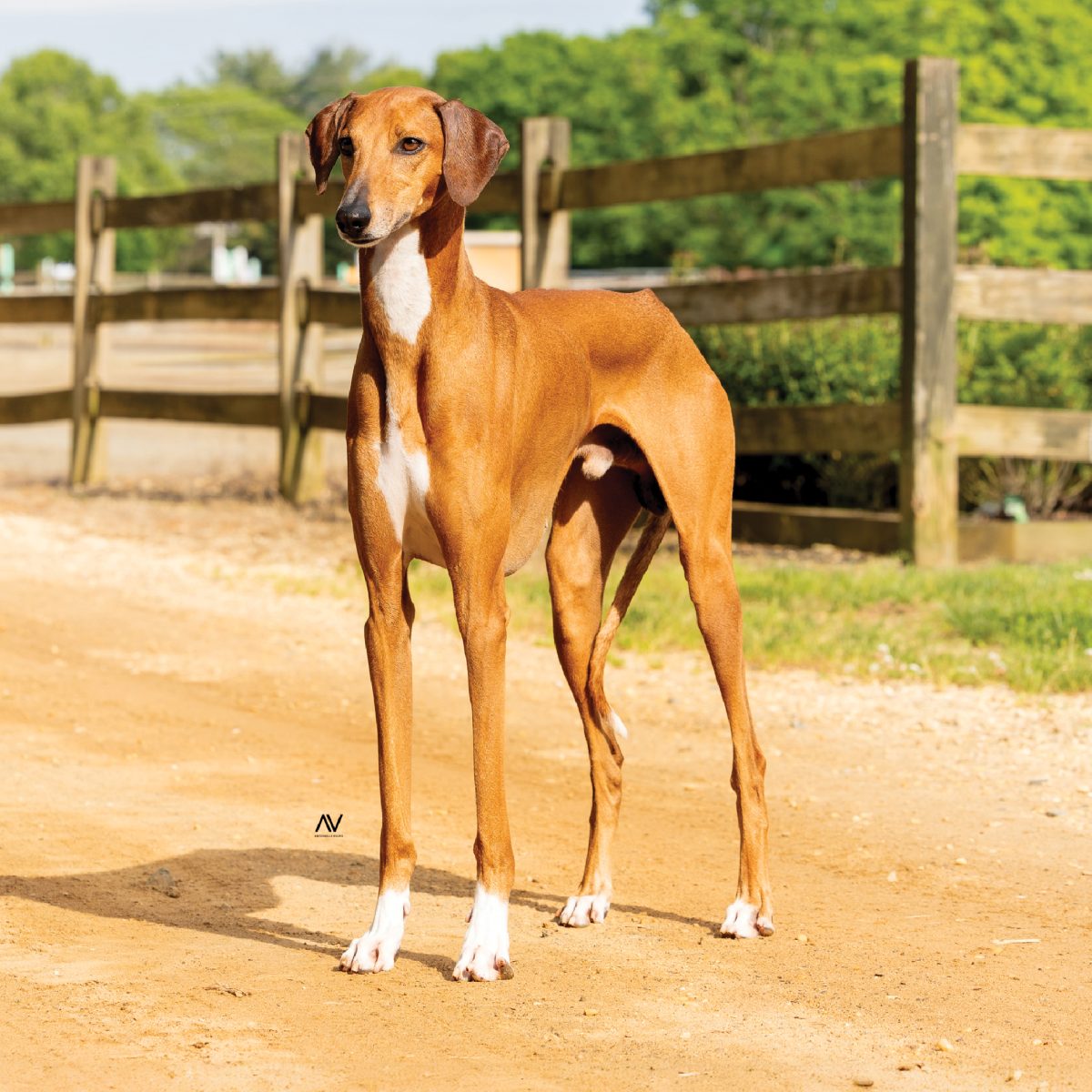
Adult male Cirnechi dell’Etna (the plural name for the breed) typically stand between 18.5 and 19.5 inches tall at the shoulder, while mature females are slightly shorter, usually measuring from 16.5 to 18 inches tall.
In terms of weight, males generally weigh between 22 and 26 pounds, whereas females tend to be in the range of 17 to 22 pounds.
Skull: The skull of the Cirneco dell’Etna is slightly convex, broadening between the ears and gradually narrowing towards the eyes. The frontal furrow is slight, and there's a noticeable, but not exaggerated, occipital crest.
Expression: The expression is one of attentiveness and intelligence. The gaze is often described as keen and lively, reflecting the alertness inherent in a hunting breed.
Eyes: Oval in shape and set well apart, the eyes are of medium size. The color typically ranges from ochre to hazelnut, and in some cases even darker, depending on the coat’s color. The eyelids fit closely, with the rims self-pigmented.
Ears: One of the most distinctive features of the breed, the ears are set high, triangular in shape, and stand erect. They are medium in size, with a base that is broad, and they taper gently to a slightly rounded point.
Muzzle: The muzzle is strong, slightly shorter than the skull, and tapers towards the nose without becoming pointy. The nasal bridge is straight.
Nose: The nose is in line with the muzzle and is well-developed. The color typically complements that of the coat, described as self-colored.
Bite: The Cirneco dell’Etna possesses a scissor bite, where the upper incisors closely overlap the lower incisors and are set square to the jaws. The jaws are strong and have large, evenly spaced teeth.
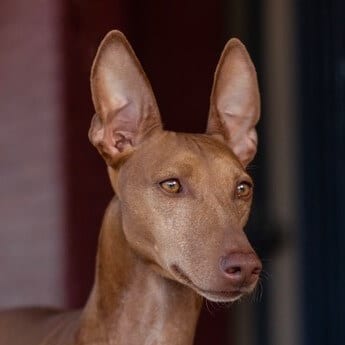
The Cirneco dell’Etna boasts a nearly square build, with the length of the body, from the point of the shoulder to the point of the buttock, being roughly equal to the dog's height at the withers. This proportion lends the breed its characteristic balance and agility. Despite its slender appearance, however, the Cirneco possesses a robust constitution, with lean muscling that highlights its hunting origins.
Texture: The coat of the Cirneco dell’Etna is typically short and fine, lying flat against the body. It is semi-harsh in texture, providing a protective layer that’s suited for the countryside on which these hounds traditionally hunted.
Colors: Tan
Markings: White Markings
04/Consider
Owning a Cirneco dell’Etna brings with it the joy of companionship with a breed that is both ancient and full of energy. This graceful hunter, with its rich Sicilian heritage, offers a blend of loyalty, intelligence, and agility. However, potential owners should be aware of the breed's specific needs, stemming from its historical role and inherent characteristics.
Interaction With Family
The level of affection a breed typically shows towards family members and familiar individuals.
Good With Other Dogs
The innate friendliness of a dog towards other dogs can depend on its breed.
Good With Young Children
The degree to which a breed will typically be patient with young children.
Amount Of Shedding
How much hair a breed typically leaves behind on clothes, furniture and floors.
Frequency Of Grooming
How often a breed needs brushing, bathing or a professional trim to stay in condition.
Amount Of Drooling
How prone a breed is to drool — worth knowing before you keep a towel by the door.
Openness To Strangers
How openly a breed tends to greet new people, visitors and strangers.
Protective Nature
How likely a breed is to alert you to — and stand between you and — anything unfamiliar.
Playfulness Level
How enthusiastic a breed stays about games and play well past puppyhood.
Trainability Level
How readily a breed takes direction and works with you rather than around you.
Barking Level
How much a breed uses its voice, and how readily.
Energy Level
How much get-up-and-go a breed brings to an average day.
Health
The Cirneco dell’Etna, by virtue of its active hunting past, is generally a robust and healthy breed. Proper care, a balanced diet, and regular check-ups can provide any dog of this breed the opportunity to enjoy a healthy life. Lifespan: On average, the Cirneco dell’Etna has a lifespan of 12 to 14 years, although with optimal care, some can be expected to live even longer.
The Cirneco dell’Etna, hailing from the volcanic landscape of Sicily, possesses a personality that’s both captivating and multifaceted. At its core, this breed is marked by its hunting heritage, revealing an astute and vigilant nature. However, as a companion, the Cirneco presents a delightful blend of affection and loyalty.
For those new to dog ownership, the Cirneco dell’Etna can be a welcoming introduction. The breed’s inherent gentleness, paired with a notable eagerness to please, renders these hounds quite amenable to even novice handlers. Yet, it's crucial to approach their training with consistency to nurture their best traits.
This breed displays a medium sensitivity level. Cirnechi establish deep bonds with their human counterparts and exhibit a warmth that's palpable. However, it's worth noting that they can be a tad anxious if confronted with abrupt changes in their environment or if they’re treated harshly.
Given their historical backdrop as pack hunters, Cirnechi inherently gravitate in the direction of companionship. Prolonged solitude isn't their preference, and there’s a potential for them to manifest signs of separation anxiety if left alone for extended durations.
The breed’s interactions with other dogs are typically harmonious, a testament to this dog’s sociable disposition. Yet, the hunting instincts of the breed may occasionally surface, especially when these dogs encounter smaller animals, warranting vigilant supervision.
When it comes to children, Cirnechi are remarkably gentle, establishing them as fitting family pets. This gentleness, however, shouldn't negate the importance of overseeing any interactions between the dog and young ones.
Exercise Expectations
The exercise needs of the Cirneco are moderate to high. These dogs enjoy a good run, making them excellent jogging or hiking companions. Their stamina, inherited from their days of hunting in the challenging landscapes of sunny Sicily, allows them to sustain prolonged activity without tiring easily. Regarding their energy level, Cirnechi dell-Etna are dynamic and spirited, especially during puppyhood. This zest for life is evident in their playful antics and their keenness to engage in interactive games. Whether it's a game of fetch, a brisk walk, or training for a dog sport, they always approach each activity with enthusiasm. The intensity of the breed during exercise sessions is a balanced mix of ease and agility. While they can exhibit bursts of speed, especially when chasing after something, Cirnechi can also be content with more leisurely activities. It's this adaptable nature that makes them suitable companions for various types of owners, from those who enjoy active outdoor pursuits to those who prefer more relaxed walks. Playfulness is another defining trait of the Cirneco dell’Etna. They cherish playtime, be it with their human family or fellow canine friends. Toys, puzzle games, and interactive playtime can be a great way to keep them engaged and strengthen the bond between the dog and its favorite human companions.
Accommodating a Cirneco dell’Etna in the household is a delightful experience, provided there’s an understanding of the breed’s unique temperament and lifestyle requirements. These dogs, being a blend of agility and intelligence, have specific living preferences that, when met, can ensure a harmonious coexistence within the home.
When considering apartment living, the Cirneco adapts reasonably well. Despite the breed’s active nature, these dogs are often content in smaller spaces as long as their exercise needs are met consistently. Regular outings and play sessions can compensate for the lack of a backyard. However, if outdoor space is available, it's important that it is securely fenced. This will allow the dog’s hunting instincts and propensity to chase to be safely expressed.
Climate plays a role in the Cirneco dell’Etna’s comfort. Originating from warm and sunny Sicily, these hounds have a higher tolerance for hot weather. Their thin coat provides some protection against the heat, but it's essential to be mindful of extreme temperatures. Ample shade and fresh water should always be provided, and strenuous activities during peak heat hours should be avoided. On the flip side, their lack of a dense undercoat means they might feel the cold more acutely. In colder climates or during winter months, it’s best to consider protective gear, like dog sweaters or jackets, to keep them comfortable.
Lastly, it's essential to recognize the breed's sociable nature. Cirnechi dell-Etna thrive in the company of their human family and can develop a deep bond with their owners. Leaving them alone for extended periods can lead to feelings of loneliness or even separation anxiety. Thus, it's advisable to provide them with company, be it human or another pet, most of the time.
05/Puppies
The allure of Cirneco dell’Etna puppies is undeniable. These tiny bundles of enthusiasm, with their expressive eyes and playful demeanor, can easily captivate the hearts of those fortunate enough to bring one of these little redheads home. However, with the joy of welcoming a Cirneco puppy also comes the responsibility of ensuring they grow into happy and well-adjusted adults.
The initial weeks of a Cirneco dell’Etna puppy's life are crucial, setting the foundation for its future health, behavior, and relationship with its human family. It's essential, therefore, to provide the pup with a stable, nurturing environment that encourages exploration, learning, and bonding with members of the household.
Diet is paramount during this growth phase, since puppies have specific nutritional needs to support their rapid growth, bone development, and overall health. It's advisable to choose high-quality puppy food that caters to the needs of medium-sized breeds. This will provide the pups with the right balance of proteins, fats, vitamins, and minerals.
Early socialization plays a pivotal role in shaping a Cirneco puppy's temperament. Introducing the little one to diverse people, environments, sounds, and experiences can help the pup grow into a confident and sociable adult. Positive encounters with other animals, gentle handling by family members, and exposure to various household noises can all contribute to a well-rounded puppy.
Training should begin early but always with gentleness and patience. Cirneco dell’Etna puppies are intelligent and eager to please, making them relatively receptive to basic obedience training. It’s important to focus on positive reinforcement techniques, rewarding desired behaviors and avoiding harsh corrections.
Regular vet check-ups are essential during this stage. These appointments allow for timely vaccinations, deworming, and overall health assessments, ensuring that any potential issues are detected and addressed promptly.
Finally, while Cirnechi dell-Etna puppies are naturally agile and energetic, it's important to remember that their bones and joints are still developing. It’s crucial to avoid strenuous activities or prolonged exercise sessions that might strain their muscles and joints. Instead, it’s best to introduce shorter, more frequent playtimes that allow them to expend energy without overexertion.
06/Activities
The Cirneco dell’Etna, with its legacy rooted in the pursuit of small game, naturally gravitates towards activities that challenge both its mind and body. Here are some popular activities and dog sports suitable for the breed:
Agility: Capitalizing on the Cirneco’s nimbleness and speed, Agility Trials are ideal outlets for the breed. Navigating through obstacle courses, from weaving poles to tunnels and teeter-totters, offers these fast-moving hounds an exciting physical challenge.
Lure Coursing: Tapping into the breed’s hunting instincts, Lure Coursing involves chasing a mechanically operated lure. This sport is perfect for Cirnechi, allowing them to display their swift running capabilities in a controlled environment.
Obedience: With their keen intelligence and desire to please, Cirnechi can excel in Obedience Trials. Here, they demonstrate their intelligence and responsiveness to commands, from basic to advanced levels.
Barn Hunt: A test of both scenting ability and agility, Barn Hunt allows dogs to locate rats (safely enclosed in tubes) hidden in hay bales. It's a fun way for Cirnechi to engage their hunting prowess in a contemporary setting.
Scent Work: Cirnechi can be trained to identify and locate specific scents, making Scent Work a stimulating activity that challenges their olfactory senses.
Rally: Combining elements of Obedience with Agility, Rally offers Cirnechi a varied set of challenges, from navigating courses to performing specific commands.
Conformation Shows: A staple for purebred dog enthusiasts, Conformation Shows provide a platform for the evaluation of a dog against its Breed Standard. Cirnechi can be showcased here, allowing judges to assess their physique, gait, and breed-specific demeanor.
Participation in these activities and dog sports can greatly enrich the life of a Cirneco dell’Etna. Not only do they offer physical exertion, they also provide ample opportunities for socialization, training, and bonding. Whether competing at high levels or simply enjoying them as recreational pastimes, these activities can amplify the joy of owning and understanding the breed’s unique attributes.
Gallery
07/Standards
The Cirneco dell’Etna is recognized by the world's leading registries and kennel organizations, which categorize the breed into a specific Group based on its unique characteristics. This breed is recognized worldwide under the following Group designations:
The ideal Cirneco dell’Etna is described by a Breed Standard that is approved by each of the world’s leading registries and kennel organizations. The Breed Standards for this breed may be found in the following links:
08/Clubs
For enthusiasts and breeders of the Cirneco dell’Etna, breed-specific clubs play an instrumental role in promoting knowledge, fostering community, and preserving the integrity of this ancient breed.In the United States, the Cirneco dell’Etna Club of America (CDECA) stands as a beacon for those passionate about the breed. This organization actively works to uphold the interests of the Cirneco dell’Etna by offering a plethora of resources to breeders, owners, and enthusiasts. From specialty shows to educational seminars, the CDECA is dedicated to shining a spotlight on the Cirneco's unique attributes and ensuring its continued prominence among purebred dog enthusiasts.In the United Kingdom, the UK Cirneco dell’Etna Club stands as the primary organization for the breed. This club, dedicated exclusively to the Cirneco, provides comprehensive guidance on everything from safeguarding the Breed Standard to providing guidance on healthcare and training. The sense of community fostered through the club’s events and initiatives makes it a nexus for Cirneco aficionados in Great Britain.Becoming involved with, or even simply exploring, these breed clubs can offer a treasure trove of information and experiences for any Cirneco dell’Etna owner or admirer. The clubs serve not just as repositories of knowledge but also as vibrant communities where the shared love for this Sicilian breed binds individuals together.
09/Rescue
The dedication to the Cirneco dell’Etna finds profound resonance in the world of dog rescues. While breeders and enthusiasts emphasize preserving the breed's legacy, rescue groups are passionate about providing a safety net for any Cirneco in need.In the United States, the Cirneco dell’Etna Club of America (CDECA) not only plays a role in promoting and preserving the breed, it also has a rescue arm dedicated to the welfare of Cirnechi in all 50 states. Through the efforts of its members, dogs that may have been lost or abandoned, or have otherwise found themselves in less than ideal circumstances, are given a chance at a new life in a forever home.
10/Facts
Volcanic Connection
The breed's name is deeply tied to its origins. "Cirneco dell’Etna" translates to "Hound of Etna," referring to Mount Etna, the prominent volcano on Sicily where these dogs were historically used for hunting.
Noble Companions
Ancient coins and artifacts from Sicily depict the Cirneco, indicating its revered status and close association with the island's inhabitants over millennia.
Versatile Hunters
Despite their petite stature, Cirnechi are versatile hunters, historically used to hunt small mammals and birds in the rugged terrain of Mount Etna.
Natural Athletes
The breed’s slender bodies, sharp senses, and agility make the Cirneco dell’Etna a natural athlete, excelling in dog sports such as Lure Coursing and Agility Trials.
Minimal Grooming
The breed's short, sleek coat is not just beautiful, it’s also low-maintenance, requiring minimal grooming compared to many other breeds.
Ancient Lineage: The Cirneco dell’Etna is one of the more ancient of dog breeds, with a lineage tracing back over 2,500 years at least. The breed has been associated with the island of Sicily for centuries.
11/FAQ
Yes, the Cirneco dell'Etna is often compared to the Pharaoh Hound due to their similar appearance. Both breeds have a slender, elegant build and large, prick ears. However, they are distinct breeds with their own unique histories. The Cirneco has its roots in Sicily, whereas the Pharaoh is from Malta.
Official Standard for the Cirneco Dell’Etna
General Appearance: Medium sized hunting dog, elegant, slender build but strong and hardy. Long limbed, of light construction and square outline with a fine coat and erect ears always alert. Honorable scars indicating a working and hunting dog are never to be penalized. The following description is that of the ideal Cirneco dell'Etna. Any deviation from the below described dog must be penalized to the extent of the deviation. Characteristics: A keen hunter. Adaptable to difficult terrain. Hunts by scent, sight and hearing. Strong-willed, alert and an excellent companion.
Size, Proportion, Substance: Height - Dogs 18 to 20 inches; bitches 17 to 19 inches. Height not within the stated limits is a disqualification. Length from point of shoulder to point of buttock equal to height at withers.
Head: Expression - Alert expression. Eyes- Relatively small, oval in shape, set somewhat obliquely. Amber or ochre blending with coat. Pigmentation of the eyelid rims corresponding to the color of the nose. Brown or yellow iris is a fault to be severely penalized. Walleye, an eye with a whitish iris or a blue eye(s) is a disqualification. Ears - Set very high and close together, erect and rigid, parallel or almost parallel when alert. Triangular shape with narrow tip. Length slightly less but no more than half the head. Totally hanging ears or bat ears are a disqualification. Skull - Width of skull less than one half the length of the head, in profile almost flat. Lean and well chiseled. Stop - Slight stop. Muzzle - Length equal to, but not less than 80 percent of the length of the skull. Planes - Top of skull and foreface parallel or slightly divergent. Nose - Bridge of nose straight. Nose rather large, flesh colored, blending with coat. Cheeks - Flat cheeks. Mouth - Lower jaw lightly developed with receding chin. Overshot mouth or undershot mouth is a disqualification. Lips - Thin, taut lips, just covering the teeth of the lower jaw. Bite - Regular and complete scissor bite, i.e. upper teeth closely overlapping lower teeth and set square to the jaws.
Neck, Topline and Body: Neck - Length the same as the head. Strong, clean, well arched and muscular. Set well into shoulders. Topline - Straight topline sloping from withers towards croup. Body - Chest - Reaches to, or nearly to, the elbow, without going beyond. Ribs - Slightly sprung, narrow but never flat. Underline & Tuck-up - Clean, gently rising, lean underline. excessive tuck-up is a severe fault. Back - Upper profile straight without conspicuous muscles, the length is approximately three times the length of the loin. Loin - Length of loin is approximately one fifth of the height at the withers and its width is nearly the same as its length. Short, slightly developed muscles but firm. Croup - Croup has flat profile, sloping steeply downwards to root of tail. Tail - Low set, fairly thick at base, reaching to point of hock. Of equal thickness for most of its length. Carried high and curved when dog is in action; sabre fashion when in repose. Hair on tail is semi-long and close. Tail curled over the back is a fault to be severely penalized.
Forequarters: Angulation - Shoulder blade (scapulum) to horizontal 55 to 60 degrees. Shoulders - Strong, long, moderately laid back. Shoulder blades - Upper tips close together. Length close to one-third the height at the withers. Upper Arm - Length of upper arm slightly less than length of shoulder blade. Elbow - Level or below the line of the brisket and well tucked in. Legs - Forelegs straight and parallel when viewed from the front. Length just over ½ the height at the withers. Pasterns - Strong and slightly sloping. Dewclaws - May not be removed.
Hindquarters: Strong and muscular. Limbs parallel when viewed from behind. Angulation- Not excessively angulated. In profile a vertical line from rear point of buttock to ground close to or touching the tips of the toes. Angle between pelvis and upper thigh is about 115 degrees. Legs - Upper thigh - Broad, long, upper thigh with flat muscles. Stifle - Moderate bend of stifle. Second thigh - Slightly shorter than the upper thigh. Lean and distinct musculature with light bone structure. Groove at Achilles tendon well marked. Hock joint - Angle at the joint is about 135 degrees. Hocks - Wide outer surface, cylindrical shape and vertical position. Length from sole of foot to point of hock is just over a quarter of the height at the withers. Dewclaws - Absent.
Feet: Strong, well knuckled, firm, slightly oval, turning neither in nor out. Pads - Well padded, hard and of the same color as the nails. Nails - Brown or flesh colored. Black nails are a disqualification.
Coat: Short on head, ears and legs. Semi-long (about 1 inch) on body and tail, but sleek and close, ranging from fine to slightly coarse. No feathering.
Color: Self-colored light to dark shades of tan, with a mixture of slightly lighter and darker hairs, or tan with white blaze or mark on head, chest and/or throat, white feet, point of tail, and/ or belly. A white collar is less desired. Total depigmentation, self-colored brown or liver; brown patches or hairs; brindle coat: or any presence of black, whether patches, hairs, or pigmentation including of mucous membranes, are a disqualification.
Gait: Springy trot without excessive extension. Viewed from behind, hind legs track the forelegs. Tendency to throw feet sideways or hackney action undesirable.
Temperament: Strong, lively, independent temperament. Gentle and affectionate.
Disqualifications: Height not within the stated limits: Dogs under 18 inches or over 20 inches, Bitches under 17 inches or over 19 inches. Walleye, an eye with a whitish iris or a blue eye(s); overshot mouth or undershot mouth. Totally hanging ears or bat ears. Total depigmentation; self-colored brown or liver; brown patches or hairs; brindle coat: or any presence of black whether patches, hairs, or pigmentation, black nails, or mucous membranes.
Approved January 14, 2020
Effective March 31, 2020
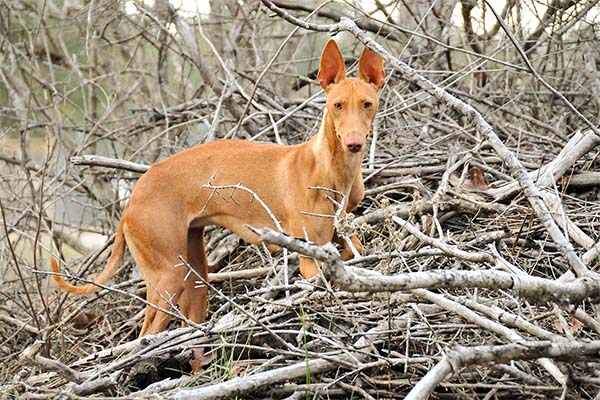

Meet the Breeders
Interview with Hound Group Breeder Jerri Gates – D’LEA Cirnechi – My mentor and original breed partner always said that her foundation girl,

Meet the Breeders
Interview with Hound Group Breeder Heather Galford – My kennel name is HighGard, and we currently have eight dogs; six Basenjis and two
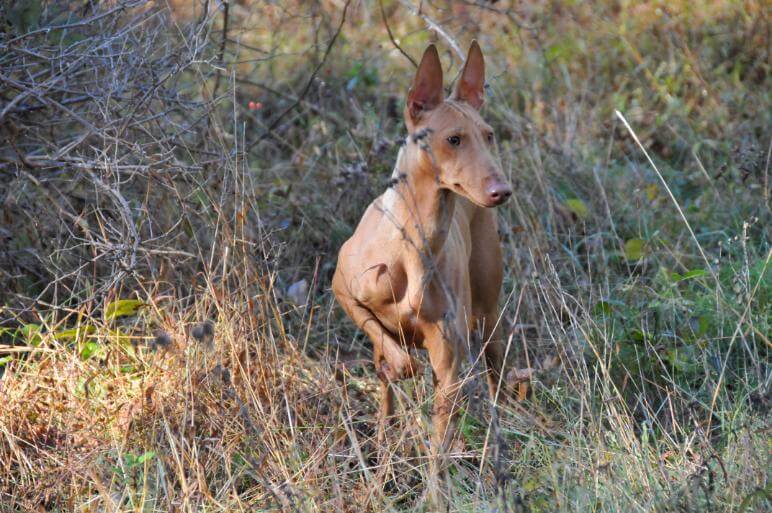

Cirneco dell’Etna’s Function – Is the Cirneco a Sighthound? No. If classified as a “Hound,” the Cirneco is a Scenthound. While employing
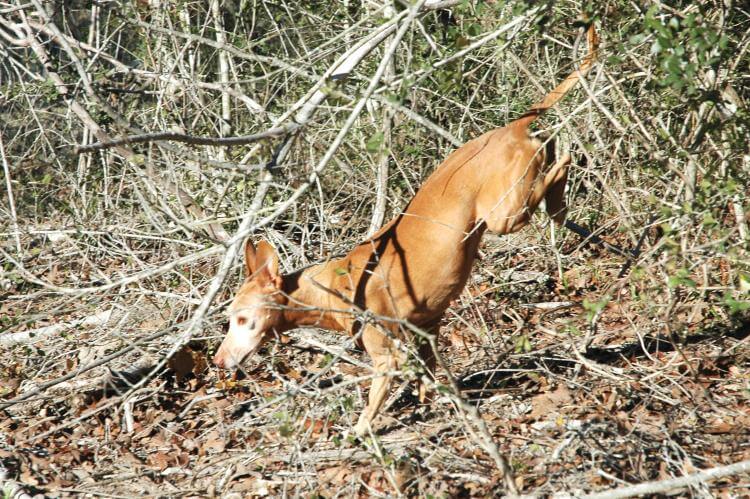
Hidden in the deep sleep of the COVID pandemic was the first revision of the AKC Cirneco dell’Etna breed standard. Although effective on
The tail of the Cirneco dell’Etna is set low and follows the natural line of the croup. In terms of length, it extends to the hocks or slightly below. When the dog is at rest, the tail is usually relaxed and hanging, though it may showcase a slight curve. However, when the Cirneco is in motion or alert, the tail is raised higher but it never curls over the back.
The tail is thick at the base and tapers towards the tip, thus accentuating the dog's overall elegance as well as its usefulness when the hound is in pursuit of its quarry.
A Note About Color: The Cirneco dell’Etna is a self-colored dog in various shades of tan, from light to dark. White may appear as a mark or blaze on the head and on the chest and/or throat, on the feet, and on the tip of the tail. White can also be found on the belly; however, a white collar is not desirable. The color of the nose, lips, and eye rims blend with the color of the coat. Any other coloration or pigmentation is not acceptable for the breed.
Coat Type
Smooth
The structure of the coat this breed carries.
Coat Length
Short
How long the breed's coat grows when kept in condition.
Adaptability Level
How easily a breed copes with changes in home, routine, noise and weather.
Mental Stimulation Needs
How much a breed needs a job, a puzzle or training to stay content.
In terms of their reception of unfamiliar faces, Cirnechi tend to be somewhat reserved. They don't naturally exhibit aggression toward strangers, but early socialization can further refine their comfort around new people.
Ensuring that the Cirneco dell’Etna receives the right nutrition is paramount to the dog’s health, energy levels, and overall well-being. Derived from an environment that often tested the breed’s endurance and agility, these dogs have specific dietary needs that should be met to keep them at their best.
Feeding a Cirneco puppy requires special attention. In the growth phase, puppies have higher energy requirements, so it's crucial to offer them a balanced diet rich in proteins and essential nutrients to support their developing muscles and bones. Puppy-specific formulations, which are dense in nutrients, are often recommended until they reach adulthood.
As the Cirneco matures into an adult, dietary needs will change. Adult Cirnechi typically require a balanced diet that supports an active lifestyle but doesn't lead to unnecessary weight gain. It's important to make sure the food provided offers a proper balance of proteins, fats, and carbohydrates, accompanied by essential vitamins and minerals.
Regarding the amount of food that’s given, the specific quantity can vary based on the dog's age, weight, activity level, and metabolism. On average, an adult Cirneco might require about 1 to 1.5 cups of high-quality dry dog food per day, divided into two meals. However, this is a general guideline, and it's always advisable to consult with a veterinarian to determine the ideal portion size for an individual dog.
Being naturally lean and athletic, Cirnechi dell’Etna should maintain an optimal weight to ensure they remain agile and healthy. Regularly monitoring the dog’s weight and adjusting its food intake, especially if it seems less active, can prevent potential health issues linked to obesity.
Training a Cirneco dell’Etna offers a rewarding experience, reflecting the breed’s sharp intellect and eagerness to please. Originating from Sicily's challenging terrain, where these hounds were employed as hunters, Cirnechi have developed a keen sense of observation and quick decision-making, attributes that come to the forefront during training sessions.
For those curious about the ease of training, the Cirneco fares quite well. The breed’s natural intelligence and willingness to cooperate often make the training process a smooth experience. However, it's essential to approach training with patience and positive reinforcement. These dogs respond best to gentle, reward-based training methods, which can foster a deeper bond between the dog and the trainer.
Regarding their tendency to vocalize, Cirnechi dell-Etna are not excessively noisy. They might alert their owners to unfamiliar sounds or unexpected visitors, but they generally aren't known for needless barking. Nonetheless, early training can curb any undesirable vocal habits and encourage them to bark only when necessary.
The breed's intelligence shines brightly, making the Cirneco a quick learner. These dogs can grasp commands and tricks with relative ease, often surprising their owners with their adeptness. Engaging in activities that challenge their intellect can not only make training sessions more productive, it also enhances their mental well-being and happiness.
Wanderlust is a facet of owning this breed that’s worthy of consideration, given the Cirneco’s hunting background. While these hounds are loyal and usually stay close to their owners, the allure of following a scent or chasing a small animal can sometimes be too tempting. Hence, it's crucial to have a secure environment, like a fenced yard, and to reinforce recall commands from a young age.
Lastly, addressing the aspect of predation, the Cirneco dell’Etna’s hunting lineage means these dogs have a pronounced prey drive. While they coexist harmoniously with family pets, smaller animals might trigger their chasing instinct. Early socialization and training can mitigate this, but it's always recommended to be vigilant in environments where smaller animals are present.
Grooming Expectations
The coat of the Cirneco dell’Etna is characterized by its short and fine texture. This sleek coat doesn't trap much dirt or debris, which means these dogs don't require frequent baths. In fact, bathing them only when they appear visibly dirty or have an odor is usually sufficient. Overbathing can strip their skin of essential oils, potentially leading to dryness or harmful irritation. When it comes to shedding, the Cirneco does so to a moderate degree. While these dogs aren't heavy shedders, regular brushing can help to remove loose hairs and promote a healthy shine in their coat. A soft-bristle brush or a grooming mitt used once a week is generally enough to maintain their coat's healthy luster. Apart from coat care, other aspects of grooming the Cirneco dell’Etna include regular nail trimming, ear cleaning, and dental care. The nails should be trimmed once every couple of weeks or as needed to prevent overgrowth, which can lead to discomfort or potential injury. The dog’s ears, being erect, are less prone to infections, but a weekly check and gentle cleaning can help to prevent any issues from becoming a problem. Lastly, dental care, including brushing the Cirneco’s teeth several times a week, can safeguard the dog against dental problems and encourage fresh breath.