01/Overview
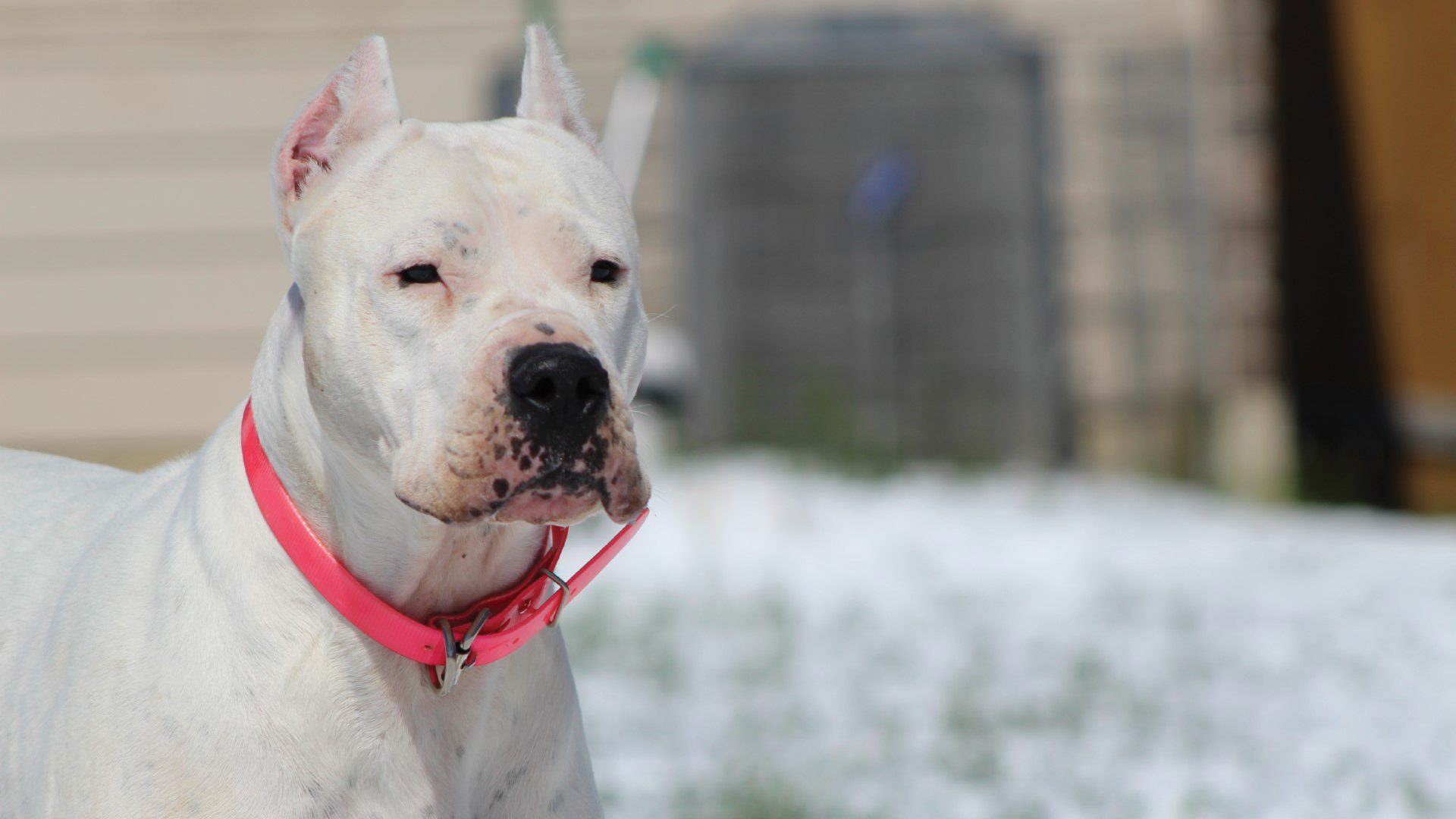
The Dogo Argentino is a muscular and athletic breed known for its courage, loyalty, and versatility. Originally bred in Argentina as a big game hunter, the breed has also gained recognition for its abilities as a guardian, working dog, and devoted family companion.
Highlights
02/History
The Dogo Argentino was developed in the 1920s by Dr. Antonio Nores Martínez in Córdoba, Argentina. Dr. Martínez sought to create a powerful and versatile dog capable of hunting large game animals like wild boar and puma, while also serving as a loyal companion and protector in the home. To achieve this, he selectively crossed the now-extinct Cordoba Fighting Dog with several other breeds to incorporate specific desirable traits.
The breeds used in the Dogo’s development included the Boxer, Great Dane, Bull Terrier, Pointer, Irish Wolfhound, Dogue de Bordeaux, and Spanish Mastiff. Each breed contributed unique characteristics, such as strength, endurance, scenting ability, and a stable temperament. The resulting dog was a powerful, agile hunter with a white coat, chosen to help the dog stand out during hunts in the dense Argentine wilderness.
The breed quickly proved its prowess in big-game hunting, becoming a favorite choice for local hunters. Beyond its hunting capabilities, the Dogo also exhibited loyalty and protective instincts, making it an effective guardian and companion.
The Dogo Argentino was first recognized by the Argentine Kennel Club in 1964. The breed later gained international recognition when it was officially accepted by the Fédération Cynologique Internationale (FCI) in 1973. The American Kennel Club (AKC) granted full recognition to the Dogo Argentino in January 2020, placing it in the Working Group.
Over the years, the Dogo has earned a reputation for its versatility. In addition to hunting, the breed has been utilized for police work, search and rescue, and as a therapy dog. Its strength, intelligence, and devotion make it a breed with a wide range of abilities.
Despite its many positive attributes, the Dogo Argentino has faced controversy in some countries due to its strong guarding instincts and perceived aggression. Breed-specific legislation (BSL) has restricted or banned ownership in certain regions, emphasizing the importance of responsible breeding, training, and ownership.
03/Appearance
Dogo Argentino males typically stand between 24 and 26.5 inches tall at the shoulder, while females measure 24 to 25.5 inches. Height above or below these limits is a disqualification in the show ring. Adult males generally weigh between 88 and 100 pounds, while mature females typically weigh from 88 to 95 pounds.
The Dogo Argentino is a well-proportioned dog with a balanced, athletic build that emphasizes both power and agility. The breed is slightly longer than it is tall (off-square), with a robust, muscular body and a deep chest, short and muscular loins, and a slight to moderate tuck-up of the abdomen.
Texture: The Dogo Argentino has a uniformly straight, short, and smooth coat that lies close to the skin, giving the breed its sleek and somewhat polished appearance. The hair’s length averages one-half to three-quarters of an inch. Long hair is unacceptable in the breed. The Dogo has very thick skin and elastic skin, with wrinkles but no excessive dewlap.
Standard Colors
Standard Markings
04/Consider
Owning a Dogo Argentino is a rewarding and serious responsibility. This breed is known for its strength, loyalty, and intelligence, but it requires an experienced and committed owner to meet its physical and mental demands. Their protective instincts and high energy levels make them ideal for active homes that can provide proper socialization, exercise, and training.
Interaction With Family
The level of affection a breed typically shows towards family members and familiar individuals.
Good With Other Dogs
The innate friendliness of a dog towards other dogs can depend on its breed.
Good With Young Children
The degree to which a breed will typically be patient with young children.
Amount Of Shedding
How much hair a breed typically leaves behind on clothes, furniture and floors.
Frequency Of Grooming
How often a breed needs brushing, bathing or a professional trim to stay in condition.
Amount Of Drooling
How prone a breed is to drool — worth knowing before you keep a towel by the door.
Openness To Strangers
How openly a breed tends to greet new people, visitors and strangers.
Protective Nature
How likely a breed is to alert you to — and stand between you and — anything unfamiliar.
Playfulness Level
How enthusiastic a breed stays about games and play well past puppyhood.
Trainability Level
How readily a breed takes direction and works with you rather than around you.
Barking Level
How much a breed uses its voice, and how readily.
Energy Level
How much get-up-and-go a breed brings to an average day.
Health
The Dogo Argentino is generally a robust breed with a lifespan of 9 to 15 years. However, like all dogs, individuals can be predisposed to certain genetic and breed-specific health issues. Regular veterinary care, a balanced diet, and a healthy lifestyle can help to maintain a Dogo’s quality of life.
The Dogo Argentino is a courageous, loyal, and intelligent breed, known for its strong protective instincts and affectionate nature with its family. This breed thrives by forming close bonds with its human companions and is highly devoted to their safety and well-being.
Dogos are generally good with children when raised together, displaying a gentle and playful demeanor. However, they can be wary of strangers and require early and consistent socialization to make sure that they remain confident and well-mannered in various situations. While they can coexist with other dogs, their assertive nature requires careful introductions and supervision, especially with unfamiliar animals.
Exercise Expectations
This breed thrives on mentally and physically stimulating activities such as Tracking, Agility, and Obedience. Without sufficient exercise, Dogos can become bored and may develop destructive behaviors, making regular outdoor activities and mental challenges essential for their overall well-being.
Grooming Expectations
The Dogo Argentino is best suited for homes with a secure outdoor space where the dog can freely roam and play. While these dogs can sometimes adapt to apartment living, they need daily exercise and mental stimulation to prevent restlessness and destructive behaviors.
This breed is sensitive to extreme temperatures, tolerating heat better than cold due to its short coat. In colder climates, the Dogo may need a sweater or jacket for warmth. These dogs are deeply loyal and thrive when included in family activities, making them excellent companions for active adventurers who are willing and able to meet their needs.
05/Puppies
Dogo Argentino puppies are undeniably appealing, but they require consistency, patience, and an understanding of the breed’s unique needs. Proper guidance during puppyhood ensures that they grow into confident, well-mannered adults that are a joy to live with.
Caring for a Dogo Argentino puppy starts with creating a safe and structured environment. Puppy-proofing the home is essential, as the pup’s natural curiosity can easily lead it into trouble.
Socialization should begin early, exposing the puppy to a variety of people, animals, and environments to support positive interactions in new situations. Puppy classes or controlled playdates are excellent opportunities to build confidence and good behavior.
Nutrition is especially important during this stage. Feeding a high-quality large-breed puppy food ensures proper growth and supports joint health. The Dogo pup typically requires three to four small meals a day, transitioning to two meals as it matures.
Training should start early and focus on basic obedience and housetraining, and introducing a crate as the puppy’s “safe space.” Positive reinforcement works best for this intelligent breed, and establishing boundaries early helps to prevent any behavioral issues later on. Regular vet checkups and communication with the puppy’s breeder are also critical for ensuring a healthy start in life.
06/Activities
Gallery
07/Standards
The Dogo Argentino is recognized by the world's leading registries and kennel organizations, which categorize the breed into a specific Group based on its unique characteristics. This breed is recognized worldwide under the following Group designations:
The ideal Dogo Argentino is described by a Breed Standard that is approved by each of the world’s leading registries and kennel organizations. The Breed Standards for this breed may be found in the following links:
08/Clubs
09/Rescue
10/Facts
Created for Big-Game Hunting
The Dogo Argentino was specifically bred in Argentina to hunt large prey like wild boar and puma, combining strength, endurance, and scenting abilities.
White Coat for Practicality
Its entirely white coat was chosen to make the dog easily visible during hunts in dense forests.
Developed by a Surgeon
Dr. Antonio Nores Martínez, a surgeon, meticulously created the breed by combining traits from 10 different established breeds.
Sensitive to Sunburn
Due to their short coat and light pigmentation, Dogos are prone to sunburn, requiring special care in sunny climates.
A Recent AKC Addition
The Dogo Argentino was officially recognized by the American Kennel Club in January 2020, joining the Working Group.
11/FAQ
Yes, Dogo Argentinos shed. However, regular brushing helps to control any loose hair and will maintain the coat's sleek appearance.
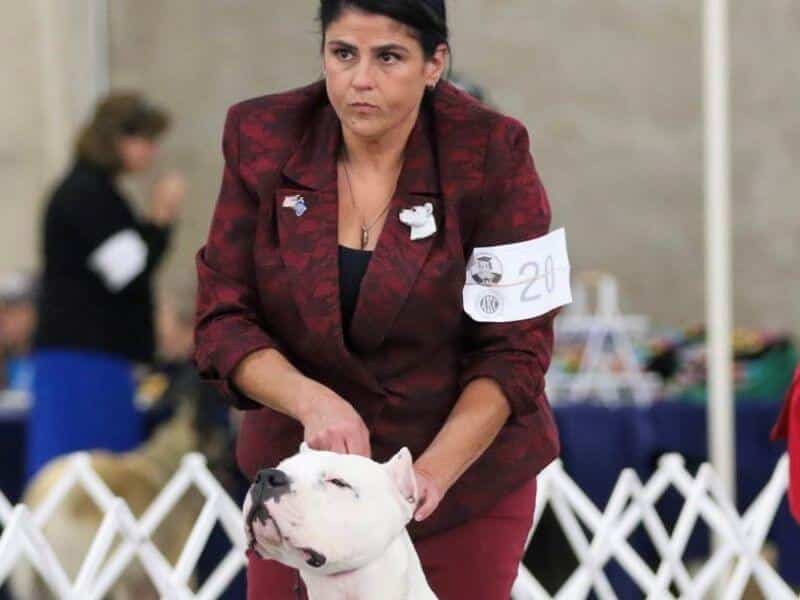

Meet the Breeders
Kassi McLaughlin is breeder behind El Remate Dogos Argentinos. Read about the kennel’s beginnings, the puppies, and much more!
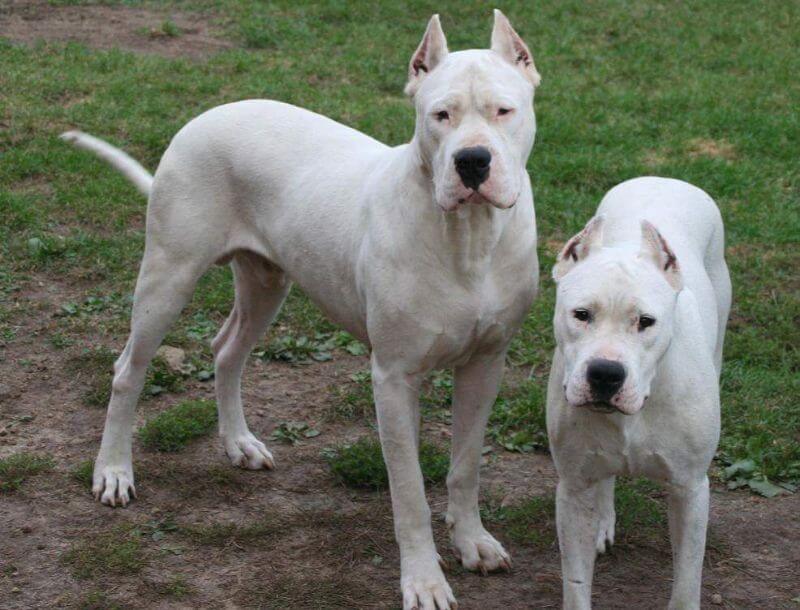

Meet the Breeders
Kristin Winter is the breeder behind Nemesis Dogos. Read about the kennel’s beginnings, champion dogs, Dogo Argentino puppies, photos & more!
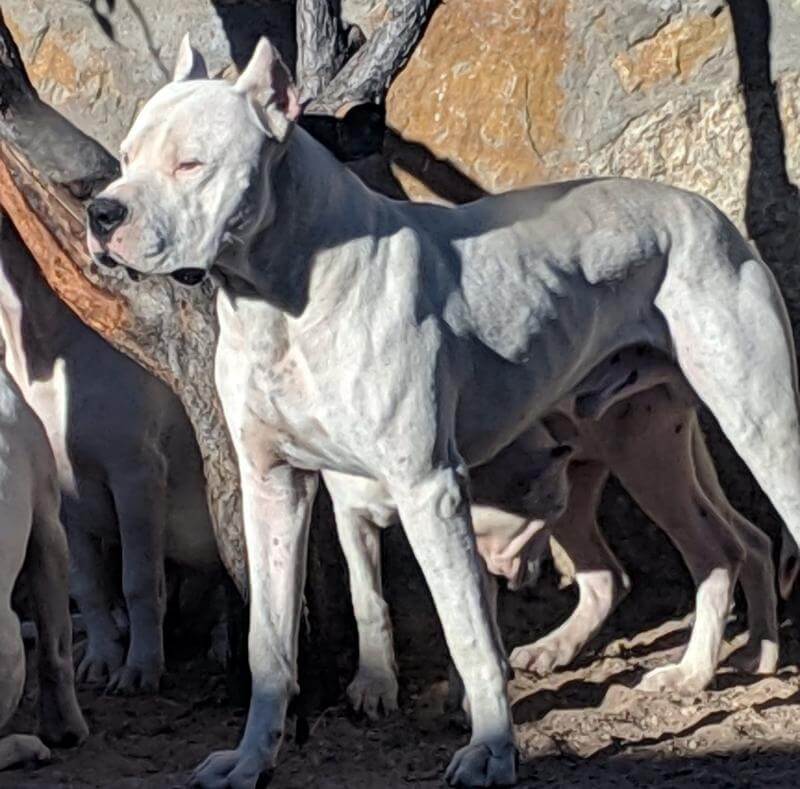

Meet the Breeders
Richard Lee is the breeder behind Del Caritas Dogo Argentino. Read about the kennel’s beginnings, champion dogs, Dogo puppies, photos & more!
The tail of the Dogo Argentino is long, thick at the base, and tapers to a point at the hock joint. It is carried low when the dog is relaxed but may rise to 45 degrees in an amply curved arc when the dog is alert or active. The tail is never docked.
A Note About Color: The Dogo Argentino is an “entirely white” breed. The only exception is a single black or dark spot on the head, and some black spotting on the ear. The spot is not to exceed 10 percent of the head. Black pigmented skin is acceptable anywhere on the dog and may be visible through the coat. This pigmentation often increases with age.
Coat Type
Smooth
The structure of the coat this breed carries.
Coat Length
Short
How long the breed's coat grows when kept in condition.
Adaptability Level
How easily a breed copes with changes in home, routine, noise and weather.
Mental Stimulation Needs
How much a breed needs a job, a puzzle or training to stay content.
The Dogo Argentino requires a high-quality, well-balanced diet to maintain its muscular build and high energy levels. Puppies should be fed a specially formulated large-breed puppy food to support proper growth and joint development, typically in three to four meals per day.
Adult Dogos usually need 3 to 4 cups of food daily, divided into two meals, although the exact amount depends on their size, age, metabolism, and activity level. Access to fresh water is essential, and feeding schedules should be consistent. To prevent bloat, it’s best to avoid feeding immediately before or after vigorous exercise and opt for elevated food bowls if recommended by a veterinarian or the dog’s breeder.
The Dogo Argentino is an intelligent and eager-to-please breed but requires firm, consistent training to manage its strength and protective nature. Early training should focus on obedience and socialization to make sure the dog is comfortable around people, children, and other animals.
Positive reinforcement methods, such as treats and praise, work best, as harsh training techniques can lead to distrust or defiance. The Dogo’s strong prey drive and natural guarding instincts mean these dogs need clear boundaries and consistent leadership. They excel in advanced Obedience, Tracking, and Protection training, making them ideal for experienced owners who can dedicate time to nurturing their potential.
Bathing should only be necessary when the dog becomes dirty or develops an odor, as overbathing can strip the coat of its natural oils. Routine care, including nail trimming, ear cleaning, and teeth brushing, is essential to prevent health issues and keep the Dogo in top condition.