Members

01/Overview
The English Cocker Spaniel, distinguished by its beautiful silky coat and cheerful personality, is one of the most beloved breeds worldwide. Originally bred for hunting game birds, this breed has captured the hearts of hunters and homeowners alike with its affectionate nature and lively spirit.
Highlights
02/History
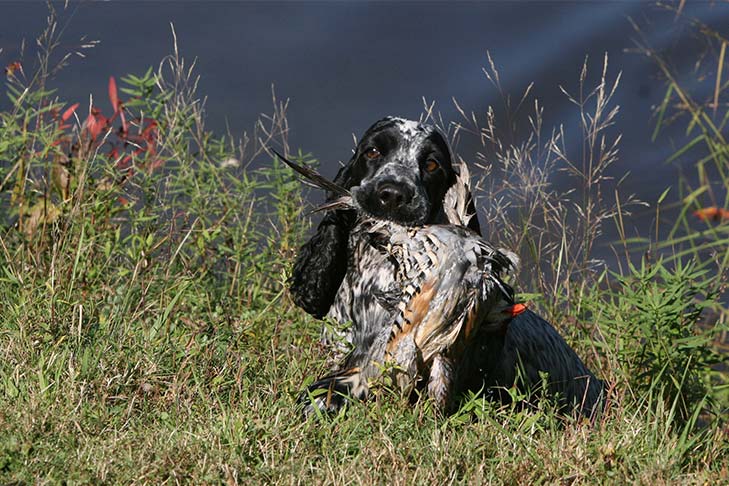
The English Cocker Spaniel's history is rooted in the British Isles, where it was primarily developed as a hunting companion specifically utilized to flush and retrieve birds from dense underbrush. Its keen sense of smell, agility, and enthusiastic work ethic made the breed a favorite among hunters, especially those in search of woodcock, a bird from which the breed gets its name.
Historically, spaniels in England were categorized based on their size and the job they performed, rather than as a distinct breed. It wasn't until the late 19th century that the various spaniels were differentiated into specific breeds. The distinction between the English Cocker Spaniel and its close relative, the English Springer Spaniel, became more pronounced during this period. The primary distinction was based on size, with the smaller spaniels used for hunting woodcock named the "Cocker."
In 1892, the Cocker Spaniel was officially recognized as a breed distinct from other spaniels breeds by The Royal Kennel Club in the UK. The breed's popularity grew steadily in the early 20th century, both in the UK and abroad. Its charm, intelligence, and versatility made it not just a preferred hunting companion but also a beloved companion.
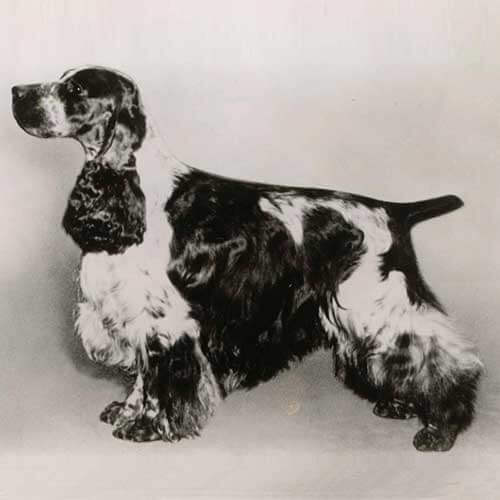
The breed's introduction to the United States led to further development, and slight differences in appearance and temperament started to become apparent. American and English variants eventually emerged, and the American Kennel Club (AKC) recognized the English Cocker Spaniel as a separate breed in 1946.
Over the years, the English Cocker has seen success not only in the field but also in the show ring. The breed’s pleasing aesthetics, combined with its cheerful demeanor, has earned it numerous accolades at Conformation dog shows.
While hunting remains in the breed's DNA, today's English Cocker Spaniel is more commonly found as a companion animal, adored for its affectionate nature, intelligence, and playful spirit. The breed's rich history and enduring qualities ensure its continued popularity among dog enthusiasts worldwide.
03/Appearance
Adult male English Cocker Spaniels typically stand at a height of about 16 to 17 inches at the withers, while mature females generally measure slightly less, standing at around 15 to 16 inches.
The weight for males usually ranges from 28 to 34 pounds, with females typically weighing between 26 and 32 pounds.
The English Cocker Spaniel is a breed of balance and symmetry. It presents neither a heavy nor a fragile silhouette, but rather a medium-sized body that's built for endurance and agility. The length of the body is approximately equal to the height, giving it a short-coupled appearance when viewed from the side. The substance of the breed, which refers to its overall solidity and musculature, is significant without being bulky. Its body is compact with a firm backbone, embodying both strength and elegance.
Texture: The English Cocker Spaniel boasts a silky, medium-length coat that lays flat against the body. Its texture is straight and free from curls, though a slight wave is permissible. The coat is dense enough to protect against brambles without being too coarse. Feathering can be found on the chest, belly, legs, and ears, giving the English Cocker its distinctive and unexaggerated appearance.
Standard Colors
04/Consider
The decision to bring an English Cocker Spaniel into the home is rewarding on many fronts. With the breed’s joyful demeanor, affectionate nature, and stunning appearance, it's no wonder this breed has been one of the most beloved around the world for more than a century. However, as with any dog, potential owners must understand the breed’s unique characteristics and needs to ensure a harmonious relationship.
Interaction With Family
The level of affection a breed typically shows towards family members and familiar individuals.
Good With Other Dogs
The innate friendliness of a dog towards other dogs can depend on its breed.
Good With Young Children
The degree to which a breed will typically be patient with young children.
Amount Of Shedding
How much hair a breed typically leaves behind on clothes, furniture and floors.
Frequency Of Grooming
How often a breed needs brushing, bathing or a professional trim to stay in condition.
Amount Of Drooling
How prone a breed is to drool — worth knowing before you keep a towel by the door.
Openness To Strangers
How openly a breed tends to greet new people, visitors and strangers.
Protective Nature
How likely a breed is to alert you to — and stand between you and — anything unfamiliar.
Playfulness Level
How enthusiastic a breed stays about games and play well past puppyhood.
Trainability Level
How readily a breed takes direction and works with you rather than around you.
Barking Level
How much a breed uses its voice, and how readily.
Energy Level
How much get-up-and-go a breed brings to an average day.
Health
English Cocker Spaniels, by and large, are a healthy and robust breed. Their breeding history, rooted in active fieldwork, has endowed them with a strong constitution. However, like all breeds of dog, they can be predisposed to certain health conditions. Lifespan: The average lifespan of an English Cocker Spaniel ranges between 12 and 14 years. Proper nutrition, regular exercise, and routine veterinary care can significantly influence a dog’s health and longevity.
The vivacious and endearing personality of an English Cocker Spaniel makes it a widely cherished companion. For those new to the world of dogs, the English Cocker is an excellent choice. The breed's amiable nature, combined with its eagerness to please, renders these dogs a straightforward choice which novice dog owners can handle. That said, proper training and early socialization remain vital for promoting harmony in the home.
These dogs are inherently sensitive, forming deep bonds with their human family members which can sometimes border on being clingy. Their delicate nature means they thrive best with positive reinforcement and a nurturing environment, whereas harsh training methods can be counterproductive. It's also noteworthy that while English Cockers are adaptable, they have a preference for company. Extended periods of solitude can be challenging for them, and in some cases, may lead to separation anxiety.
When it comes to other dogs, English Cocker Spaniels generally showcase a sociable side. They tend to mingle well with other dogs, especially when they've been exposed through early socialization experiences. This amicability extends to their relationship with children. The English Cocker’s affectionate and gentle demeanor makes the breed an ideal fit for many families, but as always, interactions between dogs and young kids should always be supervised.
Moreover, while these dogs might exhibit an initial reservation, they aren't typically aggressive or overly wary of strangers. With the right social exposure, they can transition from being reserved to being genuinely welcoming, although their loyalty and special affection will always be reserved primarily for their family members.
Exercise Expectations
English Cocker Spaniels are high-energy dogs. Born from a lineage of working dogs primarily used for hunting, they have an innate drive to be active and on the move. This energy level means that they require regular exercise to maintain their physical and mental health. The intensity of the breed’s exercise needs can be described as moderate to high. A simple walk around the neighborhood might not be sufficient for many English Cocker Spaniels. They thrive on varied activities such as fetch, agility training, and even off-leash runs in safe and enclosed areas. It's essential to mix and match activities to keep these dogs engaged and prevent them from becoming bored. In terms of playfulness, the English Cocker Spaniel is a breed that loves to engage in play. Whether it's a game of tug-of-war, chasing a ball, or simply frolicking with other dogs, this breed revels in playful activities. This inherent playfulness can be harnessed during training sessions as well, making the process enjoyable and effective. However, despite the English Cocker’s active nature, it's crucial to ensure they aren't overexerted, especially during their puppy years or in extreme weather conditions. Always monitor the dog’s energy levels and watch for signs of fatigue or overheating. Incorporating regular exercise into the daily routine of an English Cocker Spaniel is not just about physical health. Adequate exercise also plays a significant role in preventing behavioral issues. A tired English Cocker Spaniel is usually a content and well-behaved one. Without sufficient outlets for their energy, the dog can become restless, leading to unwanted behaviors such as excessive barking, digging, or even destructive tendencies.
Living with an English Cocker Spaniel is a delightful experience, filled with moments of joy, playfulness, and affection. However, to ensure a harmonious relationship and a happy home environment, it's essential to understand and cater to the breed's specific needs and characteristics.
For those residing in apartments, the English Cocker Spaniel can adapt well to small-scale living. While these dogs are energetic and require regular exercise, their moderate size and adaptable nature mean they can comfortably live in smaller spaces, provided they get their daily dose of activity. However, it's essential to have a routine in place for regular walks and play sessions to keep them stimulated and content.
Climate can influence the well-being of the English Cocker Spaniel. While they are versatile and can adapt to various weather conditions, some precautions should be taken. In cold weather, their dense coat offers some protection against the chill, but in extremely low temperatures, they might benefit from wearing a doggy sweater or coat during outdoor excursions. On the flip side, during hot weather, it's crucial to ensure they have plenty of water and shade. Avoid walking them during the hottest parts of the day to prevent overheating.
The English Cocker Spaniel, with its affable nature, typically bonds closely with its family. They are often described as "people-oriented" and can become distressed if left alone for extended periods. If you have a lifestyle that requires you to be away from home often, consider strategies to alleviate potential separation anxiety. This can include maintaining a consistent routine, providing toys for mental stimulation, or even considering a companion pet.
05/Puppies
The sight of an English Cocker Spaniel puppy, with its expressive eyes and joyful demeanor, is enough to melt any heart. These bundles of energy, curiosity, and affection bring unparalleled joy to a household. However, raising a puppy comes with its own set of challenges and responsibilities. Being well-informed about their specific needs during this crucial phase can set the foundation for a well-adjusted, healthy adult dog.
From the moment an English Cocker Spaniel puppy arrives in a home, the well-being and development of the little one become a priority. The pup’s first few months are a time of growth, both physically and mentally.
Diet plays a pivotal role during this stage. It is important to ensure puppies are fed a high-quality puppy food that caters to their specific nutritional requirements. Proper nutrition supports growth and development, ensuring a puppy will grow into a healthy adult.
Socialization is another crucial aspect of raising an English Cocker Spaniel puppy. Introducing puppies to various sights, sounds, people, and other animals in controlled settings is crucial. Positive experiences during their formative weeks can significantly influence their temperament and behavior as adults. Puppy training classes can be beneficial, not just for basic obedience training but also for socialization.
Consistent training from a young age is vital. English Cocker Spaniels are intelligent and eager to please, making them relatively easy to train. However, consistency is key. Establishing boundaries and using positive reinforcement techniques can yield the best results.
Regular veterinary check-ups are essential during their puppy stage. These visits not only ensure they're growing well but also provide opportunities for vaccinations and advice on preventative care.
Play is integral to a puppy's life. Puppies need to have access to safe toys that cater to their teething needs and stimulate their minds. Remember, though, while play is encouraged, they also require plenty of rest for their growing bodies.
Lastly, while it might be tempting to carry and pamper these adorable puppies constantly, it's crucial to give them some independence. This fosters confidence and prevents over-reliance on their human companions.
06/Activities
English Cocker Spaniels, with their lively nature, intelligence, and athleticism, thrive when they're engaged in activities and dog sports. Participation not only provides physical exercise but also offers mental stimulation and strengthens the bond between the dog and its person. Given the breed’s versatile skill set and eagerness to please, English Cockers excel in a variety of activities and competitions.
Engaging an English Cocker Spaniel in activities and dog sports ensures that it is leading a fun and fulfilling life. Not only do these events keep the dog physically active and mentally stimulated, they also offer opportunities for socialization and create cherished memories for both the dog and its partner.
Gallery
07/Standards
The English Cocker Spaniel is recognized by the world's leading registries and kennel organizations, which categorize the breed into a specific Group based on its unique characteristics. This breed is recognized worldwide under the following Group designations:
The ideal English Cocker Spaniel is described by a Breed Standard that is approved by each of the world’s leading registries and kennel organizations. The Breed Standards for this breed may be found in the following links:
08/Clubs
09/Rescue
10/Facts
Royal Connection
The breed has a royal connection. The late Duke of Windsor, formerly King Edward VIII, owned an English Cocker Spaniel named “Dizzy.”
Name Origin
The term "cocker" comes from the breed's history of being particularly adept at hunting woodcock, a type of bird.
American Counterpart
While two breeds share a name and an origin, the English Cocker Spaniel and the American Cocker Spaniel are recognized as two distinct breeds, with the English variety being larger and closer to the original hunting spaniels of the past.
Award Winner
English Cocker Spaniels have had their fair share of the spotlight at dog shows around the world. For instance, an English Cocker Spaniel won the Best in Show at Crufts Dog Show, one of the world's largest dog shows, in 2017.
Highly Trainable
These spaniels are not just pretty faces. They've been used as sniffer dogs at airports due to their trainability and extraordinary sense of smell.
Not Just a Hunter
Beyond hunting, they have been used in search and rescue operations, showcasing their versatility and keen senses.
11/FAQ
Yes, English Cocker Spaniels shed. However, their shedding is moderate compared to some other breeds. Regular grooming, including brushing, can help to manage and reduce the amount of hair they leave around the house.
Official Standard of the English Cocker Spaniel
General Appearance: The English Cocker Spaniel is an active, merry sporting dog, standing well up at the withers and compactly built. He is alive with energy; his gait is powerful and frictionless, capable both of covering ground effortlessly and penetrating dense cover to flush and retrieve game. His enthusiasm in the field and the incessant action of his tail while at work indicate how much he enjoys the hunting for which he was bred. His head is especially characteristic. He is, above all, a dog of balance, both standing and moving, without exaggeration in any part, the whole worth more than the sum of its parts.
Size, Proportion, Substance: Size-Height at withers: males 16 to 17 inches; females 15 to 16 inches. Deviations to be penalized. The most desirable weights: males, 28 to 34 pounds; females, 26 to 32 pounds. Proper conformation and substance should be considered more important than weight alone. Proportion-Compactly built and short-coupled, with height at withers slightly greater than the distance from withers to set-on of tail. Substance-The English Cocker is a solidly built dog with as much bone and substance as is possible without becoming cloddy or coarse
Head: General appearance: strong, yet free from coarseness, softly contoured, without sharp angles. Taken as a whole, the parts combine to produce the expression distinctive of the breed. Expression-Soft, melting, yet dignified, alert, and intelligent. Eyes-The eyes are essential to the desired expression. They are medium in size, full and slightly oval; set wide apart; lids tight. Haws are inconspicuous; may be pigmented or unpigmented. Eye color dark brown, except in livers and liver parti-colors where hazel is permitted, but the darker the hazel the better. Ears-Set low, lying close to the head; leather fine, extending to the nose, well covered with long, silky, straight or slightly wavy hair. Skull-Arched and slightly flattened when seen both from the side and from the front. Viewed in profile, the brow appears not appreciably higher than the backskull. Viewed from above, the sides of the skull are in planes roughly parallel to those of the muzzle. Stop definite, but moderate, and slightly grooved. Muzzle-Equal in length to skull; well cushioned; only as much narrower than the skull as is consistent with a full eye placement; cleanly chiseled under the eyes. Jaws strong, capable of carrying game. Nostrils wide for proper development of scenting ability; color black, except in livers and parti-colors of that shade where they will be brown; reds and parti-colors of that shade may be brown, but black is preferred. Lips square, but not pendulous or showing prominent flews. Bite-Scissors. A level bite is not preferred. Overshot or undershot to be severely penalized.
Neck, Topline, Body: Neck-Graceful and muscular, arched toward the head and blending cleanly, without throatiness, into sloping shoulders; moderate in length and in balance with the length and height of the dog. Topline-The line of the neck blends into the shoulder and backline in a smooth curve. The backline slopes very slightly toward a gently rounded croup, and is free from sagging or rumpiness. Body-Compact and well-knit, giving the impression of strength without heaviness. Chest deep; not so wide as to interfere with action of forelegs, nor so narrow as to allow the front to appear narrow or pinched. Forechest well developed, prosternum projecting moderately beyond shoulder points. Brisket reaches to the elbow and slopes gradually to a moderate tuck-up. Ribs well sprung and springing gradually to mid-body, tapering to back ribs which are of good depth and extend well back. Back short and strong. Loin short, broad and very slightly arched, but not enough to affect the topline appreciably. Croup gently rounded, without any tendency to fall away sharply. Tail-Docked or undocked. Set on to conform to croup. Ideally, the tail is carried horizontally and is in constant motion while the dog is in action. Under excitement, the dog may carry his tail somewhat higher, but not cocked up.
Forequarters: The English Cocker is moderately angulated. Shoulders are sloping, the blade flat and smoothly fitting. Shoulder blade and upper arm are approximately equal in length. Upper arm set well back, joining the shoulder with sufficient angulation to place the elbow beneath the highest point of the shoulder blade when the dog is standing naturally. Forelegs-Straight, with bone nearly uniform in size from elbow to heel; elbows set close to the body; pasterns nearly straight, with some flexibility. Feet- Proportionate in size to the legs, firm, round and catlike; toes arched and tight; pads thick.
Hindquarters: Angulation moderate and, most importantly, in balance with that of the forequarters. Hips relatively broad and well rounded. Upper thighs broad, thick and muscular, providing plenty of propelling power. Second thighs well muscled and approximately equal in length to the upper. Stifle strong and well bent. Hock to pad short. Feet as in front
Coat: On head, short and fine; of medium length on body; flat or slightly wavy; silky in texture. The English Cocker is well-feathered, but not so profusely as to interfere with field work. Trimming is permitted to remove overabundant hair and to enhance the dog’s true lines. It should be done so as to appear as natural as possible.
Color: Various. Parti-colors are either clearly marked, ticked or roaned, the white appearing in combination with black, liver or shades of red. In parti-colors it is preferable that solid markings be broken on the body and more or less evenly distributed; absence of body markings is acceptable. Solid colors are black, liver or shades of red. White feet on a solid are undesirable; a little white on throat is acceptable; but in neither case do these white markings make the dog a parti-color. Tan markings, clearly defined and of rich shade, may appear in conjunction with black, livers and parti-color combinations of those colors. Black and tans and liver and tans are considered solid colors.
Gait: The English Cocker is capable of hunting in dense cover and upland terrain. His gait is accordingly characterized more by drive and the appearance of power than by great speed. He covers ground effortlessly and with extension both in front and in rear, appropriate to his angulation. In the ring, he carries his head proudly and is able to keep much the same topline while in action as when standing for examination. Going and coming, he moves in a straight line without crabbing or rolling, and with width between both front and rear legs appropriate to his build and gait.
Temperament: The English Cocker is merry and affectionate, of equable disposition, neither sluggish nor hyperactive, a willing worker and a faithful and engaging companion.
Approved August 8, 2023
Effective November 1, 2023

All About Judging
Balance and Moderation in the Breed – English Cocker Spaniel is a big dog in a small package, strong for his size, very active in the field.


Meet the Breeders
Interview with Bonnie Threlfall, Edgewood English Cocker Spaniels breeder, sharing her purebred dog expertise and event experiences.
Set slightly below the line of the back, the tail acts as a perfect counterbalance to the head, ensuring that the breed's overall appearance remains harmonious and well-proportioned. When the dog is at rest, the tail is typically held level or slightly downwards. However, when in motion or when particularly excited, the English Cocker's tail will often wag enthusiastically, showcasing the breed's merry disposition.
Traditionally, many English Cocker Spaniels have had their tails docked, especially those intended for fieldwork, to prevent injury in thick brush and when out hunting. The practice of tail docking, however, has become somewhat controversial, and in some countries it has been banned or restricted. Today, whether an English Cocker sports a docked or an undocked tail largely depends on its geographical location, its intended use, and local regulations.
If docked, the tail is usually modified to a length that ensures a balanced appearance, allowing the dog to maintain its characteristic happy wag. Undocked tails are medium in length, tapering slightly, and are covered in a silky coat with some feathering that’s consistent with the breed's general coat characteristics.
Standard Markings
A Note About Color: Solid-colored dogs may be black, liver, or shades of red; a little white on the throat is acceptable, but white feet are not. Tan markings on a solid-colored dog should be clearly defined and of a rich shade.
Coat Type
Double
The structure of the coat this breed carries.
Coat Length
Medium, Long
How long the breed's coat grows when kept in condition.
Adaptability Level
How easily a breed copes with changes in home, routine, noise and weather.
Mental Stimulation Needs
How much a breed needs a job, a puzzle or training to stay content.
The English Cocker Spaniel, with its boundless energy and agile nature, requires a balanced diet that can support its active lifestyle. While feeding requirements can differ based on age, weight, activity level, and individual health, there are some general guidelines that potential and current owners should consider.
For English Cocker Spaniel puppies, their growing bodies demand a nutrient-rich diet tailored for puppies. Puppies have specific needs for protein, fat, and essential nutrients to support their growth and development. Typically, an English Cocker Spaniel puppy should be fed smaller meals more frequently, around three to four times daily. This helps to ensure steady growth and prevents overeating.
When the English Cocker Spaniel transitions into adulthood, its dietary needs change. Adult English Cocker Spaniels generally require food that's rich in high-quality protein, to support muscle health, combined with appropriate fat levels for sustaining energy. Most adult English Cockers do well with two meals a day. The exact amount of food can vary, but on average, a healthy adult might require between 1.5 to 2.5 cups of quality dog food daily, split across two meals. However, always refer to the feeding guidelines on your chosen dog food brand and consult with a veterinarian to determine the exact quantity.
Considering their hearty appetites, it's essential to monitor the weight of an English Cocker Spaniel regularly. Overfeeding or providing these dogs with calorie-dense treats frequently can lead to obesity, which in turn can cause a host of health issues. Providing them with a balanced diet, coupled with regular exercise, will help to ensure that an English Cocker remains at a healthy weight and in good overall health.
Lastly, clean, fresh, water should always be available for an English Cocker Spaniel, ensuring it stays hydrated, especially during warmer months or after active play sessions. Regular check-ins with a veterinarian regarding dietary needs and adjustments, especially as the dog ages or experiences health changes, will ensure the dog receives optimal nutrition throughout its life.
Training an English Cocker Spaniel is an experience filled with rewards and challenges. These dogs are known for their intelligence and eagerness to please, which can make them relatively responsive to training sessions. However, their sensitivity and spirited nature require a gentle and consistent approach.
English Cocker Spaniels typically respond best to positive reinforcement techniques. Given their sensitive disposition, harsh methods or punitive measures can be detrimental to their confidence and trust. Instead, using treats, praise, and play as rewards can yield impressive results in shaping their behavior and teaching new commands.
One thing that potential owners should be aware of is the English Cocker Spaniel’s occasional stubborn streak. While the breed is generally keen to learn, there might be moments when an individual dog can seem a bit independent-minded. Persistence, patience, and consistency are the keys to overcoming these occasional hiccups in training.
Barking can be a trait expressed by the English Cocker Spaniel. While the breed isn’t incessantly noisy by nature, these dogs will alert their owners to newcomers or unusual occurrences. Training them to understand commands like "quiet" or "enough" from a young age can help to manage their vocalizations.
In terms of intelligence, English Cocker Spaniels are quite bright. They pick up on new commands and tricks relatively quickly, making them delightful obedience competitors and happy participants in many dog sports.
However, the English Cocker’s intelligence can sometimes translate to craftiness. Owners should be prepared for the occasional mischievous behavior, especially if the dog is left to its own devices for extended periods.
Wanderlust potential is moderate in English Cocker Spaniels. While they love exploring and might be tempted by exciting scents or sights, a well-trained English Cocker Spaniel will usually return quickly when called. However, secure fencing and leashed walks are advisable until reliable recall is established.
Lastly, when considering predation, the breed's hunting background means it can have a natural prey drive. Training can mitigate this to an extent, but owners should always be cautious when introducing smaller pets or when the dog is around wildlife.
Grooming Expectations
The coat of the is of medium length, with feathering on the ears, chest, belly, and legs. This beautiful coat, while luxurious to the touch, can become tangled or matted if not regularly groomed. Brushing the English Cocker at least two or three times a week with a pin brush or slicker brush will help to remove loose hairs, prevent matting, and distribute natural skin oils, giving the coat a healthy sheen. Shedding is moderate in English Cocker Spaniels. Regular brushing can help to manage and reduce the amount of hair left around the house. However, owners should expect some hair on the furniture, on clothing, and on the floor. Beyond brushing, the English Cocker Spaniel may need occasional trims, especially around the ears, feet, and tail, to maintain a neat appearance. Many owners opt for professional grooming every few months to keep the coat looking its best, especially if they're showing the dog. Regular ear cleaning is of paramount importance for English Cocker Spaniels. Their long, floppy ears can restrict airflow, making them more susceptible to ear infections. Checking and cleaning the ears weekly with a vet-recommended solution can help to prevent infections. Other routine grooming practices include trimming the nails monthly or as needed, and brushing their teeth regularly to prevent dental issues. Introducing grooming routines early in a puppy's life will ensure it becomes accustomed to the process, making it easier and more enjoyable for both the dog and the groomer.