Members

01/Overview
The French Bulldog, affectionately known as the “Frenchie,” is a compact, muscular canine with a smooth coat, sturdy bones and well-developed muscles, and a short-nosed facial expression. Originating from France, this breed has swiftly gained popularity worldwide, especially in the United States, for its endearing nature and adaptability to urban and suburban living. A companion dog at heart, the Frenchie is renowned for its amiable temperament, expressive eyes, and bat-like ears that stand tall and alert.
Highlights
02/History
The captivating history of the French Bulldog, like its charming demeanor, spans national borders and several centuries. Contrary to its name, the breed’s origins can be traced back to England. During the 19th century, lace workers from Nottingham, England, relocated to France in search of better opportunities and brought along their miniature Bulldogs, which were smaller and had erect “bat” ears, distinct from the traditional English Bulldog.
Upon arriving in France, these small Bulldogs quickly became popular companions among the local Parisians, especially with women and people who lived in the city’s creative quarters. Their popularity soared, and they soon became symbols of urban Paris. These dogs were aptly renamed Bouledogue Français or French Bulldogs.
Their fame, however, wasn’t limited to France. By the late 19th century, the breed had garnered attention in the United States, and by the early 20th century, the French Bulldog had become a favorite among America’s elite. The breed’s popularity in the States led to a surge in demand, further solidifying its distinct physical features and characteristics.
The French Bulldog’s unique appearance and engaging personality led to its formal recognition. The American Kennel Club (AKC) officially recognized the breed in 1898, followed by the The Kennel Club (UK) in the early 20th century. The Fédération Cynologique Internationale (FCI) acknowledges the breed within the group of small molossian-type dogs.
Over the years, the French Bulldog’s popularity has only increased, making the breed one of the most beloved worldwide. The Frenchie’s rich history, intertwined with the story of laborers, artists, and aristocrats, showcases the breed’s charm, versatility, and universal appeal.
03/Appearance
Adult male French Bulldogs typically stand between 11 and 13 inches tall at the withers, while mature females are slightly smaller, generally measuring from 11 to 12 inches.
When it comes to weight, males usually weigh from 20 to 28 pounds, while females generally fall within the 16- to 24-pound range.
The head of the French Bulldog is one of its most defining features, characterized by both its structure and its expressiveness.
 Photo: Sande Abernathy[/caption]
The French Bulldog boasts a well-proportioned and compact body, giving it a powerful appearance despite the breed’s small size. Its substance is characterized by a solid bone structure and muscular physique, ensuring strength and durability. The distance from the French Bulldog’s withers to the ground is roughly equivalent to the distance from the withers to the tail, lending the breed a balanced, square appearance. The breed’s stoutness, combined with its balanced proportions, gives the Frenchie its distinctive presence.
Texture: The coat of the French Bulldog is short, smooth, and moderately fine. It lies close to the body, offering a sleek appearance while providing some protection against the elements. The Frenchie’s skin is soft and loose, and on the head and shoulders it forms the breed’s characteristic wrinkles. A coat that is not short and smooth is unacceptable in the breed
Unacceptable (Fad) Coats, Colors & Markings: The following coats, colors and/or markings are disqualifications per the French Bulldog Breed Standards:
04/Consider
Owning a French Bulldog can be a delightful experience. These little dogs are known for their affectionate nature, playful antics, and deep bond they forge with their families. While they certainly can be a joy to have around, prospective owners should also be aware of some considerations to ensure the Frenchie’s well-being.
Interaction With Family
The level of affection a breed typically shows towards family members and familiar individuals.
Good With Other Dogs
The innate friendliness of a dog towards other dogs can depend on its breed.
Good With Young Children
The degree to which a breed will typically be patient with young children.
Amount Of Shedding
How much hair a breed typically leaves behind on clothes, furniture and floors.
Frequency Of Grooming
How often a breed needs brushing, bathing or a professional trim to stay in condition.
Amount Of Drooling
How prone a breed is to drool, worth knowing before you keep a towel by the door.
Openness To Strangers
How openly a breed tends to greet new people, visitors and strangers.
Protective Nature
How likely a breed is to alert you to anything unfamiliar, and stand between you and it.
Playfulness Level
How enthusiastic a breed stays about games and play well past puppyhood.
Trainability Level
How readily a breed takes direction and works with you rather than around you.
Barking Level
How much a breed uses its voice, and how readily.
Energy Level
How much get-up-and-go a breed brings to an average day.
Health
Like all breeds and mixed breeds, French Bulldogs come with their own specific set of health considerations. Their compact size and unique physical characteristics, such as their flat face (brachycephalic), mean they may encounter certain health concerns more frequently than other breeds. Lifespan: The average lifespan of a French Bulldog is around 10 to 12 years. While many dogs will live a full, healthy life, understanding the potential health risks can help in prolonging their lifespan.
French Bulldogs have made a name for themselves as delightful companions, and their popularity is in no small part due to their endearing personalities. At the heart of a Frenchie is an affectionate, loyal, and sociable soul. The playful antics of these energetic dogs often entertain their families, and these clownish canines thrive when showered with attention.
For novice owners, a Frenchie can be a suitable choice. As a whole, the breed is generally easygoing and adaptable, and its smaller size makes these dogs manageable for first-time pet people. However, it’s essential to remember that while they might be small in stature, they are packed with big personalities.
Sensitive by nature, Frenchies often form deep bonds with their families. They can sense the mood in the room and often act as little emotional barometers. It’s important to approach training with kindness and positive reinforcement, as harsh words can sometimes affect them deeply.
One of the charms of this breed is its relatively low tendency to bark. While Frenchies will alert their owners to strangers or unusual sounds, they aren’t known to be excessive barkers. This trait, combined with a small size, makes this breed suitable for apartment living.
When it comes to other dogs, Frenchies can be quite social. They usually enjoy the company of their canine peers, although early socialization is crucial to make sure they develop good doggy manners. Families with young children can find a gentle friend in the French Bulldog, but as with all breeds, it’s essential to teach children how to approach and handle dogs appropriately.
Exercise Expectations
Frenchies can be high-energy dogs. They enjoy play sessions just as much as short walks. A couple of brief, leisurely strolls around the neighborhood or some playful moments in the yard will usually suffice to keep these dogs physically active and mentally stimulated. However, due to their susceptibility to overheating, extended or intense exercise sessions are not recommended, especially in hot or humid conditions. Despite their playful nature, Frenchies can be quite content lounging indoors, making them suitable for apartment living. They will still need their daily dose of activity, however, to prevent obesity, a condition they can be prone to if their diet and exercise needs aren’t managed correctly. It’s crucial to be attentive to the breed’s signs of exhaustion or respiratory stress. The Frenchie’s short nose can make these dogs more prone to breathing difficulties, especially in extreme temperatures. On particularly hot days, it is advisable to limit outdoor activities and make sure they have a cool, comfortable spot indoors. The playful antics of the French Bulldog make play sessions a delightful experience. Toys, especially those that stimulate the dog’s intellect, can be great for indoor play. A game of fetch or tug-of-war can be enjoyable too, but always ensure it’s offered in moderation and in a controlled environment where the dog won’t overexert itself.
Having a French Bulldog as a companion can be a joyous experience filled with affection, laughter, and unique experiences. Understanding the breed’s specific needs and characteristics (and quirks) will ensure a harmonious life together for everyone.
One of the primary attributes of the Frenchie that endears the breed to many is its adaptability to various living conditions. The moderate energy level and compact size of these dogs make them well-suited for apartment living. They don’t need a backyard to roam, but if they have access to one it should be securely fenced to provide for their safety.
While Frenchies love being close to their human companions, they can also be independent at times. It’s essential, however, not to mistake this independence for a tolerance for prolonged solitude. Frenchies are social animals, and prolonged isolation can lead to feelings of loneliness or even separation anxiety. While they might be okay being alone for short durations, it’s crucial to ensure they have sufficient companionship and stimulation throughout the day.
Temperature sensitivity is a significant consideration when living with a French Bulldog. The breed’s brachycephalic nature means these dogs can easily get overheated, so they need a cool, comfortable environment, especially during the hotter months. Air-conditioned spaces or fans can be beneficial. On the flip side, their short coat doesn’t offer the Frenchie much protection during colder months, so a sweater or protective gear might be needed for outdoor excursions in the cold.
05/Puppies
Welcoming a French Bulldog puppy into the home is an exciting venture that’s filled with plenty of playtime and lots of learning. That little bundle of joy, with those oversized ears and inquisitive eyes, can quickly steal hearts, but the puppy also comes with a unique set of needs that everyone should be prepared for.
The first few months of a French Bulldog puppy’s life are crucial for its development, both physically and behaviorally. Thus, understanding the little one’s needs can set the foundation for a happy and healthy life.
Feeding is one of the primary concerns for anyone who brings home a new puppy. Frenchie puppies have fast-growing bodies and require a diet that supports their growth and development. Quality puppy food, specifically formulated for small breeds, can provide them with the necessary nutrients. Portion control and regular feeding times are also essential to prevent overfeeding and ensure consistent growth.
Socialization is another critical aspect of puppy care. Introducing the puppy to various environments, people, and other animals during those early months can help to develop a well-rounded personality. Positive experiences can reduce the chances of the puppy becoming fearful or aggressive in unfamiliar situations as they grow.
Training should start early, using positive reinforcement techniques. Frenchies are known for their stubborn streak, but they are also eager to please. Consistency, patience, and rewards can go a long way toward instilling good behavior and a reliable response to commands.
Health check-ups are vital during the initial months. Regular vet visits can monitor that the puppy is growing correctly, receiving necessary vaccinations, and is free from common puppy ailments. Given the breed’s predisposition to certain health risks, early detection and intervention can be beneficial.
It’s essential to remember that while it is robust and playful, the French Bulldog puppy also needs plenty of rest. Providing the pup with a comfortable sleeping space and ensuring it has quiet times to nap can aid its growth and development.

06/Activities
The French Bulldog, while adored for its affectionate nature and playful demeanor, isn’t typically known for its prowess in high-energy dog sports due to its brachycephalic (short-nosed) head and a potential for breathing difficulties. However, this doesn’t mean the breed isn’t active or uninterested in engaging activities.
While the French Bulldog may not be the go-to breed for high-intensity sports, the versatility, intelligence, and affectionate nature of these dogs make them suitable for a range of activities that emphasize their strengths and cater to their physical limitations.
Gallery
07/Standards
The French Bulldog is recognized by the world's leading registries and kennel organizations, which categorize the breed into a specific Group based on its unique characteristics. This breed is recognized worldwide under the following Group designations:
The ideal French Bulldog is described by a Breed Standard that is approved by each of the world’s leading registries and kennel organizations. The Breed Standards for this breed may be found in the following links:
08/Clubs
09/Rescue
10/Facts
Origin
Despite its name, the French Bulldog actually originated in England. It was initially developed by lace workers in the Nottingham region who moved to France during the Industrial Revolution, taking their small Bulldogs with them. The breed became popular in France, leading to its name.
Breed Purpose
French Bulldogs were initially bred as companion animals and rat catchers in both England and France. To suit apartment living, they were bred to be smaller versions of the traditional Bulldog.
Appearance
French Bulldogs have a distinctive appearance with their large, bat-like ears, short muzzle, and compact build. Their smooth coat comes in a variety of colors, including brindle, fawn, white, and pied (a mixture of white and another color).
Snoring and Snorting
Due to their short snouts and flat faces, French Bulldogs are prone to snoring and snorting. This is caused by their brachycephalic anatomy, which can sometimes lead to breathing difficulties.
Heat Sensitivity
The short snouts of the French Bulldog also make the breed sensitive to extreme temperatures, especially heat. These dogs can struggle to regulate their body temperature and are more prone to heat exhaustion, so it is essential to be cautious in hot weather.
Popular Culture
French Bulldogs have gained significant popularity in recent years and have become a favorite among celebrities. Many Hollywood stars and influencers are often seen with their Frenchies.
Communication Style
French Bulldogs are known for their expressive faces and unique vocalizations. They might not bark excessively, but they can make a range of other sounds, including grunts, yips, and even "talking" sounds.
Notable Owners
Throughout history, several notable figures have owned French Bulldogs. For instance, the artist Pablo Picasso and the fashion designer Yves Saint Laurent were known to be fond of the breed.
11/FAQ
Yes, French Bulldogs are often considered good family dogs. They have friendly and affectionate personalities that make them great companions for families, and they generally get along well with children and other pets. However, it’s always important to supervise interactions between dogs and young children, and teach children how to properly handle and treat the dog with respect.

Written by
Dan Sayers is the Executive Editor of SHOWSIGHT. He is a member of the World Dog Press Association and the Dog Writers Association of America, which recognized his illustrations in the award-winning Encyclopedia of K-9 Terminology. Dan is a longtime supporter of the sport of dogs and an advocate for the conservation of recognized breeds in all their forms and functions. He is a member of the Morris and Essex Kennel Club, and for 45 years, the Irish Water Spaniel Club of America where he serves as AKC Delegate, Archivist, and approved Breed Mentor. Dan breeds under the Quiet Storm prefix and has judged the IWSCA National Specialty Sweepstakes twice.
Official Standard of the French Bulldog
General Appearance: The French Bulldog has the appearance of an active, intelligent, muscular dog of heavy bone, smooth coat, compactly built, and of medium or small structure. The hallmarks of the breed are the square head with bat ears and the roach back. Expression alert, curious, and interested. Proportion and Symmetry - All points are well distributed and bear good relation one to the other; no feature being in such prominence from either excess or lack of quality that the animal appears poorly proportioned. Influence of Sex - In comparing specimens of different sex, due allowance is to be made in favor of bitches, which do not bear the characteristics of the breed to the same marked degree as do the dogs.
Size, Proportion, Substance: Weight not to exceed 28 pounds; over 28 pounds is a disqualification. Proportion - Distance from withers to ground in good relation to distance from withers to onset of tail, so that animal appears compact, well balanced and in good proportion. Substance - Muscular, heavy bone.
Head: Head large and square. Eyes dark, brown or approaching black in color, wide apart, set low down in the skull, as far from the ears as possible, round in form, of moderate size, neither sunken nor bulging. Lighter brown colored eyes are acceptable, but not desirable. Blue or green eye(s) or any traces of blue or green are a disqualification. No haw and no white of the eye showing when looking forward. Ears - Known as the bat ear, broad at the base, elongated, with round top, set high on the head but not too close together, and carried erect with the orifice to the front. The leather of the ear fine and soft. Other than bat ears is a disqualification. The top of the skull flat between the ears; the forehead is not flat but slightly rounded. The muzzle broad, deep and well laid back; the muscles of the cheeks well developed. The stop well defined, causing a hollow groove between the eyes with heavy wrinkles forming a soft roll over the extremely short nose; nostrils broad with a well-defined line between them. Nose black. Nose other than black is a disqualification, except in the case of creams or fawns without black masks, where a lighter colored nose is acceptable but not desirable. Flews black, thick and broad, hanging over the lower jaw at the sides, meeting the underlip in front and covering the teeth and tongue, which are not seen when the mouth is closed. The underjaw is deep, square, broad, undershot and well turned up. Wry mouths and any bites other than undershot are serious faults.
Neck, Topline, Body: The neck is thick and well arched with loose skin at the throat. The back is a roach back with a slight fall close behind the shoulders, gradually rising to the loin which is higher than the shoulder, and rounding at the croup. The back is strong and short, broader at the shoulders, and tapering to the rear. The body is short and well rounded. The chest is broad, deep, and full; well ribbed with the belly tucked up. The tail is either straight or screwed (but not curly), short, hung low, thick root and fine tip; carried low in repose.
Forequarters: Forelegs are short, stout, straight, muscular and set wide apart. Dewclaws may be removed. Feet are moderate in size, compact and firmly set. Toes compact, well split up, with high knuckles and short stubby nails.
Hindquarters: Hind legs are strong and muscular, longer than the forelegs, so as to elevate the loins above the shoulders. Hocks well let down. Feet are moderate in size, compact and firmly set. Toes compact, well split up, with high knuckles and short stubby nails; hind feet slightly longer than forefeet.
Coat: Coat is brilliant, short and smooth. Skin is soft and loose, especially at the head and shoulders, forming wrinkles. Coats other than short and smooth are a disqualification.
Color: Acceptable colors: white, cream, fawn (ranging from light fawn to a red fawn), or any combinations of the foregoing. Markings and patterns are: brindle, piebald, black masks, black shadings, and white markings. Ticking is acceptable but not desired. Brindle ranges from sparse but clearly defined black stripes on a fawn background to such heavy concentration of black striping that the essential fawn background color barely shows through (“black brindle”). Only a trace of the background color is necessary; in a brindle piebald, a trace of the brindle patterning in any patch is sufficient. All other colors, markings or patterns are a disqualification. Disqualifying colors and patterns include, but are not limited to, solid black, black and tan, black and white, white with black, blue, blue fawn, liver, and merle. Black means black without a trace of brindle.
Gait: Correct gait is a “four tracking” foot pattern with the front track wider than the rear track. The movement should have reach and drive and is unrestrained, free and vigorous.
Temperament: Well behaved, adaptable, and comfortable companions with an affectionate nature and even disposition; generally active, alert, and playful, but not unduly boisterous.
Disqualifications:
Over 28 pounds in weight.
Blue or green eye(s) or any traces of blue or green.
Other than bat ears. Nose other than black, except in the case of cream or fawn colored dogs without black masks, where a lighter colored nose is acceptable.
Coats other than short and smooth. All coat colors other than those specifically described (e.g.,Solid black, black and tan, black and white, white and black, blue, blue fawn, liver, and merle). Black means black without a trace of brindle. All other patterns and markings other than specifically described.
Approved April 10, 2018
Effective June 5, 2018


Meet the Breeders
Mary Schroeder and Iva Oran are the breeders behind the Fleetfire and Noveheart French Bulldogs. Read about their dogs, champions, and more!

Meet the Breeders
Tina Olsen is the breeder behind Starlette French Bulldogs. Read about the kennel’s beginnings, champion dogs, puppies, photos & more!
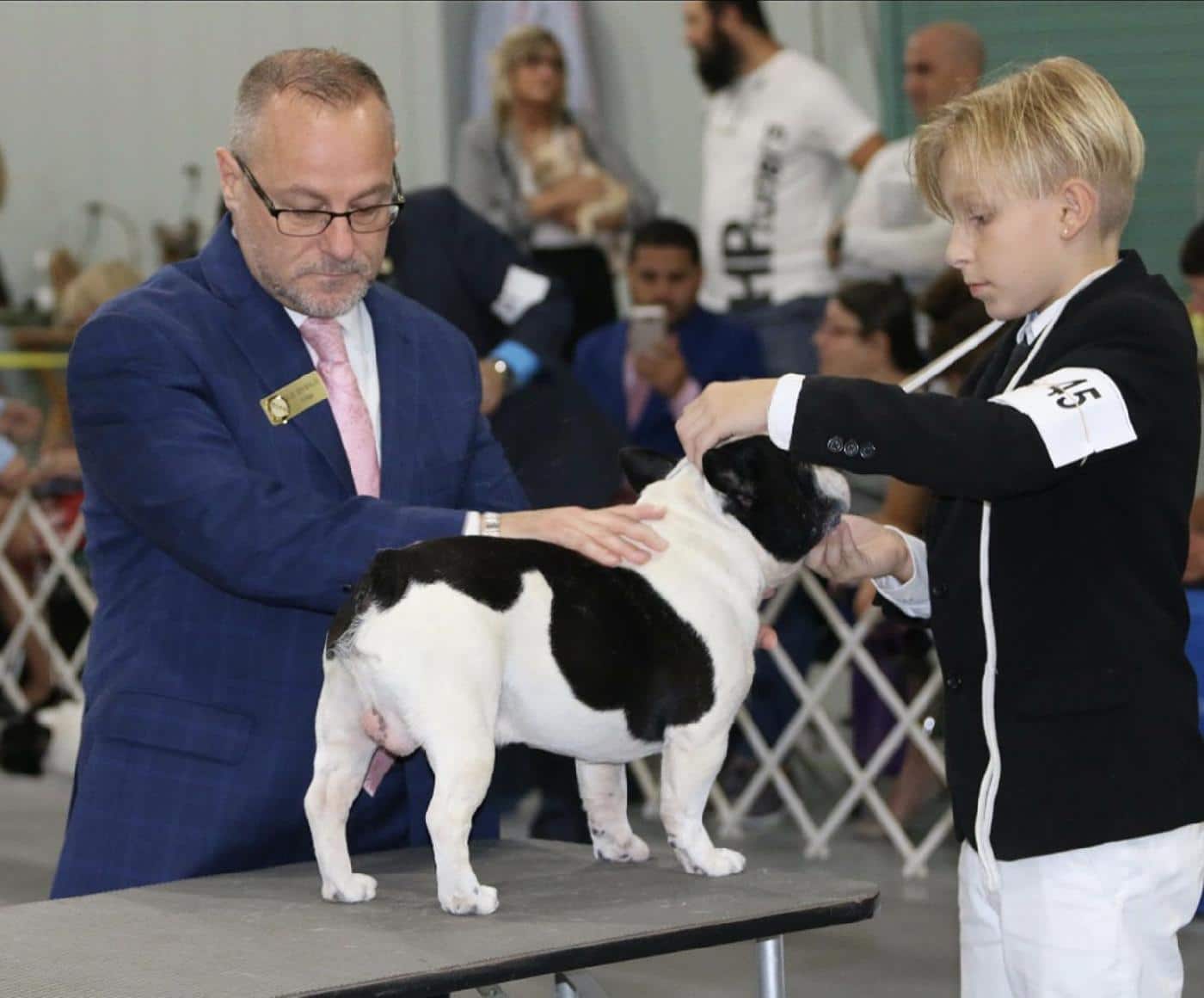

The French Bulldog, or “Frenchie” as they are affectionally called, is an active, intelligent, muscular dog of heavy bone and smooth coat.
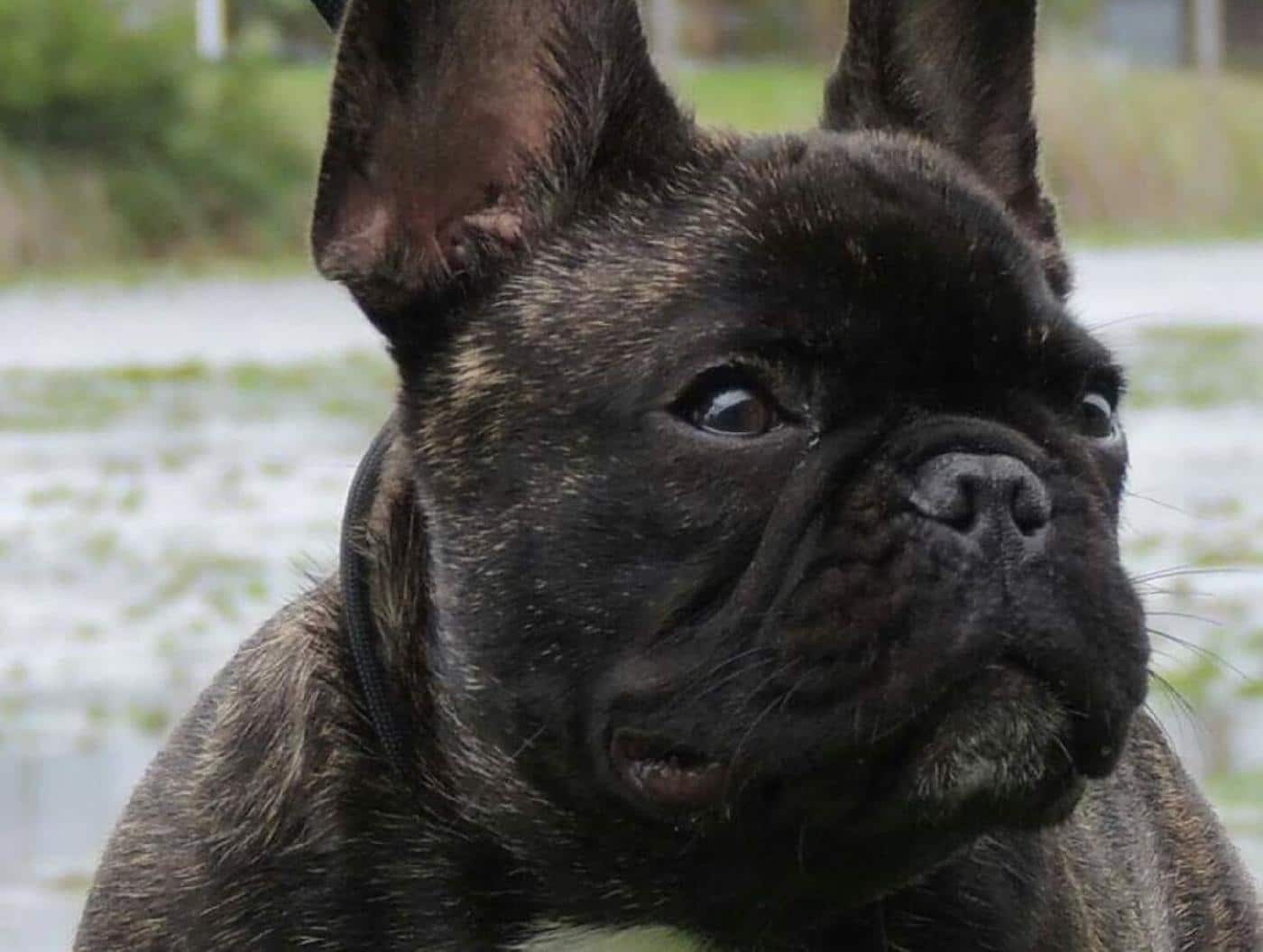
The French Bulldog comes in a wide variety of colors and patterns. Read more about the colors and patterns found in the French Bulldog.
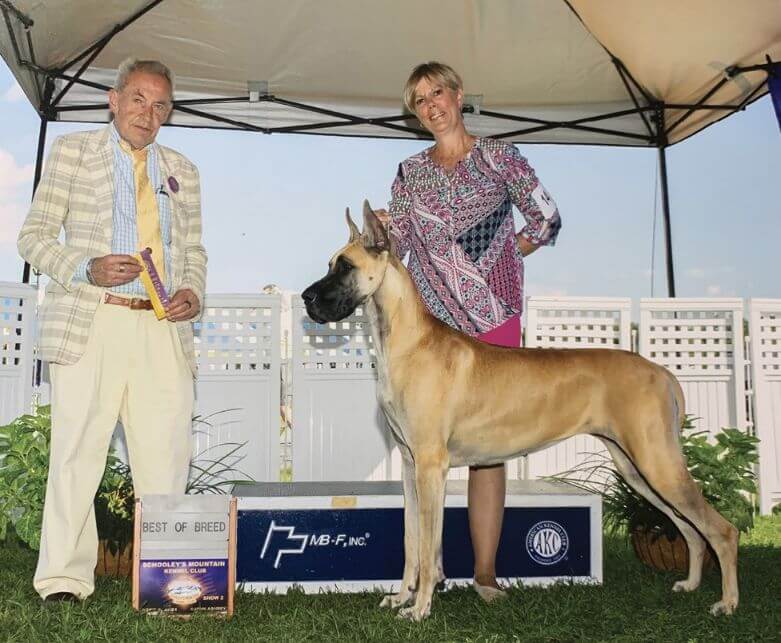
Meet the Owner Handlers
Interview with Owner Handler Sara Rude. Sara shares her experiences as an Owner Handler in the world of purebred dogs and dog shows.
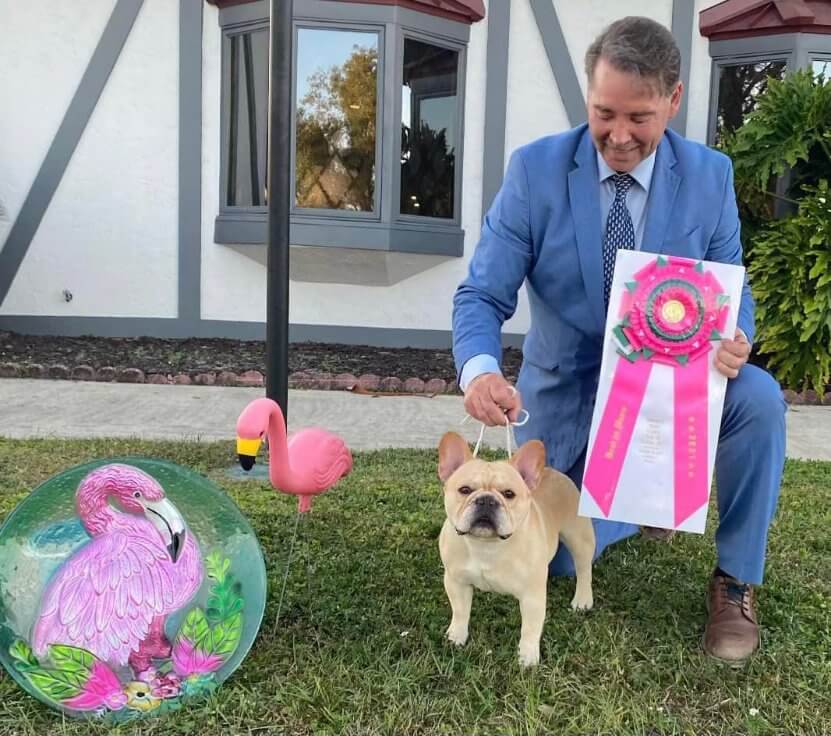
Meet the Breeders
Interview with Non-Sporting Group Breeder Perry Payson – My kennel name is Goldshield. Right now, there are four French Bulldogs and one
The tail of the French Bulldog is another distinguishing feature of the breed. It is short, set low on the rump, and hangs naturally. Depending on its shape, the tail can appear either straight or a corkscrew.
The straight tail is thick at the base and tapers to a fine point. The corkscrew tail is characterized by its twisty nature. Whatever its shape, the tail should be set and carried neither too high nor too low, and it should complement the dog’s overall compact silhouette.
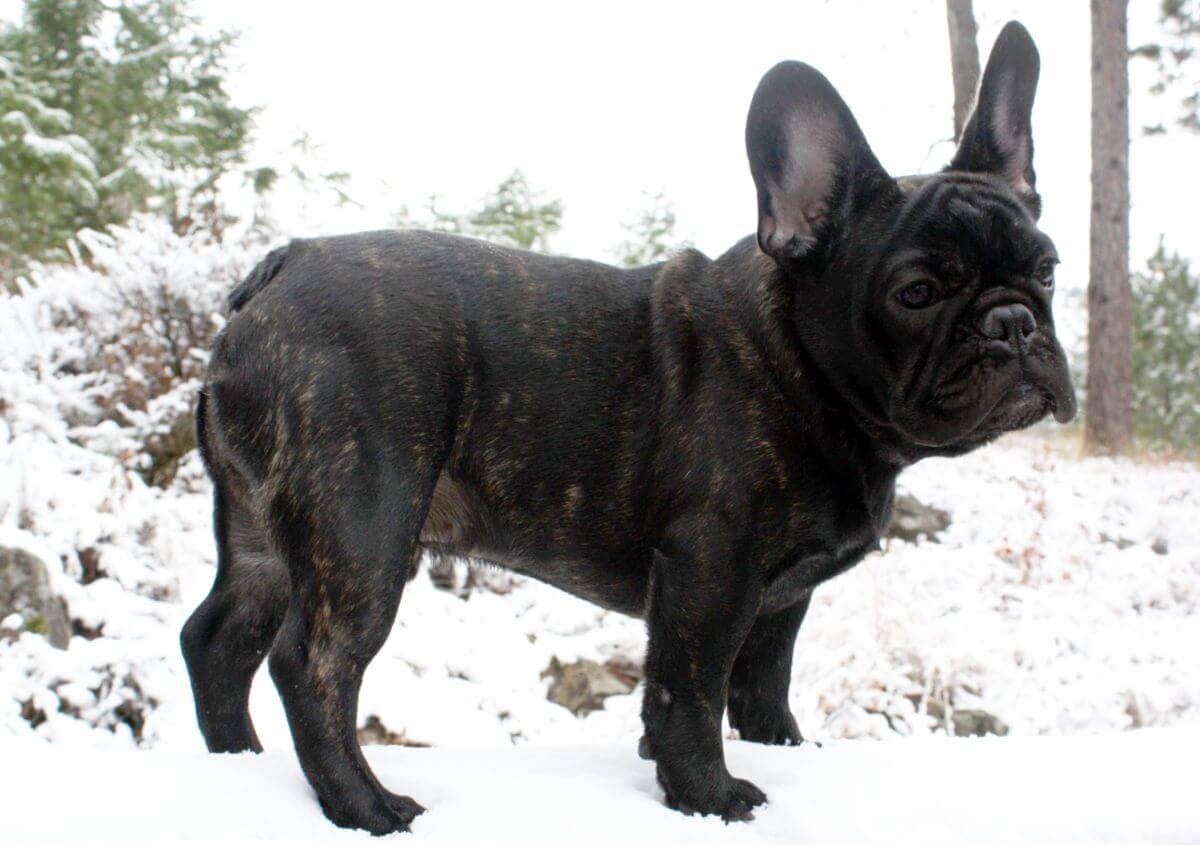 Photo: Becky L. Smith[/caption]
Standard Colors
Standard Markings
A Note About Color: A French Bulldog must have a solid black nose; lighter in light-colored dogs is acceptable. Frenchies must have a dark eye color; lighter in light-colored dogs is acceptable. Blue eyes are never acceptable in a French Bulldog.
Coat Type
Smooth
The structure of the coat this breed carries.
Coat Length
Short
How long the breed's coat grows when kept in condition.
Adaptability Level
How easily a breed copes with changes in home, routine, noise and weather.
Mental Stimulation Needs
How much a breed needs a job, a puzzle or training to stay content.
Although they exhibit friendliness towards their family and acquaintances, French Bulldogs can be initially reserved with strangers. Given a little time and gentle introduction, however, they usually warm up and might even ask for belly rubs from a new friend.
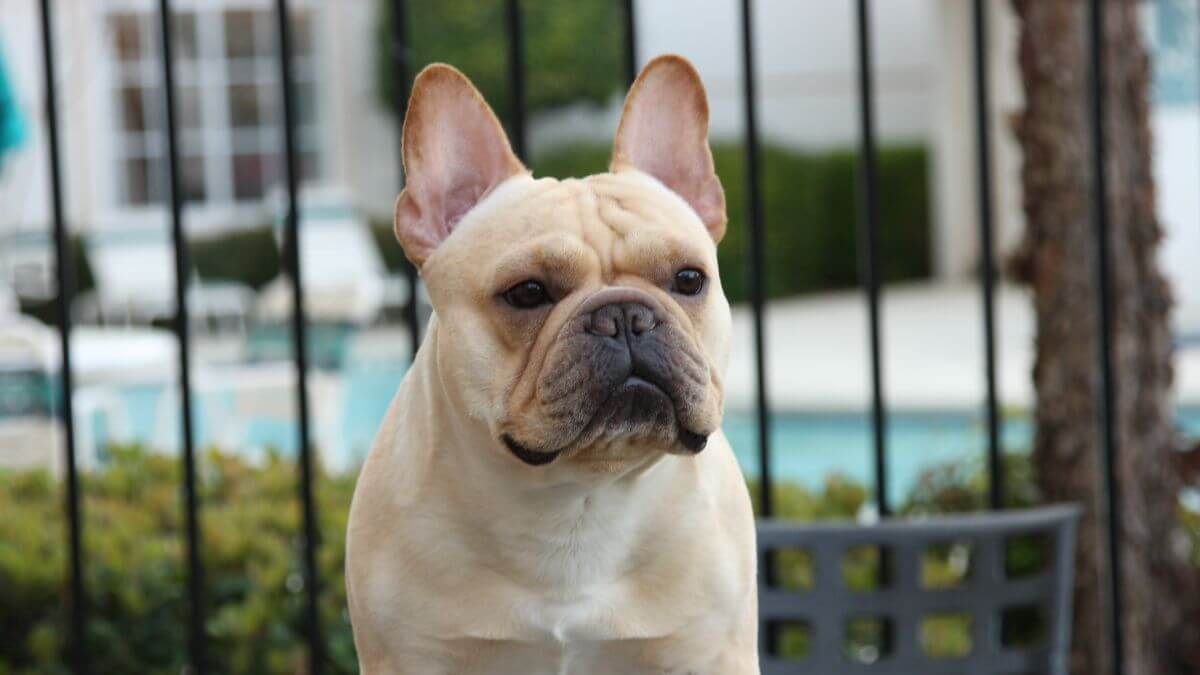 Photo: Becky L. Smith[/caption]
A French Bulldog’s diet plays a pivotal role in maintaining its health, energy, and overall well-being. Since this is a smaller breed, dietary requirements differ from those of larger breeds, but the emphasis on quality remains paramount.
When considering food for French Bulldog puppies, it’s essential to opt for a high-quality, puppy-specific formula. Puppies are bustling with energy and require food that supports their growth phase. As a general guideline, it’s recommended to feed them three to four times a day, given their smaller stomachs.
As French Bulldogs transition into adulthood, their dietary needs will shift. An adult Frenchie will typically need less food than a growing puppy. High-quality adult dog food, preferably tailored for small breeds, is optimal for their needs. On average, the amount of food an adult requires usually falls between 1 to 2 cups per day, divided into two meals. It’s crucial to adjust the amount based on the dog’s individual activity level and metabolism.
The specific amount of food also depends on various factors such as the dog’s age, activity level, metabolism, and the caloric content of the food. To ensure a balanced diet, it’s always a good idea to consult with a veterinarian who can provide personalized advice based on the dog’s weight and health status.
Just as with any breed, monitoring the French Bulldog’s weight is essential. Overfeeding can lead to obesity, a condition that can exacerbate some of the health issues common to the breed, such as respiratory and joint ailments. Conversely, underfeeding can affect a dog’s energy levels and its immune system. Regular check-ins with a veterinarian, and keeping an eye on the dog’s physique—ensuring the dog maintains a slight waistline and the ribs are palpable but not prominently visible—can help to strike the right balance in its individual diet.
Training a French Bulldog can be both a delightful and challenging experience. The breed’s playful demeanor and intelligent eyes reveal a dog that’s curious and eager, yet sometimes a tad stubborn.
Frenchies are smart, which means they pick up on commands and cues relatively quickly. However, this intelligence can sometimes translate to a bit of willfulness. If a French Bulldog doesn’t see the point of a command, or finds a particular activity uninteresting, it might choose to act aloof or distracted. Therefore, variety in training sessions is vital to keep this dog engaged.
One of the standout traits of the breed is its desire to please its people. Capitalizing on this characteristic, using positive reinforcement techniques, such as treats, praise, and play, can be highly effective. Harsh methods or negative reinforcement can harm the bond of trust between the dog and the trainer and may even lead to adverse behavioral outcomes.
The breed is not particularly vocal. While Frenchies will indeed alert their families to unfamiliar presences or sounds, they’re not known to bark without reason. This trait can be an advantage for those living in shared spaces or apartment buildings, but it’s still important to teach appropriate barking behavior to any dog.
A potential challenge with Frenchies can be their occasional penchant for chasing. It’s a playful trait, not an aggressive one, but teaching a reliable recall command is critical to ensure their safety. It’s always recommended to keep them on a leash during walks unless they’re in a secured area.
Wanderlust is not a significant concern for the French Bulldog. These dogs are quite attached to their families and prefer staying close to their loved ones rather than exploring unknown territories. That said, a secure yard or home environment is always a good idea to prevent any unexpected escapades.
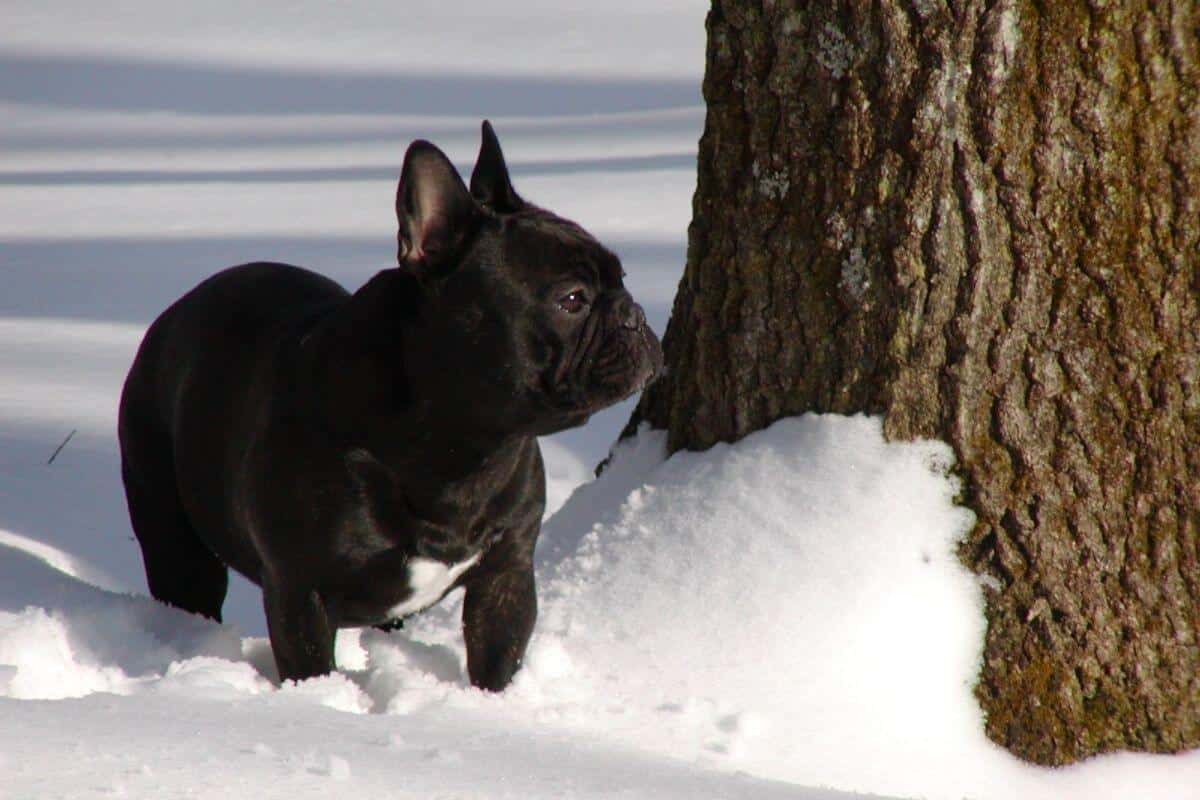 Photo: Becky L. Smith[/caption]
Grooming Expectations
The coat of a Frenchie is smooth and lies close to the body. It’s not prone to tangling or matting, making it easier to manage than a longer-haired breed. A weekly brushing session using a soft-bristle brush or a grooming mitt can help to remove loose hairs and promote circulation to the skin. These sessions are also an excellent opportunity to check for any skin issues, as Frenchies can be prone to certain conditions such as allergies and dry patches. Shedding is a natural process for most dogs, and the French Bulldog is no exception. While the breed isn’t a heavy shedder, these dogs do have periods, especially between seasons, when they shed more than usual. Regular brushing can help to manage and reduce the amount of hair around the home during these times. Bathing a Frenchie doesn’t need to be a frequent chore. Due to the breed’s short coat, these dogs don’t accumulate dirt as much as some other breeds might. Bathing them once a month or when they get particularly dirty is usually sufficient. Using a mild dog-specific shampoo can help to prevent skin irritation and maintain the natural oils in the coat. One of the unique features of the French Bulldog is its facial wrinkles. These folds of skin, while endearing, can trap moisture and debris. It’s essential, therefore, to clean them gently with a damp cloth and dry them thoroughly to prevent any potential infections or irritations. Other grooming aspects, such as nail trimming, ear cleaning, and dental care, are standard care practices as with any other dog. Regular checks and maintenance can prevent potential health issues and will keep the French Bulldog looking and feeling its best.
The expressive and communicative nature of the French Bulldog can be both amusing and informative. These clownish characters make a range of sounds, from barks to yawns to unique vocalizations, which they use to communicate their feelings and needs, or just to participate in a conversation. Their expressive faces, complete with those iconic bat ears, can reveal a lot about their mood, making it easier to gauge their feelings.
In essence, living with a French Bulldog is akin to having a cheerful, occasionally mischievous and always affectionate, friend by your side. Understanding and catering to the breed’s specific needs will typically be rewarded with unwavering loyalty and a bond that lasts a lifetime.