01/Overview
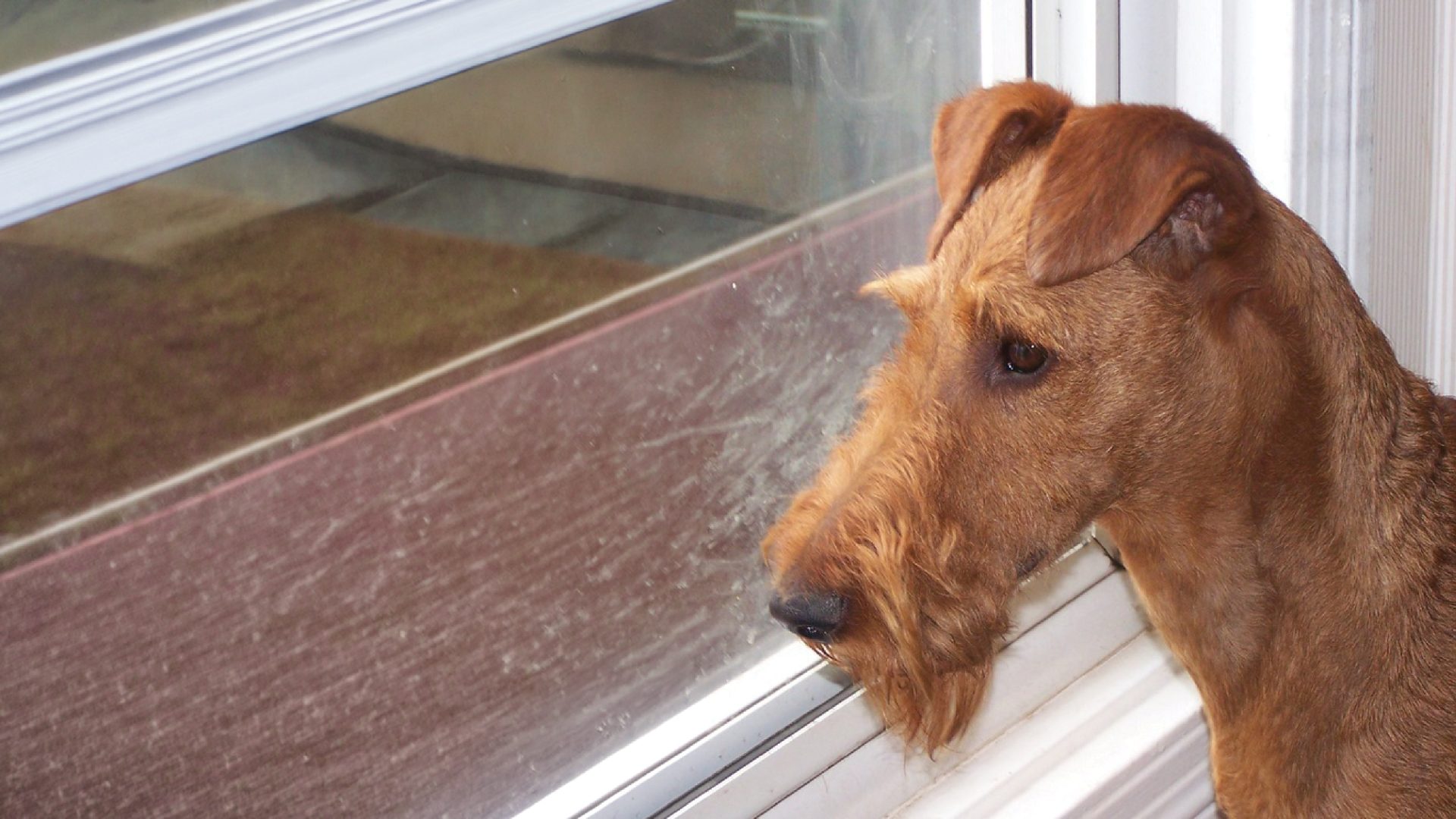
The Irish Terrier is a bold and spirited breed with a strong work ethic and deep loyalty to its family. Originally bred in Ireland for hunting, guarding, and farm work, it is a versatile and intelligent dog that thrives in active environments. Often called the "Daredevil” of the Emerald Isle, this breed is fearless yet affectionate, forming strong bonds with its human companions while maintaining an independent streak. Its high energy and intelligence make it well-suited for caretakers who can provide consistent training, exercise, and engagement.
Highlights
02/History
The Irish Terrier is believed to be one of the oldest terrier breeds, with records of its existence in Ireland dating back several centuries. While its precise origins remain unclear, it is thought to have descended from the ancient rough-coated terriers of Britain and Ireland, selectively bred for their hunting ability, tenacity, and versatility.
By the 19th century, the Irish Terrier had gained recognition as a multi-purpose farm dog, skilled in vermin hunting, guarding property, and even retrieving game. Unlike some terriers bred for a single purpose, the Irish Terrier was prized for its adaptability and intelligence, making it equally valuable as a working dog and loyal companion.
The breed's distinctive red coat became standardized in the late 19th century, as earlier Irish Terriers were found in a variety of colors, including black and tan. In 1875, the breed was first exhibited at dog shows in Dublin, and by 1879, the Irish Terrier Club was established, marking the beginning of formal breed recognition.
Irish Terriers played an important role during World War I, serving as messenger dogs on the frontlines, demonstrating their fearlessness, reliability, and intelligence under extreme conditions. Their bravery and unwavering loyalty further cemented their reputation as one of the most courageous and versatile terriers.
The breed was officially recognized by the Royal Kennel Club (UK) in 1879 and by the American Kennel Club (AKC) in 1885, making it one of the earliest breeds registered in the United States.
03/Appearance
The Irish Terrier stands between 18 to 20 inches tall at the shoulder. Males typically weigh 27 pounds, while females are slightly lighter, weighing about 25 pounds.
Skull: Long and flat, with a slight stop, giving the breed a strong yet refined appearance.
Expression: Keen, intelligent, and full of determination, reflecting the Irish Terrier’s bold personality.
Eyes: Small, dark brown, and full of alertness, set well apart to enhance the breed’s sharp expression.
Ears: Small, V-shaped, and folding forward, set high on the skull and carried close to the cheeks.
Muzzle: Strong and proportional to the skull, tapering slightly toward the nose without appearing weak.
Nose: Always black, well-developed, and complementing the breed’s strong facial features.
Bite: Strong and even, not undershot or overshot, with well-aligned teeth suitable for gripping and working.
The Irish Terrier has a well-balanced, athletic build, with a slightly longer-than-tall proportion that enhances its agility and speed. Its lean yet muscular frame reflects the breed’s working heritage, combining strength and endurance in a rather racy profile. A strong and straight back, muscular loins, strong and slightly arched, and ribs fairly sprung, deep rather than round and reaching to the level of the elbow, combine to make this “Daredevil” a capable hunter and an agile companion.
Texture: The Irish Terrier has a dense, wiry, and weather-resistant double coat, designed to protect it from harsh terrain and wet conditions. The outer coat is harsh and flat, while the undercoat is softer and insulating, providing both durability and warmth. Regular hand-stripping is required to maintain the coat’s texture and remove any dead hair.
Standard Colors
04/Consider
Owning an Irish Terrier requires an understanding of their high energy levels, independent personality, and grooming needs. They are bold, affectionate, and intelligent, but their strong-willed nature means they need consistent training and firm leadership. While they form deep bonds with their families, they also retain their natural instincts as hunters and watchdogs, making them both loyal companions and vigilant guardians.
Interaction With Family
The level of affection a breed typically shows towards family members and familiar individuals.
Good With Other Dogs
The innate friendliness of a dog towards other dogs can depend on its breed.
Good With Young Children
The degree to which a breed will typically be patient with young children.
Amount Of Shedding
How much hair a breed typically leaves behind on clothes, furniture and floors.
Frequency Of Grooming
How often a breed needs brushing, bathing or a professional trim to stay in condition.
Amount Of Drooling
How prone a breed is to drool — worth knowing before you keep a towel by the door.
Openness To Strangers
How openly a breed tends to greet new people, visitors and strangers.
Protective Nature
How likely a breed is to alert you to — and stand between you and — anything unfamiliar.
Playfulness Level
How enthusiastic a breed stays about games and play well past puppyhood.
Trainability Level
How readily a breed takes direction and works with you rather than around you.
Barking Level
How much a breed uses its voice, and how readily.
Energy Level
How much get-up-and-go a breed brings to an average day.
Health
The Irish Terrier is a generally healthy and resilient breed, with a lifespan of 13 to 15 years. Thanks to their strong genetic background, they have relatively few hereditary health issues, but responsible breeding and routine veterinary care are essential for maintaining their well-being.
The Irish Terrier is fearless, affectionate, and highly intelligent, making it both a loyal family companion and a vigilant watchdog. Known for its bold and adventurous nature, this breed thrives in environments where it can be both physically active and mentally engaged.
While deeply devoted to its human companions, the Irish Terrier retains an independent streak, requiring firm but positive training to ensure good behavior. They are friendly and playful with family members, including children, but their strong prey drive and territorial instincts mean they may not always get along with small animals or unfamiliar dogs. Early socialization and training help shape them into confident, well-adjusted companions.
Exercise Expectations
They enjoy brisk walks, runs, play sessions, and interactive games, as well as structured activities like agility, obedience, and scent work. Due to their strong prey drive, they should always be supervised in open areas or kept on a leash, as they may chase small animals. A combination of physical exercise and mental stimulation helps them remain well-behaved and content.
Grooming Expectations
The Irish Terrier is a loyal and affectionate breed that thrives in a home where it is included in daily activities. While adaptable to different living situations, they do best in active households where they receive plenty of engagement and structure.
They can adjust to apartment living, but only if they get enough exercise and mental stimulation. Their independent nature means they are comfortable being alone for short periods, but they still prefer the company of their families. While they get along well with children, their strong-willed temperament and high prey drive mean they should be supervised around small pets. With consistent training, companionship, and physical activity, they become devoted and well-mannered companions.
05/Puppies
Bringing home an Irish Terrier puppy requires early training, socialization, and patience to help them grow into a well-behaved and confident companion. These puppies are intelligent, energetic, and curious, making it essential to establish clear rules and consistent routines from the start. Their independent nature means they respond best to positive reinforcement training and early exposure to different environments, people, and animals.
Proper socialization and training should begin as soon as the puppy arrives home. Exposing them to varied experiences, sounds, and environments will help them develop into well-adjusted adults. Introducing basic obedience commands early helps set expectations and prevents undesirable behaviors.
Irish Terrier puppies require a nutrient-rich diet designed for medium-sized, active breeds, with meals divided into three to four portions per day. As they grow, their feeding schedule transitions to two meals per day to support steady growth and a healthy metabolism.
Early house training and crate training help establish good habits and provide structure. Providing safe chew toys is essential to prevent destructive chewing during the teething phase. Grooming routines such as brushing, nail trimming, and ear cleaning should begin early to help the puppy become comfortable with handling.
06/Activities
Agility: Irish Terriers excel in Agility, navigating obstacle courses with speed, precision, and enthusiasm.
Obedience: Their intelligence and eagerness to please make them strong competitors in Obedience Trials, where they showcase their ability to follow commands.
Rally: A sport that combines Obedience and teamwork, requiring them to complete a structured course with different tasks.
Scent Work: Their natural hunting instincts make them well-suited for Scent Work, where they locate hidden scents.
Tracking: Irish Terriers can participate in Tracking Trials, following a scent trail over various terrains.
Earthdog Trials: While not traditionally a burrowing breed, some Irish Terriers enjoy Earthdog events, testing their ability to locate quarry in underground tunnels.
Fast CAT: Their high energy and prey drive make them great competitors in Fast CAT, a 100-yard dash chasing a mechanical lure.
Conformation Shows: As a recognized breed by the AKC, they compete in Conformation Events, where they are judged on adherence to the breed standard.
Therapy Work: Their affectionate and social nature makes them excellent Therapy Dogs, providing comfort in hospitals, schools, and nursing homes.
Gallery
07/Standards
Irish Terriers are intelligent, energetic, and highly trainable dogs that often enjoy activities involving speed, scent, problem-solving, and close work with a handler. Here are some of the dog sports and activities in which Miniature Schnauzers may participate:
The Irish Terrier is recognized by the world’s leading registries and kennel organizations, which categorize the breed into a specific Group based on its unique characteristics. This breed is recognized worldwide under the following Group designations:
08/Clubs
Irish Terrier Club of America: The official parent club for the breed in the United States, recognized by the American Kennel Club (AKC). The ITCA supports breed education, health initiatives, and participation in Conformation and performance events.
Irish Terrier Association: The primary breed club in the United Kingdom, dedicated to preserving and promoting the Irish Terrier’s heritage, responsible breeding, and participation in shows.
09/Rescue
For those interested in adopting or assisting an Irish Terrier in need, several organizations are dedicated to the rescue and rehoming of this spirited breed:
Irish Terrier Rescue Network: Established in 2010, ITRN is a 501(c)(3) non-profit organization committed to rescuing, rehabilitating, and rehoming abandoned, neglected, or unwanted Irish Terriers across the United States. They provide safe havens and work diligently to match each dog with a suitable forever home.
Irish Terrier Club of America Rescue: The ITCA offers rescue services through its network, focusing on rescuing and rehoming Irish Terriers in need. They provide resources and support for both adopters and those looking to surrender an Irish Terrier.
Rescue Me! Irish Terrier Rescue: This platform connects dogs in need of adoption with potential adopters across the United States. They provide listings of available dogs and resources for both adopters and rescuers.
10/Facts
One of the Oldest Terrier Breeds
The Irish Terrier is believed to be one of the oldest terrier breeds, with a history dating back hundreds of years in Ireland.
The Only Terrier with a Solid Red Coat
Unlike other terriers that come in multiple colors, the Irish Terrier is the only terrier breed with a solid red coat, ranging from deep red to wheaten shades.
A Messenger Dog in World War I
Irish Terriers were used as messenger dogs during World War I, bravely delivering messages across the battlefield under enemy fire.
Nicknamed the ‘Daredevil of the Emerald Isle’
This breed earned its fearless reputation through its bold temperament and unwavering determination, making it a favorite among those who admire courageous dogs.
11/FAQ
Irish Terriers shed very little, thanks to their wiry coat, but they do require regular hand-stripping to maintain the texture and remove any dead hair.
Official Standard of the Irish Terrier
Head: Long, but in nice proportion to the rest of the body; the skull flat, rather narrow between the ears, and narrowing slightly toward the eyes; free from wrinkle, with the stop hardly noticeable except in profile. The jaws must be strong and muscular, but not too full in the cheek, and of good punishing length. The foreface must not fall away appreciably between or below the eyes; instead, the modeling should be delicate. An exaggerated foreface, or a noticeably short foreface, disturbs the proper balance of the head and is not desirable. The foreface and the skull from occiput to stop should be approximately equal in length. Excessive muscular development of the cheeks, or bony development of the temples, conditions which are described by the fancier as "cheeky," or "strong in head," or "thick in skull" are objectionable. The "bumpy" head, in which the skull presents two lumps of bony structure above the eyes, is to be faulted. The hair on the upper and lower jaws should be similar in quality and texture to that on the body, and of sufficient length to present an appearance of additional strength and finish to the foreface. Either the profuse, goat-like beard, or the absence of beard, is unsightly and undesirable.
Teeth: Should be strong and even, white and sound; and neither overshot nor undershot.
Lips: Should be close and well-fitting, almost black in color.
Nose: Must be black.
Eyes: Dark brown in color; small, not prominent; full of life, fire and intelligence, showing an intense expression. The light or yellow eye is most objectionable, and is a bad fault.
Ears: Small and V-shaped; of moderate thickness; set well on the head, and dropping forward closely toward the outside corner of the eye. The top of the folded ear should be well above the level of the skull. A "dead" ear, hound-like in appearance, must be severely penalized. It is not characteristic of the Irish Terrier. The hair should be much shorter and somewhat darker in color than that on the body.
Neck: Should be of fair length and gradually widening toward the shoulders; well and proudly carried, and free from throatiness. Generally there is a slight frill in the hair at each side of the neck, extending almost to the corner of the ear.
Shoulders and Chest: Shoulders must be fine, long, and sloping well into the back. The chest should be deep and muscular, but neither full nor wide.
Body: The body should be moderately long. The short back is not characteristic of the Irish Terrier, and is extremely objectionable. The back must be strong and straight, and free from an appearance of slackness or "dip" behind the shoulders. The loin should be strong and muscular, and slightly arched, the ribs fairly sprung, deep rather than round, reaching to the level of the elbow. The bitch may be slightly longer than the dog.
Hindquarters: Should be strong and muscular; thighs powerful; hocks near the ground; stifles moderately bent.
Stern: Should be docked, taking off about one quarter. It should be set on rather high, but not curled. It should be of good strength and substance; of fair length and well covered with harsh, rough hair.
Feet and Legs: The feet should be strong, tolerably round, and moderately small; toes arched and turned neither out nor in, with dark toenails. The pads should be deep, and must be perfectly sound and free from corns. Cracks alone do not necessarily indicate unsound feet. In fact, all breeds have cracked pads occasionally, from various causes. Legs moderately long, well set from the shoulders, perfectly straight, with plenty of bone and muscle; the elbows working clear of the sides; pasterns short, straight, and hardly noticeable. Both fore and hind legs should move straight forward when traveling; the stifles should not turn outward. "Cowhocks" - that is, the hocks turned in and the feet turned out - are intolerable. The legs should be free from feather and covered with hair of similar texture to that on the body to give proper finish to the dog.
Coat: Should be dense and wiry in texture, rich in quality, having a broken appearance, but still lying fairly close to the body, the hairs growing so closely and strongly together that when parted with the fingers the skin is hardly visible; free of softness or silkiness, and not so long as to alter the outline of the body, particularly in the hindquarters. On the sides of the body the coat is never as harsh as on the back and quarters, but it should be plentiful and of good texture. At the base of the stiff outer coat there should be a growth of finer and softer hair, lighter in color, termed the undercoat. Single coats, which are without any undercoat, and wavy coats are undesirable; the curly and the kinky coats are most objectionable.
Color: Should be whole-colored: bright red, golden red, red wheaten, or wheaten. A small patch of white on the chest, frequently encountered in all whole-colored breeds, is permissible but not desirable. White on any other part of the body is most objectionable. Puppies sometimes have black hair at birth, which should disappear before they are full grown.
Size: The most desirable weight in show condition is 27 pounds for the dog and 25 pounds for the bitch. The height at the shoulder should be approximately 18 inches. These figures serve as a guide to both breeder and judge. In the show ring, however, the informed judge readily identifies the oversized or undersized Irish Terrier by its conformation and general appearance. Weight is not the last word in judgment. It is of the greatest importance to select, insofar as possible, terriers of moderate and generally accepted size, possessing the other various characteristics.
General Appearance: The over-all appearance of the Irish Terrier is important. In conformation he must be more than a sum of his parts. He must be all-of-a piece, a balanced vital picture of symmetry, proportion and harmony. Furthermore, he must convey character. This terrier must be active, lithe and wiry in movement, with great animation; sturdy and strong in substance and bone structure, but at the same time free from clumsiness, for speed, power and endurance are most essential. The Irish Terrier must be neither "cobby" nor "cloddy," but should be built on lines of speed with a graceful, racing outline.
Temperament: The temperament of the Irish Terrier reflects his early background: he was family pet, guard dog, and hunter. He is good tempered, spirited and game. It is of the utmost importance that the Irish Terrier show fire and animation. There is a heedless, reckless pluck about the Irish Terrier which is characteristic, and which, coupled with the headlong dash, blind to all consequences, with which he rushes at his adversary, has earned for the breed the proud epithet of "Daredevil." He is of good temper, most affectionate, and absolutely loyal to mankind. Tender and forbearing with those he loves, this rugged, stout-hearted terrier will guard his master, his mistress and children with utter contempt for danger or hurt. His life is one continuous and eager offering of loyal and faithful companionship and devotion. He is ever on guard, and stands between his home and all that threatens.
Approved December 10, 1968

Dog Shows
Understanding the Irish Terrier’s type: examining the essential traits, history, and the trademark “D’hurty look” for correct breed type.


Meet the Breeders
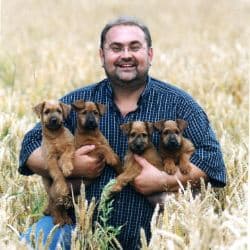
Eduardo Fugiwara is the co-breeder of Rockledge Irish Terriers. Read about the beginnings, puppies, and much more!

Meet the Owner Handlers
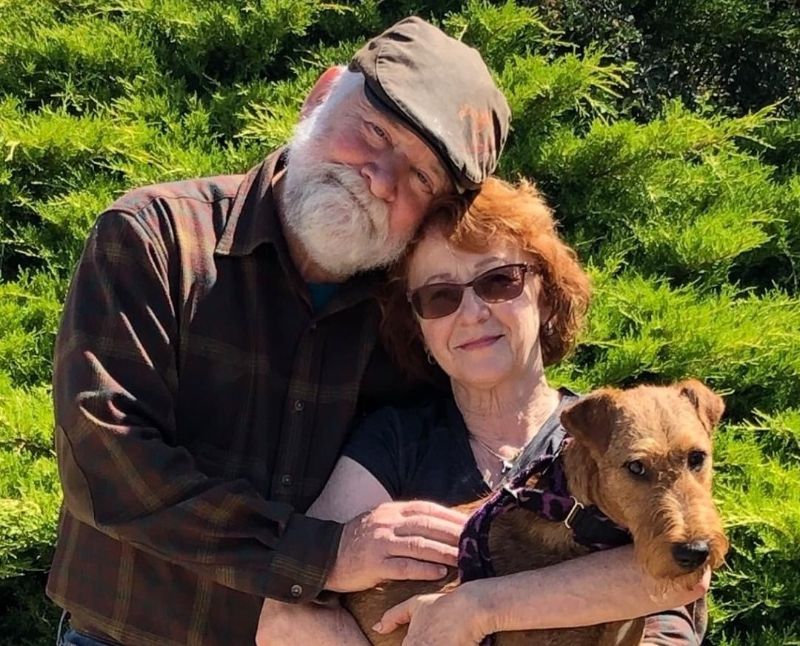
Insights from Owner Handlers: Elena & Joe Metz. Read about their opinions on various topics about dog handling in the modern show ring.
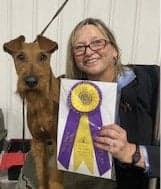
Meet the Breeders
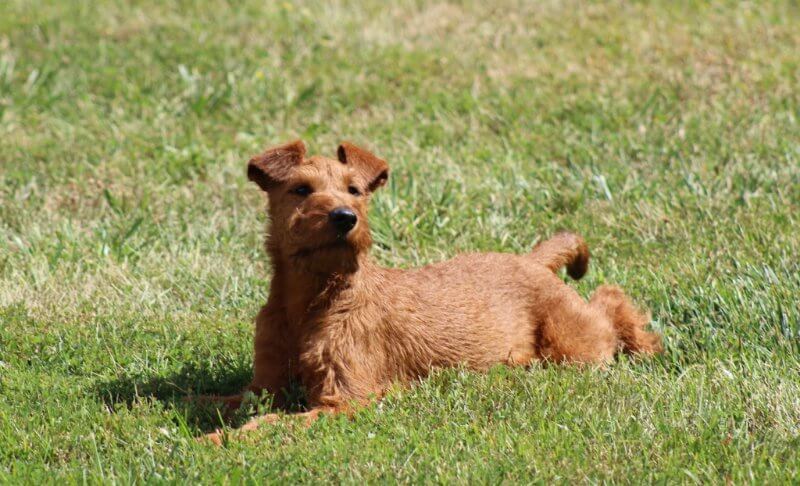
Mechele Thacker is the breeder behind MyTime Irish Terriers. Read about the kennel’s beginnings, dogs, puppies, photos and more!
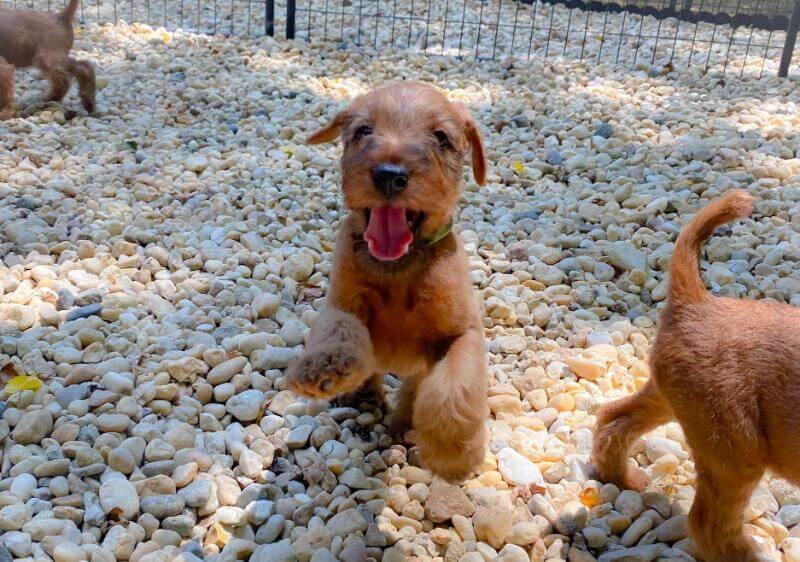

Meet the Breeders
Kelly Edwards is the breeder behind Ceallach Irish Terriers. Read about the kennel’s beginnings, dogs, puppies, photos and more!
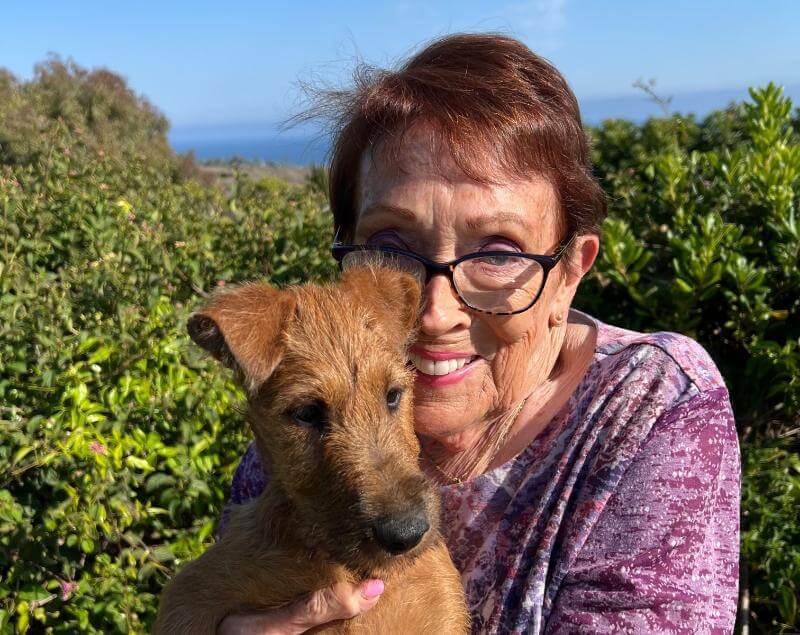
Meet the Breeders
Linda Honey is the breeder behind Rockledge Irish Terriers. Read about the kennel’s beginnings, champions dogs, puppies, photos & more!
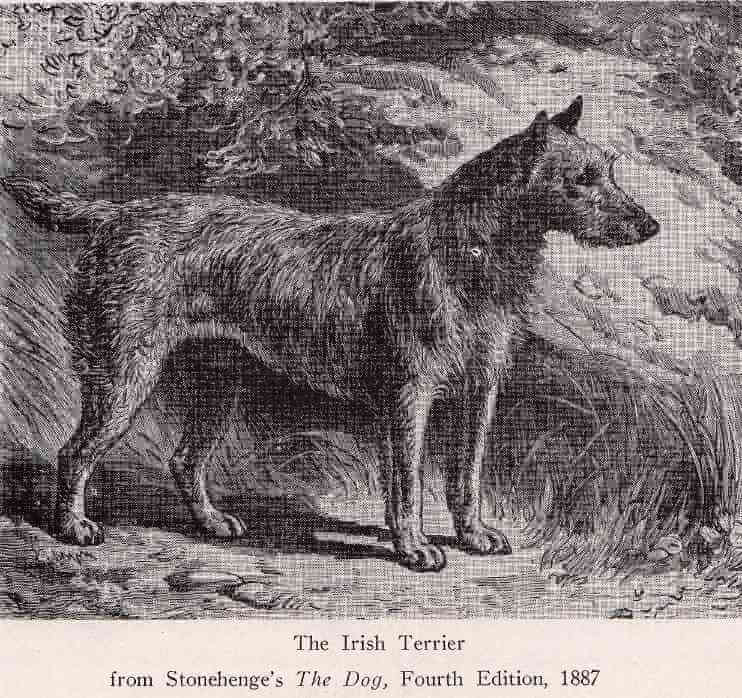
Irish Terrier Origins – The existence for centuries of an Irish sporting Terrier is referenced in ancient manuscripts archived in Dublin
The Irish Terrier’s tail is traditionally docked, leaving it moderate in length. It is carried erect, adding to the breed’s alert and confident demeanor. The tail is strong at the base, tapering to a fine point, and should be carried upright but never curled over the back.
A Note on Color: Color should be “whole-colored.” A small patch of white on the chest is permissible but not desirable. White on any other part of the body is most objectionable. Puppies sometimes have black hair at birth, which should disappear before they are full grown.
Coat Type
Wiry, Double
The structure of the coat this breed carries.
Coat Length
Medium
How long the breed's coat grows when kept in condition.
Adaptability Level
How easily a breed copes with changes in home, routine, noise and weather.
Mental Stimulation Needs
How much a breed needs a job, a puzzle or training to stay content.
A balanced, high-quality diet is essential for maintaining the Irish Terrier’s energy levels and lean physique. As an active breed, they require protein-rich food to support muscle development and overall health.
Puppies should be fed three to four meals per day, using a diet formulated for medium-sized, high-energy breeds. As they mature, they transition to two meals per day, with portions tailored to their activity level and metabolism. Most adult Irish Terriers require 1.5 to 2.5 cups of high-quality dry food daily, divided into two meals. Care should be taken to avoid overfeeding, as excess weight can impact their agility and overall health. Treats should be given in moderation, and fresh water should always be available.
The Irish Terrier is highly intelligent but independent, requiring consistent, positive training from an early age. They respond best to reward-based methods, such as praise, treats, and structured play, but can become stubborn or resistant to harsh corrections.
Early obedience training and socialization are essential to help them develop good manners and adaptability. Due to their strong prey drive and natural guarding instincts, leash training is a must, as they may chase small animals or react defensively to unfamiliar dogs. Engaging their minds through interactive games, scent work, or structured training sessions helps prevent boredom and reinforces positive behavior. With firm, patient guidance, the Irish Terrier becomes an obedient and reliable companion.
A weekly brushing helps prevent matting and keeps the coat looking neat. Baths should be given only when necessary, as frequent washing can strip the coat of its natural oils. Routine ear cleaning, nail trimming, and dental care are essential for overall health. While not a high-maintenance breed, consistent grooming keeps the Irish Terrier looking and feeling its best.