Members
01/Overview
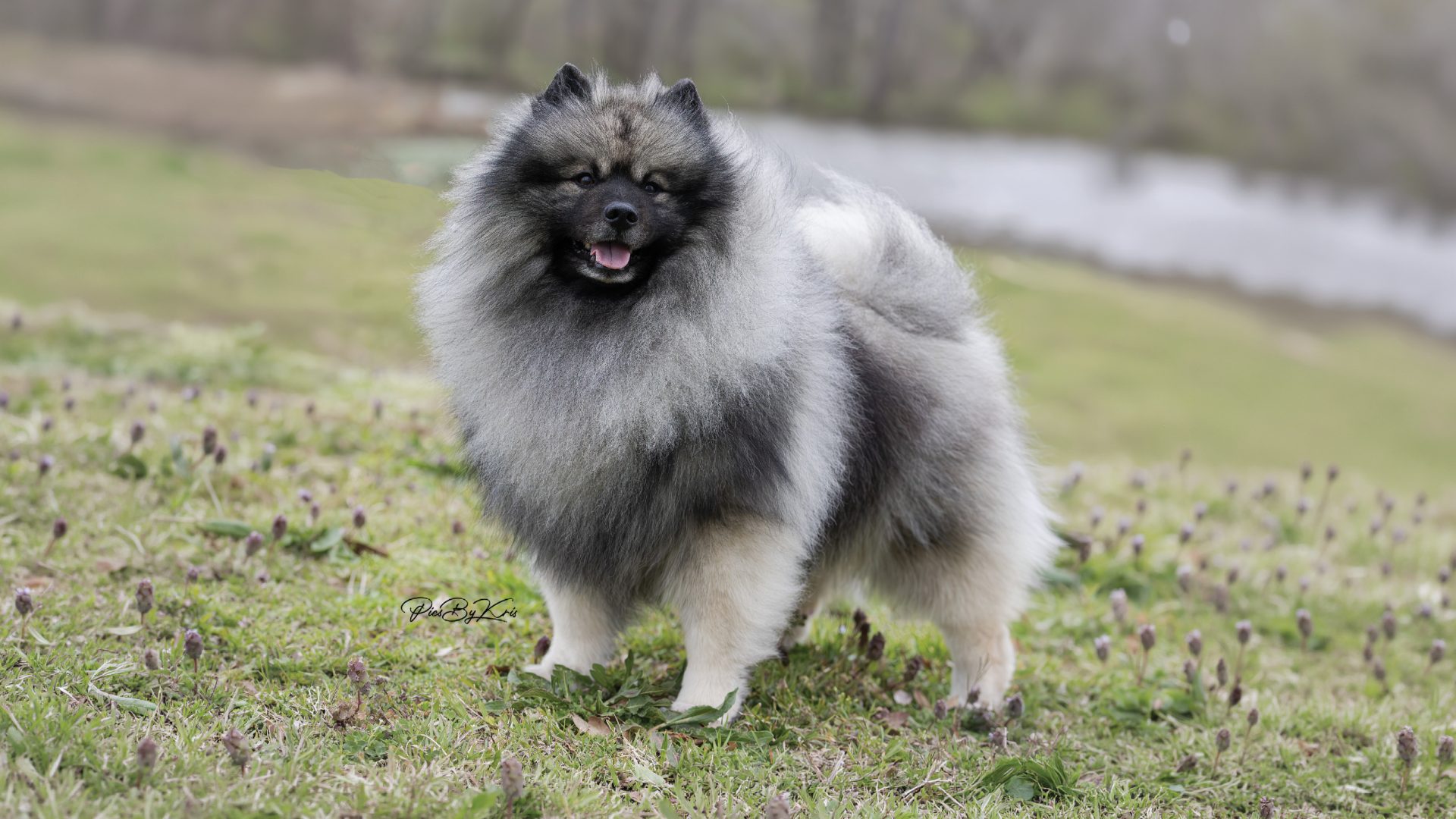
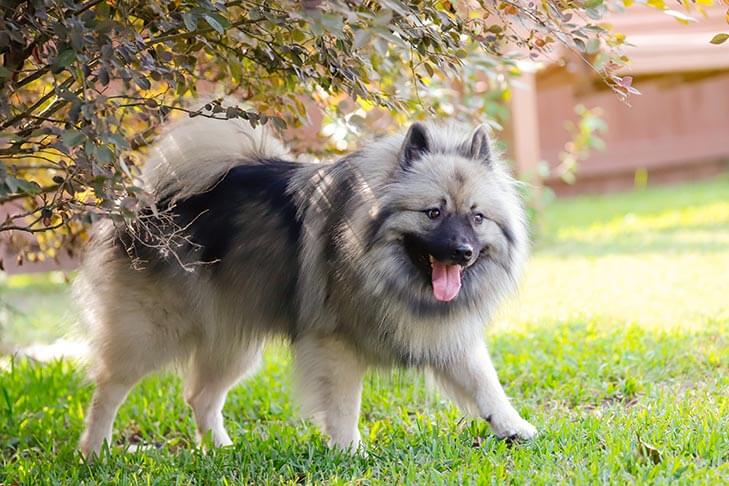
The Keeshond is a medium-sized spitz breed known for its abundant gray, black, and cream coat, plumed tail, and distinctive facial markings known as “spectacles.” Affectionate, alert, and highly people-oriented, the breed was developed as a companion and watchdog aboard Dutch vessels and around homes and businesses.
Highlights
02/History
The Keeshond developed in the Netherlands from European spitz-type dogs. Its ancestors were valued for their hardiness, watchfulness, and ability to live closely with people in homes, farms, commercial yards, and aboard riverboats and barges.
Keeshonden (plural for Keeshond) became especially associated with Dutch bargemen during the eighteenth and nineteenth centuries. The dogs served as companions and alert watchdogs aboard vessels traveling along the canals and waterways of the Netherlands. This history led to the breed’s familiar reputation as the Dutch Barge Dog.
The Keeshond also became connected with political unrest in the Netherlands during the late eighteenth century. Cornelis de Gyselaer, commonly known as “Kees,” was a leader of the Dutch Patriot movement and kept a spitz-type dog that became associated with the movement. The dog was adopted as a symbol by the Patriots, and the breed’s name is generally linked to this historical connection.
Following the decline of the Patriot movement, dogs associated with its supporters became less fashionable. The breed survived among working families, farmers, and boatmen, but its numbers and public profile diminished.
Interest in preserving the Keeshond increased during the early twentieth century. Baroness van Hardenbroek played an important role in locating surviving dogs in the Netherlands and encouraging organized breeding. Dutch and British fanciers helped to establish a more consistent type and promoted the breed through kennel clubs and dog shows.
The breed has close historical ties to other European spitz breeds. In Germany and under the Fédération Cynologique Internationale, it is associated with the Wolfspitz and is classified among the European Spitz breeds. The FCI places the Keeshond/Wolfspitz in Group 5, Spitz and Primitive Types, Section 4, European Spitz.
The Royal Kennel Club recognizes the Keeshond in the Utility Group. The American Kennel Club officially recognized the breed in 1930, and the Keeshond Club of America was established shortly afterward as the breed’s national parent club.
03/Appearance
An adult male Keeshond measures approximately 18 inches tall at the withers, while a female stands roughly 17 inches. The breed typically weighs between 35 and 45 pounds.
Skull: The Keeshond has a well-proportioned, wedge-shaped head. The skull is broad behind the ears and narrows gradually toward the eyes and muzzle, with a clearly defined stop.
Expression: The expression is alert, intelligent, and friendly. The breed’s distinctive “spectacles,” formed by dark lines and shading around the eyes, contribute greatly to its characteristic appearance.
Eyes: The eyes are dark brown, medium in size, almond-shaped, and set obliquely. They should be neither round nor protruding.
Ears: The ears are small, triangular, set high, and carried erect. They are dark in color and positioned well apart.
Muzzle: The muzzle is neither coarse nor pointed and is well proportioned to the skull. It tapers gradually toward the nose.
Nose: The nose is black.
Bite: The Keeshond has strong, evenly set teeth that meet in a scissors bite.
The Keeshond is square in profile, with the length of the body approximately equal to the height at the withers. The breed is compact, well balanced, and neither coarse nor lightly built.
The chest is deep and well developed, with well-sprung ribs and a short, level back. The Keeshond has sufficient bone and substance to present a sturdy appearance while retaining the agility and freedom of movement expected of a spitz breed.
Texture: The Keeshond has a dense double coat that stands well away from the body. The outer coat is long, straight, and harsh, while the undercoat is thick, soft, and pale in color. The coat is especially abundant around the neck, shoulders, chest, and hindquarters, forming a pronounced ruff and well-developed trousers. The tail is richly plumed.
Standard Colors
Standard Markings
04/Consider
The Keeshond is an affectionate, intelligent, and people-oriented companion that prefers to remain involved in family life. Anyone considering the breed should be prepared for regular grooming, consistent training, daily exercise, and a dog that may become a bit distressed when left alone for extended periods.
Interaction With Family
The level of affection a breed typically shows towards family members and familiar individuals.
Good With Other Dogs
The innate friendliness of a dog towards other dogs can depend on its breed.
Good With Young Children
The degree to which a breed will typically be patient with young children.
Amount Of Shedding
How much hair a breed typically leaves behind on clothes, furniture and floors.
Frequency Of Grooming
How often a breed needs brushing, bathing or a professional trim to stay in condition.
Amount Of Drooling
How prone a breed is to drool, worth knowing before you keep a towel by the door.
Openness To Strangers
How openly a breed tends to greet new people, visitors and strangers.
Protective Nature
How likely a breed is to alert you to anything unfamiliar, and stand between you and it.
Playfulness Level
How enthusiastic a breed stays about games and play well past puppyhood.
Trainability Level
How readily a breed takes direction and works with you rather than around you.
Barking Level
How much a breed uses its voice, and how readily.
Energy Level
How much get-up-and-go a breed brings to an average day.
Health
The Keeshond is generally considered a healthy and long-lived breed. The breed typically has a lifespan of 12 to 15 years. Balanced nutrition, regular exercise, preventive veterinary care, dental hygiene, and maintenance of a healthy weight can support a Kees throughout its life.
The Keeshond is affectionate, sociable, and strongly attached to its family. This people-oriented breed usually enjoys taking part in daily activities and seeks close companionship.
A Keeshond can be a good choice for a first-time dog caretaker who is prepared to provide regular grooming, training, and attention. The breed is intelligent and responsive, though inconsistent boundaries can encourage demanding or noisy behavior.
Keeshonden are generally friendly with children, other dogs, and strangers when properly socialized. Their gentle nature often suits family life, but interactions with young children should still be supervised.
Because the breed thrives on companionship, some Keeshonden struggle when left alone for long periods. Gradual training can help the dog become comfortable with short absences.
Exercise Expectations
A healthy adult generally benefits from about 45 to 60 minutes of activity each day. Puzzle toys, Scent Work games, and Trick Dog training can provide additional mental stimulation.
Grooming Expectations
The Keeshond can adapt to apartment living when given daily exercise, training, and regular companionship. Its medium size is manageable, but alert barking may create difficulties in buildings with close neighbors.
The dense double coat allows the breed to tolerate cool weather well. In hot and humid conditions, exercise should take place during cooler parts of the day, with shade and fresh water always available.
A Keeshond usually does best in a household where it can remain involved in family life. Long periods of isolation are not ideal for this social breed, which thrives on attention, routine, and shared activity.
05/Puppies
Keeshond puppies are lively, affectionate, and eager to be involved in family life. Early routines, positive socialization, gentle training, and regular grooming help each puppy develop into a confident and well-mannered adult.
A Keeshond puppy benefits from a predictable schedule that includes regular meals, potty breaks, sleep, play, training, and quiet time. A crate or secure puppy area can provide a safe place to rest and support housetraining when direct supervision is not possible.
Early socialization should introduce the puppy to different people, well-mannered dogs, household sounds, surfaces, vehicles, and unfamiliar environments. These experiences should remain positive and appropriate for the puppy’s age.
Training can begin as soon as the puppy arrives home. Short sessions can introduce name response, recall, leash walking, basic manners, and calm behavior around visitors.
A Keeshond puppy should receive a complete and balanced diet formulated for growth. Exercise should focus on supervised play, short walks, and gentle exploration rather than forced running or repetitive jumping.
Grooming should begin early so that the puppy becomes comfortable with brushing, nail trimming, ear checks, tooth brushing, and general handling. Regular veterinary visits are also important during the first year.
06/Activities
Keeshonden are intelligent, responsive, and athletic dogs that can enjoy activities requiring teamwork, focus, and steady movement. Here are some of the dog sports and activities in which Keeshonden can participate:
Obedience: Keeshonden can demonstrate attention, accuracy, and cooperation with a handler in Obedience Trials.
Rally: Rally Obedience combines a course of numbered stations with varied exercises that keep training engaging for this intelligent breed.
Agility: Keeshonden can use their coordination, balance, and enthusiasm while navigating obstacle courses.
Scent Work: The Kees can search for specific odors hidden in containers, indoor spaces, outdoor areas, or vehicles.
Tracking: In Tracking, the dog follows a scent trail across different types of terrain using concentration and persistence.
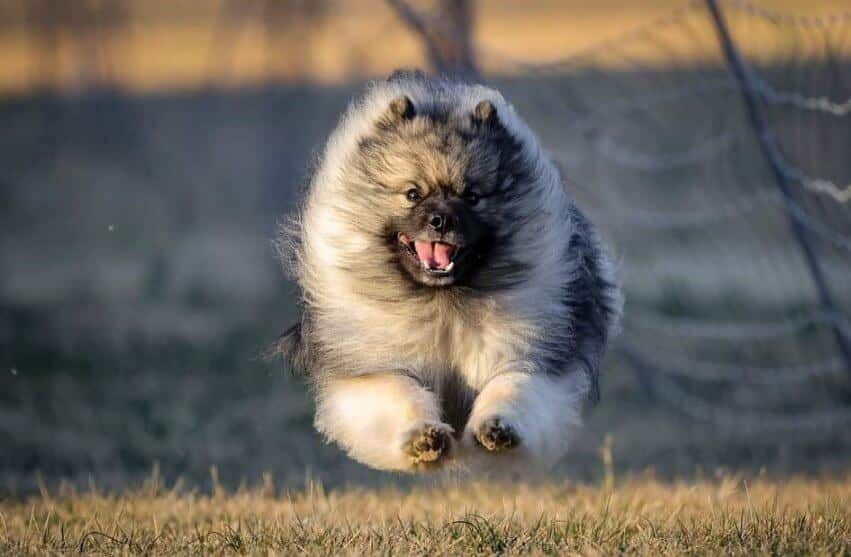
Fast CAT: This timed 100-yard dash gives the Keeshond an opportunity to run in a controlled setting.
Conformation Shows: Keeshonden compete in Conformation Shows, where judges evaluate each dog according to the Breed Standard, including structure, movement, coat, expression, temperament, and overall type.
Trick Dog: Trick training provides mental stimulation and encourages communication between the dog and handler.
Therapy Work: A calm, friendly, and well-socialized Keeshond may visit hospitals, schools, assisted living facilities, and other settings to provide part-time companionship.
Canine Good Citizen: Keeshonden may participate in programs that evaluate everyday manners, social behavior, and reliability around people and other dogs.
Gallery
07/Standards
The Keeshond is recognized by the world’s leading registries and kennel organizations, which categorize the breed into a specific Group based on its unique characteristics. This breed is recognized worldwide under the following Group designations:
The ideal Keeshond is described by a Breed Standard that is approved by each of the world’s leading registries and kennel organizations. The Standards for this breed may be found in the following links:
08/Clubs
Keeshond clubs support breed education, responsible breeding, health initiatives, rescue work, and participation in Conformation shows and Performance events.
Keeshond Club of America: Founded in 1935, this is the national breed club for the Keeshond in the United States and the breed’s AKC Parent Club.
Keeshond Club of Canada: Founded in 1971, Canada’s national organization for the Keeshond welcomes breeders, exhibitors, companion dog families, and other breed enthusiasts.
The Keeshond Club: Founded in 1925, this United Kingdom breed club promotes the Keeshond through dog shows and educational initiatives.
09/Rescue
Breed-specific rescue organizations help Keeshonden that have been surrendered, abandoned, or found in shelters. These groups may provide foster care, veterinary treatment, behavioral evaluation, and placement with an appropriate adoptive family.
Keeshond Club of America Rescue Resources: The national breed club may help connect people with regional rescue contacts or a Keeshond needing placement in the United States.
Local animal shelters and broader rescue organizations may also receive a Keeshond or Keeshond mix. Adoption databases, nearby shelters, and breed clubs can provide additional information about dogs
10/Facts
Dutch Barge Dog: The Keeshond became closely associated with Dutch barges, where it served as a companion and alert watchdog along canals and waterways.
Patriot Symbol: During the late eighteenth century, the breed became a symbol of the Dutch Patriot movement through its association with Cornelis “Kees” de Gyselaer.
Distinctive Spectacles: Dark lines and shading around the eyes create the breed’s characteristic “spectacles,” one of the Keeshond’s most recognizable features.
Baroness van Hardenbroek: This Dutch breed enthusiast played an important role in locating surviving Keeshonden and rebuilding the breed during the early twentieth century.
11/FAQ
Keeshonden can make excellent pets for families, singles, and seniors who want an affectionate and sociable companion. They do best with regular attention, exercise, training, and grooming.

Written by
Dan Sayers is the Executive Editor of SHOWSIGHT. He is a member of the World Dog Press Association and the Dog Writers Association of America, which recognized his illustrations in the award-winning Encyclopedia of K-9 Terminology. Dan is a longtime supporter of the sport of dogs and an advocate for the conservation of recognized breeds in all their forms and functions. He is a member of the Morris and Essex Kennel Club, and for 45 years, the Irish Water Spaniel Club of America where he serves as AKC Delegate, Archivist, and approved Breed Mentor. Dan breeds under the Quiet Storm prefix and has judged the IWSCA National Specialty Sweepstakes twice.
Official Standard of the Keeshond
General Appearance: The Keeshond (pronounced kayz-hawnd) is a natural, handsome, well-balanced dog with a short-coupled body. They attract attention by their coloration, alert carriage, intelligent foxlike expression, characteristic spectacles and small pointed ears. They also have a stand-off coat and richly plumed tail that is well curled over the back. The coat is very thick around the neck, fore part of the shoulders and chest, forming a lion-like ruff-more profuse in the male. The rump and hind legs, down to the hocks, are also thickly coated, forming the characteristic "trousers". The head, ears, and lower legs are covered with thick, short hair.
Size, Proportion, Substance: The Keeshond is medium-sized and square-appearing. They are sturdy, with bone in proportion to the overall dog, neither coarse nor lightly made. The ideal height of fully matured dogs when measured from top of withers to the ground is 18 inches for males and 17 inches for bitches - a 1-inch variance either way is acceptable. While correct size is very important, it should not outweigh that of type. When dogs are judged equal in type, the dog nearest the ideal height is to be preferred.
Head: Expression - Expression is largely dependent on the distinctive characteristic called "spectacles"- a hallmark of the breed. Spectacles are a combination of markings and shadings in the orbital area which must include a delicate, dark line slanting from the outer corner of each eye toward the lower corner of each ear coupled with expressive eyebrows. Markings (or shadings) on face and head must present a pleasing appearance, imparting to the dog an alert and intelligent expression. Very Serious Fault - Absence of dark lines which form the "spectacles." Eyes - Eyes should be dark brown in color, of medium size, almond shaped, set obliquely and neither too wide apart nor too close together. Eye rims are black. Faults - Round and/or protruding eyes or eyes light of color. Ears - Ears should be small, triangular in shape, mounted high on head and carried erect. Size of the ear is proportionate to the head-length approximating the distance from the outer corner of the eye to the nearest edge of the ear. Fault - Ears not carried erect when at attention. Skull - The head is in proportion to the body and wedge-shaped when viewed from above. In profile it has a defined stop. The topskull is somewhat flat and in parallel planes with the top of the muzzle. Faults - Apple head or absence of stop. Muzzle - Of medium length, neither coarse nor snipey, and well-proportioned to the skull. The muzzle, from tip of nose to stop, should be approximately the same length as from stop to occiput. Mouth -Lips should be black and closely meeting-not thick, coarse or sagging, and with no wrinkle at the corner of the mouth. The teeth should be white, sound and strong meeting in a scissors bite. Faults-Overshot, undershot or wry mouth.
Neck, Topline Body: The neck should be moderately long and set well into the shoulders. The topline is straight with a slight slope to the hindquarters. The body is well ribbed, compact and strong with a good spring of rib. The easily felt prosternum is in line with the point of shoulder with a deep chest that extends approximately to the elbow. The loin is short, with the belly moderately tucked up. Tail - The tail should be moderately long and well feathered, set on high, tightly curled over the back and lying close to the body. The tail must form a part of the "silhouette" of the dog's body, rather than give the appearance of an appendage. Fault - Tail not lying close to the back.
Forequarters: The shoulder blade, upper arm and forearm are of equal length, with the highest point of the withers being in line with the elbow. Elbows are held close to the body. Forelegs are straight seen from any angle and set behind the forechest. Distance from withers to elbows approximately equals distance from elbows to ground. Ideal shoulder angulation is moderate. Pasterns are strong with a slight slope. The feet are compact, well-rounded, cat-like. Toes are nicely arched, with black nails. Dewclaws may be removed.
Hindquarters: The hindquarters are well muscled, moderately angulated, and in balance with the forequarters. Hocks are perpendicular to the ground, neither under nor extended way behind the croup. Feet are the same as described in the forequarters section.
Coat: The body is abundantly covered with long, straight, harsh hair standing well out from a thick, downy undercoat. Head, including muzzle, skull and ears, are covered with smooth, soft, short hair-velvety in texture on the ears. The neck is covered with a mane-more profuse in the male-sweeping from under the jaw and covering the whole of the front part of the shoulders and chest, as well as the top part of the shoulders. The hair on the legs is smooth and short, except for feathering on the front legs and "trousers" on the hind legs. Hind legs are profusely feathered down to the hocks-not below. The hair on the tail forms a rich plume. Coat must not part down the back. Bitch Coat: The bitch coat may be less abundant than that of the male. Bitches should not be penalized for their shorter coats. They may also carry as much coat as their male counterparts. The bitch’s coat should reflect her feminine type and appearance, making it easy to distinguish her from the male. Puppy Coat: The puppy coat may be predominately undercoat. It may feel soft in texture as it lacks the harsh guard hairs present in adults. The age and rate at which guard hair grows varies among puppies. Trimming: The Keeshond is to be shown in a natural state. Trimming permissible only on feet, pasterns, hocks and –if desired—whiskers. Trimming or sculpting of the coat or any grooming which alters the natural appearance to be severely penalized. Faults - Silky, wavy, or curly coats.
Color and Markings: A dramatically marked dog, the adult Keeshond is a mixture of gray, black and cream. This coloring may vary from light to dark. The hair of the outer coat is black tipped, the length of the black tips producing the characteristic shading of color. The undercoat is very pale gray or cream, never containing tan, brown, or orange tones. Puppies are often less intensely marked. The dramatic color and contrast seen in adults may be lacking in some puppies as they haven’t developed the guard coat that typically determines the variations in the black color.
Head: The muzzle and ears are dark in color with some natural shading, seldom solid black. "Spectacles" and shadings, as previously described, are characteristic of the breed and must be present to some degree. Ruff, Shoulders and "Trousers”: The color of the ruff and "trousers" is lighter than that of the body. The light gray shoulder line markings must be well defined.
Tail: The plume of the tail is very light in color when curled on the back, and the tip of the tail is black.
Legs and Feet: Legs and feet are cream. Faults - Pronounced white markings. Black markings more than halfway down the foreleg. Penciling is acceptable on the toes and feet. White foot or feet. Very Serious Faults - Entirely black or white or any solid color; any pronounced deviation from the color as described.
Gait: The Keeshond movement is clean and brisk with balanced reach and drive. They move confidently, with the head carried naturally above a steady topline, while keeping the tail tightly curled over the back. When seen from the side they should not move with extended reach and drive. There is no overstepping or interfering between the front and rear movement. The Keeshond is a double tracking breed. The legs move parallel coming and going but as speed increases the legs tend to slightly converge toward a center line.
Temperament: Temperament is of primary importance. The Keeshond is neither timid nor aggressive but, instead, is outgoing and friendly with both people and other dogs. The Keeshond is a lively, intelligent, alert and affectionate companion.
Approved October 8, 2024
Effective January 1, 2025


Meet the Breeders
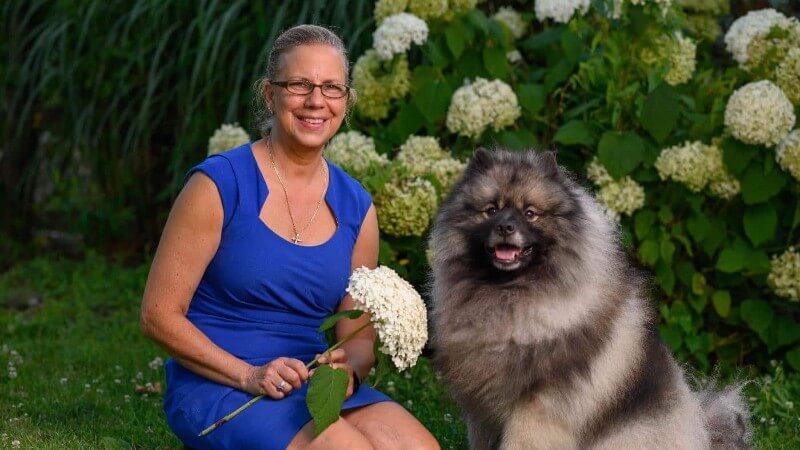
Joanne Reed is the breeder behind Windrift Keeshonden.Read about the kennel’s beginnings, puppies, and much more!
Meet the Breeders
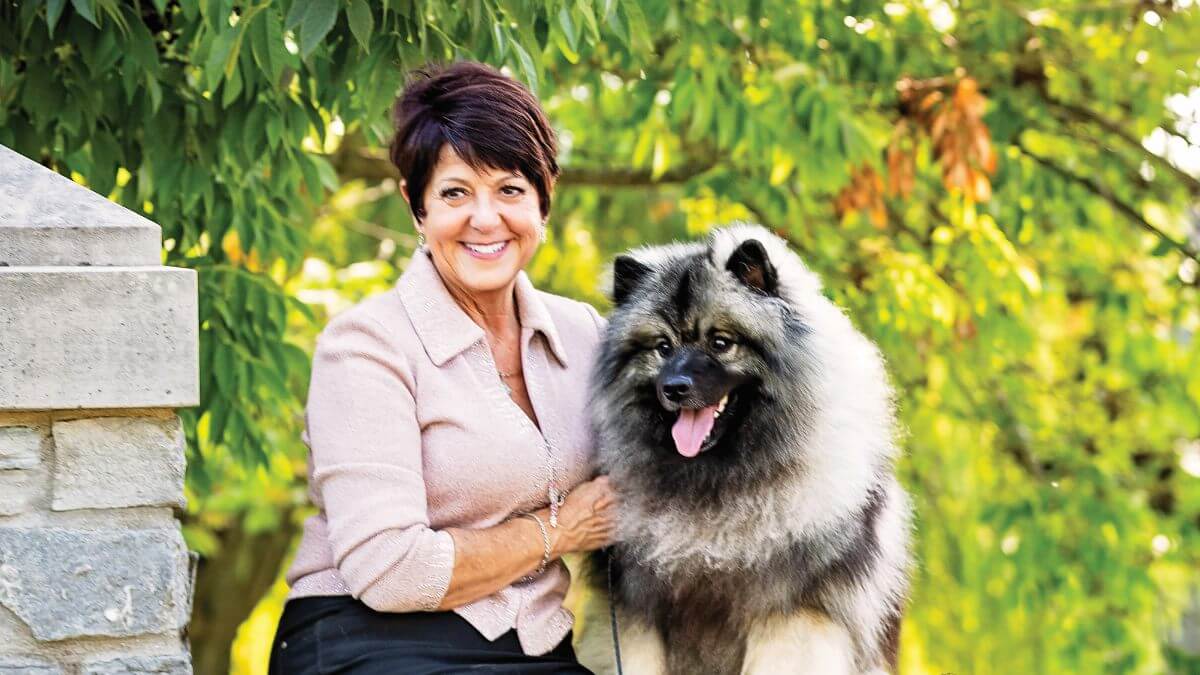
Jeri Kissling is the breeder behind Allante Keeshonden. Read about the kennel’s beginnings, puppies, and much more!


Meet the Breeders
Joanne Reed is the breeder behind the Windrift Keeshond. Read about the kennel’s beginnings, champions, dogs, puppies, and more!
Meet the Owner Handlers
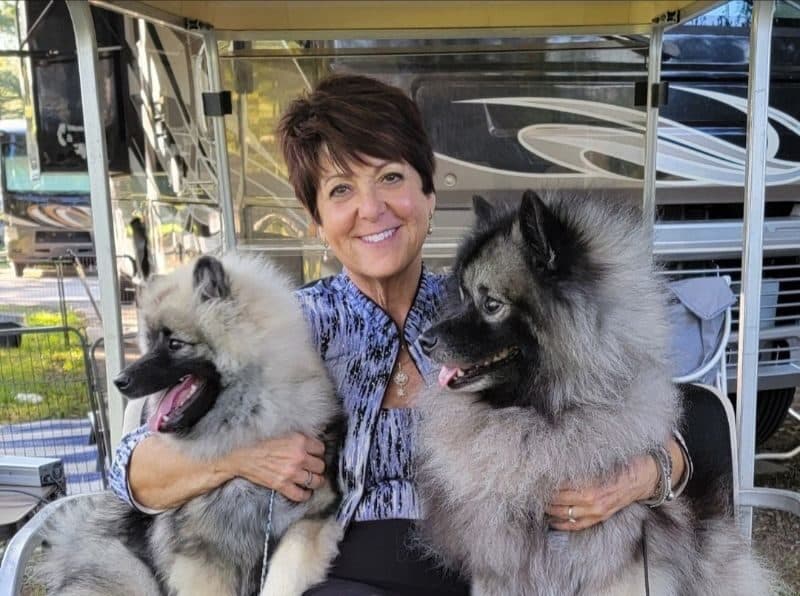
Insights from an Owner Handler, Jeri Kissling. Read about her opinions on various topics about dog handling in the modern show ring.

Keeshond Traits | The Relationship Between Structure and Movement in the Keeshond – How to Examine a Coated Breed for Correct Structure
While purebred Keeshond owners and breeders always knew that their dogs were eager to please and learned things quickly, it was not until
Explore Keeshonds with experienced breeders. Discover unique traits and entertaining stories from dedicated enthusiasts.
The tail is set high, tightly curled, and carried flat over the back. It is heavily plumed and should lie close to the body, contributing to the breed’s compact spitz outline.
A Note About Color: The adult Keeshond is a dramatically marked dog, with a mixture of gray, black and cream. This coloring may vary from light to dark. The hair of the outer coat is black tipped, the length of the black tips producing the characteristic shading of color. The undercoat is very pale gray or cream, never containing tan, brown, or orange tones. Puppies are often less intensely marked. The dramatic color and contrast seen in adults may be lacking in some puppies as they haven’t developed the guard coat that typically determines the variations in the black color. The muzzle and ears are dark in color with some natural shading, seldom solid black. "Spectacles" and shadings are characteristic of the breed and must be present to some degree. The color of the ruff and "trousers" is lighter than that of the body. The light gray shoulderline markings must be well defined. The plume of the tail is very light in color when curled on the back, and the tip of the tail is black. Legs and feet are cream. Faults include: pronounced white markings; black markings more than halfway down the foreleg (penciling is acceptable on the toes and feet); white foot or feet. Very serious faults include a dog that is entirely black or white or any solid color; and any pronounced deviation from the color as described.
Coat Type
Double
The structure of the coat this breed carries.
Coat Length
Long
How long the breed's coat grows when kept in condition.
Adaptability Level
How easily a breed copes with changes in home, routine, noise and weather.
Mental Stimulation Needs
How much a breed needs a job, a puzzle or training to stay content.
A Keeshond should receive a complete and balanced diet suited to the dog’s age, activity level, and body condition. Portions should be measured carefully because the breed can gain excess weight when overfed.
A puppy generally needs three or four meals each day before gradually moving to two meals. Most adult Keeshonden are fed twice daily and may eat approximately one and one-half to two and one-half cups of dry food per day, depending on the food, weight, and activity level.
Treats should remain limited, and fresh water should always be available.
The Keeshond is intelligent, eager to learn, and usually responsive to positive training methods. Short, varied sessions using praise, food rewards, toys, and play are generally most effective.
Early socialization should introduce the puppy to different people, dogs, sounds, surfaces, and environments. Clear expectations are important because this clever breed may quickly develop unwanted habits when rules are inconsistent.
Keeshonden are alert watchdogs and may bark when they notice visitors or unfamiliar activity. Training can teach the dog to settle after giving an alert, while regular exercise and companionship can help prevent nuisance barking.
Keeshonden shed throughout the year and often lose a substantial amount of undercoat once or twice annually. An undercoat rake, pin brush, or slicker brush can remove dead hair without damaging the outer coat. Bathing is only needed occasionally unless the dog becomes especially dirty. The coat should not be shaved, as both layers protect the dog from changing weather conditions. Nails should be trimmed regularly, ears should be checked for irritation or debris, and teeth should be brushed routinely.