01/Overview
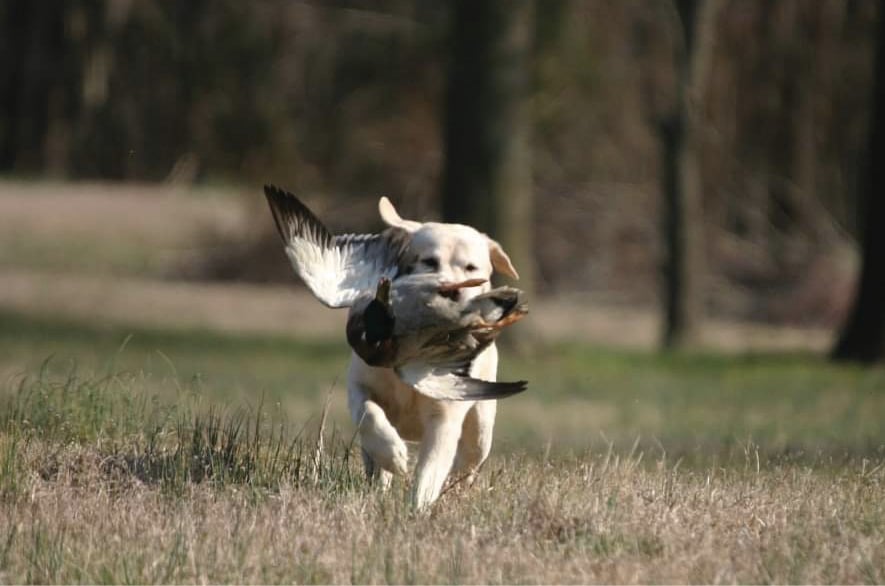
The Labrador Retriever has consistently been one of the most treasured dog breeds in the United States and internationally. Originating from the rugged coasts of Newfoundland, this breed was initially developed to aid fishermen and hunters by retrieving gear and game from water and land. Esteemed for its affable nature and multifaceted abilities, the Labrador excels in a variety of roles: from faithful family companion and skilled service animal to athletic competitor and diligent working dog.
Highlights
02/History
The Labrador Retriever's journey from a working dog in the cold North Atlantic to one of the most beloved breeds around the globe is a testament to its adaptability, intelligence, and amiable nature. Initially known as the St. John's Dog, the breed found its early roles in Newfoundland, assisting fishermen by retrieving fish and helping to haul in nets. This early version of the breed was essential for its practical working abilities, not just companionship.
As the breed caught the attention of English noblemen in the 19th century, its journey across the Atlantic marked the beginning of the Labrador as we know it today. These enthusiasts saw in the St. John's Dog an ideal sporting and hunting companion, thanks to its keen retrieving instincts, love for water, and trainable nature. Through selective breeding, they refined the dog's physical characteristics and temperament, giving birth to the modern Labrador Retriever.
The recognition of the breed by prominent kennel clubs solidified its status and standardized its traits, focusing on qualities like a strong physique, keen intelligence, and good temperament. It wasn't long before Labradors transcended their working-class roots to become favored pets, show dogs, and versatile working dogs.
Beyond their traditional roles in hunting and fieldwork, Labradors have distinguished themselves in various service roles. Their intelligence and gentle demeanor make them exemplary guide dogs, therapy animals, and participants in search-and-rescue missions. Moreover, their acute olfactory skills have been invaluable in detection tasks, assisting in law enforcement and medical fields.
The Labrador Retriever's appeal as a family pet is equally significant. Their friendly and patient nature makes them excellent companions for children and adults alike, fitting seamlessly into various family settings and lifestyles. The breed's popularity in the United States and worldwide is a reflection of its adaptability, loyalty, and the joy it brings to people's lives.
Through generations, the Labrador Retriever has evolved from a practical working dog to a beloved family member, without losing its heritage of versatility and service. Its history is not just a record of its past but a living legacy that continues to unfold in homes and fields, in service and companionship, across the world. The Labrador's story is one of enduring partnership with humanity, a narrative rich with loyalty, service, and love.
03/Appearance
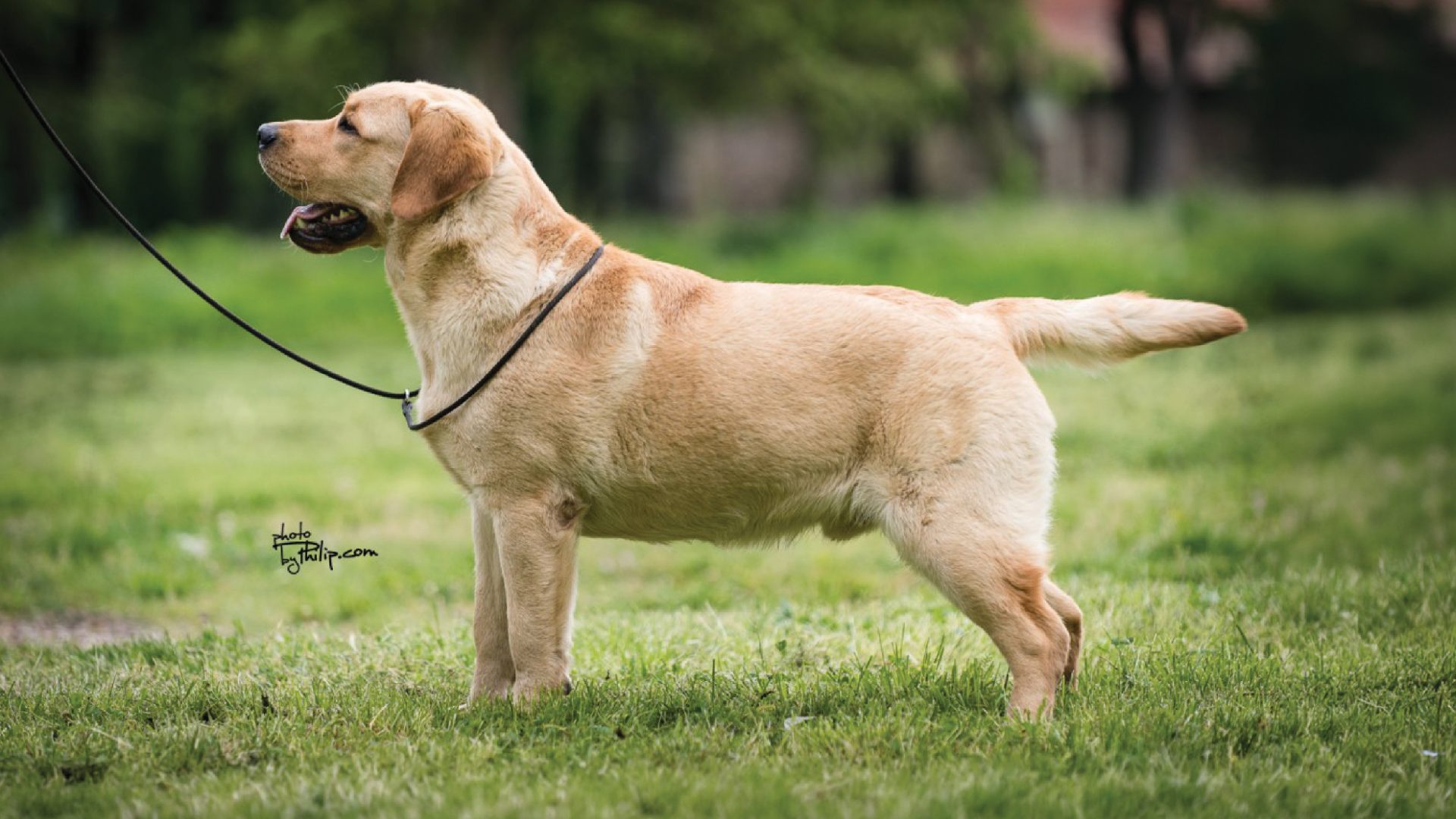
Male Labrador Retrievers typically stand about 22.5 to 24.5 inches tall at the withers, with females slightly smaller, ranging from 21.5 to 23.5 inches.
Weight should be in proportion to the height, with males weighing between 65 to 80 pounds and females between 55 to 70 pounds.

The Labrador Retriever is almost square in profile, with a strong, muscular build that reflects its origins as a capable, enduring retriever of game and fowl. Their well-developed chest reaches down to the elbows, and their back is level from the withers to the croup. Substance is evidenced in the Labrador's solid, well-knit frame, providing the strength and power needed for its retrieving tasks. Yet, despite their robust build, Labradors should move with effortless efficiency, displaying good reach in the front and strong drive from behind, without any sign of clumsiness or heaviness.
Texture: The Labrador Retriever's coat is one of its defining features, being short, dense, and straight with a distinctive water-resistant quality. This double coat consists of a soft undercoat that provides insulation and a tougher topcoat that repels water, enabling the dog to perform efficiently in various weather conditions. The coat's texture is neither wooly nor silky but firm and likely to the touch, ensuring protection against brambles and water alike.
Standard Colors
Standard Markings
04/Consider
When considering bringing a Labrador Retriever into your life, it's essential to understand the breed's specific needs and characteristics to ensure a happy and healthy life for your canine companion. Labradors are renowned for their friendly and outgoing nature, making them excellent family pets. However, they are also energetic and require ample exercise and mental stimulation to keep them content and well-behaved. Prospective owners should be prepared to provide plenty of playtime, walks, and interaction.
Interaction With Family
The level of affection a breed typically shows towards family members and familiar individuals.
Good With Other Dogs
The innate friendliness of a dog towards other dogs can depend on its breed.
Good With Young Children
The degree to which a breed will typically be patient with young children.
Amount Of Shedding
How much hair a breed typically leaves behind on clothes, furniture and floors.
Frequency Of Grooming
How often a breed needs brushing, bathing or a professional trim to stay in condition.
Amount Of Drooling
How prone a breed is to drool — worth knowing before you keep a towel by the door.
Openness To Strangers
How openly a breed tends to greet new people, visitors and strangers.
Protective Nature
How likely a breed is to alert you to — and stand between you and — anything unfamiliar.
Playfulness Level
How enthusiastic a breed stays about games and play well past puppyhood.
Trainability Level
How readily a breed takes direction and works with you rather than around you.
Barking Level
How much a breed uses its voice, and how readily.
Energy Level
How much get-up-and-go a breed brings to an average day.
Health
The health of a Labrador Retriever is a vital aspect that requires attention and care from any responsible handler or caretaker. Generally, Labradors are known for their robust health, but like any breed and mixed breed, they are prone to certain health conditions. The average lifespan of a Labrador Retriever typically ranges between 11 and 13 years.
The Labrador Retriever is celebrated for its amiable and outgoing personality, traits that make it a top choice not just for families but for various service roles as well. When considering a Labrador Retriever's personality, it is essential to delve into several aspects to truly appreciate this breed's adaptability and social nature.
Labradors are renowned for their friendly demeanor, making them excellent companions for both children and adults. They typically show a great deal of affection for their family members and are known to be particularly patient and gentle with children. This breed's sociability extends to other dogs and even strangers, as Labradors are usually eager to greet new friends with a wagging tail and an enthusiastic demeanor.
While Labradors are well-suited to novice dog owners due to their generally agreeable and teachable nature, their high energy levels and need for engagement mean they thrive best with active individuals or families who can provide them with ample exercise and interaction. Despite their friendly disposition, Labradors benefit from early socialization and training to harness their energy positively and reinforce good manners.
Their intelligence and eagerness to please make Labradors highly trainable, yet their sensitivity requires a gentle approach. Harsh methods can dampen their spirit, whereas positive reinforcement fosters a love of learning and cooperation. Labs are not well-suited to being left alone for long periods; they are social animals who prefer company and can become bored or destructive if isolated or under-stimulated.
Exercise Expectations
A Labrador's need for exercise extends beyond simple physical activity; it also plays a key role in their mental stimulation and overall happiness. Regular play sessions, walks, and the opportunity to run and explore in a safe environment can help prevent the development of undesirable behaviors often rooted in boredom or excess energy. The intensity of exercise for a Labrador should be adjusted according to the dog's age, health, and fitness level. Puppies and younger dogs may have seemingly boundless energy and require more frequent bursts of activity, while older Labradors might prefer longer, more leisurely walks. Regardless of age, all Labradors benefit from a routine that includes both physical and mental challenges. Playfulness is a hallmark of the Labrador personality, and engaging in interactive games such as fetch, tug-of-war, or hide-and-seek can provide both physical exercise and mental stimulation. Training sessions, agility courses, or even learning new tricks can also offer valuable mental workouts, reinforcing obedience while engaging their keen minds. Despite their love for active play, Labradors also need to learn to relax and settle down. Teaching a Labrador to calm down after playtime is as important as the exercise itself, ensuring they can be well-behaved and content indoors after expending their energy outside.
Living with a Labrador Retriever is a rewarding experience that brings joy, companionship, and a lot of activity into a household. Given their adaptable and friendly nature, Labradors fit well into various living situations, but there are several aspects to consider ensuring they thrive in their environment.
Firstly, Labradors are known for their high energy levels and need for regular exercise. They are not suited to a sedentary lifestyle and require ample space to move around and play. While they can adapt to apartment living, it is essential that they are given plenty of daily exercise to prevent boredom and the development of destructive behaviors. A home with a securely fenced yard is ideal, providing them with space to explore and play safely.
In terms of weather tolerance, Labradors are quite versatile. Their double coat provides insulation against both cold and hot weather, but it is crucial to provide protection from extreme conditions. In colder climates, they should not be left outside without shelter, and during hot weather, they need access to shade and fresh water to prevent overheating.
Labradors are social creatures that thrive on human interaction and do not like being left alone for long periods. They are happiest when they are part of family activities and can become anxious or exhibit unwanted behaviors if isolated or neglected. Therefore, they are best suited to homes where they will receive plenty of attention and companionship.
When it comes to training and socialization, Labradors are eager learners and respond well to positive reinforcement techniques. Early training and socialization are vital for teaching them good manners and how to behave in various situations, which is particularly important given their size and strength.
05/Puppies
Bringing a Labrador Retriever puppy into your home is an exciting and significant commitment. These adorable, energetic bundles of joy grow into large, active dogs, so early preparation and understanding of their needs are crucial for a harmonious integration into your family.
Caring for a Labrador puppy requires attention to their physical, emotional, and developmental needs. Initially, creating a safe and welcoming environment is essential. Puppy-proofing your home by removing hazardous objects and substances they can chew or swallow is crucial to prevent accidents and ensure their safety.
Nutrition plays a vital role in your puppy's health and development. Feeding a high-quality diet formulated for large-breed puppies will support their rapid growth and energy levels. It's essential to adhere to a feeding schedule, dividing their daily food intake into smaller, more manageable meals to promote healthy digestion and prevent overeating.
Socialization and training should begin early, introducing your puppy to a variety of people, animals, and environments in a positive and controlled manner. This exposure helps develop a well-adjusted, confident adult dog. Basic obedience training, using positive reinforcement methods, establishes good behavior patterns and strengthens the bond between you and your puppy.
Routine veterinary care is crucial during this formative stage. Vaccinations, deworming, and regular check-ups will help protect your puppy from infectious diseases and identify any health concerns early on. Discussing a preventive healthcare plan with your veterinarian, including spay or neuter options, is also important.
Exercise and play are vital components of your Labrador puppy's daily routine, aiding in their physical development and providing an outlet for their abundant energy. However, it's important to monitor their activity levels to avoid overexertion, particularly during rapid growth phases.
06/Activities
Labrador Retrievers are highly versatile and excel in a variety of activities and dog sports, showcasing their intelligence, agility, and eagerness to please. Their well-rounded capabilities and enthusiastic nature make them standout competitors and beloved partners in numerous canine disciplines.
Engaging a Labrador Retriever in these sports and activities provides not only physical and mental stimulation for the dog but also a unique opportunity to strengthen the bond between dog and handler, celebrating the breed's versatility and joyous nature.
Gallery
07/Standards
The Labrador Retriever is recognized by the world's leading registries and kennel organizations, which categorize the breed into a specific Group based on its unique characteristics. This breed is recognized worldwide under the following Group designations:
The ideal Labrador Retriever is described by a Breed Standard that is approved by each of the world’s leading registries and kennel organizations. The Breed Standards for this breed may be found in the following links:
08/Clubs
09/Rescue
Labrador Retriever rescue organizations across the world are dedicated to providing care and new homes for Labradors that find themselves without a family. These groups work tirelessly to ensure that each dog receives the love, medical care, and training it needs before being placed in a forever home.
In the United States, organizations like Lab Rescue LRCP, Labs4rescue, Inc., and Lu's Labs are at the forefront of these efforts, operating across multiple states and touching the lives of countless Labradors and their adoptive families. They work through networks of volunteers, foster homes, and veterinarians to provide a support system for these animals, preparing them for life in their new homes.
Canada is home to Labrador Retriever Adoption Service Inc. The organization focuses on rescuing Labradors within specific provinces but often extends their help beyond those boundaries, addressing the needs of Labradors across the country.
Local shelters and broader animal rescue organizations are equally critical in the landscape of pet adoption and animal welfare. These entities provide sanctuary, medical care, and rehabilitation to a wide array of animals, not just Labradors or specific breeds, ensuring that countless pets find their way to loving homes each year.
10/Facts
Excellent Swimmers
Their webbed paws and otter-like tails make Labradors natural swimmers, skills that were essential in their original roles retrieving fishing nets and escaping icy waters.
Intelligent and Trainable
Labradors are highly intelligent and eager to please, making them highly trainable and often chosen for various service roles.
Shedding and Grooming
Despite their short coat, Labradors are heavy shedders, requiring regular grooming to manage their shedding and keep their coat healthy.
Great with Children
Their gentle nature and patience make them excellent companions for children, contributing to their popularity as family pets.
Loyal Companions
Labradors are known for their loyalty and companionship, often forming strong bonds with their human families.
Popularity
The Labrador Retriever has consistently ranked as the most popular dog breed in several countries, including the United States, for many years, a testament to their enduring appeal.
11/FAQ
Labrador Retrievers typically live between 11 and 13 years. Like all breeds, their lifespan can be influenced by various factors, including genetics, diet, exercise, and access to quality veterinary care. Responsible ownership and preventive health measures can help ensure they live full, happy lives.
Official Standard for the Labrador Retriever
General Appearance: The Labrador Retriever is a strongly built, medium-sized, short-coupled, dog possessing a sound, athletic, well-balanced conformation that enables it to function as a retrieving gun dog; the substance and soundness to hunt waterfowl or upland game for long hours under difficult conditions; the character and quality to win in the show ring; and the temperament to be a family companion. Physical features and mental characteristics should denote a dog bred to perform as an efficient Retriever of game with a stable temperament suitable for a variety of pursuits beyond the hunting environment. The most distinguishing characteristics of the Labrador Retriever are its short, dense, weather resistant coat; an "otter" tail; a clean-cut head with broad back skull and moderate stop; powerful jaws; and its "kind," friendly eyes, expressing character, intelligence and good temperament. Above all, a Labrador Retriever must be well balanced, enabling it to move in the show ring or work in the field with little or no effort. The typical Labrador possesses style and quality without over refinement, and substance without lumber or cloddiness. The Labrador is bred primarily as a working gun dog; structure and soundness are of great importance.
Size, Proportion and Substance: Size-The height at the withers for a dog is 22½ to 24½ inches; for a bitch is 21½ to 23½ inches. Any variance greater than ½ inch above or below these heights is a disqualification. Approximate weight of dogs and bitches in working condition: dogs 65 to 80 pounds; bitches 55 to 70 pounds. The minimum height ranges set forth in the paragraph above shall not apply to dogs or bitches under twelve months of age. Proportion-Short-coupled; length from the point of the shoulder to the point of the rump is equal to or slightly longer than the distance from the withers to the ground. Distance from the elbow to the ground should be equal to one half of the height at the withers. The brisket should extend to the elbows, but not perceptibly deeper. The body must be of sufficient length to permit a straight, free and efficient stride; but the dog should never appear low and long or tall and leggy in outline. Substance-Substance and bone proportionate to the overall dog. Light, "weedy" individuals are definitely incorrect; equally objectionable are cloddy lumbering specimens. Labrador Retrievers shall be shown in working condition well-muscled and without excess fat.
Head: Skull-The skull should be wide; well developed but without exaggeration. The skull and foreface should be on parallel planes and of approximately equal length. There should be a moderate stop-the brow slightly pronounced so that the skull is not absolutely in a straight line with the nose. The brow ridges aid in defining the stop. The head should be clean-cut and free from fleshy cheeks; the bony structure of the skull chiseled beneath the eye with no prominence in the cheek. The skull may show some median line; the occipital bone is not conspicuous in mature dogs. Lips should not be squared off or pendulous, but fall away in a curve toward the throat. A wedge-shape head, or a head long and narrow in muzzle and back skull is incorrect as are massive, cheeky heads. The jaws are powerful and free from snippiness- the muzzle neither long and narrow nor short and stubby. Nose-The nose should be wide and the nostrils well-developed. The nose should be black on black or yellow dogs, and brown on chocolates. Nose color fading to a lighter shade is not a fault. A thoroughly pink nose or one lacking in any pigment is a disqualification. Teeth-The teeth should be strong and regular with a scissors bite; the lower teeth just behind, but touching the inner side of the upper incisors. A level bite is acceptable, but not desirable. Undershot, overshot, or misaligned teeth are serious faults. Full dentition is preferred. Missing molars or pre-molars are serious faults. Ears-The ears should hang moderately close to the head, set rather far back, and somewhat low on the skull; slightly above eye level. Ears should not be large and heavy, but in proportion with the skull and reach to the inside of the eye when pulled forward. Eyes-Kind, friendly eyes imparting good temperament, intelligence and alertness are a hallmark of the breed. They should be of medium size, set well apart, and neither protruding nor deep set. Eye color should be brown in black and yellow Labradors, and brown or hazel in chocolates. Black, or yellow eyes give a harsh expression and are undesirable. Small eyes, set close together or round prominent eyes are not typical of the breed. Eye rims are black in black and yellow Labradors; and brown in chocolates. Eye rims without pigmentation is a disqualification.
Neck, Topline and Body: Neck-The neck should be of proper length to allow the dog to retrieve game easily. It should be muscular and free from throatiness. The neck should rise strongly from the shoulders with a moderate arch. A short, thick neck or a "ewe" neck is incorrect. Topline-The back is strong and the topline is level from the withers to the croup when standing or moving. However, the loin should show evidence of flexibility for athletic endeavor. Body-The Labrador should be short-coupled, with good spring of ribs tapering to a moderately wide chest. The Labrador should not be narrow chested; giving the appearance of hollowness between the front legs, nor should it have a wide spreading, bulldog-like front. Correct chest conformation will result in tapering between the front legs that allows unrestricted forelimb movement. Chest breadth that is either too wide or too narrow for efficient movement and stamina is incorrect. Slab-sided individuals are not typical of the breed; equally objectionable are rotund or barrel chested specimens. The underline is almost straight, with little or no tuck-up in mature animals. Loins should be short, wide and strong; extending to well developed, powerful hindquarters. When viewed from the side, the Labrador Retriever shows a well-developed, but not exaggerated forechest. Tail-The tail is a distinguishing feature of the breed. It should be very thick at the base, gradually tapering toward the tip, of medium length, and extending no longer than to the hock. The tail should be free from feathering and clothed thickly all around with the Labrador's short, dense coat, thus having that peculiar rounded appearance that has been described as the "otter" tail. The tail should follow the topline in repose or when in motion. It may be carried gaily, but should not curl over the back. Extremely short tails or long thin tails are serious faults. The tail completes the balance of the Labrador by giving it a flowing line from the top of the head to the tip of the tail. Docking or otherwise altering the length or natural carriage of the tail is a disqualification.
Forequarters: Forequarters should be muscular, well coordinated and balanced with the hindquarters. Shoulders-The shoulders are well laid-back, long and sloping, forming an angle with the upper arm of approximately 90 degrees that permits the dog to move his forelegs in an easy manner with strong forward reach. Ideally, the length of the shoulder blade should equal the length of the upper arm. Straight shoulder blades, short upper arms or heavily muscled or loaded shoulders, all restricting free movement, are incorrect. Front Legs-When viewed from the front, the legs should be straight with good strong bone. Too much bone is as undesirable as too little bone, and short legged, heavy boned individuals are not typical of the breed. Viewed from the side, the elbows should be directly under the withers, and the front legs should be perpendicular to the ground and well under the body. The elbows should be close to the ribs without looseness. Tied-in elbows or being "out at the elbows" interfere with free movement and are serious faults. Pasterns should be strong and short and should slope slightly from the perpendicular line of the leg. Feet are strong and compact, with well-arched toes and well-developed pads. Dew claws may be removed. Splayed feet, hare feet, knuckling over, or feet turning in or out are serious faults.
Hindquarters: The Labrador's hindquarters are broad, muscular and well-developed from the hip to the hock with well-turned stifles and strong short hocks. Viewed from the rear, the hind legs are straight and parallel. Viewed from the side, the angulation of the rear legs is in balance with the front. The hind legs are strongly boned, muscled with moderate angulation at the stifle, and powerful, clearly defined thighs. The stifle is strong and there is no slippage of the patellae while in motion or when standing. The hock joints are strong, well let down and do not slip or hyper-extend while in motion or when standing. Angulation of both stifle and hock joint is such as to achieve the optimal balance of drive and traction. When standing the rear toes are only slightly behind the point of the rump. Over angulation produces a sloping topline not typical of the breed. Feet are strong and compact, with well-arched toes and well-developed pads. Cow-hocks, spread hocks, sickle hocks and over-angulation are serious structural defects and are to be faulted.
Coat: The coat is a distinctive feature of the Labrador Retriever. It should be short, straight and very dense, giving a fairly hard feeling to the hand. The Labrador should have a soft, weather-resistant undercoat that provides protection from water, cold and all types of ground cover. A slight wave down the back is permissible. Woolly coats, soft silky coats, and sparse slick coats are not typical of the breed, and should be severely penalized.
Color: The Labrador Retriever coat colors are black, yellow and chocolate. Any other color or a combination of colors is a disqualification. A small white spot on the chest is permissible, but not desirable. White hairs from aging or scarring are not to be misinterpreted as brindling. Black-Blacks are all black. A black with brindle markings or a black with tan markings is a disqualification. Yellow-Yellows may range in color from fox-red to light cream, with variations in shading on the ears, back, and underparts of the dog. Chocolate-Chocolates can vary in shade from light to dark chocolate. Chocolate with brindle or tan markings is a disqualification.
Movement: Movement of the Labrador Retriever should be free and effortless. When watching a dog move toward oneself, there should be no sign of elbows out. Rather, the elbows should be held neatly to the body with the legs not too close together. Moving straight forward without pacing or weaving, the legs should form straight lines, with all parts moving in the same plane. Upon viewing the dog from the rear, one should have the impression that the hind legs move as nearly as possible in a parallel line with the front legs. The hocks should do their full share of the work, flexing well, giving the appearance of power and strength. When viewed from the side, the shoulders should move freely and effortlessly, and the foreleg should reach forward close to the ground with extension. A short, choppy movement or high knee action indicates a straight shoulder; paddling indicates long, weak pasterns; and a short, stilted rear gait indicates a straight rear assembly; all are serious faults. Movement faults interfering with performance including weaving; side-winding; crossing over; high knee action; paddling; and short, choppy movement, should be severely penalized.
Temperament: True Labrador Retriever temperament is as much a hallmark of the breed as the "otter" tail. The ideal disposition is one of a kindly, outgoing, tractable nature; eager to please and non-aggressive towards man or animal. The Labrador has much that appeals to people; his gentle ways, intelligence and adaptability make him an ideal dog. Aggressiveness towards humans or other animals, or any evidence of shyness in an adult should be severely penalized.
Disqualifications: 1. Any deviation from the height prescribed in the Standard. 2. A thoroughly pink nose or one lacking in any pigment. 3. Eye rims without pigment. 4. Docking or otherwise altering the length or natural carriage of the tail. 5. Any other color or a combination of colors other than black, yellow or chocolate as described in the Standard.
Approved February 12, 1994
Effective March 31, 1994
The tail of a Labrador Retriever is thick at the base, gradually tapering towards the tip, providing a powerful aid in swimming, much like an otter's. It is covered with the same short, dense coat as the rest of the body, which further emphasizes its otter-like appearance. The tail is of medium length, extending no longer than to the hock, and is devoid of feathering, maintaining its thickness and shape throughout. The tail is never docked; it is left in its natural state.
Coat Type
Double
The structure of the coat this breed carries.
Coat Length
Short
How long the breed's coat grows when kept in condition.
Adaptability Level
How easily a breed copes with changes in home, routine, noise and weather.
Mental Stimulation Needs
How much a breed needs a job, a puzzle or training to stay content.
Labradors generally get along well with other pets and are known for their non-aggressive demeanor, though they may enthusiastically engage in play. Their friendly nature typically extends to strangers, making them poor guard dogs but excellent ambassadors of goodwill.
Feeding a Labrador Retriever appropriately is crucial for its health, longevity, and overall well-being. Labradors are known for their hearty appetites and can be prone to obesity if their diet and food intake are not managed carefully. Understanding the nutritional needs of a Labrador Retriever will help ensure that your dog maintains an optimal weight and receives the necessary nutrients for a healthy life.
When feeding a Labrador puppy, it is essential to provide a diet formulated for large-breed puppies. This diet helps support their rapid growth and development while helping to prevent bone and joint problems later in life. Typically, Labrador puppies should be fed three to four small meals a day to support their high energy levels and rapid growth.
As Labradors transition into adulthood, their food intake should be adjusted to their activity level and weight to prevent obesity. Adult Labradors generally do well with two meals per day. It's crucial to choose a high-quality dog food that provides balanced nutrition suited to their age, size, and activity level. Regularly monitoring your Labrador's weight and body condition can help you make necessary adjustments to their diet.
Portion control is critical for Labradors due to their propensity to overeat. Following the recommended feeding guidelines on the dog food label and adjusting based on your dog's specific needs can help maintain a healthy weight. Treats should be given sparingly and accounted for in the dog's total daily calorie intake.
Exercise also plays a vital role in managing a Labrador's weight. Regular physical activity not only helps burn calories but also stimulates the mind and provides an outlet for their energy.
Training a Labrador Retriever is an enjoyable and rewarding experience due to the breed's intelligence and eagerness to please. These traits make them highly trainable and well-suited for a variety of roles, from family pet to service dog. However, as with any breed, a tailored approach to training is essential to harness their potential fully.
Labradors are known for their food motivation, which can be a double-edged sword. While it makes them responsive to treats as rewards, care must be taken to prevent overfeeding. Their intelligence means they pick up on commands quickly, but it also implies they can easily learn bad habits if not guided correctly. Consistency is key in Labrador training, ensuring they understand what is expected of them.
Despite their amiable nature, Labradors have a strong retriever instinct and can be prone to chasing wildlife or picking up forbidden objects. Training should, therefore, include commands to drop or leave items, as well as a solid recall to manage their impulses effectively. Their intelligence and energy also mean they require mental stimulation to prevent boredom, which can be provided through training exercises, puzzle toys, and ongoing learning opportunities.
The tendency to bark varies among individuals, but Labradors are generally not excessive barkers. They may, however, vocalize when excited or seeking attention. Training can help manage their vocalizations, ensuring they understand when it is appropriate to be quiet.
A Labrador's friendly nature should not be mistaken for a lack of willfulness. They can be stubborn, particularly if they sense they can gain control over a situation or if they are not motivated. As such, training should be firm yet respectful, using positive reinforcement to build a strong bond and mutual respect.
Wanderlust is not typically a problem for Labradors compared to some other breeds, but they should still be taught to respond to commands even when distractions are present. This is particularly important given their sociable nature and tendency to greet new people or animals with enthusiasm.
Grooming Expectations
While Labradors are not the most high-maintenance breed in terms of grooming, they do shed throughout the year, with increased shedding typically occurring twice annually during the change of seasons. Regular brushing, ideally a few times a week, can significantly reduce the amount of hair shed around the house and help distribute the dog's natural skin oils throughout their coat, promoting a healthy sheen and reducing the need for frequent baths. Bathing a Labrador should be done as needed—too frequent bathing can strip the coat of its natural oils, leading to dry skin and irritation. When baths are necessary, using a dog-specific shampoo is crucial to maintaining skin and coat health. In addition to coat care, regular grooming routines should include ear checks and cleanings to prevent infections, particularly given the Labrador's propensity for ear issues due to their floppy ear structure. Nail trimming is also essential to prevent discomfort and potential problems with walking or running. Dental care should not be overlooked; regular teeth brushing can prevent dental diseases, which are common in all dog breeds.