01/Overview
The Rottweiler is a large, muscular canine known for its strength, agility, and unwavering loyalty. Originating in Germany, the breed was used as a herding dog and draft animal, pulling carts to market. The Rottweiler is now popular as a steadfast family companion and devoted working dog. Rotties, as they are affectionately called by their friend, are calm and confident dogs with a “wait and see” attitude when it comes to assessing any situation. They have a strong willingness to work and are typically gentle and affectionate with children.
Highlights
02/History
The Rottweiler is one of the oldest breeds of working dogs, with a history that originated when the Romans ruled much of Europe. These robust dogs were originally bred to drive cattle to market and were later used to pull carts. Their name is derived from the German town of Rottweil, a former Roman settlement where the dogs were known to have proliferated, assisting local butchers and earning the name Rottweiler Metzgerhund, which means Rottweil butchers' dogs.
As the need for driving cattle diminished with the advent of rail systems, Rottweilers found new roles. They were recognized for their intelligence, strength, and loyalty, qualities that made them excellent police dogs, service dogs, and even family guardians and companions. The breed's versatility has been a defining trait throughout its history, allowing it to adapt and thrive in various roles beyond its original herding and guarding duties.
The official recognition of the Rottweiler is a significant part of its history. The Allgemeiner Deutscher Rottweiler Klub (ADRK), which is committed to preserving the breed's working abilities, was established in Germany in 1921. In the United States, the American Kennel Club (AKC) recognized the Rottweiler in 1931, and the breed quickly gained popularity. In the United Kingdom, The Royal Kennel Club recognized the Rottweiler somewhat later, but it has since become a beloved breed there as well.
Throughout its history, the Rottweiler has been a subject of admiration as well as controversy. The breed's strength and protective instincts require responsible ownership, knowledgeable training, and sufficient socialization. The Rottie's intelligence and willingness to work make these dogs excellent candidates for Obedience, Agility, and other organized activities, but they must be handled with a firm, consistent, and understanding approach.
The role of the Rottweiler in modern society has continued to evolve. These dogs are not only seen in working roles but also as beloved family members. Their loyalty, intelligence, and protective nature make them exceptional companions. However, prospective owners should be aware of the breed's needs, including adequate exercise, training, and socialization, to help them become well-adjusted members of society.
The history of the Rottweiler as a distinct purebred reflects its resilience and adaptability. Whether serving as a working dog, a guardian, a police dog, or a companion, the Rottie has remained a respected breed throughout the centuries.
03/Appearance
Adult male Rottweilers typically stand between 24 and 27 inches tall at the shoulder, while mature females usually measure from 22 to 25 inches.
Male Rottweilers typically weigh between 95 and 135 pounds, with females generally weighing between 80 and 100 pounds.
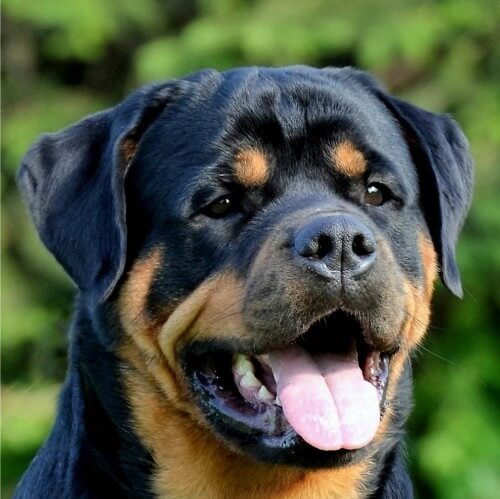
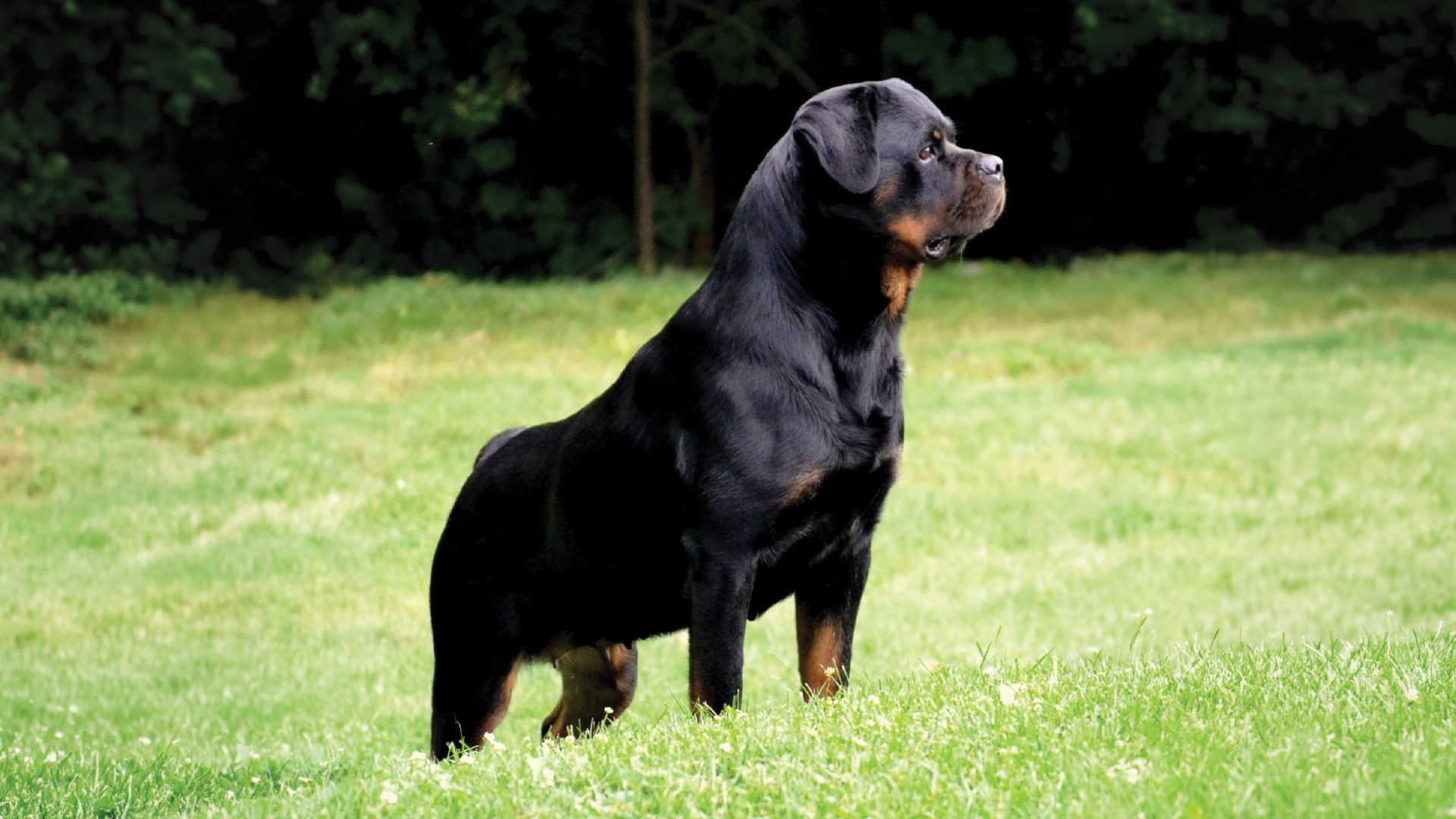
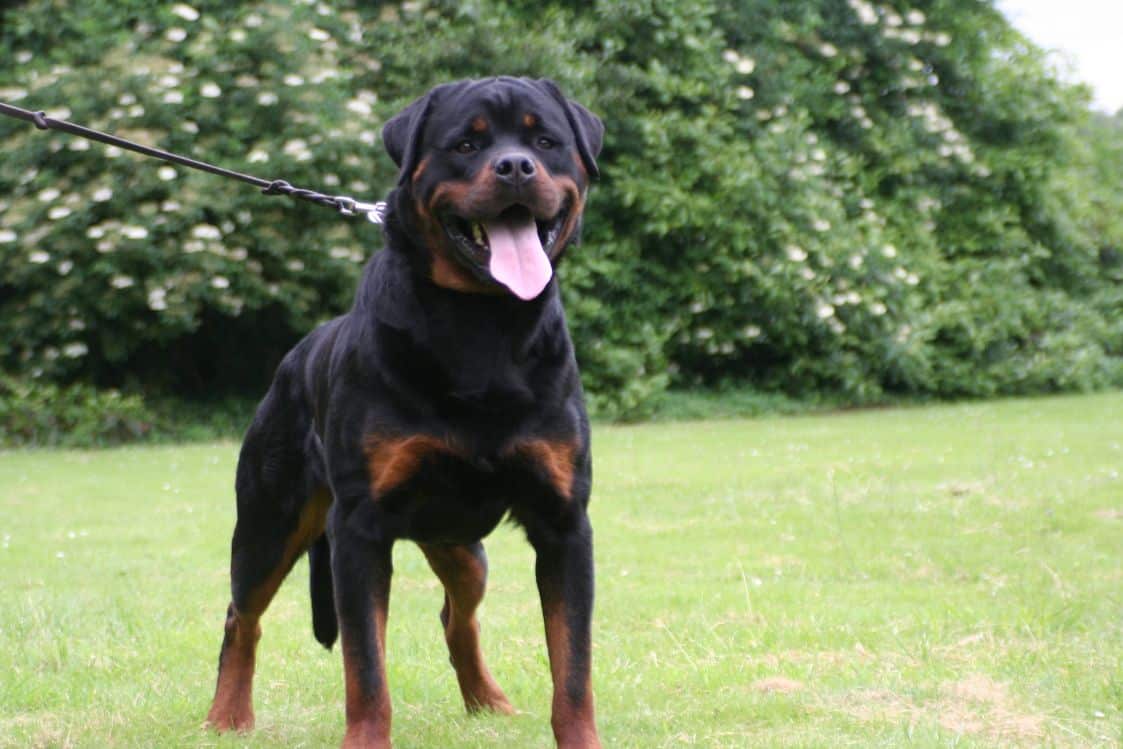
The Rottweiler is a medium-to-large dog with a signature black coat marked by clearly-defined rust-colored markings. The breed is known for its strong and substantial appearance, with a deep chest and a broad, muscular back. The length of the body, from the prosternum to the rearmost projection of the rump, is slightly longer than the dog's height at the withers, with a height-to-length ratio of 9 to 10.
Texture: The Rottweiler’s coat is a protective covering that requires no trimming to maintain its neat appearance. The hair is straight and of medium length, lying flat against the body. It should never be wavy, curly, or excessively short. The coat is shortest on the head, ears, and legs, and longest on the breeching. A long coat, however, is unacceptable in the breed.
Standard Colors
04/Consider
When considering adding a Rottweiler to a home, it's crucial to understand the breed's health and personality profile. Known for its strength, resilience, and loyalty, the Rottie is a commendable companion that, when properly trained and cared for, can become an integral member of the family. However, without careful consideration, there's no guarantee that the new addition will be a perfect fit.
Interaction With Family
The level of affection a breed typically shows towards family members and familiar individuals.
Good With Other Dogs
The innate friendliness of a dog towards other dogs can depend on its breed.
Good With Young Children
The degree to which a breed will typically be patient with young children.
Amount Of Shedding
How much hair a breed typically leaves behind on clothes, furniture and floors.
Frequency Of Grooming
How often a breed needs brushing, bathing or a professional trim to stay in condition.
Amount Of Drooling
How prone a breed is to drool — worth knowing before you keep a towel by the door.
Openness To Strangers
How openly a breed tends to greet new people, visitors and strangers.
Protective Nature
How likely a breed is to alert you to — and stand between you and — anything unfamiliar.
Playfulness Level
How enthusiastic a breed stays about games and play well past puppyhood.
Trainability Level
How readily a breed takes direction and works with you rather than around you.
Barking Level
How much a breed uses its voice, and how readily.
Energy Level
How much get-up-and-go a breed brings to an average day.
Health
Rottweilers are generally robust and healthy dogs, but like all dogs, they do have a few specific issues. It is paramount to provide the Rottie with routine veterinary check-ups, a nutritious diet, and regular exercise to promote longevity and quality of life. A well-cared-for Rottweiler has an average lifespan of 9 to 10 years, though some dogs can live into their early teens.
Understanding the Rottweiler's personality is crucial for anyone considering this breed as a companion. Rottweilers are known for their loyalty, confidence, and courage, making them excellent protectors of their families. However, their strong will and powerful physique require a handler who can provide firm, consistent training and socialization from an early age.
Rottweilers may not be the best choice for novice dog owners due to the breed's strong personality and size. These dogs respond best to experienced handlers who can establish clear leadership and set boundaries. Regarding sensitivity, Rottweilers are highly attuned to their environment and their human companions' emotions, often reacting accordingly to their surroundings and the mood within their home.
The typical Rottie can adapt to being alone for moderate periods, but these dogs thrive on interaction and should not be isolated for long durations. They form deep bonds with their families and can become unhappy or destructive if left alone for too long. When it comes to other dogs and household pets, Rottweilers can be friendly if they have been properly socialized, although their inherent drive to guard should always be considered and managed appropriately.
Rottweilers can be excellent with children, especially when raised with them. However, due to their size and strength, interactions should always be carefully supervised. Additionally, teaching the kids how to interact safely and respectfully with the dog is essential to prevent any accidents or misunderstandings.
Exercise Expectations
A daily routine for a Rottweiler should consist of multiple exercise sessions, including walks, playtime, and training activities. It's best to aim for at least one to two hours of exercise daily, divided into sessions to prevent overexertion. Walks should be brisk and long enough to keep the Rottie engaged and physically active, while playtime can include games like fetch, tug-of-war, or obstacle courses that stimulate the dog's mind and body. In terms of energy levels, Rottweilers are known for their stamina and strength. However, their exercise needs can vary based on age, health, and individual temperament. While they are typically energetic and playful, it's important to tailor their exercise routine to their specific needs and avoid excessive strenuous activity, especially in hot weather. Intensity in exercise should be balanced; while Rottweilers benefit from vigorous activities that challenge them, they also need downtime to rest and recover. Playfulness is a trait that can be encouraged through interactive games and toys, which also strengthen the bond between the dog and its handler. Incorporating training into an exercise routine can enhance a Rottweiler's responsiveness and obedience, while offering opportunity for mental stimulation. Activities like advanced Obedience, Agility, or even Trick Dog training can be beneficial. These activities not only provide exercise but also reinforce positive behavior and strengthen the partnership between the Rottweiler and its favorite training partner.
Living with a Rottweiler can be an immensely rewarding experience, provided the dog's specific needs and characteristics are well understood and accommodated. When considering a Rottie as a companion, it's essential to evaluate the owner's living environment and lifestyle to make sure it aligns with the requirements of this powerful breed.
Rottweilers are adaptable to a variety of living conditions as long as their substantial exercise and mental stimulation needs are met. These dogs thrive in environments where they can be part of the family activities and have adequate space to move around. Despite their size, Rotties can adapt to smaller living spaces if they receive sufficient daily exercise to burn off their energy.
When it comes to the breed's tolerance for various climates, Rottweilers have a double coat that provides some protection against the elements. They can adapt to both cold and hot weather, but it's important to take precautions during extreme conditions. In cold weather, it's important to make sure the dogs has a warm, dry place to rest, especially if it spends considerable time outdoors. During hot weather, avoiding excessive exercise, providing ample shade and water, and being mindful of the signs of overheating are essential.
Integrating a Rottweiler into the home also means considering its interaction with other family members and pets. With proper socialization, Rotties can get along well with children and other animals, though their interactions should always be supervised, especially with younger children. Teaching kids how to interact safely and respectfully with the dog is crucial to fostering a harmonious relationship.
05/Puppies
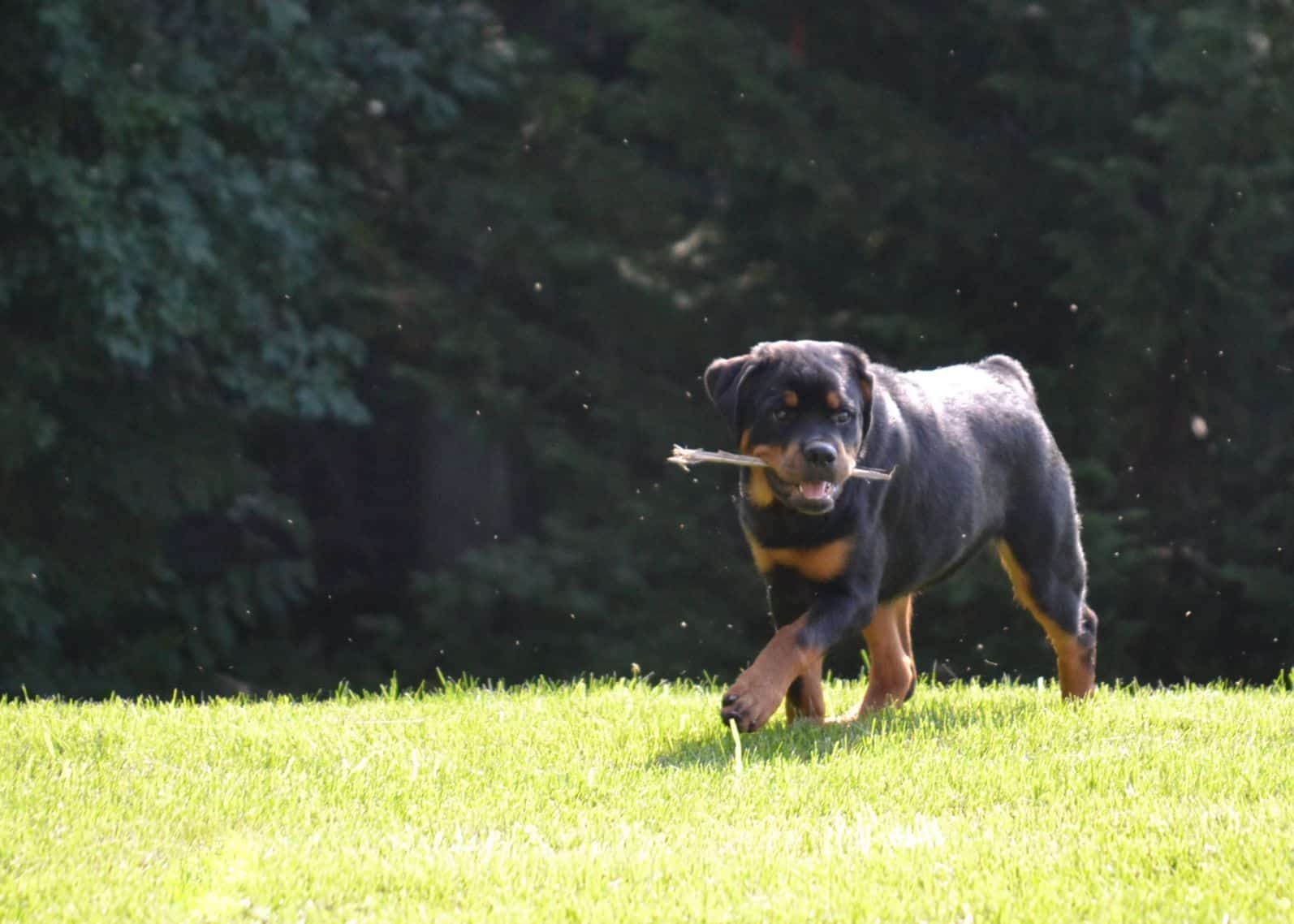
Bringing a Rottweiler puppy home is an exciting experience and a significant commitment. These energetic and intelligent pups require attentive care, socialization, and training from a young age to develop into well-adjusted adult dogs. Understanding the needs of Rottie puppies, and providing them with a nurturing environment, is crucial for their development and well-being.
Caring for a Rottweiler puppy involves several key components, including nutrition, socialization, training, and healthcare. Providing a high-quality diet formulated for large-breed puppies is essential to support the puppy's rapid growth and development while preventing overgrowth that can lead to joint issues later in life. Feeding guidelines should be followed closely, and meals should be divided into multiple feedings throughout the day to aid in proper digestion and growth.
Socialization is another critical aspect of Rottweiler puppy care. Early, positive exposure to a variety of people, environments, sounds, and experiences can help the pup develop into a confident and well-adjusted adult. This exposure should be carried out thoughtfully and at a pace that is comfortable for the puppy, ensuring that each new experience is positive.
Training should begin early, focusing on basic obedience, housetraining, and manners. Rottweilers are intelligent and eager to please, but they're also strong-willed. This makes consistent, positive reinforcement-based training methods most effective. Establishing clear rules and routines can help to prevent behavioral issues and foster a strong bond between the puppy and its owner.
Regular veterinary care is crucial for maintaining your Rottweiler puppy's health. This includes vaccinations, parasite prevention, and routine check-ups. A veterinarian can also provide guidance on preventive care and address any health or developmental concerns.
In addition to these aspects of care, providing the Rottweiler puppy with a safe and comfortable living environment is vital. This includes a designated sleeping area that's secure, appropriate chew toys to support teething, and an area where the pup can safely play and explore.
06/Activities
Rottweilers are versatile, intelligent, and robust dogs that excel in a variety of dog sports. Their strength, endurance, and eagerness to work make them well-suited for many disciplines, particularly those that challenge them physically and mentally. Engaging a Rottweiler in these activities can provide essential exercise, mental stimulation, and an opportunity to strengthen the human/canine bond.
Participating in these activities and dog sports not only provides physical and mental stimulation for the Rottweiler, it also offers opportunities to develop and deepen the relationship between dog and handler. Additionally, these pursuits can showcase the breed's capabilities and promote a positive image of the Rottweiler as a versatile, trainable, and companionable canine.
Gallery
07/Standards
The Rottweiler is recognized by the world's leading registries and kennel organizations, which categorize the breed into a specific Group based on its unique characteristics. This breed is recognized worldwide under the following Group designations:
The ideal Rottweiler is described by a Breed Standard that is approved by each of the world’s leading registries and kennel organizations. The Breed Standards for this breed may be found in the following links:
08/Clubs
09/Rescue
10/Facts
Ancient Origins
The Rottweiler is one of the oldest herding breeds, with a lineage tracing back to the Roman Empire. These dogs were originally used to herd livestock and guard the empire's resources.
Name Origin
The breed's name, Rottweiler, is derived from the German town of Rottweil. In this town, they were used by butchers to herd cattle and protect money pouches tied around their necks.
Versatile Workers
Beyond their herding roots, Rottweilers have been employed in a variety of roles, including as Police Dogs, Search and Rescue dogs, and Service Dogs, showcasing the breed's versatility and intelligence.
Strength & Stamina
Known for their robust physique, Rottweilers possess great strength and stamina. This physical prowess has made them excellent working dogs throughout their history.
Distinctive Markings
One of the Rottweiler's most recognizable features is its black coat with clearly defined rust or mahogany markings. These markings are present on specific areas: cheeks, lips, chin, chest, eyebrows, legs, and beneath the tail.
Positive Temperament
Despite some misconceptions, Rottweilers have a naturally good-natured and devoted temperament when properly trained and socialized. They are known for being confident, fearless, and loyal companions.
Intelligence
Rottweilers are highly intelligent and responsive dogs, which makes them relatively easy to train. They excel in Obedience, Agility, and working roles, responding well to positive and consistent training methods.
Popularity
The Rottweiler has ranked among the Top 10 most popular dog breeds in the United States, according to American Kennel Club registrations, reflecting the breed's enduring appeal and versatility as a companion animal.
11/FAQ
Rottweilers do shed, though typically not excessively. They have a double coat with a medium-length outer coat and a softer undercoat, which sheds more heavily during the spring and fall. Regular brushing can help to manage the shedding and keep the coat healthy and shiny.
All About Judging
Rottweiler type is in the details—dark pigment, full dentition, powerful yet efficient movement, and a noble, no-nonsense presence.

All About Judging
Judging Rottweilers | Breed Type & Movement : I am often asked if I value breed type or movement when My answer is—both. The two important
The tail of the Rottweiler is set on a slightly sloping croup as an elongation of the topline. Traditionally, the tail has been docked short, leaving one or two vertebrae. The naturally long tail may be straight or curved in a saber-like fashion. A curled “ring” tail is unacceptable in the breed, as are tails with kinks or strong lateral deviations. When the dog is in motion or excited, the natural tail may be carried slightly above the horizontal. Otherwise, it hangs down when the dog is relaxed and at ease.
A Note About Color: The Rottweiler's black and rust markings are a signature of the breed. The markings are clearly defined on a black coat and appear as spots above the eyes and on the cheeks, sides of the muzzle, throat, forelegs from the carpus to the toes, inside of the rear legs down to the stifle and broadening out to the front of the rear legs from the hock to the toes, under the tail, and as triangular marks on either side of the prosternum. Black appears on the back of the rear pasterns and as penciling on the toes. Excessive, insufficient, sooty, and straw-colored markings are unacceptable, as are any white markings.
Coat Type
Smooth
The structure of the coat this breed carries.
Coat Length
Short
How long the breed's coat grows when kept in condition.
Adaptability Level
How easily a breed copes with changes in home, routine, noise and weather.
Mental Stimulation Needs
How much a breed needs a job, a puzzle or training to stay content.
In terms of friendliness toward strangers, Rottweilers are naturally wary and may not immediately warm up to new people. Proper introductions should be managed in a controlled and positive manner to help the Rottie understand that not all strangers are a threat.
Feeding a Rottweiler correctly is crucial to maintain its overall health and vitality. These large, active dogs have specific dietary needs that should be met to make sure they stay in optimal condition. When it comes to feeding a Rottie puppy, it's vital to provide a balanced diet formulated for large breed puppies. This diet will support a puppy's rapid growth phase without promoting excessive weight gain, which can lead to joint issues later in life.
Transitioning to adult food should be done gradually when the Rottweiler reaches about 18 to 24 months of age, depending on its growth and development. Adult Rotties typically require a diet that's rich in protein to maintain their muscle mass, along with the right balance of fats, carbohydrates, vitamins, and minerals.
The amount of food a Rottweiler needs can vary based on the dog's age, size, activity level, and metabolism. On average, an adult Rottie can consume between 4 to 8 cups of high-quality dry dog food per day, divided into two meals. This regimen can reduce the risk of bloat, a serious health concern for this breed. It's essential to monitor the dog's weight and adjust the food intake accordingly to prevent obesity, which can lead to numerous health issues.
In terms of a feeding schedule, consistency is key. Offering meals at the same times each day helps to regulate the dog's digestive system and can also aid in training and behavior. It's important to always make sure fresh, clean water is available, as proper hydration is a crucial part of the Rottweiler's overall wellness.
Lastly, while it can be tempting to treat a Rottweiler with excessive treats, it's important to do so sparingly and make sure that any treats given are suitable for dogs. Consultation with a veterinarian can provide guidance tailored to a Rottie's specific nutritional needs, ensuring it receives a balanced diet that supports a long and healthy life.
Training is an essential aspect of caring for a Rottweiler, a breed known for its strength and protective instincts. Establishing a good training regimen early on is crucial, as it sets the foundation for a Rottie's behavior throughout its life. Rottweilers are typically eager to learn and they respond well to consistent, positive reinforcement. They are also known for their intelligence, which can make them excellent students, but their strong will does require a patient and understanding trainer.
Rottweilers are not inherently inclined to bark without reason, but they will alert their handlers to anything unusual. Their protective nature makes them excellent watchdogs, though this trait should be guided through training to make sure it is expressed appropriately. Due to the breed's intelligence, Rotties require mental stimulation as much as they need physical exercise, and training can provide this.
Their intelligence and eagerness to please their human companions make Rottweilers generally easy to train when compared with some other breeds. However, they can have a tendency to be assertive, which should be channeled through training. Early socialization is imperative to teach these dogs how to behave around other animals and people, reducing the risk of any combative behavior.
Training a Rottweiler also involves teaching the dog to manage its strong guarding instincts. Without proper training, these instincts can turn into unacceptable behaviors. Consistent, firm, and fair training helps to establish the trainer's leadership and teaches the Rottie to trust and follow instructions to the letter.
In terms of the breed's wanderlust potential, the Rottweiler is typically a home-oriented dog. It does, however, require secure fencing and supervision when outdoors. Rotties are not known for wandering far from home, but they do require physical boundaries and clear guidelines about where they can and cannot go.
Grooming Expectations
The Rottweiler possesses a double coat, with a medium-length outer coat and a softer undercoat. These dogs are moderate shedders, with increased shedding twice a year during spring and fall. During shedding seasons, more frequent brushing may be necessary to manage the increased hair loss. Brushing removes loose hairs and distributes the skin's natural oils, which keeps the coat shiny and healthy. Bathing a Rottweiler should be done as needed, but typically, not more than once a month to avoid stripping the natural oils from the coat. Using a dog-specific shampoo will help to maintain the health and condition of the skin and coat. After bathing, it's important to make sure the dog is dried thoroughly, especially when the air is cold. In addition to coat care, Rottweilers require regular nail trimming to prevent overgrowth, splitting, and cracking. Depending on the dog's activity level, the nails may need trimming every month or so. Keeping nails at an appropriate length is crucial for the dog's comfort and mobility. Ear care is another important aspect of grooming the Rottweiler. Ears should be checked weekly for signs of infection, irritation, or wax buildup and cleaned as needed with a vet-approved ear cleaner. Regular dental care is also vital; brushing the teeth several times a week helps to prevent tartar buildup and gum disease. When grooming a Rottweiler, the experience can be used to reinforce the relationship between dog and groomer. Grooming provides the opportunity to check for any unusual changes in the dog's condition, such as lumps, bumps, injuries, or infections, ensuring any health issue can be addressed promptly.
Security is another aspect to consider when living with a Rottweiler. Due to the breed's protective nature, the Rottie can be wary of strangers and may perceive unfamiliar people as a threat. Adequate training and socialization are essential to help the dog distinguish between normal and suspicious behavior.
Commitment to training and socialization is paramount for any Rottweiler owner. Establishing clear rules, boundaries, and expectations through consistent training enhances the Rottie's sense of security and allows the dog to understand its place within the family hierarchy. Positive reinforcement techniques are reliably effective, helping to build a strong bond based on trust and respect.