01/Overview
The Saluki, often referred to as the "Royal Dog of Egypt," is one of the oldest known breeds of domesticated dogs. Graceful, swift, and elegant, this sighthound embodies a rich history intertwined with the ancient civilizations of the Fertile Crescent. The Saluki is renowned for its incredible speed and endurance. These qualities made it an ideal companion of the Bedouins for centuries just as it has made it a reliable competitor in many dog sports today.
Highlights
02/History
Regarded as one of the oldest dog breeds in existence, the history of the Saluki is scattered across the sands of time. These origins of these graceful hounds can be traced back to the ancient civilizations of the Middle East. Carvings and cave paintings depicting Saluki-like dogs have been discovered at several archaeological sites in the region of Sumer, which is present-day southern Iraq, some of which date back to 2100 B.C.
The Saluki, often referred to as the "Royal Dog of Egypt," held a place of high esteem in ancient Egyptian society. Historical evidence suggests that these dogs were considered to be gifts from the gods and they were revered as such. Pharaohs and other royals often had their Salukis mummified and buried alongside them so the hounds could accompany their masters in the afterlife.
The nomadic Bedouin tribes of the Middle East held the Saluki in similar regard. For them, the breed was more than just a companion; it was a skilled hunter, essential for their survival in a harsh environment. Using their remarkable speed and sight, Salukis were adept at hunting gazelle, hare, and other desert fauna.
The breed's name, "Saluki," is believed to have originated from the ancient city of Saluk, in Yemen. However, other theories suggest it might derive from the Arabic word "Saluqi," which refers to something hailing from the Arabian city of Seleucia.
Introduced to Europe in the late 19th century, the Saluki quickly gained popularity, especially in England. Their elegant appearance, combined with their hunting prowess, made them a favorite among the British elite.
The Saluki has garnered respect and recognition from leading kennel organizations across the world. The Royal Kennel Club (UK) granted it official status in 1923. This was followed by the American Kennel Club, which recognized the Saluki in 1929. Later, the Fédération Cynologique Internationale (FCI) added its seal of approval in 1966. Today, the Saluki occupies a cherished position in the sport of dogs, underscoring its rich heritage and widespread admiration.
The breed's enduring legacy, spanning thousands of years, is a testament to its timeless allure and exceptional qualities. As both a companion and a hunter, the Saluki continues to captivate hearts and minds wherever it is found.
03/Appearance
In terms of height, adult male Salukis typically stand between 23 and 28 inches tall at the shoulder. Mature females are typically shorter in stature.
When it comes to weight, both males and females usually range from 40 to 65 pounds.
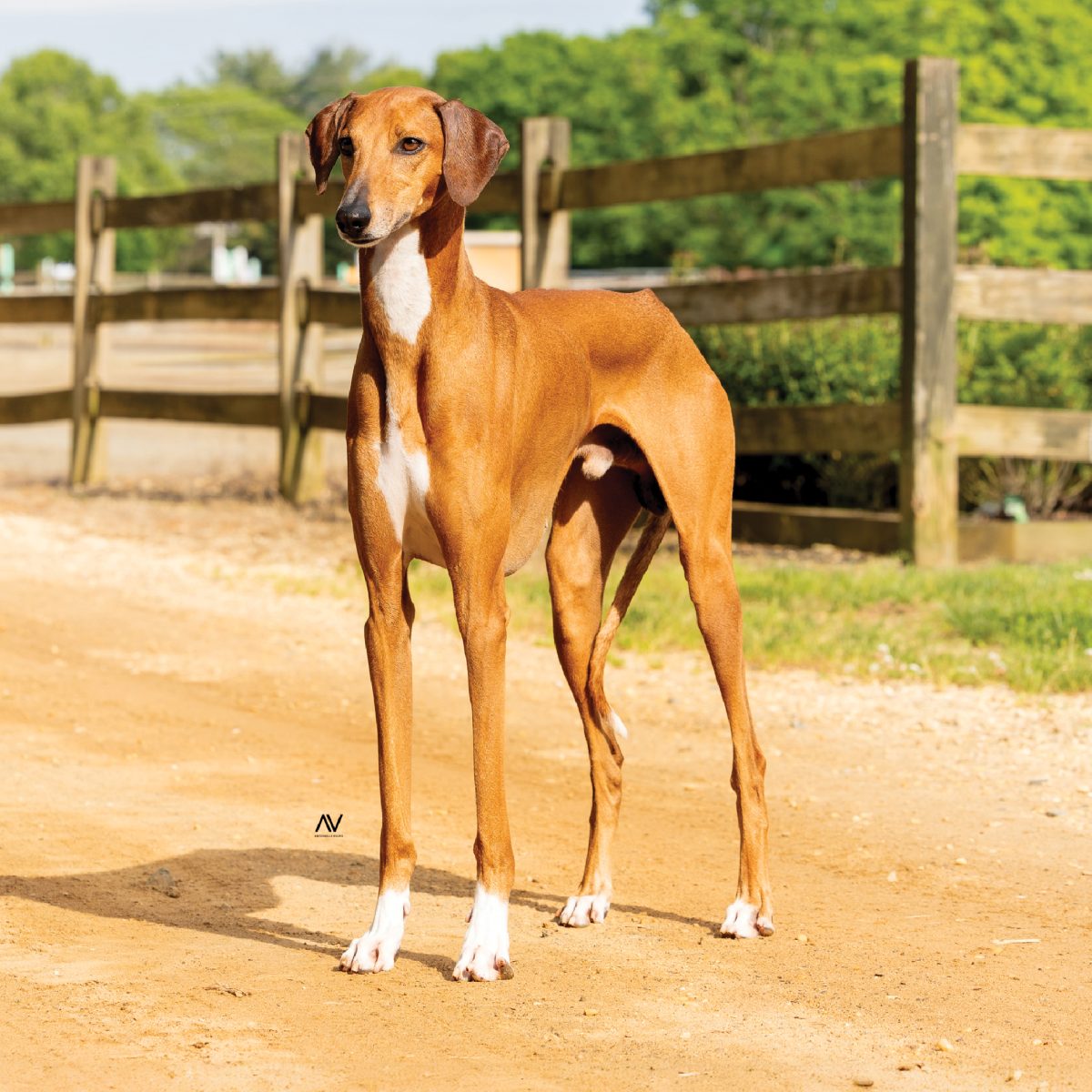
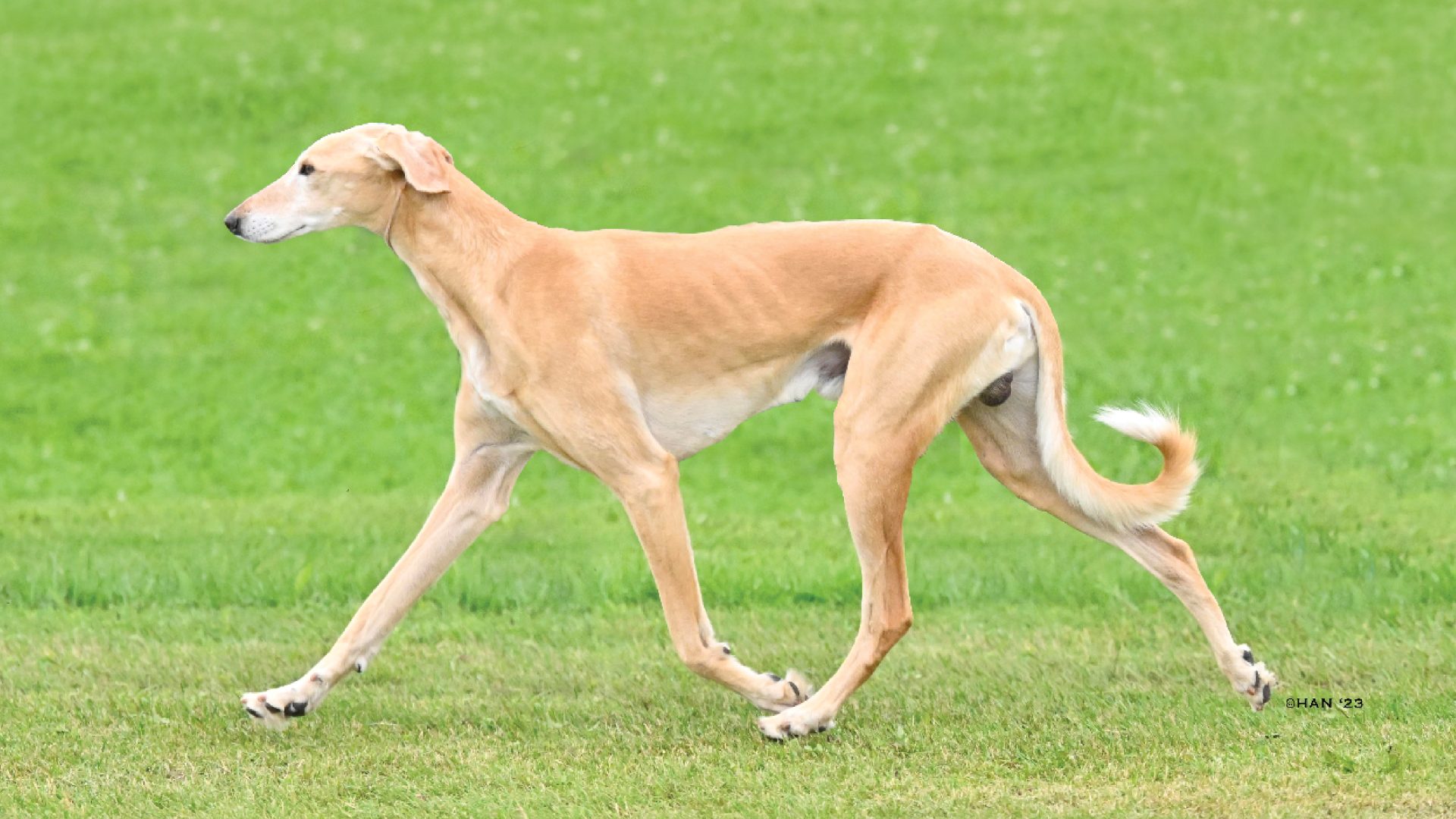
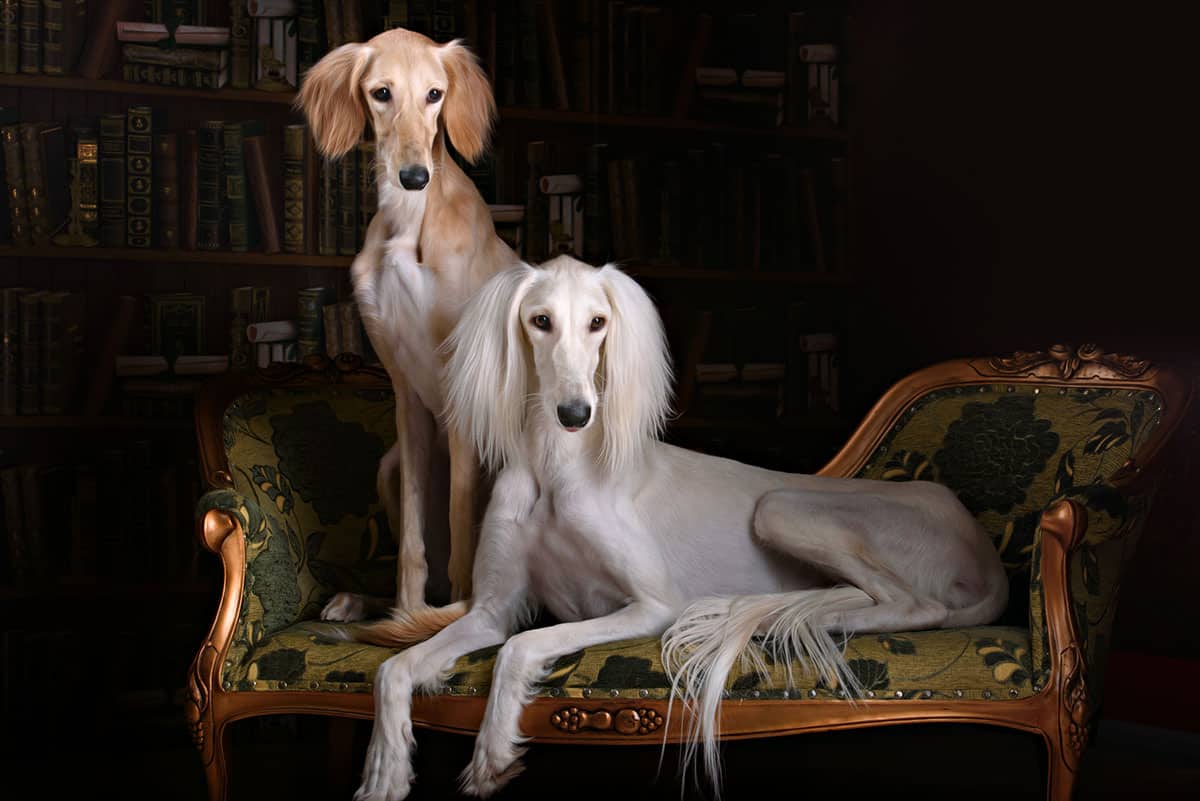
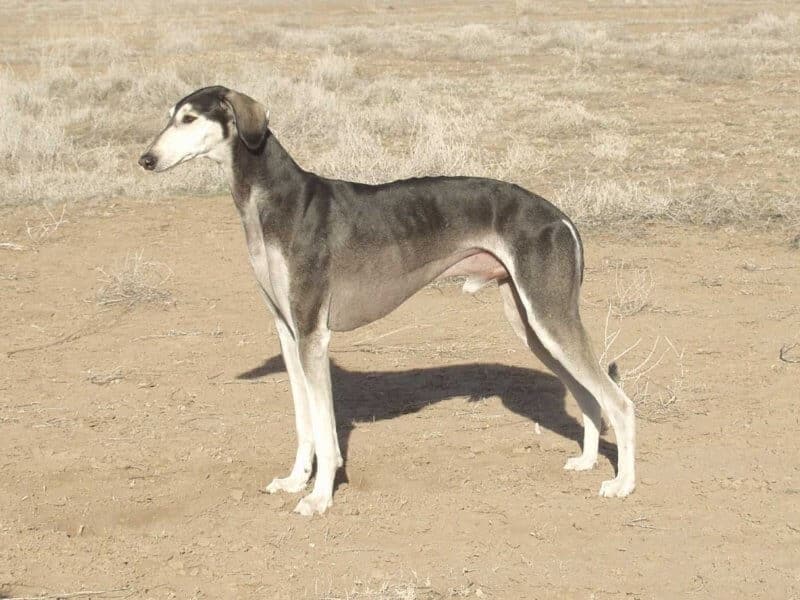
The Saluki is the embodiment of grace and symmetry. The breed's slender, elongated frame is well-proportioned, suggesting both strength and elegance. This sighthound is defined by its lightness and its swiftness. Its body is moderately deep, with a gently curved topline and a slight arch over the loin. When the Saluki is in motion, it is impossible not to be captivated by this sighthound’s effortless, fluid gait, a testament to its hunting heritage.
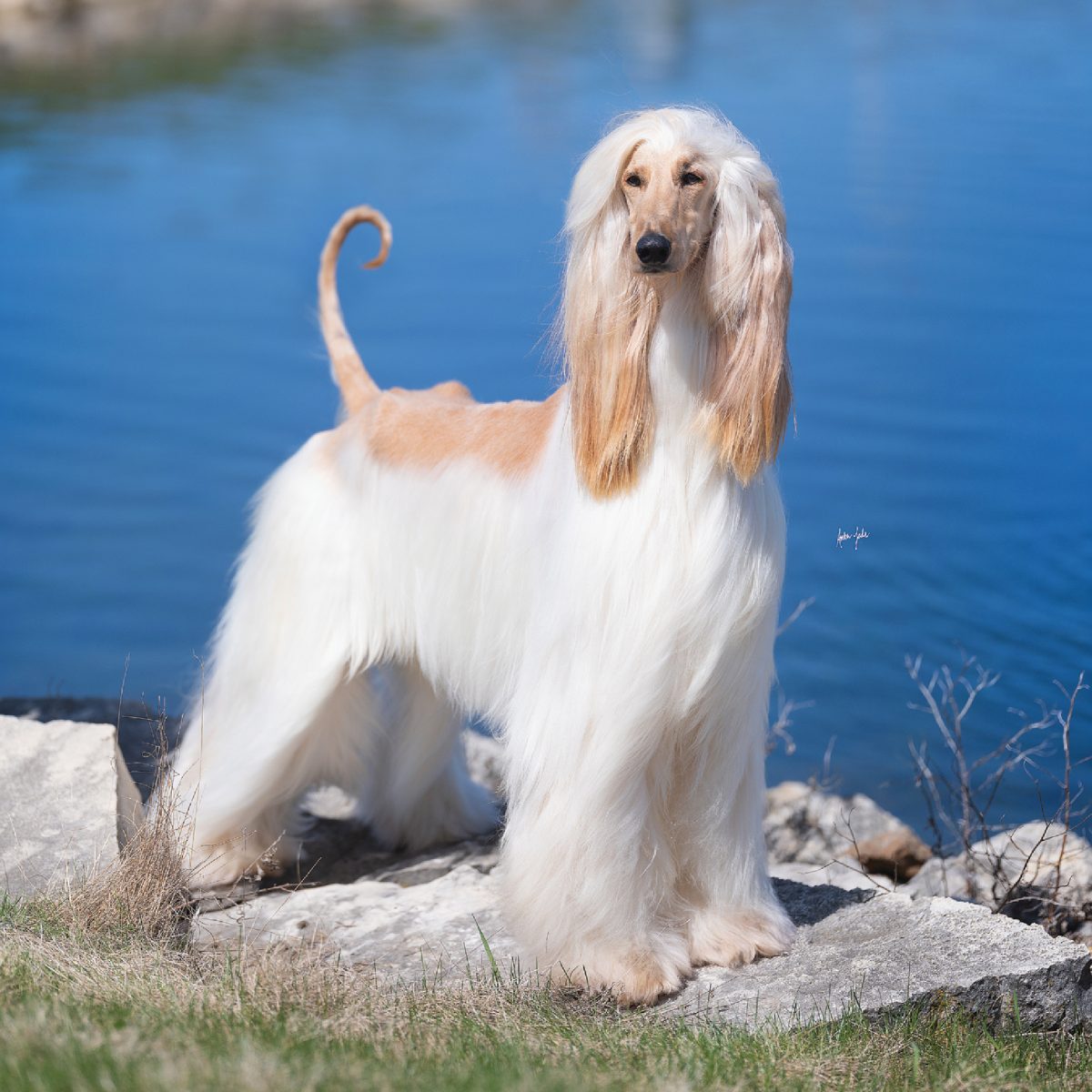
Texture: The Saluki has two coat types: smooth or feathered. Both variations are silky to the touch, exuding an air of elegance and refinement. The length of the smooth coat is consistently short over the body, although a slight “brush” on the tail is acceptable. The coat of the feathered variety, however, may vary in length from quite short to several inches in length. The hair is longer on the ears, neck, tail, back of the forelegs and thighs, between the toes, and sometimes on the thighs and shoulders, giving it a distinctly elegant appearance. Puppies can have “puppy fuzz” over the body, which generally disappears with the arrival of the adult coat. Adult Salukis, particularly the males, can have a neck ruff of longer hair.
Standard Colors
04/Consider
Choosing to bring a Saluki into the home is a commitment to understanding and appreciating a breed with ancient roots and unique needs. These hounds, referred to as the "Royal Dog of Egypt," possess a blend of grace, speed, and endurance, but with their regal appearance, they also come with specific responsibilities for their handlers and caretakers.
Interaction With Family
The level of affection a breed typically shows towards family members and familiar individuals.
Good With Other Dogs
The innate friendliness of a dog towards other dogs can depend on its breed.
Good With Young Children
The degree to which a breed will typically be patient with young children.
Amount Of Shedding
How much hair a breed typically leaves behind on clothes, furniture and floors.
Frequency Of Grooming
How often a breed needs brushing, bathing or a professional trim to stay in condition.
Amount Of Drooling
How prone a breed is to drool — worth knowing before you keep a towel by the door.
Openness To Strangers
How openly a breed tends to greet new people, visitors and strangers.
Protective Nature
How likely a breed is to alert you to — and stand between you and — anything unfamiliar.
Playfulness Level
How enthusiastic a breed stays about games and play well past puppyhood.
Trainability Level
How readily a breed takes direction and works with you rather than around you.
Barking Level
How much a breed uses its voice, and how readily.
Energy Level
How much get-up-and-go a breed brings to an average day.
Health
The Saluki is generally considered a robust and resilient breed, inheriting the lineage of a desert hunter built for stamina and speed. However, as with any dog, individuals can be prone to certain health issues. Lifespan: The average lifespan of a Saluki is around 10 to 17 years. With attentive care, many Salukis live comfortably in their golden years, still showcasing the grace and elegance that has been a hallmark of the breed for centuries.
The Saluki is a breed renowned for its dignified demeanor and ancient heritage. While these dogs have a reserved nature, they form deep bonds with their human companions, showcasing a loyalty that is both profound and enduring. They aren't typically suited for novice owners, however, as their independent spirit requires an understanding and patient caretaker who can appreciate and manage the hound unique traits.
Salukis have a moderate sensitivity level, which means they can be affected by their environment. Sudden changes can stress them out. These sighthounds cherish their quiet time and might not appreciate a chaotic household. However, this sensitivity also translates to their being incredibly intuitive and empathetic companions, often attuned to their human partner's emotions.
When it comes to socialization, Salukis typically exhibit selective behavior. They can be aloof with strangers, taking their time to warm up. However, once they decide someone is trustworthy, they can be quite affectionate. As for other dogs, they generally get along well, especially if they've been raised together. The Saluki's history as a hunting dog means it has an inherent pack mentality, but introductions to unfamiliar dogs should still be done with care.
The Saluki tends to be gentle with children, especially if it has been raised with them. The breed's calm disposition makes these hounds particularly good companions for older kids. However, due to their somewhat reserved nature, it is always a good idea to supervise interactions with very young children, and to teach the kids how to approach and handle the dog appropriately.
Exercise Expectations
Their energy level is moderate to high. While they cherish their relaxation moments indoors, they equally relish regular opportunities to run. This breed benefits from a combination of structured exercises, such as daily walks or jogs, and unstructured playtime in a safely enclosed area where they can sprint to their heart's content. The intensity of the exercise can vary based on their age and overall health. Younger Salukis might have bursts of energy, requiring more frequent play sessions, while seniors might be content with more leisurely walks and shorter playtimes. Playfulness is a characteristic trait of Salukis, especially during their younger years. Engaging them in interactive games, like fetch or agility training, not only caters to their exercise needs but also strengthens the bond between the dog and their human companion. It's worth noting that due to their slim build and thin coat, Salukis can be sensitive to extreme temperatures. On very hot days, it's best to exercise them during the cooler hours of the morning or evening. Similarly, in cold weather, they might require protective clothing to keep them comfortable.
The Saluki is a breed of contradictions. Inside the home, they present as refined and reserved, often seeking the most comfortable spot on the couch or bed. However, given their natural instincts, they come alive outdoors, showcasing their inherent athleticism and zest for life. For those sharing their lives with a Saluki, understanding and accommodating these dual aspects of their nature is essential.
When it comes to apartment living, Salukis can adjust quite well, provided their exercise needs are met diligently. Their generally calm and quiet demeanor indoors makes them suitable for such living arrangements. Still, they will need access to a safe open space where they can run and express their athletic tendencies. Ensuring they get the physical activity they need is crucial to prevent potential behavioral issues borne out of pent-up energy.
Salukis have a short, fine coat and lack an undercoat, making them more sensitive to extreme temperatures. In colder weather, they may require some protective clothing, like a coat or sweater, to keep them warm during outdoor excursions. Similarly, during hotter periods, it's wise to restrict their outdoor activity to cooler parts of the day, like early mornings or late evenings, to prevent overheating.
As previously mentioned, this breed values comfort. Soft bedding or a plush dog bed will be greatly appreciated by a Saluki. They enjoy their relaxation time and will often seek out the softest spot in the house to lounge.
05/Puppies
The allure of Saluki puppies is undeniable. With their soft, innocent expressions and playful antics, they can melt the heart of any onlooker. However, raising a Saluki puppy requires understanding and patience, as the foundation laid during the early months can significantly influence a puppy's development towards becoming a balanced, well-behaved adult.
Bringing a Saluki puppy into one's home is an exciting time, but it is also a period of significant responsibility. Each puppy is full of energy and curiosity, eager to explore its surroundings and engage with new family members. To ensure a pup grows up to become healthy and well-adjusted, certain aspects of its care need to be considered.
Nutrition plays a vital role in the development of a Saluki puppy. A balanced diet that is formulated specifically for the needs of growing puppies is crucial. This provides the essential nutrients required for rapid growth and development. Regular consultations with a veterinarian can help to determine the best dietary choices while monitoring the puppy's progress.
Socialization is another cornerstone of puppy care. The Saluki pup benefits immensely from early and varied social experiences. Exposing it to different environments and people, as well as other animals, in a controlled and positive manner can help to shape its temperament, making the hound more adaptable and confident as an adult.
Training should commence from a young age. While the Saluki is intelligent, the breed also has an independent streak. Using positive reinforcement techniques, such as treats and praises, can aid in building a strong bond while ensuring the puppy responds well to commands. Basic obedience training is important, and as the puppy grows, more advanced training can be introduced that recognizes to the breed's innate temperament.
Regular veterinary check-ups are essential to monitor the Saluki puppy's health and to ensure it receives timely vaccinations and preventive care. Being proactive in addressing any health concerns can make a significant difference in the puppy's growth and development.
06/Activities
Salukis, with their inherent athleticism and grace, naturally excel in a variety of Performance events. Participation not only offers an excellent outlet for the hounds' energy, it also strengthens the bond between the Saluki and its handler. Some of the dog sports enjoyed by Salukis include:
For those interested in exploring these activities with their Saluki, it's essential to start with proper training and ensure that any sport or event chosen is enjoyable and safe for the dog. Participation not only provides physical exercise but also mental stimulation, ensuring a well-rounded and fulfilled Saluki.
Gallery
07/Standards
The Saluki is recognized by the world's leading registries and kennel organizations, which categorize the breed into a specific Group based on its unique characteristics. This breed is recognized worldwide under the following Group designations:
The ideal Saluki is described by a Breed Standard that is approved by each of the world’s leading registries and kennel organizations. The Breed Standards for this breed may be found in the following links:
08/Clubs
09/Rescue
10/Facts
Ancient Lineage
The Saluki is among the world's oldest breeds of dogs. Depictions of Saluki-like canines have been discovered on ancient Sumerian carvings dating back to 7000 B.C.
Royal Companions
Historically, Salukis were considered a symbol of royalty and grace. Pharaohs in ancient Egypt often had them as companions, and their images appear frequently in ancient Egyptian artifacts.
Desert Adaptation
Originating in the Middle East, the Saluki is well-adapted to desert conditions. The thin coat and long legs help to dissipate heat, allowing these dogs to perform well in high temperatures.
Silent Hunter
The Saluki is a quiet worker. on the hunt. The dogs use their incredible sight to spot prey from a distance and pursue without making much noise.
Low Shedding
Salukis are low-shedding dogs. Their silky coat requires regular grooming to keep it in top condition, but they don't shed as heavily as some other breeds.
The Name
The breed's name, "Saluki," is believed to have been derived from the ancient Arabian city of Saluk, although its exact origins remain a subject of debate.
The Ridge
Some Salukis have a slight ridge of hair along their spine, which stands in contrast to the direction of the rest of their coat. This is a natural trait and not considered a fault.
11/FAQ
Salukis are generally considered low-shedding dogs. While they do shed, the amount is much less compared to many some other breeds. Regular grooming helps to remove any loose hair and to keep the silky coat in top condition.
Official Standard of the Saluki
Head: Long and narrow, skull moderately wide between the ears, not domed, stop not pronounced, the whole showing great quality. Nose black or liver. Ears Long and covered with long silky hair hanging close to the skull and mobile. Eyes Dark to hazel and bright; large and oval, but not prominent. Teeth Strong and level.
Neck: Long, supple and well muscled.
Chest: Deep and moderately narrow.
Forequarters: Shoulders sloping and set well back, well muscled without being coarse. Forelegs straight and long from the elbow to the knee.
Hindquarters: Strong, hipbones set well apart and stifle moderately bent, hocks low to the ground, showing galloping and jumping power.
Loin and Back: Back fairly broad, muscles slightly arched over loin.
Feet: Of moderate length, toes long and well arched, not splaying out, but at the same time not cat-footed; the whole being strong and supple and well feathered between the toes.
Tail: Long, set on low and carried naturally in a curve, well feathered on the underside with long silky hair, not bushy.
Coat: Smooth and of a silky texture, slight feather on the legs, feather at the back of the thighs and sometimes with slight woolly feather on the thigh and shoulder.
Colors: White, cream, fawn, golden, red, grizzle and tan, tricolor (white, black and tan) and black and tan.
General Appearance: The whole appearance of this breed should give an impression of grace and symmetry and of great speed and endurance coupled with strength and activity to enable it to kill gazelle or other quarry over deep sand or rocky mountains. The expression should be dignified and gentle with deep, faithful, far-seeing eyes. Dogs should average in height from 23 to 28 inches and bitches may be considerably smaller, this being very typical of the breed.
The Smooth Variety: In this variety the points should be the same with the exception of the coat, which has no feathering.
Approved November 1927


American Kennel Club (AKC)
Daniel Smyth shares insights from judging at the 2025 AKC National Championship, reflecting on preparation, quality, and a standout year.
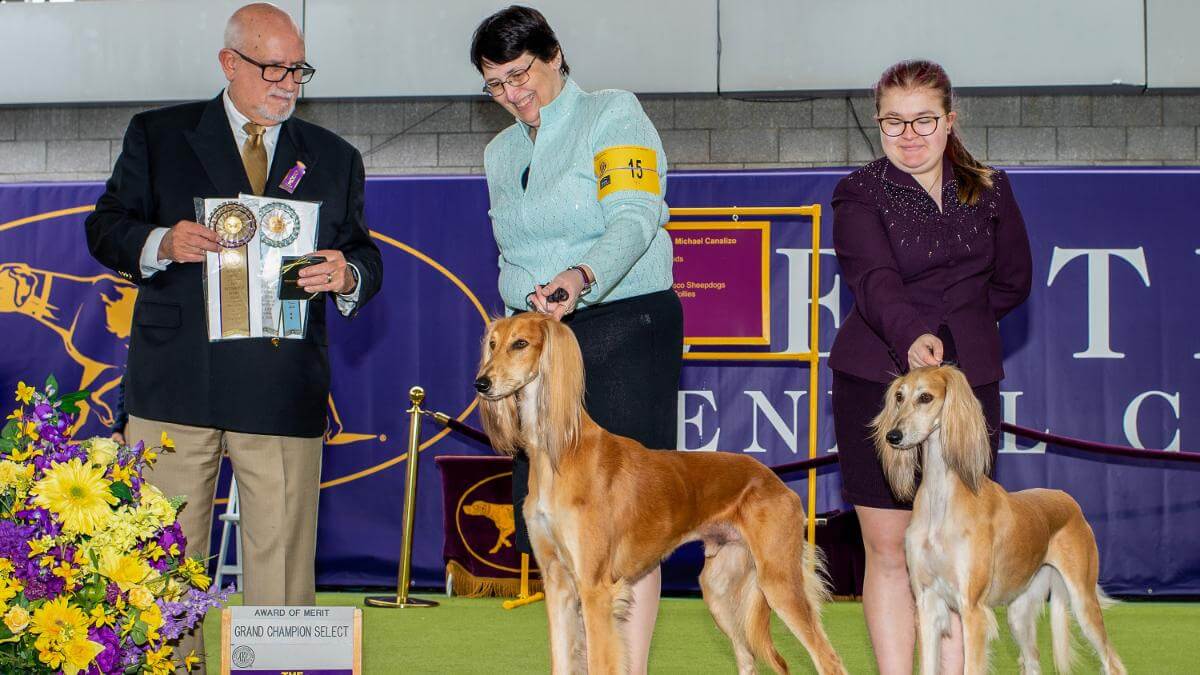

Meet the Breeders
Starlite Salukis champions functional, ethical breeding, mentorship, and tradition – preserving the timeless Saluki legacy.
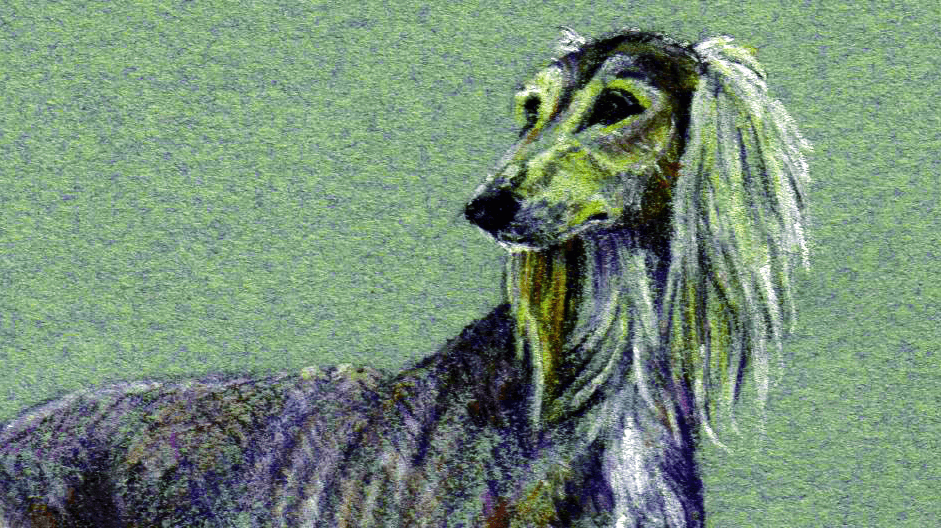
All About Judging
Gain insights into judging Salukis, a breed celebrated for its grace, speed, and enduring hunting prowess. Learn more.
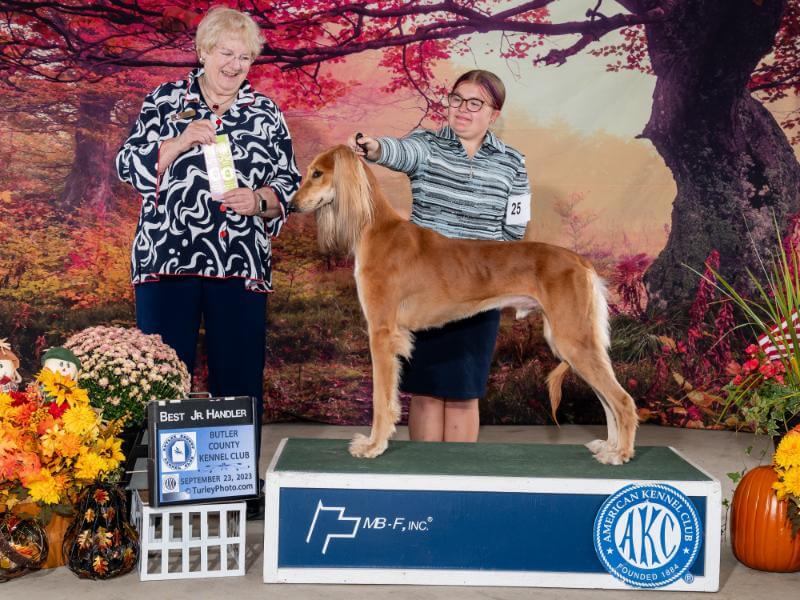

Meet the Junior Handlers
Mary Grace Kocab’s captivating journey as a Junior Handler—from Kirtland, Ohio, to national wins with Salukis.

Meet the Breeders
Lesley Brabyn is the breeder behind Timaru Kennels. Read about the kennel’s beginnings, the sires, the dams, the puppies, and much more!
All About Judging
Discover the intriguing history of the Saluki standard and unravel the missing elements in this captivating article. A must-read!
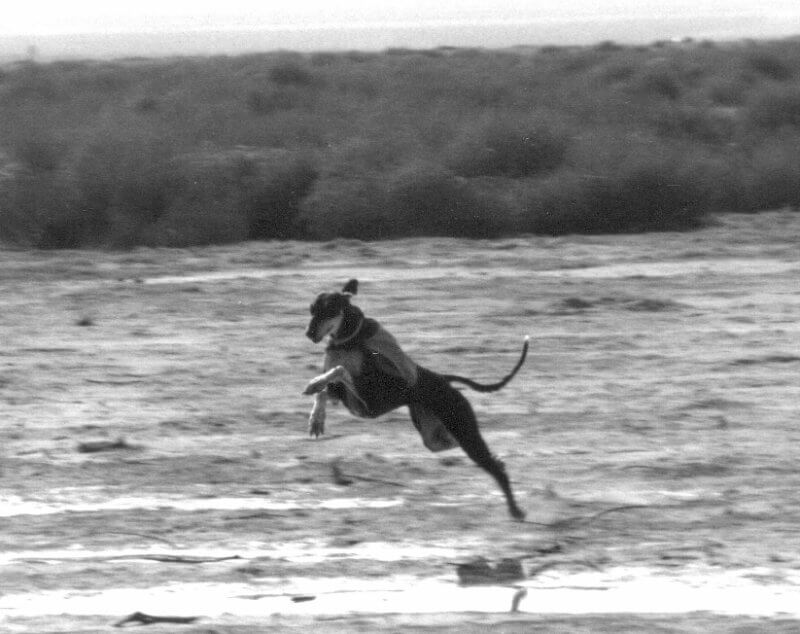
Explore Saluki’s essence and discover the key movement indicators: grace, symmetry, speed, endurance, strength, and nimbleness.
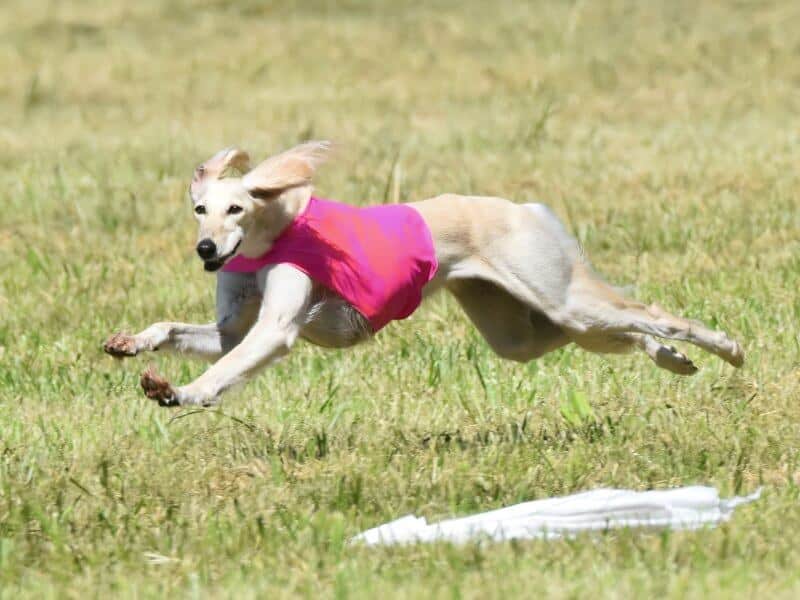

Lure Coursing
Follow Sophie’s remarkable journey in AKC Lure Coursing as a Saluki, showcasing the importance of evaluating sighthounds’ performance.

Explore the essence of the Saluki dog breed, preserving its moderate conformation and balanced characteristics.
The tail of the Saluki is long, set low, and carried naturally in a gentle curve. When the Saluki is in motion or excited, the tail may be elevated but doesn't curl over the back. It is well covered with hair, especially in the feathered variety where the hair is more pronounced, giving it a plume-like appearance. The tail's length and flexibility allow the Saluki to use it as a rudder during high-speed chases, aiding in balance and quick changes in direction.
Standard Markings
A Note About Color: Color is immaterial in the Saluki; however, brindle is a coloration that is not desired in the breed.
Coat Type
Smooth
The structure of the coat this breed carries.
Coat Length
Short
How long the breed's coat grows when kept in condition.
Adaptability Level
How easily a breed copes with changes in home, routine, noise and weather.
Mental Stimulation Needs
How much a breed needs a job, a puzzle or training to stay content.
Feeding a Saluki appropriately requires an understanding of their unique nutritional needs, which are shaped by their athletic build and historical role as desert hunters. The energy requirements of a Saluki can vary based on their age, activity level, and individual metabolism.
When it comes to Saluki puppies, their rapid growth means they need a diet rich in essential nutrients. High-quality puppy food is crucial during this phase to support their developing bones and muscles. Splitting their daily food intake into multiple smaller meals can aid digestion and prevent overeating.
As Salukis transition into adulthood, their dietary needs change. Adult Salukis, depending on their activity level, typically require a balanced diet formulated for medium to large breeds. It's essential to monitor their weight and adjust their food portions accordingly to prevent obesity, as an overweight Saluki can face numerous health issues.
The average Saluki might consume between 2 to 2.5 cups of high-quality dog food daily, split into two meals. However, it's always wise to consult with a veterinarian regarding the specific amount, as factors like age, activity level, and health can influence their dietary needs.
Fresh water should always be accessible to Salukis. Their slender build and active nature mean they can get dehydrated quickly, especially in warmer climates. Regularly checking their water dish and keeping it clean ensures they remain hydrated and healthy.
Training a Saluki can be both a rewarding and challenging endeavor due to their independent and sometimes aloof nature. These dogs are intelligent, but they possess a free spirit that hails from their long history as desert hunters. This means that while they can grasp commands and lessons quickly, they might also choose when to obey based on their mood or distractions in their environment.
Salukis aren't known for excessive barking. However, if left alone for extended periods or if they become bored, they might vocalize their displeasure. Providing them with enough mental and physical stimulation can mitigate such behaviors.
Their intelligence is undeniable. Salukis are quick learners and can excel in obedience training if it's made engaging for them. Positive reinforcement methods, such as treats or praise, often work best with this breed. Harsh training methods or scolding can be counterproductive, causing the Saluki to become more reserved or even distant.
A trait to be mindful of is their strong prey drive. Salukis have an innate desire to chase, stemming from their days as hunting dogs in the deserts of the Middle East. This means they might be tempted to chase smaller animals, and having them off-leash in an unfenced area can be risky.
Salukis are not typically prone to wandering, but their curiosity and hunting instincts can sometimes get the better of them. Secure fencing and a watchful eye during outdoor activities can help manage this trait.
Grooming Expectations
Salukis possess a smooth coat on most parts of their body, complemented by feathering on their ears, tail, and sometimes legs. This feathering, while adding to their regal appearance, can get tangled or matted if not attended to. Regular brushing, about two to three times a week, with a soft-bristle brush or a pin brush, can help in detangling the feathering and removing any loose hair or debris. Shedding in Salukis is typically low to moderate. While they don't shed excessively like some breeds, periodic shedding is natural. Regular brushing not only keeps their coat in top condition but also minimizes the amount of hair they leave around the home. Bathing a Saluki doesn't have to be frequent. Given their thin coat and skin, it's crucial not to strip their natural oils, so bathing should be done only when necessary, perhaps once every few months or if they get particularly dirty. When bathing, always use a dog-specific shampoo that's gentle on their skin. Apart from coat care, other grooming essentials include regular nail trimming, ear cleaning, and dental care. Salukis, like all breeds, can develop ear infections if moisture or debris accumulates in their ears. Checking and cleaning their ears weekly with a vet-approved solution can help prevent this. Additionally, dental hygiene practices such as brushing their teeth or providing dental chews can aid in maintaining good oral health.