Members
01/Overview
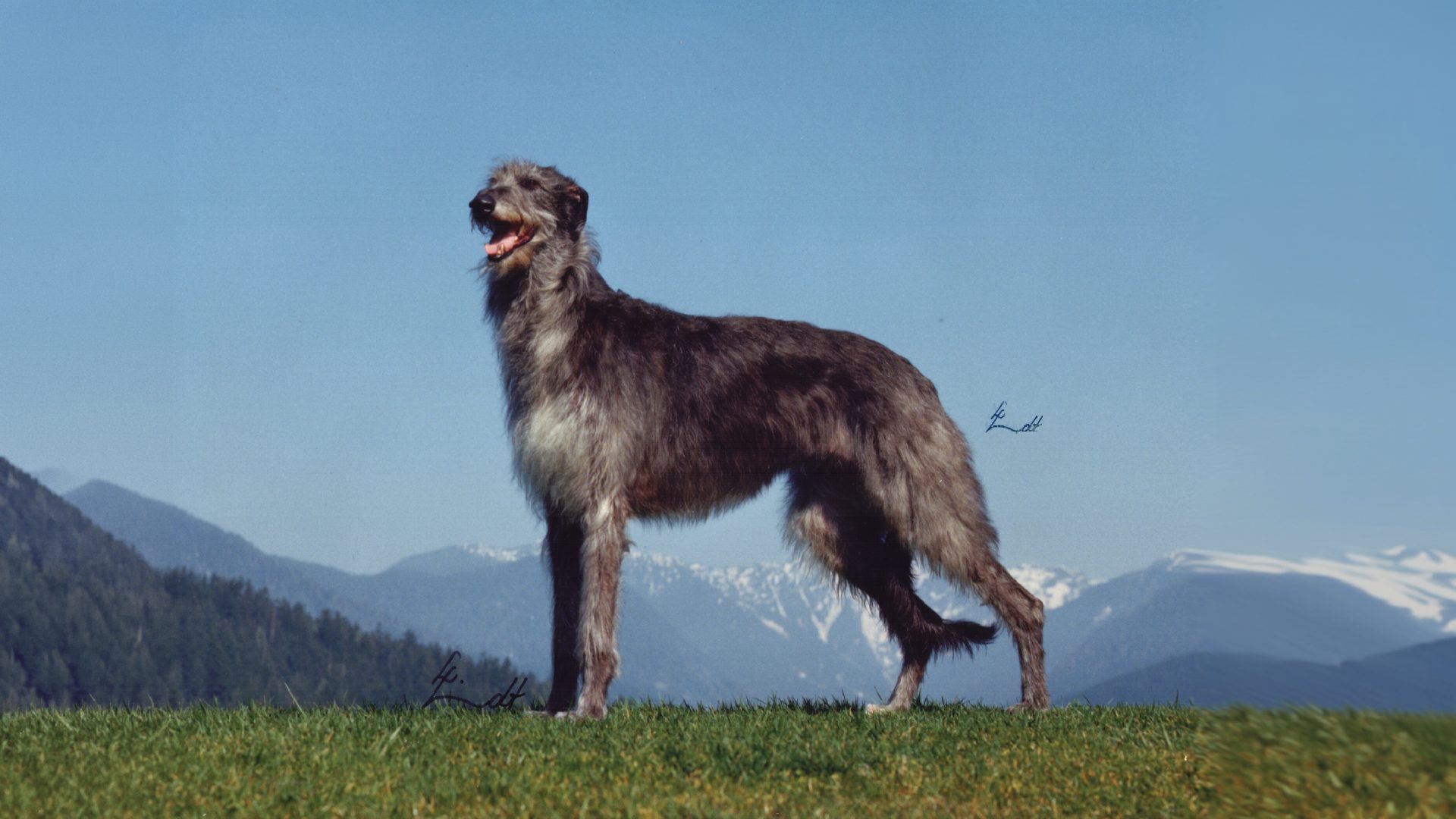
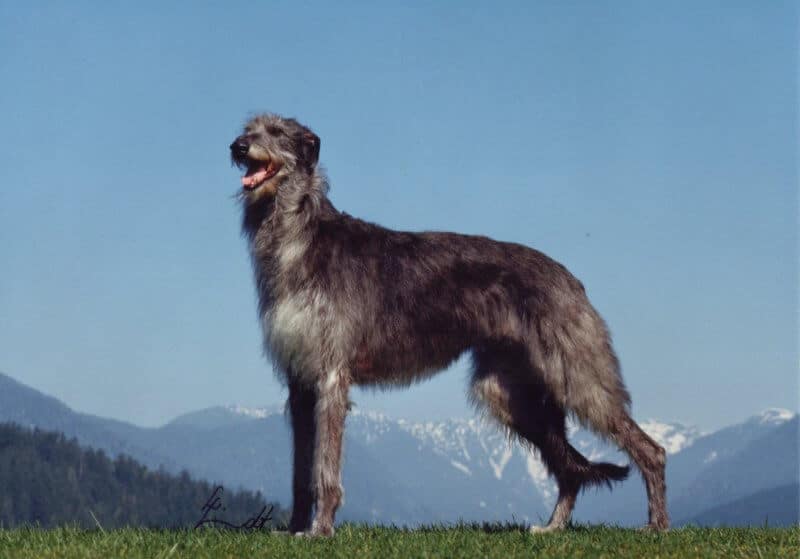
The Scottish Deerhound, sometimes simply known as the Deerhound, is a majestic and ancient breed known for its regal appearance and gentle disposition. Originally bred for pursuing red deer, this sighthound is characterized by a wiry coat, long limbs, and a very dignified demeanor.
Highlights
02/History
The Scottish Deerhound, referred to as the "Royal Dog of Scotland," boasts a history that is as captivating as its regal appearance would suggest. This ancient breed has graced the Scottish highlands for centuries, serving as a trusted companion of nobles and a proficient hunter of fleet-footed quarry.
As a member of the sighthound family of dogs, the breed's ancestors are believed to have been brought to the British Isles by the Phoenicians and Romans. Those early hounds were interbred with local dogs, resulting in the development of this hound's coursing predecessors.
The primary purpose of the Deerhound was to course deer, a task for which the hound's speed, endurance, and size had it ideally suited. Unlike other hunting breeds that relied on scent, Deerhounds used their keen eyesight to spot and chase down their quarry across the rugged Scottish landscape.
By the Middle Ages, the Scottish Deerhound had gained significant prominence, especially among chieftains and nobles. The breed's prowess in hunting, and their dignified demeanor, made them highly coveted. So much so that, at one point, laws restricted the ownership of Deerhounds to only those of noble birth.
Sadly, as firearms became the preferred method of hunting, the need for Deerhounds diminished. By the 18th century, their numbers had dwindled alarmingly. However, passionate enthusiasts, recognizing the breed's historical importance and its many unique qualities, undertook efforts to revive the breed.
The 19th century saw a resurgence in the Deerhound's popularity, thanks to dedicated breeding programs. The breed gained official recognition by various kennel clubs and registries, further securing its place within the dog world. The American Kennel Club (AKC) officially recognized the Scottish Deerhound in 1886, and it was also recognized by the Fédération Cynologique Internationale (FCI) in 1955.
Today, while not as widespread as some other breeds, the Scottish Deerhound is cherished by breed enthusiasts and families alike, not just for its hunting abilities but also for its gentle nature and dedication to its people.
03/Appearance
Adult male Scottish Deerhounds typically stand at a height of 30 to 32 inches at the shoulder, while mature females typically measure at least 28 inches tall.
As for weight, males tend to weigh between 85 and 110 pounds, with females weighing slightly less, ranging from 75 to 95 pounds.
Scottish Deerhounds exhibit a harmonious balance between length and height, a proportion that beautifully combines strength and elegance. The breed's overall body is somewhat elongated, with its length slightly longer than the dog's height at the shoulders. This gives the Deerhound its characteristic agile and streamlined appearance, one that is perfectly suited for high-speed pursuits. Substance-wise, the Deerhound possesses a robust and athletic build, with strong bones that contribute to its formidable nature while hunting.
Texture: The Scottish Deerhound’s coat is harsh and crisp to the touch. It is thick, close-lying, and rather ragged in appearance. The length on the neck and body, as well as on the fore and hindquarters, measures from 3 to 4 inches in length. A mustache, beard, and eyebrows are present, as is a slight fringe on the insides of the forelegs and thighs. The coat of a Scottish Deerhound provides ample protection in inclement weather.
Markings: White Markings
Standard Colors
04/Consider
Owning a Scottish Deerhound can be a rewarding experience. This breed, steeped in hunting history with a noble lineage, offers a unique combination of gentleness and strength. However, there are several considerations that potential caretakers should be aware of before deciding to welcome a Deerhound into the home.
Interaction With Family
The level of affection a breed typically shows towards family members and familiar individuals.
Good With Other Dogs
The innate friendliness of a dog towards other dogs can depend on its breed.
Good With Young Children
The degree to which a breed will typically be patient with young children.
Amount Of Shedding
How much hair a breed typically leaves behind on clothes, furniture and floors.
Frequency Of Grooming
How often a breed needs brushing, bathing or a professional trim to stay in condition.
Amount Of Drooling
How prone a breed is to drool — worth knowing before you keep a towel by the door.
Openness To Strangers
How openly a breed tends to greet new people, visitors and strangers.
Protective Nature
How likely a breed is to alert you to — and stand between you and — anything unfamiliar.
Playfulness Level
How enthusiastic a breed stays about games and play well past puppyhood.
Trainability Level
How readily a breed takes direction and works with you rather than around you.
Barking Level
How much a breed uses its voice, and how readily.
Energy Level
How much get-up-and-go a breed brings to an average day.
Health
The Scottish Deerhound, like all dogs, has specific health concerns that prospective owners of the breed should be made aware. Although these hounds are generally healthy dogs, their large size and unique conformation mean they may be prone to certain conditions. Lifespan: The average lifespan of the Scottish Deerhound ranges from 8 to 11 years. While some may live beyond these years, it is important to provide the best care to ensure both longevity and quality of life.
When considering the personality of the Scottish Deerhound, one is immediately struck by their gentle and dignified nature. Belying their imposing size, Deerhounds are often described as calm, courteous, and keenly perceptive.
For those wondering if the breed is suitable for novice handlers, the answer is largely affirmative. Scottish Deerhounds, due to their even-tempered disposition, can be quite forgiving of a handler's missteps. That being said, like all breeds, they benefit from consistent and understanding guidance.
In terms of sensitivity level, Deerhounds are attuned to the emotions and nuances of their human companions. They thrive in an environment of mutual respect and can become withdrawn if treated harshly.
Being alone is something the Scottish Deerhound can tolerate for short periods, but they are social creatures by nature. Extended isolation can lead to feelings of loneliness or even anxiety.
When it comes to relations with other dogs, Deerhounds usually get along well, especially if they are introduced in a controlled and positive manner. Their history as pack hunters means they often appreciate the company of their canine counterparts.
Families with young children will find the Scottish Deerhound to be patient and gentle. However, due to their size, it's always recommended to supervise interactions between any large dog and small children.
As for their stance towards strangers, Deerhounds tend to be reserved but not aggressive. A well-socialized Deerhound will be polite and may warm up to newcomers once they've assessed them.
Exercise Expectations
Their exercise needs are moderate to high. Regular daily walks combined with opportunities to run in a secure area will keep them physically and mentally stimulated. While they certainly enjoy lounging at home, without adequate exercise, they can become restless or even display unwanted behaviors. In terms of energy level, the Scottish Deerhound is a mix of bursts of speed and long periods of rest. They are known for their impressive sprinting abilities, a nod to their historical role as chasers. When given an opportunity in a safe, enclosed area, they love to stretch their legs in a fast run. The intensity of their exercise should be balanced. While they benefit from rigorous activity, it's essential not to overexert them, especially in hot weather. A combination of walks, play sessions, and free runs will ensure they get a well-rounded exercise regimen. Playfulness is another characteristic trait of the Deerhound. They can be quite spirited and playful, especially during their younger years. Engaging in games like fetch or tug-of-war can be an excellent way for them to expend energy and bond with their human companion.
Living with a Scottish Deerhound is a unique experience, one that's filled with moments of both calm introspection and playful exuberance. Their majestic and dignified presence often belies their affectionate and gentle nature.
When considering apartment living, the Deerhound can adapt, provided they receive adequate exercise. Despite their size, they are known for being calm indoors, often choosing a favorite spot to lounge. However, given their preference for stretching their legs, a home with a spacious yard is ideal.
In terms of weather adaptability, their wiry coat offers protection from cooler climates, making them well-suited to cold weather. They can enjoy outdoor activities in chillier conditions, but it's essential to monitor them to ensure they don't become too cold, especially during extreme conditions. Conversely, in hot weather, care should be taken. Their thick coat can make them prone to overheating. During warmer months, exercise should be scheduled during the cooler parts of the day, and they should always have access to fresh water and shade.
Overall, while the Deerhound can be adaptable to various living conditions, they thrive best when their physical and emotional needs are met. A combination of space to run, regular interaction with their human companion, and a comfortable resting place makes for a content Scottish Deerhound.
05/Puppies
Welcoming a litter of Scottish Deerhound puppies into the world is an exciting journey that brings with it an excess of playful antics, boundless curiosity, and the formation of lifelong bonds. These puppies, with their large paws and expressive eyes, are endearing and can quickly capture the hearts of their human companions. They do, however, come with certain responsibilities.
Proper care during a Scottish Deerhound puppy's early months is crucial to ensure it grows into a healthy and well-adjusted adult. The foundations for its future temperament, health, and behavior are laid during this period.
Nutrition is paramount at this time. Each puppy will have specific dietary needs to support its rapid growth. It is vital , therefore, to provide a high-quality puppy food that meets the nutritional requirements for large breeds. Regular veterinary check-ups will ensure a puppy is gaining weight appropriately and will allow it to receive the necessary vaccinations.
Socialization is another critical aspect of raising a Deerhound puppy. Introducing the pup to a variety of people, places, sounds, and other animals in a positive manner will help it develop into a confident and well-rounded adult. Positive experiences during the early months can shape the puppy's outlook for the rest of it life.
Training should begin early, even if it is just the basic commands. As mentioned, Deerhounds are sensitive and respond best to gentle, positive reinforcement methods. Building a bond of trust and understanding during puppy training sessions will prove invaluable as the hound grows.
Regular play sessions and moderate exercise are essential for the puppy's physical and mental development. However, intense physical activities should be limited, as young bones and joints are still developing.
Lastly, setting routines for feeding, potty breaks, and sleep will help the Deerhound puppy to feel secure, and they will aid in housebreaking and crate training.
06/Activities
The Scottish Deerhound, with its rich history of chasing and coursing, naturally excels in activities that tap into its innate talents and energy. While these hounds are not the most hyperactive of breeds, they do enjoy structured activities that challenge both their body and mind. Some of the dog sports enjoyed by Deerhounds include:
Engaging a Scottish Deerhound in various activities and dog sports is beneficial for their physical health, mental stimulation, and the strengthening of the bond between dog and handler. Not only does it offer them a constructive outlet for their energy, but it also allows them to shine in areas where their natural talents are celebrated.
Gallery
07/Standards
The Scottish Deerhound is recognized by the world's leading registries and kennel organizations, which categorize the breed into a specific Group based on its unique characteristics. This breed is recognized worldwide under the following Group designations:
The ideal Scottish Deerhound is described by a Breed Standard that is approved by each of the world’s leading registries and kennel organizations. The Breed Standards for this breed may be found in the following links:
08/Clubs
09/Rescue
10/Facts
Literary Mention
Sir Walter Scott, a renowned Scottish novelist, once described the Scottish Deerhound as "the most perfect creature of heaven."
Noble Companions
Historically, ownership of Scottish Deerhounds was once restricted to the noble class. This exclusivity led to the breed being highly prized and coveted by aristocrats.
Cinematic Stars
Scottish Deerhounds have made appearances in various films and television shows, showcasing the breed's regal appearance and rather serene demeanor.
Natural Hunters
Though known for a gentle nature, the Deerhound's hunting instinct takes over outdoors. Bred primarily to hunt red deer, these hounds perform in the field with unmatched grace and efficiency.
Gentle Giants
Despite their large size, Scottish Deerhounds are known for their gentle and friendly disposition, often described as calm and docile when they are not in pursuit of prey.
Sleep Lovers
Like many large breeds, Scottish Deerhounds enjoy their rest and can often be found lounging around. This makes them surprisingly good companions for less active individuals and families.
11/FAQ
No, Scottish Deerhounds and Irish Wolfhounds are not the same, although they can be confused due to their somewhat similar appearance. Both breeds have a long history in the British Isles, but they were bred for different purposes. While the Deerhound was primarily used for hunting red deer, the Wolfhound was bred for hunting wolves and for guarding duties.
Official Standard of the Scottish Deerhound
Head: Should be broadest at the ears, narrowing slightly to the eyes, with the muzzle tapering more decidedly to the nose. The muzzle should be pointed, but the teeth and lips level. The head should be long, the skull flat rather than round with a very slight rise over the eyes but nothing approaching a stop. The hair on the skull should be moderately long and softer than the rest of the coat. The nose should be black (in some blue fawns-blue) and slightly aquiline. In lighter colored dogs the black muzzle is preferable. There should be a good mustache of rather silky hair and a fair beard.
Ears: Should be set on high; in repose, folded back like a Greyhound's, though raised above the head in excitement without losing the fold, and even in some cases semi-erect. A prick ear is bad. Big thick ears hanging flat to the head or heavily coated with long hair are bad faults. The ears should be soft, glossy, like a mouse's coat to the touch and the smaller the better. There should be no long coat or long fringe, but there is sometimes a silky, silvery coat on the body of the ear and the tip. On all Deerhounds, irrespective of color of coat, the ears should be black or dark colored.
Neck and Shoulders: The neck should be long-of a length befitting the Greyhound character of the dog. Extreme length is neither necessary nor desirable. Deerhounds do not stoop to their work like the Greyhounds. The mane, which every good specimen should have, sometimes detracts from the apparent length of the neck. The neck, however, must be strong as is necessary to hold a stag. The nape of the neck should be very prominent where the head is set on, and the throat clean cut at the angle and prominent. Shoulders should be well sloped; blades well back and not too much width between them. Loaded and straight shoulders are very bad faults.
Tail: Should be tolerably long, tapering and reaching to within 1½ inches of the ground and about 1½ inches below the hocks. Dropped perfectly down or curved when the Deerhound is still, when in motion or excited, curved, but in no instance lifted out of line of the back. It should be well covered with hair, on the inside, thick and wiry, underside longer and towards the end a slight fringe is not objectionable. A curl or ring tail is undesirable.
Eyes: Should be dark-generally dark brown, brown or hazel. A very light eye is not liked. The eye should be moderately full, with a soft look in repose, but a keen, far away look when the Deerhound is roused. Rims of eyelids should be black.
Body: General formation is that of a Greyhound of larger size and bone. Chest deep rather than broad but not too narrow or slab-sided. Good girth of chest is indicative of great lung power. The loin well arched and drooping to the tail. A straight back is not desirable, this formation being unsuited for uphill work, and very unsightly.
Legs and Feet: Legs should be broad and flat, and good broad forearms and elbows are desirable. Forelegs must, of course, be as straight as possible. Feet close and compact, with well-arranged toes. The hindquarters drooping, and as broad and powerful as possible, the hips being set wide apart. A narrow rear denotes lack of power. The stifles should be well bent, with great length from hip to hock, which should be broad and flat. Cowhocks, weak pasterns, straight stifles and splay feet are very bad faults.
Coat: The hair on the body, neck and quarters should be harsh and wiry about 3 or 4 inches long; that on the head, breast and belly much softer. There should be a slight fringe on the inside of the forelegs and hind legs but nothing approaching the "feather" of a Collie. A woolly coat is bad. Some good strains have a mixture of silky coat with the hard which is preferable to a woolly coat. The climate of the United States tends to produce the mixed coat. The ideal coat is a thick, close-lying ragged coat, harsh or crisp to the touch.
Color: Is a matter of fancy, but the dark blue-gray is most preferred. Next come the darker and lighter grays or brindles, the darkest being generally preferred. Yellow and sandy red or red fawn, especially with black ears and muzzles, are equally high in estimation. This was the color of the oldest known strains-the McNeil and Chesthill Menzies. White is condemned by all authorities, but a white chest and white toes, occurring as they do in many of the darkest-colored dogs, are not objected to, although the less the better, for the Deerhound is a self-colored dog. A white blaze on the head, or a white collar, should entirely disqualify. The less white the better but a slight white tip to the stern occurs in some of the best strains.
Height: Height of Dogs - From 30 to 32 inches, or even more if there be symmetry without coarseness, which is rare. Height of Bitches - From 28 inches upwards. There is no objection to a bitch being large, unless too coarse, as even at her greatest height she does not approach that of the dog, and therefore could not be too big for work as overbig dogs are.
Weight: From 85 to 110 pounds in dogs, and from 75 to 95 pounds in bitches.
Points of the Deerhound, Arranged in Order of Importance 1. Typical-A Deerhound should resemble a rough-coated Greyhound of larger size and bone. 2. Movements-Easy, active and true. 3. As tall as possible consistent with quality. 4. Head-Long, level, well balanced, carried high. 5. Body-Long, very deep in brisket, well-sprung ribs and great breadth across hips. 6. Forelegs-Strong and quite straight, with elbows neither in nor out. 7. Thighs-Long and muscular, second thighs well muscled, stifles well bent. 8. Loins-Well arched, and belly well drawn up. 9. Coat-Rough and hard, with softer beard and brows. 10. Feet-Close, compact, with well-knuckled toes. 11. Ears-Small (dark) with Greyhound-like carriage. 12. Eyes-Dark, moderately full. 13. Neck-Long, well arched, very strong with prominent nape. 14. Shoulders-Clean, set sloping. 15. Chest-Very deep but not too narrow. 16. Tail-Long and curved slightly, carried low. 17. Teeth-Strong and level. 18. Nails-Strong and curved.
Disqualification: White blaze on the head, or a white collar.
Approved March, 1935


Meet the Owner Handlers
Lori Chowning shares her journey as an Owner Handler, highlighting NOHS success and the joy of showing her dog, Balfour.

American Kennel Club (AKC)
Debbie Melgreen reflects on judging Hound breeds at the 2025 AKC National Championship, sharing highlights, depth of quality, and gratitude.

Meet the Breeders
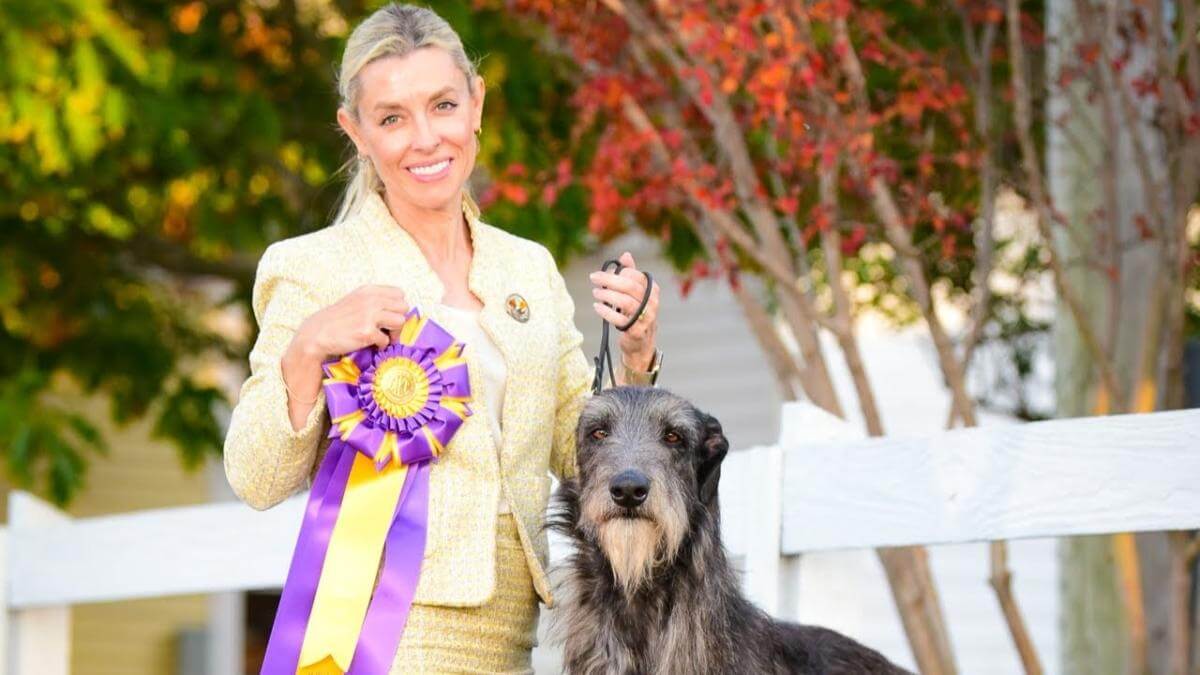
Lynne Lozano of Iron Gate shares her passion for Scottish Deerhounds, breeding challenges, and hopes for the sport’s future.
Meet the Breeders
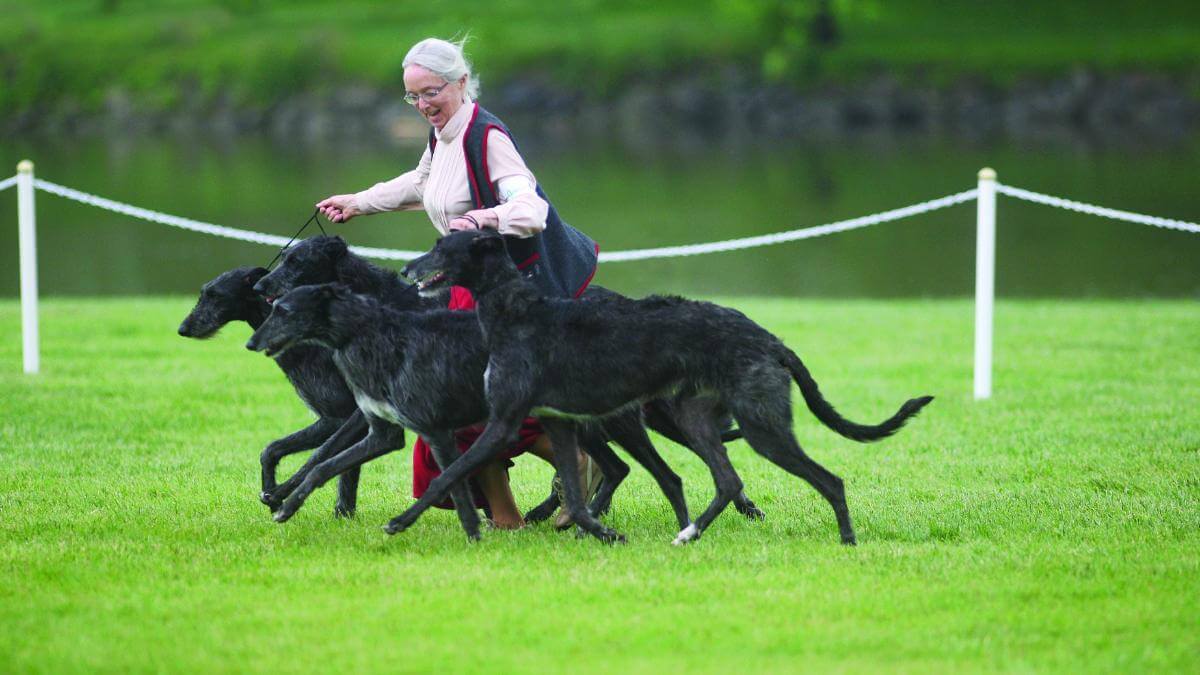
Barbara Heidenreich of Fernhill reflects on 50 years in Scottish Deerhounds, breeding for function, health, and historic type.
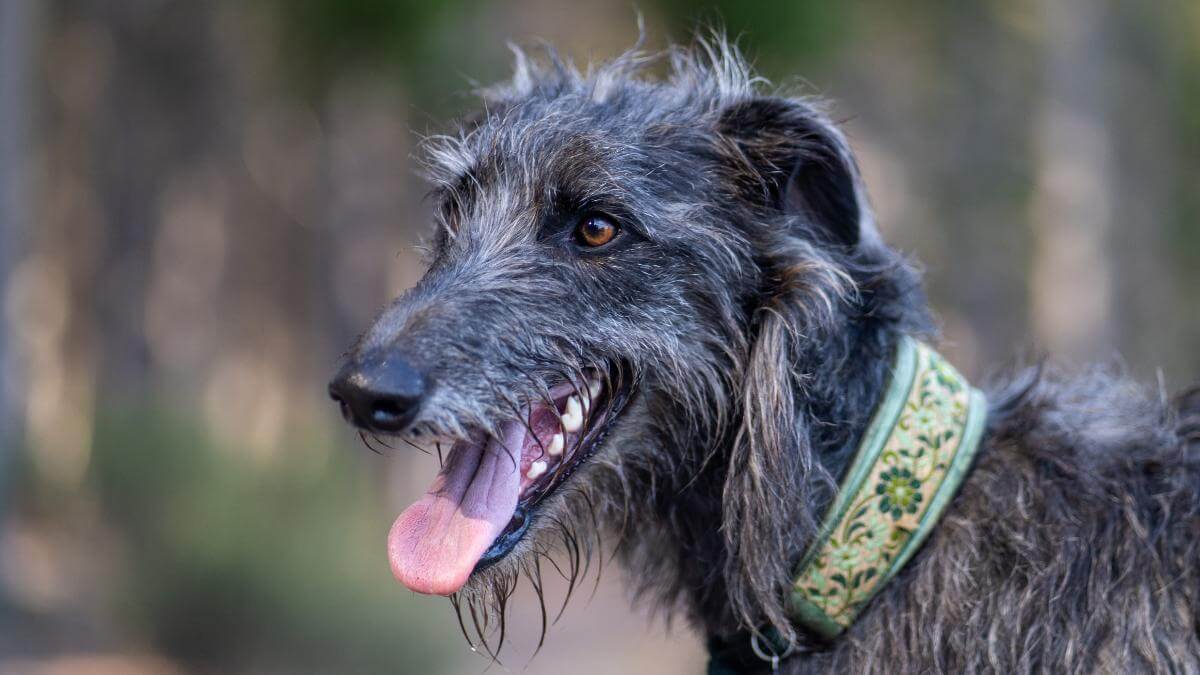
Learn about the history, standards, and dedicated breed clubs of the Scottish Deerhound, including its evolution and preservation.
Profiles & Interviews
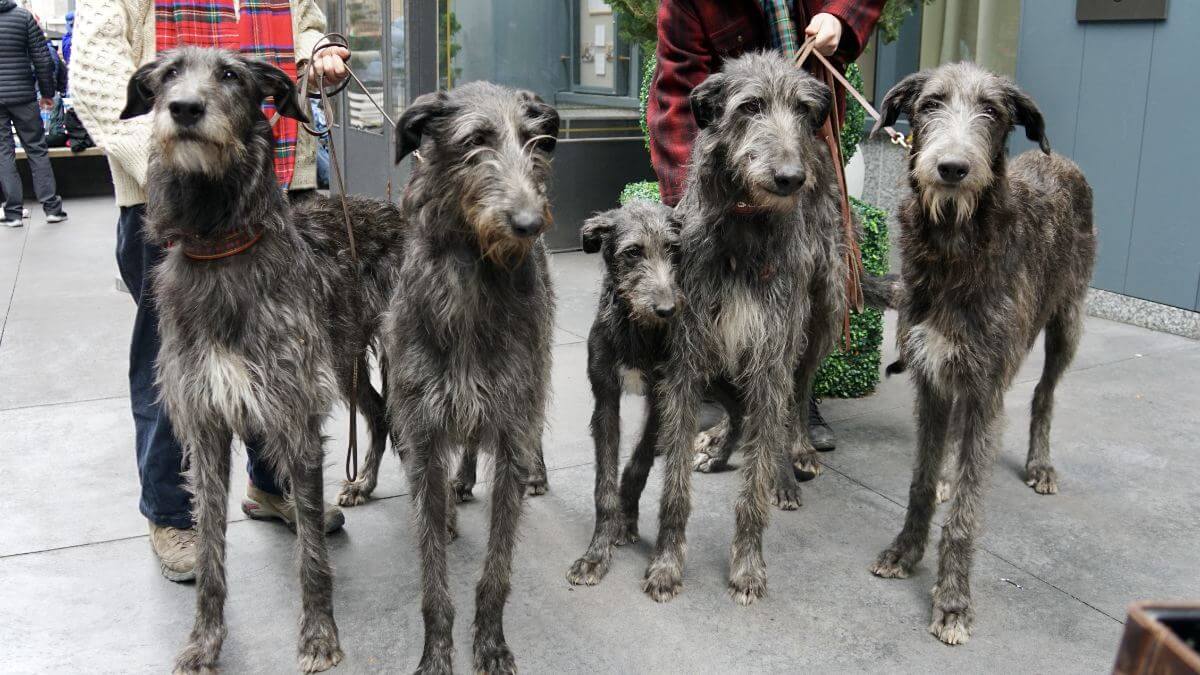
Discover the joy of Scottish heritage at the 2024 Tartan Day Parade, featuring bagpipers, dancers, and adorable Scottish dog breeds.
Meet the Breeders
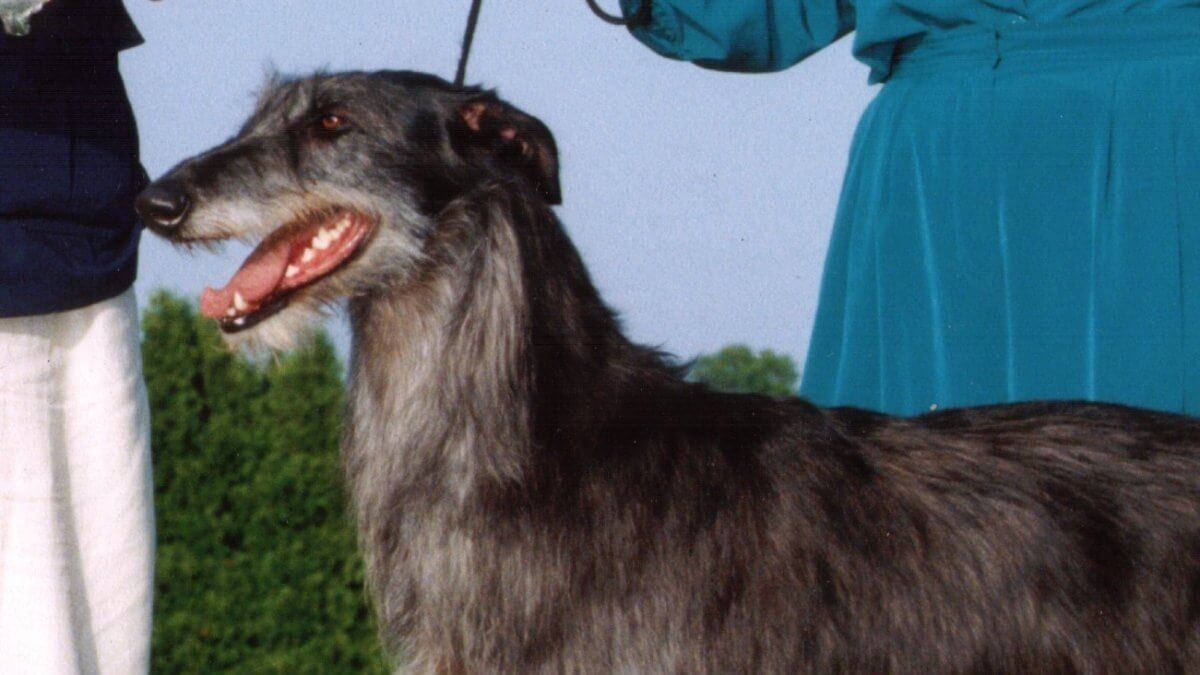
Interview with Barb Heidenreich, breeder of Fernhill Scottish Deerhounds. Read about the kennel’s beginnings, achievements, and much more!
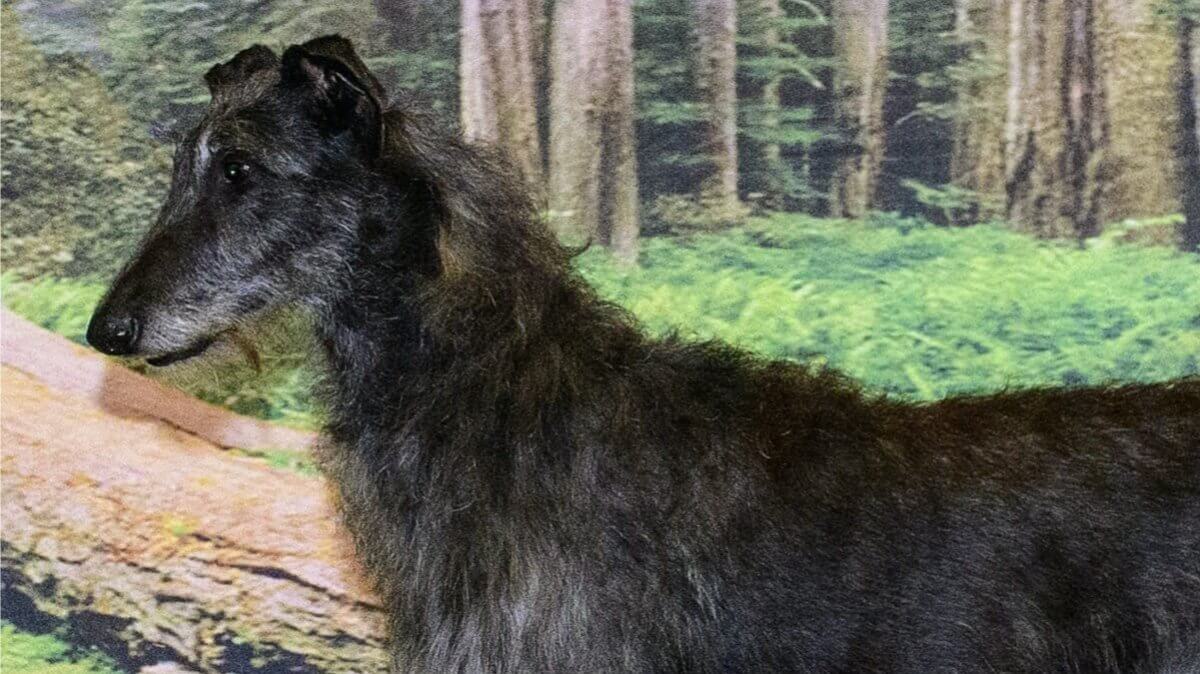
Explore the legacy of Scottish Deerhounds, reflecting on the breed’s beauty, athleticism, and history of lure coursing and show rings.
All About Judging
The Scottish Deerhound, often known as the Deerhound, is a large sighthound breed that was originally developed for coursing red deer.
The tail of the Scottish Deerhound is a distinguishing breed feature, characterized by its long length, tapering form, and curve. Broad at the base, the tail tapers to a fine point and reaches below the hocks. When the Deerhound is relaxed or in motion, the tail is carried low, with just a slight upward curve at the tip.
The tail serves as a good indicator of the dog's mood, swishing gently when the Deerhound is content and raising slightly when the dog is excited or alert. However, it should not be curled or held over the back. The tail is covered with hair that is slightly longer than that of the neck but shorter than the body coat. It should never be feathered.
Historically, the tail's length and strength were essential during the hunt, as these qualities aided the hound while it was pursuing its prey. Due to these qualities, however, the tail may be prone to injury in and around the house.
A Note About Color: In terms of color, a blue-gray coat is preferred; however, darker and lighter grays and brindles may be seen, the darker the tone the better. Most other historic colors, including black-masked varieties, are no longer seen in the breed. A small amount of white on the chest, the tail tip, and/or the toes is acceptable, but a white collar or white blaze is not.
Coat Type
Wiry, Double
The structure of the coat this breed carries.
Coat Length
Medium
How long the breed's coat grows when kept in condition.
Adaptability Level
How easily a breed copes with changes in home, routine, noise and weather.
Mental Stimulation Needs
How much a breed needs a job, a puzzle or training to stay content.
The nutritional needs of a Scottish Deerhound can vary based on age, activity level, and individual health. However, a balanced diet is the cornerstone for their well-being.
For a Scottish Deerhound puppy, a high-quality puppy formula is essential. As they are a larger breed, growth should be slow to ensure the proper development of bones and joints. Typically, Deerhound puppies are fed 3-4 times a day, transitioning to twice daily feeding as they approach adulthood.
An adult Scottish Deerhound requires a diet that can support its energy levels and size. A typical adult might consume 3-4 cups of high-quality dog food daily, split into two meals. This can fluctuate depending on the dog's activity level and metabolism.
It's always crucial for owners to monitor their dog's weight. Overfeeding can lead to obesity, which in turn can result in numerous health issues. On the flip side, underfeeding or not providing the right nutrients can lead to deficiencies or other health problems.
Treats can be a valuable training tool, but they should be used in moderation. Always ensure that treats are not accounting for more than 10% of their daily caloric intake. Fresh water should always be accessible for the Deerhound, ensuring they stay hydrated.
Lastly, when changing their diet, it should be done gradually over a week to prevent digestive upsets. This involves mixing the old and new food, gradually increasing the proportion of the new food day by day.
The Scottish Deerhound, with its noble lineage and dignified demeanor, might present an impression of independence. However, beneath this stately exterior lies a breed that is eager to please and relatively compliant, making them quite trainable.
That said, Deerhounds, by nature, are gentle souls. They respond best to positive reinforcement methods and can be somewhat resistant to more assertive techniques. The key is patience, consistency, and understanding.
Training a Scottish Deerhound can be a relatively smooth process. Although they aren't known for being stubborn, their sensitive nature means that handlers should approach training sessions with kindness and positivity. Utilizing treats, praises, and gentle corrections often yield better results with this breed than stern rebukes.
When it comes to vocalizing, Deerhounds are not typically barkers. They might alert their handler to something unusual, but they aren't known for being overly vocal.
In terms of intelligence, the Scottish Deerhound is sharp and observant. While they might not have the hyper-focus of some working breeds, they are astute and often pick up on cues quickly.
The breed's wanderlust potential is worth noting. As sighthounds, they have a strong instinct to chase, so it's essential to provide them with a secure environment. An unenclosed space can be tempting for a Deerhound if they spot something worth chasing.
Regarding predation, their historical role as deer hunters means they have a high prey drive. It's a trait deeply embedded in their DNA. While they are generally well-behaved and can be trained to recall, it's always recommended to be cautious when they are off-leash, especially in an area with potential prey.
Grooming Expectations
Grooming a Deerhound is relatively straightforward. Their coat doesn't have the tendency to mat or tangle excessively, but it's still beneficial to brush them once or twice a week. This helps remove loose hairs, keeps the coat clean, and distributes natural oils throughout the fur, promoting a healthy sheen. In terms of shedding, Scottish Deerhounds are moderate shedders. Regular brushing can help minimize the amount of hair around the home, and during seasonal changes, when shedding might increase, it's advisable to brush them more frequently. Beyond coat care, it's important for owners to regularly check their ears for any signs of infection or wax buildup. Nails should be trimmed every few weeks to prevent overgrowth and potential cracking. Dental hygiene, often overlooked, is crucial. Brushing their teeth or providing dental chews can help prevent tartar buildup and gum disease. While the Scottish Deerhound doesn't require frequent baths, it's beneficial to bathe them when they become particularly dirty or have an unpleasant odor. Using a dog-specific shampoo will ensure their skin doesn't become dry or irritated.