01/Overview
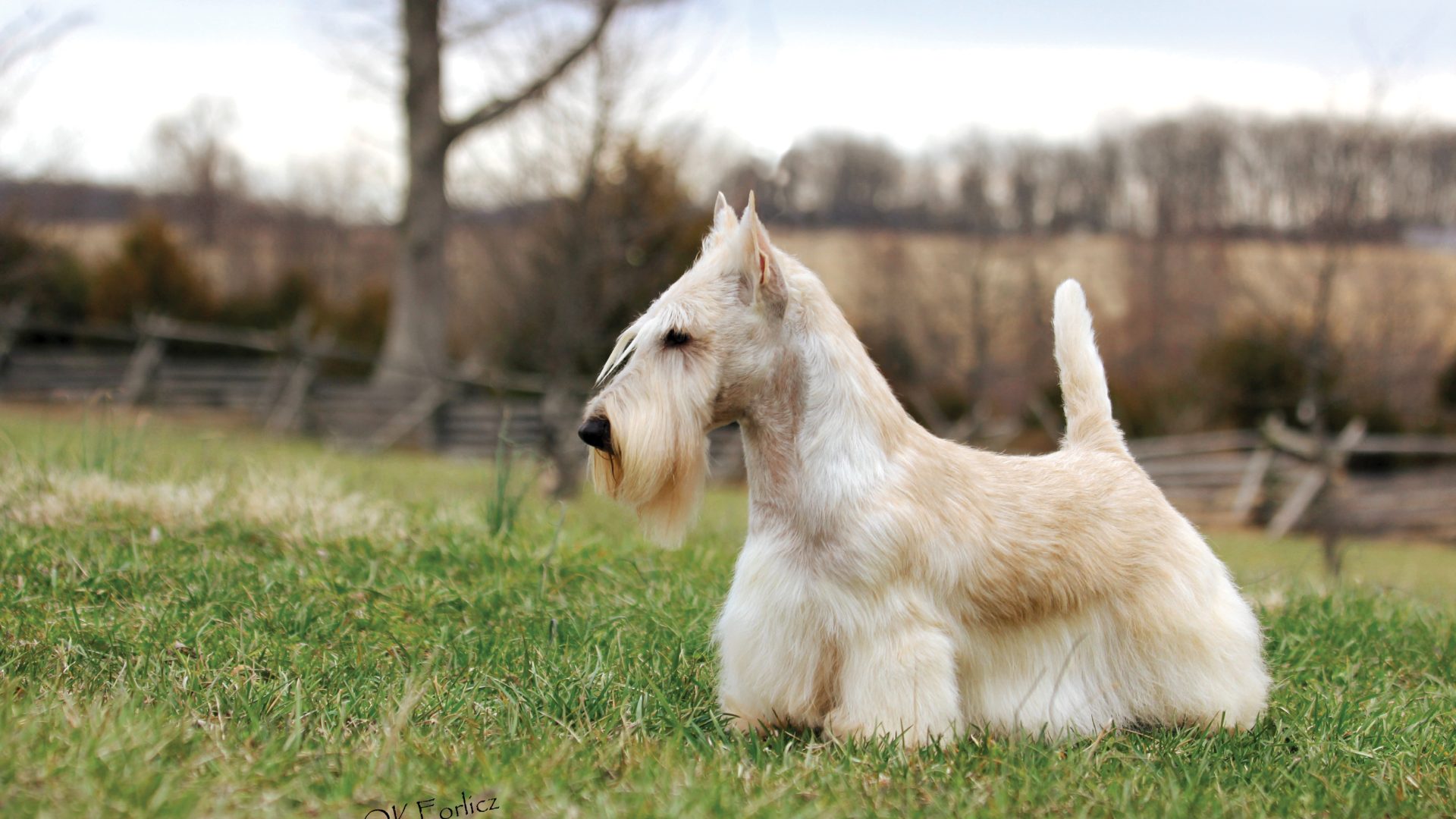
The Scottish Terrier, affectionately known as the "Scottie," is a breed that epitomizes determination and confidence. Characterized by its distinctive profile and dignified demeanor, this breed has a storied history as a skilled vermin hunter and hardy companion. Originating from the rugged terrain of Scotland, the breed is cherished today not only for its hunting prowess but also for its rugged and independent nature. Compact and sturdy, Scotties possess a charm that appeals to both show enthusiasts and pet people alike.
Highlights
02/History
The Scottish Terrier dog breed boasts a heritage rich in history and character. This breed's journey from Scotland's rugged landscapes to the hearts of dog lovers worldwide is a testament to its enduring appeal.
Originating in Scotland, Scottish Terriers were initially bred for their prowess in hunting and vermin control. Their compact size and agile physique made them ideal for navigating the rough terrain of the Scottish Highlands. The breed's early history saw them lumped together with other terriers of the region, but by the late 19th century, efforts were made to distinguish and refine the Scottish Terrier as a distinct breed.
The rise of the Scottish Terrier is marked by the development of specific breeding programs in the late 1800s. These programs were dedicated to enhancing the breed’s unique characteristics, including its robust build, distinctive coat, and bold personality. The breed’s standardization was a significant step in establishing its identity separate from other terrier types native to Scotland.
Scottish Terriers gained widespread popularity in the United Kingdom, capturing the imagination of dog enthusiasts with their courage, confidence, and distinctive appearance. Their charm soon crossed the Atlantic, leading to a surge in popularity in the United States. The breed was one of the early members of the American Kennel Club's Terrier Group, receiving official recognition in 1885.
The breed's stature grew further in the United States, particularly when several U.S. Presidents chose Scottish Terriers as their companions, elevating the breed's profile in American culture. Despite the changes in breeding practices and shifts in popularity over the years, the Scottish Terrier has remained a symbol of determination and rugged charm.
Throughout its history, the Scottish Terrier has been celebrated for its unique character and steadfast loyalty. Whether in the show ring or as a beloved family pet, the Scottie continues to be a favorite for its distinctive personality and appearance. The breed's history, from its origins in the Scottish Highlands to its current status as a cherished companion, highlights the enduring legacy of the Scottish Terrier.
03/Appearance
Adult Scottish Terriers typically stand about 10 inches tall at the shoulder. In terms of weight, males generally weigh between 19 to 22 pounds, with females usually in the range of 18 to 21 pounds.
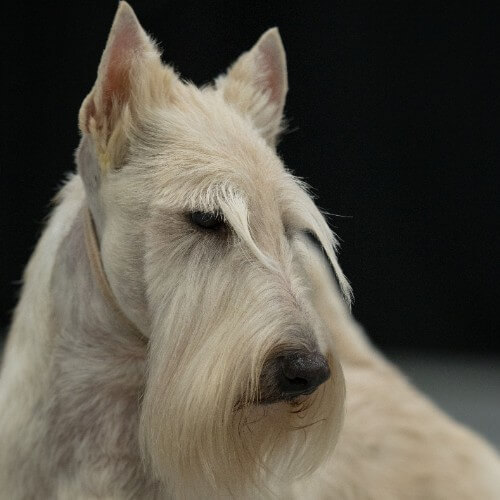
The Scottish Terrier boasts a compact body with a robust bone structure, endowing it with a solid and substantial feel. Proportionally, the Scottish Terrier is longer than it is tall, measured from the back of the withers to the set-on of the tail and from the top of the withers to the ground. These proportions contribute to the breed’s distinctive gait, which combines power and vigor with smoothness and fluidity. Substantial bone, coupled with a muscular build, endows the Scottie with remarkable strength and agility, qualities that are essential for a breed historically bred for digging and hunting vermin.
Texture: The Scottish Terrier's coat is a distinctive breed feature, notable for its unique “broken” texture. It boasts a hard, wiry outer coat and a soft, dense undercoat. This dual layer not only gives the breed its characteristic appearance, it also serves as protection against harsh weather and rough terrain. The coat is typically trimmed (by hand), blending the topcoat with the longer furnishings to create the breed’s classic silhouette which is enhanced by longer coat on the beard, eyebrows, lower body, and legs.
Standard Colors
04/Consider
Owning a Scottish Terrier, known for its distinct personality and dignified demeanor, is a rewarding experience for dog lovers. However, it’s important to understand the unique characteristics and needs of this breed to ensure a harmonious relationship between the dog and its human companion. Scottish Terriers, with their independent nature and strong-willed temperament, require an owner who can provide firm, consistent training and a structured environment.
Interaction With Family
The level of affection a breed typically shows towards family members and familiar individuals.
Good With Other Dogs
The innate friendliness of a dog towards other dogs can depend on its breed.
Good With Young Children
The degree to which a breed will typically be patient with young children.
Amount Of Shedding
How much hair a breed typically leaves behind on clothes, furniture and floors.
Frequency Of Grooming
How often a breed needs brushing, bathing or a professional trim to stay in condition.
Amount Of Drooling
How prone a breed is to drool — worth knowing before you keep a towel by the door.
Openness To Strangers
How openly a breed tends to greet new people, visitors and strangers.
Protective Nature
How likely a breed is to alert you to — and stand between you and — anything unfamiliar.
Playfulness Level
How enthusiastic a breed stays about games and play well past puppyhood.
Trainability Level
How readily a breed takes direction and works with you rather than around you.
Barking Level
How much a breed uses its voice, and how readily.
Energy Level
How much get-up-and-go a breed brings to an average day.
Health
Scottish Terriers are generally hardy and robust dogs, known for their longevity and resilience. However, as with any breed, they can be prone to certain health conditions that potential owners should be aware of. It is essential to engage with reputable breeders who conduct health screenings and to maintain regular veterinary check-ups to monitor and maintain the health of your Scottish Terrier. The average lifespan of a Scottish Terrier is around 12 years. With attentive care, a nutritious diet, and regular exercise, many Scottish Terriers can enjoy a full and healthy life, often surpassing the average lifespan.
The personality of the Scottish Terrier is as distinctive as its appearance. Known for their independent and somewhat stubborn nature, these dogs possess a charm that is both endearing and challenging. Their strong-willed character means they often do best with experienced dog owners who understand the nuances of terrier temperaments.
Scottish Terriers are not typically recommended for novice dog owners, as they require consistent and patient training. Their sensitivity level is moderate; they respond well to positive reinforcement but can become withdrawn if treated harshly. While they can enjoy periods of solitude, Scottish Terriers also thrive on interaction and should not be left alone for extended periods.
When it comes to socializing with other dogs, Scottish Terriers can be selective. Early socialization is key to helping them develop good canine manners. They are generally good with older children who understand how to interact with dogs respectfully, but their tolerance may not extend to very young, energetic children.
In terms of their friendliness towards strangers, Scottish Terriers can be aloof. They are loyal to their family and can be reserved around new people, often sizing up strangers before deciding to engage with them.
Owners of Scottish Terriers should be prepared for a dog with a strong personality, one that requires understanding, patience, and a sense of humor to fully appreciate all the qualities that make this breed so unique.
Exercise Expectations
Their exercise needs are moderate. A couple of brisk walks each day, along with some playtime, usually suffices to keep a Scottish Terrier healthy and content. These activities not only cater to their physical health but also provide essential mental stimulation. Playful interactions, such as fetch or tug-of-war, are particularly enjoyed by this breed and serve to strengthen the bond between the dog and its owner. While Scottish Terriers are energetic, the intensity of their exercise should not be overly strenuous. They enjoy activities that are engaging but don't typically require or tolerate highly intense workouts. It's important to consider each individual dog's health, age, and fitness level when planning their exercise routine. The playful nature of Scottish Terriers can't be overstated. They relish opportunities to play and interact with their human companions. This aspect of their exercise regime is crucial for their emotional well-being. Regular play sessions help keep them mentally sharp and emotionally satisfied.
Living with a Scottish Terrier can be a delightful experience, but it's important to consider their specific needs to provide a harmonious household. These dogs are adaptable to various living environments, but like all breeds, they have certain preferences and requirements.
Apartment living is generally suitable for Scottish Terriers. They are small enough to fit comfortably in smaller spaces and do not require a large yard. However, their moderate energy level means they still need daily exercise and mental stimulation. Regular walks and play sessions are essential, even in an apartment setting, to keep them happy and prevent boredom.
In terms of weather tolerance, Scottish Terriers have a dense double coat that provides them with good insulation. This makes them fairly tolerant of cold weather. They enjoy brisk walks in cooler temperatures, but it's important to monitor them to make sure that they don't get too cold, especially in extreme conditions.
Conversely, their tolerance for hot weather is somewhat lower due to their thick coat. In warmer climates or during hot weather, it's crucial to make sure that they don't overheat. Providing access to shade, fresh water, and avoiding intense exercise during the hottest parts of the day will help keep them comfortable.
When considering bringing a Scottish Terrier into your home, it's also important to think about their strong-willed and independent nature. They can be territorial and may require training to manage any tendencies towards stubbornness or possessiveness. Early socialization and consistent training are key to helping them become well-adjusted members of the family.
05/Puppies
Welcoming a Scottish Terrier puppy into your home is an exciting journey filled with challenges and joys. These puppies are energetic, curious, and often full of spunk, embodying the breed's characteristic traits from an early age. It's important for new owners to understand the specific needs of Scottish Terrier puppies to help them grow into well-adjusted, healthy adult dogs.
Caring for Scottish Terrier puppies involves several key aspects. Firstly, nutrition is crucial; they require a balanced diet formulated for small-breed puppies. This diet should support their rapid growth and development in their first months. Puppies have higher energy needs than adults, so feeding them small, frequent meals is recommended.
Early socialization and exposure to a variety of people, sounds, and experiences are essential in shaping a well-behaved adult Scottish Terrier. This breed can be somewhat reserved and independent, so early socialization helps to build confidence and ease in different situations.
Training should begin as soon as a puppy comes home. Scottish Terriers are intelligent and capable of learning quickly, but they can also be stubborn. Consistent, positive reinforcement methods work best for training, with a focus on basic commands and house training. Crate training can also be an effective tool for housebreaking and providing a safe space for the puppy.
Regular veterinary check-ups are important for monitoring the puppy's health, receiving vaccinations, and discussing spaying or neutering. These visits are also an opportunity to learn about preventive care, such as flea and tick control and heartworm prevention.
Exercise for puppies should be moderate; too much rigorous activity can be hard on their developing bodies. Short walks and play sessions are ideal for expending energy and encouraging healthy growth.
Lastly, grooming should be introduced early. Getting a Scottish Terrier puppy accustomed to regular brushing, nail trims, and ear cleaning from a young age will make grooming a much easier process as they grow older.
06/Activities
Scottish Terriers are well-suited for a variety of activities and dog sports that can provide mental and physical stimulation. Participating in these activities not only keeps them fit but also strengthens the bond between the dog and its owner. Here are some activities and dog sports in which Scottish Terriers can excel:
These activities provide excellent outlets for a Scottish Terrier's energy and intelligence. They also offer opportunities for socialization and can be a fun way for owners to deepen their relationship with their dog.
Gallery
07/Standards
The Scottish Terrier is recognized by the world's leading registries and kennel organizations, which categorize the breed into a specific Group based on its unique characteristics. This breed is recognized worldwide under the following Group designations:
The ideal Scottish Terrier is described by a Breed Standard that is approved by each of the world’s leading registries and kennel organizations. The Breed Standards for this breed may be found in the following links:
08/Clubs
09/Rescue
10/Facts
Presidential Pets
The breed has been a favorite of several U.S. Presidents, including Franklin D. Roosevelt, who had a Scottish Terrier named Fala, and George W. Bush, who had two Scotties named Barney and Miss Beazley.
Monopoly Token
The Scottish Terrier is immortalized as one of the tokens in the classic board game Monopoly, a testament to its iconic status.
Origins in Hunting
Originally bred in Scotland for hunting, the Scottie was used to hunt vermin and small game, using its agility and determination to navigate rough terrain.
Double Coat
Scottish Terriers have a double coat, consisting of a hard, wiry outer coat and a soft, dense undercoat, which protected them from harsh weather and rough landscapes during their hunting days.
Die-Hard Diggers
True to their terrier nature, Scottish Terriers love to dig. This instinct can often be seen in gardens and backyards, a trait tracing back to their burrowing days.
National Dog of Scotland
The Scottish Terrier is often considered the national dog of Scotland, symbolizing the country’s heritage and culture.
A Breed with Many Names
Historically, the Scottish Terrier has been known by several names, including the Aberdeen Terrier and the Highland Terrier.
Celebrity Status
Beyond being a favorite in the White House, Scottish Terriers have appeared in various forms of media and pop culture, often depicted as characters with strong personalities and a dignified demeanor.
11/FAQ
Scottish Terriers are often considered hypoallergenic due to their unique coat type. They have a wiry topcoat and a soft undercoat, which tend to shed less than other breeds. However, no dog is truly hypoallergenic. People with allergies may react differently to individual dogs, but Scottish Terriers are generally a better option for allergy sufferers compared to many other breeds.
Official Standard of the Scottish Terrier
General Appearance: The Scottish Terrier is a small, compact, short-legged, sturdily-built dog of good bone and substance. His head is long in proportion to his size. He has a hard, wiry, weather-resistant coat and a thick-set, cobby body which is hung between short, heavy legs. These characteristics, joined with his very special keen, piercing, "varminty" expression, and his erect ears and tail are salient features of the breed. The Scottish Terrier's bold, confident, dignified aspect exemplifies power in a small package.
Size, Proportion, Substance: The Scottish Terrier should have a thick body and heavy bone. The principal objective must be symmetry and balance without exaggeration. Equal consideration shall be given to height, weight, length of back and length of head. Height at withers for either sex should be about 10 inches. The length of back from withers to set-on of tail should be approximately 11 inches. Generally, a well-balanced Scottish Terrier dog should weigh from 19 to 22 pounds and a bitch from 18 to 21 pounds.
Head: The head should be long in proportion to the overall length and size of the dog. In profile, the skull and muzzle should give the appearance of two parallel planes. The skull should be long and of medium width, slightly domed and covered with short, hard hair. In profile, the skull should appear flat. There should be a slight but definite stop between the skull and muzzle at eye level, allowing the eyes to be set in under the brow, contributing to proper Scottish Terrier expression. The skull should be smooth with no prominences or depressions and the cheeks should be flat and clean. The muzzle should be approximately equal to the length of skull with only a slight taper to the nose. The muzzle should be well filled in under the eye, with no evidence of snippiness. A correct Scottish Terrier muzzle should fill an average man's hand. The nose should be black, regardless of coat color, and of good size, projecting somewhat over the mouth and giving the impression that the upper jaw is longer than the lower. The teeth should be large and evenly spaced, having either a scissor or level bite, the former preferred. The jaw should be square, level and powerful. Undershot or overshot bites should be penalized. The eyes should be set wide apart and well in under the brow. They should be small, bright and piercing, and almond-shaped not round. The color should be dark brown or nearly black, the darker the better. The ears should be small, prick, set well up on the skull and pointed, but never cut. They should be covered with short velvety hair. From the front, the outer edge of the ear should form a straight line up from the side of the skull. The use, size, shape and placement of the ear and its erect carriage are major elements of the keen, alert, intelligent Scottish Terrier expression.
Neck, Topline, Body: The neck should be moderately short, strong, thick and muscular, blending smoothly into well laid back shoulders. The neck must never be so short as to appear clumsy. The body should be moderately short with ribs extending well back into a short, strong loin, deep flanks and very muscular hindquarters. The ribs should be well sprung out from the spine, forming a broad, strong back, then curving down and inward to form a deep body that would be nearly heart-shaped if viewed in cross-section. The topline of the back should be firm and level. The chest should be broad, very deep and well let down between the forelegs. The forechest should extend well in front of the legs and drop well down into the brisket. The chest should not be flat or concave, and the brisket should nicely fill an average man's slightly-cupped hand. The lowest point of the brisket should be such that an average man's fist would fit under it with little or no overhead clearance. The tail should be about seven inches long and never cut. It should be set on high and carried erectly, either vertical or with a slight curve forward, but not over the back. The tail should be thick at the base, tapering gradually to a point and covered with short, hard hair.
Forequarters: The shoulders should be well laid back and moderately well knit at the withers. The forelegs should be very heavy in bone, straight or slightly bent with elbows close to the body, and set in under the shoulder blade with a definite forechest in front of them. Scottish Terriers should not be out at the elbows. The forefeet should be larger than the hind feet, round, thick and compact with strong nails. The front feet should point straight ahead, but a slight "toeing out" is acceptable. Dew claws may be removed.
Hindquarters: The thighs should be very muscular and powerful for the size of the dog with the stifles well bent and the legs straight from hock to heel. Hocks should be well let down and parallel to each other.
Coat: The Scottish Terrier should have a broken coat. It is a hard, wiry outer coat with a soft, dense undercoat. The coat should be trimmed and blended into the furnishings to give a distinct Scottish Terrier outline. The dog should be presented with sufficient coat so that the texture and density may be determined. The longer coat on the beard, legs and lower body may be slightly softer than the body coat but should not be or appear fluffy.
Color: Black, wheaten or brindle of any color. Many black and brindle dogs have sprinklings of white or silver hairs in their coats which are normal and not to be penalized. White can be allowed only on the chest and chin and that to a slight extent only.
Gait: The gait of the Scottish Terrier is very characteristic of the breed. It is not the square trot or walk desirable in the long-legged breeds. The forelegs do not move in exact parallel planes; rather, in reaching out, the forelegs incline slightly inward because of the deep broad forechest. Movement should be free, agile and coordinated with powerful drive from the rear and good reach in front. The action of the rear legs should be square and true and, at the trot, both the hocks and stifles should be flexed with a vigorous motion. When the dog is in motion, the back should remain firm and level.
Temperament: The Scottish Terrier should be alert and spirited but also stable and steady-going. He is a determined and thoughtful dog whose "heads up, tails up" attitude in the ring should convey both fire and control. The Scottish Terrier, while loving and gentle with people, can be aggressive with other dogs. He should exude ruggedness and power, living up to his nickname, the "Diehard."
Penalties: Soft coat; curly coat; round, protruding or light eyes; overshot or undershot jaws; obviously oversize or undersize; shyness or timidity; upright shoulders; lack of reach in front or drive in rear; stiff or stilted movement; movement too wide or too close in rear; too narrow in front or rear; out at the elbow; lack of bone and substance; low set tail; lack of pigment in the nose; coarse head; and failure to show with head and tail up are faults to be penalized. No judge should put to Winners or Best of Breed any Scottish Terrier not showing real terrier character in the ring.
Scale of Points Skull 5 Muzzle 5 Eyes 5 Ears 10 Neck 5 Chest 5 Body 15 Legs and Feet 10 Tail 5 Coat 15 Size 10 General Appearance 10 Total 100
Approved October 12, 1993
Effective November 30, 1993
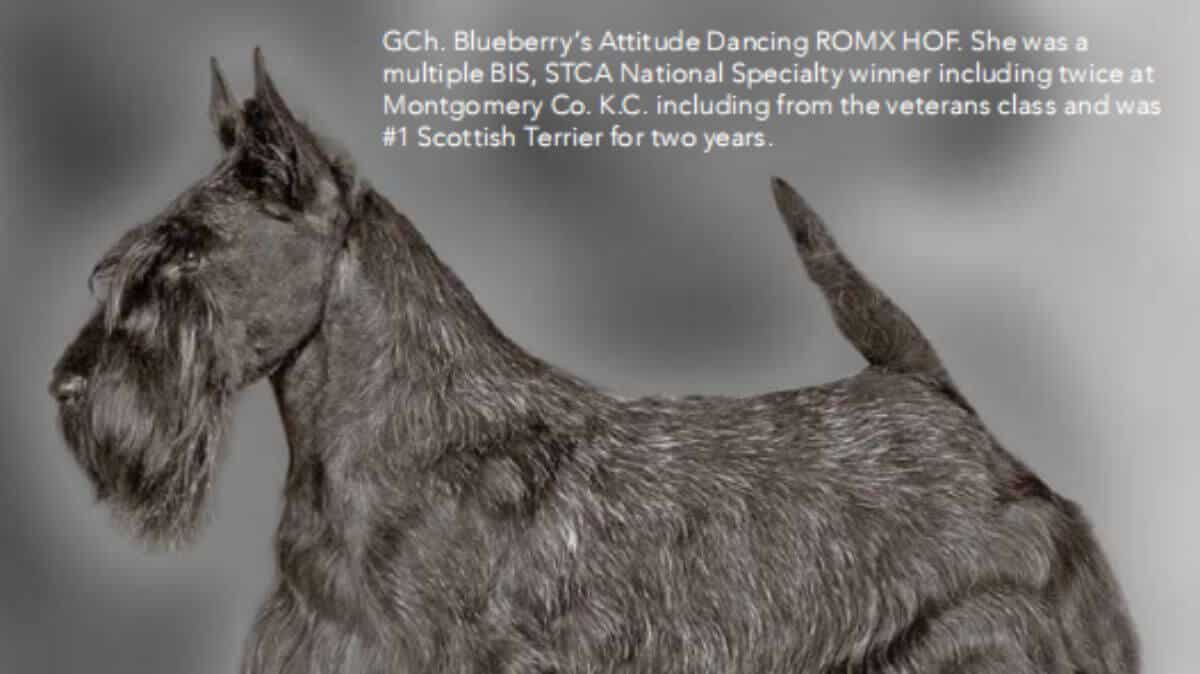

All About Judging
Guidelines for properly examining Scottish Terriers, highlighting AKC protocols and breed-specific standards by Kathi Brown.
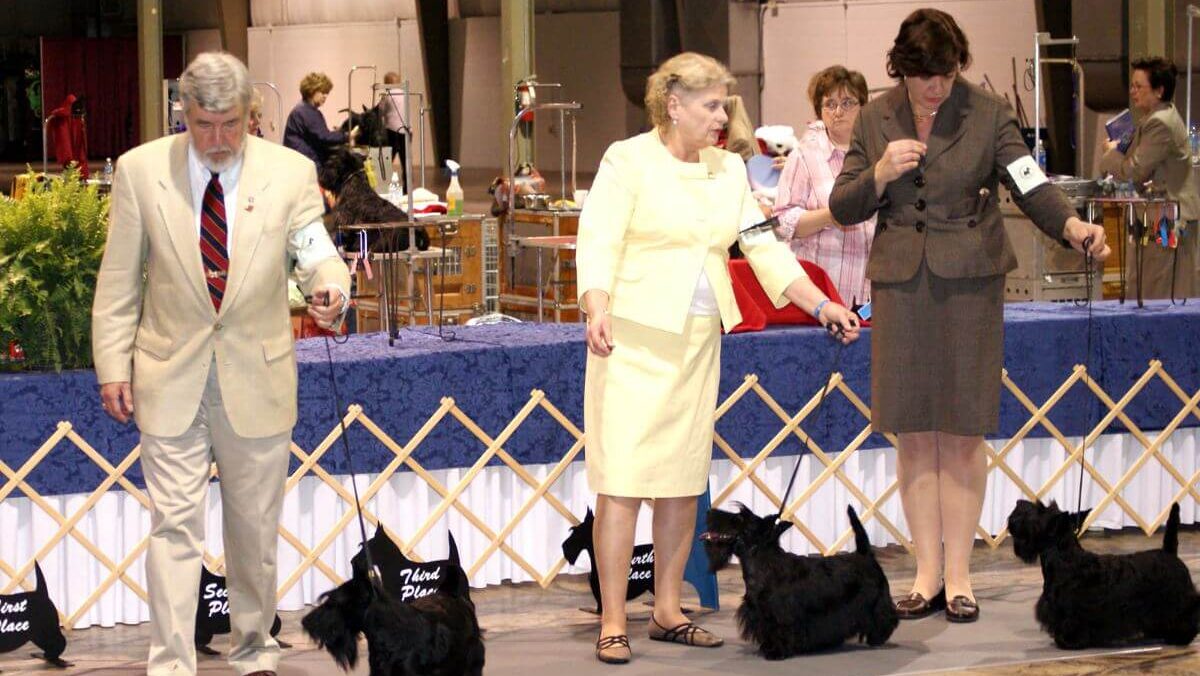

All About Judging
Reflecting on over forty years of judging Scotties, memorable mentors, key breed traits, and the importance of proper grooming.
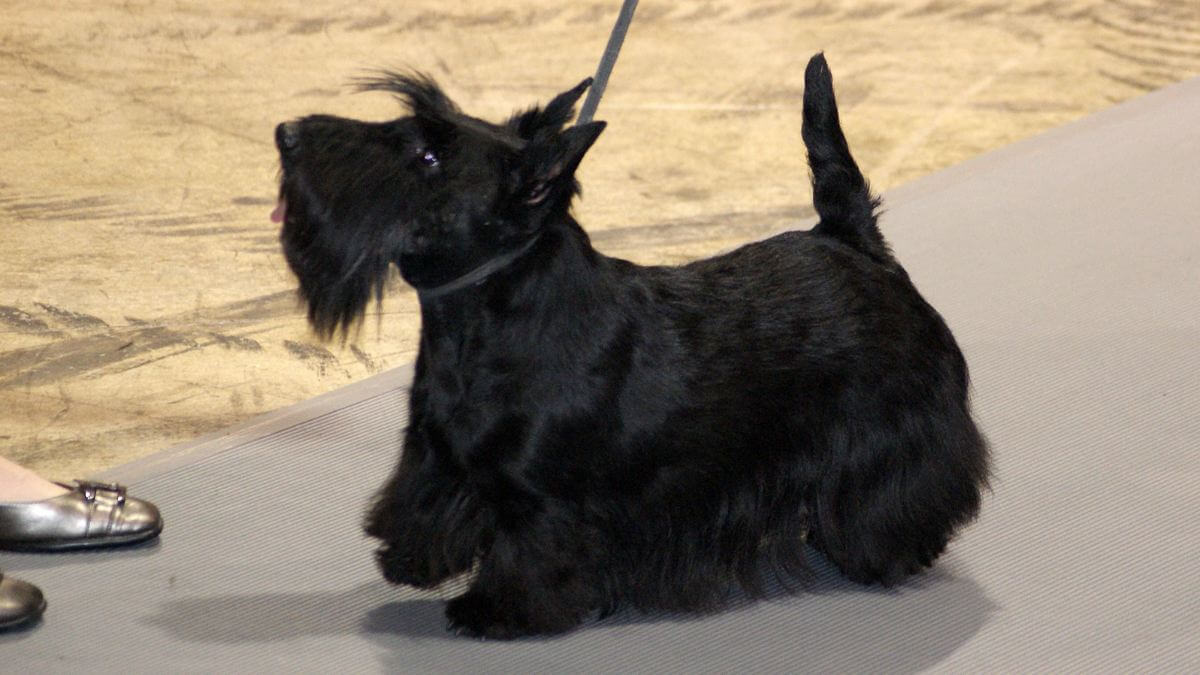
All About Judging
Evaluating the Scottish Terrier: a guide to recognizing their unique structure, temperament, and grooming essentials in the show ring.
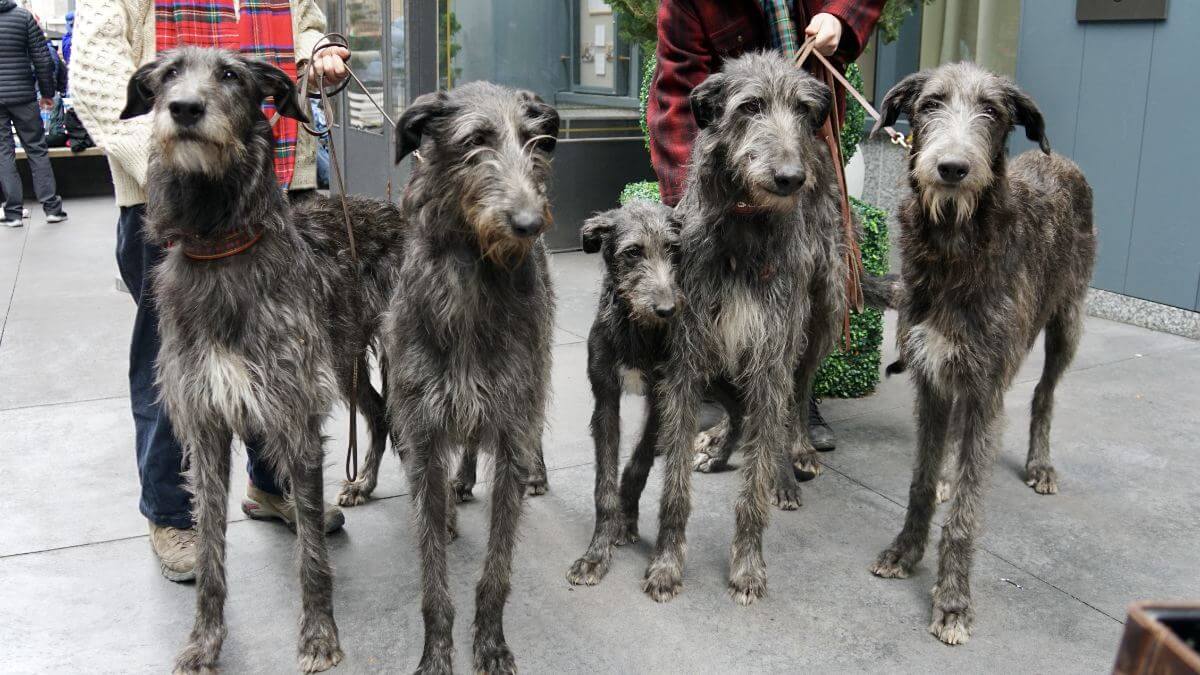
Profiles & Interviews
Discover the joy of Scottish heritage at the 2024 Tartan Day Parade, featuring bagpipers, dancers, and adorable Scottish dog breeds.


Meet the Breeders
Dr. Danica Burge is the breeder behind J-Mar Scottish Terriers. Read about the kennel’s beginnings, champion dogs, puppies, photos & more!
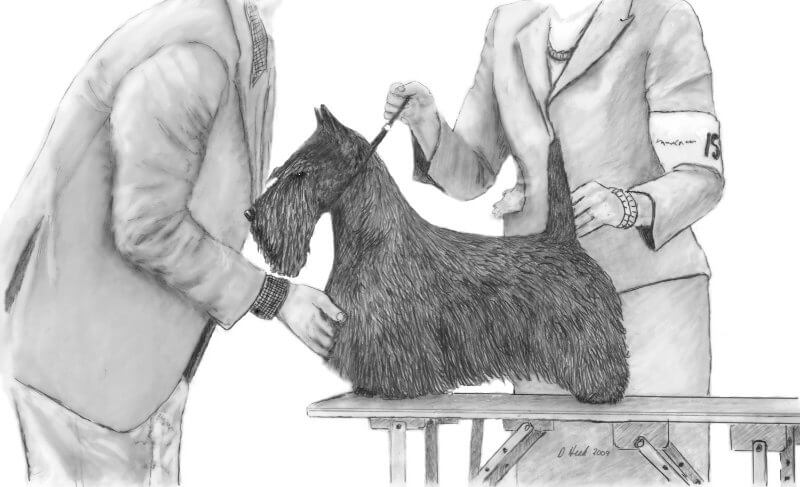
Dive into the Scottish Terrier’s essence with Evelyn Kirk’s “The Lovely Fire,” enriched by AKC insights and illustrations.
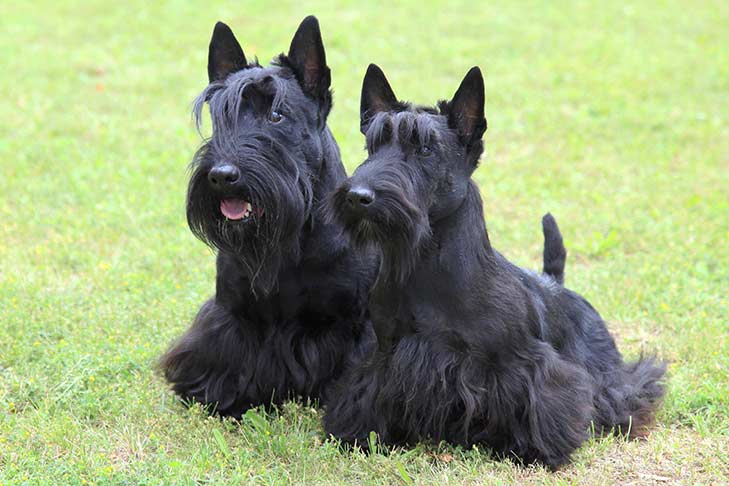

All About Judging
The front of the Scottish Terrier is important to understand and appreciate correctly. The breed is a short-legged dog with a deep chest.
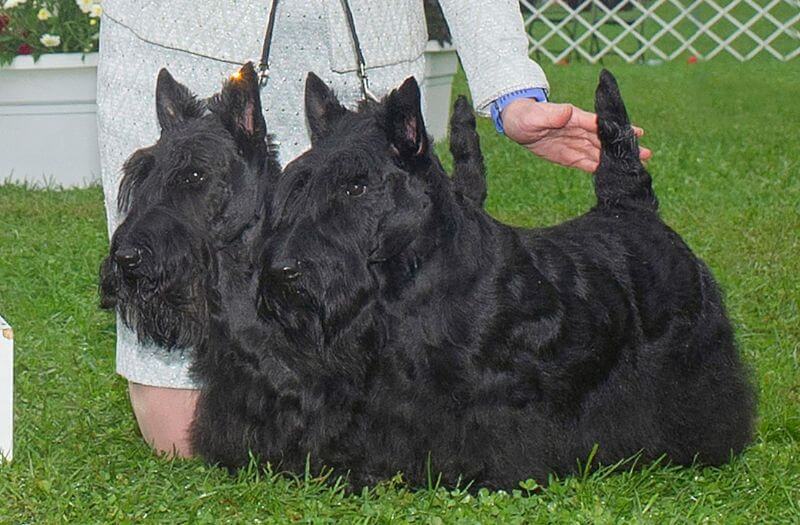

Meet the Breeders
Kari Hill is the breeder behind Charthill Scottish Terriers. Read about the kennel’s beginnings, dogs, puppies, photos and more!
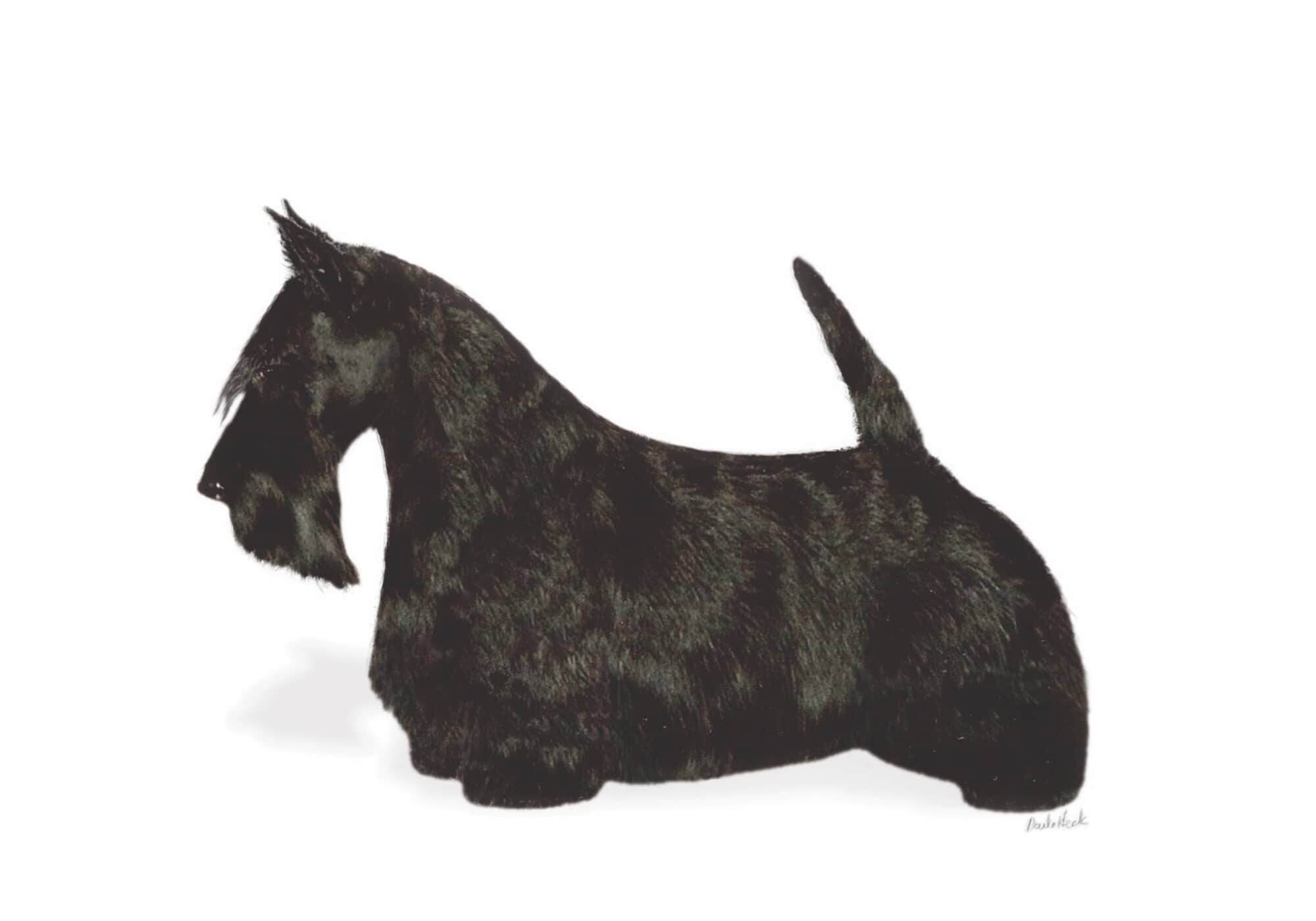
All About Judging
The hard and weather-resistant texture of the Scottish Terrier coat is essential for its original purpose. Reward the coat, not the color.
The tail of a Scottish Terrier is moderate in length, about seven inches long, providing a balance with the head’s carriage. It is set high and carried erectly or may be slightly curved forward. It does not curl over the back. The tail is thick at its base, covered in short, hard hair, and tapers to a fine point.
The Scottie’s tail is never docked. Its natural length and carriage have historically enabled the dog to be pulled safely from burrows where it has cornered unwanted (and dangerous) vermin. The tail is a symbol of the breed’s confidence in itself and its capacity to meet any challenge head-on.
A Note About Color: The properties of the Scottish Terrier’s coat are more important than the coat’s color. The breed may be solid or brindled, darker or lighter in a variety of acceptable colors. Brindle-colored dogs can have varying shades and depths of color; wheaten dogs can range from a deep red to more a pale coloration; black dogs can have a small amount of white on the chin (known as a “milk beard”). A few white hairs may also be found on the body coat, but an all-white coat is unacceptable. However, rare colors, such as solid red and sandy, are sometimes seen in the breed and are permissible.
Coat Type
Wiry, Double
The structure of the coat this breed carries.
Coat Length
Medium
How long the breed's coat grows when kept in condition.
Adaptability Level
How easily a breed copes with changes in home, routine, noise and weather.
Mental Stimulation Needs
How much a breed needs a job, a puzzle or training to stay content.
Proper feeding and nutrition are crucial for the health and well-being of a Scottish Terrier. The dietary needs of a Scottish Terrier vary from puppyhood to adulthood, and it's important to tailor their diet accordingly.
For puppies, a balanced diet specifically formulated for small-breed puppies is recommended. Puppies have higher energy needs, so their diet should be rich in protein and fat to support their growth and development. It's generally advised to feed Scottish Terrier puppies three to four small meals per day.
As they transition into adulthood, the dietary focus shifts towards maintaining a healthy weight and supporting overall health. Adult Scottish Terriers typically do well on two meals per day. The amount of food depends on the dog's size, age, activity level, and metabolism. On average, an adult Scottish Terrier might require about 1 to 1.5 cups of high-quality dry dog food per day, divided into two meals. However, these are just guidelines, and it's important to adjust the portion sizes based on the dog's individual needs and to prevent obesity.
When it comes to nutrition, look for foods that list meat as the primary ingredient and avoid those with excessive fillers or artificial additives. Also, having fresh water available at all times is essential for their hydration.
Lastly, regular check-ups with a veterinarian can help monitor the Scottish Terrier's weight and overall health, making sure that their diet continues to meet their nutritional needs throughout their life stages.
Training a Scottish Terrier can be a unique experience due to their intelligent yet independent nature. While they are capable of learning quickly, they often display a stubborn streak, which can pose a challenge during training sessions. Consistency, patience, and positive reinforcement are key in successfully training a Scottish Terrier.
Scottish Terriers are not the easiest breed to train, especially for first-time dog owners. They require a handler who understands canine psychology and can establish themselves as a calm, assertive leader. This breed responds well to training that is engaging and varied, as repetitive tasks may lead to boredom.
When it comes to barking, Scottish Terriers have a moderate tendency. They may bark to alert their owners of something unusual, but are not typically excessive barkers. Training from a young age to understand the command to stop barking is beneficial.
Intelligence is a prominent trait in Scottish Terriers. They are quick learners and can excel in various dog sports and activities. However, their independent thought process means they might not always follow commands blindly.
Wanderlust potential in Scottish Terriers is relatively low compared to other breeds. While they enjoy exploring, their loyalty to their home and family usually keeps them from straying too far. Nonetheless, a secure, fenced area is recommended for outdoor activities.
Predation is a natural instinct in Scottish Terriers, stemming from their history as hunting dogs. They may chase smaller animals, so it’s important to manage this behavior through training and socialization.
Grooming Expectations
Scottish Terriers have a double coat, with a hard, wiry outer coat and a soft, dense undercoat. This type of coat requires regular brushing to prevent matting and to remove loose hair. Brushing a couple of times a week is usually sufficient to keep their coat healthy and to manage shedding. The wiry top coat also needs to be hand-stripped or clipped several times a year to maintain the breed's characteristic appearance. This process involves removing dead hair and helps to keep the coat’s texture. While they do shed, Scottish Terriers are not heavy shedders compared to many other breeds. Regular grooming will help to minimize the amount of hair they leave around the house. In addition to coat care, other grooming needs include regular nail trimming, as overly long nails can cause discomfort and problems walking. Ear cleaning is also important to prevent infections, particularly since their small, erect ears can trap dirt. Regular dental care, including teeth brushing or dental chews, is essential for maintaining oral health. Grooming is also an excellent opportunity to check for any skin issues, lumps, or signs of infection that might need veterinary attention. Starting grooming routines early in life will help your Scottish Terrier become accustomed to being handled and make the process easier for both the dog and the groomer.
Overall, the Scottish Terrier can make a wonderful companion in various living situations, provided their exercise, mental stimulation, and training needs are met. Their adaptable nature, coupled with their unique personality, makes them a cherished pet for the right owner.