Members
01/Overview
The Sealyham Terrier is a small, sturdy terrier known for its long, low body, weather-resistant white coat, and confident expression. Developed in Wales to hunt badgers, foxes, otters, and other quarry, the breed combines courage and determination with an affectionate, often humorous personality.
Highlights
02/History
The Sealyham Terrier originated in Pembrokeshire, Wales, during the nineteenth century. The breed was developed by Captain John Edwardes at Sealy Ham, his family estate near Haverfordwest, from which the breed takes its name.
Edwardes wanted a compact, powerful terrier capable of working with his pack of Otterhounds and pursuing quarry both above and below ground. The dogs needed enough courage to confront badgers, foxes, otters, and other animals, along with a low, flexible body that allowed them to enter narrow dens and rocky spaces.
The exact breeds used to create the Sealyham Terrier were not formally recorded. Its ancestry is believed to include several British terrier types, possibly including the Dandie Dinmont Terrier, West Highland White Terrier, Wire Fox Terrier, Bull Terrier, and other local working dogs. Edwardes selected primarily for working ability, determination, strength, and a predominantly white coat that made the terrier easier to distinguish from its quarry.
After Edwardes died in 1891, other breeders continued developing the Sealyham Terrier and established a more consistent appearance. The breed began appearing at dog shows around the turn of the twentieth century, where its distinctive head, strong body, and harsh white coat attracted growing interest.
During the early and middle twentieth century, the Sealyham Terrier became a fashionable companion among actors, writers, and members of British society. Humphrey Bogart, Cary Grant, Alfred Hitchcock, and members of the British Royal Family were among those associated with the breed.
The Sealyham Terrier Club was founded in Britain in 1908. The (Royal) Kennel Club recognized the breed in 1911, helping to establish an official Breed Standard and increasing its popularity in the show ring.
The American Kennel Club also recognized the Sealyham Terrier in 1911 and placed the breed in the Terrier Group. The American Sealyham Terrier Club serves as the breed’s AKC parent club.
The Fédération Cynologique Internationale recognizes the Sealyham Terrier as a British breed and places it in Group 3, Terriers, Section 2, Small-Sized Terriers.
03/Appearance
An adult Sealyham Terrier stands approximately 10.5 inches tall at the withers. Males typically weigh from 23 to 24 pounds, while females generally weigh slightly less.
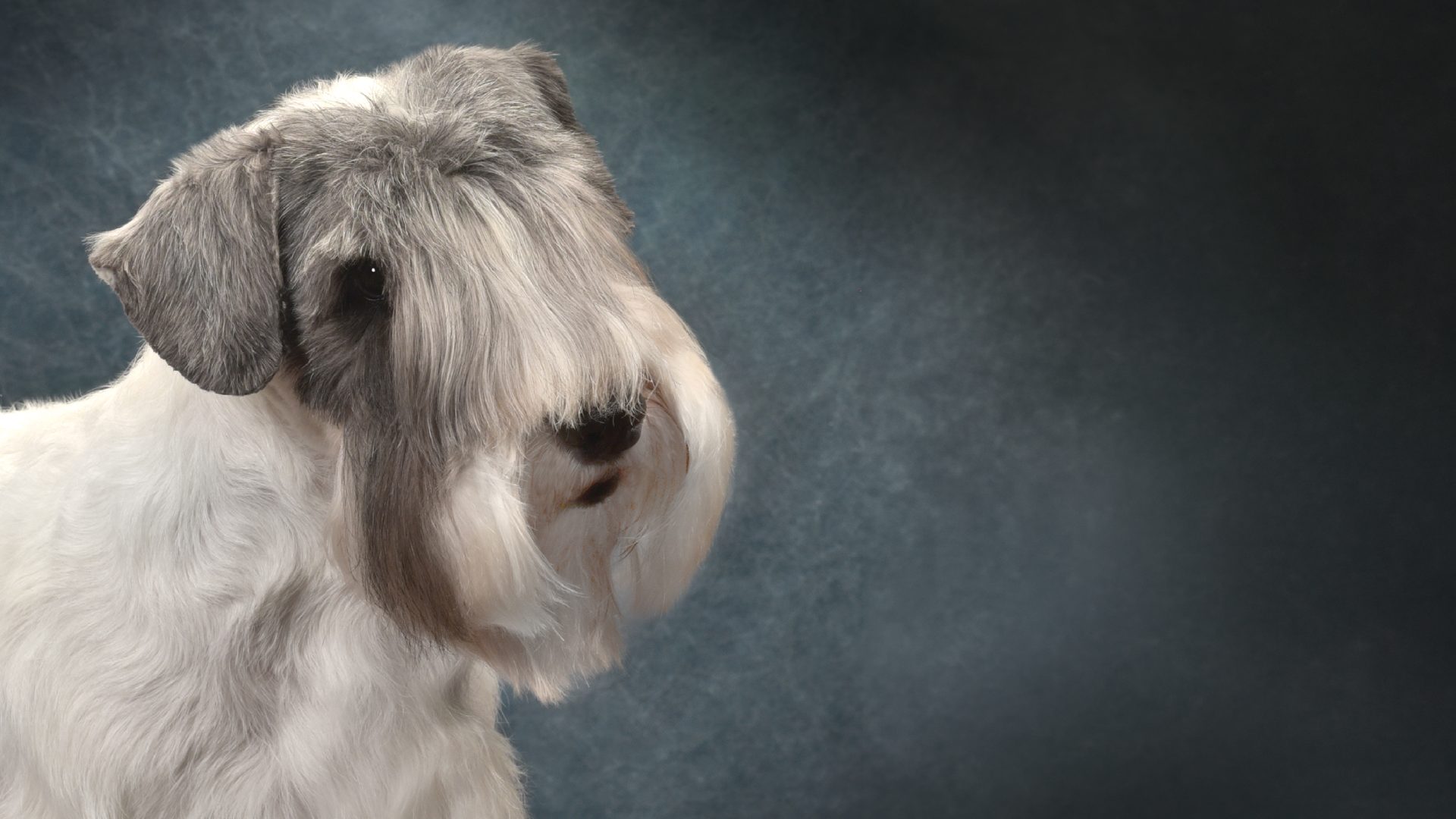
Skull: The Sealyham Terrier has a broad, slightly domed skull that is long in proportion to the dog’s size. The stop is moderate, and the head should appear strong without becoming coarse.
Expression: The expression is keen, alert, and confident, reflecting the breed’s courage and determination.
Eyes: The eyes are medium-sized, dark, and set well apart. They should convey a lively and intelligent expression.
Ears: The ears are medium-sized, rounded at the tips, and fold forward close to the cheeks. They are set level with the top of the skull and carried without standing away from the head.
Muzzle: The muzzle is strong, square, and well filled beneath the eyes. It should not appear narrow, weak, or pointed.
Nose: The nose is black, with large, open nostrils.
Bite: The Sealyham Terrier has strong teeth that meet in a level or scissors bite.
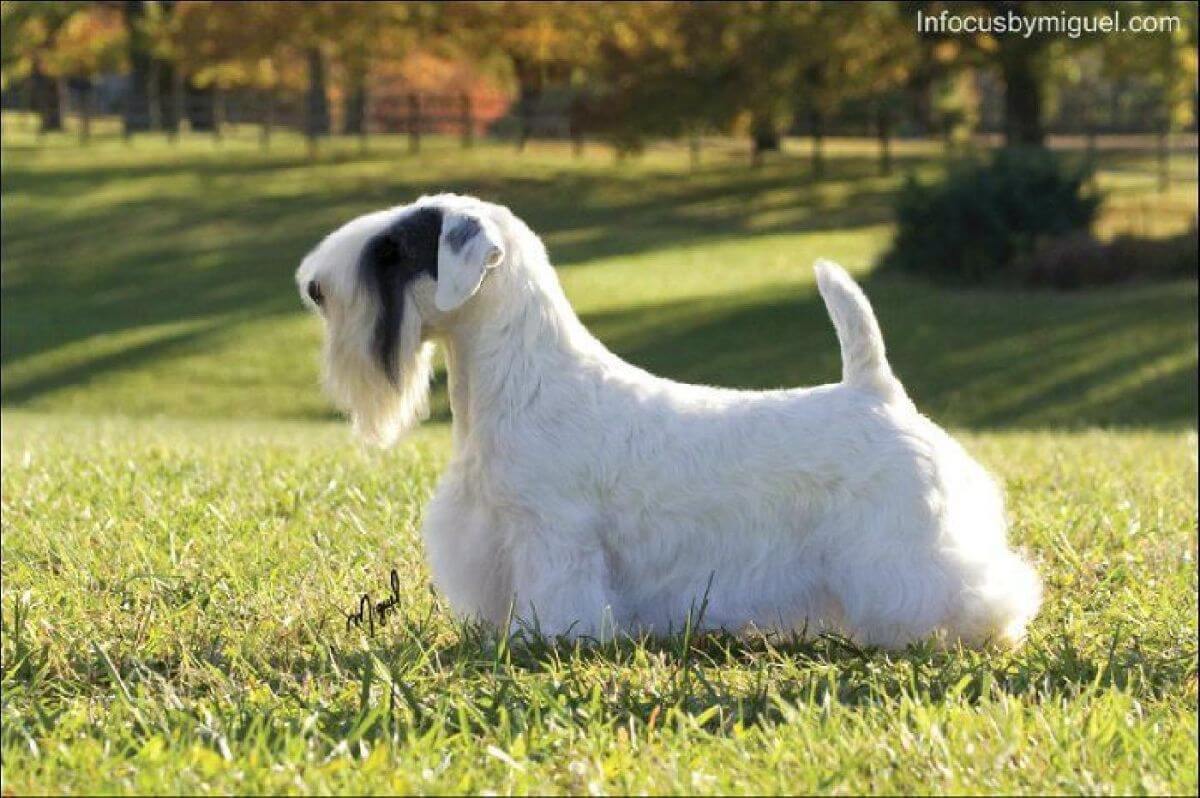
The Sealyham Terrier has a long, low, and substantial outline, with the body clearly longer than the height at the withers. Despite its low stature, the breed should appear balanced, powerful, and capable of working across difficult terrain and entering narrow spaces.
The chest is broad and deep, with well-sprung ribs, a strong back, and a muscular loin. Bone is heavy in proportion to the dog’s size, providing the strength and stability expected of a working terrier without creating a clumsy or cumbersome appearance.
Texture: The Sealyham Terrier has a long, hard, and wiry outer coat with a dense, weather-resistant undercoat. The coat lies close enough to protect the body while remaining harsh in texture, with longer furnishings on the head, legs, and underside.
Standard Colors
Standard Markings
04/Consider
The Sealyham Terrier is confident, affectionate, independent, and strongly influenced by its working terrier background. Anyone considering the breed should be prepared for regular coat care, consistent training, daily exercise, and a dog that may dig, chase small animals, or become vocal when bored.
Interaction With Family
The level of affection a breed typically shows towards family members and familiar individuals.
Good With Other Dogs
The innate friendliness of a dog towards other dogs can depend on its breed.
Good With Young Children
The degree to which a breed will typically be patient with young children.
Amount Of Shedding
How much hair a breed typically leaves behind on clothes, furniture and floors.
Frequency Of Grooming
How often a breed needs brushing, bathing or a professional trim to stay in condition.
Amount Of Drooling
How prone a breed is to drool — worth knowing before you keep a towel by the door.
Openness To Strangers
How openly a breed tends to greet new people, visitors and strangers.
Protective Nature
How likely a breed is to alert you to — and stand between you and — anything unfamiliar.
Playfulness Level
How enthusiastic a breed stays about games and play well past puppyhood.
Trainability Level
How readily a breed takes direction and works with you rather than around you.
Barking Level
How much a breed uses its voice, and how readily.
Energy Level
How much get-up-and-go a breed brings to an average day.
Health
The Sealyham Terrier is generally considered a hardy breed with a typical lifespan of 12 to 14 years. Preventive veterinary care, balanced nutrition, regular exercise, good dental hygiene, and maintenance of a healthy weight can help support long-term health.
The Sealyham Terrier is confident, affectionate, alert, and can be a bit more easygoing than some other terrier breeds. It can be playful and entertaining with its family while still retaining the independence and determination of a working terrier.
The breed may be reserved with unfamiliar people but is usually deeply loyal to those it knows. Early socialization helps the Sealyham become comfortable with different people, dogs, environments, and everyday situations.
A Sealyham Terrier can live successfully with respectful children, especially when raised with them. Its sturdy build and moderate energy level can suit family life, although all interactions with young children should be supervised.
Exercise Expectations
A healthy adult generally benefits from about 30 to 45 minutes of activity each day, divided into manageable sessions. Barn Hunt, Earthdog-style activities, and puzzle toys can provide productive outlets for the breed’s natural instincts. Off-leash exercise should take place only in a securely enclosed area because a Sealy may chase wildlife or follow an interesting scent.
Grooming Expectations
The Sealyham Terrier can adapt well to apartment living because it is often calm indoors and does not require excessive exercise. Regular walks, training, and mental activity are still important, and barking may need to be managed in homes with close neighbors.
A securely fenced yard can provide space for play, but fencing should be checked carefully because the breed may dig beneath barriers or pursue small animals. Outdoor time should not replace companionship and interaction with the family.
The Sealyham Terrier usually does best in a household that appreciates its humor, confidence, and independent nature. Consistent routines, moderate activity, and regular companionship help the breed thrive.
05/Puppies
Sealyham Terrier puppies are curious, playful, and typically full of personality. Early routines, positive socialization, patient training, and appropriate outlets for their natural terrier instincts help the pup develop into a confident and well-mannered adult.
A Sealyham Terrier puppy benefits from a predictable daily schedule that includes regular meals, potty breaks, sleep, play, training, and quiet time. A crate or secure puppy area can provide a safe place to rest and support housetraining when direct supervision is not possible.
Early socialization should introduce the puppy to different people, well-mannered dogs, household sounds, surfaces, vehicles, and unfamiliar environments. These experiences should remain positive and appropriate for the puppy’s age.
Training can begin as soon as the puppy arrives home. Short sessions can introduce name response, recall, leash walking, basic manners, impulse control, and calm behavior around visitors. Because the breed can be independent, patient and consistent training is especially important.
A Sealyham puppy should receive a complete and balanced diet formulated for growth. Exercise should focus on supervised play, short walks, and gentle exploration rather than forced running, repetitive jumping, or other strenuous activity while the puppy is still developing.
Regular veterinary visits are important during the first year. Grooming should also begin early so that the puppy becomes comfortable with brushing, nail trimming, ear checks, tooth brushing, and handling of the beard, feet, and coat.
06/Activities
Sealyham Terriers are intelligent, determined, and capable dogs that often enjoy activities involving scent, problem-solving, controlled movement, and close work with a handler. Here are some of the dog sports and activities in which Sealyham Terriers may participate:
Earthdog: Sealyham Terriers can use their natural hunting instincts to locate quarry underground in a controlled setting.
Barn Hunt: Barn Hunt allows the breed to search for safely enclosed rats hidden among bales of straw.
Scent Work: Sealyham Terriers can search for specific odors hidden in containers, indoor spaces, outdoor areas, or vehicles.
Tracking: Tracking allows the breed to follow a scent trail across different types of terrain using concentration and persistence.
Obedience: Obedience Trials test the Sealyham Terrier’s ability to perform exercises accurately while working closely with a handler.
Rally: Rally Obedience combines movement through a course with varied obedience exercises that can keep training engaging for this independent breed.
Conformation Shows: Sealyham Terriers compete in Conformation Shows, where judges evaluate each dog according to the Breed Standard, including structure, movement, coat, expression, temperament, and overall type.
Trick Dog: Trick training provides mental stimulation and gives the Sealyham Terrier a productive way to use its intelligence and playful personality.
Therapy Work: A calm, friendly, and well-socialized Sealyham Terrier may visit hospitals, schools, assisted living facilities, and other settings to provide companionship.
Canine Good Citizen: Sealyham Terriers may participate in programs that evaluate everyday manners, social behavior, and reliability around people and other dogs.
Gallery
07/Standards
The Sealyham Terrier is recognized by the world’s leading registries and kennel organizations, which categorize the breed into a specific Group based on its unique characteristics. This breed is recognized worldwide under the following Group designations:
The ideal Sealyham Terrier is described by a Breed Standard that is approved by each of the world’s leading registries and kennel organizations. The Standards for this breed may be found in the following links:
08/Clubs
Sealyham Terrier clubs support breed education, responsible breeding, health initiatives, rescue work, and participation in Conformation shows and Performance events.
American Sealyham Terrier Club: Founded in 1913, this is the national breed club for the Sealyham Terrier in the United States and the breed’s AKC parent club.
Sealyham Terrier Club of Canada: Established in 1982, Canada’s national organization for the Sealyham Terrier welcomes breeders, exhibitors, companion dog families, and other breed enthusiasts.
Sealyham Terrier Club: Founded in the United Kingdom in 1908, this club and its members promote the breed through dog shows and educational information.
09/Rescue
Breed-specific rescue organizations help Sealyham Terriers that have been surrendered, abandoned, or found in shelters. These groups may provide foster care, veterinary treatment, behavioral evaluation, and placement with an appropriate adoptive family.
American Sealyham Terrier Club Rescue: The breed’s AKC parent club provides rescue information and may help connect Sealyham Terriers in need with foster or adoptive homes across the United States.
Sealyham Terrier Club of Canada: Canada’s national breed club can provide guidance about Sealyhams needing rescue, welfare support, or rehoming.
Sealyham Terrier Club Rescue: The United Kingdom breed club supports the welfare and rehoming of Sealyham Terriers and may assist people seeking to adopt or surrender a dog.
Because the Sealyham Terrier is a rare breed, dogs available through dedicated rescue programs may be limited. Local shelters, broader terrier rescue organizations, adoption databases, and breed clubs can provide additional information about a Sealyham Terrier or Sealyham mix currently needing a home.
10/Facts
Named for Sealy Ham
The breed takes its name from Captain John Edwardes’ estate in Pembrokeshire, Wales, where it was developed during the nineteenth century.
Bred as a Versatile Hunting Terrier
Sealyham Terriers were used to pursue badgers, foxes, otters, and other quarry both above and below ground.
Once a Celebrity Favorite
Humphrey Bogart, Cary Grant, Alfred Hitchcock, and members of the British Royal Family have had Sealyhams.
Rare Today
The Sealyham Terrier is now far less common than many other terrier breeds, despite its long history and distinctive appearance.
11/FAQ
Sealyham Terriers can make excellent pets for people who appreciate a confident, affectionate, and independent companion. They need regular grooming, moderate exercise, consistent training, and close involvement in family life.
Official Standard of the Sealyham Terrier
The Sealyham should be the embodiment of power and determination, ever keen and alert, of extraordinary substance, yet free from clumsiness.
Height: At withers about 10½ inches.
Weight: 23 to 24 pounds for dogs; bitches slightly less. It should be borne in mind that size is more important than weight.
Head: Long, broad and powerful, without coarseness. It should, however, be in perfect balance with the body, joining neck smoothly. Length of head roughly three-quarters height at withers, or about an inch longer than neck. Breadth between ears a little less than one-half length of head. Skull - Very slightly domed, with a shallow indentation running down between the brows, and joining the muzzle with a moderate stop. Cheeks - Smoothly formed and flat, without heavy jowls. Jaws - Powerful and square. Bite level or scissors. Overshot or undershot bad faults. Teeth - Sound, strong and white, with canines fitting closely together. Nose - Black, with large nostrils. White, cherry or butterfly bad faults. Eyes - Very dark, deeply set and fairly wide apart, of medium size, oval in shape with keen terrier expression. Light, large or protruding eye bad faults. Lack of eye rim pigmentation not a fault. Ears - Folded level with top of head, with forward edge close to cheek. Well rounded at tip, and of length to reach outer corner of eye. Thin, not leathery, and of sufficient thickness to avoid creases. Prick, tulip, rose or hound ears bad faults.
Neck: Length slightly less than two-thirds of height of dog at withers. Muscular without coarseness, with good reach, refinement at throat, and set firmly on shoulders.
Shoulders: Well laid back and powerful, but not over-muscled. Sufficiently wide to permit freedom of action. Upright or straight shoulder placement highly undesirable.
Legs: Forelegs strong, with good bone; and as straight as is consistent with chest being well let down between them. Down on pasterns, knuckled over, bowed, and out at elbow, bad faults. Hind legs longer than forelegs and not so heavily boned. Feet - Large but compact, round with thick pads, strong nails. Toes well arched and pointing straight ahead. Forefeet larger, though not quite so long as hind feet. Thin, spread or flat feet bad faults.
Body: Strong, short-coupled and substantial, so as to permit great flexibility. Brisket deep and well let down between forelegs. Ribs well sprung.
Back: Length from withers to set-on of tail should approximate height at withers, or l0½ inches. Topline level, neither roached nor swayed. Any deviations from these measurements undesirable. Hindquarters - Very powerful, and protruding well behind the set-on of tail. Strong second thighs, stifles well bent, and hocks well let down. Cowhocks bad fault.
Tail: Docked and carried upright. Set on far enough forward so that spine does not slope down to it.
Coat: Weather-resisting, comprised of soft, dense undercoat and hard, wiry top coat. Silky or curly coat bad fault.
Color: All white, or with lemon, tan or badger markings on head and ears. Heavy body markings and excessive ticking should be discouraged.
Action: Sound, strong, quick, free, true and level.
Scale of Points General character, balance and size 15 Head 5 Eyes 5 Mouth 5 Ears 5 Neck 5 25 Shoulders and brisket 10 Body, ribs and loin 10 Hindquarters 10 Legs and Feet 10 Coat 10 50 Tail 5 Color (body marking and ticking) 5 10 Total 100
Approved February 9, 1974
The tail is set high and carried upright, adding to the breed’s confident outline. Traditionally docked in countries where the practice is permitted, it should be strong and balanced with the Sealyham Terrier’s long, low body.
A Note About Color: The Sealyham Terrier is an all-white dog that can have lemon, tan, or badger markings on the head and ears. Heavy body markings and excessive ticking is to be discouraged.
Coat Type
Wiry, Double
The structure of the coat this breed carries.
Coat Length
Medium
How long the breed's coat grows when kept in condition.
Adaptability Level
How easily a breed copes with changes in home, routine, noise and weather.
Mental Stimulation Needs
How much a breed needs a job, a puzzle or training to stay content.
A Sealyham Terrier should receive a complete and balanced diet suited to the dog’s age, activity level, and body condition. Portions should be measured carefully because the breed can gain excess weight, which may place additional strain on the back and joints.
A puppy generally needs three or four small meals each day before gradually moving to two meals. Most adults are fed twice daily, with the amount adjusted according to the food’s caloric density and the dog’s level of activity.
Treats can be useful during training but should remain limited. Fresh water should always be available.
The Sealyham Terrier is intelligent and capable of learning quickly, but it can also be independent and selective about cooperation. Training is most effective when sessions are short, varied, and supported by praise, food rewards, toys, or play.
Early socialization should introduce the puppy to different people, well-mannered dogs, sounds, surfaces, and unfamiliar environments. Recall, leash manners, calm greetings, and impulse control are especially useful because the breed may follow scents or chase small animals.
Clear and consistent expectations help support good habits. Harsh methods can create resistance, while patient, reward-based training usually encourages better cooperation.
Dogs kept in a traditional show coat are hand-stripped to remove dead outer hair while preserving the coat’s harsh texture and proper color. Pet coats are sometimes clipped for convenience, although clipping may soften the texture over time. Bathing is needed as necessary, particularly because the beard can collect food and moisture. Nails should be trimmed regularly, ears should be checked for irritation or debris, and teeth should be brushed routinely.