Members
01/Overview
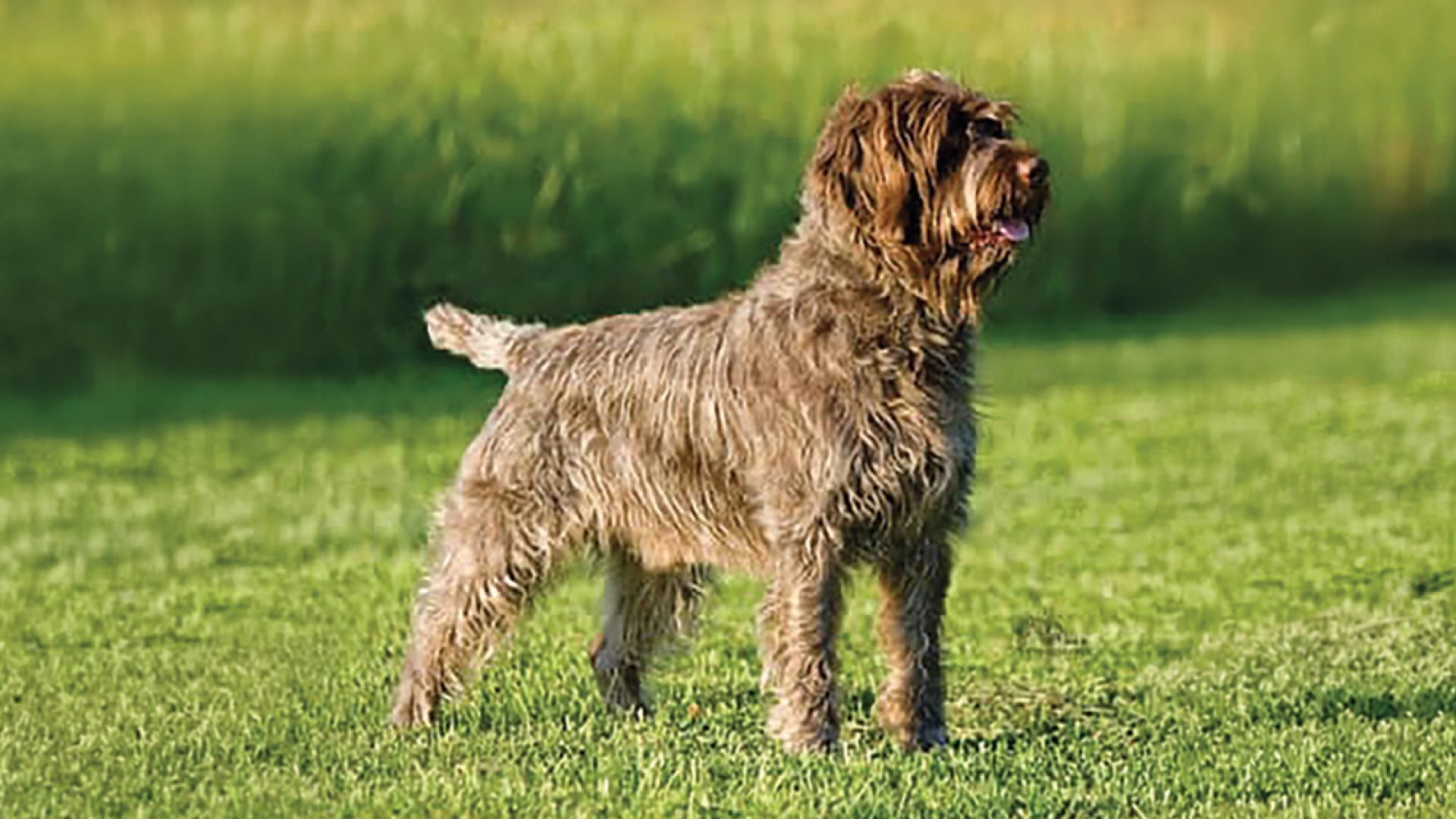
The Wirehaired Pointing Griffon is a distinguished and versatile gundog known for its tenacity and its keen nose. Originating in the Netherlands and developed in Germany, this breed exhibits a unique combination of robustness and agility paired with a wiry coat that provides protection in dense cover. The "Griffon" is not only a reliable hunting partner, however. Although it is ideally suited for the field, it is also a devoted family member, thriving on human companionship and exhibiting a friendly and intelligent demeanor to everyone it meets.
Highlights
02/History
The Wirehaired Pointing Griffon is a unique breed with a rich history that traces back to 19th century Europe. The "Griffon" was developed by a Dutch breeder named Eduard Karel Korthals, who was passionate about creating the ultimate gun dog. Korthals's quest began while he was managing the kennels of the Duke of Plessis in Germany, where he carefully selected and bred various types of gundogs with an emphasis on traits such as robustness, intelligence, and a keen sense of smell. His aim was to produce a dog that could handle the varied and difficult terrain that local hunters encountered most often.
Korthals's dedication to his breeding program was intense and thorough, with records providing meticulous documentation and a clear vision for the breed's characteristics. He desired a dog that was as skilled in pointing as it was in retrieving, capable of working on all kinds of environments and in all weather conditions. His efforts resulted in a breed known for its wiry coat that protected it from harsh underbrush and inclement weather, and for its remarkable skill in pointing and retrieving game.
The Griffon quickly gained popularity in Europe for its hunting prowess and spread to other countries, including the United States. Many American hunters quickly valued the breed for its versatility, trainability, and reliable performance in the field. Throughout the 19th century, its popularity continued to grow and it was officially recognized by the American Kennel Club (AKC) in 1887.
In addition to the AKC, the breed has also been recognized by other major canine organizations, such as the Fédération Cynologique Internationale (FCI), which is essentially the World Canine Organization, and The Royal Kennel Club (UK), both of which have contributed to maintaining a Breed Standard and promoting the breed's capabilities in Great Britain and around the world.
For well over a century, the Wirehaired Pointing Griffon has been appreciated not only for its abilities in the field but also for its amiable nature as a faithful companion. This dual-purpose has made the breed a cherished choice for both hunters and families alike, ensuring its place among many generations of dog enthusiasts. Over the years, the breed has maintained its reputation as a dedicated hunter with a keen nose and hard-working spirit, attributes that were so carefully instilled by its founder. Today, the Griffon continues to be a testament to its creator's vision of a versatile and steadfast hunting companion.
03/Appearance
Adult male Wirehaired Pointing Griffons typically stand between 22 and 24 inches tall at the shoulder, while mature females are slightly smaller, ranging from 20 to 22 inches in height.
Weight should be proportionate to the height, with males averaging around 50 to 70 pounds and females weighing in at approximately 35 to 50 pounds.
The Wirehaired Pointing Griffon exhibits a body that is slightly longer than it is tall, adhering to a ratio of 10 to 9. Despite the breed’s medium size, the Griffon possesses a substantial build, robust yet never cumbersome. This form facilitates both the power and agility necessary for rigorous fieldwork. Musculature is well-developed in the breed, providing these dogs with the strength and endurance that are hallmarks of its hunting heritage.
Texture: The coat of the Wirehaired Pointing Griffon consists of a soft, insulating undercoat and a hard, wiry outer coat. Texture can vary, but the head will always be furnished with a prominent mustache and eyebrows, which are an extension of the undercoat. The legs are covered in hair that is shorter and denser, with a texture that is less coarse than that on the body coat. The hair on the ears is short and soft, with a mixture of longer, harsher hairs. The coat is not clipped, stripped or trimmed except for the hair on the top of the head, ears, cheeks, and feet. In general, the breed's protective coat equips the Griffon well for work without hindrance in challenging outdoor environments.
Standard Colors
Standard Markings
04/Consider
Embarking on the journey of owning a Wirehaired Pointing Griffon requires a thoughtful understanding of the breed's unique attributes and requirements for its care. These dogs are known for their versatile hunting skills, intelligence, and affectionate nature, which makes them both a delightful companion and a dedicated sportsman's partner. Prospective owners should be prepared for a dog that is active and requires meaningful engagement—both mentally and physically.
Committing to a Griffon means making sure the dog has ample opportunities to exercise its body and mind, reflecting the dog's heritage as a tireless field worker. This breed thrives with human companionship and may not be well-suited for those who cannot provide it with a substantial amount of time and attention.
Interaction With Family
The level of affection a breed typically shows towards family members and familiar individuals.
Good With Other Dogs
The innate friendliness of a dog towards other dogs can depend on its breed.
Good With Young Children
The degree to which a breed will typically be patient with young children.
Amount Of Shedding
How much hair a breed typically leaves behind on clothes, furniture and floors.
Frequency Of Grooming
How often a breed needs brushing, bathing or a professional trim to stay in condition.
Amount Of Drooling
How prone a breed is to drool, worth knowing before you keep a towel by the door.
Openness To Strangers
How openly a breed tends to greet new people, visitors and strangers.
Protective Nature
How likely a breed is to alert you to anything unfamiliar, and stand between you and it.
Playfulness Level
How enthusiastic a breed stays about games and play well past puppyhood.
Trainability Level
How readily a breed takes direction and works with you rather than around you.
Barking Level
How much a breed uses its voice, and how readily.
Energy Level
How much get-up-and-go a breed brings to an average day.
Health
The Wirehaired Pointing Griffon is generally a hearty and resilient breed, possessing the robust health needed for a vigorous life outdoors. Nonetheless, conscientious caretakers should be aware that the breed may be predisposed to certain health conditions. To maintain its well-being, it is important to schedule regular veterinary check-ups, which allow for early detection and management of any health issues that may arise. Lifespan: In terms of longevity, Wirehaired Pointing Griffons typically enjoy a lifespan of 12 to 15 years. Achieving this lifespan is often a result of comprehensive care, which includes a balanced diet, routine health screenings, and proactive disease prevention. With a dedication to the dog's health and happiness, a Griffon can be a long-lived companion, providing years of enjoyment and many shared experiences.
The personality of the Wirehaired Pointing Griffon is one of keen alertness, vivacity, and a gentleness, making these dogs an excellent companion both in the field and at home. Their amiable nature often means they are good with children and can integrate well into a family setting. However, due to their high intelligence and active mind, they are not always the best match for novice owners. They thrive with an experienced handler who can provide firm, consistent training and who understands the needs of working breed dogs.
These dogs typically do well when left alone for moderate periods, provided they have been given enough exercise and mental stimulation. Nevertheless, they are a breed that prefers company and may become unhappy if isolated for too long. Their sociability usually extends to other dogs as well, and with proper socialization they are often eager to play and interact with their canine companions.
Regarding strangers, the Wirehaired Pointing Griffon can be cautious initially, but they are generally not aggressive without provocation. They are known to be quite perceptive and can become welcoming once they ascertain there is no threat, often warming up quickly to new people under the guidance of their trusted human partner. It is this blend of intelligence, friendliness, and loyalty that makes the Griffon a versatile and endearing breed to those who are familiar with its characteristics and needs.
Exercise Expectations
Their intensity is palpable, especially when they are given tasks that simulate their natural working behaviors, such as retrieving or scent work. Owners should be ready to provide them with daily exercise that goes beyond a leisurely walk. Hiking, running, and playing fetch are great ways to channel their energy productively. Playfulness is another trait that can be used to an owner's advantage during exercise. Interactive games that challenge them both mentally and physically can be particularly beneficial and enjoyable for the Griffon. Owners can consider activities that allow these dogs to exercise their instincts, such as tracking, agility, or even advanced obedience training. Given their high energy and need for vigorous exercise, Wirehaired Pointing Griffons are not ideally suited to apartment living unless their exercise needs can be met through other means. They are best suited to homes with more space where they can run and play freely. Regular, dedicated exercise sessions will help ensure that the Griffon remains a well-balanced and content companion.
Living with a Wirehaired Pointing Griffon is a rewarding experience for an active individual or family who understands the breed's specific needs. Their adaptable nature means that while they can adjust to apartment living, they thrive in environments where they have more space to express their energy, such as a home with a securely fenced yard.
Despite their thick, wiry coat, the Griffon is well-suited to a variety of climates. Their coat provides ample warmth, making them quite comfortable in cooler temperatures. However, it is important to monitor them and provide protection in extreme cold to prevent any risk of frostbite to sensitive areas like the ears and paws. Conversely, in hot weather, their coat can protect them from the sun, but they should always have access to shade and fresh water, and their exercise should be scheduled during the cooler parts of the day to prevent overheating.
Griffons typically do well in households with children and other dogs, given their sociable nature. They are generally friendly towards strangers as well, though they may exhibit initial caution as part of their alert temperament. Making sure that they have been properly socialized will help foster their innate friendliness and ensure that their caution does not turn into shyness or fearfulness.
Those considering adding a Griffon to their life should be prepared to integrate this active dog into many of their daily activities. The Griffon is happiest when they can be part of the family's routine, whether that's being involved in outdoor adventures or simply hanging out at home with their human companions. For those willing to invest time in exercise, training, and companionship, the Wirehaired Pointing Griffon can be an exceptional partner.
05/Puppies
The arrival of a litter of Wirehaired Pointing Griffon puppies is an exciting experience and the beginning of a wonderful journey. These pups are inquisitive, energetic, and eager to explore their environment. New caretakers should be prepared for the task of channeling their boundless energy and curiosity in positive directions. From the moment a Griffon puppy steps paw into its new home, the foundation for future temperament and behaviors is being laid.
Caring for a Wirehaired Pointing Griffon puppy involves more than just meeting its physical needs; it also includes training and socialization at an early stage. Nutrition plays a crucial role in the pup's development, and feeding a balanced diet designed for puppies will support its growth and health. Puppy food should be rich in nutrients that support a puppy's high energy levels and rapid growth.
Puppies do not regulate their food intake as adults do, so it is essential to establish a feeding routine. Breaking down the puppy's daily food requirement into several smaller meals can help to prevent overeating and maintain a healthy digestion. As the pup grows, the number of meals can decrease as the portion size increases, until the growing pup transitions to an adult feeding schedule.
Socialization is just as important as nutrition and involves exposing the puppy to a variety of people, places, and situations. This exposure helps the Griffon pup to grow up into a well-adjusted and confident adult dog. Introducing a puppy to different environments, both indoors and outdoors, and a range of friendly humans and animals can aid in this process.
Basic obedience training should start early with simple commands like sit, stay, and come. This not only helps with the puppy's behavior but also strengthens the bond between the puppy and its caretaker. Potty training is another crucial part of early care, requiring consistency, patience, and positive reinforcement.
Healthcare, such as vaccinations, worming, and flea prevention, should be carried out under the guidance of a veterinarian to protect the puppy's overall health. The pup will also benefit from gentle grooming practices that are introduced early. These sessions allow the Griffon pup to accept and even enjoy the grooming process as part of its regular routine.
06/Activities
The Wirehaired Pointing Griffon is an energetic and versatile breed that excels in a variety of canine activities. The breed's keen intelligence and eager disposition make these supremely gifted dogs suitable for many competitive events that can help to keep them physically fit and mentally sharp. Here are some of the dog sports in which the Griffon can participate:
These activities provide excellent opportunities for Wirehaired Pointing Griffons to harness their energy and for their handlers to engage in a rewarding partnership with their canine companions. Participation in these sports not only provides physical and mental stimulation for the dog, it also reinforces the bond between the Griffon and its human partner.
Gallery
07/Standards
The Wirehaired Pointing Griffon is recognized by the world's leading registries and kennel organizations, which categorize the breed into a specific Group based on its unique characteristics. This breed is recognized worldwide under the following Group designations:
The ideal Wirehaired Pointing Griffon is described by a Breed Standard that is approved by each of the world’s leading registries and kennel organizations. The Breed Standards for this breed may be found in the following links:
08/Clubs
09/Rescue
10/Facts
Dual-Purpose Dog
The Wirehaired Pointing Griffon is renowned for being a versatile gundog, skilled in both pointing and retrieving. This dual-purpose ability makes these dogs highly valued among hunters and sportsmen.
A "Supreme" Gundog
Created to be the “supreme gundog,” the breed's founder, Eduard Korthals, aimed to develop a breed with great stamina, a keen nose, and a hardy coat, all of which the Griffon exemplifies today.
An International Pedigree
Although the breed's development is largely credited to the Netherlands and France, its ancestry includes a mix of German, French, and other European breeds, reflecting a truly international heritage.
Presidential Preference
The breed has found its way into the annals of American history as well, with President Calvin Coolidge owning a Griffon named Prudence Prim.
The Name Says It All
The term "Griffon" indicates a wire-coated dog, while "pointing" refers to the breed's ability to point hidden game birds, and "wirehaired" describes the distinctive coat that sets the breed apart from most other gundogs.
11/FAQ
Wirehaired Pointing Griffons are known to shed minimally. Their rough, dense coat requires regular grooming to maintain its condition and to remove loose hair. While they are not a "non-shedding" breed, the amount of hair they "blow" is generally less than that of many other breeds, making the Griffon a manageable choice for those concerned with dog hair in the house.

Written by
Dan Sayers is the Executive Editor of SHOWSIGHT. He is a member of the World Dog Press Association and the Dog Writers Association of America, which recognized his illustrations in the award-winning Encyclopedia of K-9 Terminology. Dan is a longtime supporter of the sport of dogs and an advocate for the conservation of recognized breeds in all their forms and functions. He is a member of the Morris and Essex Kennel Club, and for 45 years, the Irish Water Spaniel Club of America where he serves as AKC Delegate, Archivist, and approved Breed Mentor. Dan breeds under the Quiet Storm prefix and has judged the IWSCA National Specialty Sweepstakes twice.
Official Standard for the Wirehaired Pointing Griffon
General Appearance: Medium sized, with a noble, square-shaped head, strong of limb, bred to cover all terrain encountered by the walking hunter. Movement showing an easy catlike gracefulness. Excels equally as a pointer in the field, or a retriever in the water. Coat is hard and coarse, never curly or woolly, with a thick undercoat of fine hair, giving an unkempt appearance. His easy trainability, devotion to family, and friendly temperament endear him to all. The nickname of "supreme gundog" is well earned.
Size, Proportion, Substance: Size-22 to 24 inches for males, 20 to 22 inches for females. Correct size is important. Oversize to be severely penalized. Proportion-Slightly longer than tall, in a ratio of 10 to 9. Height from withers to ground; length from point of shoulder to point of buttocks. The Griffon must not evolve towards a square conformation. Substance medium, reflecting his work as an all-terrain hunting dog.
Head: The head is to be in proportion to the overall dog. The skull is of medium width with equal length from nose to stop and from stop to occiput. The skull is slightly rounded on top, but from the side the muzzle and head are square. The stop and occiput are only slightly pronounced. The required abundant mustache and eyebrows contribute to the friendly expression. The eyes are large and well open, more rounded than elliptical. They have an alert, friendly, and intelligent expression. Eye color ranges in all shades of yellow and brown. Haws should not show nor should there be protruding eyes. The ears should be of medium size, lying flat and close to the head, set high, at the height of the eye line. Nose-Well open nostrils are essential. Nose color is always brown. Any other color is a disqualification. Bite scissors. Overshot or undershot bite is a serious fault.
Neck, Topline, Body: Neck- rather long, slightly arched, no dewlap. Topline- The back is strong and firm, descending in a gentle slope from the slightly higher withers to the base of the tail. Body-Chest- The chest must descend to the level of the elbow, with a moderate spring of rib. The chest must neither be too wide nor too narrow, but of medium width to allow freedom of movement. The loin is strong and well developed, being of medium length. The croup and rump are stoutly made with adequate length to favor speed. The tail extends from the back in a continuation of the topline. It may be carried straight or raised slightly. It is docked by one-third to one-half length.
Forequarters: Shoulders are long, with good angulation, and well laid back. The forelegs are straight and vertical from the front and set well under the shoulder from the side. Pasterns are slightly sloping. Dewclaws should be removed. Feet are round, firm, with tightly closed webbed toes. Pads are thick.
Hindquarters: The thighs are long and well muscled. Angulation in balance with the front. The legs are vertical with the hocks turning neither in nor out. The stifle and hock joints are strong and well angulated. Feet as in front.
Coat: The coat is one of the distinguishing features of the breed. It is a double coat. The outer coat is medium length, straight and wiry, never curly or woolly. The harsh texture provides protection in rough cover. The obligatory undercoat consists of a fine, thick down, which provides insulation as well as water resistance. The undercoat is more or less abundant, depending upon the season, climate, and hormone cycle of the dog. It is usually lighter in color. The head is furnished with a prominent mustache and eyebrows. These required features are extensions of the undercoat, which gives the Griffon a somewhat untidy appearance. The hair covering the ears is fairly short and soft, mixed with longer harsh hair from the coat. The overall feel is much less wiry than the body. The legs, both front and rear, are covered with denser, shorter, and less coarse hair. The coat on the tail is the same as the body; any type of plume is prohibited. The breed should be exhibited in full body coat, not stripped short in pattern. Trimming and stripping are only allowed around the ears, top of head, cheeks and feet.
Color: Preferably steel gray with brown markings, frequently chestnut brown, or roan, white and brown; white and orange also acceptable. A uniformly brown coat, all white coat, or white and orange are less desirable. A black coat disqualifies.
Gait: Although close working, the Griffon should cover ground in an efficient, tireless manner. He is a medium-speed dog with perfect coordination between front and rear legs. At a trot, both front and rear legs tend to converge toward the center line of gravity. He shows good extension both front and rear. Viewed from the side, the topline is firm and parallel to the line of motion. A smooth, powerful ground-covering ability can be seen.
Temperament: The Griffon has a quick and intelligent mind and is easily trained. He is outgoing, shows a tremendous willingness to please and is trustworthy. He makes an excellent family dog as well as a meticulous hunting companion.
Disqualifications: Nose any color other than brown. Black coat.
Approved October 8, 1991
Effective November 28, 1991
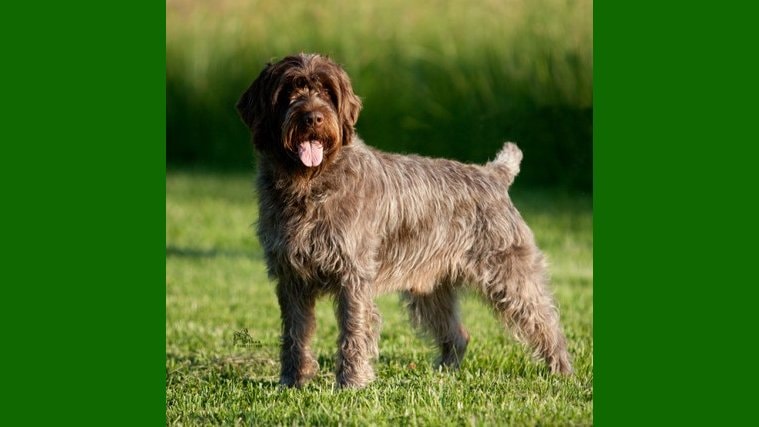

The AWPGA Board of Directors explains the key traits, structure, movement, and purpose that define the Wirehaired Pointing Griffon.


American Kennel Club (AKC)
Britt Jung reflects on judging at the 2025 AKC National Championship, highlighting depth of quality, mentorship, and exhibitor spirit.

Meet the Judges
Gerardo Bernard shares his experience judging at the 2025 National Dog Show, reflecting on prestige, history, and excellence.
Dog Shows
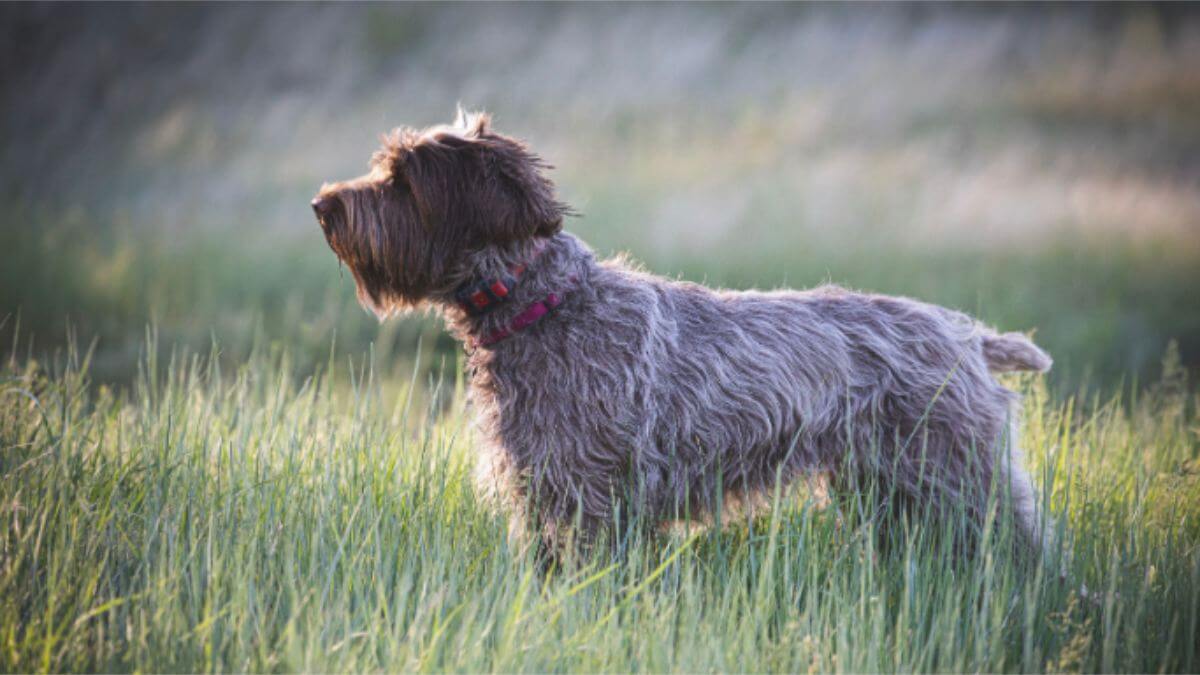
Griffons excel in both field and show, maintaining versatility with success in AKC, NAVHDA, and performance events.
All About Judging
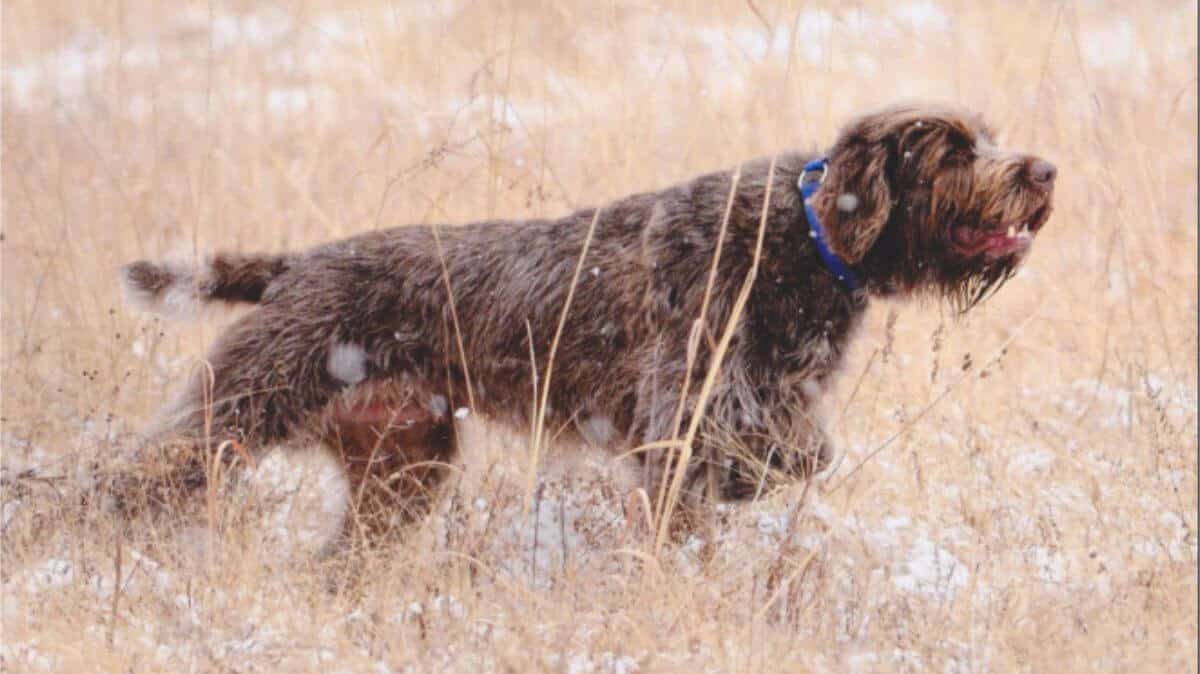
Explore the distinct traits, noble bearing, and judging essentials of the versatile Wirehaired Pointing Griffon.

Meet the Breeders
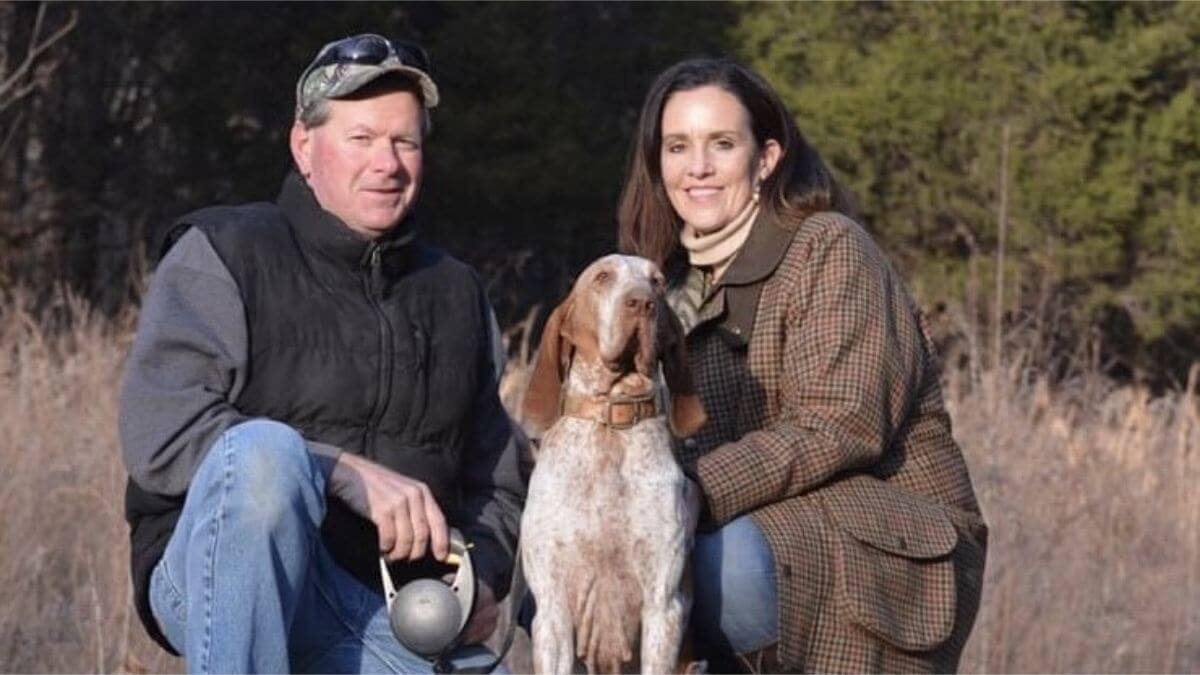
Kristi Libertore is the breeder behind Whiskey Hills Bracchi Italiani. Read about the kennel’s beginnings, puppies, and much more!
Meet the Breeders
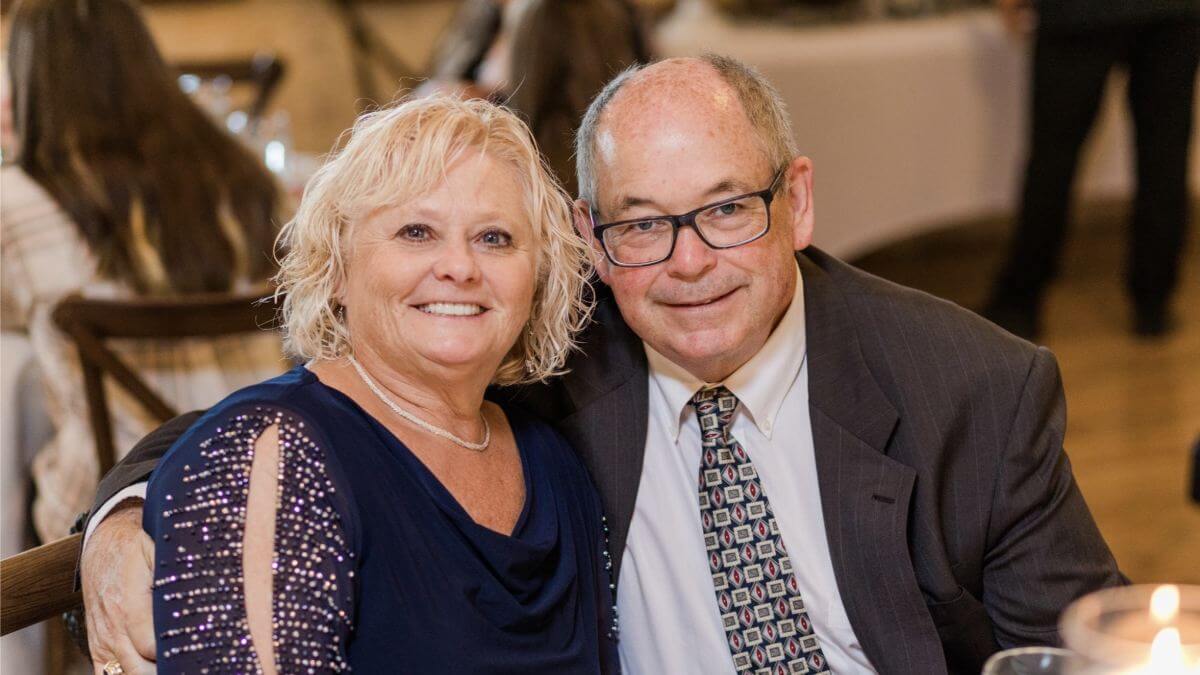
Lonnie & Marsha’Carroll are the breeders behind Bear Hug Wirehaired Pointing Griffons. Read about the kennel’s beginnings, puppies, and more!

Dog Clubs
Discover the achievements of Wirehaired Pointing Griffons and the AWPGA. Learn about their excellence in hunting, showing, and more!
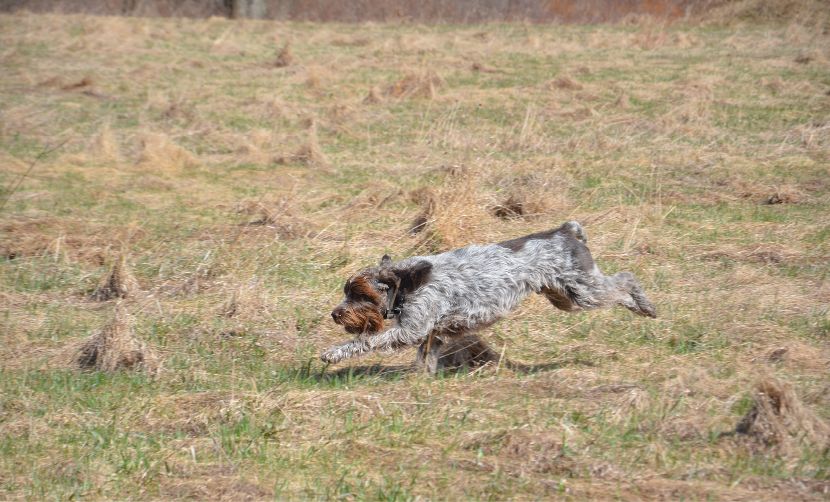
Form And Function Of The Wirehaired Pointing Griffon | American architect Louis Sullivan famously coined the phrase, “form follows function”
The tail of the Wirehaired Pointing Griffon is an extension of the dog’s topline. It is carried straight or is slightly raised, and it moves in a manner that expresses the dog’s keen interest and activity level, especially when in motion or while working in the field.
Traditionally, the tail is docked to approximately 40 to 60 percent of its full length. This practice is rooted in the breed's hunting heritage, where a shorter tail is thought to prevent injuries in the rough underbrush. In countries where docking is prohibited, the tail is left in its natural state.
Whether docked or natural, the tail's appearance is enhanced by the wiry coat, which provides protection and adds to the overall unkempt look of the breed. The tail does not have excessive feathering, keeping with the practical and unadorned aesthetic that is a hallmark of the breed's functional design.
A Note About Color: The color of the Griffon's coat is ideally steel gray with brown markings or roan, white, and brown. A solid brown coat, all-white coat, or white and orange coat are less desirable, and a black coat is unacceptable.
Coat Type
Wiry, Double
The structure of the coat this breed carries.
Coat Length
Medium
How long the breed's coat grows when kept in condition.
Adaptability Level
How easily a breed copes with changes in home, routine, noise and weather.
Mental Stimulation Needs
How much a breed needs a job, a puzzle or training to stay content.
Feeding a Wirehaired Pointing Griffon appropriately is essential to maintain their health and energy levels. As puppies, they require a diet formulated for active breeds with a growth pattern that supports their energetic nature. It is often recommended to feed them high-quality puppy food divided into three to four meals a day to support their rapid growth phase.
As adults, the breed's diet should be adjusted to match their activity level. A high-quality commercial dog food or a well-balanced homemade diet, under veterinary guidance, should suffice. The amount of food, typically measured in cups, can vary depending on the dog's size, age, and activity level. On average, an adult Wirehaired Pointing Griffon may require between 2 to 3 cups of dry dog food per day, ideally divided into two meals to prevent bloating and promote digestive health.
Regular feeding schedules and avoiding excessive treats are key to preventing obesity, especially as the breed may slow down with age. Fresh water should be available at all times, and dietary needs may change as the dog ages or if there are health concerns, so it is important to regularly discuss nutrition with a veterinarian. An optimally fed Wirehaired Pointing Griffon is usually a healthy and happy companion, ready for whatever activities the day may bring.
Training a Wirehaired Pointing Griffon requires patience and consistency, given their independent nature and high intelligence. They respond best to positive reinforcement techniques, such as treats and praise, rather than harsh corrections. This breed possesses a natural instinct for hunting and pointing, so their training should start early, especially to hone these skills for those who wish to use them in the field.
While they are intelligent and capable of learning a wide variety of commands and tasks, Griffons can exhibit a stubborn streak. Early socialization and puppy training classes are recommended to help them develop into well-adjusted adults. They have a moderate tendency to bark, which can be managed with proper training and socialization.
Their intelligence means they can be easy to train in the right hands, but it also means they can get bored easily. Therefore, training sessions should be kept engaging and varied to hold their attention. Despite their hunting background, Wirehaired Pointing Griffon's predation instinct is generally not as high as some other breeds, but they will chase wildlife if given the opportunity, so a reliable recall is essential.
Given their working breed heritage, Griffons also have a moderate wanderlust potential. Training should include a strong emphasis on recall and boundaries to ensure they do not stray too far during outdoor adventures. With the right approach, a Wirehaired Pointing Griffon can be a joy to train and will develop into a loyal and obedient companion.
Grooming Expectations
Brushing a couple of times a week is generally sufficient to remove dead hair and prevent matting. The coat does not shed excessively, but it does shed, and routine brushing will help to manage loose hair and maintain the coat's condition. In addition to brushing, the coat may require hand-stripping or clipping to remove dead hair and encourage new growth, particularly for those dogs that are shown or that have longer coats. Hand-stripping is a technique used to pull out the dead outer coat, and it is generally done a few times a year, depending on the dog's coat growth cycle. It's also important to attend to other grooming tasks such as cleaning the ears to prevent infections, trimming the nails to avoid overgrowth and splitting, and dental care to ensure good oral health. Regular grooming sessions are not only a necessity for the breed's coat and health but also provide an opportunity to strengthen the bond between the dog and their human companion. With consistent grooming, this breed can remain a handsome and happy participant in all of life's adventures.