Members
The Weekly Brief
The best of SHOWSIGHT editorials, weekly wins, and breeder commentary — delivered to your inbox every Sunday morning.
The ultimate award in the Breed rings at a show is the ribbon handed to the winner declared as Best of Breed (or Best of Variety), and those words are printed on the ribbon. It does not declare best-moving dog, best-presented dog, most-winning dog, best handler, most prestigiously owned dog, the dog most likely to do well in the Group competition... but simply Best of Breed, implying that it is the best example of the breed in the ring on the day.
At the starter level, the tools which equip a person to judge are basic: an under-standing of conformation and movement, and a detailed knowledge of the Breed Standard and the ability to apply this to the dogs in the ring. Throw in a knowledge of the original function of the breed and the judge might do a decent job. However, experience has taught me that a knowledge of breed type goes beyond the Breed Standard, and a good grasp of it comes over time with a deeper involvement with the breed.
In my early judging career days, I undertook a new breed at championship level, confident in the two basics and applying them to the dogs presented to me. However, it was always my practice after judging to seek out a review with a respected breed specialist, prepared for brickbats or bouquets, for these were learning experiences. From these discussions I soon discovered that every judging experience is a learning curve, even these days after 50 years of judging experience. One of the criticisms that stung me most would be the comment about my Best of Breed as “more of an all-rounder’s dog,” implying that it was sound and decent but lacking in some aspects of breed type. So, my next quest was to develop a grasp of TYPE in every breed I judged.
Of course, it did not come easily and I hope I have learned from my mistakes. On one occasion I was judging overseas, and in the Group rewarded a very handsome dog with the Group and was delighted to see another judge award the dog Best in Show. A year or so later, I was judging the breed at a show in a different country and into the Champion class trotted a very attractive dog, a great mover and showman, in superb condition and with a very adept handler with the look of confidence and entitlement; he had come to win! After examining the dog on the table and applying the Breed Standard, and after going over the other dogs and comparing them, I realized that the attractive dog did not fit with the others I liked in the breed and he went out unplaced (the handler looking deflated). After the judging, I saw ringside one of the world specialists in the breed, a friend for many years, and told him my feelings about the dog and why I had not placed him: a handsome dog but not possessing some features of breed type. He smiled and replied, “Yes, Frank, you are absolutely right, but perhaps you should explain that to the handler as that was the dog who won the Group under you in France last year!”
Red-faced when I recalled the show and the dog, but here was a real moment of learning. Group judging might well throw up such occasions when these dogs win because they are attractive show dogs rather than great examples of their breed type. And it enforces even more the importance of judging for type in the Breed rings so that the dogs going forward into Group competition are the best examples of their breed. I have experienced this more than once in my judging: liking a dog in the Group and being disappointed with it when later judging it in the Breed.
These days there are more extended Breed Standards written by breed clubs. In the US, you have been fortunate to have had these for many years, as the Breed Standards are owned by the clubs, whereas in the UK, the Breed Standards are maintained by the Royal Kennel Club, adjusted when necessary because breed clubs have requested alterations in the substance of the Standard or in its wording. Our Kennel Club has its own style of expression and construction, and I am aware that some are considered too vague by breeders and exhibitors and judges (myself included), and I speak as past chairman of that committee for 15 years.
I am an avid reader of Breed Standards and I still notice when clearer expression is needed, when there are details missing. I am frustrated when Standards describe which features should NOT be apparent, e.g., “eye not too large” or “ bone not heavy” or vagueness like “chest as deep as possible.” So, the quality of the descriptions in the Breed Standard impacts upon the knowledge and understanding of the judge. I confess that I often go to your AKC Standards for a fuller description, especially for your national breeds or breeds developed in America.
However, I believe the nuances of breed type are really grasped by having more experience in the breed, by watching respected judges, both breed specialists and non-specialists alike, going through their entry and picking out dogs of a certain pattern and possessing the same features. This is judging for TYPE by recognizing the pattern for a breed, and this helps to develop the eye for type in a breed.
I was fortunate to study for five years at the University of Leeds, not only because of its excellent school of English Literature for my academic studies, but I had an extra bonus (which I discovered after I had started there—honest!) that Leeds was the location for many of the northern breed clubs to hold their championship shows. I spent many happy weekends at the historic Corn Exchange building, seeing great dogs in many breeds, famous breeders with their dogs, and famous judges at work. I took the opportunity to talk with breeders and exhibitors about their breeds, so this provided me with a second education... on breed type. And I mention here two very special moments from those shows when I learned about movement and style as important parts of breed type, and that all breeds do not move the same.
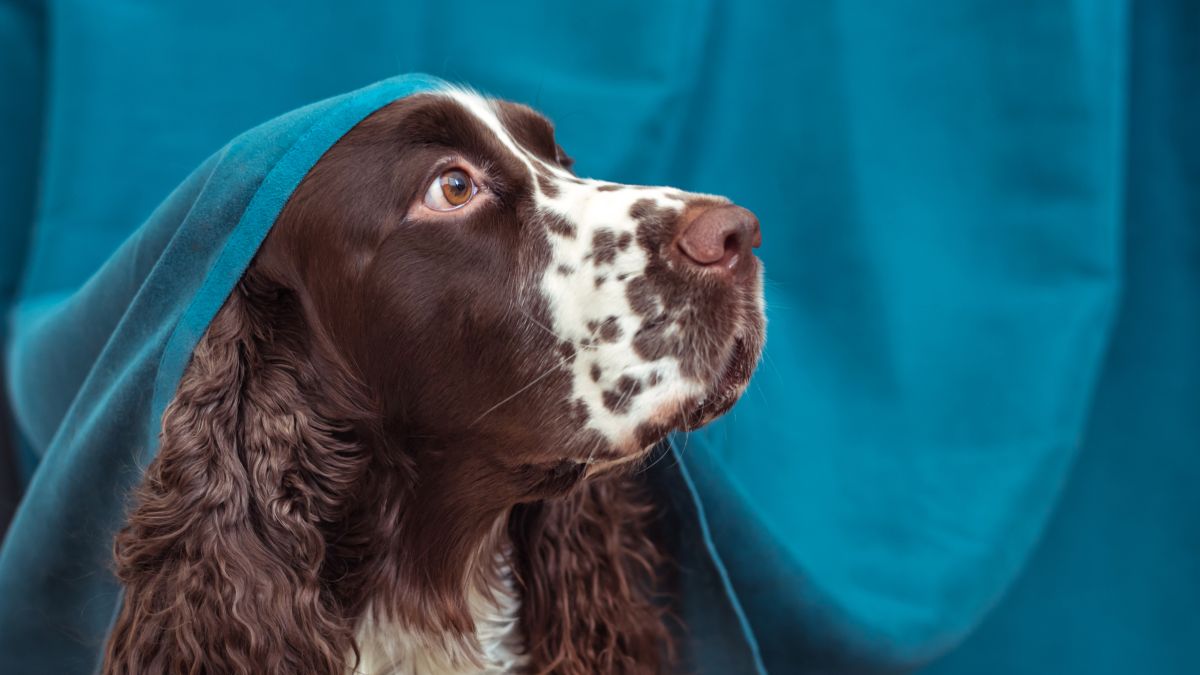
At an English Springer Spaniel Championship show, I was fortunate to meet the late Jimmy Cudworth and Judith Hancock of Hawkhill fame; the Hawkhill type was the pattern for the breed. Perhaps their most famous dog was SH CH Hawkhill Connaught, Dog of the Year in the UK on at least one occasion. They pointed out the good movers in the breed, and by this I refer not to dogs that were sound front and rear but those that had the breed-specific movement—the swing from the shoulder which is something special for the breed (and relatively rare nowadays). Similarly, at an Afghan Hound show there, I saw dogs with the light, lifting gait with proud head carriage and wonderful tail carriage, all contributing to what our Standard calls “style of a high order.” Only recently I saw this when judging the breed, in a dog who was not outstanding on the stack but on the move went to another level, and it was all absolutely natural on a loose lead with a handler who was not the most gifted. It gave me goosebumps. Isn’t it amazing that when seeing something so correct and typical it can give you a real buzz? It took me back to my student years, and I am still nostalgic about those days.
Another help to understanding breed type is the study of books and looking at photographs of the breeds in the past, to see which features were apparent in the breed then and the changes apparent now. This is particularly beneficial in breeds which have dwindled in popularity and which are now not seen in such numbers in the show ring. In the UK, many of the trimmed terriers are no longer as numerous as they were; canine annuals from the 1940s and 1950s show the many breeders of Sealyhams and Welsh and Fox Terriers, to name but a few... and what an education lies in these photographs.
Recently, the RKC have formalized the process of ringside mentoring whereby a prospective judge sits ringside with an experienced breeder or judge to discuss dogs in the ring in confidential detail. Similarly, we now have the practice of student judges who may request to be a student in the ring with a judge who can explain features of a breed and also ask questions of the student. The judge then completes a report on the student’s readiness to judge or the need for further experience. This is a great way to learn about type, but the drawback is the time needed to be a good teacher: having a student slows down the judging process. The student judging process has long been established in some FCI countries, especially in Scandinavia.
When I started my interest in dog shows and judging, it was a much quoted belief that the specialist judge prioritized breed type, whereas for a non-specialist, soundness came first. That was a very simplistic generalization and might have led to many dogs becoming champions... it did, and I can remember some and they still exist. I am sure some readers can think of dogs within their breed that became champions, and Group-winning dogs that were not particularly good specimens of their breeds but were perhaps well-constructed, good-moving dogs with good ring presence and were well presented. They were generic show dogs and took top awards, defeating dogs that possessed more type. Well, soundness is a positive quality, but soundness without type can be detrimental to a breed. The danger is that when the generic show dog wins big, the audience seeing it, be they other judges or exhibitors, might well assume that it is a good example of the breed. Judges might rush to join the fan club and play “follow my leader,” and breeders and exhibitors, wanting to get on the winning trail, breed to it, and gradually this can lead to more dogs of the same features in the breed—and the breed is changed and type is lost. I can think of dogs that win Group and Best in Show awards but have never won a major Breed award from a specialist in the breed. That’s bad, in my opinion. Remember when dog shows were originally held to promote the best breeding stock? Is winning more important than type these days? In a breeding program, soundness without type is not a good choice. What is wanted by the breeder and the judge is type WITH soundness.
The UK was once proclaimed as the cradle of breed specialist judges, and so it remains. For most general championship shows, the judging panel consists of a high proportion of breed specialists with a nucleus of all-rounder judges. This is economically viable because judges do not receive a fee for judging in the UK. Most shows offer travel expense to judges, and if distance warrants it, hospitality for the night before the show. Some judges judge in an honorary capacity, deeming it a privilege to be invited. Sometimes, breeds will air their opinion on judging panels in their breed notes in the media if they think that the balance of specialists and non-specialists is undesirable, with too many non-specialists judging the breed.
Stateside and in FCI shows around the world, this might not be economically viable, as all-rounder judges are needed to cover a number of breeds each day, and for that they are paid a token daily fee. The danger lies in generic judging and what has recently been termed as “lemming judges.” When insecure in a breed, a judge might well be happy to fall for the attraction of a familiar, well-advertised, big-winning dog, irrespective of breed type. At the cluster shows, clean sweeps for one dog in a breed throughout the cluster must be very disheartening for other exhibitors, especially when the dog is not typey.
I think it is very healthy for breeds when general shows, and not just breed clubs, hire breed specialists occasionally. Crufts dog show uses many breed specialists, and more recently, has included more specialists from overseas to judge their breed, to cast a new, specialist opinion. This has been much appreciated, evidenced in big entries for those judges. At the World Dog Show in Italy recently, I was delighted to see their policy of bringing breed specialists from home and abroad to judge popular breeds which bring in a lot of money for the shows with their big numbers: Retrievers, Poodles, and English Cockers are examples. I hope other WDS hosts will follow this lead. In too many of the World Shows, the schedules have been heavy with international canine politicians because of the nature of an FCI World Show. Italy has opened the door for progress in promoting more type judging in the Breed rings.
My book, Judging the Gundog Breeds, was originally written as “JUDGING FOR TYPE IN THE GUNDOG BREEDS” and I was persuaded (regretfully) to abbreviate it to its present title, for brevity and because the phrase “for type” made it sound too abstract. However, the text of the book emphasizes the importance of type by using the rather unsubtle large font on the word: TYPE. At a grass roots level, when I am leading a general breed seminar, I ask participants to write down the most important features of their breed on a note card which they would give to a non-specialist about to judge their breed. This makes them focus on breed type. I then ask for volunteers to stand up and, without naming their breed, read out their focus points. Then we see if the audience can recognize the breed. Some doggy friends have adapted this as a party game.
I keep my own compact note cards on every breed. They focus on type essentials. For me, one of the key indicators for breed type is the shape or outline of the dog; its proportions of length to height; the proportions of leg length to body depth. Can you identify the breed from a blacked-out silhouette? I use these at seminars too. Type versus soundness is a no-brainer. The good judge should demand both. All-rounder versus specialist? I was fortunate enough to have the late RM James (Bobby) as a mentor. He had a wonderful eye for breed type in every breed he judged and I try to follow his advice: “Try to judge every breed as a specialist.” Judging for correct breed type is one way that judges can preserve and protect our breeds.
From grass roots Breed judging to Group and Best in Show judging, type must play the big part... the window dressing can come later!

All About Judging