01/Overview
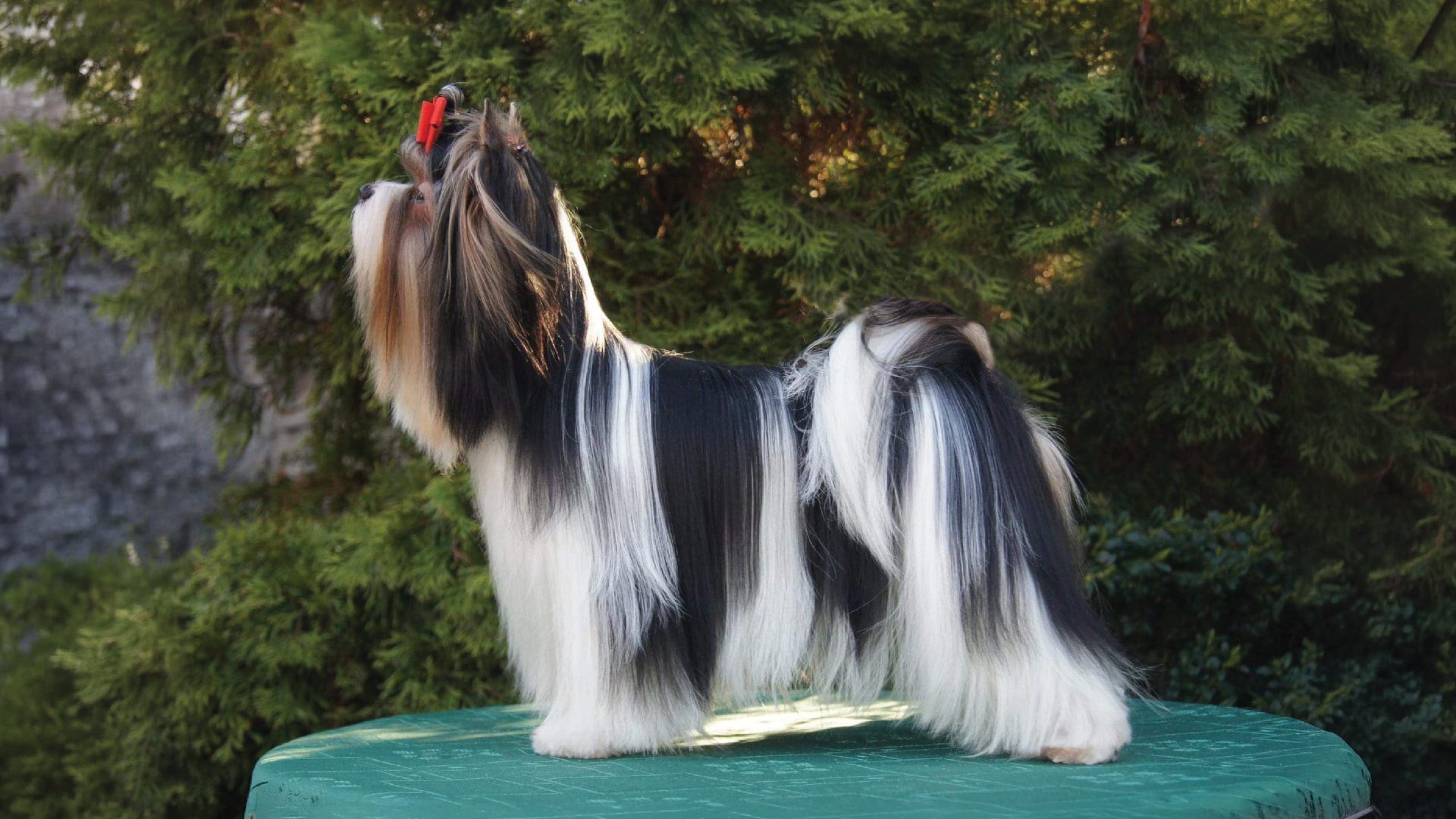
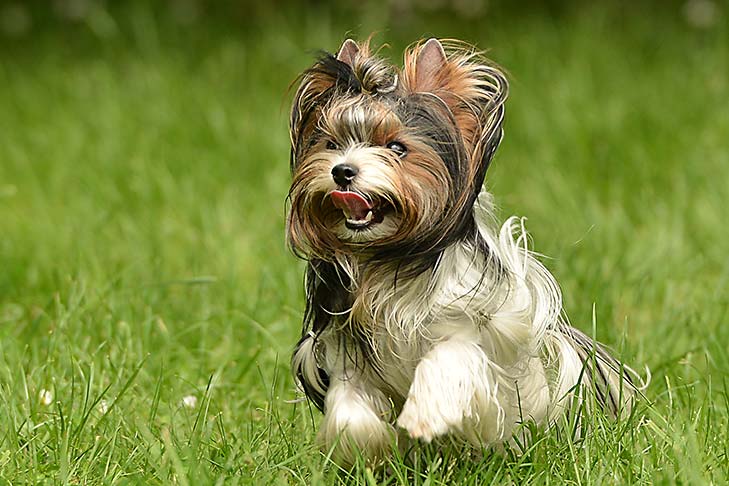
The Biewer Terrier is a small, elegant companion breed known for its long, silky coat, distinctive tri-colored pattern, and lively personality. Pronounced “Beaver,” the breed is affectionate, intelligent, playful, and often closely attached to its family.
Although similar in appearance to the Yorkshire Terrier, the Biewer Terrier is recognized as a separate breed with its own history and Breed Standard.
Highlights
02/History
The Biewer Terrier originated in Germany in the 1980s with Yorkshire Terrier breeders Werner and Gertrud Biewer. The breed’s development began when a Yorkshire Terrier litter produced a puppy with unusual white markings caused by a recessive piebald gene.
The Biewers were intrigued by the puppy’s distinctive coloring and began selectively breeding for dogs with the same tri-colored appearance. These dogs became known as Biewer Yorkshire Terriers and later as Biewer Terriers.
The first dogs of this type were introduced publicly in Germany during the 1980s, where their long, flowing coats and white, black, and tan coloring attracted attention among toy dog enthusiasts.
As the breed developed, breeders worked to establish a consistent appearance and temperament. Biewer Terriers were eventually imported into the United States, where interest in the breed continued to grow.
Modern genetic research helped confirm the Biewer Terrier as a distinct breed population rather than simply a color variation of the Yorkshire Terrier. This played an important role in establishing the breed’s independent identity.
The American Kennel Club accepted the Biewer Terrier into the Foundation Stock Service in 2014 and later into the Miscellaneous Class. The breed received full AKC recognition in 2021 and was placed in the Toy Group.
03/Appearance
An adult Biewer Terrier stands approximately 7 to 11 inches tall at the withers and typically weighs between 4 and 8 pounds.
Skull: The Biewer Terrier has a slightly rounded skull that is proportionate to the body and refined in appearance. The head should not appear coarse or overly heavy.
Expression: The expression is bright, alert, and intelligent, with a lively and curious appearance.
Eyes: The eyes are medium in size, round or slightly oval, and dark in color. They should be set to give the dog an attentive and expressive look.
Ears: The ears are small, V-shaped, set high, and carried erect. They are covered with hair and should contribute to the breed’s alert expression.
Muzzle: The muzzle is moderate in length, clean, and well proportioned to the skull, tapering slightly toward the nose.
Nose: The nose is small and dark, with pigmentation that complements the dog’s coloring.
Bite: The Biewer Terrier has a scissor bite, although a level bite is acceptable.
The Biewer Terrier is a small, fine-boned, elegant Toy breed with a compact and balanced outline. The body is slightly longer than tall, with a level topline and enough substance to appear sturdy without looking coarse.
The chest is moderately broad and deep, and the body should have good balance between the front and rear. Bone is light but sufficient for the breed’s size, supporting smooth, confident movement.
The overall impression should be graceful and refined, with a lively carriage and a flowing coat that enhances the breed’s elegant appearance.
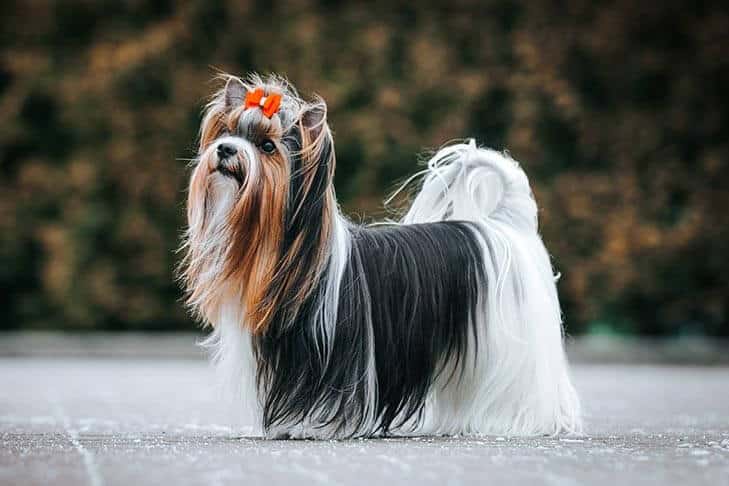
Texture: The Biewer Terrier has a long, straight, silky coat that falls evenly on both sides of the body. The hair should be fine in texture, smooth, and flowing without appearing woolly or overly heavy.
Standard Colors
Standard Markings
04/Consider
The Biewer Terrier is affectionate, lively, intelligent, and closely attached to its family. Anyone considering the breed should be prepared for regular coat care, early socialization, consistent training, regular dental care, and moderate daily exercise suited to a small companion dog.
Interaction With Family
The level of affection a breed typically shows towards family members and familiar individuals.
Good With Other Dogs
The innate friendliness of a dog towards other dogs can depend on its breed.
Good With Young Children
The degree to which a breed will typically be patient with young children.
Amount Of Shedding
How much hair a breed typically leaves behind on clothes, furniture and floors.
Frequency Of Grooming
How often a breed needs brushing, bathing or a professional trim to stay in condition.
Amount Of Drooling
How prone a breed is to drool — worth knowing before you keep a towel by the door.
Openness To Strangers
How openly a breed tends to greet new people, visitors and strangers.
Protective Nature
How likely a breed is to alert you to — and stand between you and — anything unfamiliar.
Playfulness Level
How enthusiastic a breed stays about games and play well past puppyhood.
Trainability Level
How readily a breed takes direction and works with you rather than around you.
Barking Level
How much a breed uses its voice, and how readily.
Energy Level
How much get-up-and-go a breed brings to an average day.
Health
The Biewer Terrier is generally a healthy and long-lived breed with a typical lifespan of 16 years or more. Preventive veterinary care, balanced nutrition, regular exercise, dental care, and maintenance of a healthy weight can help support long-term health.
The Biewer Terrier can adapt well to apartment or house living as long as it receives regular exercise, companionship, and mental stimulation. Its small size makes it easy to accommodate, but the breed still benefits from an active daily routine.
Biewers often enjoy staying close to their families and may not do well when left alone for long periods. Their small size also means care should be taken around young children, stairs, high furniture, and larger dogs.
The breed usually does best with people who appreciate an affectionate, playful, and alert companion. Regular interaction, consistent routines, and proper coat care help the Biewer Terrier thrive.
Exercise Expectations
A healthy adult generally benefits from about 30 to 45 minutes of activity each day, divided into manageable sessions. Trick training, scent games, and secure opportunities to explore can provide additional mental stimulation. Exercise should be adjusted to the dog’s age and fitness level. Care should also be taken around rough play, high furniture, and uncontrolled interaction with much larger dogs.
Grooming Expectations
The Biewer Terrier can adapt well to apartment or house living as long as it receives regular exercise, companionship, and mental stimulation. Its small size makes it easy to accommodate, but the breed still benefits from an active daily routine.
Biewers often enjoy staying close to their families and may not do well when left alone for long periods. Their small size also means care should be taken around young children, stairs, high furniture, and larger dogs.
The breed usually does best with people who appreciate an affectionate, playful, and alert companion. Regular interaction, consistent routines, and proper coat care help the Biewer Terrier thrive.
05/Puppies
Biewer Terrier puppies are playful, affectionate, curious, and quick to become closely attached to their families. They benefit from early socialization, gentle handling, consistent routines, and positive training from an early age.
A Biewer Terrier puppy should have a predictable daily schedule that includes regular meals, potty breaks, naps, play, training, and quiet time. A crate or secure puppy area can provide a safe place to rest and can also support housetraining.
Early socialization should introduce the puppy to different people, well-mannered dogs, household sounds, surfaces, vehicles, and unfamiliar environments. These experiences should remain positive and appropriate for the puppy’s age.
Training can begin as soon as the puppy arrives in its new home. Short sessions can focus on name response, recall, leash walking, house training, basic manners, and calm behavior around visitors. Because the breed is intelligent and can be independent, clear and consistent expectations are especially helpful.
A puppy should receive a complete and balanced diet formulated for growth. Young puppies generally do best with several small meals throughout the day before gradually transitioning to an adult feeding schedule.
Exercise should include supervised play, short walks, and gentle exploration. Care should be taken around stairs, high furniture, rough play, and much larger dogs because of the breed’s small size.
Regular veterinary visits are important during the first year. Grooming routines such as brushing, combing, nail trimming, ear checks, and tooth brushing should also begin early so that the puppy becomes comfortable with regular handling.
06/Activities
Biewer Terriers are intelligent, lively, and responsive dogs that often enjoy activities involving movement, problem-solving, and close cooperation with a handler. Here are some of the dog sports and activities in which Biewer Terriers may participate:
Agility: Biewer Terriers can use their speed, balance, and coordination while navigating obstacle courses.
Obedience: Obedience Trials allow the breed to demonstrate focus, responsiveness, and reliable performance with a handler.
Rally: Rally Obedience combines obedience exercises with movement through a designated course and can provide both mental and physical stimulation.
Fast CAT: This timed 100-yard dash gives the Biewer Terrier an opportunity to use its speed and enthusiasm for running.
Scent Work: Biewer Terriers can use their sense of smell to locate specific odors hidden in containers, indoor spaces, outdoor areas, or vehicles.
Conformation Shows: Biewer Terriers compete in Conformation Shows, where judges evaluate each dog according to the Breed Standard, including structure, movement, coat, expression, temperament, and overall type.
Trick Dog: Trick training provides mental stimulation and gives the Biewer Terrier an enjoyable way to use its intelligence and eagerness to learn.
Therapy Work: A calm, friendly, and well-socialized Biewer Terrier may participate in therapy visits to hospitals, schools, assisted living facilities, and other settings.
Canine Good Citizen: Biewer Terriers may participate in programs that evaluate everyday manners, social behavior, and reliability around people and other dogs.
Gallery
07/Standards
The Biewer Terrier is recognized by the world’s leading registries and kennel organizations, which categorize the breed into a specific Group based on its unique characteristics. This breed is recognized worldwide under the following Group designations:
The ideal Biewer Terrier is described by a Breed Standard that is approved by each of the world’s leading registries and kennel organizations. The Standards for this breed may be found in the following links:
08/Clubs
Biewer Terrier clubs support breed education, responsible breeding, health initiatives, Conformation shows, Performance events, and adherence to the Breed Standard.
Biewer Terrier Club of America: Founded in 2007, this is the national breed club for the Biewer Terrier in the United States and the breed’s AKC parent club.
Biewer Terrier Club of Canada: Established in 2018, Canada’s national organization for the breed welcomes breeders, exhibitors, and all other Biewer enthusiasts.
09/Rescue
Breed-specific rescue organizations help Biewer Terriers that have been surrendered, abandoned, or found in shelters. These groups may provide foster care, veterinary treatment, behavioral evaluation, and placement with an appropriate adoptive family.
Biewer Terrier Club of America Rescue Resources: The breed’s AKC parent club can provide rescue contacts, referrals, or guidance for Biewer Terriers needing placement in the United States.
Biewer Terrier Club of Canada: Canada’s national breed club may provide information or referrals for Biewer Terriers needing rescue or rehoming.
Because the Biewer Terrier is still a relatively uncommon breed, dedicated rescue organizations may be limited. Local shelters, Toy breed rescue groups, Yorkshire Terrier rescue organizations, and national adoption databases can provide additional options for finding a Biewer Terrier or Biewer mix in need of a home.
10/Facts
Developed in Germany
The Biewer Terrier originated in Germany in the 1980s through the breeding program of Werner and Gertrud Biewer.
A Distinct Breed
The Biewer Terrier is recognized as a separate breed rather than simply a color variation of the Yorkshire Terrier.
Known for Its Tri-Colored Coat
The breed is especially recognizable for its long, silky coat and combinations of white and tan with black, blue, or chocolate.
Small but Lively
Despite its toy size, the Biewer Terrier is active, playful, and capable of participating in activities such as Agility, Rally, Fast CAT, and Trick Dog.
11/FAQ
Biewer Terriers can make excellent pets for people who want an affectionate, playful, and lively companion. They usually do best with regular interaction, consistent training, and gentle handling.
Official Standard of the Biewer Terrier
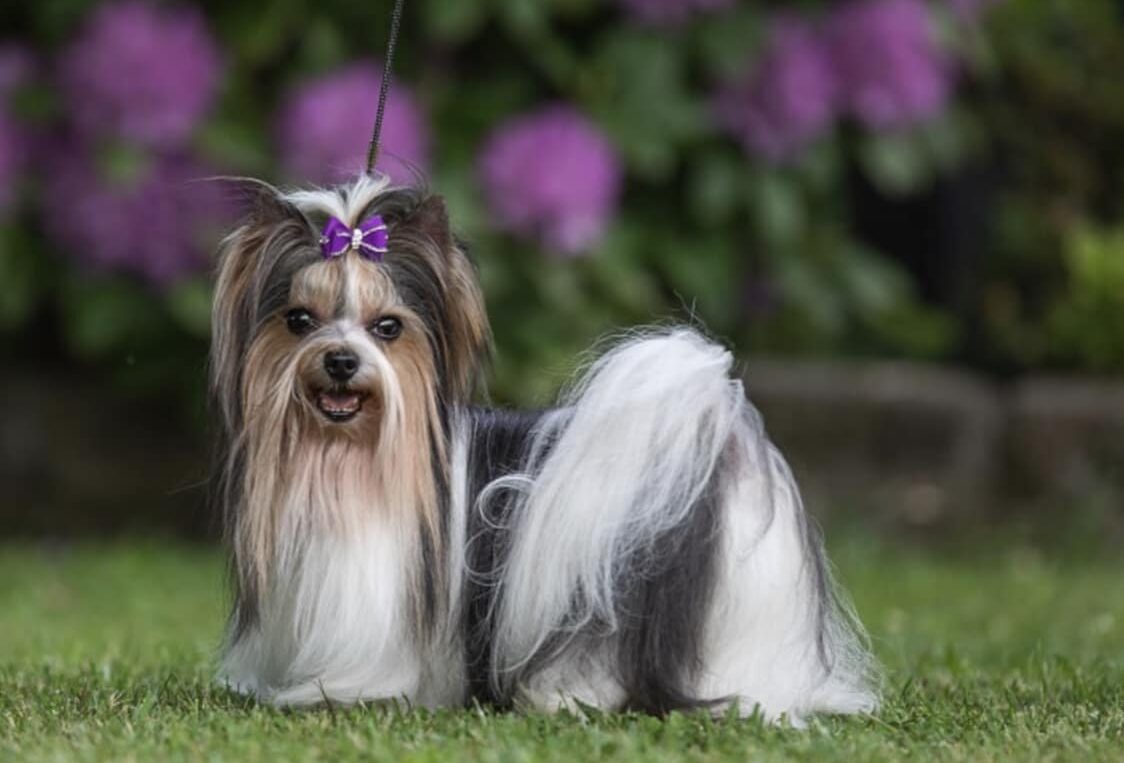
General Appearance: The Biewer Terrier is an elegant, longhaired, tri-colored toy terrier with a distinctive, breed signature ponytail. The coat parts down the middle, hanging straight and evenly on both sides of the body. The back is level, with the height at the withers equal to the height at the croup. The body length is slightly longer than tall, although square is acceptable. The tail is set high and carried well-arched over the body, covered with a long, flowing plume. The Biewer Terrier is alert and eager.
Size, Proportion, Substance: The height at the withers is equal to the height at the croup, measuring 8 to 10 inches. The body length, measured from the prosternum to the ischium, is slightly longer than the height, although a square proportion is acceptable. The body is fine to medium-boned with a level topline. Serious fault – Height over 11 inches.
Head: The expression is engaging, bright and intelligent. The eyes are medium sized, dark, and expressive, with the iris as dark as possible, showing no flecks of blue. The ears are small, erect, V-shaped, set high and moderately wide, covered with hair except for the tips which are shaved. The skull is slightly rounded, and the muzzle is one-third the length of the head. The skull and muzzle are on parallel planes and meet at a moderate stop. The eye rims, nose, or lips are all completely black. The ideal bite is scissor, although a level bite is also acceptable. Serious fault - Incomplete pigment on the eye rims, nose, or lips; ears not standing erect. Disqualifications - Blue eye(s) or blue flecks in the iris; liver pigmentation of eye rims or nose.
Neck, Topline and Body: The neck is of moderate length. The backline is level. The body is slightly longer than tall, off square, although square is acceptable. The chest reaches the elbows, and the ribs are moderately sprung. The underline is slightly tucked up. The loin is well-developed and strong. The tail is set high when in motion, is carried in a well-arched position over the body, covered with a long, flowing plume. Serious faults - High in the front or rear, roach or rounded back.
Forequarters: The forelegs should be straight, with elbows neither in nor out, set close to the body. The shoulders are well angulated and laid back, the upper arm should be of equal length as the shoulder laid with good return, allowing for good reach and freedom of movement. The legs are straight and muscular, and the pasterns are upright and straight. Dewclaws may be removed. The feet are round, with toes well arched and covered in hair that is trimmed to neither impede movement nor obscure the shape of the foot. The pads can be black, flesh-colored, or a combination of both, while the nails can be black and/or white.
Hindquarters: The hindquarters are well-balanced with the forequarters, and the rear angulation matches the front. The hind legs are straight and muscular when viewed from behind with wellbent stifles. The hocks are short, well let down and straight when viewed from behind, neither turned in nor out. Dewclaws may be removed. The feet are round, with toes well arched and covered with hair that is trimmed to neither impede movement nor obscure the shape of the foot. The pads can be black, flesh-colored, or a combination of both, while the nails can be black and/or white.
Coat: The coat is long and flowing with a silky, smooth texture. It is straight, without an undercoat, and hangs close to the ground, if not touching it. The coat may be trimmed to floor length for ease of movement. The fall on the head is tied in a single fall, finished simply and adorned with a single bow. Excessive grooming on the head, such as ratting, teasing, or rollovers common to other breeds, shall be so severely penalized as to be eliminated from competition. The feet are trimmed for a neat, clean appearance, and the hair around the anus is trimmed. Eliminating faults - Head falls that display ratting, teasing or roll overs common to other breeds.
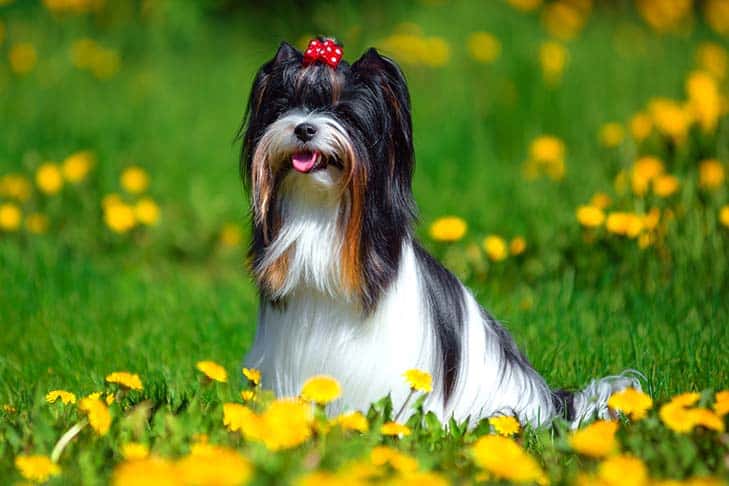
Color: The Biewer Terrier is defined by the placement of tan on the head. The ideal head coloring is black or blue, tan, and white in good symmetry. However, any combination of the following two color patterns – Black or blue with tan, or tan and white – is acceptable. The chin and throat should be white. Disqualification – A head lacking tan. Body Coloring - Body coloring is black or blue and white; a solid dog of either color is undesirable. The chest, legs, and tip of the tail should be white. The white on the chest must extend up the neck to the chin. The legs must be white from the elbows and stifles to the feet. A small amount of tan hair may be found around the anus, and trace amounts of tan or black may appear at the elbow, stifle, or on the feet. Any deviation from this is undesirable. Disqualification – Any color other than the tricolored pattern described above.
Gait: The Biewer Terrier moves confidently with a high head carriage. The movement should be graceful, smooth and straightforward. When viewed from the side, the backline remains level. The hind legs should track in line with the front legs, moving neither inward nor outward. The tail is carried in a well-arched position over the body while in motion. Serious Fault - Hackneyed gait.
Temperament: Intelligent and loyal, they are affectionate and playful, making them excellent companions and family dogs. The foregoing description represents the ideal Biewer Terrier. Any deviation from the described standard should be penalized in proportion to the extent of the deviation.
Serious Faults: Height over 11 inches; High in front or rear; Incomplete pigment on the eye rims, nose or lips; ears not standing erect; Hackneyed gait. Eliminating Faults: Head falls that display ratting, teasing, or roll overs common to other breeds.
Disqualifications: A head without tan; any color other than the tri-colored pattern described above; Blue eye(s) or blue flecks in the iris; liver pigmentation of eye rims or nose.
Approved February 5, 2026
Effective April 30, 2026


Kennel Clubs & Registries
Insights and photos from the Rocky Mountain Biewer Terrier Club Event which was held on September 14-18, 2022, in Cortez, Colorado.

Meet the Breeders
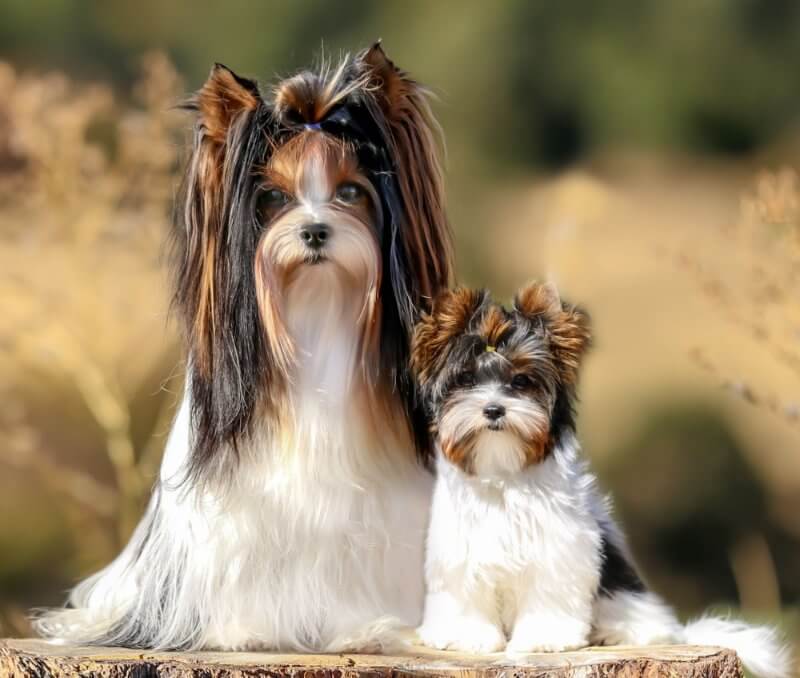
Interview with a Toy Group Breeder Diana Sparkowski – I currently live in Chesapeake, Virginia, and started my breed program in 2008.
Meet the Breeders
Interview with a Toy Group Breeder Karen Hansen – My family and I live on a ranch at the San Juan National Forrest in Colorado. I got my

All About Judging
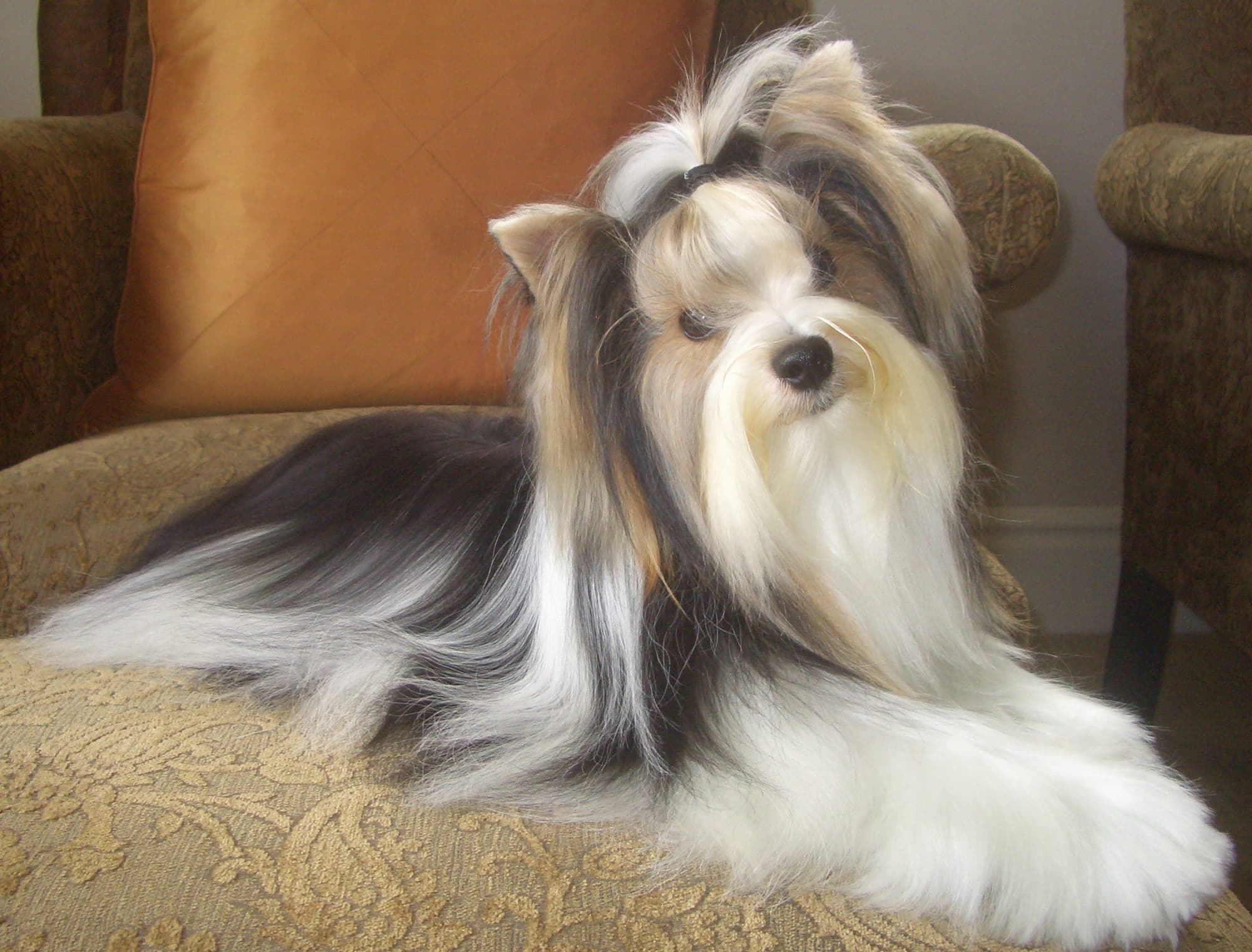
How to Judge the Biewer Terrier | It is with great excitement that the Biewer Terrier joined the AKC fully-recognized breeds on
Breed Conservation
The Biewer Terrier is a relatively new breed. What dogs should be used for breeding and what should be put in the show ring?
The Value of a Biewer Terrier Mentor | After falling in love with this breed, I started my journey with the Biewer Terrier in 2009.

American Kennel Club (AKC)
Biewer Terrier Becomes 197th to Receive Recognition New York, NY – The American Kennel Club (AKC®), the world’s largest purebred dog registry and leading advocate for dogs, announced today that the Biewer Terrier has received full recognition, and is eligible to compete in the Toy Group. This addition brings the number of AKC-recognized breeds to […]
The tail is set high and carried in an upward curve over the body, contributing to the breed’s lively and balanced outline. It is covered with long, flowing hair that forms a plume and enhances the breed’s elegant appearance.
A Note About Color: The Biewer Terrier is defined by the placement of tan on the head. The ideal head coloring is black or blue, tan, and white in good symmetry. However, any combination of the following two color patterns – black or blue with tan, or tan and white – is acceptable. The chin and throat should be white. A head lacking tan is a disqualification in the show ring. Body coloring is black or blue and white; a solid dog of either color is undesirable. The chest, legs, and tip of the tail should be white. The white on the chest must extend up the neck to the chin. The legs must be white from the elbows and stifles to the feet. A small amount of tan hair may be found around the anus, and trace amounts of tan or black may appear at the elbow, stifle, or on the feet. Any deviation from this is undesirable. Any coat color other than the tricolored pattern is a disqualification. The pads of the feet can be black, flesh-colored, or a combination of both, while the nails can be black and/or white. Liver pigment of the eye rims and nose is a disqualification.
Coat Type
Silky
The structure of the coat this breed carries.
Coat Length
Long
How long the breed's coat grows when kept in condition.
Adaptability Level
How easily a breed copes with changes in home, routine, noise and weather.
Mental Stimulation Needs
How much a breed needs a job, a puzzle or training to stay content.
A Biewer Terrier should receive a complete and balanced diet appropriate for the dog’s age, activity level, and body condition. Because the breed is small, portions should be measured carefully to avoid unwanted weight gain.
Most adults do well with two measured meals per day, while puppies may need three or four smaller meals as they grow. Treats can be useful during training but should remain a modest part of the dog’s total daily calorie intake.
Fresh water should always be available. Maintaining a lean body condition can help support mobility, joint health, and overall fitness.
The Biewer Terrier is intelligent and usually responds well to training when sessions are short, positive, and engaging. Food rewards, praise, toys, and play can all be effective motivators.
Early training should include recall, leash manners, house training, basic cues, impulse control, and calm behavior around visitors and other dogs. Socialization should also introduce the dog to a variety of people, surfaces, sounds, and environments.
Consistency is important because the breed can be independent and may test boundaries. Patient, reward-based methods generally work better than harsh corrections.
Particular attention should be given to the areas behind the ears, under the legs, around the feet, and beneath the collar or harness. Bathing can be done as needed, followed by thorough drying and gentle brushing. Nails should be trimmed regularly, ears should be checked for debris or irritation, and teeth should be brushed routinely. Dental care is especially important in small toy breeds.