01/Overview
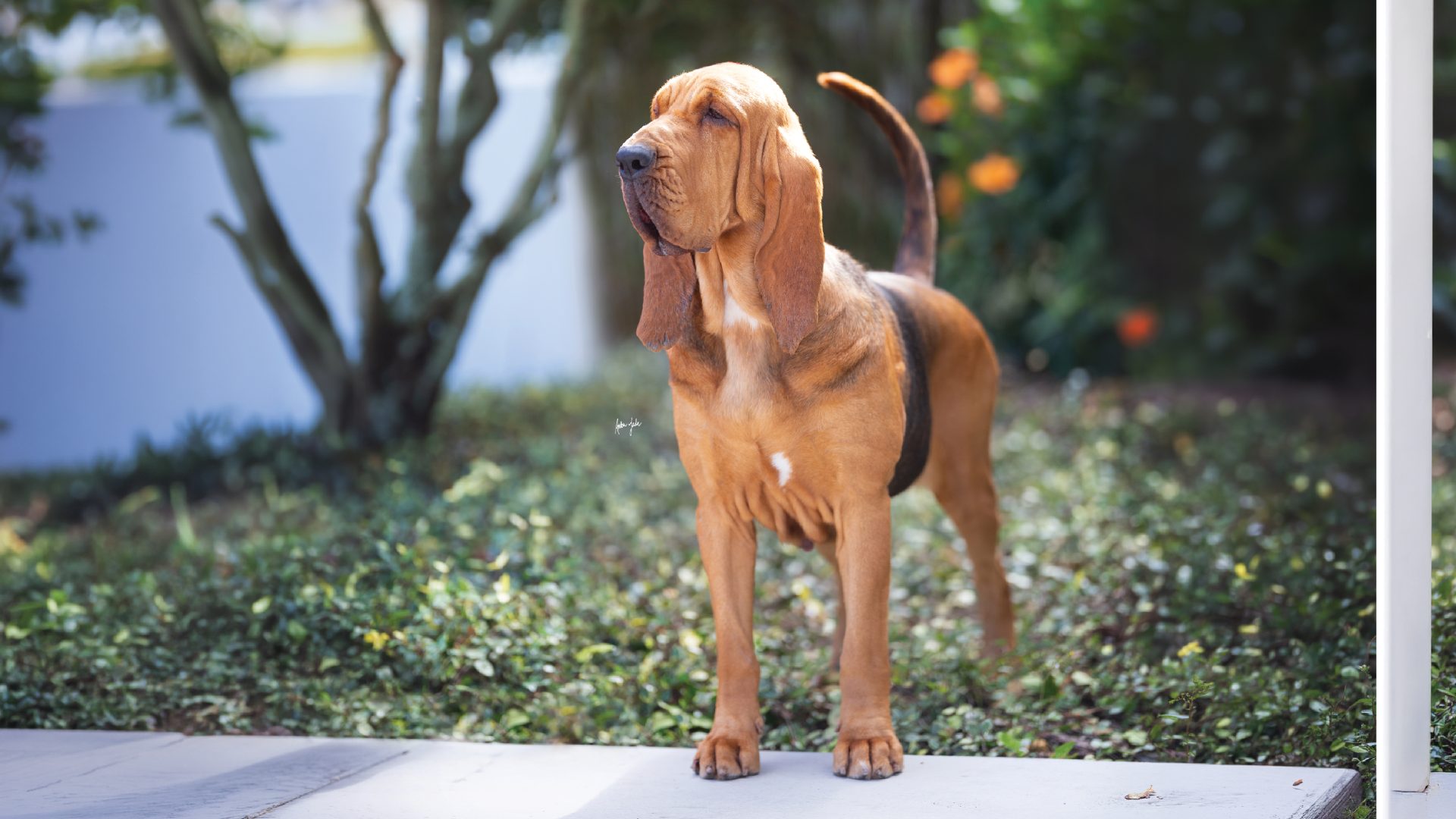
The Bloodhound is an ancient breed, famous for its unparalleled sense of smell and its strong trailing abilities. Often used by law enforcement for tracking purposes, these hounds are also gentle and affectionate companions, making them suitable in a family setting. And with their immense size, sagging skin, and distinctive voice, they have the ability to command attention wherever they work or play.
Highlights
02/History
The Bloodhound is a breed with a history that is steeped in legend. Its origins be traced back to ancient civilizations, but its name has often been the subject of intrigue and debate.
The roots of the Bloodhound lie in the monastic hounds kept by monks in Belgium, particularly to the 8th century at the Saint-Hubert Monastery . There, "St. Hubert Hounds" were kept and those hounds are generally considered the antecedents of today's breed. When the hounds made their way to England with William the Conqueror in 1066, they began to be developed and further refined.
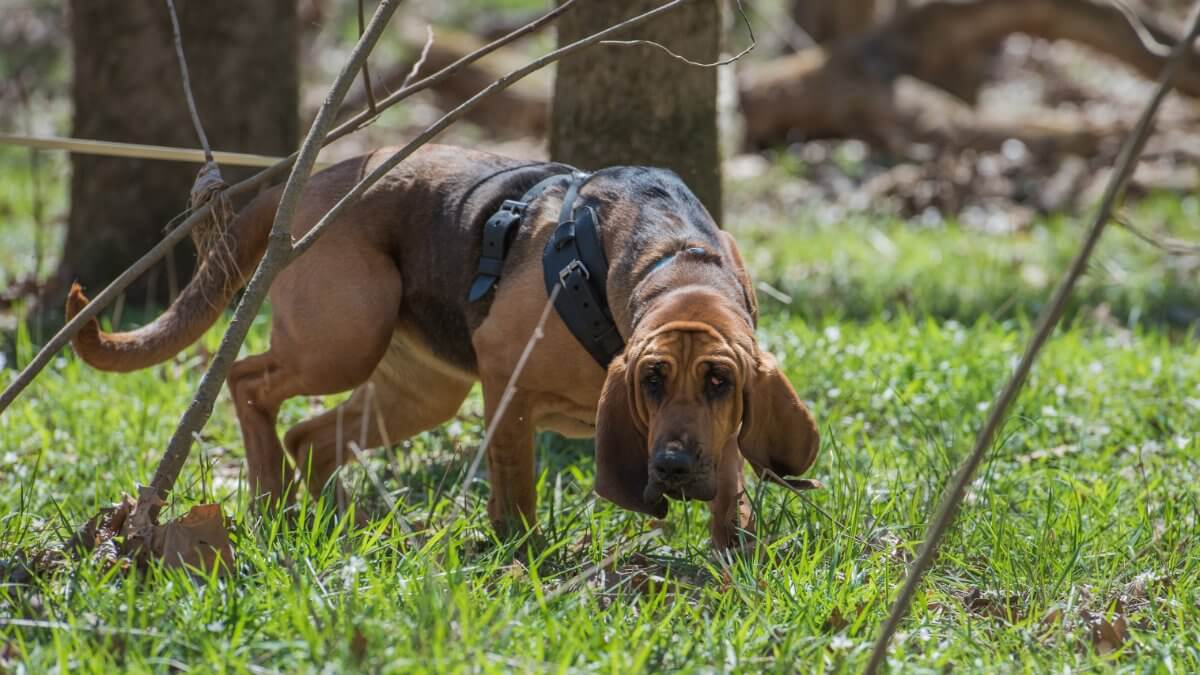
From its inception, the Bloodhound has been revered for its unparalleled abilities. Although it has always been employed in hunting to track game, especially deer and wild boar, its exceptional skill at following a human scent trail, even one that is several days old, became evident. As a result, the breed earned a reputation as a "sleuth-hound" and became instrumental for tracking down escaped inmates as well as for finding missing persons.
The Bloodhound's reputation ultimately crossed the Atlantic to the United States. The American Kennel Club (AKC) recognized the breed in 1885, making it one of the earliest breeds to gain such acknowledgment. Globally, the Fédération Cynologique Internationale (FCI) and The Royal Kennel Club (UK) have also recognized the breed, establing a written Breed Standard that recognizes this purebred for its unique characteristics and capabilities.
Throughout its long history, the Bloodhound has been both a loyal companion and an unmatched working partner. Its contributions in law enforcement, search and rescue operations, and even in the show ring have made it a breed of great significance in the modern world.
03/Appearance
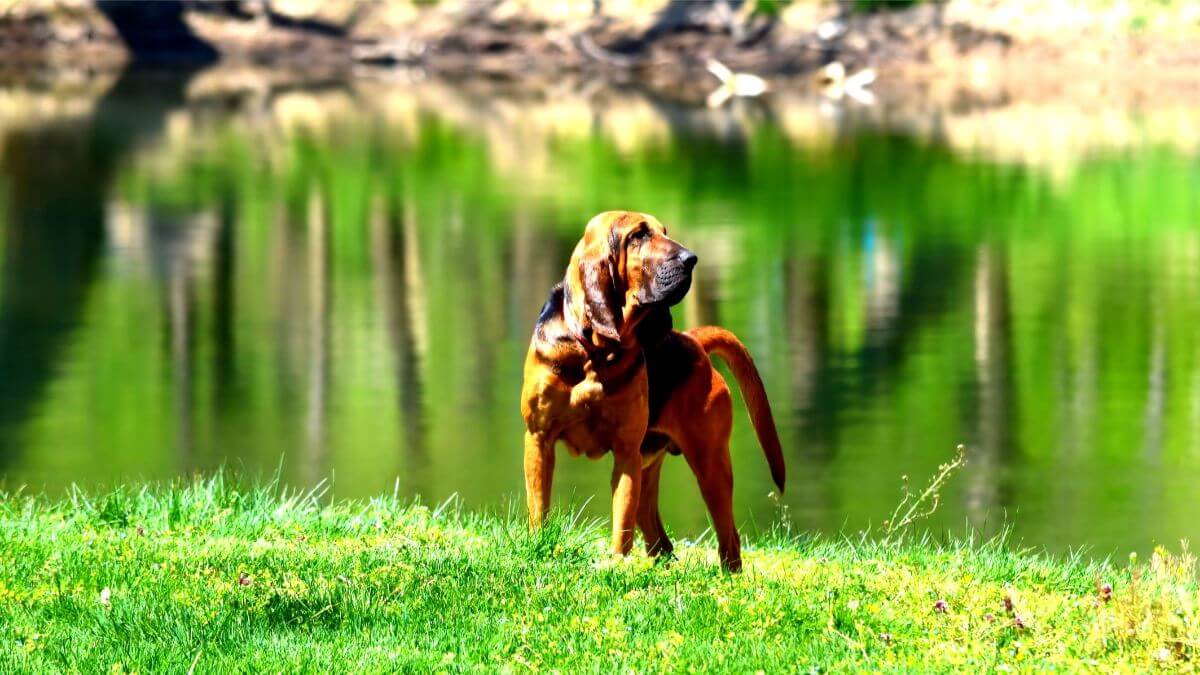
Adult male Bloodhounds typically stand between 25 and 27 inches tall at the shoulder, whereas mature females generally range from 23 to 25 inches.
In terms of weight, males usually weigh between 90 and 110 pounds, while females typically weigh around 80 to 100 pounds.
Skull: The Bloodhound’s skull is long and narrow in profile, with the occipital peak pronounced. It is slightly domed in profile, with brows that are not prominent.
Expression: This scenthound’s expression is one of dignified curiosity. Gentle yet determined, the eyes of this breed often a look of melancholy that is reflective of the hound’s deep concentration, especially when on a scent.
Eyes: The eyes are medium-sized, set deeply in their sockets, and come in shades from hazel to brown. The lower eyelids often show a characteristic droop, exposing a bit of the inner lining.
Ears: Set low and hanging in graceful folds, the ears are remarkably thin and soft to the touch. When drawn forward, they extend well beyond the tip of the nose.
Muzzle: The muzzle is long and deep, with a square outline in profile. Its length is emphasized by the pronounced stop between the eyes and nose.
Nose: Black in color and wide, the nose is typically moist, with well-opened nostrils. This feature is crucial for the dog’s superior olfactory abilities.
Bite: The Bloodhound possesses a level or scissors bite, where the upper incisors closely overlap the lower incisors.
The Bloodhound presents a harmonious balance of strength and stamina. While its body is slightly longer than it is tall, the majority of the breed’s length is attributed to its well-sprung rib cage rather than its loin. The elongated rib cage provides ample lung capacity, which is essential for the breed’s renowned endurance. This hound’s substantial bone structure complements its muscular build, indicative of both its power and its perseverance. The breed's loose, pendulous skin, especially noticeable around the head and neck, contrasts with its solid underlying physique. This unique combination of features underscores the breed's historical role as a dedicated and relentless tracker.
Texture: The Bloodhound boasts a coat that is short, dense, and weatherproof, with a slight sheen. The coat is designed to be both protective in inclement weather and resistant to damage, aiding these hounds in their tracking duties across overgrown and often difficult terrain. The breed's pliable skin, which forms a dewlap on the neck and gaskins on the hind legs, prevents the hound from becoming harmed in bramble and brush.
Markings: Tan Markings
Standard Colors
04/Consider
The decision to bring a Bloodhound into one’s life is never to be taken lightly. While the breed is celebrated for its unparalleled tracking abilities and gentle disposition, these hounds require specific care and attention to thrive in a family setting. Their keen sense of smell, while an asset in tracking and trailing, means they can be easily led astray if they catch an intriguing scent. Potential owners should be prepared for a loyal and affectionate companion, but one that is sometimes stubborn and always willing to wander.
Interaction With Family
The level of affection a breed typically shows towards family members and familiar individuals.
Good With Other Dogs
The innate friendliness of a dog towards other dogs can depend on its breed.
Good With Young Children
The degree to which a breed will typically be patient with young children.
Amount Of Shedding
How much hair a breed typically leaves behind on clothes, furniture and floors.
Frequency Of Grooming
How often a breed needs brushing, bathing or a professional trim to stay in condition.
Amount Of Drooling
How prone a breed is to drool — worth knowing before you keep a towel by the door.
Openness To Strangers
How openly a breed tends to greet new people, visitors and strangers.
Protective Nature
How likely a breed is to alert you to — and stand between you and — anything unfamiliar.
Playfulness Level
How enthusiastic a breed stays about games and play well past puppyhood.
Trainability Level
How readily a breed takes direction and works with you rather than around you.
Barking Level
How much a breed uses its voice, and how readily.
Energy Level
How much get-up-and-go a breed brings to an average day.
Health
The Bloodhound is generally hearty, but like all breeds and mixed breeds, individuals can be susceptible to certain health conditions. Regular veterinary check-ups and a well-balanced diet are essential to ensure a long, healthy life. Lifespan: On average, Bloodhounds live between 10 and 12 years. This lifespan can be influenced by factors such as genetics, diet, and overall care.
The Bloodhound, often hailed as the quintessential scenthound, boasts a personality as distinctive as its reputation. With a noble and somewhat solemn expression, these dogs are incredibly affectionate, forming strong bonds with their families. Despite their imposing size and serious demeanor, they are known for being extremely gentle, especially with children, often displaying a preponderance of patience and tolerance.
Novice dog owners may find the Bloodhound a bit challenging due to its independent nature. While these dogs are deeply loyal, they are also known for their determination, particularly when they catch a scent. This can sometimes be mistaken for stubbornness, as a Bloodhound on a trail can become single-minded. Therefore, it’s essential for owners to understand and respect this innate trait.
In terms of their sensitivity level, Bloodhounds tend to be quite in tune with their surroundings and can be sensitive to changes in their environment or routine. This sensitivity, combined with their strong attachment to their families, means they generally don't like being left alone for extended periods. Loneliness or prolonged isolation can lead to unwanted behaviors or vocalizations.
The breed’s sociable nature extends not just to humans but also to other canines. Bloodhounds typically get along well with other dogs, making them suitable for multi-pet households. However, due to their tracking and hunting background, they should always be introduced carefully to smaller pets to make sure the coexistence will be harmonious.
Exercise Expectations
These dogs are not content with just a short walk around the block. They thrive on regular, extended exercise sessions, which might include long walks or play sessions in a securely fenced yard. Due to their incredible sense of smell, Bloodhounds will often be eager to follow scents, so it's crucial that when not in a secure area, they are kept on a leash to prevent them from wandering off on an invisible scent trail. Their energy level is moderate to high, which means Bloodhounds are not hyperactive. However, they do require consistent physical activity to remain healthy and to prevent unwanted behaviors. Without adequate exercise, a Bloodhound might resort to destructive actions like chewing or digging, especially if left alone. While Bloodhounds have a good amount of stamina, their intensity is often driven by their nose. They're not as driven to play fetch continuously like some breeds, but they are keen on scent games or tracking activities, which stimulate both their body and mind. Playfulness is another characteristic trait of the Bloodhound. These dogs often maintain their puppy-like enthusiasm well into their adult years. Engaging in play sessions, interactive toys, and scent-based games can be a fantastic way to meet their exercise needs while also building a strong bond between the hound and its human companion.
The experience of living with a Bloodhound is a unique one, characterized by the breed's distinctive personality and physical attributes. Providing a harmonious living situation involves catering to the dog’s particular needs and understanding their disposition.
When it comes to apartment living, Bloodhounds can adapt, but it's not the most ideal setting for them. Due to their size and exercise needs, a home with a yard is certainly preferable. The yard should be securely fenced to prevent the hound from wandering off, especially when it catches an interesting scent. If an apartment is the only option, owners must commit to multiple daily walks and ample playtime to cater to the dog's physical needs.
Bloodhounds have a dense coat and can handle colder weather reasonably well. However, like all dogs, they should not be left outside for extended periods in very cold conditions. Their short coat offers limited protection from prolonged exposure to frigid temperatures. On the other hand, in hot weather, care should be taken to prevent the Bloodhound from overexerting itself or becoming overheated. A dog’s dark coat can absorb heat, and its large size can make it prone to heat stress. During warmer months, walks during the cooler parts of the day, like early morning or late evening, are recommended.
The Bloodhound’s distinct personality traits also play a role in the experience of living with the breed. These dogs can be stubborn, given their history as independent trackers. This trait, coupled with their large size, can be a challenge for first-time dog owners or those not familiar with the breed. Early socialization and training are essential, therefore, to ensure a contented and well-behaved companion.
05/Puppies
Bloodhound puppies, with their droopy eyes and oversized paws, are a sight to behold. They radiate charm and curiosity, drawing in dog lovers with their innocent expression. However, behind those adorable looks lies a bundle of energy and an insatiable desire to explore the world, primarily using their nose. It’s important to remember that raising a Bloodhound puppy requires patience, dedication, and an understanding of the breed's innate tendencies to explore and roam.
Caring for a Bloodhound puppy begins with understanding the pup’s nutritional needs. Unlike adult dogs, growing puppies thrive on high-quality puppy food that’s formulated for their specific growth and developmental stages. It's important to feed them several smaller meals throughout the day, not just to satisfy their appetite but also to reduce the risk of conditions such as bloat.
Socialization is a cornerstone of puppy care. During their early months, exposing Bloodhound puppies to diverse people, places, and experiences can profoundly influence their adult behavior. This early socialization helps them become well-adjusted adults, familiarizing them with the world in a positive light.
Training Bloodhound puppies is both a joy and a challenge. Known for their individualistic nature, starting obedience training early is paramount. Consistency, patience, and positive reinforcement go a long way, and given their innate drive to follow their nose, instilling a reliable recall command is of the essence.
Bloodhound puppies, while energetic and playful, also require significant rest to support their rapid growth. It's essential to strike a balance, ensuring they have adequate playtime without overexerting themselves.
Lastly, a proactive approach to healthcare can set the stage for a lifetime of wellness. Regular veterinary visits for vaccinations, deworming, and health assessments are crucial, and monitoring their development and being vigilant about potential health issues ensures they’ll grow into robust adults.
Investing love, time, and effort in the foundational months can lead to years of companionship with a well-adjusted and happy Bloodhound.
06/Activities
The Bloodhound, with its distinctive scent-tracking ability and enduring stamina, is naturally inclined towards certain activities and dog sports. Engaging a Bloodhound in these pursuits not only provides physical exercise, it also satisfies the dog’s innate drive.
Tracking: Capitalizing on the Bloodhound’s natural aptitude, Tracking Trials test a dog’s scent discrimination and its ability to follow a trail.
Obedience: While they do have an independent streak, Bloodhounds can excel in Obedience Trials with consistent (and patient) training.
Mantrailing: Similar to Tracking, but often in an urban setting, this sport focuses on the dog's ability to find a specific person based on the individual’s scent.
Scent Work: This fun and engaging activity lets dogs use their natural sniffing abilities to locate a specific scent in various environments.
Conformation Shows: Bloodhounds have a rich history and a specific Breed Standard. Participating in Conformation Shows allows them to be judged by experts against these written standards of perfection.
Search and Rescue: Many Bloodhounds are involved in Search and Rescue operations, utilizing their unparalleled olfactory skills to locate missing persons.
Engaging a Bloodhound in these activities not only enhances the dog’s physical and mental well-being, it also strengthens the bond between the hound and handler.
Gallery
07/Standards
The Bloodhound is recognized by the world's leading registries and kennel organizations, which categorize the breed into a specific Group based on its unique characteristics. This breed is recognized worldwide under the following Group designations:
The ideal Bloodhound is described by a Breed Standard that is approved by each of the world’s leading registries and kennel organizations. The Breed Standards for this breed may be found in the following links:
08/Clubs
The Bloodhound has, over the years, captured the admiration and commitment of countless enthusiasts, leading to the establishment of dedicated clubs worldwide. These organizations not only champion the breed, they also provide resources, events, and community for Bloodhound owners and admirers.In the United States, the American Bloodhound Club (ABC) stands out prominently. Founded in 1952, this organization prides itself on advocating for the health, welfare, and responsible breeding of Bloodhounds. Beyond just fostering the community of breeders and owners, the ABC actively organizes national specialty shows, tracking events, and educational programs tailored to the breed's unique characteristics and needs.In Canada, the Canadian Bloodhound Club (CBC) stands as the primary organization for Bloodhound aficionados. Serving the expansive Canadian community, the CBC prioritizes education and responsible breeding practices, and celebrates the distinct attributes that make this breed so special.In the United Kingdom, The Bloodhound Club holds a venerable position in the breed's history. With its establishment dating back to 1897, it's one of the oldest breed clubs in the UK. This longevity speaks to its unwavering commitment to ensuring the pure breeding of Bloodhounds, promoting their welfare, and fervently encouraging breed exhibitions.For anyone intrigued by or invested in the Bloodhound as a unique purebred, these clubs offer invaluable insights, support, and camaraderie, all dedicated to celebrating and continuing the prominence of this remarkable breed.
09/Rescue
The dedication and love for the Bloodhound extend beyond breeders and enthusiasts to those who are committed to rescuing and rehoming these magnificent hounds. Rescue organizations play a pivotal role in offering Bloodhounds in need a second chance at a loving home, especially those that might have faced unfortunate circumstances or been displaced.In the United States, the American Bloodhound Club (ABC), aside from its primary focus on the breed's advocacy and safeguarding the written Standard, often provides resources and support for rescue efforts. Additionally, there's the Southeast Bloodhound Rescue, a dedicated organization of volunteers with a mission centered on the rescue, rehabilitation, and rehoming of Bloodhounds in the American South.In Canada, while a Bloodhound-specific national rescue might not be as prevalent, the Canadian Bloodhound Club (CBC) occasionally steps in with support or information related to rescues or adoptions within the country. Additionally, general dog rescue organizations and shelters across Canada can have Bloodhounds available for adoption, so potential adopters are encouraged to explore these avenues.The United Kingdom has The Bloodhound Club (UK), which, besides its role in promoting the breed's welfare and upholding its written Standard, sometimes gets involved in rescue and rehoming operations.
10/Facts
Forensic Validity
The breed's sense of smell is so acute and reliable that its tracking results can be used as evidence in a court of law. This makes the Bloodhound one of the only breeds whose work can directly lead to a legal conviction.
Historical Mention
The Bloodhound’s existence has been documented since the 3rd century A.D. These dogs have been mentioned in medieval scripts, and Shakespeare even referenced them in his plays.
Scent Memory
Bloodhounds have an incredible scent memory. Once they have a scent, they can remember it for years.
Skin Folds
Those characteristic wrinkles and droopy ears aren't just for looks. The skin folds help to trap scents, and their large, drooping ears help to funnel the scent directly to the nose.
Royal Connection
King Richard the Lionhearted is said to have kept Bloodhounds and utilized them during his reign.
Lifesaving Trackers
Beyond law enforcement, Bloodhounds have been instrumental in search and rescue operations. Their unrivaled tracking abilities have led to many lost individuals being found.
Dual Name: In their homeland of Belgium, Bloodhounds are often referred to as the "Chien de Saint-Hubert."
11/FAQ
Bloodhounds make excellent pets for the right families. They are known for their gentle and affectionate nature, especially towards children. However, due to their tracking instinct and large size, they require consistent training, socialization, and ample space to move around.
Official Standard for the Bloodhound
General Character: The Bloodhound possesses, in a most marked degree, every point and characteristic of those dogs which hunt together by scent (Sagaces). He is very powerful, and stands over more ground than is usual with hounds of other breeds. The skin is thin to the touch and extremely loose, this being more especially noticeable about the head and neck, where it hangs in deep folds.
Height: The mean average height of adult dogs is 26 inches, and of adult bitches 24 inches. Dogs usually vary from 25 to 27 inches, and bitches from 23 to 25 inches; but, in either case, the greater height is to be preferred, provided that character and quality are also combined.
Weight: The mean average weight of adult dogs, in fair condition, is 90 pounds, and of adult bitches 80 pounds. Dogs attain the weight of 110 pounds, bitches 100 pounds. The greater weights are to be preferred, provided (as in the case of height) that quality and proportion are also combined.
Expression: The expression is noble and dignified, and characterized by solemnity, wisdom, and power.
Temperament: In temperament he is extremely affectionate, neither quarrelsome with companions nor with other dogs. His nature is somewhat shy, and equally sensitive to kindness or correction by his master.
Head: The head is narrow in proportion to its length, and long in proportion to the body, tapering but slightly from the temples to the end of the muzzle, thus (when viewed from above and in front) having the appearance of being flattened at the sides and of being nearly equal in width throughout its entire length. In profile the upper outline of the skull is nearly in the same plane as that of the foreface. The length from end of nose to stop (midway between the eyes) should be not less than that from stop to back of occipital protuberance (peak). The entire length of head from the posterior part of the occipital protuberance to the end of the muzzle should be 12 inches, or more, in dogs, and 11 inches, or more, in bitches. Skull-The skull is long and narrow, with the occipital peak very pronounced. The brows are not prominent, although, owing to the deep-set eyes, they may have that appearance. Foreface-The foreface is long, deep, and of even width throughout, with square outline when seen in profile. Eyes-The eyes are deeply sunk in the orbits, the lids assuming a lozenge or diamond shape, in consequence of the lower lids being dragged down and everted by the heavy flews. The eyes correspond with the general tone of color of the animal, varying from deep hazel to yellow. The hazel color is, however, to be preferred, although very seldom seen in liver-and-tan hounds. Ears-The ears are thin and soft to the touch, extremely long, set very low, and fall in graceful folds, the lower parts curling inward and backward. Mouth-A scissors bite is preferred, level bite accepted.
Wrinkle: The head is furnished with an amount of loose skin, which in nearly every position appears superabundant, but more particularly so when the head is carried low; the skin then falls into loose, pendulous ridges and folds, especially over the forehead and sides of the face. Nostrils-The nostrils are large and open. Lips, Flews, and Dewlap-In front the lips fall squarely, making a right angle with the upper line of the foreface; whilst behind they form deep, hanging flews, and, being continued into the pendant folds of loose skin about the neck, constitute the dewlap, which is very pronounced. These characteristics are found, though in a lesser degree, in the bitch.
Neck, Shoulders and Chest: The neck is long, the shoulders muscular and well sloped backwards; the ribs are well sprung; and the chest well let down between the forelegs, forming a deep keel.
Legs and Feet: The forelegs are straight and large in bone, with elbows squarely set; the feet strong and well knuckled up; the thighs and second thighs (gaskins) are very muscular; the hocks well bent and let down and squarely set.
Back and Loin: The back and loins are strong, the latter deep and slightly arched. Stern-The stern is long and tapering, and set on rather high, with a moderate amount of hair underneath.
Gait: The gait is elastic, swinging and free, the stern being carried high, but not too much curled over the back.
Color: The colors are black and tan, liver and tan, and red; the darker colors being sometimes interspersed with lighter or badger-colored hair, and sometimes flecked with white. A small amount of white is permissible on chest, feet, and tip of stern.
Approved: January 9, 1996
Effective: February 29, 1996
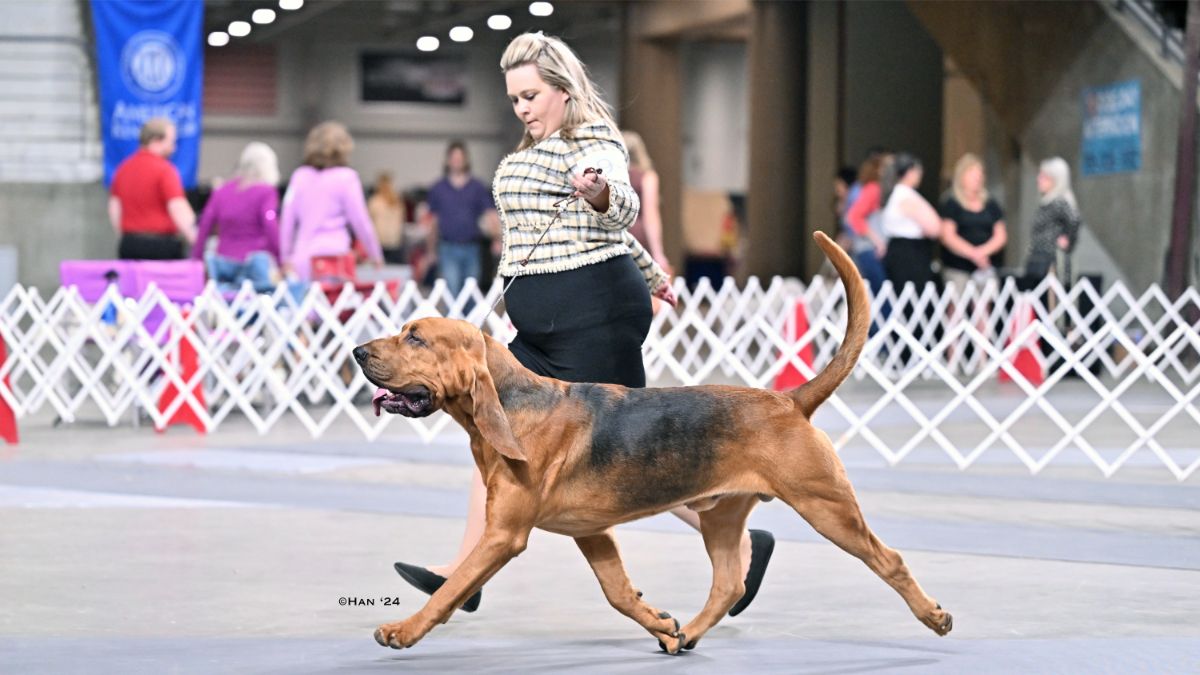

Meet the Owner Handlers
Owner Handler Natalie Lewis discusses Longhaired Dachshunds, Bloodhounds, breed preservation, and success in the ring.
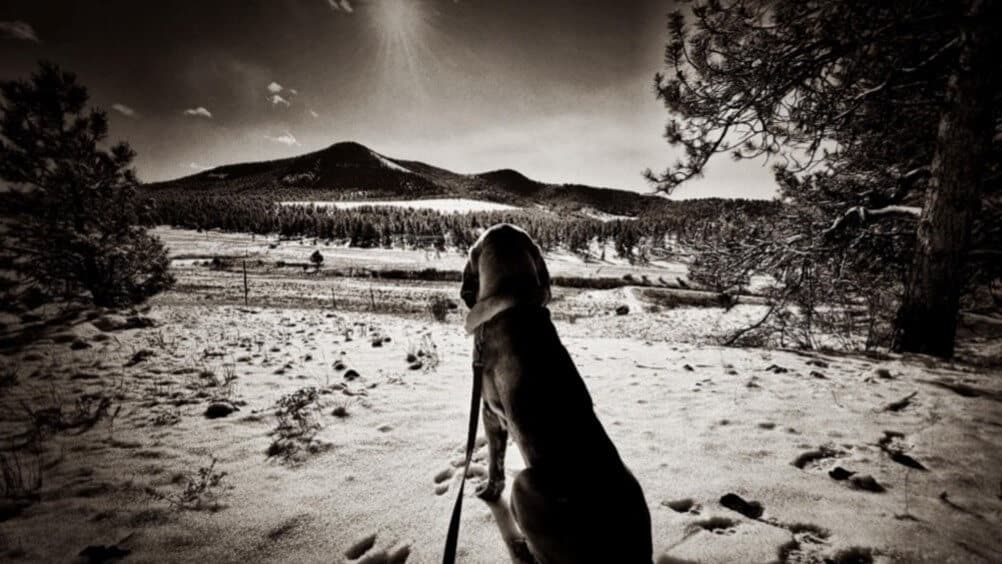
Breed Conservation
Marlene Groves shares Gunner’s rehoming journey, from a difficult return to finding the perfect home and a fresh start.

Meet the Judges
Denise Flaim reflects on judging Hound breeds at Westminster 2026, noting overall quality, key winners, and breed type consistency.

American Kennel Club (AKC)
Debbie Melgreen reflects on judging Hound breeds at the 2025 AKC National Championship, sharing highlights, depth of quality, and gratitude.

Meet the Judges
Christine Calcinari on judging at the 2025 Morris & Essex Kennel Club, her breed assignments, and why tradition drives today’s exhibitors!

Breed Conservation
Amid declining show entries, a breeder urges prioritizing show homes and rethinking how we support newcomers to preserve the sport.
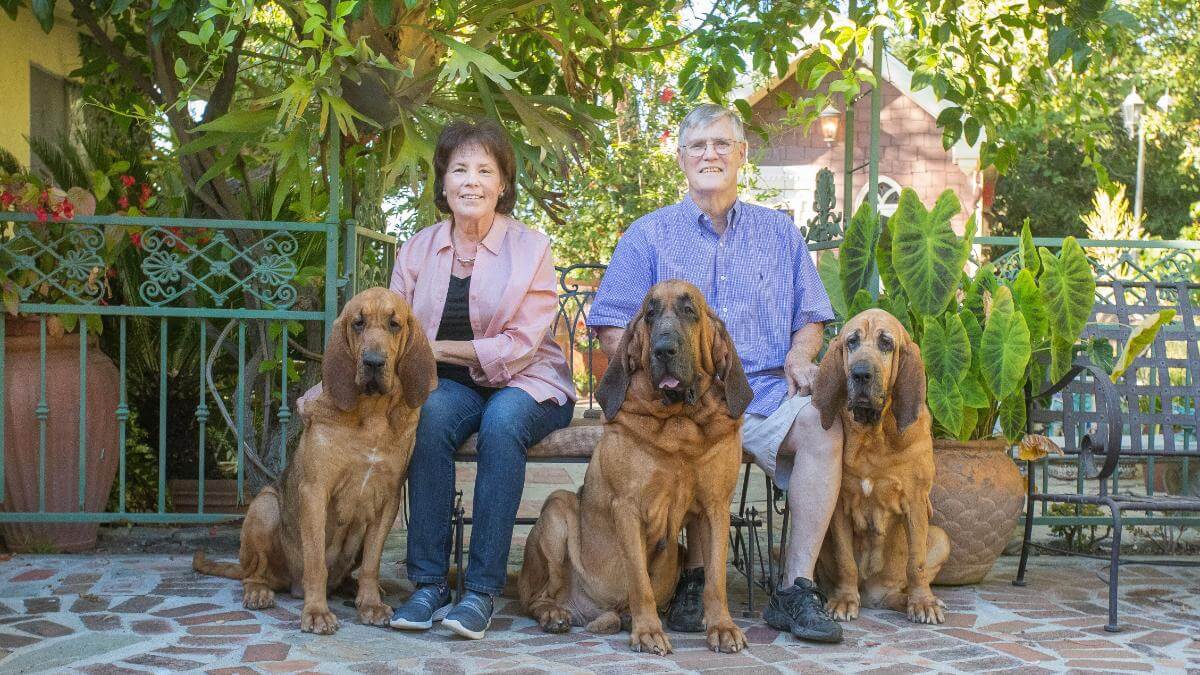

Meet the Breeders
Breeder Susan LaCroix Hamil shares insights on Bloodhounds, conformation trends, challenges, and the future of purebred dogs.
Explore the rich history of the Bloodhound, from noble St. Hubert hounds to modern-day mantrailing legends. Discover their fascinating legacy!
All About Judging
A guide to judging the Bloodhound, focusing on size, proportions, head type, movement, and temperament for both show and work.
The tail of the Bloodhound, often referred to as the "stern," is a distinguishing feature, serving to balance the hound while on the move. Its length is long, and it tapers from a broad base towards the tip. When this hound is active or alert, the tail is carried high with a slight curve; however, not so much as to curl over the back. In its natural state, the tail is thick and strong. It is covered with hair that is slightly longer than that on the rest of the body, giving it a brush-like appearance.
A Note About Color: The Bloodhound is seen in three color variations: black and tan, liver and tan, and red. Darker colors may be interspersed with lighter or badger-colored hair, and with flecks of white. A small amount of white is allowed on the chest, feet, and tip of the tail.
Coat Type
Smooth
The structure of the coat this breed carries.
Coat Length
Short
How long the breed's coat grows when kept in condition.
Adaptability Level
How easily a breed copes with changes in home, routine, noise and weather.
Mental Stimulation Needs
How much a breed needs a job, a puzzle or training to stay content.
When it comes to strangers, the Bloodhound’s approach is usually friendly but reserved. While these dogs aren't inherently aggressive, their size and deep bark can be intimidating. However, with proper introductions, they usually warm up to new people, showing their true gentle nature.
Feeding a Bloodhound properly is crucial to ensure the dog leads a healthy, active life. The breed’s dietary needs can vary based on age, activity level, and overall health. As puppies, Bloodhounds require food that supports their rapid growth. It's important to feed high-quality puppy food that's rich in essential nutrients, ensuring they develop strong bones and muscles. Dividing the daily portion into 3 to 4 meals helps to maintain steady energy levels and prevents potential gastrointestinal issues.
As the Bloodhound transitions into adulthood, the dog’s dietary needs change. Adult Bloodhounds usually do well on high-quality commercial dog food that provides a balanced mix of protein, fats, and carbohydrates. Depending on the dog’s activity level, an adult Bloodhound might consume 3 to 5 cups of food daily. This portion can be split into two meals, morning and evening, to aid digestion and prevent bloat, a condition to which deep-chested breeds like the Bloodhound can be susceptible.
Senior Bloodhounds, like all older dogs, may have specific dietary needs, especially if they have some health issues. It might be necessary to switch to a senior-specific formula that addresses these needs, focusing on maintaining an ideal weight and supporting joint health.
It's essential to monitor the Bloodhound’s weight and adjust food intake accordingly. Overfeeding can lead to obesity, which poses a host of health risks. Regular vet check-ups can provide guidance on maintaining an optimal weight for this otherwise powerful breed.
Lastly, it is important to make sure fresh water is readily available for the Bloodhound. Proper hydration supports overall health, aids digestion, and helps to reliably regulate the hound’s body temperature.
Training a Bloodhound offers a unique experience, thanks to the breed’s distinctive personality and inherent traits. While these hounds are intelligent and can be eager to please, their intense tracking instinct can sometimes overshadow their focus on training. This makes it essential to start early and remain consistent throughout the dog’s life.
Bloodhounds, like many scent hounds, have a natural inclination to follow their nose. This trait can sometimes be perceived as stubbornness, especially when they catch an interesting scent. Therefore, while training, it's crucial to capture their attention and provide them with a distraction-free environment. Utilizing positive reinforcement techniques, such as treats or praise, can be highly effective. Harsh corrections or punitive measures are counterproductive and can harm the trust between dog and trainer.
One of the primary concerns for Bloodhound owners is the breed’s tendency to wander off when these dogs catch a scent. A solid recall command, therefore, is of paramount importance. Alongside this, training these hounds to walk properly on a leash without pulling can prevent them from suddenly darting off when they get a whiff of something they find intriguing.
When it comes to their vocal tendencies, Bloodhounds are known for their distinctive bay. While it's in the breed’s nature to vocalize, especially when on a scent trail, it is possible to train these hounds to control excessive barking, particularly in home settings.
Intelligence-wise, Bloodhounds are no slouches. They can quickly pick up commands and tricks, provided the training sessions are engaging and not overly repetitive. Keeping sessions short, fun, and frequent can yield better results than longer, infrequent sessions.
Despite their size and sometimes aloof demeanor, Bloodhounds can have a high prey drive. Proper socialization from a young age, especially with smaller animals, is important. This not only helps them differentiate between what's acceptable to chase and what's not, it also ensures they become well-rounded adult dogs.
Grooming Expectations
Bloodhounds have a dense and short coat that lies close to the body. These dogs are not considered high shedders, but they do shed moderately throughout the year. Regular brushing, at least once a week, is beneficial to remove loose hairs and promote healthy skin. Using a rubber grooming mitt or a short-bristle brush can effectively collect the hair and keep the coat looking its best. Another unique feature of the Bloodhound is its wrinkled skin, especially around the face and neck. These folds and wrinkles need regular checking and cleaning to prevent any bacterial or fungal growth. It's advisable to gently clean these areas with a damp cloth and then dry them thoroughly to ensure no moisture remains, as trapped moisture can lead to infections. Bloodhounds are known for their distinct “houndy” odor. While it's a natural scent inherent to the breed, regular baths can help to manage and reduce the smell. However, it's essential not to over-bathe as this can strip the skin of its natural oils, leading to dryness or irritation. Usually, bathing the hound every couple of months, or when it gets particularly dirty, is sufficient. Ears are another focal point of grooming for Bloodhounds. Due to their long, droopy ears, they receive limited air circulation, which can create an environment conducive to bacterial and yeast growth. Weekly ear cleanings with a veterinarian-approved solution can help to prevent ear infections. Finally, like all dogs, Bloodhounds need their nails trimmed regularly, their teeth brushed, and their eyes checked for any signs of irritation or infection. Regular grooming sessions will not only ensure the Bloodhound looks and feels its best, it also provides an opportunity to check for signs of health problems, allowing any potential issues to be caught early.