Members
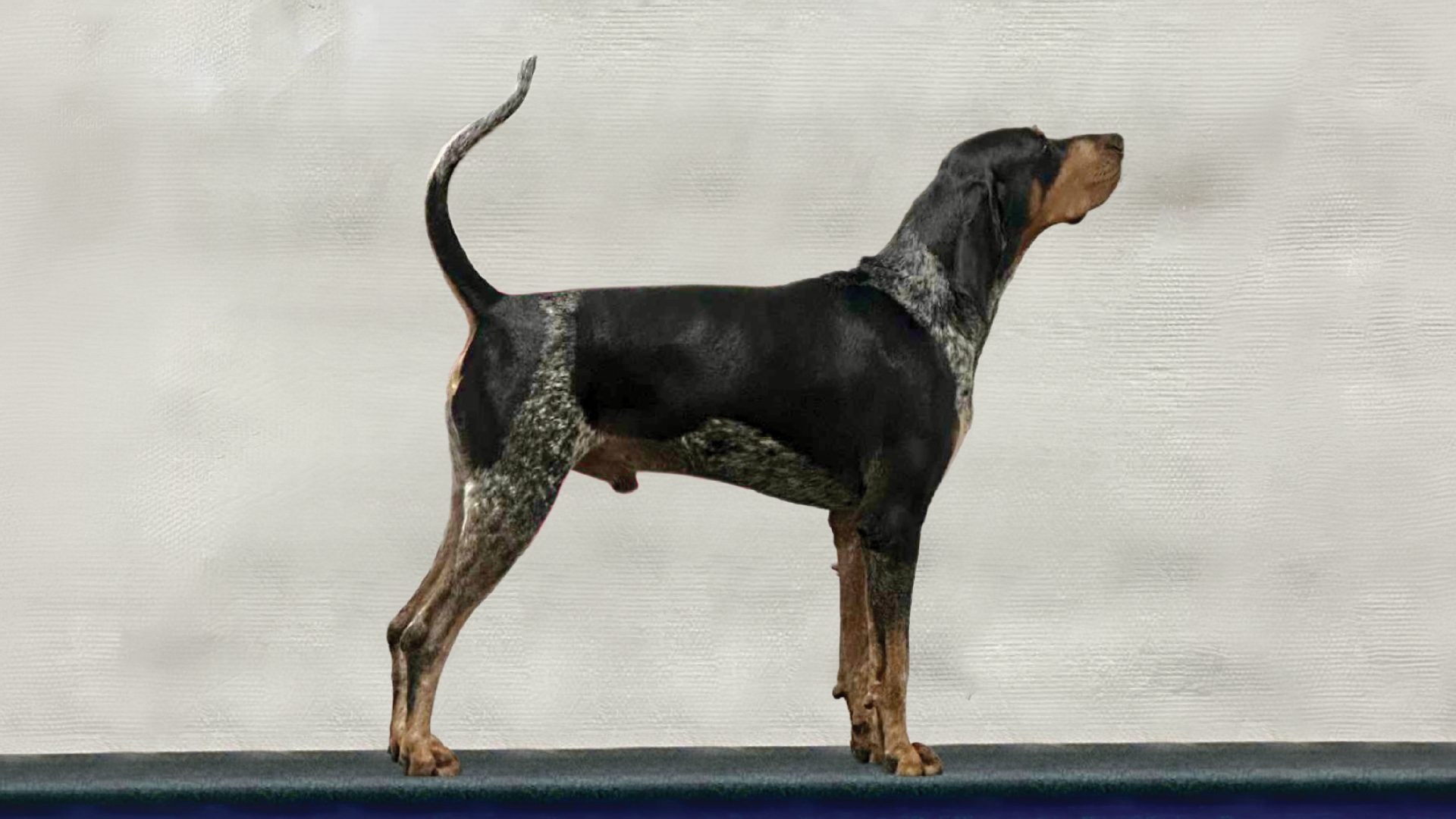
01/Overview
The Bluetick Coonhound is a breed renowned for a striking coat that is marked by a mottled pattern in a deep blue hue. Originating in the United States, the breed is known for its acute sense of smell, which is often considered second only to that of the Bloodhound. These coonhounds are highly energetic and have been used historically for hunting raccoons and other large game animals.
Highlights
02/History
The history of the Bluetick Coonhound is steeped in American history, tracing its roots back to the early days of the nation's founding. Originally, the breed descended from the Grand Bleu de Gascogne, a French Staghound, and the English Foxhound. Both of these ancestors were brought to the United States by early immigrants who selectively bred their hounds to adapt to the unique terrain and hunting conditions found in the New World.
The Bluetick was primarily developed in the Southern United States, particularly in parts of Louisiana, Florida, and Tennessee. The early hounds were specifically bred for their keen sense of smell and tireless work ethic. They were considered to be exceptional at tracking raccoons and other wild animals, primarily at night.
Over the years, as hunting practices evolved, so too did the role of the Bluetick. While the hounds continued to be prized for their hunting skills, their pleasant demeanor and striking appearance soon made them popular as companion animals. This was due in no small part to the hounds' beautifully mottled "blue" coat, which is one of the breed's distinguishing features.
The American Kennel Club (AKC) initially grouped the Bluetick with the English Coonhound. However, recognizing its unique characteristics and history, the registry officially recognized the Bluetick Coonhound as a separate breed in 2009.
Today, the Bluetick Coonhound continues to be a symbol of American heritage and ingenuity. Whether a hound participates in hunting expeditions, dog shows, or simply lounges at home, it carries with it a rich legacy of tradition and adaptability. The breed's combination of hunting prowess, loyalty, and affectionate nature ensures these hounds are sure to remain beloved both in the field and in the family home.
03/Appearance
Adult males typically stand between 22 and 27 inches tall at the shoulder, while mature females usually range from 21 to 25 inches tall.
In terms of weight, males generally weigh between 55 and 80 pounds, with females weighing slightly less, ranging from 45 to 65 pounds.
Skull: The Bluetick Coonhound possesses a moderately sized skull, broad between the ears, with a slightly domed forehead.
Expression: This breed often displays an alert and intelligent expression, indicative of its keen senses and hunting background.
Eyes: The eyes are dark brown to hazel in color, set wide apart. They are large without appearing protruding. The expression of the eyes is one of determination and alertness.
Ears: Bluetick Coonhounds have low-set ears that are thin and tapering. These ears reach near the tip of the nose when drawn forward.
Muzzle: The muzzle is of medium length, broad, and deep, leading to a well-defined stop. The jaws are strong, capable of delivering a firm grip.
Nose: This breed has a large black nose with an exceptional sense of smell that is essential for tracking.
Bite: The Bluetick Coonhound possesses a scissors bite, where the upper incisors closely overlap the lower incisors. This ensures a firm grip that is indicative of this hunter’s heritage.
The Bluetick Coonhound is a well-proportioned dog with a balanced build. Its bodies is square or slightly longer than it is tall, which provides the flexibility needed for hunting in various environments. The breed has a sturdy frame, suggesting strength without any hint of clumsiness or fragility. The overall appearance showcases a hound with great stamina and endurance, one that is capable of rigorous physical activity.
Texture: The Bluetick Coonhound's coat is short but dense, offering protection against thick underbrush and inclement weather. It is smooth to the touch and provides an effective barrier against the elements while hunting or working in various terrain.
Markings: Black Spots
Standard Colors
04/Consider
When bringing a Bluetick Coonhound into the home, it's essential to understand the breed's unique characteristics, needs, and potential challenges. Blueticks are energetic, intelligent, and dedicated dogs that, when properly trained and cared for, can make fantastic companions for the right families.
Interaction With Family
The level of affection a breed typically shows towards family members and familiar individuals.
Good With Other Dogs
The innate friendliness of a dog towards other dogs can depend on its breed.
Good With Young Children
The degree to which a breed will typically be patient with young children.
Amount Of Shedding
How much hair a breed typically leaves behind on clothes, furniture and floors.
Frequency Of Grooming
How often a breed needs brushing, bathing or a professional trim to stay in condition.
Amount Of Drooling
How prone a breed is to drool — worth knowing before you keep a towel by the door.
Openness To Strangers
How openly a breed tends to greet new people, visitors and strangers.
Protective Nature
How likely a breed is to alert you to — and stand between you and — anything unfamiliar.
Playfulness Level
How enthusiastic a breed stays about games and play well past puppyhood.
Trainability Level
How readily a breed takes direction and works with you rather than around you.
Barking Level
How much a breed uses its voice, and how readily.
Energy Level
How much get-up-and-go a breed brings to an average day.
Health
Bluetick Coonhounds are generally hardy and healthy dogs, but like all breeds and mixed breeds, they are susceptible to certain health conditions. Regular veterinary check-ups, a balanced diet, and consistent exercise can help to foster a long and healthy life for the new family member. Lifespan: On average, Blueticks have a life expectancy of 11 to 12 years. Factors that can influence their lifespan include genetics, health care, diet, and overall lifestyle.
The Bluetick Coonhound is more than just striking in appearance; it possesses a distinctive personality that sets it apart from similar breeds of scent hounds. Renowned for its keen senses and hunting prowess, the demeanor of a Bluetick at home can be quite different from the hound that’s in working mode.
When considering the suitability of Blueticks for novice owners, it's worth noting that while these hounds are friendly and loyal, they might pose challenges for those unfamiliar with responsible dog ownership. The hounds’ high energy levels combined with their intelligence necessitate an owner who understands canine behaviors and remains consistent with training.
The typical Bluetick Coonhound has a sensitive nature. It responds best to positive reinforcement and can become withdrawn or anxious if subjected to harsh corrections. Therefore, a gentle yet firm approach is recommended in handling and training these active hunting hounds.
Regarding their tolerance for being alone, this breed can manage solitude for limited periods. However, like most dogs, prolonged isolation can result in unwanted behaviors or signs of anxiety. Blueticks are happiest when included in family activities or given regular tasks to perform.
Bluetick Coonhounds typically get along well with other dogs, especially if they've grown up together. Their hunting background endows them with a pack mentality, making them sociable with fellow canines. Moreover, they generally exhibit patience and playfulness with children, although it's always a good practice to supervise interactions, especially with younger kids.
Exercise Expectations
The breed thrives on regular physical activities, which not only provide an outlet for its energy but also cater to each hound’s innate instincts. Daily walks, ranging from moderate to long in duration, are essential to keep a Bluetick happy. These excursions serve as an excellent opportunity for coonhounds to explore new scents and environments, satisfying their natural curiosity. However, mere walks might not suffice for this spirited breed. They also benefit from regular play sessions, where they can freely run and engage in activities that challenge them mentally. Fetch, hide and seek, and scent tracking games can be particularly fun for them. A securely fenced yard where they can roam and play safely can be a boon for coonhound owners. It's worth noting that, due to the Bluetick Coonhound’s strong prey drive, these hounds might be inclined to chase after smaller animals. This makes it imperative to have them on a leash during walks, especially in unfamiliar or wildlife-rich areas. While the Bluetick is robust and can have high-intensity play sessions, it's equally important to recognize when these dogs need rest. Over-exertion, especially in hot weather, can be harmful. It’s important to always ensure they have access to fresh water during and after strenuous exercise sessions. The energy level of a Bluetick Coonhound is quite consistent, showing moderate to high intensity levels. This breed is also notably playful, which can be leveraged during training sessions to make any activity more engaging and effective.
Living with a Bluetick Coonhound is a unique experience that can be both challenging and rewarding. Understanding the breed’s characteristics and catering to the hound’s needs can make cohabitation harmonious for every member of the household.
When it comes to housing, while a Bluetick can adapt to apartment living, it's not the ideal environment for this energetic scent hound. Given the breed’s origins as a hunting dog and its subsequent energy levels, these dogs thrive best in homes with spacious yards where they can roam, play, and follow intriguing scents at their leisure. If an apartment lifestyle is expected, it's crucial to ensure the coonhound receives ample exercise and outdoor time to prevent restlessness and potential behavioral issues.
Temperature sensitivity is another point to consider. Bluetick Coonhounds are hardy and can generally tolerate a range of temperatures. However, they're more suited to moderate climates, thanks to their dense coat. In particularly hot weather, it's vital to provide them with shade and plenty of water, and to avoid intense physical activity during the hottest parts of the day.
In contrast, these hounds fare relatively well in colder conditions, but it's always a good idea to monitor them and provide a warm shelter if temperatures drop significantly.
Blueticks have strong hunting instincts, which means they might occasionally be prone to wandering off if they pick up an interesting scent. This tendency makes it crucial to have secure fencing if there’s a yard for them to spend time in. It also underscores the importance of leash-walking these hounds when outside enclosed areas.
05/Puppies
The arrival of Bluetick Coonhound puppies can be an exciting time for prospective dog owners. These little bundles of joy, with their soft blue-ticked coats and dark eyes, are sure to melt hearts. However, just as with any puppy, Bluetick babies come with their own set of needs and responsibilities. Making sure their early days are filled with proper care, love, and guidance can pave the way for a well-adjusted adult dog.
When a Bluetick Coonhound puppy is first brought home, one of the primary considerations is the little one’s nutritional needs. Feeding the pup a balanced, high-quality puppy formula is crucial for its growth and development. It's always recommended to consult with a veterinarian or the puppy’s breeder to determine the right feeding schedule and portion sizes tailored to the young coonhound's specific needs.
Socialization is another vital aspect of puppy care. Introducing coonhound pups to various environments, people, and other animals at an early age can help to shape their temperament and ensure they grow up to become well-rounded adults. Regular playdates, puppy classes, and walks can be beneficial in this regard.
Training should also commence from an early age. While Bluetick puppies are intelligent and eager to please, they can also be independent and occasionally stubborn. Establishing a foundation of basic obedience and housetraining from the get-go can make future training endeavors smoother. Using positive reinforcement methods, such as treats and praise, will usually yield the best results.
Physical and mental stimulation is paramount in the development of a young coonhound. Puppies are energetic and curious by nature, so providing them with age-appropriate toys and interactive games can help to channel their energy constructively and keep them mentally engaged.
Finally, regular health check-ups are essential to monitor the Bluetick Coonhound puppy’s growth and catch any potential health issues early on. Vaccinations, deworming, and preventive care should be administered as per a veterinarian's recommendations.
06/Activities
Bluetick Coonhounds, with their robust stamina and keen nose, are naturally inclined towards activities that challenge both their body and mind. Engaging these hounds in various activities and dog sports not only provides them with the much-needed physical exercise, it also offers a wonderful opportunity for bonding with their handlers.
Tracking and Scent Work: Given their history as scent hounds, Blueticks are known to excel in Tracking and Scent Work activities.
Field Trials: These events mimic hunting scenarios, testing the dog's ability to track and tree game. While no actual hunting takes place, Bluetick Coonhounds are scored based on their proficiency in locating and indicating the presence of the target scent.
Agility: While not traditionally associated with Agility Trials, Blueticks can be trained to navigate the obstacle courses. Their intelligence and enthusiasm can make these hounds good contenders, though they may not be as fast as some other fast-moving breeds.
Rally Obedience: This sport combines elements of Obedience and Agility. It requires the dog and handler to navigate a course with different stations, each indicating a specific command. The Bluetick's eagerness to please and trainable nature can make these hounds good participants in Rally-O.
Conformation Shows: These competitive events assess the dog's appearance and structure against the Breed Standard. Participating in these shows can be a proud moment for owners and breeders alike as they showcase the best attributes of the breed.
Canine Good Citizen (CGC): While not a sport, per se, the CGC test assesses a dog's basic manners and behavior in various social scenarios. Bluetick Coonhounds, with proper training, can achieve this title, which is a testament to their well-rounded behavior and social temperament.
Gallery
07/Standards
The Bluetick Coonhound is recognized by the world's leading registries and kennel organizations, which categorize the breed into a specific Group based on its unique characteristics. This breed is recognized worldwide under the following Group designations:
The ideal Bluetick Coonhound is described by a Breed Standard that is approved by each of the world’s leading registries and kennel organizations. The Breed Standards for this breed may be found in the following links:
08/Clubs
Dedicated to the promotion, preservation, and betterment of the Bluetick Coonhound, several clubs and organizations have been established over the years. These clubs play a vital role in maintaining the Breed Standard, providing resources for breed enthusiasts, organizing competitive and social events, and championing the welfare of this American dog breed.In the United States, the National Bluetick Coonhound Association stands as a premier organization, recognized by the American Kennel Club. The organization’s members work tirelessly to promote the breed by preparing educational materials and offering a series of events for the hounds and their handlers throughout the year.The Bluetick Breeders and Coon Hunters Association was founded in 1954 by a group of experienced varmint hunters in Arkansas. The founders’ mission was to protect these coonhounds as a distinct breed and to promote their use as hard-driving hunters.
09/Rescue
The love and appreciation for the Bluetick Coonhound have led to the establishment of several rescue organizations dedicated to the welfare, rehabilitation, and rehoming of this unique breed. Rescues play a crucial role in offering a second chance to Blueticks that have been abandoned, mistreated, or surrendered for any reason.In the United States, organizations such as the Bluetick Coonhound Rescue and Coonhound Companions are devoted to rescuing, rehabilitating, and finding loving homes for Blueticks in need. The organization’s volunteers work tirelessly to ensure each dog receives the love, care, and forever home it deserves.Local shelters and animal rescue organizations occasionally come across a Bluetick Coonhound and provide the dog with care as needed. For those considering bringing a Bluetick into the home, checking with local rescues and shelters can be a rewarding way to offer a loving home to a coonhound in need.
10/Facts
Name Origin
The "bluetick" in the breed’s name refers to the hound’s mottled blue-black and white coat, which gives these hounds a unique "blue" appearance.
Distinctive Bawl
These coonhounds are known for their distinctive "bawl" or howl. They use it when they've located prey or simply when they're vocalizing their feelings.
Night Hunters
Historically, Bluetick Coonhounds were used for nighttime raccoon hunts. Their tenacity and determination made them excellent at tracking these nocturnal critters up trees.
Famous Mascot
One of the most famous Blueticks is “Smokey,” the live mascot for the University of Tennessee. This beloved hound is a staple at football games and represents the school's ambitious spirit.
Musical Tribute
The coonhound has been mentioned in several country songs, underscoring its deep connection with America’s Southern culture.
Late AKC Recognition
Despite the breed’s long-standing American heritage, the Bluetick Coonhound only received official recognition from the American Kennel Club in 2009.
11/FAQ
Bluetick Coonhounds are generally not aggressive by nature. They are known for their friendly and sociable temperament, especially when properly socialized from a young age. However, like all breeds, individual dogs may have unique personalities, so early training and socialization are essential to prevent any behavioral issues.
Official Standard for the Bluetick Coonhound
General Appearance: The Bluetick should have the appearance of a speedy and well-muscled hound. He never appears clumsy or overly chunky in build. He has a neat, compact body, a glossy coat and clear, keen eyes. In motion he carries his head and tail well up.
Size, Proportion, Substance: Height at withers for adult males, 22 to 27 inches. For adult females, 21 to 25 inches. Weight for males 55 to 80 pounds, females 45 to 65 pounds. Proportion (measured from point of shoulder to base of tail and withers to ground) is square or slightly longer than tall. Disqualifications: Males under 22 inches or over 27 inches. Females under 21 inches or over 25 inches. (Entries in puppy class are not to be disqualified for being undersize.)
Head: The head is broad between the ears with a slightly domed skull. Total length of head from occiput to end of nose is 9 to 10 inches in males and 8 to 9 inches in females. Stop is prominent. Muzzle is long, broad and deep, square in profile with flews that well cover the line of the lower jaw. Depth of foreface should be 3 to 4½ inches. Eyes-rather large, set wide apart in skull. Round in shape and dark brown in color (never lighter than light brown). Eye rims tight and close fitting. No excess third eyelid should be apparent. Expression is a typical pleading hound expression, never wild or cowering. Ears-set low and devoid of erectile power. Should be thin with a slight roll, taper well towards a point, and reach well towards the end of the nose when pulled forward. Well attached to head to prevent hanging or backward tilt. Nose-large with wellopened nostrils. Fully pigmented, black in color. Teeth-scissors bite preferred, even bite acceptable. Undershot or overshot are disqualifying faults. Disqualifications: undershot or overshot.
Neck, Topline, Body: Neck-muscular and of moderate length, tapering slightly from shoulders to head. Carried well up but not vertical (goose necked). Throat clean with only a slight trace of dewlap. Body-the body should show considerable depth (extending well down toward the elbow), rather than excessive width, to allow for plenty of lung space. Forechest is moderate, fairly even with the point of the shoulder. Girth of chest for males is 26 to 34 inches, for females 23 to 30 inches. Ribs are long and well-sprung, tapering gradually towards a moderate tuck-up. Back is muscular and topline slopes downward slightly from withers to hips. Loin is broad, well-muscled and slightly arched.
Forequarters: Legs are straight from elbows to feet, well boned and muscular, with strong, straight, slightly sloping pasterns. Legs should appear straight from either side or front view. Length of leg from elbow to ground is approximately one half the height at the withers. Shoulders are clean and sloping, muscular but not too broad or rough, giving the appearance of freedom of movement and strength.
Hindquarters: Hips are strong and well muscled, not quite as wide as ribcage. Thighs have great muscular development for an abundance of propelling power. Breeching full and clean down to hock. Hocks are strong and moderately bent. Dewclaws are removed. Rear legs are parallel from hip to foot when viewed from behind (no cowhocks).
Feet: Round (cat-like) with well arched toes and thick, tough pads.
Tail: Set on slightly below the line of the back, strongly rooted and tapering to a moderate length (in balance to the overall length of the hound). Carried high with a forward half-moon curve. Well coated but without flag.
Coat: Medium coarse and lying close to the body, appearing smooth and glossy. Not rough or too short.
Color: Preferred color is a dark blue, thickly mottled body, spotted by various shaped black spots on back, ears and sides. Preference is to more blue than black on body. Head and ears predominately black. With or without tan markings (over eyes, on cheeks, chest and below tail) and red ticking on feet and lower legs. A fully blue mottled body is preferred over light ticking on the body. There should be more blue ticking than white in the body coat. No other colors allowed. Disqualifications: Any color other than that described in the standard. Albinism.
Gait: Active and vigorous, with topline carried firmly and head and tail well up.
Characteristics: Active, ambitious and speedy on the trail. The Bluetick should be a free tonguer on trail, with a medium bawl or bugle voice when striking and trailing, which may change to a steady chop when running and a steady coarse chop at the tree.
Disqualifications: Males under 22 inches or over 27 inches. Females under 21 inches or over 25 inches. (Entries in puppy class are not to be disqualified for being undersize.) Any color other than that described in the standard. Undershot or overshot. Albinism.
Approved November 2007
Effective July 1, 2008

US breeders have produced a number of hearty and hungry canine originals by combining established British, European, and Asian breeds with local village dogs.
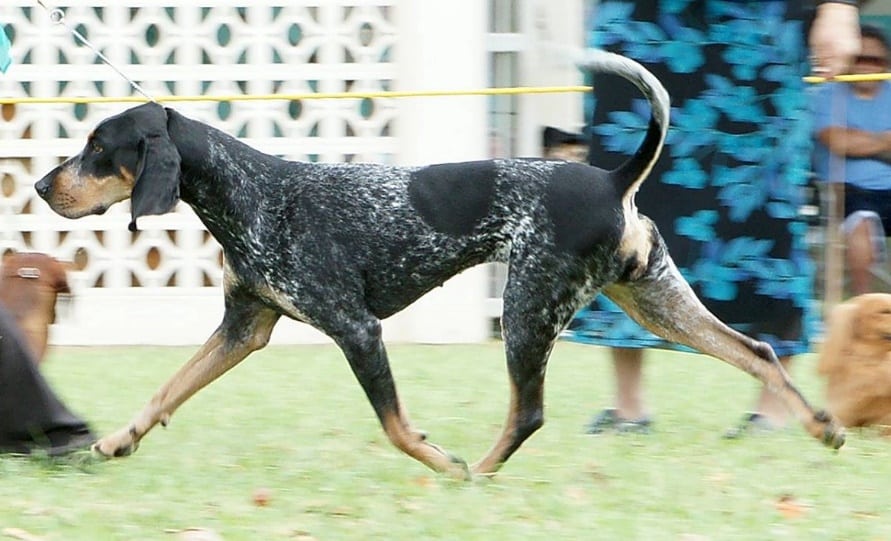
General Appearance of the Bluetick Coonhound | Bluetick Coonhound is a smart and active breed that thrives in an environment where they have
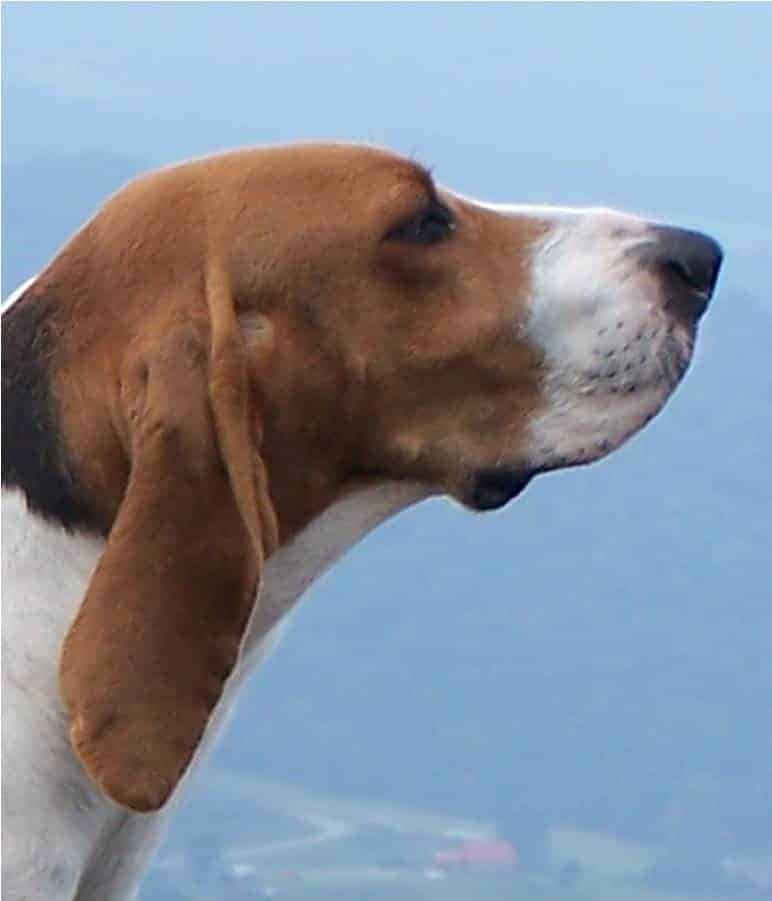
All About Judging
Now that coonhounds are in AKC conformation shows, it is becoming increasingly important that we focus on the correct coonhound structure
The Bluetick Coonhound's tail, often referred to as the "stern," is set slightly below the natural line of the back. It is strong at the base and tapers to a fine point. The tail's length extends to the hocks when the dog is standing in a relaxed posture. When the hound is in motion or particularly alert, the tail is carried high but should never curl over the back.
The tail is covered with a smooth coat and mau occasionally display a slight brush. Due to its length and its strength, the tail can be a good indicator of the hound's mood, often wagging enthusiastically when the Bluetick is happy or excited.
A Note About Color: As its name suggests, the Bluetick Coonhound has a thickly mottled, dark blue coloration. The blue appearance is created by black ticking on a white background. More ticking than white is preferred on the body, and fully a mottled blue body is preferred over light ticking. The head and ears are predominantly black, with black spots appearing variously on the hound’s back and sides. Tan markings may appear over the eyes and on the cheeks, chest, and below the tail. No other colors are acceptable in this coonhound breed.
Coat Type
Smooth
The structure of the coat this breed carries.
Coat Length
Short
How long the breed's coat grows when kept in condition.
Adaptability Level
How easily a breed copes with changes in home, routine, noise and weather.
Mental Stimulation Needs
How much a breed needs a job, a puzzle or training to stay content.
While they are usually friendly with dogs they are familiar with, Blueticks can be initially wary of strangers. Early and continuous socialization helps them to differentiate between a friend and a potential threat, but a certain degree of caution towards unfamiliar faces might always be present in this active and intelligent coonhound.
Feeding a Bluetick Coonhound requires an understanding of the breed's specific needs throughout its life stages. Given their energetic nature, these dogs benefit from high-quality, nutritionally balanced food to fuel their active lifestyles.
For Bluetick puppies, it's crucial to provide a diet that supports their rapid growth and development. Puppy-specific formulations usually have the required nutrients and calorie content to cater to their needs. As they transition to adulthood, the dietary requirements change, and feeding them adult-specific formulations becomes essential.
The amount of food a Bluetick Coonhound requires can vary based on factors such as age, activity level, metabolism, and overall health. On average, an adult Bluetick may consume 2 to 2.5 cups of high-quality dry food per day, divided into two meals. However, this is just a guideline, and it's essential to monitor the dog's weight and adjust portions as needed to prevent overfeeding or underfeeding.
It's worth mentioning that individual dietary needs can vary widely even within the same breed. Therefore, regular vet consultations are advisable to ensure the nutritional requirements of an individual coonhound are being adequately met.
Water is another essential aspect of the Bluetick’s diet. It’s always important to provide constant access to fresh, clean water, especially after intense activity and throughout the months of hotter weather and increased humidity.
When it comes to giving treats, moderation is key. While treats can be a valuable training tool, over-reliance or overindulgence can lead to weight gain and other health issues. Always opt for healthy treat options and consider them as a part of a Bluetick Coonhound’s overall daily calorie intake.
Training a Bluetick Coonhound presents a unique blend of challenges and rewards. This breed, with its hunting lineage, combines intelligence with a high degree of determination. Recognizing and tapping into these traits can be the key to a successful training experience.
Blueticks are smart and they’re often quick learners. However, their independent streak might sometimes be perceived as stubbornness. It's essential for trainers, especially those new to the breed, to approach training with a mix of patience, consistency, and positive reinforcement. This coonhound responds far better to encouragement and rewards than to harsh corrections.
One aspect that potential owners should be prepared for is the breed's vocal nature. The Bluetick Coonhound is known for its distinctive bay, which can be loud and frequent. Training these hounds from a young age about when it's appropriate to voice their opinions can be beneficial, though it might be challenging to completely suppress this natural instinct.
The hunting instincts of the Bluetick also influence this dog’s behaviors. These hounds have a strong prey drive, which means they might have a tendency to chase after smaller animals. Early socialization and exposure to various situations, animals, and environments can help in curbing unwanted chasing behaviors.
Another point to note is the Bluetick Coonhound’s penchant for wanderlust. Thembreed’s keen nose can lead these dogs to pursue fascinating scent trails, making it essential to train reliable recall commands. Providing secure fencing, and always using a leash during walks, can prevent those unscheduled adventures.
Grooming Expectations
The coat of a Bluetick Coonhound is indeed short, but it is dense enough to offer protection during their outdoor escapades. This coat type does shed, though not excessively so. Regular brushing, ideally once a week, will help to remove loose hairs and maintain the coat's natural sheen. A firm-bristled brush is typically effective for this task, as it can easily reach through the dense coat and remove debris and dead hair. While they don't require frequent baths, it's a good idea to give the Bluetick a thorough wash every few months or whenever the hound gets particularly dirty. The breed’s adventurous nature will likely mean the occasional encounter with muddy puddles and other messy environments. Bathing, when necessary, should always include a dog-specific shampoo that's gentle on the hound’s skin. Ear care is crucial for the Bluetick Coonhound. The breed’s floppy ears can trap moisture and debris, making them susceptible to infections. It's advisable to check the hound’s ears regularly for signs of redness, bad odor, or excessive wax. Gently cleaning them with a vet-approved solution can prevent many common ear issues from becoming chronic problems. The coonhound’s nails should also be trimmed regularly. If they get too long, they can cause discomfort and even lead to injuries. For those not comfortable with trimming their dog’s nails, seeking the help of a professional groomer or veterinarian is a wise decision. Lastly, dental care is essential for every Bluetick Coonhound. Regular brushing of the teeth can prevent tartar buildup and avoid dental diseases. If the dog is resistant to toothbrushing, dental chews or professional cleanings can be good alternatives.
In terms of family dynamics, Bluetick Coonhounds are generally good-natured and can get along well with children and other pets, especially if introduced and socialized from a young age. Their playful nature can make them a hit with kids, though it's always recommended to supervise interactions between any dog and young children.