01/Overview
A Bullmastiff will give a family boundless love and devotion, but will retain a part of himself as a free spirit, capable of making his own decisions and acting on them. Children will be his charges to protect and to love, but they must respect him and not be allowed to tease him.
He asks only to be as much a part of the family as possible. He will reward such treatment with devotion and friendship, which is not exceeded in any breed.
Highlights
02/History
In the early 19th century, English gamekeepers created this noble breed by crossing the courageous Mastiff with the tenacious Bulldog to produce fleet-footed, powerful dogs for protection against poachers. The original cross combined the courageous Mastiff with the tenacious Bulldog in a 60 percent Mastiff and 40 percent Bulldog proportion. They created a dog that was fleet-footed, and powerful enough to catch and down a poacher for apprehension by the Gamekeeper. The Mastiff, while powerful and courageous, was not fast enough and sufficiently aggressive. The Bulldog was more aggressive but not large enough for the task. This cross resulted in the development of a breed that was totally utilitarian.
Originally called the "Gamekeepers Night Dog,” these dogs combined tremendous strength and guarding instinct with an affectionate disposition and devotion to their masters. The Bullmastiff was recognized in England in 1924 by The Kennel Club as a distinct breed, and by the American Kennel Club in 1933.
The Bullmastiff is an intelligent dog and has a definite mind of his own. His independence of spirit makes a relationship with him more of a working partnership than the conventional dog/master association which some people might expect.
03/Appearance
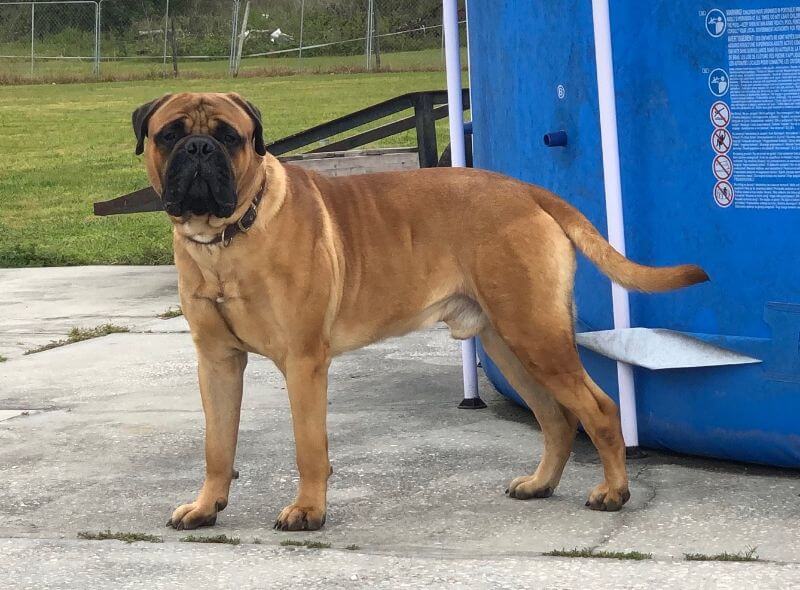
Dogs, 25 to 27 inches at the withers, and 110 to 130 pounds weight. Bitches, 24 to 26 inches at the withers, and 100 to 120 pounds weight. Other things being equal, the more substantial dog within these limits is favored.
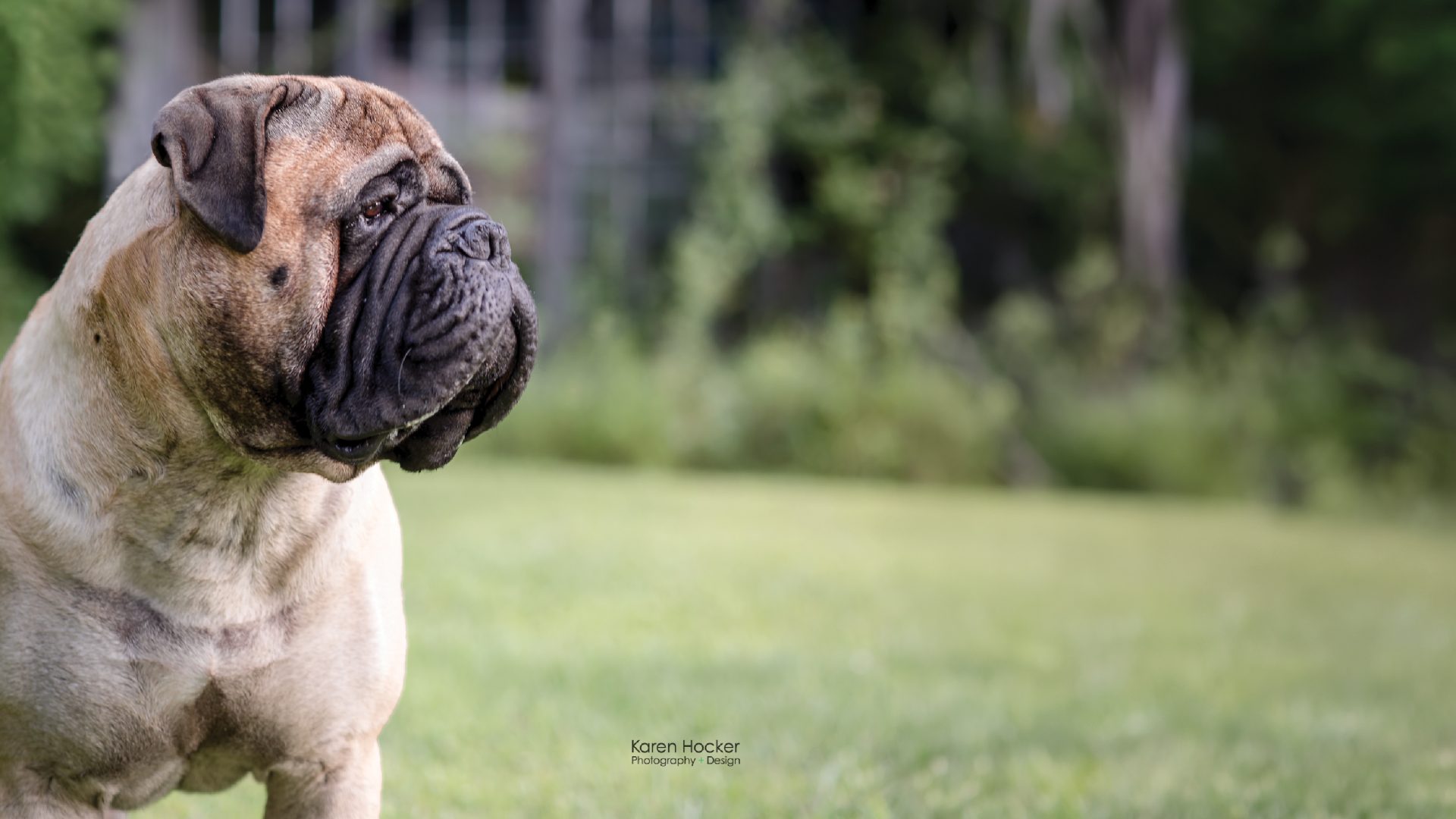
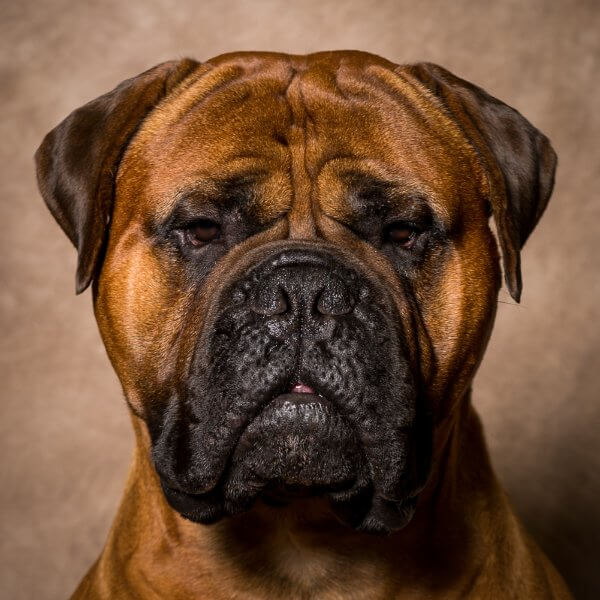
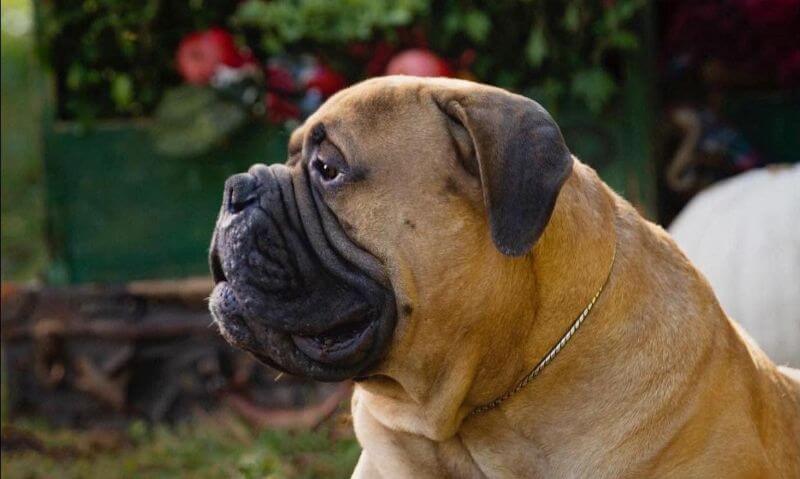
The head of the Bullmastiff is the hallmark of the breed. Good head type is essential, not only for correct appearance, but when the headpiece is properly constructed it is entirely functional.
Skull: Large, broad, and flat with a fair amount of wrinkle when alert; cheeks are well developed and forehead is flat.
Expression: Keen, alert, and intelligent.
Eyes: Dark and of medium size.
Ears: V-shaped and carried close to the cheeks, set on wide and high, level with occiput and cheeks, giving a square appearance to the skull; darker in color than the body and medium in size.
Muzzle: Stop - Moderate. Muzzle - Broad and deep; its length, in comparison with that of the entire head, approximately as 1 is to 3. Lack of foreface with nostrils set on top of muzzle is a reversion to the Bulldog and is very undesirable. A dark muzzle is preferable, with a moderate stop.
Nose: Black, with nostrils large and broad.
Bite: Preferably level or slightly undershot. Canine teeth are large and set wide apart.
Flews: Not too pendulous.
The length from tip of breastbone to rear of thigh exceeds the height from withers to ground only slightly, resulting in a nearly square appearance.
Texture: Short and dense, giving good weather protection.
Standard Colors
Standard Markings
04/Consider
The Bullmastiff is a wonderful breed, strong-willed, fearless, and confident. Its temperament is ideal in a home where it is made to understand structure and rules and is loved and wanted as part of the household. A dog that understands its position in the pack (family) is secure and happy. It is a safe pet. It follows the lead of its family superiors.
Interaction With Family
The level of affection a breed typically shows towards family members and familiar individuals.
Good With Other Dogs
The innate friendliness of a dog towards other dogs can depend on its breed.
Good With Young Children
The degree to which a breed will typically be patient with young children.
Amount Of Shedding
How much hair a breed typically leaves behind on clothes, furniture and floors.
Frequency Of Grooming
How often a breed needs brushing, bathing or a professional trim to stay in condition.
Amount Of Drooling
How prone a breed is to drool — worth knowing before you keep a towel by the door.
Openness To Strangers
How openly a breed tends to greet new people, visitors and strangers.
Protective Nature
How likely a breed is to alert you to — and stand between you and — anything unfamiliar.
Playfulness Level
How enthusiastic a breed stays about games and play well past puppyhood.
Trainability Level
How readily a breed takes direction and works with you rather than around you.
Barking Level
How much a breed uses its voice, and how readily.
Energy Level
How much get-up-and-go a breed brings to an average day.
Health
Responsible Bullmastiff breeders support the American Bullmastiff Association Health & Research Committee, and screen their breeding stock for cardiac issues, hip and elbow dysplasia, hypothyroidism, and eye problems. Bullmastiffs can develop cancer as well as bloat, a sudden and life-threatening swelling of the abdomen; owners should educate themselves about its symptoms and what to do should bloat occur. Heredity and environment play roles in the health of the breed. Lifespan: 8-10 years
Fearless and confident yet docile. The dog combines the reliability, intelligence, and willingness to please required in a dependable family companion and protector.
Exercise Expectations
Grooming Expectations
The dog combines the reliability, intelligence, and willingness to please required in a dependable family companion and protector. He is a dog we can depend on to be consistent in his responses, bright enough to learn what we want, and willing to do what we ask, for whatever reason he attaches to that willingness.
05/Puppies
Bullmastiffs are puppies for at least the first year of their lives, and in many breeder lines an additional year as well. Growth plates on male bullmastiffs generally close between 18 months of age and 36 months. Female growth plates close between 12 months and 24 months.
Food - An unbalanced diet in a large breed puppy can lead to serious health complications when the dog is older. Follow your breeder’s guidance in choosing a raw, kibble, or combination diet for your puppy. Be aware of ongoing research and investigations regarding Canine Dilated Cardiomyopathy and grain-free diets or those high in peas, lentils, legume seeds, and/or potatoes. Calcium, phosphorus, and vitamin D are an important part of a growing, giant-breed puppy’s diet. The recommended range for dietary calcium is .8 percent to 1.2 percent in kibble. Excess calcium adversely affects growth and skeletal formation and is associated with developmental orthopedic diseases.
Shelter - Provide your puppy with a safe place in the house to call its own. Generally, Bullmastiffs enjoy their crate space and time. Crate pads, toys, etc., are earned as they mature and learn to manage puppy chewing tendencies.
Health - Puppies should see their new veterinarian within a week of their arrival. Veterinarians will want to see the pup’s vaccination record.
Condition - Puppies require very little in terms of exercise, and should actually be limited from jumping on furniture, up and down stairs, in and out of vehicles, etc., until those growth plates are pretty solid. Bathe your puppy only as necessary with an emollient free canine shampoo.
When your puppy begins teething you may find that their ears are beginning to “fly.” This is a cosmetic condition and is the owner’s choice whether to correct the ears or allow them to be as is. If you’d like to correct the ears, this can be done via taping, a harmless process that can take a couple of months and usually corrects the ear set. There are videos available on the Internet and your breeder will have a recommended method to tape the ears.
06/Activities
The American Bullmastiff Association, Inc. recognizes the outstanding achievements of Bullmastiffs participating in a variety of canine competitions with the Working Dog Performance-Versatility certificate program. The WDP-V certification is acknowledgement of Bullmastiffs that are able to successfully demonstrate the diverse skills required for successful participation in the following categories: Obedience, Conformation, Agility, Rally, Tracking, Therapy, Canine Good Citizen, Coursing Ability, Nosework, Dock Diving and various other miscellaneous activities.
Gallery
07/Standards
The Bullmastiff is recognized by the world's leading registries and kennel organizations, which categorize the breed into a specific Group based on its unique characteristics. This breed is recognized worldwide under the following Group designations:
The ideal Bullmastiff is described by a Breed Standard that is approved by each of the world’s leading registries and kennel organizations. The Breed Standards for this breed may be found in the following links:
08/Clubs
09/Rescue
10/Facts
Bred to Be Silent Guardians
The Bullmastiff was developed in 19th-century England to guard estates against poachers. They were specifically bred to track silently, catch intruders, and hold them without mauling—earning them the nickname “Gamekeeper’s Night Dog.”
Perfect Blend of Bulldog and Mastiff
The breed is a deliberate mix of 60% Mastiff and 40% Bulldog, combining the size and strength of the Mastiff with the tenacity and alertness of the Bulldog. This unique blend gave them the ideal temperament and physique for nighttime protection work.
Imposing Yet Gentle
Despite their intimidating appearance, Bullmastiffs are calm, affectionate, and deeply loyal to their families. They’re known as “gentle giants” and often form strong bonds with children and other pets when properly socialized.
They Don’t Bark Much
Bullmastiffs are naturally quiet—a trait from their poacher-catching days. They rarely bark without reason, making them great for households that value peace but still want a protective presence.
Short Lifespan but Big Impact
Bullmastiffs typically live only 7–9 years, but they leave a lasting impression with their dignified demeanor, protective instincts, and unwavering loyalty to their people.
11/FAQ
All dogs drool, but sometimes Bullmastiffs may drool more often than other breeds.
Official Standard of the Bullmastiff
General Appearance: That of a symmetrical animal, showing great strength, endurance, and alertness; powerfully built but active. The foundation breeding was 60 percent Mastiff and 40 percent Bulldog. The breed was developed in England by gamekeepers for protection against poachers.
Size, Proportion, Substance: Size - Dogs, 25 to 27 inches at the withers, and 110 to 130 pounds weight. Bitches, 24 to 26 inches at the withers, and 100 to 120 pounds weight. Other things being equal, the more substantial dog within these limits is favored. Proportion - The length from tip of breastbone to rear of thigh exceeds the height from withers to ground only slightly, resulting in a nearly square appearance.
Head: Expression - Keen, alert, and intelligent. Eyes - Dark and of medium size. Ears - Vshaped and carried close to the cheeks, set on wide and high, level with occiput and cheeks, giving a square appearance to the skull; darker in color than the body and medium in size. Skull - Large, with a fair amount of wrinkle when alert; broad, with cheeks well developed. Forehead flat. Stop-Moderate. Muzzle - Broad and deep; its length, in comparison with that of the entire head, approximately as 1 is to 3. Lack of foreface with nostrils set on top of muzzle is a reversion to the Bulldog and is very undesirable. A dark muzzle is preferable. Nose - Black, with nostrils large and broad. Flews - Not too pendulous. Bite - Preferably level or slightly undershot. Canine teeth large and set wide apart.
Neck, Topline, Body: Neck - Slightly arched, of moderate length, very muscular, and almost equal in circumference to the skull. Topline - Straight and level between withers and loin. Body - Compact. Chest wide and deep, with ribs well sprung and well set down between the forelegs. Back-Short, giving the impression of a well balanced dog. Loin-Wide, muscular, and slightly arched, with fair depth of flank. Tail - Set on high, strong at the root, and tapering to the hocks. It may be straight or curved, but never carried hound fashion. Forequarters: Shoulders - muscular but not loaded, and slightly sloping. Forelegs-straight, well boned, and set well apart; elbows turned neither in nor out. Pasterns straight, feet of medium size, with round toes well arched. Pads thick and tough, nails black.
Hindquarters: Broad and muscular, with well developed second thigh denoting power, but not cumbersome. Moderate angulation at hocks. Cowhocks and splay feet are serious faults.
Coat: Short and dense, giving good weather protection.
Color: Red, fawn, or brindle. Except for a very small white spot on the chest, white marking is considered a fault.
Gait: Free, smooth, and powerful. When viewed from the side, reach and drive indicate maximum use of the dog's moderate angulation. Back remains level and firm. Coming and going, the dog moves in a straight line. Feet tend to converge under the body, without crossing over, as speed increases. There is no twisting in or out at the joints.
Temperament: Fearless and confident yet docile. The dog combines the reliability, intelligence, and willingness to please required in a dependable family companion and protector.
Approved February 8, 1992
Effective March 31, 1992
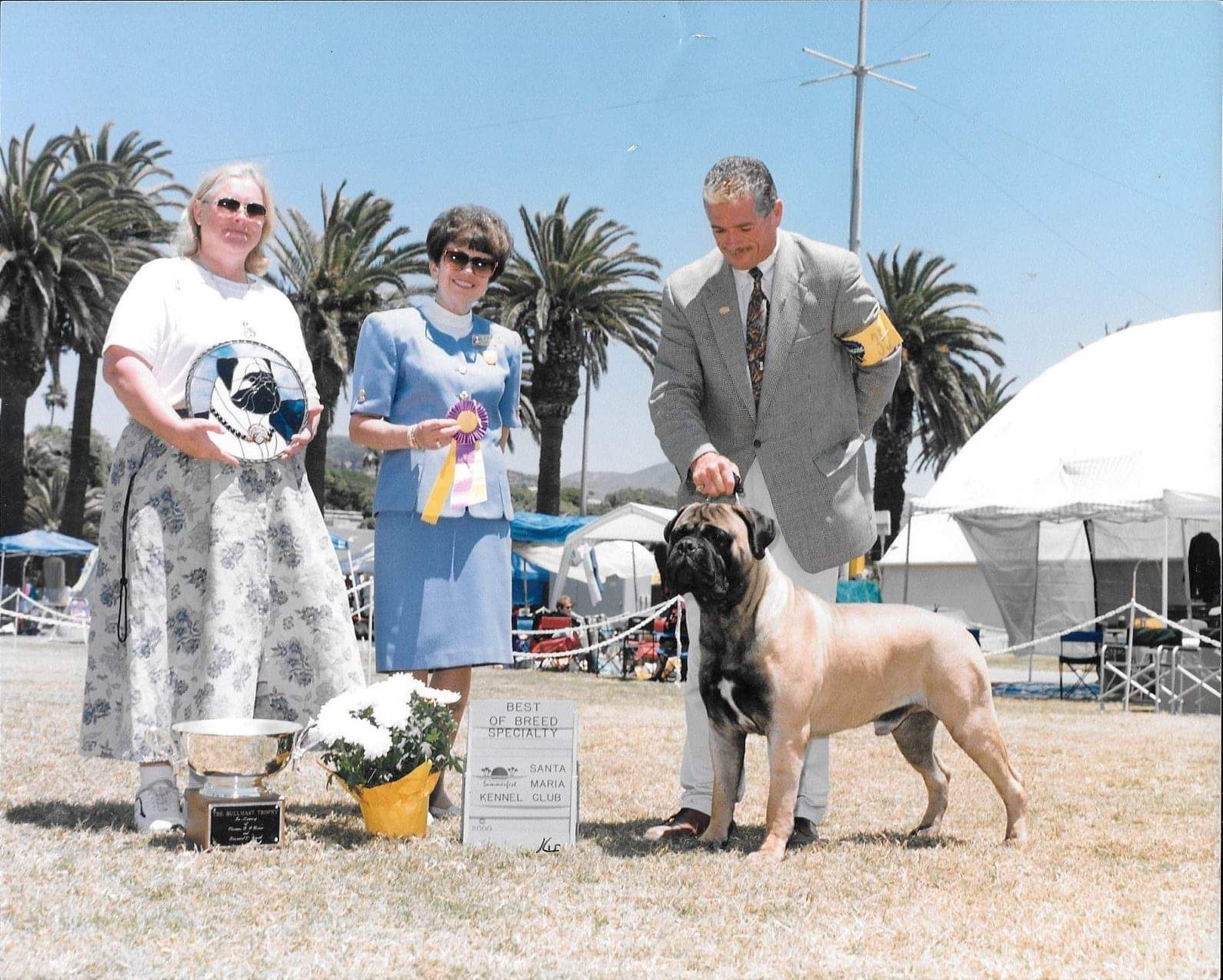

All About Judging
Geraldine Shastid, a noted Bullmastiff AKC Judge, explains and expands on the points made in the AKC Bullmastiff Breed Standard.
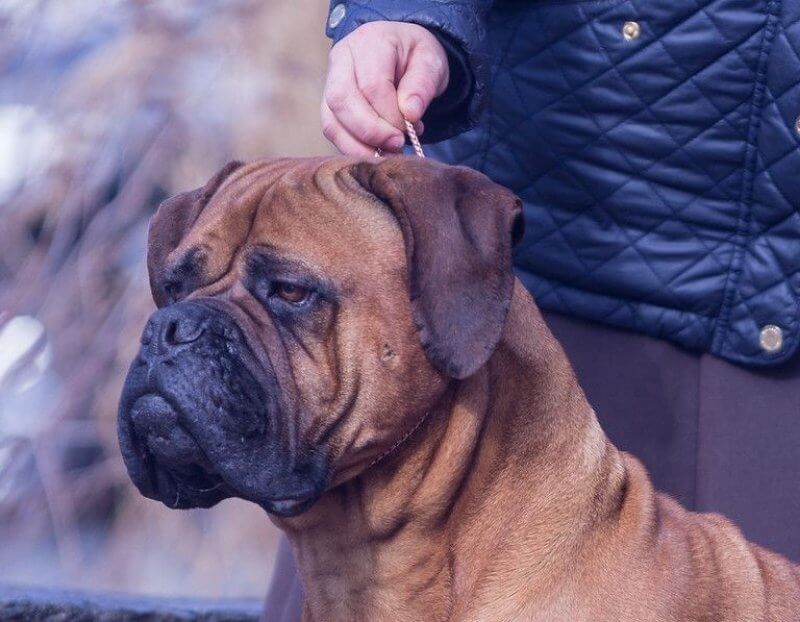
All About Judging
Bullmastiff breeders have worked hard to improve excellent features and eliminate faults as outlined in the breed standard.
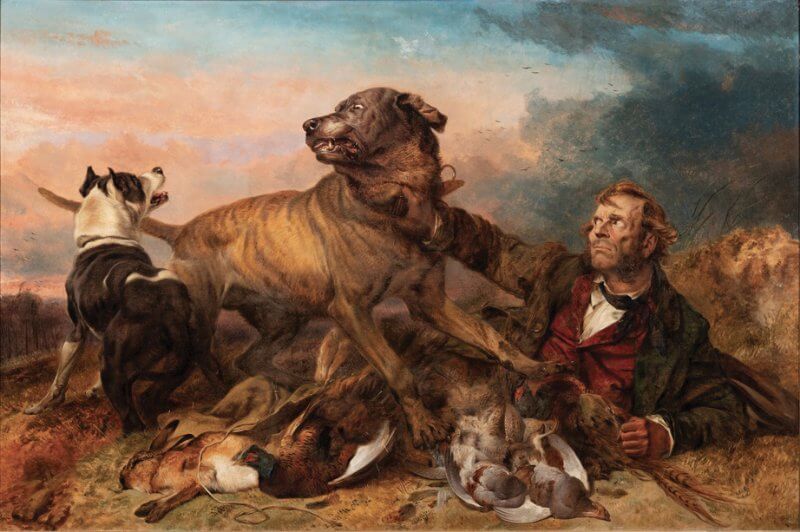
Fearless at work, docile at home, the Bullmastiff is a large, muscular guarder who pursued and held poachers in Merry Old England.
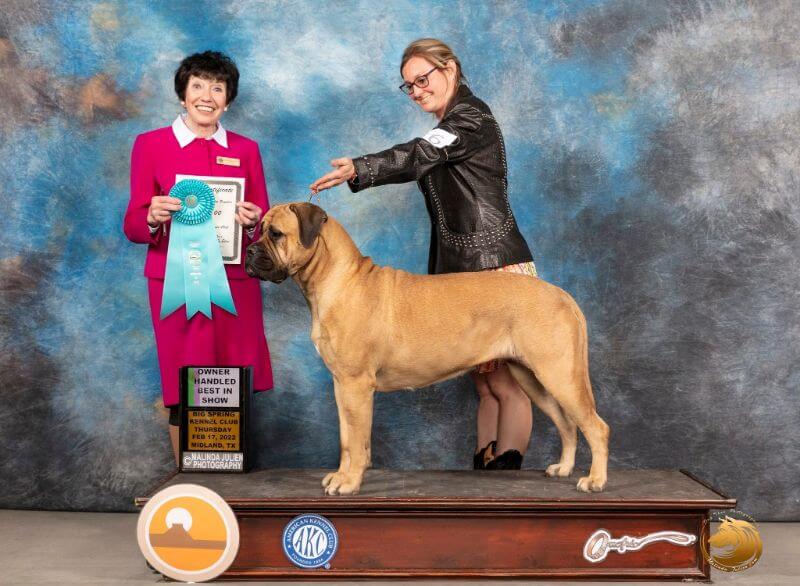
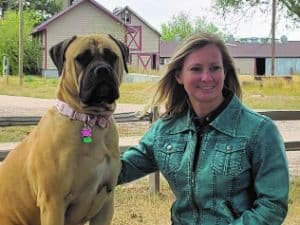
Meet the Breeders
Stacie Toft-Devore is the breeder behind Corral West Kennels. Read about the kennel’s beginnings, champion dogs, puppies, photos & more!
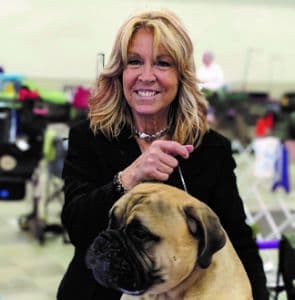
Meet the Breeders
Cheryl Pike is the breeder behind Amulet Bullmastiffs. Read about the kennel’s beginnings, champion dogs, puppies, photos & more!
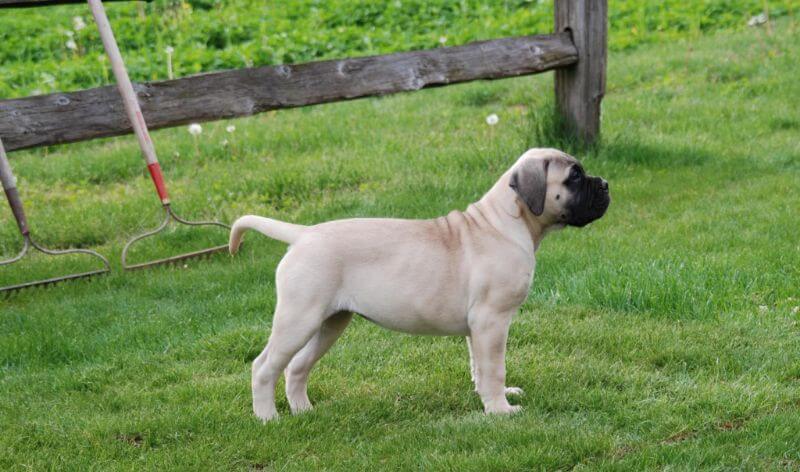

Meet the Breeders
Carrie Lane is the breeder behind Affinity Bullmastiffs. Read about the kennel’s beginnings, champion dogs, puppies, photos & more!

Meet the Breeders
Toni Donovan is the breeder behind Guardian Angel Bullmastiffs. Read about the kennel’s begginings, champion dogs, puppies, photos and more!

Meet the Breeders
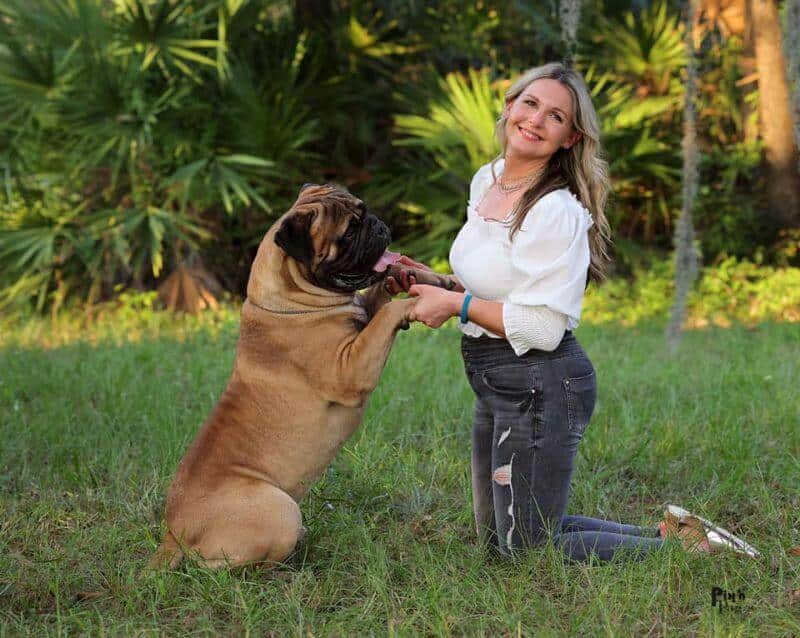
Olga Contant is the breeder behind Ridgetop Bullmastiffs. Read about the kennel’s beginnings, champions, Bullmastiff puppies, photos & more!

Meet the Breeders
Interview with Working Group Breeder Kathryn Roberts – Where do I live? How many years in dogs? How many years as a breeder?
Set on high, strong at the root, and tapering to the hocks. It may be straight or curved, but never carried hound fashion.
A Note About Color: A clear coat is desirable. Fawn ranges from lightest of fawn to a honey fawn, and red ranges from light rust to dark mahogany. Brindles have an even striped pattern with an undercoat of red or fawn; chevron pattern.
Coat Type
Smooth
The structure of the coat this breed carries.
Coat Length
Short
How long the breed's coat grows when kept in condition.
Adaptability Level
How easily a breed copes with changes in home, routine, noise and weather.
Mental Stimulation Needs
How much a breed needs a job, a puzzle or training to stay content.
Most Bullmastiff breeders advise feeding adult dog food or large-breed puppy food for puppies in order to ensure slow and steady growth. Several small meals are best for puppies, and two meals daily is a good routine for adults, so dogs don't have to digest too much food at each meal. Because of the risk of bloat, exercise is discouraged immediately before and after eating. Bullmastiffs should be kept lean, especially as puppies, as they grow very rapidly, which can tax their systems.
Early training and socialization are critical for Bullmastiff puppies. The breed can be quite strong-willed, and dogs and owners will both benefit from training regimens instilled in puppyhood. Rules and routines should be put in place early and adhered to as the puppy grows. Many breeders will encourage new owners to enroll in local puppy classes in order to ensure that puppies are exposed to other dogs and that owners have access to training assistance and information. Bullmastiffs can excel in Agility, Obedience, Rally, even Scent Work and Tracking, so training should begin immediately and be a part of the lifelong bond between dog and owner.